Skin Rash Dog Food Allergy Pictures: What Allergic Skin Looks Like
Labeled pictures of food allergy rashes on dog ears, paws, belly and groin, early to chronic, how food, environmental, flea and contact allergies differ, how an elimination diet confirms it and when to see a vet.

BVMS MRCVS
Medically reviewed by Dr. Pippa Elliott, BVMS MRCVS · Last reviewed

This article contains affiliate links. Webvet may earn a commission when you buy through them, at no extra cost to you.
A dog's food allergy rash usually looks like itchy pink to red skin with small bumps and rust-brown lick stains on the ears, paws, face, armpits, belly, groin and rear end. The itch lasts all year. That is the pattern most skin rash dog food allergy pictures show, but no photo can prove the cause.
Food and environmental allergies look alike and often occur together, so only a vet-guided elimination diet trial can confirm food as the trigger. The labeled photos of allergic skin below go by body area and by stage, from early redness to chronic, darkened skin, and include the flea and grass patterns.
What does a food allergy rash look like on dogs?
A food allergy rash in dogs, which vets call a cutaneous adverse food reaction, starts with itch (pruritus). The skin turns pink to red, small red bumps can appear, and licking leaves thinning hair and rust-brown saliva staining. It concentrates on the ears, paws, face, armpits, belly and groin, and sometimes around the rear end.
Two clues set it apart from a passing irritation. The itching continues year-round instead of rising and falling with the seasons, and ear or skin infections keep coming back as bacteria (Staphylococcus) and yeast (Malassezia) take hold in the damaged skin, according to the Merck Veterinary Manual.
- 1A food allergy rash is itchy pink to red skin with small bumps, lick stains and thinning hair on the ears, paws, face, armpits, belly, groin and rear end.
- 2Year-round itching and ear or skin infections that keep coming back fit a food allergy.
- 3Environmental allergy affects the same areas but is often seasonal. Flea allergy centers on the lower back and tail base.
- 4Photos cannot confirm a food allergy. Only an elimination diet trial followed by a food challenge, guided by your vet, can.
- 5Sudden facial swelling, hives with vomiting, trouble breathing or collapse means an emergency vet visit now.
The photos below go through each area. To check whether your dog's rash matches, look at every area, not just the spot your dog licks most. In each one, allergic skin tends to look like this:
- Ears: pink to red skin inside the ear flaps, brown waxy debris and head shaking
- Face: redness and thinning hair around the eyes and on the muzzle
- Paws and legs: rust-brown lick stains, red skin between the toes and licked front legs
- Armpits, belly and groin: pink to red skin with small red bumps and thinning hair
- Rear end: licking, scooting and itch around the anus and under the tail
Your dog's rash matches the food or environmental allergy pattern if it itched before or along with the redness, appears in one or more of these areas and keeps coming back. The back and sides usually look normal unless fleas are also involved. A match is a reason to see your vet, not a diagnosis.
Other patterns point elsewhere. A rash only on the lower back and tail base suggests flea allergy, one limited to thinly haired skin that touched the ground suggests contact allergy, and a single oozing or pus-filled spot suggests infection. Each is covered below.
Ears and face: red ear flaps and irritated eyes and muzzle
Dog ear allergies usually show up inside the ear flaps. The inner ear flap, the smooth, thinly haired side that faces the head, turns pink to red, and brown, waxy debris can build up at the ear opening if the canal is inflamed too. Dogs shake their heads and scratch at their ears.
Ear trouble is a common allergy clue: in some allergic dogs, outer ear infections (otitis externa) that keep coming back are the only sign, according to the Merck Veterinary Manual. If your dog keeps needing treatment for ear infections, ask your vet whether an allergy is driving them.
On the face, allergic itch tends to show up as:
- redness and thinning hair around the eyes, from rubbing and pawing
- a pink, thinly haired muzzle and chin with scratch marks
- face rubbing on carpet, furniture or grass
- red, itchy eyes in some dogs
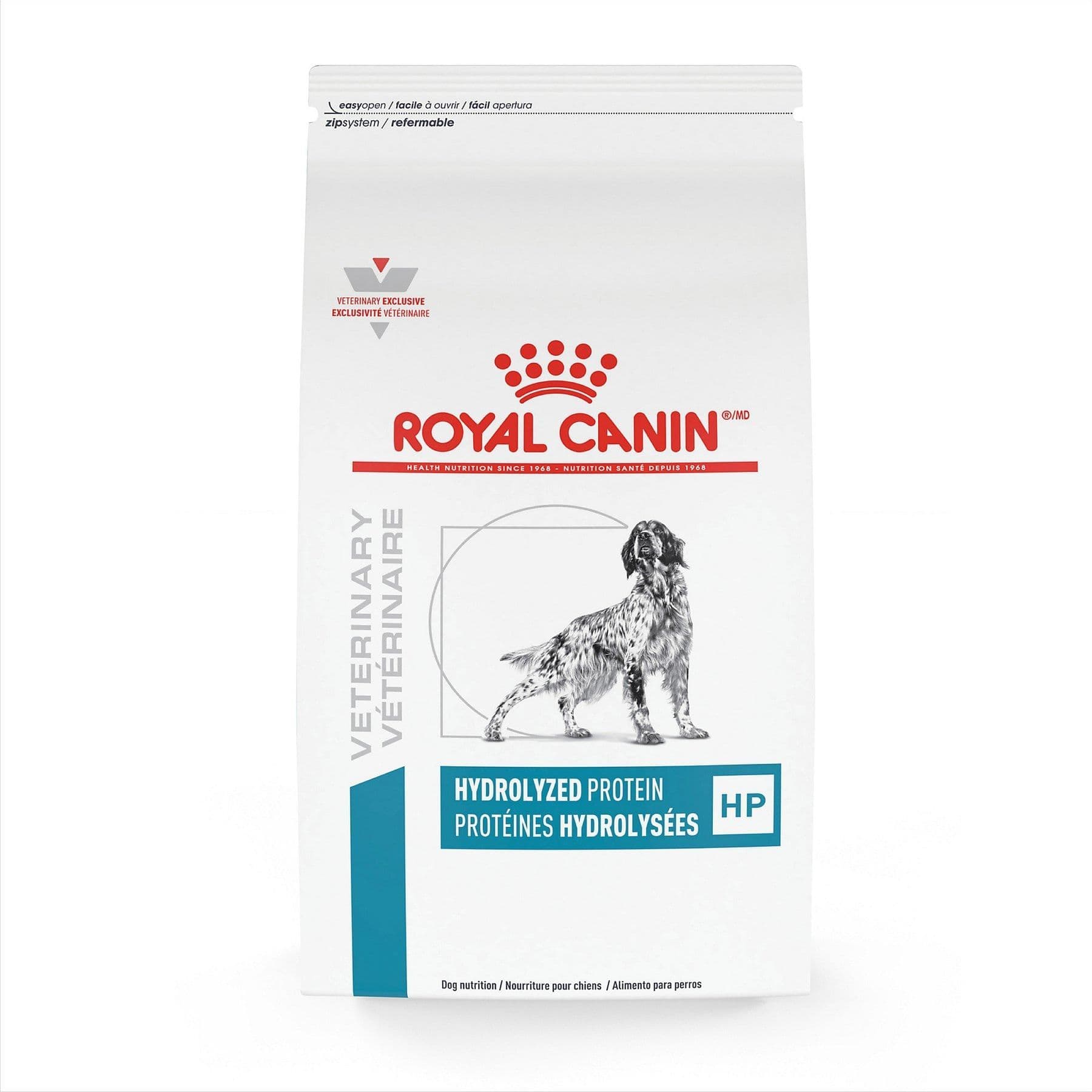
For the diet trial: Royal Canin HP is a veterinary hydrolyzed diet option. Your vet selects one trial diet; authorization required.
Webvet may earn a commission when you click through to Chewy, at no extra cost to you.
The dermatologists at Veterinary Skin and Ear Specialists list inflamed eyes (conjunctivitis) among the signs of food allergy. Eye redness has other causes too, so see our guide to conjunctivitis in dogs before assuming allergy.
The photo below shows the early ear and face pattern: pink-red skin on the inner ear flap, a little brown, waxy debris at the ear opening, and redness with thinning hair around the eyes and on the muzzle.

Paws and legs: licking, saliva stains and red skin between the toes
Dog paw allergies show up as licking and chewing at the feet, often for long stretches. VCA Animal Hospitals describes allergic paws as inflamed and sometimes swollen, with the tops of the paws most often involved and reddish-brown staining of the fur from saliva or yeast.
That saliva staining is easiest to see on light fur, where licked areas turn rust brown. Spread the toes and check the webbing too: allergic skin between the toes looks pink to red and often feels damp from licking.
The photo below shows a typical allergic paw: rust-brown saliva staining on the top of the paw and lower leg, damp, clumped fur from licking, and pink-red skin between the toes.

The legs follow the same pattern. Allergic dogs lick the lower front legs and the inside of the elbow, one of the areas the Merck Veterinary Manual lists most often for environmental allergy. Photos of dog skin allergies on legs usually show redness, thinning hair and staining wherever the tongue reaches.
A few paw problems look different and need a vet rather than allergy care:
- painful, shiny, reddish-purple bumps between the toes that can burst and ooze, a deep infection that allergies, grass seeds or hairs pushed into the skin can set off, according to the Merck Veterinary Manual
- a single swollen, sore spot between two toes after a walk, which can be a lodged grass seed
- a musty smell and greasy brown debris around the nails, which points to yeast
Belly, armpits and groin: pink to red skin with small bumps
A rash on a dog's belly is often the easiest allergy sign to see, because the hair there is thin. Allergic belly skin looks pink to red, with small red bumps, faint scratch marks and thinning hair where the dog has licked or scratched.
A red rash on a dog's belly from allergy often reaches the armpits and groin too. The Merck Veterinary Manual lists the armpits and belly among the areas environmental allergy affects most, and the underside is a typical food allergy site.
A dog rash in the armpit, on the groin or across the belly can mean different things. Compare it with these patterns:
- Pink to red skin with small red bumps and thinning hair: fits allergy.
- Pimples with a white or yellow center, or round peeling rings: points to bacterial infection.
- A greasy film and a musty smell: points to yeast.
- Raised welts that appear suddenly and fade within a day or two: points to hives.
- Red spots only on the thinly haired belly and inner thighs after lying on grass or carpet: points to contact allergy.
The photo below shows allergic skin on the lower belly and groin: patchy pink to red skin, scattered small red bumps, a few faint scratch marks and thinning hair.

Rear end and under the tail
Some food-allergic dogs itch around the anus and under the tail. They lick the area, chew at the skin between the back legs and may scoot along the floor.
Rear-end itch is less common than ear or paw itch, but it matters. The Merck Veterinary Manual lists the skin around the anus and genitals as a less common food allergy site, and dermatologists at Veterinary Skin and Ear Specialists include the area under the tail among the usual spots.
Two other problems look the same from the outside:
- Anal sac problems cause scooting, licking and biting at the anal area, according to the Merck Veterinary Manual.
- Flea allergy itches just above, on the lower back and tail base, rather than under the tail.
A vet can check the anal sacs during an exam. Rear-end itch together with ear or paw itch is a stronger hint of allergy than scooting alone.
Early vs chronic allergic skin: how the rash changes
Early versus chronic allergic skin is the difference between skin that is only inflamed and skin that long-term scratching has changed. Early allergy looks like redness and small bumps with the hair still in place. Chronic allergy brings hair loss, darker and thicker skin, scabs and infection.
Dog allergy symptoms show up at every stage. The common signs of allergies in dogs include:
- scratching, licking and chewing, especially at the paws
- rubbing the face on the floor or furniture
- head shaking and ear infections that keep coming back
- red skin, small bumps and rust-brown lick stains
- hair loss, scabs and a musty or sour smell once the skin is infected
Some food-allergic dogs also have digestive signs. The Merck Veterinary Manual lists soft stools, more than three bowel movements a day, vomiting, diarrhea and gas, and dermatologists at Veterinary Skin and Ear Specialists report vomiting or diarrhea in up to 20 percent of food-allergic dogs.
Early stage: redness, small bumps and constant licking
Early stage allergic skin shows up as behavior before it shows as a rash. Dogs lick their paws, rub their face or scratch their belly while the skin still looks close to normal. The Merck Veterinary Manual lists itch without visible skin changes at the start as a typical feature of environmental allergy.
Then comes faint redness: flat pink or red patches and a few pinpoint red bumps, with the hair still present. These are the first skin changes of allergy, and they appear where the itch is, such as the inner elbows, belly and armpits.
Early stage signs worth photographing for your vet:
- licking, chewing or rubbing that starts before the skin changes
- faint redness or flat pink patches
- a few pinpoint red bumps
- normal hair, with no scabs, crusts or dark patches
The photo below shows an early, mild rash on the inside of a front leg: faint pink patches and a few pinpoint red bumps, with normal hair over most of the area and no scabs or dark skin.

Treating allergy at this stage means there is no infection to clear yet and no darkened skin that will take months to fade. If the itch keeps coming back, book a vet visit now rather than waiting for hair loss.
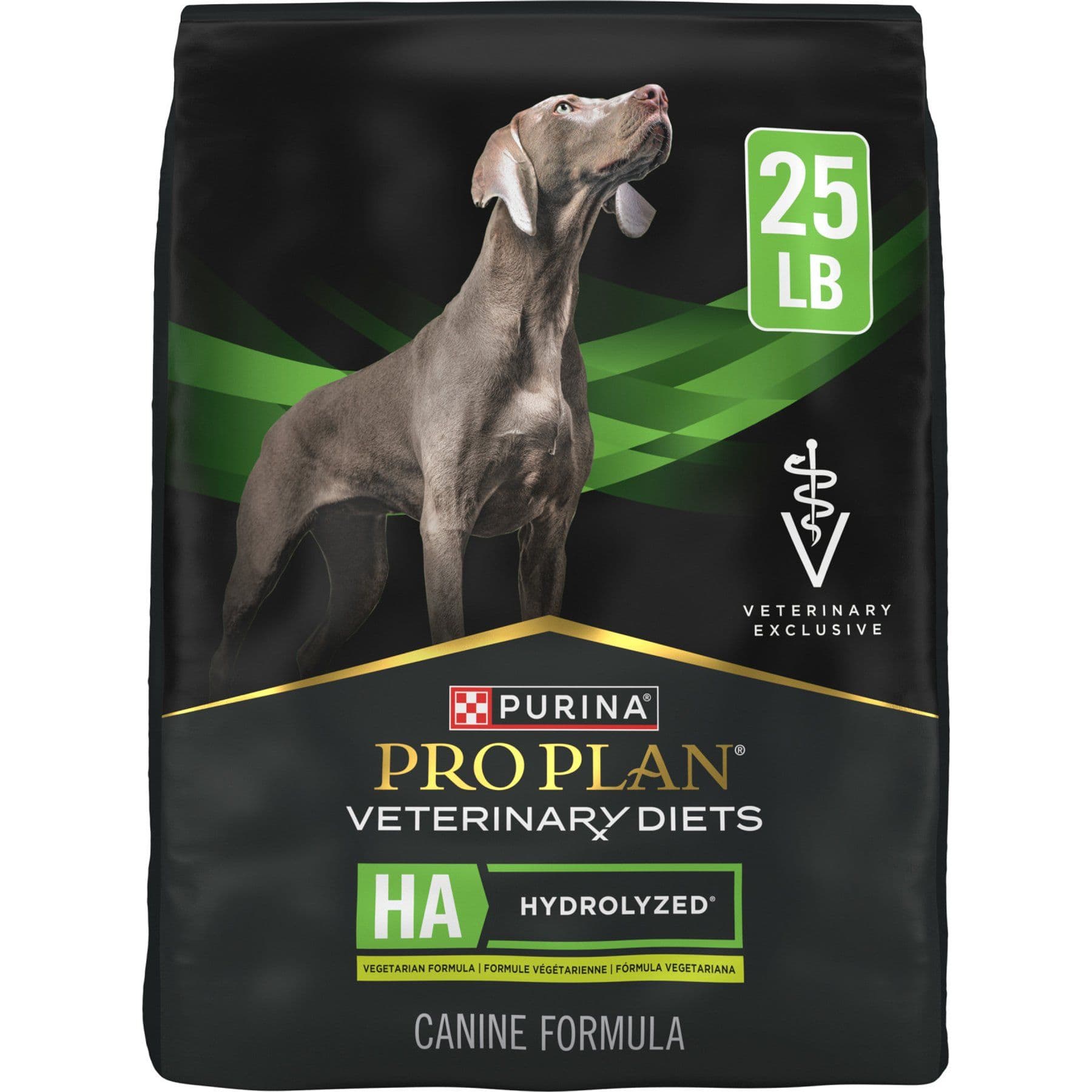
An alternative trial diet: Purina HA Hydrolyzed. Use the single food your vet selects rather than rotating trial foods. Veterinary authorization required.
Webvet may earn a commission when you click through to Chewy, at no extra cost to you.
Chronic stage: hair loss, dark thickened skin and infection
When allergic skin stays itchy for a long time, constant scratching and licking change the skin itself. The Merck Veterinary Manual lists what follows: hair loss, scaling, crusts, scratch wounds, thickened skin with deep creases (lichenification) and darkened skin (hyperpigmentation).
Darker, thicker skin often starts as a lacy gray pattern in the armpits and groin and can deepen to black, leathery skin with hair loss, according to Merck. Scabs on an allergic dog usually come from scratch wounds and infection rather than from the allergy itself.
Infection is the other big change. Staphylococcus bacteria and Malassezia yeast take advantage of damaged skin, so secondary bacterial and yeast infection is common and often makes a flare worse. Watch for these chronic and infected skin signs:
- hair loss over the itchy areas
- gray to black skin that feels thick, with deeper creases
- crusts, scabs and scratch wounds
- pimples with pus and round, scaly peeling rings called epidermal collarettes
- a greasy feel or a musty, sour smell
Yeast is a common passenger on chronic allergic skin, especially in skin folds, around the nails and in the ears, according to a 2020 review of yeast in veterinary dermatology. If the skin looks greasy, dark and smelly, compare it with our dog skin yeast infection pictures.
The photo below shows chronic allergic skin on the inner thighs and lower belly: hair loss, gray-black thickened skin with deep creases, scattered crusts and pustules, and a few round, scaly peeling rings from a secondary bacterial infection.

Skin at this stage needs a vet visit, not more home care. The infection has to be treated, and dark, thick skin fades slowly, possibly over months, once the itch is under control, according to the Merck Veterinary Manual.
 $65 · no membership
Is your dog's itching or skin issue getting worse?
A licensed vet can examine your dog over video and prescribe treatment online when it's appropriate.
 Talk to a vet
- Licensed vets
- All 50 states
- same-day Rx

Webvet may earn a commission if you book.
Food, environmental, flea or contact allergy: four rashes that look alike
Can dogs have allergies? Yes. Dog skin allergies are an immune overreaction to something the dog eats, breathes, touches or is bitten by, and vets call the skin inflammation allergic dermatitis. VCA Animal Hospitals lists four common types of allergies in dogs: flea bite allergy, environmental allergy (atopic dermatitis), food allergy and contact allergy.
Food allergy is one cause among several. Studies summarized in the Merck Veterinary Manual found food allergy in 9 to 40 percent of itchy dogs, and many food-allergic dogs have environmental or flea allergy too, so treating one trigger may only partly help.
Where and when the itch shows up is the best clue to which kind you are looking at:
- Food allergy: itch that stays the same all year, on the ears, paws, face, belly and rear end.
- Environmental allergy: the same areas, with symptoms that are usually seasonal but can last all year.
- Flea allergy: the lower back, tail base and backs of the thighs.
- Contact allergy: thinly haired skin that touches the trigger, such as the belly, inner thighs and paws.
What are the top 3 food allergies in dogs?
The top 3 food allergies in dogs are beef, dairy and chicken. In a 2016 review of published studies covering 297 food-allergic dogs, beef caused reactions in 34 percent, dairy products in 17 percent and chicken in 15 percent, followed by wheat at 13 percent.
Less common triggers were soy (6 percent), lamb (5 percent), corn and egg (4 percent each), and pork, fish and rice (2 percent each). The numbers add up to more than 100 percent because some dogs react to more than one food.
These proteins cause trouble only in dogs whose immune system has become sensitized to them, usually after eating them for a long time, and the allergy can start at any age. For the full list of common allergens in dog food, see our allergen guide.
Environmental allergies (atopic dermatitis): often seasonal
Environmental allergy, or atopic dermatitis, is an inherited tendency to react to allergens in the air and surroundings. VCA Animal Hospitals names tree, grass and weed pollens, molds and dust mites as common triggers, and signs usually begin between 6 months and 3 years of age, according to Merck.
Seasonal itching with environmental allergy is the classic tell. The Merck Veterinary Manual's owner guide says signs are usually seasonal but may be seen all year, and VCA notes that pollens cause seasonal flares while molds and dust mites can keep a dog itchy year-round.
It affects the same places as food allergy, mainly the paws, face, ears, front legs, armpits and belly. Breeds prone to it include Labrador and Golden Retrievers, Boxers, Boston Terriers, West Highland White Terriers and Shih Tzus, among others on the Merck Veterinary Manual's list.
Grass and contact allergy: rash where the skin touches the ground
A dog allergic to grass can react in two ways. Grass pollen is an environmental allergen, so it can cause the same itchy paws, face and belly as other environmental allergies. Direct contact with grass and some plants can also cause a contact allergy, which looks different.
Contact dermatitis shows up mainly where thinly haired skin touches the trigger. A review presented at the WSAVA World Congress lists the muzzle, the skin around the eyes, the inner ear flaps, the groin, the feet and the genital area, and Merck adds the belly of dogs that lie on treated lawns or carpets.
Reported contact triggers include:
- grasses such as Bermuda grass (Cynodon) and Kikuyu grass
- plants in the spiderwort family (Tradescantia)
- lawn and carpet chemicals
- plastic food bowls and collars
- some skin medicines, including creams with the antibiotic neomycin
Contact allergy is the least common of the four types, according to VCA. When it does happen, the rash sits wherever skin touches the trigger, which for grass means the parts of the body that brush the ground.
In pictures of dogs with grass allergies, look at where the rash stops. The photo below shows red, flat spots and small bumps on the sparsely haired belly and inner thighs, with the redness ending where the thicker coat begins.

An early stage grass rash is pink and bumpy after time on the lawn. What helps:
- Rinse or wipe the belly and paws with plain water after walks to cut contact.
A clean Frisco Microfiber Towel dampened with plain water is an option for wiping paws and the belly after walks. Wash it between uses; scented grooming wipes can add another irritant.
- Keep your dog off the suspect lawn or plant for 7 to 10 days and see whether the rash settles.
- Cover the belly with a light T-shirt or body suit on walks.
- Ask your vet about anti-itch treatment. Allergy shots (immunotherapy) can help grass pollen allergy but do not work for contact allergy, where avoiding the trigger works best.
Flea allergy dermatitis: lower back and tail base
A dog flea allergy centers on the lower back and tail base and runs down the backs of the thighs, according to the Merck Veterinary Manual. VCA Animal Hospitals calls this zone, from the middle of the back to the tail base and down the rear legs, the flea triangle.
Flea allergy dermatitis looks like small red crusted bumps and scabs, with thinning, broken hair where the dog has chewed. Long-standing cases turn bald, dark and thickened. Scratching can also set off skin infection and hot spots on dogs, wet, raw patches that need prompt care.
The photo below shows flea allergy dermatitis with the fur parted at the lower back and tail base: thinning, broken hair, small red crusted bumps and scabs, and a few black specks of flea dirt.

You may not find a single flea. VCA explains that you often won't see live fleas on a dog unless there is a heavy infestation nearby, and one bite can keep an allergic dog itching for several days. Vets use a dog's response to strict flea control as a test for this reason.
A flea rash on a dog's belly is a different picture:
- Flea bites without allergy: small red bumps on the belly and groin, where Merck notes flea infestation signs usually appear.
- Flea allergy: crusted bumps, scabs and hair loss on the lower back, tail base and backs of the thighs, with intense chewing.
- Flea dirt: black specks of flea droppings in the coat, easiest to find with a fine-tooth flea comb.
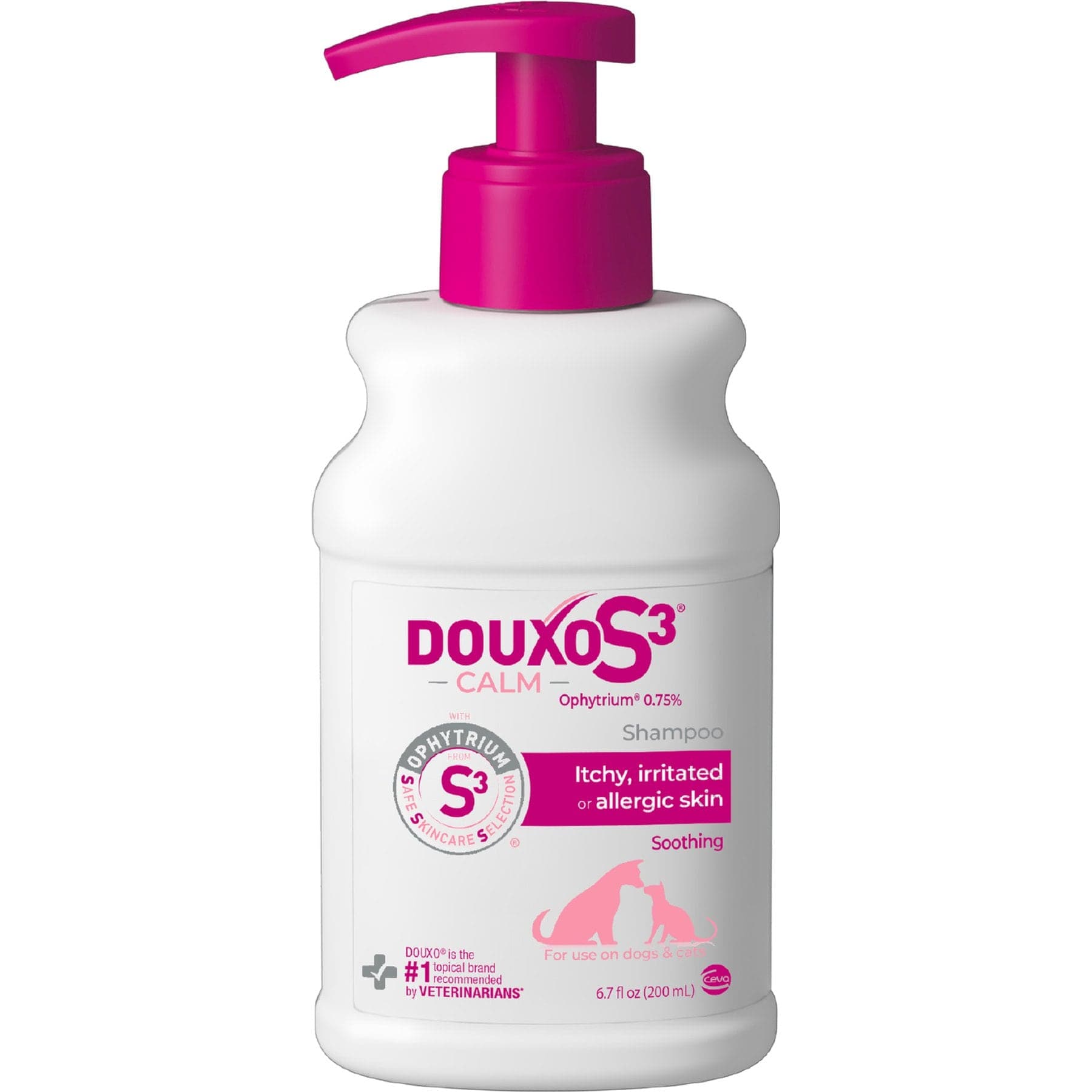
For itchy, allergy-prone skin: DOUXO S3 CALM shampoo, if your vet recommends bathing. Skin care does not replace the diet trial.
Webvet may earn a commission when you click through to Chewy, at no extra cost to you.
Treatment for flea allergy dermatitis in dogs starts with the fleas. Merck advises lifelong flea control for every dog and cat in the household, plus clearing fleas from the home, and your vet may prescribe a modern oral flea product such as an isoxazoline.
While the flea control takes hold, your vet can calm the itch with short-term medicine and treat any skin infection. For a step-by-step plan for your dog and home, see how to get rid of fleas on dogs.
Ask your vet about ongoing flea prevention such as Advantage II for dogs over 55 pounds. This exact listing is for large dogs; use the formulation for your dog’s weight. Flea prevention does not diagnose or treat a food allergy.
Food allergy or environmental allergy? Why a photo can't tell you
A photo cannot confirm a food allergy. Food and environmental allergies affect the same areas with the same redness, bumps and lick stains, and the Merck Veterinary Manual's owner guide says food allergy signs are similar to airborne allergies except that the itch varies little from season to season.
What your vet weighs instead is the history. These clues lean toward food allergy:
- itching that stays the same all year
- itch that began before 6 months of age or after about 3 years of age, when environmental allergy is less likely to start
- soft stools, gas or more than three bowel movements a day
- itch around the rear end along with ear or paw itch
- itch that continues despite strict flea control
These clues shift the odds, but none proves the cause. Blood, saliva and hair tests are not reliable for food allergy either: Merck reports that none of them gives consistently accurate results, and dermatologists at Veterinary Skin and Ear Specialists do not recommend them.
Skin and blood allergy tests do have a job in environmental allergy, but it is a different one. The Merck Veterinary Manual explains that their main purpose is to pick the allergens for allergy shots (immunotherapy) after a vet has diagnosed the condition from the history and exam.
So the practical order is to rule out fleas and treat any infection first, then run a diet trial. For a fuller walk through whether itchy skin comes from food, fleas or the environment, see our triage guide.
How an elimination diet confirms a food allergy
An elimination diet trial is the only reliable way to confirm a food allergy. VCA Animal Hospitals calls it the best and most accurate method: your dog eats one carefully chosen diet and nothing else for 8 to 12 weeks, then the old food goes back in to see whether the itch returns.
How the trial works, step by step:
- Your vet rules out fleas and mites and treats any skin or ear infection first, so it does not muddy the result.
- Your vet chooses the trial diet: a prescription hydrolyzed protein diet, with proteins broken into pieces too small for the immune system to recognize, or a novel protein diet made from proteins your dog has never eaten. A home-cooked version needs a recipe from a veterinary nutritionist.
Royal Canin Hydrolyzed Protein HP is one veterinary hydrolyzed diet your vet may select for the trial. It requires veterinary authorization; do not choose a trial food solely from a rash photo.
Another veterinary trial-diet option to discuss is Purina Pro Plan Veterinary Diets HA Hydrolyzed. Follow the single diet your vet selects.
- Your dog eats only that diet and water for 8 to 12 weeks, and your vet can prescribe anti-itch medicine meanwhile to keep your dog comfortable. Merck notes that at least 10 weeks may be needed to identify 95 percent of food-allergic dogs and cats.
- If the itch clears, the food challenge follows: your dog eats the old food again. Signs usually return within a week, according to VCA, though Merck notes a reaction can take up to 10 to 14 days. That flare confirms the allergy.
- To pinpoint the trigger, your vet adds single ingredients back one at a time, no more often than every 2 weeks.
Why not use a store-bought limited-ingredient food? A review by Olivry and Mueller found unlisted ingredients in 33 to 83 percent of the novel protein and limited-ingredient foods tested, depending on the study, while hydrolyzed diets almost never contained them. VCA adds that retail foods are not made with the same controls against cross-contamination.
Those foods can still have a place later; see our guide to limited ingredient dog food for where they fit. For the trial itself, stick with the diet your vet prescribes.
Not every bad reaction to food is an allergy. Merck groups true allergy with other, non-immune reactions under the umbrella of adverse food reactions, and a strict trial points to the problem food either way. See food intolerance in dogs for how an intolerance differs from an allergy.
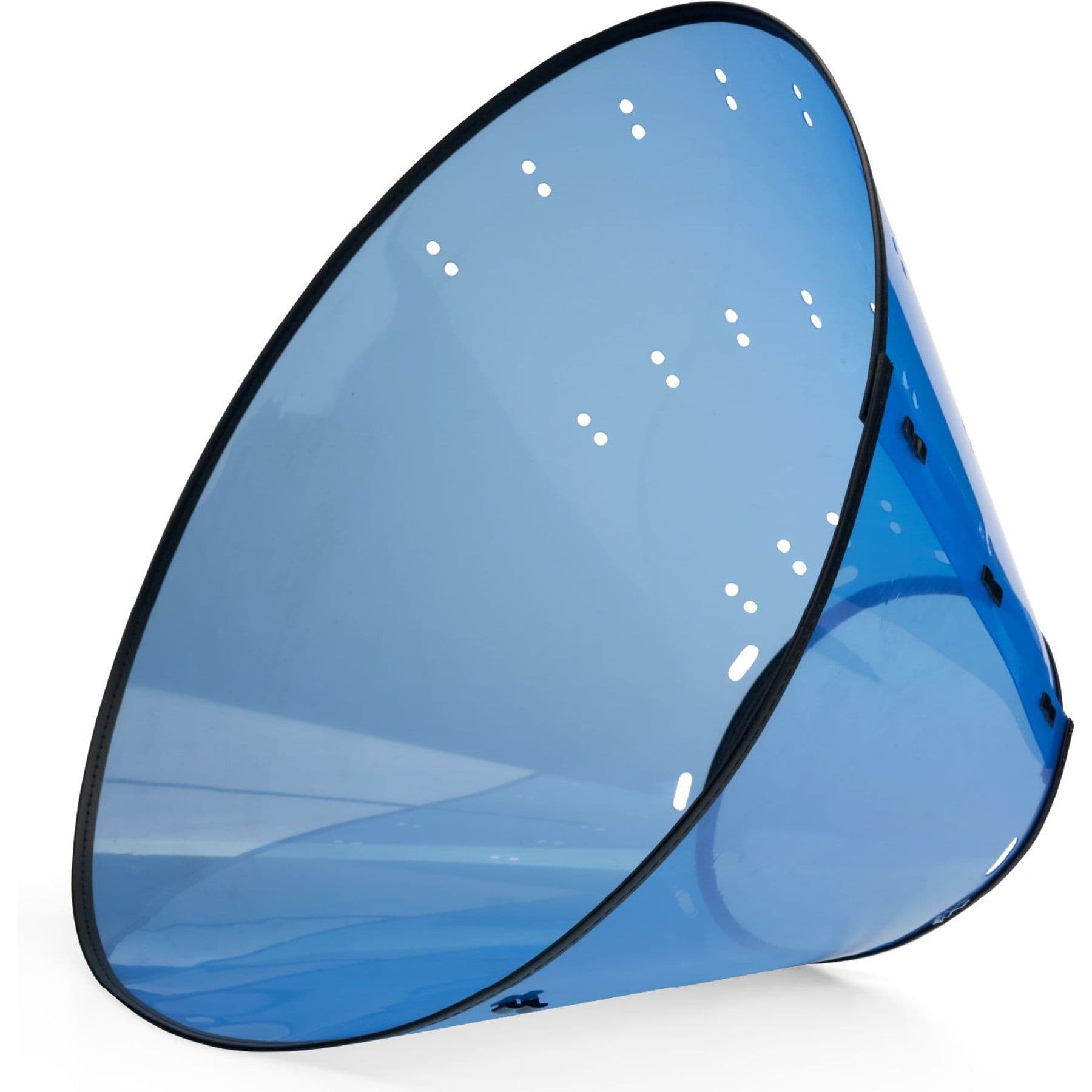
For persistent licking: a rigid recovery collar. This listing is Small; measure for fit and check that your dog cannot reach the affected skin.
Webvet may earn a commission when you click through to Chewy, at no extra cost to you.
Allergy rash look-alikes: mange, yeast, bacterial infection, hives and heat rash
A dog rash that itches is not always an allergy. The common types of dog rashes that pass for one are sarcoptic mange, yeast infection, bacterial infection, hives and heat rash, and allergy can set off or worsen the yeast and bacterial ones. The table compares them.
| Condition | What the skin shows | Where it usually appears | Itch | Other clues | How a vet confirms it |
|---|---|---|---|---|---|
| Allergy rash (food or environmental) | Pink to red skin, small red bumps, rust-brown lick stains; darker, thicker skin when chronic | Ears, paws, face, armpits, belly, groin and rear end | The main sign; year-round itch with food allergy, often seasonal with environmental allergy | Ear or skin infections that keep coming back | Food allergy: elimination diet and food challenge. Environmental allergy: history, exam and ruling out other causes |
| Sarcoptic mange | Red bumps, thick yellow crusts and hair loss | Ear edges, elbows, hocks, chest and belly first, then spreading | Intense | Spreads between dogs and can cause an itchy rash in people | Skin scraping, which can miss the mites, a blood test or a treatment trial |
| Yeast infection | Red, greasy or scaly skin that thickens and darkens (elephant skin) | Ears, skin folds and creases, and around the nails | Itchy | Musty odor and greasy brown debris | Skin cytology: tape or impression samples checked under a microscope |
| Bacterial infection (pyoderma) | Pimples with pus, epidermal collarettes (round peeling rings), crusts and patchy hair loss | Trunk and belly most often | Often itchy | Usually follows allergy, parasites or hormone disease | Skin cytology, plus bacterial culture for repeat or deep infections |
| Hives | Raised welts (dome-shaped wheals), sometimes with facial swelling | Anywhere, often the head, legs, trunk and belly | Often itchy | Appear within minutes of a trigger such as a sting, vaccine or drug and usually fade within 12 to 48 hours | History and exam; an emergency if vomiting, breathing trouble or collapse follows |
| Heat rash (skin fold irritation) | Red, damp, sometimes smelly skin | Skin folds and creases where warm, damp skin rubs, such as lip, face and tail folds, armpits and groin | Can be very itchy | Stays inside the fold; more common in wrinkly or overweight dogs | Exam, plus skin cytology if infection is suspected |
Patches of hair loss with scale or crust can also be ringworm, a fungal infection that spreads to people and other pets, so compare them with what ringworm looks like on dogs. For pimples, crusts and peeling rings, see our pictures of staph infection in dogs.
If the rash fits none of these patterns, our dog skin problems pictures guide compares allergies with the other common skin conditions side by side.
Allergy bumps on dogs: small red bumps, pimples or hives?
Allergy bumps on dogs come in three kinds that look different up close:
- Small, solid red bumps (papules) scattered over pink skin are typical of allergic skin itself.
- Pimples with a white or yellow pus-filled center are pustules, a sign that bacterial infection has joined in.
- Raised, puffy welts that appear suddenly, sometimes making the hair stand up in patches, are hives (urticaria).
Dog allergy bumps that pop up within minutes of an insect sting, a vaccine or a new medicine are most likely hives. They usually fade within 12 to 48 hours, according to the Merck Veterinary Manual, and our pictures of hives on dogs show how they differ from an allergy rash.
Bumps that last for weeks alongside the classic itch pattern point to allergic skin, while bumps with pus point to infection. Hives with facial swelling, vomiting or trouble breathing need an emergency vet.
Heat rash on a dog's belly
Heat rash in dogs is mostly a skin fold problem. Dogs sweat mainly through their paw pads and cool off by panting, so they do not get heat rash the way people do, explains veterinarian Dr. Hanie Elfenbein in PetMD. The closest match is irritation where skin rubs on skin.
Vets call it intertrigo, or skin fold dermatitis. Friction plus warm, damp skin with little air flow inflames the skin inside a fold or crease, according to a review in Today's Veterinary Practice. On the belly, that means the groin creases and armpits, which VCA lists among fold sites.
Heat rash compared with an allergy rash:
- Heat rash stays inside the fold or crease and looks red and damp, sometimes with a smell.
- An allergy rash spreads across the belly and also shows on the ears, paws and face, and it itches whether or not the weather is hot.
- A red, bumpy belly after lying on the lawn can be contact allergy instead, covered above.
Dog heat rash treatment is simple when it is caught early: keep your dog cool, keep the fold clean and dry, and stop the licking. Skip human creams, which dogs lick off. Folds that stay red, smell or ooze can become infected and need a vet for medicated wipes or shampoo and sometimes antibiotics.
See a vet if you notice pus-filled bumps, spreading redness or a bad smell, or if the rash has not settled within a day or two of keeping the area cool and dry.
How vets treat an allergy rash
- 1Treat the trigger: a strict diet trial and then lifelong avoidance of the problem food for food allergy, year-round flea control for flea allergy and avoidance for contact allergy.
- 2Calm the itch with vet-prescribed medicine so scratching stops damaging the skin.
- 3Clear secondary infection with medicated shampoos, ear treatment, antibiotics or antifungals.
- 4For environmental allergy, allergy shots (immunotherapy) aim to build tolerance, though they can take up to a year to work.
Dog skin allergy treatment works on three fronts at once, because allergies are managed rather than cured. VCA notes there is no cure for food allergy, only avoidance, and its allergy overview says environmental allergy can be controlled but not usually cured for good.
For environmental allergy, allergen-specific immunotherapy uses the results of skin or blood allergy tests to build tolerance to the specific pollens or mites involved. Unlike itch medicines, it aims to change the allergic response itself, but it can take up to 12 months to help, according to Merck.
Dog rash treatment also has to clear infection, because infection makes the itch worse. Vets use medicated shampoos, ear medicine, and antibiotics or antifungals chosen with skin cytology and, for repeat infections, a bacterial culture. If the itch stays hard to control, ask about a referral to a veterinary dermatologist.
What is the fastest acting dog itch relief?
The fastest acting dog itch relief comes from prescription medicine, and the options work at very different speeds. Here is how fast each anti-itch medicine works, according to the Merck Veterinary Manual:
- Steroids (glucocorticoids): fast acting and useful for a bad flare, but long-term use carries a high risk of side effects.
- Oclacitinib: controls itch within 24 hours.
- A lokivetmab injection, given by your vet: starts working within 1 to 3 days, and one injection lasts about 4 to 8 weeks, according to VCA.
- Cyclosporine: takes 4 to 6 weeks to help, so it suits long-term control rather than flares.
- Antihistamines: little effect on a flare, though they can help some dogs as ongoing prevention.
- Fatty acid supplements, such as omega-3s: can take up to 2 months to work.
Your vet will choose based on how severe the itch is and on your dog's age and health. For safety details and side effects, see our guides to Apoquel for dogs, which contains oclacitinib, and Cytopoint for dogs, which contains lokivetmab.
Human antihistamines are not a fast fix for a flare. Check with your vet before giving one, and read our guide to Benadryl for dogs for product safety.
Omega-3 fatty acids for dogs can support allergic skin over the long run but will not stop a flare. Ask your vet which supplement and amount suit your dog.
What are some home remedies for my dog's itchy skin?
The home remedies that help most are the ones vets use alongside treatment. Dog skin allergy treatment at home should support your vet's plan, not replace it:
- Bathe your dog every week or two in lukewarm water with a gentle or vet-recommended medicated shampoo. The Merck Veterinary Manual notes that regular baths lower the allergen load on the skin.
A bathing option to discuss with your vet is DOUXO S3 CALM shampoo.
- Rinse or wipe the paws and belly with plain water after walks to remove pollen and grass.
- Block licking and chewing with a cone, a soft body suit or dog socks, since licking keeps allergic skin red and irritated.
One barrier option is the Dogswell rigid recovery collar; measure for the correct size and check reach.
- Keep every pet in the home on year-round flea prevention.
- Keep a diary of itch, food, walks and weather, with weekly photos of the same spots, to show your vet.
For help choosing a gentle or medicated wash, see our guide to dog shampoo for itchy skin. Medicated shampoos with chlorhexidine or an antifungal are meant for skin your vet has found to be infected.
Probiotics are a popular add-on for allergic dogs. Ask your vet whether one is worth trying, and treat it as an extra rather than a treatment; our page on probiotics for dogs with allergies covers the options.
Some popular remedies do more harm than good. Tea tree oil is the most commonly reported essential oil poisoning in pets, according to the Merck Veterinary Manual.
What healing allergic skin looks like
What healing allergic skin looks like depends on the stage it started from, but recovery usually follows this order once the trigger and any infection are under control:
- The licking and scratching ease.
- Red skin fades to pale pink skin, and no new bumps appear.
- Crusts, pimples and peeling rings clear as any infection is treated.
- New hair growth starts to fill in the thin and bald patches.
- Dark, thickened skin fades last.
That last step is slow. The Merck Veterinary Manual notes that darkened skin can take months to fade after the cause is corrected, and some faint lacy darkening may remain. On a food trial, the full response can take 10 weeks or more.
The photo below shows healing allergic skin several weeks into treatment: calm, pale pink skin on the belly and inner thighs with no bumps or crusts, short new hairs growing in, and faint lacy gray pigment still fading.

Book a recheck if new bumps, redness or scabs appear, if the itch returns after improving, or if dark patches keep spreading. A relapse can mean a new trigger, missed fleas or an infection coming back.
When to see a vet about an allergy rash
Allergic reactions in dogs range from a slow, itchy rash to a sudden emergency. A sudden reaction usually follows an insect sting, a vaccine, a medicine or a food, VCA notes. In dogs it shows up more often as vomiting, diarrhea and collapse than as breathing trouble, according to the Merck Veterinary Manual.
Book a regular vet visit within a few days for:
- itch that keeps your dog awake or distracts it from eating and play
- broken, oozing or pus-filled skin, or a bad smell
- hair loss that is spreading
- ear infections that keep coming back
- an itchy rash on a young puppy
- a rash that spreads to other pets, or itchy bumps on people in your home
- no improvement after a week or two of home care
A photo can help your vet, but it cannot confirm a food allergy; only a vet-guided elimination diet trial with a food challenge can.
Bring photos of the rash on its worst days, a list of everything your dog eats, including treats and chews, and notes on when the itch started and whether it changes with the seasons.
Can a dog's skin rash heal on its own?
Some rashes can, but an allergy rash usually does not. Hives often fade within 12 to 48 hours, and mild irritation from a one-off contact can settle once the trigger is gone and the licking stops. A true allergy rash keeps returning while your dog keeps eating, breathing or touching the trigger.
Skin that has become infected tends to get worse without treatment, because the infection adds its own itch, odor and crusting. If you see pus-filled bumps, crusts or a greasy film, or if any rash lasts more than a week or two, book a vet visit.
Food allergy rash questions
Frequently Asked Questions
What kind of dog food is best for dogs with allergies and itchy skin?
For a suspected food allergy, the best food is the one your vet prescribes for a strict trial: a prescription hydrolyzed diet or a novel protein diet built on proteins your dog has never eaten. Hydrolyzed diets are the most reliable, because tests have found unlisted proteins in many over-the-counter limited-ingredient foods.
For environmental allergy, no food cures the itch, though a diet with added omega-3 fatty acids can support the skin alongside treatment. For help comparing diets, see our guide to hypoallergenic dog food.
What not to feed dogs with itchy skin?
There is no single list of foods every itchy dog should avoid. Avoid the proteins your dog reacts to, which are most often beef, dairy, chicken and wheat. During a diet trial, skip everything but the trial food, including table food, rawhide, pill pockets, flavored chews, flavored supplements and flavored heartworm or flea medicines.
Rotating through store-bought foods is not a substitute for a trial, because many contain proteins that are not on the label. For the full list, see our guide to allergens in dog food.
What can I feed my dog to help stop itching?
If food is the cause, the strict diet trial itself is what stops the itch, gradually over the weeks of the trial. If the cause is fleas or pollen, no food will stop it, and the itch needs flea control or vet treatment instead.
Omega-3 fatty acids, from a skin-support diet or a supplement your vet recommends, can help allergic skin a little, but Merck notes fatty acids can take up to two months to work. For skin-support diets, see our guide to dog food for sensitive skin.
Will giving my dog an egg help with itching?
No, eggs are not an itch treatment, and egg protein is itself a food allergen for some dogs. In the 2016 review of 297 food-allergic dogs, 11 dogs, about 4 percent, reacted to egg, and VCA lists chicken eggs among the common food allergens in dogs.
If your dog is on an elimination trial, nothing extra goes in the bowl, eggs included. Outside a trial, ask your vet before adding eggs or any new food to an itchy dog's diet.
Can a dog suddenly become allergic to a food it has eaten for years?
Yes. A food allergy develops only after the immune system has been exposed to a protein, so the trigger is usually something the dog has eaten for months or years. VCA notes that food allergies usually appear after long exposure to one brand, type or form of food.
Dermatologists at Veterinary Skin and Ear Specialists add that signs can start at any age, even when a dog has eaten the same food all its life. An unchanged diet does not rule out a food allergy.
Is a dog allergy rash contagious to people or other pets?
No. Allergies are not contagious, because an allergy is the dog's own immune system overreacting. Two look-alikes do spread, though: sarcoptic mange passes easily between dogs and can cause an itchy rash in people, according to the Merck Veterinary Manual, and ringworm, a fungal infection, spreads to people and other pets.
If other pets start scratching or family members get itchy bumps, book a vet visit rather than assuming allergy.
Can puppies get a food allergy rash?
Yes. Food allergy can start in puppies under six months old. The Merck Veterinary Manual reports that signs most often start in young adult dogs, between 1 and 4 years old, while dermatologists at Veterinary Skin and Ear Specialists say the most common age of onset is under a year.
Fleas, mange mites and skin infection also make puppies itch, so your vet will rule those out before suggesting a diet trial.
Environmental allergy usually starts between 6 months and 3 years of age, so an itchy puppy under six months is less likely to have it.
How long does a food allergy rash take to clear up?
Expect several weeks at least. On a strict trial the itch eases gradually, and Merck notes that a trial of at least 10 weeks may be needed to identify 95 percent of food-allergic dogs and cats. Any secondary infection is treated first so it does not hide progress.
Hair regrows once the itch settles, and dark, thickened skin fades last, slowly and sometimes over months.
$65 · no membershipIs your dog's itching or skin issue getting worse?
A licensed vet can examine your dog over video and prescribe treatment online when it's appropriate.
Talk to a vet- Licensed vets
- All 50 states
- same-day Rx
Webvet may earn a commission if you book.

Editor
The Webvet Editorial Team is the in-house group of pet-care editors and writers behind Webvet, operated by Smart Pet Collective. The team researches, writes, and maintains Webvet's pet health, behavior, and medication content. Every article follows a defined editorial process: research from reputable veterinary and scientific sources, careful drafting, mandatory review of medical content by a credentialed veterinarian, and dated publication. Health and medication articles are medically reviewed by a licensed veterinary professional before they go live and are kept current over time.
Veterinarian · BVMS MRCVS
Dr. Pippa Elliott, BVMS, MRCVS, is a veterinarian with nearly 30 years of experience in companion animal practice. Dr. Elliott earned her Bachelor of Veterinary Medicine and Surgery from the University of Glasgow. She was also designated a Member of the Royal College of Veterinary Surgeons. Married with 2 grown-up kids, Dr. Elliott has a naughty Puggle named Poggle, 3 cats and a bearded dragon.
Related reading

Pictures of Black Spots on Dog Skin and What Each One Means

Dog Skin Problems Pictures: 15 Conditions and When to See a Vet

Dog Skin Yeast Infection Pictures: Paws, Belly, Skin Folds and Face
