Pictures of Hives on Dogs: Welts, Bug Bites and When It's an Emergency
Vet-reviewed pictures of hives on dogs: raised welts on the side and belly, facial swelling, bee stings and bug bites, look-alikes such as folliculitis, the usual triggers, and the emergency signs of anaphylaxis.

BVMS MRCVS
Medically reviewed by Dr. Pippa Elliott, BVMS MRCVS · Last reviewed

This article contains affiliate links. Webvet may earn a commission when you buy through them, at no extra cost to you.
These pictures of hives on dogs show what the reaction looks like: raised, round welts where the hair stands up in patches, easiest to spot on a short coat or the thin-haired belly. Hives appear within minutes to hours of contact with a trigger, and most fade within a few hours to two days.
The photos also show a swollen face, bee stings, bug bites and a look-alike skin infection, since each needs a different response. No photo can diagnose hives, so call your vet about new welts. Trouble breathing, vomiting or diarrhea, pale gums, collapse or fast-spreading facial swelling means go to an emergency vet now.
What does it look like when a dog has hives?
- 1Hives (urticaria) are raised welts that appear within minutes to hours of contact with a trigger, often with the hair standing up over each welt.
- 2Welts range from about 5 mm (1/4 inch) to several centimeters across and show up most often on the head, back, sides, legs and belly.
- 3Most hives fade within a few hours to two days. A bump that lasts longer is probably something else.
- 4Puffiness of the muzzle, lips or eyelids needs a call to your vet the same day.
- 5Trouble breathing, vomiting or diarrhea, pale gums, collapse or fast-spreading swelling is an emergency.
- 6No photo can confirm hives. A veterinarian decides from an exam and your dog's history.
Hives are usually an allergic flare in the skin. Mast cells release histamine and other chemicals, fluid leaks into the skin, and it swells into raised welts that vets call wheals, according to the Merck Veterinary Manual. The medical name is urticaria.
Urticaria in dogs has a recognizable look:
- Raised welts: round and often dome-shaped, from about 5 mm (1/4 inch) to several centimeters across (VCA Animal Hospitals).
- Hair standing up: on a short coat, the hair over each welt lifts, so the coat looks bumpy or patchy.
- Several at once: dog hives are usually multiple, scattered over the body or grouped in clusters.
- Unbroken skin: hives usually don't ooze or form open sores. Pus-filled pimples point to an infection instead.
- Itching: usually itchy, though some dogs hardly seem to notice.
- A sudden start: welts appear within minutes or hours of exposure to the trigger (Merck Veterinary Manual).
The picture below shows classic hives on a short-coated dog's side and back: a cluster of round, raised welts about 1 to 3 cm across, the hair standing up on each one, and normal skin in between. Use it as your reference if your dog is suddenly breaking out in hives or covered in bumps.

How to check your dog for hives
On a short coat, hives are easiest to see in daylight, looking along the body from the side. On a long or thick coat, run your palm slowly against the lay of the fur to feel for raised patches, then part the hair to look at the skin.
Check the belly, the inner thighs, the face and the ears, and look at your dog's gums, which should be pink. Take clear photos with a coin for scale and note the time. Hives can fade before you reach the clinic, and photos show your vet what you saw.
How a vet confirms hives
A vet usually diagnoses hives from the history, the exam and how quickly the welts respond to treatment (Merck Veterinary Manual). One exam clue is that large welts and swollen areas pit, holding a dent for a moment, when pressed with a fingertip.
Extensive testing usually isn't needed. Welts that last, or that come with other signs, should be biopsied to check for other diseases. To compare hives with the other skin problems that cause bumps, see our dog skin problems pictures guide.
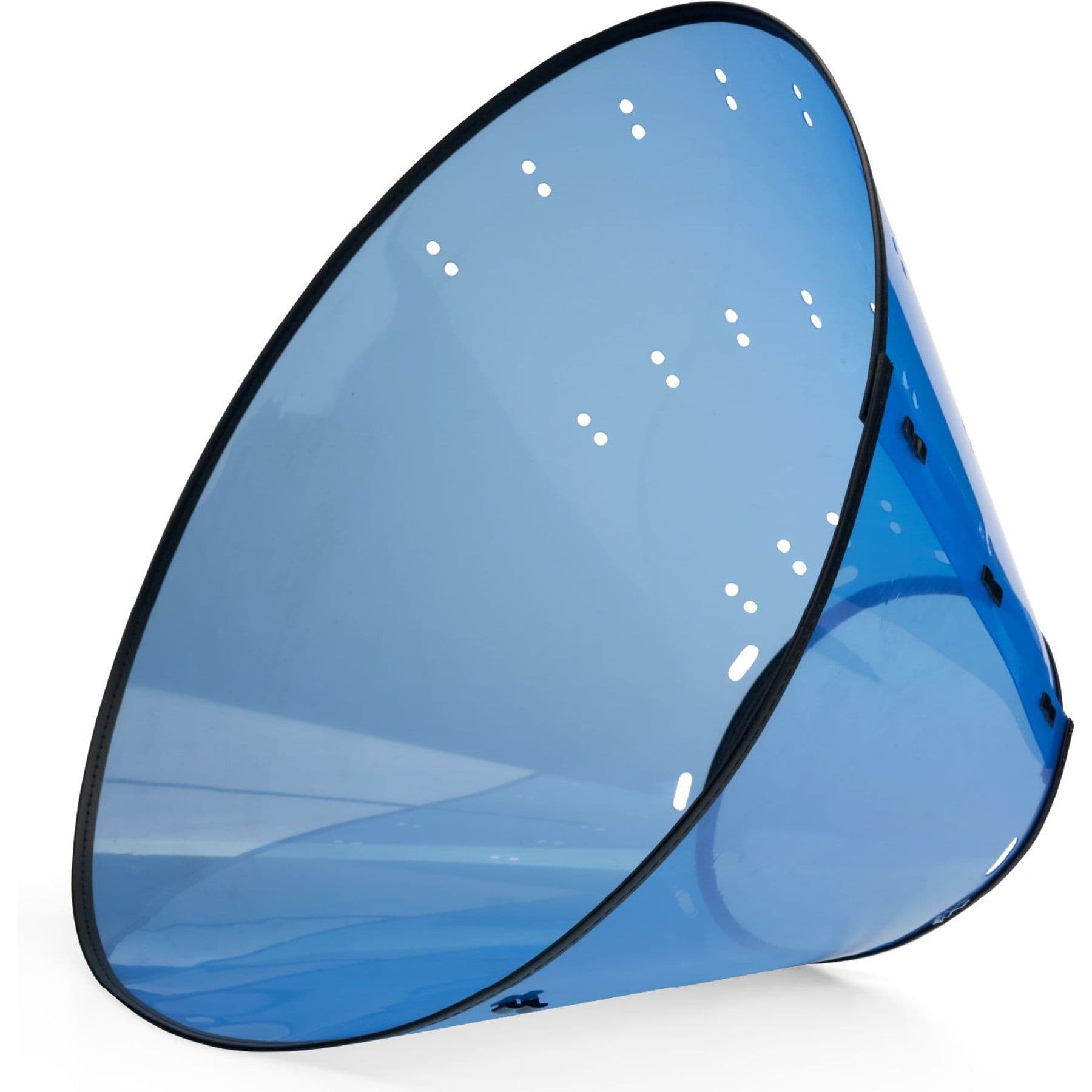
For a body area your dog keeps licking: a rigid recovery collar after veterinary advice. Small size shown; check fit and reach. This does not treat the allergic reaction.
Webvet may earn a commission when you click through to Chewy, at no extra cost to you.
Hives on a dog's belly, back, legs and head
Hives can appear anywhere on a dog's skin, but they show up mainly on the back, sides, neck, eyelids and legs, according to the Merck Veterinary Manual. The head and belly are also common sites. In advanced cases, welts can form on the lining of the mouth, nose and eyes.
Where the welts sit changes what you see and what to do:
- Back and sides: the classic look on a short coat, with raised patches of lifted hair like the picture above. On a thick coat, you may only feel them.
- Belly and inner thighs: thin hair lets you see the welts themselves, as raised red patches on pink skin.
- Legs: welts are easy to miss under longer leg hair, so run a hand down each leg. A dog that suddenly licks or chews at one paw may have been stung there (VCA Animal Hospitals).
- Head and neck: hives on the head can involve the face, lips, ears, tongue and throat (VCA Animal Hospitals). Any facial swelling needs a call to your vet the same day.
- Mouth and throat: swelling here can interfere with breathing, which makes it an emergency.
Where the welts cluster can hint at the cause. Stings happen most often on the face and in the mouth (Merck Veterinary Manual). Welts that show up after a walk through weeds or long grass raise the question of a plant or an insect, which is worth mentioning when you call.
Hives on a dog's belly
Hives on a dog's belly are often the easiest to see, because the skin there is pink and thinly haired. Instead of lifted hair, you see the raised welts on the belly directly: pink to red, in different sizes, and itchy enough that many dogs lick or scratch at them.
The picture below shows hives on a dog's belly and inner thigh: raised red welts of different sizes on pink skin, a few joined into a larger patch, with no pimples, scabs or flea dirt.

Belly bumps have several possible causes, and their size and timing tell them apart:
- Hives: raised welts from about 5 mm to several centimeters across that appear within minutes to hours and fade within about two days.
- Bug bite bumps: a few small, separate red bumps a few millimeters across, one at each spot an insect bit. The bug bite picture further down shows the difference.
- Allergy rash: red, itchy skin that lasts for weeks rather than welts that come and go, often with itchy paws, face and ears too (Merck Veterinary Manual). Compare our dog food allergy rash pictures.
- Flea bites: small crusted bumps, mostly on the lower back, tail base and back of the thighs, with flea dirt in the coat (Merck Veterinary Manual).
A Safari Double Row Flea Comb can collect fleas or flea dirt when you are checking those look-alike bumps. It cannot confirm hives. Avoid combing directly over tender welts or broken skin.
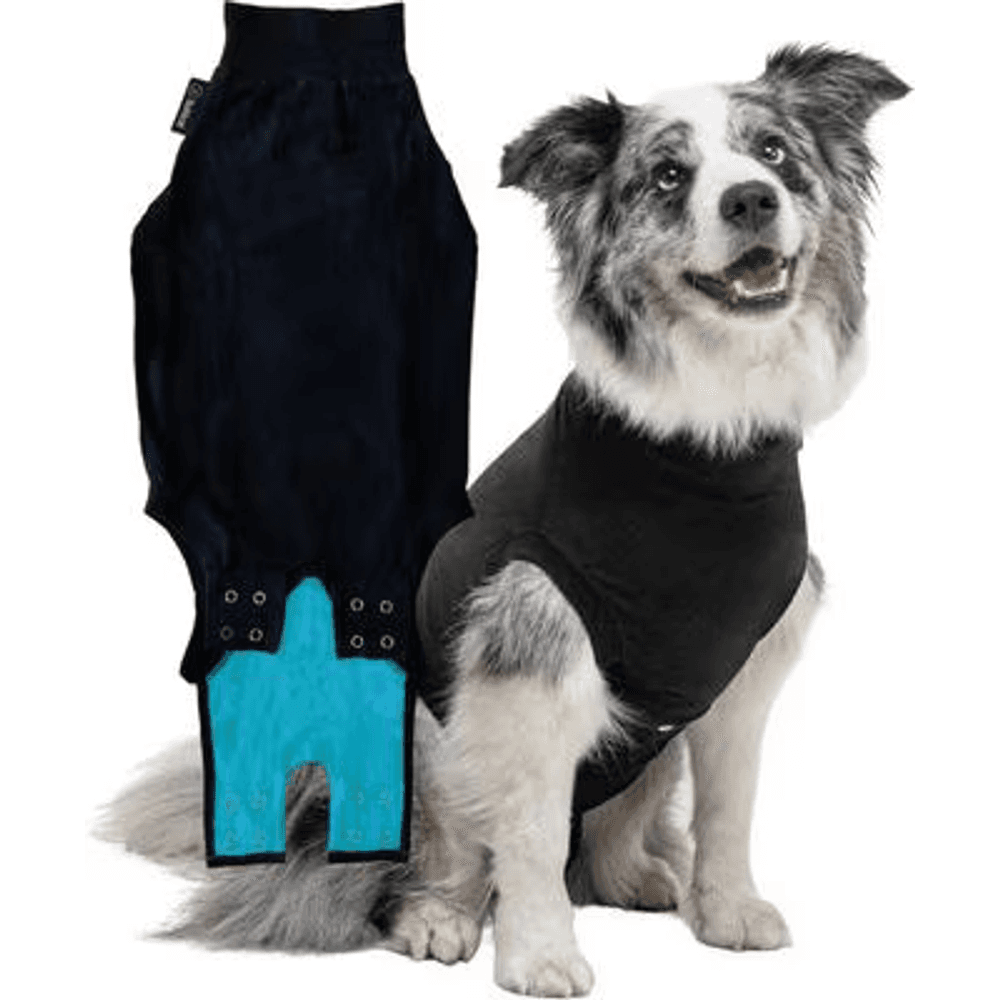
For covering affected body areas: a Suitical recovery suit, if your vet recommends a covering. Medium size shown; check fit. It does not treat the allergic reaction.
Webvet may earn a commission when you click through to Chewy, at no extra cost to you.
Hives and swelling on a dog's face
Hives on a dog's face often come with deeper swelling called angioedema. The Merck Veterinary Manual describes this facial swelling as sudden puffiness of the lips, the skin of the face and the tissue around the eyes (Merck Veterinary Manual).
Facial swelling looks different from welts on the body. Instead of separate bumps, the whole muzzle, the lips or the eyelids puff up, so the face looks broader or the eyes smaller. Insect stings, particularly from bees, can cause dramatic swelling around the face and lips (VCA Animal Hospitals).
Most of this swelling settles within a day, but it is the swelling most likely to turn dangerous, because it can spread to the throat and interfere with breathing. If your dog has hives and a swollen face, call your vet right away even if it seems fine, and go now if breathing changes.
Swollen muzzle and lips
A swollen muzzle and lips are the classic picture of facial swelling from an allergic reaction. The picture below shows the typical look: a puffy, swollen muzzle and puffy lips on both sides, mild puffiness under the eyes, and an alert dog with its mouth closed and no wounds.

Swelling on both sides points to an allergic reaction affecting the whole face. Swelling on one side, centered on a single spot, is more typical of one sting or bite, like the bee sting picture further down. Two details change the plan:
- Drooling or trouble breathing: the swelling may involve the mouth or throat, so go to an emergency vet now. Excessive drooling is one of the allergic reaction signs VCA lists after stings (VCA Animal Hospitals).
- Puncture marks, bruising or bleeding: a swollen face with fang marks, darkening skin or oozing blood suggests a snakebite, which is a true emergency. Don't put ice or a cold pack on it, because that can do harm (Merck Veterinary Manual).
Swollen eyelids
Swollen eyelids are another common sign of an allergic reaction. Puffy eyelids narrow the eye openings, and the skin around the eyes can look pink with thinner hair. The Merck Veterinary Manual's own example is a Dachshund with swollen, reddened, partly hairless skin around the eyes after insect bites.
The picture below shows puffy upper and lower eyelids on both eyes, with clear eyes and no discharge.

Allergic swelling puffs up the lids, and the pink tissue around the eyes can swell and redden too. Cloudy eyes, squinting or thick discharge can point to a problem with the eye itself, so mention them when you call.
When the eyelids swell, check two things right away: breathing and gum color. Gums should be pink. Pale or bluish gums, noisy or labored breathing, or swelling that spreads across the face means go to an emergency vet now (VCA Animal Hospitals).
When are hives on a dog an emergency?
Hives on their own are usually not dangerous. Most cases clear up without lasting harm, and death is uncommon unless anaphylaxis or swelling of the airway develops (Merck Veterinary Manual).
Anaphylaxis is a severe, whole-body allergic reaction to something such as an insect sting, a vaccine, a medicine or a food. Signs usually start within seconds to minutes, and Merck lists pale gums, cold legs and a very fast heartbeat with a weak pulse among them (Merck Veterinary Manual).
In dogs, the main organ affected by anaphylaxis is the liver rather than the lungs, so vomiting and diarrhea are often more prominent than breathing trouble (Merck Veterinary Manual). A dog with hives that starts vomiting needs an emergency vet, even if its breathing looks normal. Use these tiers to decide how fast to act:
- Go now: any sign in the box above, a sting inside the mouth or throat, or hives or facial swelling within hours of a vaccine.
- Call your vet right away: swelling of the muzzle, lips or eyelids with normal breathing, hives after a new medicine, or several stings at once, which can cause severe reactions (Merck Veterinary Manual).
- Call your vet for advice and keep watching: a few welts on the body of a dog that is bright, eating and breathing normally. Even mild reactions deserve close watching for a day or two.
On the way to the clinic, keep your dog calm and cool. Heat and excitement make breathing harder, especially for flat-faced breeds such as bulldogs and pugs (American College of Veterinary Surgeons).
 $65 · no membership
Is your dog's itching or skin issue getting worse?
A licensed vet can examine your dog over video and prescribe treatment online when it's appropriate.
 Talk to a vet
- Licensed vets
- All 50 states
- same-day Rx
Webvet may earn a commission if you book.
What are the most common causes of hives in dogs?
The most common causes of hives in dogs are insect bites and stings, shampoos and medications, according to the Merck Veterinary Manual. Vaccines, foods, pollen, mold, plants and chemicals can also trigger them (VCA Animal Hospitals).
Most hives are an allergic reaction, meaning the immune system overreacts to something the dog touched, ate, breathed in or received by injection. Allergic hives in dogs can come from any of these triggers:
- Insect bites and stings: bees, wasps, hornets, mosquitoes, black flies, ants, spiders and certain caterpillars (Merck Veterinary Manual). Pictures of the common bites follow in the next section.
- Medicines: especially one your dog has just started.
- Vaccines: see the vaccine question below.
- Shampoos and other products applied to the skin.
- Plants and chemicals: stinging nettle is the classic plant trigger, and contact with toxic plants or chemicals can also cause hives.
- Foods: possible, though hives are a less common sign of food allergy.
- Pollen and mold: environmental allergens that can also cause hives.
- Less often: blood transfusions, infections and parasites.
Non-allergic triggers such as stress, heat, sunlight or friction can also cause hives or make them worse, as can exercise (Merck Veterinary Manual). Cold and pressure can too (Merck Veterinary Manual), so in a sensitive dog, welts may appear where a tight collar or harness rubs.
If your dog is itchy but you can't find any welts, the cause is more likely a longer-running problem such as allergies, fleas or mites. Our guide to why a dog is so itchy walks through them.
Which plants can cause hives in dogs?
Stinging nettle is the plant most clearly tied to hives in dogs, and the Merck Veterinary Manual names it among the causes of hives in animals. Other plant triggers are less direct: pollen, irritating plants and chemicals used on lawns.
- Stinging nettle: its leaves and stems carry stinging hairs that poke the skin and release irritating plant compounds (Pet Poison Helpline). Welts rise where the plant touched, such as the belly, legs or muzzle.
- Nettles in the mouth: a dog that chews nettles can get rapid swelling, itching and pain in the mouth, and may vomit, stumble or twitch. Call your vet or a pet poison hotline straight away.
- Pollen: pollen from grasses, trees and weeds can act as an inhaled or contact allergen and set off hives (VCA Animal Hospitals).
- Toxic plants and lawn chemicals: contact with toxic plants or chemicals can cause hives (Merck Veterinary Manual). Lawn chemicals can also cause a slower contact rash on the belly of dogs that lie on treated grass (Merck Veterinary Manual).
If a plant is the likely trigger:
- Rinse your dog's coat with plenty of cool water, since bathing lowers the allergen load on the skin (Merck Veterinary Manual).
- Call your vet if the welts spread or the face swells, and avoid that patch on future walks.
- Call your vet right away if your dog ate part of a plant you can't identify, because some plants are toxic when eaten.
Bug bites on dogs: pictures of insect bites and stings
Can dogs get bug bites? Yes. Bee stings and bites from spiders, fleas and ticks are the most common causes of insect bite reactions in pets (VCA Animal Hospitals). Most bug bites on dogs look like small, red, raised bumps at the bite site, while a wider reaction can bring hives or a swollen face.
Telling hives from bug bites comes down to pattern. A bite is a bump where an insect fed or stung, usually one or a few. Hives are welts that pop up in many places at once, including skin no insect touched. A dog can have both: one sting can set off hives across the body.
| Insect | What the bite looks like | Where it shows up | When to call a vet |
|---|---|---|---|
| Bee or wasp sting | Sudden, painful swelling at one spot within minutes. A honeybee stinger can stay in the skin | Face and mouth most often, also the paws | Now for any emergency sign or a sting in the mouth. Right away for facial swelling, many stings or a stinger you can't remove |
| Fire ant | Itchy red bumps that usually clear within 24 hours, sometimes small yellow pustules with a red rim | Skin that touched the mound, such as the paws, legs and belly | Right away for many stings or facial swelling. Soon if pustules spread |
| Mosquito or black fly | Small itchy red bumps. On the ears, bumps with dark crusted centers that can turn into small sores | Ear tips and ear folds, and other exposed skin | If ear sores don't heal. Mosquitoes also spread heartworm |
| Spider | Black widow: little to see at the bite, then muscle cramps and a rigid belly. Brown recluse: a painless bite that blisters and forms a bull's-eye within 2 to 8 hours, then darkens | Anywhere on the body | Now for cramps, weakness or a sore that darkens or spreads |
| Flea | Small, very itchy red bumps and crusts, with flea dirt in the coat | Lower back, tail base and back of the thighs | When itching keeps your dog scratching. Every pet in the home needs flea control |
| Tick | A small red bump where the tick fed, or the tick itself still attached | Ears, face and eyelids, neck, armpits, groin, between the toes and under the tail | If redness, swelling or a scab lasts beyond 1 to 2 weeks, or your dog seems lethargic, stiff or off food afterward |
| Bed bug | No mark, small red spots, or an itchy rash or welts, like many other bites | Anywhere. Bed bugs feed mainly on people, so bites on family members are a clue | If bites keep appearing. The home needs treatment, not the dog |
| Kissing bug | Usually painless and often unnoticed, with no typical bite reaction | Mainly southern states, with the most finds in Texas, New Mexico and Arizona | If your dog may have been bitten or eaten one. Ask about Chagas disease testing |
Fleas and ticks have their own picture guides: see fleas on dogs and flea bites and what tick bites look like on dogs.
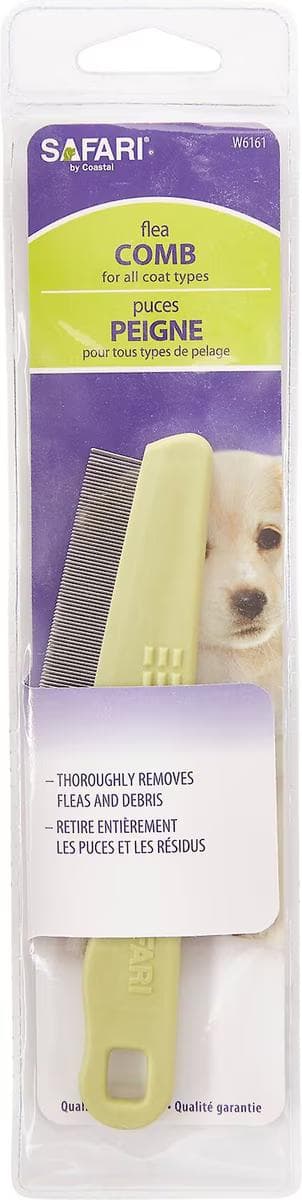
For checking flea-related look-alikes: a fine-tooth flea comb. Avoid tender welts and broken skin; a comb cannot confirm hives.
Webvet may earn a commission when you click through to Chewy, at no extra cost to you.
Most bites cause only a local bump and itch. The ones that matter more are a sting that sets off hives, facial swelling or anaphylaxis signs, dozens of stings at once, a black widow bite followed by cramps, a darkening brown recluse sore (Merck Veterinary Manual), and kissing bugs, which can carry the Chagas parasite.
For a dog that reacts to insects, prevention matters most. Merck advises a daily insect repellent for dogs whose hives come from insects (Merck Veterinary Manual), and flea control only works when every pet in the home is treated. Ask your vet which flea, tick and heartworm products and which dog-safe repellent suit your dog.
For the flea-control part of that plan, ask your vet whether Advantage II for dogs over 55 pounds suits your dog. This weight-specific product targets fleas; it does not repel every biting insect or treat an active hives reaction.
Bee stings and bug bites on a dog's nose, face and ears
Dogs investigate with their noses and mouths, and stings are most common on the face and in the mouth (Merck Veterinary Manual). A sting on the nose or muzzle causes pain and swelling within minutes, and a honeybee can leave its stinger behind in the skin.
The picture below shows a bee sting on a dog's nose: a firm, rounded swelling on one side of the muzzle just behind the nose, slightly pink at the center, with the rest of the face and both eyes normal.

The difference between local sting swelling and facial swelling decides how fast to act. Swelling on one side, centered on the sting, is a local reaction, and these usually settle quickly. Swelling that spreads to both sides, the lips or the eyelids is a wider allergic reaction, so call your vet right away.
Not sure whether it's spreading? Take a photo from the same angle every 15 minutes and compare. Take your dog in straight away for drooling, trouble breathing, hives elsewhere on the body, vomiting or weakness.
First aid for a bee sting, from VCA Animal Hospitals:
- Move your dog away from the insects.
- If the stinger is still in, scrape it out with the edge of a credit card. Don't use tweezers, which can squeeze more venom out of the stinger sac.
- Hold an ice pack or a cool compress on the swelling for about 10 minutes.
- Watch closely for hives, facial swelling, drooling, vomiting or breathing changes.
- Call your vet before giving any medicine, including an antihistamine.
Insect bites on a dog's ears look a little different. Biting flies, mosquitoes and fleas can leave small bumps and welts with dark crusted centers that turn into small sores, on the tips of upright ears or the folded surfaces of floppy ears (Merck Veterinary Manual).
Stable flies target the ear tips of pointed-eared dogs such as German Shepherds (Merck Veterinary Manual). Two more spots on the head deserve a look:
- Eyelids: a bug bite on a dog's eyelid can make the lid swell. If only one eye is affected and your dog is otherwise normal, call your vet for advice. Treat swelling of both eyes or the whole face as facial swelling.
- Head and neck: a firm bump that doesn't fade may be a tick bite, so check for a tick still attached.
Bug bites on a dog's belly, legs and paws
Bug bites on a dog's belly are easy to spot because the hair is thin there. The picture below shows what insect bites usually look like on the belly and inner thigh: a scattering of small, separate red bumps a few millimeters across, with one or two slightly scratched.

Compare that with the belly hives picture above. Small red bumps from insect bites are separate and fewer, each marking a spot where an insect fed or stung, while hives are larger welts that appear in many places at once.
A few small bumps on a bright, comfortable dog can usually be watched at home. Call your vet if a bite:
- spreads, blisters or turns into welts
- keeps growing, feels hot or painful, or starts to ooze, which can mean infection or, after a bee sting, an abscess around a stinger left in the skin (Merck Veterinary Manual)
- lasts more than a few days
On the legs and paws, look for fire ant and bee stings. Fire ant stings leave itchy red bumps that usually clear within 24 hours, sometimes with small yellow pustules ringed in red (Merck Veterinary Manual).
Bites in the groin, including near the vulva, look like bites anywhere else: small red bumps. Swelling or discharge from the vulva itself with no obvious bite has other causes, so have your vet check it.
Bed bug and kissing bug bites on dogs
Bed bug bites on dogs happen in infested homes: bed bugs may feed on dogs and cats, though they feed mainly on people (Companion Animal Parasite Council). Reactions range from no mark at all to a red spot to an itchy rash or welts (University of Minnesota Extension).
That is why a photo of a bed bug bite on a dog can't confirm the problem. Finding the bugs is the only way to know, so check mattress seams, pet beds and nearby furniture for:
- the bugs themselves
- their empty shed skins
- dark reddish or brownish spots on sheets and bedding
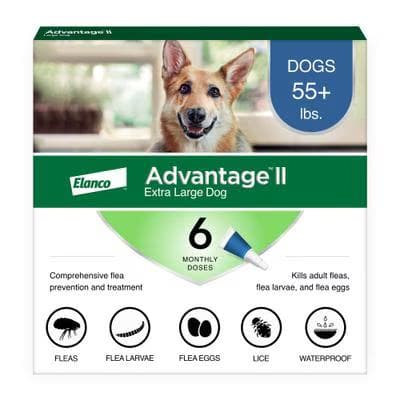
For flea prevention when fleas are the trigger: Advantage II for dogs over 55 lb. It does not treat acute hives or bed bugs; confirm suitability with your vet.
Webvet may earn a commission when you click through to Chewy, at no extra cost to you.
Treating the dog won't solve a bed bug problem. Pets aren't a source of bed bugs, and flea products aren't labeled for them, so the treatment belongs to the home. Wash your dog's bedding in hot water above 120°F, dry it on high heat, and throw out a torn bed that can't be cleaned.
Kissing bugs are a bigger concern, because they can spread Chagas disease in the southern US. The parasite lives in the bug's feces, not its bite. Kissing bugs can pass it on by biting and then defecating near the bite, and dogs can also be infected by eating the bugs (Texas A&M University).
The bite itself is usually painless and often goes unnoticed, and there is no typical bite reaction to look for (Texas A&M University). In dogs, Chagas disease can cause heart disease and sudden death, although many infected dogs show no signs. If you live where kissing bugs are found:
- Don't touch a kissing bug with bare hands. Catch it in a sealed bag or container so it can be identified.
- Ask your vet about a Chagas blood test if your dog may have been exposed. If one dog tests positive, test the other dogs in the home too (Texas A&M College of Veterinary Medicine).
- Reduce outdoor lighting near where your dogs sleep, since lights draw the bugs in, and consider screened kennels.
- There is no vaccine and few treatment options for dogs, so prevention matters most.
What else looks like hives on a dog?
Many skin problems cause raised bumps, but hives have a signature: they appear within minutes to hours and fade within about two days. This table compares the common look-alikes by timing and the next step to take.
| Condition | How fast it appears | How long it lasts | What it looks like | Next step |
|---|---|---|---|---|
| Hives | Minutes to hours after contact with a trigger | Usually hours, generally gone within 2 days | Raised welts, often with the hair standing up, in several places at once | Call your vet. Go now for any emergency sign |
| Insect bite or sting | Right after the bite or sting | Local swelling usually settles quickly. Fire ant bumps usually clear within a day | One or a few red bumps, or swelling at one spot | Watch at home unless it spreads, festers, the face swells or any emergency sign appears |
| Allergic rash (atopic or food allergy) | Gradually, not in minutes | Weeks or longer, often coming back | Red, itchy skin on the paws, face, ears, front legs or belly | Vet visit for an allergy workup |
| Bacterial folliculitis | Over days | Days to weeks, until treated | Red bumps with white pus-filled centers, crusted rings, tufts of hair and patchy hair loss | Vet visit. It usually needs antibiotics |
| Hot spot | Within hours | Days, and it can grow quickly | One raw, red, wet patch, often painful and matted | Prompt vet visit |
| Mast cell tumor | Suddenly, or present for months | Stays, though it may shrink and swell again | A raised lump that can look like a bite or a hive, sometimes red or swollen | Vet visit for a needle sample |
A bump that lasts for days is not hives. If a welt or bump is still there after two or three days, or keeps coming back in the same spot, have your vet check it.
A mast cell tumor is the look-alike that matters most. VCA calls these tumors great pretenders: they can look like an insect bite or an allergic reaction, and may swell and shrink, even daily, as they release histamine (VCA Animal Hospitals). A needle sample tells them apart. See our mast cell tumor pictures.
Hot spots can grow from a small red spot to a raw, oozing patch in the course of a day (VCA Animal Hospitals). Compare our photos of hot spots on dogs and dog food allergy rash pictures.
Folliculitis: bumps that mimic hives but last for days
Bacterial folliculitis, an infection of the hair follicles, can mimic hives on short-coated dogs. VCA notes that in short-haired breeds the coat may stick up in patches, like hives, or look moth-eaten from patchy hair loss (VCA Animal Hospitals).
Up close, folliculitis looks like a different problem from hives: red, raised bumps, many with a white pus-filled center, plus circular crusts, flaky patches, hair loss and itching. The scaly rings are called epidermal collarettes (Merck Veterinary Manual).
The picture below shows folliculitis on a short-coated dog's chest, with tufts of raised hair, moth-eaten hair loss, pus-filled bumps and a few scaly rings.

How to tell the two apart:
- Timing: hives come and go within hours to about two days. Folliculitis bumps stay for days and turn into crusts and rings.
- Surface: hives leave the skin surface smooth. Folliculitis brings pus-filled bumps, crusts and scaling.
- Hair loss: patchy, moth-eaten hair loss points to folliculitis.
- History: folliculitis often follows allergies and scratching, which break the skin and let bacteria in (VCA Animal Hospitals).
Folliculitis needs a vet visit rather than waiting. Your vet may confirm it by looking at skin cells under a microscope, and treatment usually means antibiotics for at least three to four weeks. For more photos, see our pictures of bacterial skin infections in dogs.
Hives in pit bulls, bulldogs, boxers and other short-coated dogs
Hives can affect any dog, but they are easiest to see on pit bulls, bulldogs, boxers and other short-coated dogs. Raised patches of hair stand out plainly on a short, smooth coat, so owners of these dogs often spot welts that a thick coat would hide.
That same short coat makes look-alikes easy to confuse with hives, and flat-faced breeds carry an extra risk with facial swelling:
- Folliculitis in pit bull types and other short coats: a skin infection can make the hair stand up in tufts that look like hives. Bumps that last more than two days, or that crust or fill with pus, point to infection.
- Mast cell tumors in boxers and bulldogs: these tumors are particularly common in boxers, English bulldogs, Boston terriers, pugs and Staffordshire terriers, a group that includes many dogs called pit bulls (VCA Animal Hospitals). In these breeds, a "hive" that stays put deserves a needle sample.
- Allergic skin disease: boxers and Boston terriers are among the breeds prone to atopic dermatitis, a long-running skin allergy (Merck Veterinary Manual). Itchy red skin that lasts for weeks points to allergy rather than hives.
- Airway risk in flat-faced breeds: English and French bulldogs, pugs and Boston terriers have narrowed upper airways, with narrow nostrils and an overly long soft palate (American College of Veterinary Surgeons). Swelling of the face or throat leaves them less room to breathe, so call your vet sooner and keep them cool and calm.
Whatever the breed, the first steps are the same: check breathing and gum color, call your vet, and go now for any emergency sign.
How do you get rid of hives on a dog?
Most hives go away on their own within hours to two days once the trigger is gone, but because it is hard to predict whether hives will fade or worsen, vets usually treat them (Merck Veterinary Manual).
To clear them faster and safely, remove the trigger, soothe the skin and let your vet decide on medicine. Dog hives treatment at the clinic usually means an antihistamine, a corticosteroid or both (VCA Animal Hospitals).
What you can safely do at home
Here is how to treat dog hives at home while you wait to hear from your vet:
- Check for emergency signs first. Trouble breathing, vomiting or diarrhea, pale gums, collapse or spreading facial swelling means go to an emergency vet now.
- Remove the trigger. Stop any new shampoo, spray, food or treat, move away from insects or plants, and scrape out a bee stinger with a card.
- Rinse off contact triggers. If plant material, pollen or a product may be on the coat, rinse the area with plenty of cool water.
- Use a cool compress. Hold a cool, damp cloth or an ice pack on swollen spots for about 10 minutes. The same cool compress is also the simplest relief for an itchy bug bite.
For the cool damp cloth, a clean Frisco Microfiber Towel or a soft cloth you already own can be used with plain water. Skip scented sprays and stop if the contact bothers your dog.
- Stop the scratching. Scratched skin can become infected, so distract your dog or cover the area if it keeps scratching or chewing.
Barrier options to discuss with your vet include a Dogswell rigid recovery collar or a Suitical recovery suit. Choose the fit and coverage your vet recommends.
- Call your vet before giving any medicine. Give antihistamines only as directed by a vet who has confirmed the product and dose for your dog. Our Benadryl for dogs guide answers dosing questions.
- Keep watching for a day or two. VCA advises close monitoring for 24 to 48 hours even after a mild allergic reaction is treated (VCA Animal Hospitals).
What your vet may do
Your vet will lean heavily on your history, because hives are diagnosed mainly from the story and the exam. Be ready to tell them:
- when you first saw the welts and whether they are spreading
- where your dog was in the past few hours, such as a yard, woods or long grass
- any stings, insects or nests you noticed
- new food, treats, chews or table scraps in the past day
- medicines, flea products or vaccines given in the past day
- new shampoos, sprays, cleaners, lawn treatments or bedding
- whether other pets have bumps too
Treatment depends on how severe the reaction is:
- Hives or facial swelling alone: an injectable antihistamine and corticosteroid usually bring dramatic improvement, sometimes within minutes (VCA Animal Hospitals). Some dogs go home with a few days of oral medicine.
- Stings and bites: removing any stinger or insect parts, then an antihistamine and anti-inflammatory medicine as needed (VCA Animal Hospitals).
- Anaphylaxis: epinephrine (adrenaline) to counter the reaction, with intravenous fluids, oxygen and close monitoring (Merck Veterinary Manual).
- Hives that keep coming back: a search for the cause, which may include flea control, a diet trial, allergy testing or a skin biopsy.
If the trigger was a vaccine, ask about pre-treatment before the next shot. If it was insects, ask about prevention and whether your dog needs a daily antihistamine when contact can't be avoided (Merck Veterinary Manual).
More questions about hives on dogs
Frequently Asked Questions
Will Benadryl make my dog's hives go away?
It can help mild hives fade and ease the itch, but give it only if your vet says to. Benadryl's active ingredient, plain diphenhydramine, is an antihistamine vets sometimes use for hives (Merck Veterinary Manual). Many mild hives fade without it.
It has real limits. It cannot stop anaphylaxis: breathing trouble, vomiting, pale gums or collapse need epinephrine at a clinic, not a pill. Diphenhydramine can also make dogs drowsy, and it needs caution in dogs with glaucoma, an enlarged prostate or a bladder or bowel blockage (VCA Animal Hospitals).
Combination allergy and cold products can add a decongestant, and some liquids contain xylitol, both dangerous for dogs. For product and dose questions, see our Benadryl for dogs guide, then confirm the dose with your vet.
How long do hives usually last on a dog?
Usually a few hours. Hives often disappear as quickly as they arise, and mild cases generally resolve within 12 to 48 hours even without treatment (Merck Veterinary Manual). With injections from a vet, welts can shrink within minutes.
New welts can keep appearing while the trigger is still around, such as fleas or a daily shampoo. A single bump that is still there after two or three days is probably not hives. It may be bites, an infection or a growth, so have your vet check it.
Can food cause hives in dogs?
Yes, but food isn't the usual cause. Merck lists adverse food reactions among the causes of hives, yet hives and facial swelling are less common signs of food allergy (Merck Veterinary Manual). Food allergy more often causes itching of the ears, paws and belly that lasts year-round.
If hives appear soon after a new food or treat, stop it and tell your vet. To confirm a food allergy, vets use a strict elimination diet, which may need 10 weeks or more, then return to the old food to see if signs flare. Blood and skin tests can't diagnose it reliably.
For common culprits, see our guides to common allergens in dog food and dog food allergy rash pictures.
Are hives on dogs contagious?
No. Hives are not contagious, because they come from your dog's own immune system reacting to a trigger, not from a germ. People and other pets can't catch hives from your dog.
Other pets can react to the same trigger, though, such as a wasp nest, a nettle patch or a shared shampoo, so check them too. If bumps really do spread from pet to pet, think of fleas, mites or ringworm instead, and call your vet.
Why does my dog keep getting hives?
Recurring hives need a vet workup, because repeat episodes often mean the trigger is still in your dog's life. VCA notes that dogs that have had hives may have other allergic reactions, and the episodes may get worse (VCA Animal Hospitals).
Start a trigger diary: the date and time of each episode, photos of the welts, where your dog had been, and anything new it ate, touched or was given. Patterns often point to the cause.
Your vet may check for fleas, suggest a diet trial, or recommend allergy testing, which identifies environmental allergens for allergy shots rather than diagnosing allergy on its own (Merck Veterinary Manual). Lasting welts may need a skin biopsy, and some dogs need a daily antihistamine when a trigger can't be avoided.
Can stress cause hives in dogs?
It can. Merck lists stress, along with friction, sunlight, heat and exercise, as things that may cause hives or make them worse (Merck Veterinary Manual).
Stress alone is not the first thing to suspect. Insect bites, stings, shampoos and medicines are the most frequent causes, so rule those out. If welts show up after heat or friction, such as a run on a hot day or a tight harness, note it in your trigger diary and tell your vet.
What should I do if my dog gets hives after a vaccine?
Call the clinic that gave the vaccine right away. Reactions can start within minutes to hours of the shot, and VCA calls hives, a puffy face, breathing trouble, collapse or persistent vomiting or diarrhea after vaccination medical emergencies (VCA Animal Hospitals). If any appear, go to the clinic or an emergency vet now.
Before your dog's next vaccination, tell your vet about the vaccine reaction, even a mild one. Your vet may give an antihistamine or corticosteroid beforehand, or split the vaccines across separate visits (VCA Animal Hospitals).
$65 · no membershipIs your dog's itching or skin issue getting worse?
A licensed vet can examine your dog over video and prescribe treatment online when it's appropriate.
Talk to a vet- Licensed vets
- All 50 states
- same-day Rx
Webvet may earn a commission if you book.

Editor
The Webvet Editorial Team is the in-house group of pet-care editors and writers behind Webvet, operated by Smart Pet Collective. The team researches, writes, and maintains Webvet's pet health, behavior, and medication content. Every article follows a defined editorial process: research from reputable veterinary and scientific sources, careful drafting, mandatory review of medical content by a credentialed veterinarian, and dated publication. Health and medication articles are medically reviewed by a licensed veterinary professional before they go live and are kept current over time.
Veterinarian · BVMS MRCVS
Dr. Pippa Elliott, BVMS, MRCVS, is a veterinarian with nearly 30 years of experience in companion animal practice. Dr. Elliott earned her Bachelor of Veterinary Medicine and Surgery from the University of Glasgow. She was also designated a Member of the Royal College of Veterinary Surgeons. Married with 2 grown-up kids, Dr. Elliott has a naughty Puggle named Poggle, 3 cats and a bearded dragon.


