Cheyletiella in Dogs (Walking Dandruff): Signs, Treatment, and Contagion
Cheyletiella is a contagious surface mite that causes walking dandruff, the moving white flakes along a dog's back. This guide covers the signs, how it spreads, how a vet confirms it, treating every pet in the home, and the risk to people.

BVMS MRCVS
Medically reviewed by Dr. Pippa Elliott, BVMS MRCVS · Last reviewed

This article contains affiliate links. Webvet may earn a commission when you buy through them, at no extra cost to you.
What cheyletiella in dogs is: walking dandruff mites and whether your dog needs a vet
Cheyletiella in dogs is an infestation with a large surface mite that causes walking dandruff: white flakes along the back that seem to move, because some of them are mites. It is very contagious between pets and can cause itchy bites on people.
It calls for a routine vet visit rather than an emergency trip. The vet confirms the mite and prescribes an antiparasitic for every pet in the home, and VCA Animal Hospitals rates the outlook as excellent when owners follow that plan.
The mite is Cheyletiella yasguri, and the Merck Veterinary Manual explains that the dandruff seen "walking" is actually the mites moving about on the skin. Merck counts walking dandruff among the types of mange in dogs, and the condition is zoonotic, meaning people can pick up the mites from an infested pet.

- 1What walking dandruff mites are: large Cheyletiella mites that live on the skin surface and make flakes along the back appear to move.
- 2Why puppies from shelters get it most: the mite spreads where many dogs mix, and it is most contagious among young or stressed animals.
- 3A vet confirms the mite with tape tests, combing, or skin samples, and a negative test does not always rule it out.
- 4Every pet in the home is treated at once, bedding is cleaned, and treatment often runs 6 to 8 weeks.
- 5Itchy spots on people clear within about three weeks once the pets and the home are treated.
What is walking dandruff in dogs?
Walking dandruff is cheyletiellosis. Walking dandruff mites are large: the adult is about 0.5 mm long, with eight long legs and two curved claws at the mouth, per the Western College of Veterinary Medicine at the University of Saskatchewan (USask). They live on the skin surface, and Merck's professional chapter says their three-week life cycle happens on the host.
A vet visit still matters despite the good outlook. Flakes alone cannot separate mites from ordinary dandruff, and the treatment plan has to cover every animal in the house, not just the itchy one.
VCA describes cheyletiellosis as uncommon but highly contagious, and says it has become rare thanks to improved flea control medications. Routine flea control is one practical layer of protection, though no product is FDA-approved to treat walking dandruff once a dog has it.
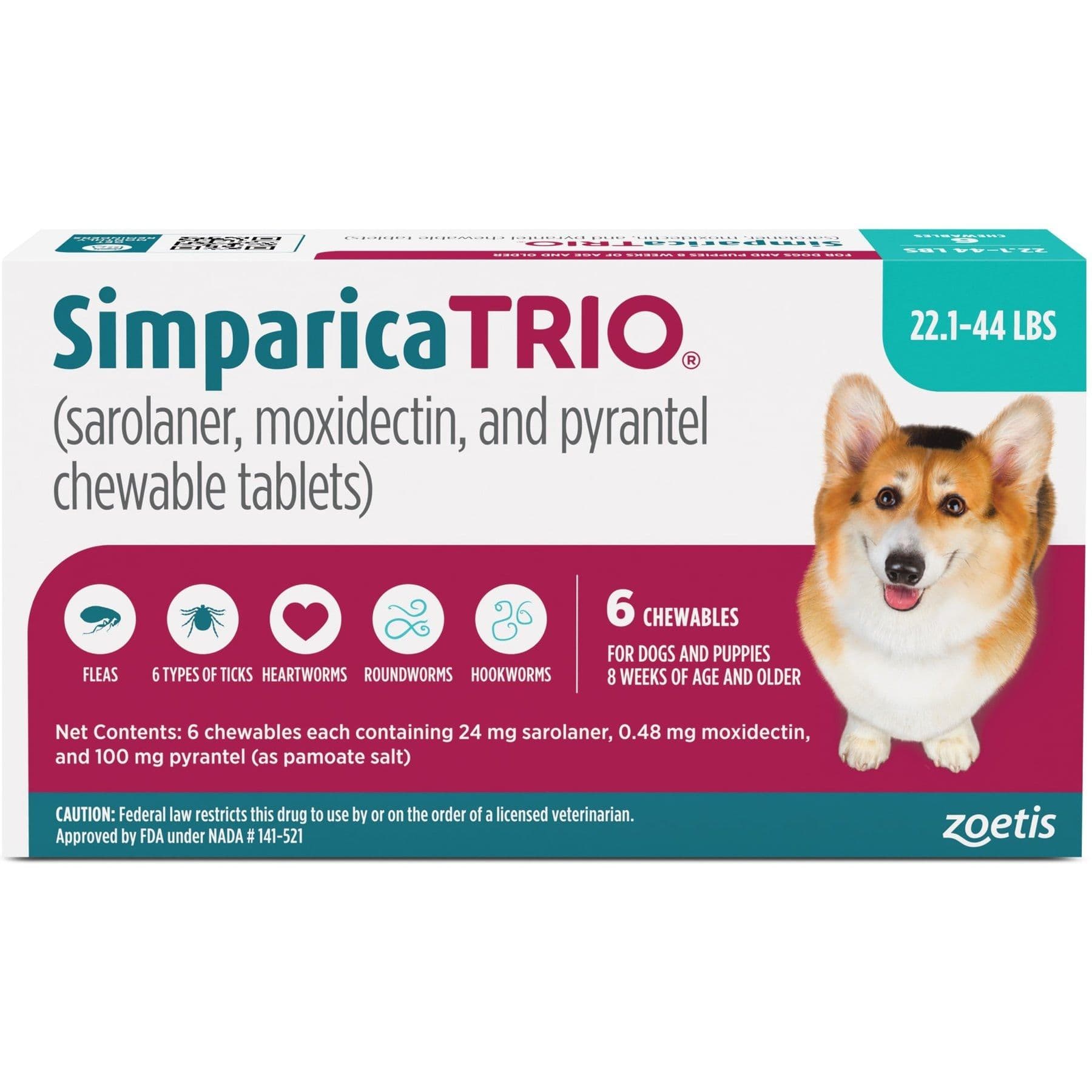
Prescription monthly chew with sarolaner, an isoxazoline, that kills fleas and ticks; use against mites is your vet's extra-label call.
Webvet may earn a commission when you click through to Chewy, at no extra cost to you.
Walking dandruff signs: moving flakes, itch, and how it differs from dandruff or scabies
VCA calls scaling the most important sign of cheyletiellosis. Itch is less predictable: Merck says intense itching is common, yet some dogs do not itch at all, and pets with no signs can still carry and spread the mites.
Common cheyletiella symptoms in dogs include:
- Widespread, often large flakes, mostly on the back and upper body (VCA)
- Flakes that seem to move, which Merck explains is the mites themselves
- Early on, a dry and usually non-itchy scurfiness along the back (USask)
- Later, in some dogs, spreading scale with hair loss, itch, and small red lesions (USask)

Ordinary dandruff can look much the same: VCA's page on seborrhea in dogs describes scaly skin that flakes off like dandruff onto the dog's bedding. Two clues point to Cheyletiella mites instead: flakes that move, and itchy spots on people or other pets in the home. Without those clues, start with our guide to dry skin on dogs.
Scabies, or sarcoptic mange, is the other common mix-up:
- Where the mite lives: VCA's sarcoptic mange page says Sarcoptes scabiei burrows just beneath the skin, while Cheyletiella stays on the surface.
- Where signs show: walking dandruff scales the back, while Veterinary Partner places scabies itch, redness, and crusts on the ear tips, elbows, hocks, chest, and belly.
- Where they overlap: USask notes that some dogs with few Cheyletiella mites itch severely, likely from hypersensitivity, with lesions that mimic scabies.
That overlap is why a vet settles the question. Our guide to sarcoptic mange in dogs covers scabies in depth, and why your dog is so itchy walks through other common causes of canine itch.

 Sponsored
Want a vet's take on your dog's skin or coat?
Talk to a licensed vet at Dutch over video, often the same day. They can recommend treatment and prescribe it when it's appropriate.
Use code Pets60
Plans start at $12/month · covers up to 5 pets
- Licensed vets in most states
- Rx for 150+ conditions
- 4.7 on Trustpilot
How dogs get cheyletiella: the mite, its eggs, and how it spreads
Dogs on regular flea control seem to be at lower risk. Merck notes that mite infestations are rare where fleas are common, probably because those pets receive insecticides regularly. Our roundup of the best flea and tick prevention for dogs compares the prescription options.
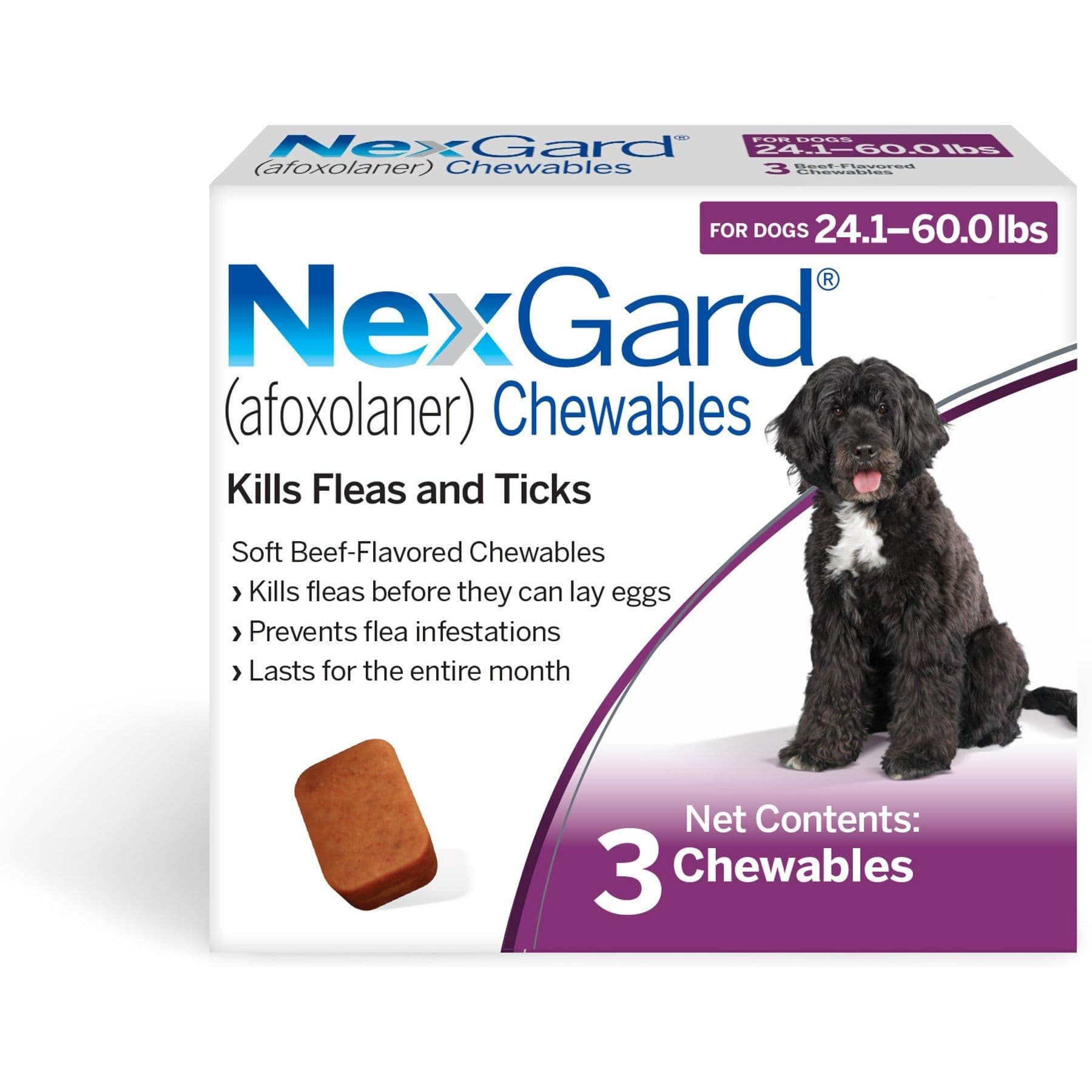
Prescription monthly afoxolaner chew for dogs 24.1-60 lbs that kills fleas and ticks; Chewy's pharmacy fills it with a vet's prescription.
Webvet may earn a commission when you click through to Chewy, at no extra cost to you.
Most dogs catch cheyletiellosis from other pets, VCA says, in places where many dogs have contact with one another:
- Animal shelters
- Breeders
- Groomers
That is why puppies from shelters get it most. USask adds that infestations are especially contagious among young animals and those that are stressed or immunosuppressed, which fits many puppies leaving a shelter. Merck calls walking dandruff very contagious in kennels and multi-pet households.

Cheyletiella eggs are attached to the dog's hairs by fine threads, USask explains. Each egg hatches into a larva that moults through two nymph stages into an adult, and the full cycle takes about three weeks on the host.
Each host has its own Cheyletiella species, though the Merck professional chapter says cross-infestation is possible:
- Cheyletiella yasguri in dogs
- Cheyletiella blakei in cats
- Cheyletiella parasitovorax in rabbits
Off the dog, the sources disagree. Merck says the mites can live up to 10 days in the environment, while USask says larvae and nymphs probably last only a few days but adults may last longer, perhaps a few weeks. When walking dandruff keeps coming back, VCA points to a carrier pet with no signs or to untreated bedding.
 Sponsored
Vet care that's always there
Unlimited video calls and messaging with licensed vets for less than a typical vet visit. One membership covers up to five pets.
Use code Pets60
Plans start at $12/month · covers up to 5 pets
- Licensed vets in most states
- Rx for 150+ conditions
- 4.7 on Trustpilot
How a vet diagnoses cheyletiella: tape tests, combing, and ruling out other mites
A vet confirms the mite by finding it. VCA says the diagnosis rests on history and signs plus actually seeing the mite, which is large enough to spot easily under a microscope on low magnification. The usual collection methods:
- Acetate tape test: clear adhesive tape picks up skin debris and mites for the microscope, a method Merck and USask both describe.
- Flea comb: combing against the lie of the coat over a dark plastic sheet, then examining what falls, as USask describes.
- Superficial skin scrapings: Merck lists them, though USask says standard scrapings are not very effective for surface mites.
The mites can still be missed. Merck warns that mites and eggs may be hard to find, especially on dogs that are bathed often, and USask says a negative result in a dog with matching signs and history should not rule out cheyletiellosis.

The same visit rules out other parasites. VCA notes that sarcoptic mites are often missed on scrapings because they burrow, and that demodectic mange is diagnosed with deep skin scrapings. A flea comb also turns up fleas and flea debris; our guide to fleas on dogs shows how to recognize them.
What are the different types of mites that commonly infect dogs?
Merck lists several types of mange in dogs, and each mite behaves differently:
- Sarcoptic mange (canine scabies): burrowing mites that cause intense itch and, per Veterinary Partner, spread between pets and to people.
- Ear mites, or otodectic mange.
- Walking dandruff (cheyletiellosis): large surface mites that are very contagious.
- Trombiculosis, also on Merck's list.
- Demodex: hair-follicle mites that VCA says are not contagious to other animals or people; see demodectic mange in dogs.
To compare how they look on the skin, see our mange in dogs pictures.
Cheyletiella treatment: what the vet prescribes, then cleaning the home
Cheyletiellosis treatment has two halves: killing the mites on every pet, then clearing them from the home. The Merck professional chapter says topical and systemic acaricides both work, though no drug is currently approved for this use, and that treatment usually lasts 6 to 8 weeks, continuing a few weeks after the skin looks normal.
VCA says Cheyletiella mites are susceptible to most topical insecticides, and most pets need 3 to 4 medicated baths, given once a week, to remove the scales and mites. VCA's guidance on which bath suits which animal:
- Lime-sulfur rinses for puppies, kittens, cats, and rabbits
- Pyrethrins or organophosphates for adult dogs

Lime sulfur dip covers the widest range of animals on VCA's list. The label text for Vet Basics Lime Sulfur Dip Antimicrobial for Dogs, Cats & Horses, 16-fl oz bottle, as published by Revival Animal Health, directs you to:
- Dilute the concentrate before use
- Wear gloves and sponge it onto the affected areas
- Let it air dry without rinsing
- Keep the dog from licking the coat until it dries
Use it on the bath schedule your vet sets, which may differ from the label's 5 to 7 day repeat interval.
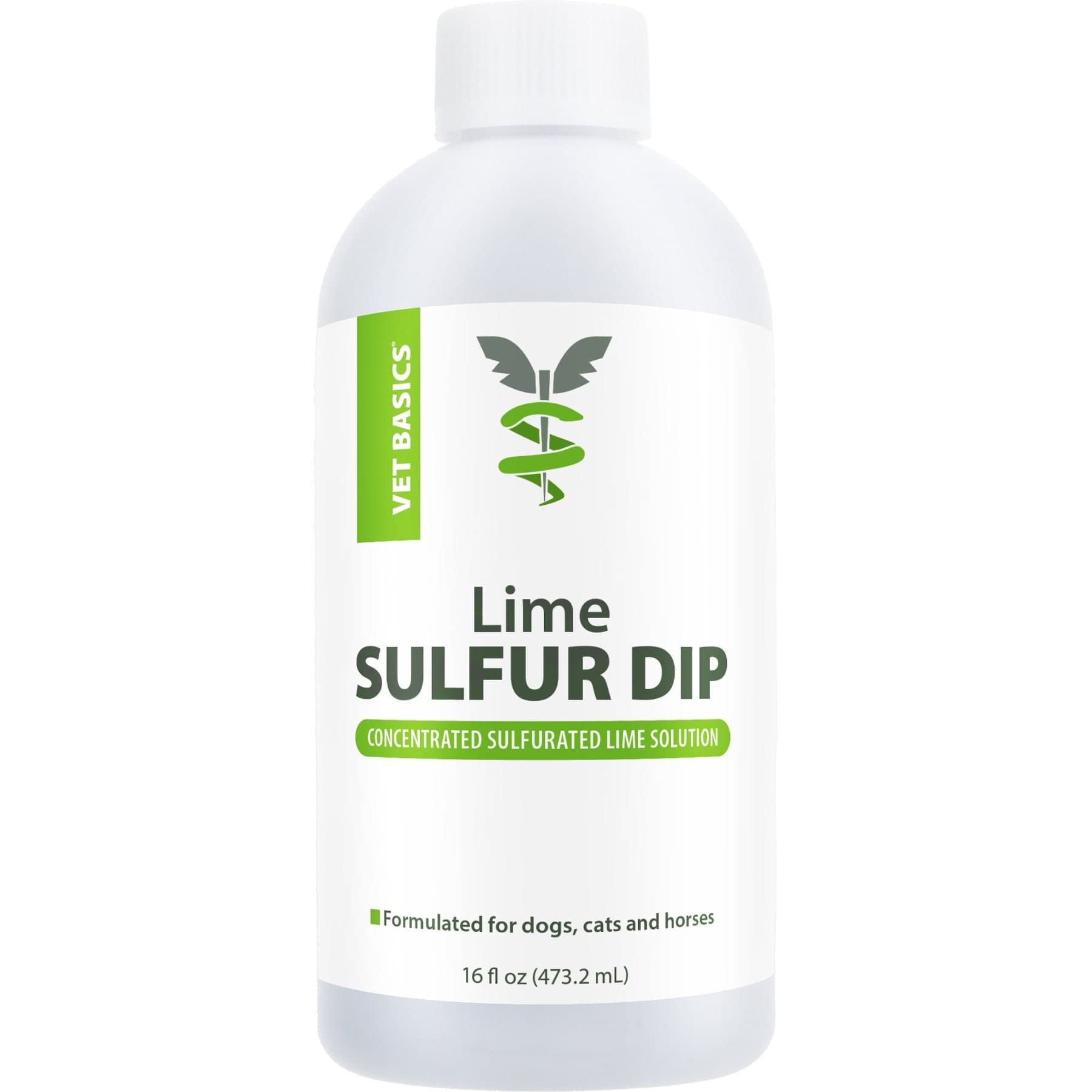
Concentrated lime sulfur dip that the listing says kills mites; dilute it and use it on the bath schedule your vet sets.
Webvet may earn a commission when you click through to Chewy, at no extra cost to you.
Spot-ons and tablets are the other route. VCA says none is FDA-approved for cheyletiellosis, so vets use them off label, sometimes after you sign an informed consent form. The main options:
- Selamectin: the active ingredient in Revolution 120 mg Selamectin Topical Solution for Dogs, 20.1-40 lbs, 3 treatments, a prescription spot-on whose FDA label covers sarcoptic mange and ear mites but not Cheyletiella. A review in Acta Veterinaria Scandinavica records its off-label use against Cheyletiella spp.
- Milbemycin oxime: in a Colorado State University study, 18 of 23 dogs given it by mouth once weekly for three weeks had no mites on later skin scrapings.
- Ivermectin: a 1988 Canadian Veterinary Journal study cured all 20 dogs with C. yasguri after one or two injections three weeks apart, but VCA warns that collies, sheepdogs, and their crosses can be more sensitive to it.
- Fipronil or permethrin: a fipronil spray cleared two outbreaks when affected and in-contact animals were all treated, and a 65% permethrin spot-on left no mites or eggs on treated dogs within 7 to 21 days.
Whichever product your vet picks, clear skin is not the finish line. USask warns that signs can resolve while mites remain, so treatment may continue until several periodic exams are negative. Combing against the lie of the coat over a dark surface, the flea comb method vets use to collect mites, lets you watch for flakes between rechecks.
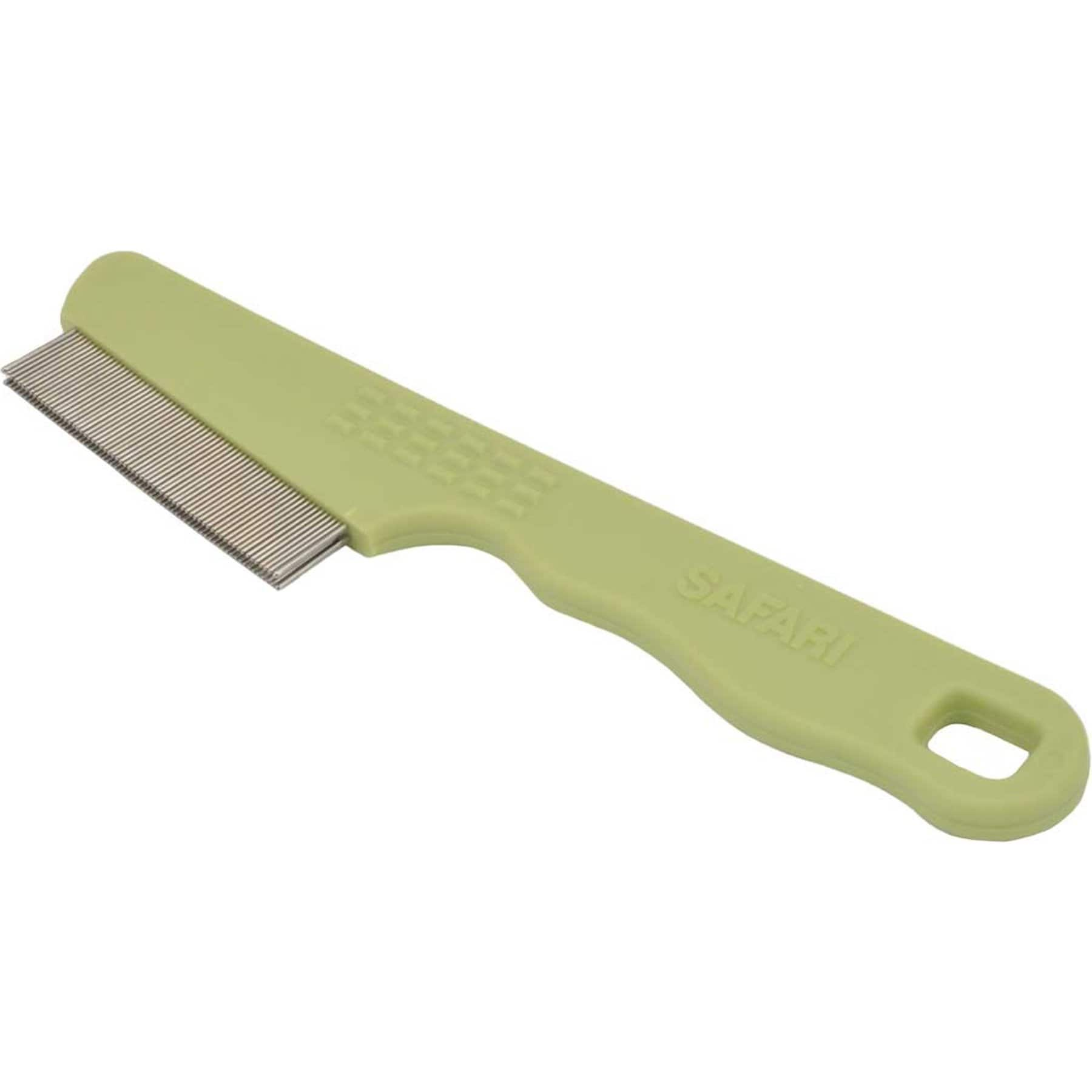
Closely spaced teeth reach into the coat to lift flakes and debris, a simple way to keep an eye on the skin during treatment.
Webvet may earn a commission when you click through to Chewy, at no extra cost to you.
USask says the newer isoxazoline chews are likely to work against Cheyletiella, as they do for other mites. The labels for NexGard 24.1-60 lbs. 3 treatments Dogs 68 mg Afoxolaner and 22-44 lbs, Bravecto Chews for Dogs, 1 treatment, 500 mg Fluralaner cover fleas and ticks only, so using either for walking dandruff is your vet's extra-label call. Both are prescription chews filled through Chewy's pharmacy.
Label minimum ages matter for puppies:
- Revolution: dogs 6 weeks and older
- NexGard: 8 weeks and older
- Bravecto chews: 6 months and older
Why every pet in the home needs treatment comes down to carriers. VCA explains that pets with no signs can carry the mites, so all pets in the house must be treated at the same time. The Colorado State study shows how hard a large household is to clear: all in-contact dogs were treated, yet in a household of 41 dogs signs came back and needed two more treatment courses.
A household plan matches every pet, and the bedding they share, to one schedule:
| Who or what | Vet-prescribed option | How long | Cleaning task |
|---|---|---|---|
| The itchy dog | Weekly medicated baths or dips, or an extra-label spot-on or tablet such as selamectin, milbemycin, or ivermectin | Often 6 to 8 weeks, continuing a few weeks past clear skin | Wash or replace its bedding and clean every surface it touches |
| Other dogs, even with no signs | Every pet in the home is treated on the same days as the itchy dog | Same course as the itchy dog | Clean their bedding on the same schedule |
| Puppies | Lime-sulfur rinses are commonly used; spot-ons and chews carry minimum ages on their labels | Same course as the household | Clean crate and puppy bedding with the rest |
| Cats in the home | Only a product your vet approves for cats, such as weekly insecticide dips; some insecticides are poisonous to cats | Same course as the dogs | Clean cat beds and surfaces the cat uses |
| Rabbits | Treated as in-contact animals; lime-sulfur rinses are commonly used in rabbits | Same course as the dogs | Clean hutch bedding |
| The home itself | Environmental treatment of bedding and carpets as your vet directs | Through the whole course; mites can live off the host up to 10 days or longer | Wash or remove bedding, treat carpets, clean surfaces pets touch |
| People with itchy spots | No pet medication; see a doctor | Clears within about 3 weeks once pets and home are treated | Keep infested pets off your bed until treatment ends |
Cleaning bedding during treatment matters as much as the medication. Merck says treating the environment is necessary to kill mites in bedding and carpets, and VCA says to thoroughly clean all bedding and every surface an infested pet has touched. USask adds that bedding should be removed or thoroughly cleaned to prevent reinfestation.
What kills skin mites on dogs?
Vet-prescribed insecticides and antiparasitics kill skin mites on dogs. For walking dandruff, the options are weekly medicated baths such as lime sulfur, or off-label spot-ons and tablets such as selamectin, milbemycin, or ivermectin, with isoxazoline chews a likely option too. How to treat cheyletiella mites in a given dog depends on its age and breed and on the other animals at home.
Does vinegar remove mites?
There is no veterinary evidence that it does. The veterinary references on Cheyletiella name only vet-prescribed insecticides, and none of them backs apple cider vinegar or colloidal silver. No natural treatment for cheyletiella in dogs has the published evidence that ivermectin and milbemycin do, and a vinegar rinse does nothing for the other pets carrying the mites.
What household cleaner kills mites?
No veterinary source names a household cleaner that kills Cheyletiella. For sarcoptic mange, VCA advises discarding bedding or washing it often in diluted bleach, one ounce of bleach in one gallon of water, and a published cheyletiella outbreak report used a permethrin spray on the home. Ask your vet which product is safe around your pets, especially cats.
When walking dandruff needs a vet visit, and when people in the home should see a doctor
Book a vet visit if your dog shows any of these:
- New scaling or heavy flakes along the back
- Flakes that seem to move
- Itch that spreads to other pets or to people in the home
- Scratching that breaks the skin or leaves raw or crusted sores
- Flaking that returns after a treatment course
Damaged skin needs care sooner. Merck notes that scratched skin can develop secondary yeast or bacterial infections, and VCA describes hot spots as painful, itchy, smelly sores that can hide under matted fur.
No veterinary source lists emergency signs specific to walking dandruff. In its demodectic mange section, Merck names these signs of severe skin disease, and any of them calls for prompt veterinary care:
- Lethargy
- Fever
- Enlarged lymph nodes
- Pus-filled inflammation of the deeper skin layers
What to do if people in the home itch: see a doctor and mention the pet's diagnosis. Merck advises owners of infested pets to ask their physicians about medication and other steps to control the mites in the family and the home.
USask notes that itchy spots on the owner are sometimes the first sign a pet has the mites, even before the pet shows any. The reassuring part: VCA says the human infection is self-limiting, because people are accidental hosts, and it clears within three weeks once the pets and the home are treated.
Can people catch cheyletiella? Contagion to humans and other pets
Yes. USask says people pick up Cheyletiella from dogs or cats as accidental hosts, and sleeping with an infested pet probably encourages it. There is no evidence that it spreads from person to person. The Merck professional chapter calls the disease very contagious, especially in animal communities, and says human infestation is frequent.
Can humans get skin mites from dogs?
Some, yes. Veterinary Partner says sarcoptic mites spread between pets and to people, and Cheyletiella passes to people too. Demodex is the exception: VCA says demodectic mange is not contagious to other animals or humans. Because Cheyletiella cannot complete its life cycle on people, a review in Cutis notes the human rash can be hard to diagnose.
On people, USask describes this pattern:
- Intense itch
- Grouped red spots, each developing a small raised bump in the center
- Bumps that turn into a blister, then a pustule, then a yellow crust
- Spots mostly on the arms and trunk
The Cutis review adds that human disease ranges from mild dermatitis to more severe illness with symptoms beyond the skin, another reason to see a doctor rather than wait it out.
Other pets are at risk too: Merck says infections across species are possible, and pets with no signs can carry and spread the mites. In cats the usual mite is Cheyletiella blakei, and Merck says a vet may prescribe weekly insecticide dips; our guide to mange in cats covers how to get rid of the mites on a cat.
Cheyletiella in dogs questions
Frequently Asked Questions
How long does it take to get rid of cheyletiella?
Plan on several weeks. Merck puts the practical course at 6 to 8 weeks, extended a few weeks past the point the dog looks cured, and VCA's bath plan alone means 3 to 4 weekly baths. USask adds that a vet may keep going until several checks are negative. Every pet in the home follows the same timeline.
Does NexGard kill cheyletiella mites?
Possibly, but that use is off-label. NexGard's active ingredient is afoxolaner, and its FDA label covers fleas and ticks, not Cheyletiella. USask expects drugs in its class to work against Cheyletiella, and VCA notes that vets already prescribe afoxolaner off-label for other mange mites. Whether it fits your dog's plan is your vet's call.
Can cheyletiella live in carpet or bedding?
For a while, yes. Merck gives up to 10 days of survival in the environment, and USask suggests adult mites may hold on for a few weeks, with bedding a possible source of reinfestation. That is why the home needs cleaning through the whole course, and why VCA ties repeat infections to untreated bedding.
Is walking dandruff the same as mange?
It is one type of mange, but not the same as the best-known kinds. Merck lists walking dandruff alongside sarcoptic mange among the types of mange in dogs. Sarcoptic mites burrow and spread easily to pets and people, while Demodex mites live in hair follicles and, per VCA, are not contagious. Cheyletiella lives on the skin surface and is contagious.
Do all pets in the house need treatment for cheyletiella?
Yes, including pets that look fine. Merck's professional chapter says all in-contact animals must be treated along with the affected one, and USask extends that to cats and rabbits in the household even when they show no signs. Skipping one leaves a carrier that can reinfest the rest, so each species gets a product your vet approves for it.

Editor
The Webvet Editorial Team is the in-house group of pet-care editors and writers behind Webvet, operated by Smart Pet Collective. The team researches, writes, and maintains Webvet's pet health, behavior, and medication content. Every article follows a defined editorial process: research from reputable veterinary and scientific sources, careful drafting, mandatory review of medical content by a credentialed veterinarian, and dated publication. Health and medication articles are medically reviewed by a licensed veterinary professional before they go live and are kept current over time.
Veterinarian · BVMS MRCVS
Dr. Pippa Elliott, BVMS, MRCVS, is a veterinarian with nearly 30 years of experience in companion animal practice. Dr. Elliott earned her Bachelor of Veterinary Medicine and Surgery from the University of Glasgow. She was also designated a Member of the Royal College of Veterinary Surgeons. Married with 2 grown-up kids, Dr. Elliott has a naughty Puggle named Poggle, 3 cats and a bearded dragon.
Related reading

Stud Tail in Cats: Causes, Treatment, and Grooming That Helps

Eosinophilic Granuloma Complex in Cats: Rodent Ulcers, Plaques, and Treatment

Miliary Dermatitis in Cats: Causes, Treatment, and Flea Control
