Dry Skin on Dogs: Causes, Flaky Skin Fixes, and When to See a Vet
Dry skin on dogs shows up as flakes, dandruff, a dull coat, and itching, and it can come from dry air, over-bathing, diet, parasites, or a medical condition. Here are the causes, what to put on it, which remedies help, and when to see a vet.

BVMS MRCVS
Medically reviewed by Dr. Pippa Elliott, BVMS MRCVS · Last reviewed

This article contains affiliate links. Webvet may earn a commission when you buy through them, at no extra cost to you.
Dry skin on dogs is skin that loses moisture and sheds visible flakes, and it usually comes from dry air, over-bathing, poor diet, parasites, allergies, or an underlying condition. Mild cases often improve with a humidifier, fewer baths, omega-3s, and a moisturizing shampoo, but scabs, hair loss, or constant itching need a vet.
Healthy skin is supple and clear, not greasy, flaky, or bumpy, according to VCA Animal Hospitals. That makes dry skin on dogs a sign worth reading, because the coat is often the first place a health problem shows.
- 1The common causes from dry air to medical conditions include winter heating, frequent bathing, essential fatty acid deficiency, parasites, allergies, infections, and thyroid disease.
- 2Watch for the signs: flakes, dull coat, itching, scabs, and patchy hair loss.
- 3Mild flaking often responds to a humidified home, fewer baths, omega-3 fatty acids, and a gentle moisturizing shampoo.
- 4Flakes with scabs, sores, odor, or hair loss point to a skin infection or another medical cause and need a vet visit.
- 5Tea tree oil is highly toxic to dogs on the skin, and concentrated essential oils should never be applied to a pet.

 Sponsored
Want a vet's take on your dog's skin or coat?
Talk to a licensed vet at Dutch over video, often the same day. They can recommend treatment and prescribe it when it's appropriate.
Use code Pets60
Plans start at $12/month · covers up to 5 pets
- Licensed vets in most states
- Rx for 150+ conditions
- 4.7 on Trustpilot
What Causes Dry Skin on Dogs?
What causes dry skin on dogs ranges from dry winter air and frequent baths to fatty-acid gaps in the diet, parasites, allergies, skin infections, and hormonal disease. The causes of dry skin on dogs matter because the fix depends on which one you have. Mild cases often respond to a humidifier, fewer baths, omega-3s, and a moisturizing shampoo.
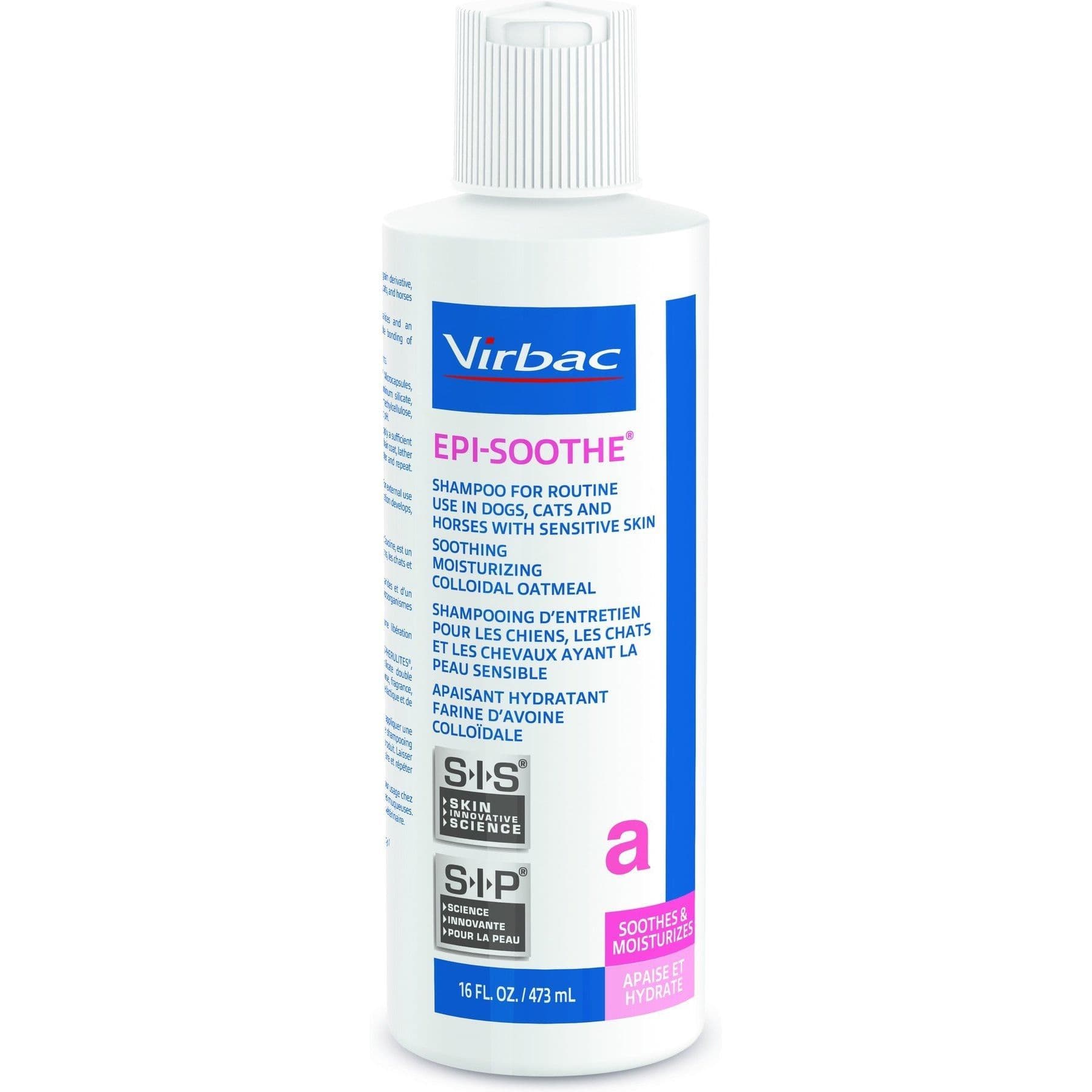
Virbac Epi-Soothe Shampoo is a dog shampoo in a 16-fl oz bottle.
Webvet may earn a commission when you click through to Chewy, at no extra cost to you.
The table below maps what you see on your dog to the likely cause and the first step. It is a dry skin on dogs cause table that matches the pattern you notice, such as flakes only, flakes with itch, or flakes with scabs or hair loss, to the next move.
| What you see | Likely cause | First step |
|---|---|---|
| Fine white flakes only, no itching, worse in winter | Dry indoor air, cold weather, or frequent bathing | Humidify the home, towel-dry after walks, space out baths |
| Flakes plus itching | Allergies, fleas, or mites | Check for fleas and book a vet visit for skin tests |
| Flakes plus scabs or hair loss | Bacterial skin infection, often secondary to allergies or parasites | See a vet; infections need diagnosis and treatment |
| Greasy flakes with odor | Oily seborrhea (seborrhea oleosa) | See a vet for a workup and a medicated shampoo plan |
| Dry, dull coat with heavy shedding | Hypothyroidism or Cushing's disease | See a vet for blood tests, including thyroid levels |
| Large white flakes that seem to move | Cheyletiella mites (walking dandruff) | See a vet; the mite is highly contagious |
Where the dryness shows also offers clues. Dryness on the legs and paws often tracks with cold, wet walks, while flaking on the ears, head, or belly can point to parasites, allergies, or hormonal disease. A rash, irritated patches, or small crusty bumps suggest infection rather than simple dryness.
Stopping and preventing dry skin starts with the basics: keep the home humidified, bathe only when the coat is dirty or smelly, and feed a complete diet with adequate fat. For cracked paws, a dog paw balm made for pets is a reasonable choice over human lotion.
For mild cases, the Merck Veterinary Manual recommends gentle, moisturizing, or hypoallergenic shampoos. Coconut oil is covered in the home remedies section below.
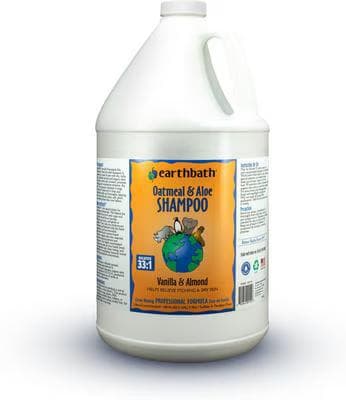
Earthbath Oatmeal & Aloe Shampoo is a dog and cat shampoo made with colloidal oatmeal and aloe vera.
Webvet may earn a commission when you click through to Chewy, at no extra cost to you.
Long-term care comes down to finding the cause. Prescription shampoos or thyroid treatment come from a vet once the cause is known, and any other product works best when it matches that cause.
Symptoms of Dry Skin on Dogs
Symptoms of dry skin on dogs are flakes, a dull coat, itching, and in more serious cases scabs, crusts, and hair loss. VCA notes that a healthy coat is shiny and free from dandruff, so dry flaky skin on dogs is a departure from normal.

What does dry skin on dogs look like? Most owners see white flakes in the fur or dry, scaly patches and spots on the skin. Our dog skin problems guide shows how other conditions compare.
Common places and signs include:
- Ears, where flaky or scaly skin shows on the flaps
- Back, belly, and tail, where flakes collect in the coat
- Elbows, where pressure points rub
- Itchy patches that lead to scratching and licking
- Crusts, scabs, and red spots
- Small bumps, or flaking with hair loss
VCA lists circular crusts, dry or flaky patches of skin, hair loss, and itching as signs of pyoderma, a bacterial skin infection. Merck adds that redness, swelling, ulceration, scabs, and blisters may be seen. Severe dryness with these signs is more than simple dryness and needs a vet.
Dry Skin vs Dandruff vs Seborrhea
Dry skin, dandruff, and seborrhea overlap: dandruff is the visible flake, dry skin is one cause of it, and seborrhea is a skin disease in which the skin's keratinization process is defective. Merck describes the scaling of seborrhea as dandruff, so the flakes can look the same while the cause differs.
VCA explains that seborrhea comes in two forms: seborrhea sicca, the dry form, and seborrhea oleosa, the oily form, in which the sebaceous glands produce too much sebum. Affected skin often flakes off like dandruff. Most dogs have secondary seborrhea, a sign of an underlying disease such as hormonal disorders or allergies, according to Merck.
Primary seborrhea is inherited and usually begins before 18 to 24 months of age, per Merck. A lack of itching helps vets rule out allergies and scabies. Read more in our guide to seborrhea in dogs.
Environmental Causes
Environmental causes of dry skin are winter air, indoor heating, and over-bathing. VCA Animal Hospitals says going in and out between the dry warm air of a heated home and cold, snowy, or rainy weather can lead to dry skin on dogs in winter.

VCA also says bathing too frequently, especially in winter, can remove oils from the skin and coat. Winter dry skin on dogs often combines both problems: heated air pulls moisture out while frequent baths strip the natural oils that protect the skin.
Steps that help with winter air and heating:
- Keep the home humidified; running a humidifier is a reasonable step for dry indoor air, especially in winter
- Towel-dry your dog as soon as they come inside
- Bathe only when the coat is dirty or smells
Dry scaly skin on dogs with hair loss is not typical of winter dryness alone. Hair loss with scaling points to infection, parasites, or hormonal disease, so book a vet visit rather than waiting for spring.
 Sponsored
Vet care that's always there
Unlimited video calls and messaging with licensed vets for less than a typical vet visit. One membership covers up to five pets.
Use code Pets60
Plans start at $12/month · covers up to 5 pets
- Licensed vets in most states
- Rx for 150+ conditions
- 4.7 on Trustpilot
Diet and Dry Skin
Diet affects dry skin because essential fatty acid deficiency makes skin scaly and dry and causes hair to mat easily, according to VCA Animal Hospitals. VCA adds that food without adequate protein or fat can cause areas of hair loss or loss of hair color.
VCA names the omega-3 fatty acids EPA and DHA as nutrients that affect the skin barrier, and it recommends adding omega-3 fatty acids in winter to help prevent dry or flaky skin. The best food for dry skin on dogs is a complete and balanced diet with adequate fat; a premium dry food is one option, but completeness matters more than the label. For more on diet choices, see our guide to dog food for sensitive skin.
Supplements for dry skin on dogs usually supply omega-3 fatty acids. Ask your vet before starting one, especially if your dog takes other medication or has a medical condition.
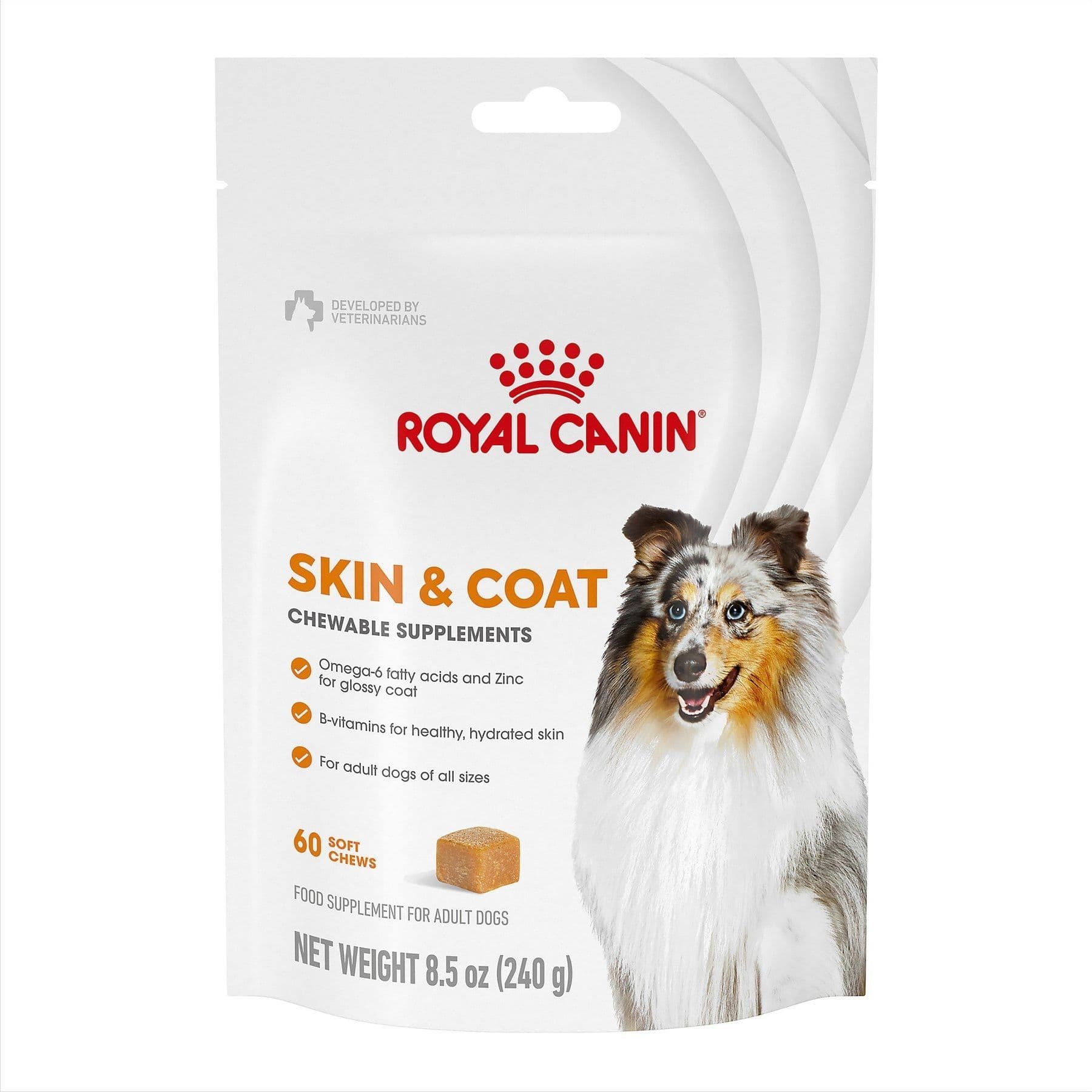
Royal Canin Skin & Coat Support Soft Chews are a skin and coat supplement for adult dogs, 60 count.
Webvet may earn a commission when you click through to Chewy, at no extra cost to you.
Medical Causes of Dry Skin
Medical causes of dry skin include parasites, allergies, skin infections, and hormonal disease such as hypothyroidism and Cushing's disease. These dry skin conditions on dogs often look like ordinary flaking at first.
Do fleas cause dry skin on dogs? Yes, VCA lists parasites such as fleas, ticks, and mange mites among the causes of scaling seborrhea, so flaky skin and fleas often go together. Fleas can also lead to a secondary skin infection with scabs. For mite problems, see mange in dogs pictures.
Cheyletiella mites cause walking dandruff, named for the large whitish mites. VCA calls it uncommon but highly contagious to dogs, cats, humans, and rabbits, and scaling or dandruff is its most important sign.
My dog has dry, peeling skin. What could be causing this?
Dry, peeling skin can come from dry air or frequent bathing, but medical causes are common. Merck says the most common underlying causes of secondary seborrhea are hormonal disorders and allergies, and hypothyroidism causes dryness, excessive shedding, and slow hair regrowth. Allergies, parasites, and skin infections can also cause peeling. Learn more about dog skin allergies and hypothyroidism in dogs.
VCA lists dry, dull hair with excessive shedding and more skin and ear infections as hypothyroidism signs, and a poor hair coat with thin skin as common in Cushing's disease.
How Vets Diagnose Dry Skin
Vets diagnose dry skin by examining the skin and coat, then running tests to find the cause. What the vet checks usually includes parasites, infection, and hormone levels, according to VCA and Merck.
Common tests include:
- Skin scrapings and hair pluckings to check for external parasites
- Skin cytology and biopsy to look for inflammatory cells, bacteria, yeast, fungus, or abnormal cells
- Skin culture and antibiotic sensitivity tests, plus fungal cultures, for infections
- Blood tests showing low thyroid hormone, especially T4, to diagnose hypothyroidism
Cheyletiellosis is diagnosed from the history, the signs, and seeing the mite. Merck notes that primary seborrhea is confirmed by skin biopsy only after the other tests come back normal. Thyroid treatment needs 4 to 8 weeks before coat changes can be judged.
What to Put on a Dog's Dry Skin
What to put on a dog's dry skin is a pet-safe moisturizing product, such as a colloidal oatmeal shampoo, cream rinse, or spray, rather than human lotion. VCA Animal Hospitals describes colloidal oatmeal as an anti-itching and softening, soothing agent that comes in spray, cream rinse, and shampoo forms.
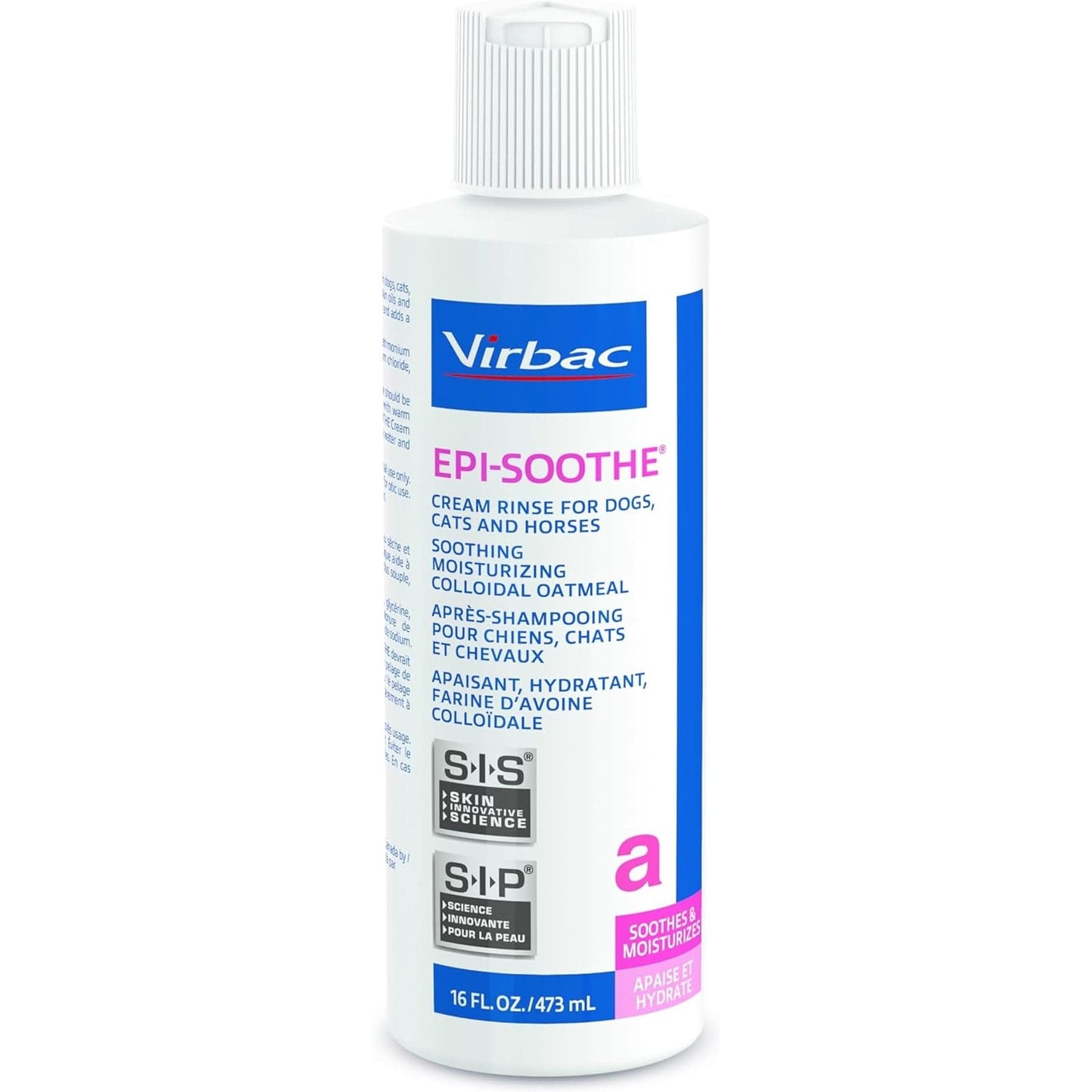
Virbac Epi-Soothe Cream Rinse is a conditioner for dogs and cats in a 16-oz bottle.
Webvet may earn a commission when you click through to Chewy, at no extra cost to you.
Oatmeal products made for pets and a conditioner after the bath are good choices for dry skin. For itchy or flaky skin, the first answer is the same: a pet product, not one from your bathroom.

Products to avoid or use with care:
- Human lotion, cocoa butter, Aquaphor, and Vaseline: VCA warns that dogs licking and ingesting moisturizers can get drooling, vomiting, and diarrhea, so ask your vet before using a human product
- Human shampoo: VCA says some are gentle enough for occasional use, but human scalp pH is 5.2 to 6.2 while dog coats are 6.2 to 7.5
- Tea tree oil and concentrated essential oils: never apply them, as covered below
Veterinary references do not recommend human lotion, Aquaphor, or Vaseline for dogs, so a moisturizing spray or lotion made for pets is the safer choice. Olive oil and other kitchen oils lack veterinary support for dry skin, so ask your vet first.
What is a good moisturizer for dog dry skin?
A good moisturizer for dog dry skin is a pet-specific colloidal oatmeal product or a conditioning rinse used after shampooing. VCA describes colloidal oatmeal as emollient, meaning softening and soothing, and recommends applying a conditioning product after shampooing to restore lost moisture. Avoid human moisturizers your dog may lick off.
How can I moisturize my dog's skin?
You can moisturize your dog's skin by bathing with a gentle shampoo, following with a conditioning rinse, and adding omega-3 fatty acids from the inside. VCA says the omega-3s in fish oil support the skin barrier, though fish oil may take several weeks to work.
Home oils, including coconut oil, are covered next, with what the evidence says.
Home Remedies for Dry Skin on Dogs
Home remedies for dry skin on dogs that help are a humidified home, fewer baths, omega-3 fatty acids, and pet-safe oatmeal products; remedies that do not help, or cause harm, include tea tree oil and concentrated essential oils. There is no single cure for dry skin on dogs, because treatment depends on the cause. The best way to treat dry skin on dogs is to match the remedy to that cause.
Home remedies that help plus the ones that do not, in brief:
- Help: humidify the home, towel-dry after walks, bathe only when needed, use a conditioner, and add omega-3 fatty acids with your vet's input
- Unproven: coconut oil, olive oil, and apple cider vinegar
- Harmful: tea tree oil, which Cornell University College of Veterinary Medicine lists as highly toxic to dogs both orally and topically
Pet Poison Helpline says tea tree oil applied to the skin is absorbed and can cause severe effects, and VCA says never apply a concentrated essential oil to a pet. Natural remedies for dry skin on dogs are not automatically safe.
Will coconut oil help my dog dry skin?
Coconut oil is not proven to help dry skin on dogs. A PMC review of canine atopic dermatitis describes coconut oil as a popular remedy with self-directed owners and says that to be clinically effective in allergic dogs it must be applied twice daily for at least 4 weeks. The review cites no trial in dogs with plain dry skin, so ask your vet before relying on it.
How do I heal my dog's dry skin?
You heal your dog's dry skin by fixing the cause: humidify the air, cut back on baths, feed adequate fat and omega-3s, and use a gentle moisturizing shampoo. Fish oil timing varies: VCA says full effects take several weeks, while the PMC review suggests an adequate fatty acid trial may need 3 to 4 months. VCA also lists itchiness or skin flaking as possible fish oil side effects.
Treating dry skin on dogs at home works for mild flaking. When these basics have not helped, a vet can find the cause and prescribe the right treatment.
Best Shampoo for Dry Skin on Dogs
The best shampoo for dry skin on dogs is a gentle, pH-balanced, moisturizing formula made for dogs, often with colloidal oatmeal. VCA Animal Hospitals says to look for a gentle formula that is pH-balanced for dogs and free of additives.

Shampoo ingredients to look for in a good shampoo for dry skin on dogs:
- Colloidal oatmeal, which VCA describes as anti-itching and soothing
- A hypoallergenic formula without added perfumes, which VCA calls the best choice for routine bathing
- A pH balanced for dogs rather than for people
One example of an oatmeal shampoo is Earthbath Oatmeal & Aloe Itch Relief Shampoo, which the manufacturer lists as made with colloidal oatmeal and organic aloe vera and labels as safe for animals over 6 weeks. Watch for redness, itching, or irritation, which VCA lists as possible colloidal oatmeal side effects.
The best shampoo to use on dogs with dry skin still needs sensible timing. Veterinary references give no bathing interval specific to dry skin; VCA says most dogs need a bath only when dirty or smelly. Compare options in our guides to oatmeal shampoo for dogs and dog shampoo for itchy skin.
When to See a Vet
See a vet when dry skin comes with scabs, sores, hair loss, odor, constant itching, or does not improve after simple changes. These signs point to infection, parasites, allergies, or hormonal disease rather than plain dryness.
Merck says skin infection can cause small bald patches, and VCA notes that many dogs with seborrhea have an odor. Chronic or recurring skin infections may need more testing. If itching is the main problem, read why is my dog so itchy to learn about common causes.
Dry Skin on Dogs FAQs
Frequently Asked Questions
What can I put on my dog for dry skin and itching?
A pet colloidal oatmeal shampoo, cream rinse, or spray is a safe first choice, since VCA describes oatmeal as anti-itching and soothing. If itching continues, see your vet, because medicated shampoos and treatment of the underlying cause may be needed.
Why does my dog have dry flaky skin and scabs?
Dry flaky skin with scabs often means a bacterial skin infection. Merck says scabs can come with superficial infection, which is usually secondary to allergies or parasites, so a vet visit is needed.
Is it dry skin or dandruff on my dog?
The flakes look the same, because dandruff is the visible flake and dry skin is one cause of it. Seborrhea, parasites, and allergies can cause the same flakes, so persistent dandruff needs a vet check.
Does fish oil help dry skin on dogs?
Fish oil supplies omega-3 fatty acids, which VCA says support the skin barrier. VCA says full effects may take several weeks, while a veterinary review suggests a 3 to 4 month trial.
Can over-bathing cause dry skin on dogs?
Yes. VCA says bathing too often, especially in winter, can strip the natural oils from your dog's skin and coat. No set number of baths per week is given for dry skin, so bathe when the coat is dirty or smelly.
Is apple cider vinegar good for a dog's dry skin?
Veterinary references do not support apple cider vinegar for dry skin on dogs, and they do not say whether it soothes or stings broken skin. Ask your vet before putting it on your dog.
When is dry skin on a dog serious?
Dry skin is serious when it comes with hair loss, sores, scabs, odor, or constant itching. These signs suggest infection or another medical cause and need a vet visit.

Editor
The Webvet Editorial Team is the in-house group of pet-care editors and writers behind Webvet, operated by Smart Pet Collective. The team researches, writes, and maintains Webvet's pet health, behavior, and medication content. Every article follows a defined editorial process: research from reputable veterinary and scientific sources, careful drafting, mandatory review of medical content by a credentialed veterinarian, and dated publication. Health and medication articles are medically reviewed by a licensed veterinary professional before they go live and are kept current over time.
Veterinarian · BVMS MRCVS
Dr. Pippa Elliott, BVMS, MRCVS, is a veterinarian with nearly 30 years of experience in companion animal practice. Dr. Elliott earned her Bachelor of Veterinary Medicine and Surgery from the University of Glasgow. She was also designated a Member of the Royal College of Veterinary Surgeons. Married with 2 grown-up kids, Dr. Elliott has a naughty Puggle named Poggle, 3 cats and a bearded dragon.


