Hair Loss in Dogs: Causes, Patterns, and Treatment
Hair loss in dogs, called alopecia, can come from parasites, allergies, skin infections, hormonal disease, or genetics, and the pattern tells the vet a lot. Here is what patchy, symmetrical, and itchy hair loss mean and whether hair grows back.

BVMS MRCVS
Medically reviewed by Dr. Pippa Elliott, BVMS MRCVS · Last reviewed

This article contains affiliate links. Webvet may earn a commission when you buy through them, at no extra cost to you.
Hair loss in dogs, called alopecia, is the partial or complete lack of hair in areas where hair is normally present. The main causes are parasites, allergies, skin infections, hormonal disease, and genetics, and the pattern of loss plus whether the dog is itchy point the vet toward the cause.
Because treatment for hair loss in dogs depends on the underlying cause, the bald spot is a sign to trace, not a diagnosis. A vet visit with skin tests, and sometimes blood tests, is the usual next step, according to the Merck Veterinary Manual.
- 1Alopecia is hair loss beyond normal shedding: bald patches or symmetric loss rather than a coat that simply sheds.
- 2Vets sort the patterns: patchy, symmetrical, thinning, with or without itching, because each pattern narrows the list of causes.
- 3Itchy hair loss usually points to parasites, infections, or allergies, while symmetrical, nonitchy thinning points toward hormonal disease such as hypothyroidism.
- 4Skin scrapings, fungal culture, cytology, and blood tests such as total T4 confirm the cause.
- 5Whether hair grows back depends on the cause: hypothyroid skin can take up to 3 months to improve, while color dilution alopecia follicles cannot grow new hairs.

 Sponsored
Want a vet's take on your dog's skin or coat?
Talk to a licensed vet at Dutch over video, often the same day. They can recommend treatment and prescribe it when it's appropriate.
Use code Pets60
Plans start at $12/month · covers up to 5 pets
- Licensed vets in most states
- Rx for 150+ conditions
- 4.7 on Trustpilot
What Is Hair Loss in Dogs?
Hair loss in dogs is any loss of hair beyond normal shedding, and alopecia is the medical term for it. The main causes are parasites, allergies, skin infections, hormonal disease, and genetics; the pattern and whether the dog is itchy point to the cause, and a vet visit with skin tests is the next step.
Merck defines alopecia as the partial or complete lack of hair where hair normally grows, and says shedding is likely normal when it comes without bald patches or symmetric hair loss. A dog with lots of hair that sheds evenly is usually fine.
Loss of hair in dogs can be congenital or acquired later in life. The coat change often travels with other skin signs:
- Flaky skin and hair loss, or dry skin and hair loss together
- Dandruff and hair loss on the back or flanks
- Black skin and hair loss, where bare skin darkens (see hyperpigmentation in dogs)
- Ear hair loss, often alongside scratching at the ears
- Hair loss and weight loss together, which deserves a vet exam
- Hair loss after giving birth, which Merck says is often temporary
Skin conditions in dogs causing hair loss range from mites to hormone disorders, so alopecia hair loss in dogs is worked up like any other sign. The same approach applies to cats, covered in our guide to hair loss in cats. A Maltese, a mixed breed, or any other dog follows the same diagnostic steps.
Owners often ask about melatonin for hair loss in dogs and about shampoo for hair loss. Melatonin has a vet-directed role in two specific non-itchy conditions covered below, and a shampoo cleans and soothes skin rather than regrowing hair. A skin and coat supplement is one option to discuss with your vet.
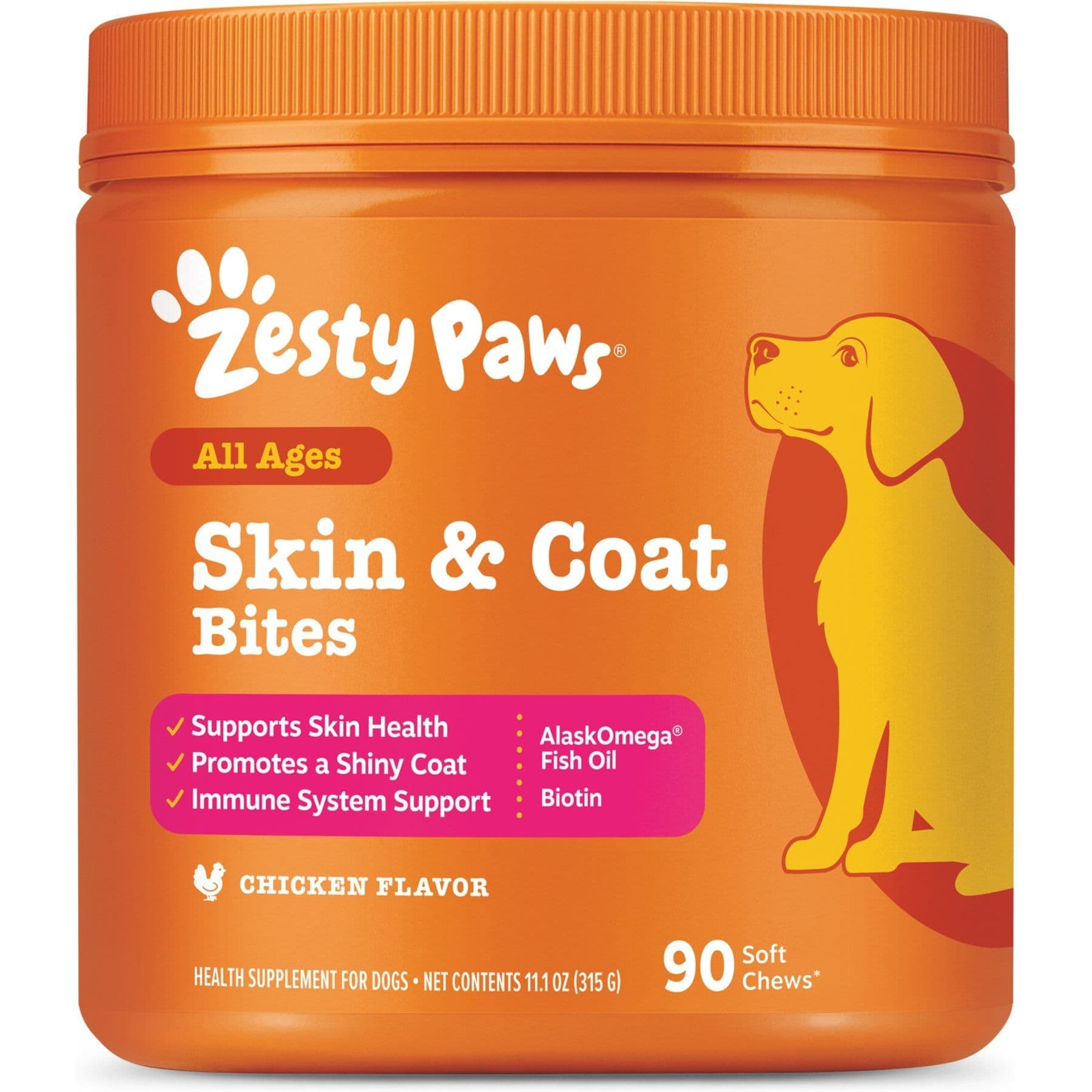
Zesty Paws Omega Bites are skin and coat chews for dogs and cats, 90 count.
Webvet may earn a commission when you click through to Chewy, at no extra cost to you.
Supplements do not replace a diagnosis. The evidence for omega-3 products in dogs measures skin scores in allergic dogs, not hair regrowth, which the home remedies section explains.
Symptoms and Patterns of Hair Loss in Dogs
The main symptoms of hair loss in dogs are bald patches, symmetrical thinning, and broken or scaly hairs. Merck names bald patches and symmetric hair loss as the two patterns that separate abnormal loss from normal shedding.

When a dog is losing hair, the vet asks where, how fast, and whether the dog scratches. Owners notice the problem in different ways:
- A dog losing hair in spots
- Tufts of hair coming off the dog, or clumps of hair loss after brushing
- A dog whose hair is falling out evenly across the body
Sudden hair loss in dogs in clear bald patches suggests a local cause such as mites, ringworm, or a skin infection. Slow, symmetrical hair loss in dogs on both sides of the trunk suggests a hormonal or hair-cycle problem. Merck says hypothyroid hair thinning is nonitchy and usually bilaterally symmetric, and appears in approximately two-thirds of hypothyroid dogs.
A puppy losing hair has its own short list. VCA calls hair loss in specific spots focal hair loss and lists parasites, allergies, ringworm, Demodex, infection, and anxiety overgrooming as puppy causes.
Brushing shows how much hair is coming out and where, and gentle bathing keeps irritated skin clean while you wait for an appointment. Many owners keep a soothing shampoo on hand for itchy skin.
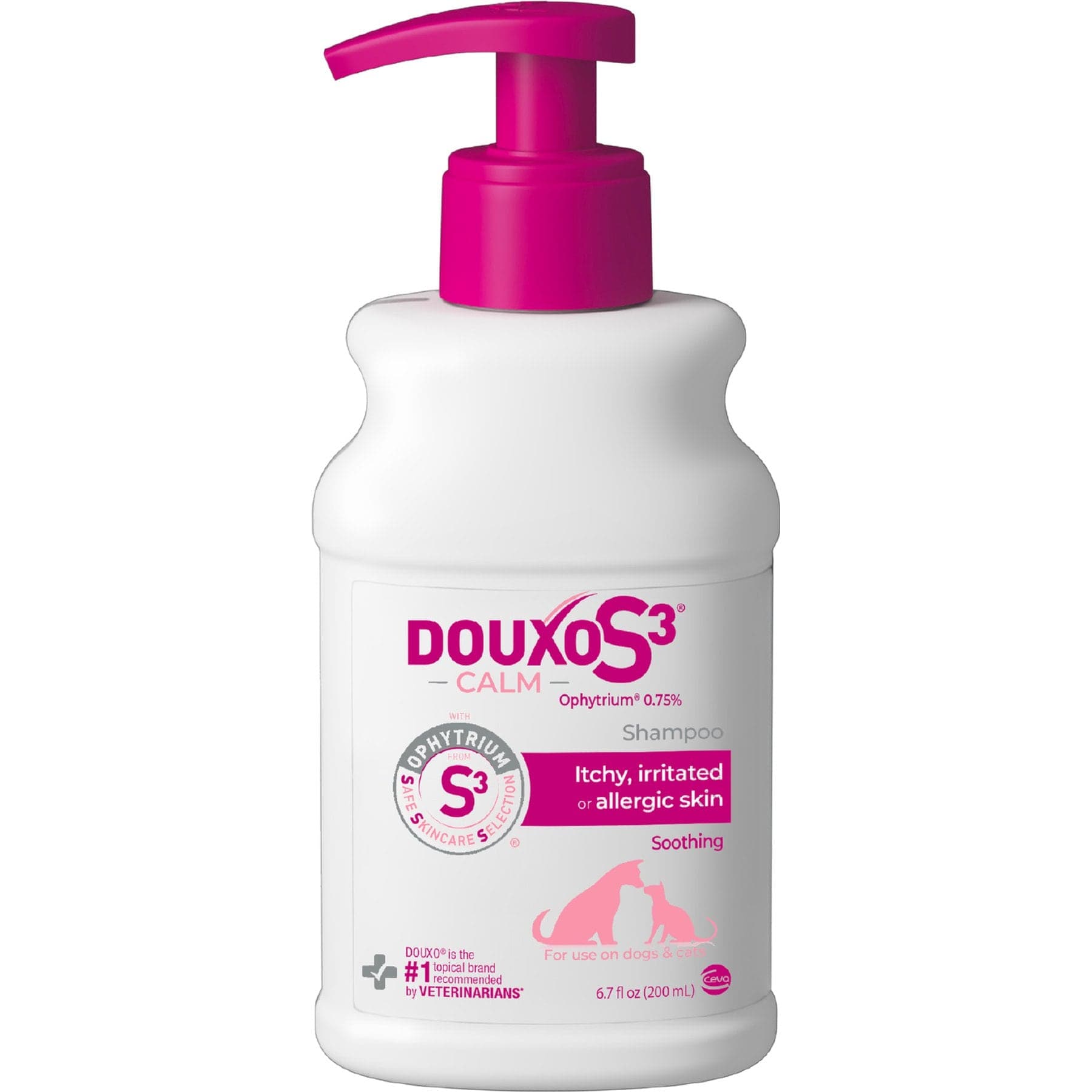
Douxo S3 CALM is a soothing shampoo for itchy dogs and cats, 6.7-fl oz bottle.
Webvet may earn a commission when you click through to Chewy, at no extra cost to you.
This hair loss in dogs pattern table matches the pattern the owner sees (patchy and itchy, patchy and calm, symmetrical on the trunk, around the eyes, over the tail base) to the likely causes and the confirming test in one table.
| Pattern you see | Likely causes | How the vet confirms it |
|---|---|---|
| Patchy and itchy | Sarcoptic mange, flea allergy, pyoderma | Skin scraping, flea check, cytology |
| Patchy and not itchy | Ringworm, localized demodex | Fungal culture, deep skin scraping |
| Symmetrical on the trunk, not itchy | Hypothyroidism, Cushing's disease, alopecia X | Total T4 and other blood tests, history |
| Flanks, worse in winter | Seasonal flank alopecia | Clinical signs and the seasonal course |
| Face and front legs | Localized demodectic mange | Deep skin scraping under a microscope |
| Tail base, rear back, thighs | Flea allergy dermatitis, stud tail | Flea check, exam of the tail gland |
| Legs and belly, intense itch | Sarcoptic mange | Skin scraping (mites often not seen) |
| Thinning along the top of a dilute coat | Color dilution alopecia | Breed, coat color, history |
Veterinary references describe these patterns by appearance, not by how often each occurs.
What Causes Hair Loss in Dogs?
The causes of hair loss in dogs fall into five groups: parasites, allergies, infections, hormonal disease, and genetic or hair-cycle disorders. Merck also lists nutritional deficiencies and hormonal imbalances such as hypothyroidism as causes that can slow hair growth.
Parasites and allergies are the most common reasons for hair loss in dogs that scratch:
- Fleas: yes, fleas cause hair loss in dogs. Merck places flea allergy dermatitis on the mid to rear back, tailhead, and rear thighs. See flea allergy dermatitis in dogs.
- Sarcoptic mange: VCA says it causes large amounts of hair loss, especially on the legs and belly.
- Demodectic mange: VCA says localized demodex causes hair loss on the face and front legs.
- Allergies: hair loss in dogs from allergies follows scratching, licking, and chewing at itchy skin.
Infections are the next group:
- Ringworm: Merck says affected dogs develop bald, scaly patches with broken hairs.
- Superficial pyoderma: this bacterial infection commonly appears as bald patches, welts around hairs, and scabbing.
Merck adds that a pyoderma workup must always look for the underlying trigger, because the infection usually follows another skin problem.
Hormonal diseases that cause hair loss in dogs include hypothyroidism and Cushing's disease. VCA lists a very thin to nearly bald coat as a hypothyroidism sign, and says a poor hair coat is common in dogs with Cushing's disease (hyperadrenocorticism). Read more on hypothyroidism in dogs and Cushing's disease in dogs.
Hair loss in old dogs and hair loss in older dogs often trace to these same hormonal and skin diseases rather than to age itself. Genetic and hair-cycle causes complete the list:
- Alopecia X: a non-inflammatory hair cycle disorder most common in Pomeranians; a peer-reviewed paper on PMC says its cause is unresolved.
- Seasonal flank alopecia: seasonal hair loss in dogs on the flanks; VCA says its cause has not been determined.
- Color dilution alopecia: Merck names affected breeds, including Dachshunds, Whippets, and Yorkshire Terriers.
- Postclipping alopecia: Merck lists it among follicular dysplasias in Spitz-type breeds.
Some causes are local. A veterinary immunology text says some rabies vaccines may cause local skin vasculitis and injection-site hair loss. Merck says hygromas form over bony pressure points, and soft bedding helps prevent further trauma there.
Hair Loss With Itching vs Without Itching
Itchy hair loss in dogs usually points to parasites, infections, or allergies, while hair loss in dogs without itching points toward hormonal, hair-cycle, or genetic causes. Merck says itching should be investigated first when a dog has hair loss and is scratching the area.
Merck names parasites, infections, and allergies as the most common causes of itching. Skin conditions in dogs that cause itching and hair loss include:
- Sarcoptic mange, which VCA says causes intense itching
- Flea allergy dermatitis, where Merck describes moderate to severe itch
- Skin infections that complicate demodex and need antibiotic or shampoo therapy, per VCA
Severe itching and hair loss in dogs, with scratching that breaks the skin, needs a prompt exam. If your dog is itching and losing hair but has no fleas, mites and allergies are still on the list; our guide on why your dog is so itchy covers the full workup. A dog itching, losing hair, and smelling bad may have a secondary skin infection.
Medicine for dog itching and losing hair depends on the cause found, from antiparasitics to antibiotics, so the vet picks it after testing.
Hair loss in dogs but no itching has a different list, where the coat thins without the dog seeming bothered:
- Hypothyroidism: Merck says the hair loss is nonitchy.
- Alopecia X: MedVet calls it a non-inflammatory hair loss condition.
- Seasonal flank alopecia: VCA calls it purely cosmetic.
How to stop hair loss in dogs with no itching depends on the diagnosis. Hair loss in dogs no itching treatment ranges from daily thyroid medication for hypothyroidism to no treatment at all for cosmetic conditions.
 Sponsored
Vet care that's always there
Unlimited video calls and messaging with licensed vets for less than a typical vet visit. One membership covers up to five pets.
Use code Pets60
Plans start at $12/month · covers up to 5 pets
- Licensed vets in most states
- Rx for 150+ conditions
- 4.7 on Trustpilot
Hair Loss in Patches
Patchy hair loss in dogs usually means a local skin problem such as ringworm, mites, or a bacterial infection. Each produces bald patches with a slightly different look.
Once a vet confirms ringworm, medicated bathing is often part of the plan alongside other treatment, and owners pick up an antifungal shampoo for those baths.
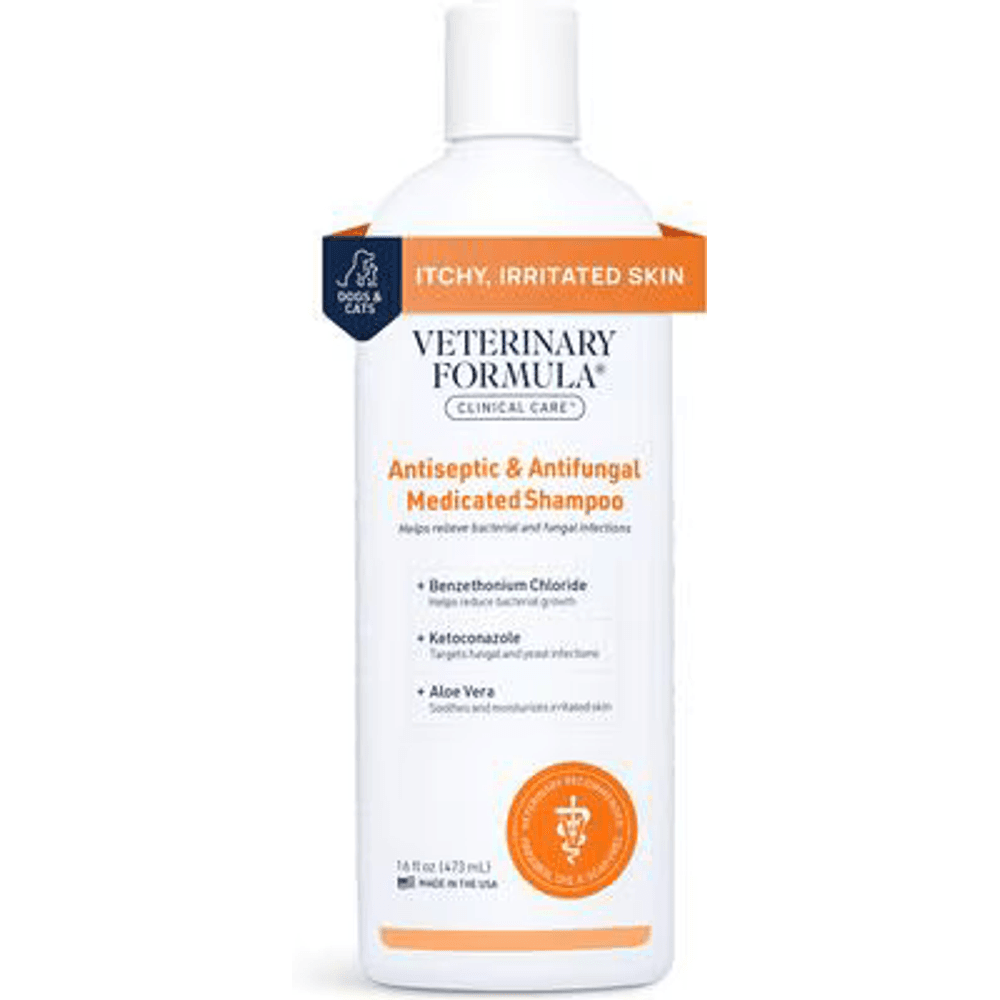
Veterinary Formula Clinical Care is a medicated shampoo with benzethonium chloride and ketoconazole, 16-oz bottle.
Webvet may earn a commission when you click through to Chewy, at no extra cost to you.
What causes patches of hair loss in dogs:
- Round or circular patches: Merck describes ringworm as bald, scaly patches with broken hairs. Compare ringworm vs hot spot on dogs.
- Patches with scabs: Merck says superficial pyoderma appears as bald patches, welts around hairs, and scabbing.
- Many patches, especially on the paws: VCA says generalized demodex causes hair loss in many areas.
- Patches of thinning in a dilute coat: VCA says color dilution alopecia causes patches of thinning or loss.
A dog losing hair with scabs, or showing dry skin patches and hair loss, often has pyoderma on top of another problem. A senior dog losing hair in patches and scabs needs the same workup, because pyoderma usually has an underlying cause such as allergies or hormonal disease.
Treatment for a dog losing hair in patches and scabs follows the cause: antibiotics for pyoderma, antifungals for ringworm, and antiparasitics for mange. Home remedies cannot tell these apart.
For patchy hair loss in dogs pictures, our galleries of mange in dogs pictures and dog skin problems pictures show what each looks like.
Hair Loss Around the Eyes, Tail, and Belly
Where the hair falls out is a strong clue: face and eye-area loss suggests demodex, tail-base loss suggests flea allergy or stud tail, and belly and leg loss suggests sarcoptic mange.

A dog losing hair around the eyes most often fits the facial pattern of localized demodex. VCA says localized demodex hair loss is common on the face and front legs. Veterinary references do not describe the eye area as a separate pattern, so hair loss near the eyes in dogs is worked up as facial hair loss. Allergies can also cause face rubbing and loss there.
For an allergic dog that rubs its face, diet and supplements are part of skin care. A trial in atopic dogs found a diet with omega-3s plus other antioxidants improved skin scores, though it did not measure hair regrowth.

Nordic Naturals Omega 3 Pet Softgels are an omega-3 supplement in softgel form.
Webvet may earn a commission when you click through to Chewy, at no extra cost to you.
A puppy losing hair around the eyes fits the same picture, since VCA lists Demodex among the common puppy causes. A dog with hair over its eyes that suddenly thins there should have a skin scraping.
Tail hair loss in dogs has two main sourced causes:
- Flea allergy dermatitis: Merck places it on the tailhead, rear thighs, and mid to rear back, which explains much hair loss in dogs on the back.
- Stud tail: VCA says enlarged oil glands near the tail base compress follicles and cause hair loss, most often from excess androgens.
Belly, legs, ears, and neck have their own clues. VCA places sarcoptic hair loss on the legs and belly, so a dog losing hair on the ears or legs with intense itch needs a mange check. Hair loss in dogs around the neck can come from friction, since Merck notes a poorly fitting collar can cause local hair loss.
How Is Hair Loss in Dogs Diagnosed?
Hair loss in dogs is diagnosed with a detailed history and physical exam, then targeted tests such as skin scrapings, fungal culture, cytology, and blood tests. Merck says accurate diagnosis needs that history and exam first.

Common tests, matched to what they find:
- Deep skin scrapings: VCA says demodex is diagnosed this way under a microscope. VCA adds that sarcoptic mites are commonly not seen on scrapings, so a negative result does not rule them out.
- Fungal culture: Merck says culture of hairs and scrapings is the most accurate ringworm test. VCA notes some ringworm cases glow yellow-green under a Wood's lamp, but not all.
- Cytology: Merck says it confirms bacteria in pyoderma.
- Blood tests: VCA says total T4 is the most common thyroid screening test, and Merck gives its sensitivity as approximately 90%. VCA says several blood tests diagnose and confirm Cushing's disease.
- Biopsy: Merck lists skin biopsies among the possible tests, along with parasite combing and urine tests.
Some conditions are diagnosed by exclusion. MedVet says alopecia X is diagnosed from breed, history, and course of hair loss, and VCA says seasonal flank alopecia is tentatively diagnosed from clinical signs. Diagnosis with skin scrapings, fungal culture, plus blood tests rules out the treatable causes first.
Treatment for Hair Loss in Dogs
Treatment for hair loss in dogs is matched to the cause, so there is no single cure. Merck says treatment depends on the underlying cause, which is why the tests above come first.
How to treat hair loss in dogs, by cause:
- Demodectic mange: VCA says several oral or topical antiparasitics kill demodex mites; Merck says generalized demodicosis needs medical treatment.
- Sarcoptic mange: Merck says all dogs and animals in contact should be treated.
- Fleas: to treat hair loss in dogs from fleas, Merck says treatment covers the pet, other pets, and the environment.
- Pyoderma: Merck says antibiotics last at least 3 weeks and preferably 4 weeks.
- Hypothyroidism: Merck says standard treatment is daily oral levothyroxine, and VCA says the drug is lifelong.
- Cushing's disease: VCA says it cannot be cured medically but can be controlled.
- Ringworm: Merck says spread stops as immunity develops over several weeks, with vet-directed treatment and cleanup.
Medicated bathing supports many of these plans, since VCA says secondary skin infections with demodex can need shampoo therapy.
Treating dry skin and hair loss in dogs together usually means fixing the cause and supporting the skin barrier with bathing and diet. Some causes need little or no treatment. VCA says mild stud tail may need no treatment, MedVet says alopecia X is cosmetic and treatment is not necessary, and Merck says congenital or genetic hair loss is managed but not cured.
Hair loss in dogs after whelping, or after giving birth, is often temporary. Merck says temporary hair loss can follow pregnancy, lactation, or severe illness or fever. A Labrador or any other breed follows the same rule: hair loss in dogs causes and treatment go together, and the treatment is only as good as the diagnosis.
Will the Hair Grow Back?
Whether hair grows back depends on the cause: most treatable causes regrow hair once controlled, while some genetic conditions never do. Here is what the references give for each:
- Hypothyroidism: Merck says skin signs may take up to 3 months to improve after treatment.
- Seasonal flank alopecia: VCA says loss starts in fall and hair regrows in spring, and affected dogs are often affected every year. VCA says melatonin typically leads to regrowth within 2 to 3 months.
- Alopecia X: MedVet says melatonin may give partial to complete regrowth in 30 to 40% of dogs. A PMC paper cites earlier reports of regrowth in 75% of intact male dogs of one toy breed treated with deslorelin, a different treatment in a different group.
- Demodectic mange: VCA says treatment is generally successful.
- Color dilution alopecia: VCA says affected follicles cannot grow new hairs.
- After pregnancy, lactation, or illness: Merck describes the loss as temporary.
Veterinary references do not give a regrowth time for postclipping alopecia; Merck names it only as a follicular dysplasia of uncertain cause. If a shaved patch does not regrow, ask your vet to examine it.
Whether and when hair regrows comes down to finding the cause early, since regrowth after treatment is measured in months, not days.
Home Remedies for Hair Loss in Dogs
No home remedy is proven to regrow hair in dogs with alopecia, so home care supports the skin while a vet finds the cause. The evidence for omega-3s measures skin scores in allergic dogs, not regrowth.

Which home remedies help plus which waste time is clearer once you see what the research measured. A randomized placebo-controlled trial of 40 atopic dogs found a diet with omega-3s plus polyphenols and antioxidants cut skin scores by 25% and 49% at days 30 and 60. The effect cannot be isolated to omega-3, and hair regrowth was not measured.
That makes an omega-3 supplement, such as Nordic Naturals Omega 3 Pet Softgels, a reasonable skin-support option to discuss with your vet for an itchy, allergic dog, not a hair-loss cure.
Natural remedies for hair loss in dogs that help, and ones that waste time:
- Helps: a complete, balanced dog food. Merck says nutritional deficiencies can slow hair growth.
- Helps: a well-fitting collar, since Merck notes collar friction causes local hair loss.
- Helps: soft bedding for pressure-point hair loss over elbows, per Merck on hygromas.
- Vet-directed only: melatonin, which VCA says is often used for seasonal flank alopecia if owners choose to treat it.
- Wastes time: home remedies for itching and hair loss when mites, fleas, or ringworm are the cause, because these need vet-directed treatment.
What vitamin deficiency causes hair loss in dogs? Veterinary references describe nutritional deficiencies in general and do not name a single vitamin, including vitamin D, as the cause. Vitamins for hair loss in dogs are no substitute for a balanced diet and a vet check.
Can food allergies cause hair loss in dogs? Food allergy hair loss follows itching and scratching, like other allergies. What food causes hair loss in dogs varies by dog, so the vet uses a diet trial rather than a list of foods that cause hair loss. A dog food for hair loss linked to allergy is a vet-chosen diet; see dog food for sensitive skin. A dog losing hair in patches and scabs needs a vet, not a home remedy.
When to See a Vet
See a vet for any new hair loss, because VCA advises evaluation regardless of the pattern. Some situations need a prompt visit.
The signs that need a vet include:
- Hair loss with intense itching, sores, or a bad smell
- Many patches or loss spreading over the body, since Merck calls generalized demodicosis serious
- Symmetrical thinning with increased appetite, thirst, and urination, which VCA lists as the most common Cushing signs
- Bald, scaly patches with broken hairs, especially with children or other pets at home
Contagion matters for the household. Merck warns people can easily be infected with ringworm fungi, and VCA says sarcoptic mange is highly contagious to dogs and humans. VCA says demodectic mange is not contagious to other animals or humans.
Hair Loss in Dogs FAQs
Frequently Asked Questions
Why is my dog suddenly getting bald patches?
Sudden bald patches most often come from mange, ringworm, or a skin infection. Merck describes ringworm as bald, scaly patches with broken hairs, and notes localized demodectic mange often resolves without treatment, so a vet scraping and culture tell them apart.
Can hypothyroidism cause hair loss in dogs?
Yes. Merck says hypothyroid hair thinning is nonitchy and usually symmetrical on both sides of the body, and a total T4 blood test is the usual screening step.
Will bald spots on dogs grow back?
It depends on the cause. Bald spots from treatable causes usually regrow over months; VCA gives 2 to 3 months with melatonin for seasonal flank alopecia, while color dilution alopecia does not regrow.
What vitamin deficiency causes hair loss in dogs?
Veterinary references do not name a single vitamin. Merck says nutritional deficiencies in general can slow hair growth, so feed a complete, balanced diet and have a vet check the coat before adding vitamins.
Why is my dog losing hair but not itching?
Hair loss without itching usually points to a hormonal or hair-cycle cause. Merck says thyroid-related hair loss is nonitchy, and alopecia X and seasonal flank alopecia are also non-itchy conditions.
Why is my dog losing hair around the eyes?
The most common sourced cause is demodex. VCA says localized demodectic mange causes hair loss on the face, and allergies that make a dog rub its face can add to it; a deep skin scraping confirms mange.
Do dogs lose hair at the end of life?
Older dogs lose hair for the same medical reasons as younger dogs, such as hormonal disease or illness; references do not describe it as a sign of dying. Ask your vet to check any new coat change in an older dog.

Editor
The Webvet Editorial Team is the in-house group of pet-care editors and writers behind Webvet, operated by Smart Pet Collective. The team researches, writes, and maintains Webvet's pet health, behavior, and medication content. Every article follows a defined editorial process: research from reputable veterinary and scientific sources, careful drafting, mandatory review of medical content by a credentialed veterinarian, and dated publication. Health and medication articles are medically reviewed by a licensed veterinary professional before they go live and are kept current over time.
Veterinarian · BVMS MRCVS
Dr. Pippa Elliott, BVMS, MRCVS, is a veterinarian with nearly 30 years of experience in companion animal practice. Dr. Elliott earned her Bachelor of Veterinary Medicine and Surgery from the University of Glasgow. She was also designated a Member of the Royal College of Veterinary Surgeons. Married with 2 grown-up kids, Dr. Elliott has a naughty Puggle named Poggle, 3 cats and a bearded dragon.


