Hair Loss in Cats: When to Worry and What Could Be Causing It
Hair loss in cats can come from fleas, allergies, ringworm, pain, overgrooming, or illness. Learn which clues matter, what your vet may test, and when a bald patch needs prompt care.

MRCVS BVMS, BS ASci, MLitt
Medically reviewed by Dr. Caitlin Merrill, MRCVS BVMS, BS ASci, MLitt · Last reviewed

This article contains affiliate links. Webvet may earn a commission when you buy through them, at no extra cost to you.
Hair loss in cats is a sign, not a diagnosis. Hair loss in cats can develop when a disease damages hair or skin, or when itching, pain, or overgrooming makes a cat pull or break the fur. A new bald patch deserves attention even when your cat otherwise seems comfortable.
Check the skin as well as the coat. Redness, scales, crusts, broken hairs, odor, discharge, or repeated licking help your veterinarian narrow the possibilities. Rapidly spreading lesions, open or draining skin, marked pain, or illness need faster care. Repeated litter-box trips with little or no urine are an emergency, especially in a male cat.
- 1Bald patches are not normal shedding, even when the rest of the coat looks healthy.
- 2Location is a clue, not a diagnosis. Fleas, allergies, infection, pain, and overgrooming can create overlapping patterns.
- 3Arrange a veterinary visit for new, spreading, persistent, itchy, or painful hair loss.
- 4Open or draining skin needs same-day advice. Straining to urinate is an emergency.
Common Causes of Hair Loss in Cats
Hair loss in cats is a sign, not a diagnosis. Pruritus, the medical term for itching, and the self-trauma it triggers are among the most common routes to acquired feline alopecia. The Merck Veterinary Manual advises investigating itch first when a cat is losing hair and scratching. Flea allergy is a frequent cause, but allergies, mites, ringworm, bacterial infection, and yeast can look similar.
Fleas can be hard to see because cats groom them away. Look for tiny dark specks of flea dirt, scabs over the back, and irritation around the back and tail base. Our guides explain how to spot fleas on cats and how flea, food, and environmental allergies in cats differ. If your veterinarian says Advantage II for Cats fits your cat's age, weight, health, and current medications, use only the cat-labeled dose and follow the label. Never substitute a dog flea product.

Cat-labeled flea control can help when fleas are confirmed or suspected. Ask your veterinarian whether this product fits your cat's age, weight, health, and current medications.
Webvet may earn a commission when you click through to Chewy, at no extra cost to you.
Fleas and mites
Flea allergy can make one bite intensely itchy. Other parasites include ear mites, usually Otodectes cynotis, and Cheyletiella blakei, a different mite associated with walking dandruff. Mites may cause scratching, scale, debris, or crusting, but identifying the species usually requires examination of material from the coat, skin, or ears. These parasites occupy different sites and require different control plans, so a precise identification helps prevent ineffective or unsafe treatment.
A clean flea-comb check does not rule out flea allergy because cats may remove adult fleas while grooming. Indoor cats can still be exposed through another pet, visiting animals, shared hallways, or people carrying fleas indoors. Ear debris and head shaking make an ear examination more important, while heavy scale over the back may lead the veterinarian to sample the coat for surface mites. Fleas and mites require different control plans, so identifying the likely parasite matters before treatment begins.
Food and environmental allergies
Allergic cats often lick or scratch the head, neck, belly, inner thighs, or legs. Blood and skin allergy tests do not prove that an allergy is causing the current lesions. For suspected food allergy, the diagnostic standard is a strict veterinary elimination diet followed by a controlled food challenge, as described in the AAHA allergic skin disease guidelines. Testing for environmental allergens is generally used after a clinical diagnosis to help design immunotherapy.
A food trial works only when the prescribed diet is the sole food source for the full trial period. Flavored medication, treats, table food, and access to another pet's bowl can make the result impossible to interpret. Improvement during the diet raises suspicion, but a controlled return to the previous ingredients is usually needed to show whether food truly triggered the skin problem.
Ringworm, bacterial infection, and yeast
Ringworm, also called dermatophytosis, can cause broken hairs, scale, crusts, or scattered round patches, but itching and lesion shape vary. Appearance alone cannot confirm ringworm. The Merck ringworm guide describes Wood's lamp examination, microscopy, and fungal culture as diagnostic tools. Some cases need topical treatment plus oral antifungal medicine, and spores can spread to other animals and people. See our detailed guide to ringworm in cats for household precautions.
Bacterial and yeast infections often develop on already inflamed skin. They may add odor, grease, pustules, pain, or discharge. A product such as MiconaHex+Triz shampoo should be used only after a veterinarian identifies an appropriate fungal or bacterial problem and gives directions. Shampoo choice, contact time, frequency, and the need for oral medication depend on the diagnosis.
Hair Loss in Cats vs Normal Shedding

Alopecia is a sign rather than a diagnosis. Normal shedding removes old hairs across the coat but should not leave persistent bare skin. Seasonal shedding can look dramatic on a brush or sofa, yet the coat remains evenly covered. Sudden hair loss in cats, a widening patch, or fur that feels clipped or bristly points to breakage, self-grooming, or a problem affecting the follicles.
Look closely at the remaining hair. Short, even stubble often means the cat has licked or chewed the shafts. Loose hairs that pull out easily, inflamed follicles, scales, or crusts suggest a different process. Naturally thin hair between the eyes and ears can be normal in some adult cats, but new asymmetry, redness, or surface change warrants an exam.
Feline alopecia may be localized to one spot, appear in several hair loss patches, or affect matching areas on both sides. Note whether hairs are missing from the root, broken at the surface, or simply less dense. Those distinctions help separate active shedding from follicle disease and barbering.
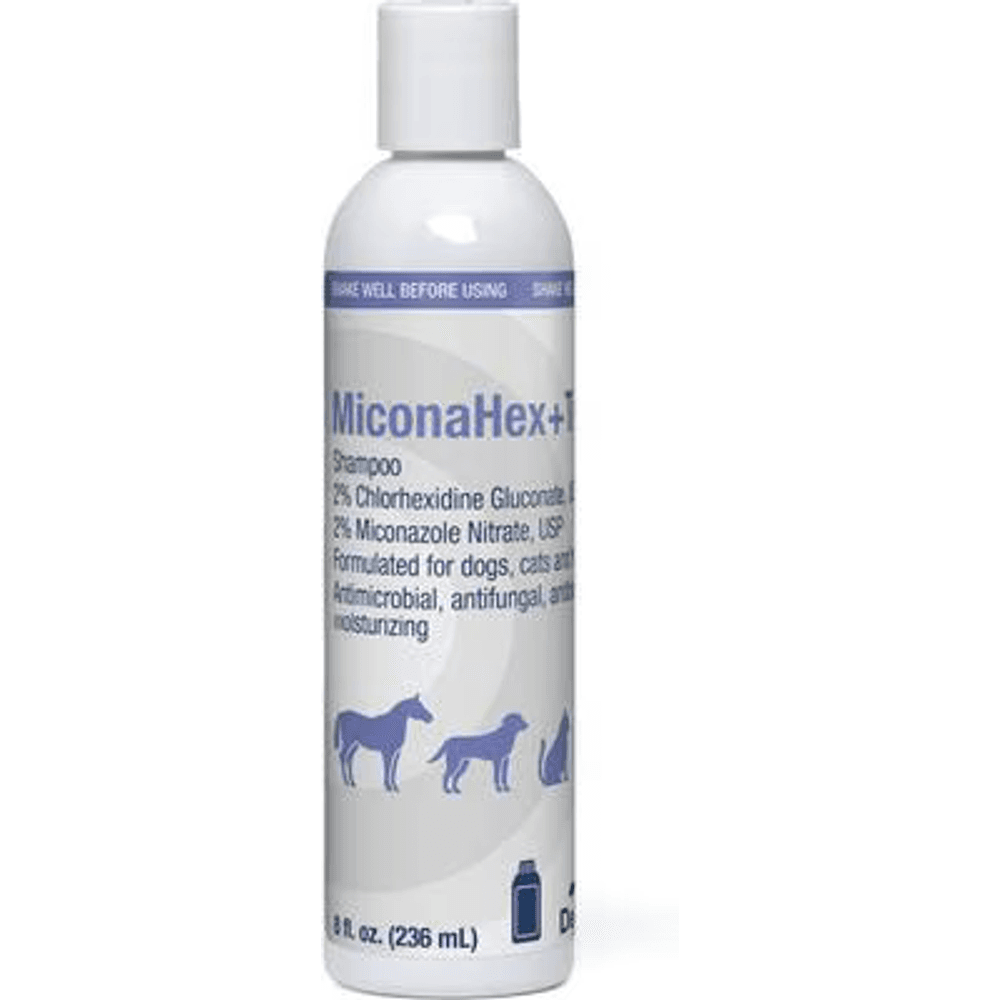
Use medicated shampoo only after a veterinarian identifies an appropriate fungal or bacterial skin problem and gives product-specific directions.
Webvet may earn a commission when you click through to Chewy, at no extra cost to you.
What Hair Loss Patterns Can Tell You
Coat distribution can help organize the history, but it cannot identify the cause by itself. Photograph the area for your veterinarian when you first notice it, then take another image in the same lighting every few days. Include one close view of the skin and one wider view that shows body location. Sudden hair loss in cats, hair loss around the eyes, and patchy hair loss in several regions deserve a complete history rather than a diagnosis from pictures.
| Location or pattern | What you may notice | Possible clues | Next step |
|---|---|---|---|
| Ears and face | Scale, crusts, broken hairs, debris, or itching | Mites, ringworm, allergy, sun damage, or infection | Book an exam; avoid picking crusts or applying cream |
| Back and tail base | Scabs, rippling skin, chewing, or flea dirt | Fleas, flea allergy, or other itchy skin disease | Review parasite prevention and arrange veterinary advice |
| Belly and inner thighs | Smooth thinning or short, even stubble | Self-trauma from itch, pain, or overgrooming | Watch litter-box behavior and report pain or urinary signs |
| Legs and paws | Licking, staining, redness, or swelling | Allergy, infection, contact irritation, or pain | Check for tenderness and schedule an exam |
| Scattered round patches | Broken hair, scale, crust, or variable itching | Ringworm or another infection may be possible | Limit shared grooming tools and ask about fungal testing |
| Symmetric sides | Similar smooth loss on both flanks | Often self-grooming or flea allergy; systemic causes are less common | A full skin and health workup is still needed |
Hair loss on a cat's back or tail base commonly raises concern for fleas or flea allergy, while belly and inner-thigh loss often reflects reachable self-trauma from itch, pain, or overgrooming. Hair loss on the back legs and paws may accompany allergy, infection, or discomfort. Ear and facial lesions can occur with mites, ringworm, allergy, or sun-related disease. These are starting points for an exam, not home diagnoses.
Itchy or self-induced
Scabs, redness, broken stubble, scratching, chewing, or frequent licking point toward itch and self-trauma. Flea allergy, other parasites, environmental or food allergy, ringworm, and secondary infection can overlap, so the body location helps organize the workup but does not identify the cause.
Owners often notice smooth thinning rather than active scratching because cats may groom in private. Check the tail base, neck, belly, inner thighs, legs, and paws, then note whether the pattern changes after parasite prevention or other veterinarian-directed treatment.
Pain-focused licking
Repeated licking of one joint, limb, flank, or abdominal region can be a response to pain rather than a primary skin problem. Reduced jumping, stiffness, guarding, hiding, appetite change, or sensitivity to touch makes a pain assessment more important.
Abdominal or genital grooming paired with litter-box changes needs prompt attention. The visible coat pattern cannot distinguish arthritis, urinary pain, wounds, abdominal disease, and itchy skin, so the rest of the behavior history matters.
Apparently non-itchy
Hair that sheds from the root without obvious licking may direct attention toward follicle or hair-shaft disease, infection, medication effects, scarring, pressure, or systemic illness. Weight loss, thirst, appetite change, weakness, fever, or a generally poor coat shifts the workup beyond the skin.
An apparently non-itchy pattern is not proof that the cat feels no itch. Cats groom discreetly, and smooth symmetric thinning can still be self-induced. Hair examination and a complete physical exam help separate those routes.
Whether a female cat or an old cat is losing hair on the back near the tail, age and sex do not identify the cause. The same observation checklist still applies: look for flea dirt, scabs, broken stubble, licking, pain, and changes elsewhere on the body, then share the pattern and timeline with your veterinarian.

 $65 · no membership
Is your cat's itching or skin issue getting worse?
A licensed vet can examine your cat over video and prescribe treatment online when it's appropriate.
 Talk to a vet
- Licensed vets
- All 50 states
- same-day Rx
Webvet may earn a commission if you book.
Overgrooming, Stress, and Pain
Cats may hide itching by quietly licking rather than scratching. The resulting coat can look smoothly thin until you feel the short, broken hairs. Watch for repeated attention to one region, hair in the mouth, frequent hairballs, or grooming that interrupts sleep and play.
Pain can focus licking over the abdomen, back, hips, or a limb. Arthritis, wounds, abdominal discomfort, and urinary-tract pain are important possibilities. Compare the grooming change with other signs a cat may be in pain, including hiding, reduced jumping, appetite change, sensitivity to touch, or altered litter-box behavior.
A Suitical recovery suit may protect selected abdominal lesions or surgical sites when your veterinarian approves the fit and use. It can trap moisture, hide worsening skin, or increase stress in some cats, and it does not treat alopecia or its cause.
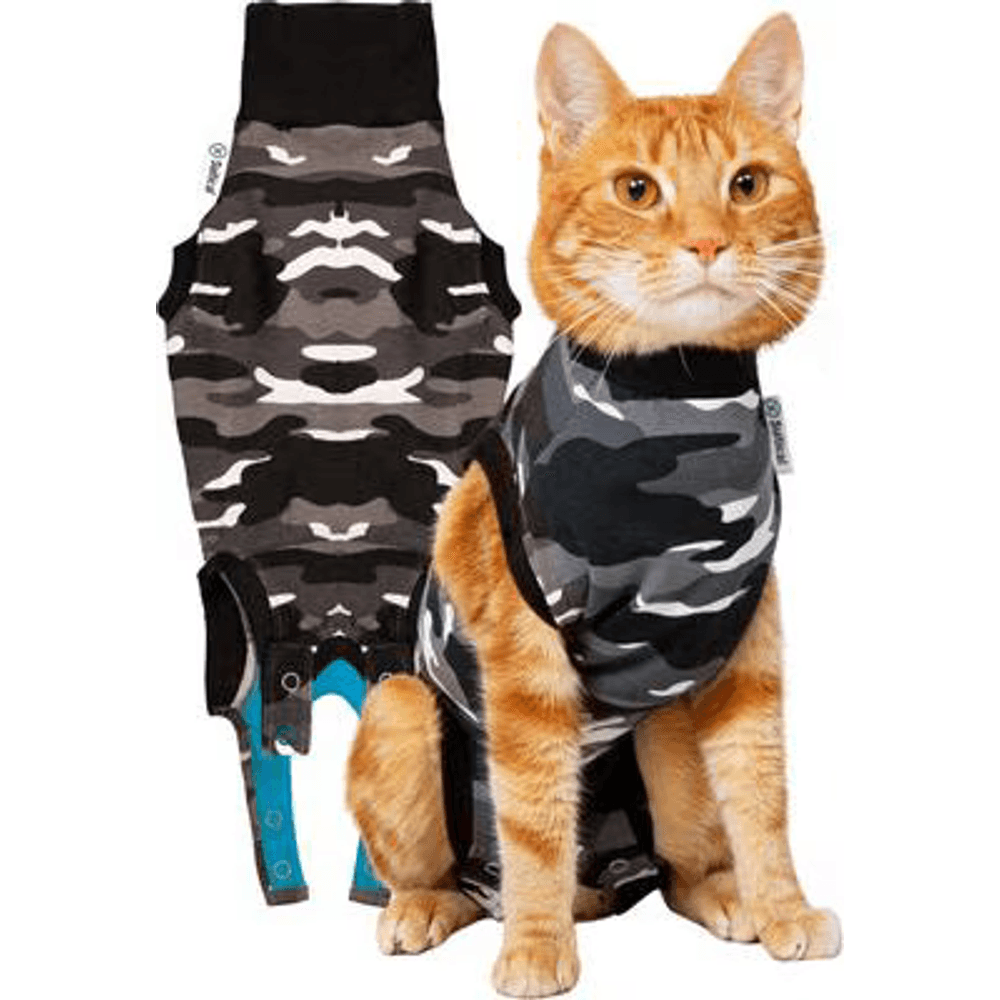
A recovery suit can limit licking of selected abdominal areas when a veterinarian approves the fit and use. It does not treat the cause of hair loss.
Webvet may earn a commission when you click through to Chewy, at no extra cost to you.
Stress can contribute, but psychogenic alopecia should be a diagnosis of exclusion. In a published case series of 21 cats referred for presumed psychogenic alopecia, investigators found a medical cause of itching in 76% and psychogenic alopecia alone in only 10%. A dermatologic workup should come before assuming the problem is behavioral.
Non-Itchy Hair Loss and Underlying Illness
Hair loss without obvious itch can reflect a disorder of the hair shaft or follicle, infection, medication reaction, scarring, pressure, or a body-wide illness. Hormonal disease is less common than inflammatory self-trauma in cats. Symmetry and smooth skin may suggest a non-inflammatory route, but many cats groom privately, so an apparently non-itchy pattern can still be self-induced.
Health changes that matter
Weight loss, increased appetite, thirst, urination, vomiting, weakness, fever, or an unkempt coat shifts attention beyond the skin. Hyperthyroidism more often causes weight loss and coat deterioration than a classic focal bald patch. Diabetes, cancer, immune disease, and rare hormone disorders may affect the coat alongside other signs. Cushing's syndrome is rare in cats and should not be inferred from thinning hair alone.
Nutritional alopecia is uncommon in a cat eating a complete and balanced diet. Do not add supplements or switch to a high-protein or raw diet solely to regrow fur. A veterinarian should first assess calorie intake, diet completeness, weight, muscle condition, intestinal disease, and any reason nutrients may not be absorbed.
Feline leukemia virus does not create one diagnostic hair-loss picture, and images cannot establish infection. Immune-mediated and autoimmune diseases can also damage skin or hair, but they usually bring other examination or laboratory clues. Testing should follow the cat's full clinical picture rather than a list of rare causes found online.
How Veterinarians Diagnose Cat Hair Loss
Cause-specific diagnostics and treatment begin with the timeline, body location, itch or pain behavior, parasite-prevention history, diet, medications, travel, household pets, and general health. A close skin and coat examination then guides targeted tests. The Merck diagnostic overview and our guide to how vets diagnose cat skin problems explain why similar-looking lesions may require different tests.
- Timeline: when the patch first appeared, how quickly it changed, and whether similar episodes happened before.
- Behavior: scratching, licking, chewing, rubbing, pain, hiding, reduced jumping, and litter-box changes.
- Exposures: parasite-prevention dates, diet and treats, medications, supplements, travel, grooming products, and affected household pets or people.
- Whole-body signs: appetite, weight, thirst, urination, stool, vomiting, energy, fever, and coat-quality changes.
| Test or step | What it can reveal | Important limitation |
|---|---|---|
| Flea combing and parasite history | Adult fleas, flea dirt, prevention gaps, or a pattern consistent with flea allergy | A negative comb check does not rule out flea allergy because cats may groom fleas away |
| Skin scrapings, tape preparations, and cytology | Mites, inflammatory cells, bacteria, yeast, or clues that guide culture and treatment | Each sample answers a different question, and one surface test does not screen for every cause |
| Hair examination or trichography | Broken shafts, grooming damage, hair-cycle changes, or some parasites | Hair findings must be interpreted with the skin examination and grooming history |
| Wood's lamp, microscopy, fungal culture, or PCR | Evidence supporting or confirming ringworm when the tests are selected and interpreted together | Appearance and a Wood's lamp alone cannot confirm every case |
| Veterinary elimination diet followed by challenge | Whether food is likely contributing to the skin disease | Treats, flavored medication, and access to other food can invalidate the trial |
| Bloodwork, urine testing, imaging, hormone tests, or biopsy | Systemic illness, unusual skin disease, or reasons a first-line workup was inconclusive | These tests are targeted to the history and examination, not automatically required for every bald patch |
Veterinarians usually stage these tests rather than ordering everything at once. Hair-shaft examination, sometimes called trichography, is interpreted alongside the skin findings and grooming history. Common, low-burden causes are assessed first, then the workup expands when the pattern, whole-body signs, treatment response, or lesion severity points elsewhere. That approach keeps results interpretable and reduces the risk of treating a contaminant or incidental finding instead of the actual cause.

A flea comb can help you look for flea dirt and collect useful evidence for your veterinarian, but it does not replace effective flea prevention.
Webvet may earn a commission when you click through to Chewy, at no extra cost to you.
At home, a Frisco flea comb can help you look for flea dirt and collect useful evidence. Comb gently over a white damp paper towel and photograph any dark specks that turn reddish brown. A negative comb check does not rule out fleas, and a comb does not replace effective parasite control.
What You Can Safely Do Before the Vet Visit
What can you give your cat to stop losing hair? There is no single safe medicine, supplement, shampoo, or food that stops all feline hair loss. Treatment for parasites can be dangerous when the wrong species, dose, or product is used. Steroids can mask infection, and topical products can be swallowed during grooming. Give only products your veterinarian has recommended for this cat and this suspected cause.
Keep the area clean and dry unless your veterinary team gives different instructions. Prevent rough licking only with a method your cat tolerates and your veterinarian considers safe. If ringworm is possible, wash hands after handling the cat and avoid sharing brushes or bedding until you receive guidance.
How Is Hair Loss in Cats Treated?
Treat the cause, control discomfort, and prevent further skin damage. That may mean cat-safe parasite control for every appropriate pet in the home, treatment of secondary infection, a strict diet trial, antifungal therapy for ringworm, pain relief, or management of an underlying illness. Some cats need more than one approach because itch, infection, and self-trauma can reinforce one another.
How do you treat a cat's hair loss? The useful answer starts with the diagnosis, not the bald patch. Your veterinarian may treat itch and infection at the same time while confirming the primary trigger, then adjust the plan as the skin responds. Ask what improvement should appear first, how long to continue each medication, whether every household pet needs parasite control, and which changes should prompt an earlier recheck. A written plan is especially helpful when a diet trial, environmental cleaning, or several medications must be coordinated.

Treatment by cause
Ringworm may require topical therapy, oral antifungal medicine, and environmental cleaning. Bacterial or yeast infection needs treatment selected from cytology, culture, and the cat's health. Allergy management may combine parasite control, dietary investigation, anti-itch treatment, environmental changes, or allergen-specific immunotherapy. Pain-driven grooming improves only when the painful condition is addressed.
Treatment for a cat losing hair on the back near the tail may begin with rigorous flea control, while treatment for back-leg hair loss may focus on allergy, infection, joint pain, or another cause found on examination. Improvement is evidence that the plan is working, but a partial response can mean that more than one trigger remains.
Track more than hair coverage when judging response. Less licking, fewer new scabs, calmer skin, and a stable boundary around the patch may improve before obvious regrowth appears. Use dated photographs and follow the planned recheck interval so your veterinarian can tell whether the diagnosis is incomplete, the treatment needs more time, or a second problem is present.
How Long Does It Take for a Cat's Hair to Grow Back?
What helps a cat's fur grow back is control of the underlying disease and self-trauma. Early fuzz may appear within several weeks, while a full coat can take months, especially in longhaired cats or after widespread clipping. Consistent parasite control, completion of prescribed treatment, a complete diet, and follow-up for lingering itch give the follicles the best chance to recover.
Regrowth can be incomplete when inflammation has scarred or destroyed follicles, a disease remains active, or the cat continues to lick the area. If the skin improves but no new hair appears, or if hair starts to regrow and then breaks again, schedule a recheck rather than adding supplements.
Reducing Risk and Catching Recurrence Early
Use consistent veterinarian-recommended parasite prevention, even for indoor cats when local risk warrants it. Check the coat during routine petting, especially around the ears, neck, back, tail base, belly, and legs. Wash shared grooming tools, maintain a complete and balanced diet, and make gradual household changes when possible.
For cats with a previous allergy, parasite, infection, or overgrooming diagnosis, follow the prevention plan created for that cause. Record the first signs of a flare and contact your veterinary team before skin damage becomes extensive. Early evidence is more useful than trying multiple home remedies that can alter the lesions.
When Should You Worry About Cat Hair Loss?
When should you worry about cat hair loss? Arrange a veterinary appointment for any new bald patch that is spreading, lasts more than a few days, keeps returning, or comes with licking, scratching, scales, scabs, broken hairs, ear debris, odor, or behavior change. Call sooner for kittens, older cats, immunocompromised cats, or households where people or pets have suspicious skin lesions.
Seek same-day veterinary advice for open, bleeding, painful, swollen, foul-smelling, or draining skin; rapidly worsening lesions; fever; marked lethargy; or refusal to eat. Use emergency care for collapse, breathing difficulty, severe weakness, or repeated litter-box visits with straining and little or no urine. Urinary obstruction can become life-threatening quickly and is not a skin problem to monitor at home.
Hair Loss in Cats FAQs
Frequently Asked Questions
What is the most common cause of hair loss in cats?
Itch and self-trauma from licking, chewing, or scratching are among the most common routes to acquired hair loss in cats. Flea allergy is frequent, but other parasites, environmental or food allergy, ringworm, and secondary infection can create similar patterns. Hair loss is a sign rather than a diagnosis, so the most likely cause depends on the skin changes, body location, behavior, preventive history, and test results.
Why is my cat losing hair on the belly?
A cat losing hair on the belly and inner thighs is often creating short stubble or smooth thinning through self-trauma because those areas are easy to reach. Possible triggers include fleas, allergy, infection, abdominal or urinary pain, joint discomfort, and overgrooming. Watch for litter-box changes, guarding, reduced jumping, redness, scale, or repeated licking. A veterinarian should exclude itch, pain, and infection before calling the pattern behavioral.
Why is my cat losing hair on the back near the tail?
A cat losing hair on the back near the tail may have fleas or flea allergy, especially when the lower back and tail base also have scabs or chewing, even if no live fleas are visible. Other itchy skin diseases and pain can affect the same region. Check for flea dirt, review every pet's parasite-prevention history, and arrange an exam rather than applying a new product without confirming that it is cat-safe and appropriate.
Why is my cat losing hair around the eyes or ears?
Hair loss around a cat's eyes or ears can be normal only when the hair is naturally thin and the pattern is even. New asymmetry, redness, scale, crusts, broken hairs, ear debris, or itching is not normal. Mites, ringworm, allergy, infection, irritation, and sun-related disease are possibilities. Because products used near the eyes and ears can cause harm, avoid creams or cleaners that your veterinarian has not recommended for this cat.
Is hair loss in cats contagious?
Most causes of hair loss in cats are not contagious, but the underlying problem sometimes can spread. Ringworm can infect other pets and people, and some mites can move between animals. If the skin has scale, crusts, broken hairs, or expanding patches, wash your hands, avoid sharing brushes and bedding, and ask your veterinarian whether testing and household precautions are needed.
Can stress cause bald spots in cats?
Stress can contribute to bald spots in cats through repetitive grooming, but psychogenic alopecia is a diagnosis of exclusion. A medical cause of itching or pain, including fleas, allergy, infection, or other parasites, must be assessed first. If the medical workup supports a behavioral component, treatment may include predictable routines, hiding and climbing options, play, resource separation, and other environmental changes selected for the individual cat.
Can I put anything on my cat's bald spot at home?
Do not put anything on your cat's bald spot at home unless your veterinary team recommends it for the suspected cause. There is no universal home treatment. Human creams, essential oils, hair-growth products, unprescribed antiseptics, and leftover medication can be ineffective or toxic when a cat licks them. Never use a dog flea product on a cat. Keep the area dry unless advised otherwise, and seek a diagnosis before applying medication.
What helps a cat's fur grow back?
What helps a cat's fur grow back is controlling the underlying disease and stopping self-trauma. Early fuzz may appear within several weeks, but a full coat can take months. Regrowth varies with coat length, the size and duration of the lesion, inflammation, scarring, and whether the cat is still licking. Complete prescribed treatment and schedule a recheck if the patch spreads, the skin worsens, no new hair appears, or new growth repeatedly breaks.
$65 · no membershipIs your cat's itching or skin issue getting worse?
A licensed vet can examine your cat over video and prescribe treatment online when it's appropriate.
Talk to a vet- Licensed vets
- All 50 states
- same-day Rx
Webvet may earn a commission if you book.
Veterinarian · MRCVS BVMS, BS ASci, MLitt
Caitlin is a primary care clinician based at the University of Glasgow. She currently splits her time between clinical work, teaching, and writing. When not working she can be found hiking the moors with her mildly dramatic terrier or cuddling on the sofa with her wildly naughty cat.


