Hyperpigmentation in Dogs: Causes of Dark Skin and Treatment
Hyperpigmentation in dogs is skin that darkens to brown or black, most often as a response to long-term irritation from allergies, yeast infection, friction, or hormonal disease. Here are the causes, diagnosis, treatment, and whether it fades.

BVMS MRCVS
Medically reviewed by Dr. Pippa Elliott, BVMS MRCVS · Last reviewed

This article contains affiliate links. Webvet may earn a commission when you buy through them, at no extra cost to you.
Hyperpigmentation in dogs is a darkening and thickening of the skin that is a reaction to another condition, not a disease on its own. The darker patches are a signal worth reading, because the trigger underneath can be anything from friction to a hormone disorder.
Most cases of hyperpigmentation in dogs are secondary, which means allergies, yeast, friction, or hormonal disease is driving the change. The Merck Veterinary Manual is clear on the practical point: treating the cause is the treatment, and the color often fades slowly once that cause is controlled.
- 1Hyperpigmentation in dogs is darkening of the skin, often with thickening, and it is usually a response to another problem.
- 2The signs: brown to black skin, often thickened, on the belly, groin, armpits, or legs, sometimes spreading to the ears and around the eyes.
- 3Secondary hyperpigmentation always points to an underlying disease such as allergies, yeast, friction, Cushing's disease, or hypothyroidism.
- 4Primary acanthosis nigricans occurs almost exclusively in Dachshunds and cannot be cured, though in some dogs it is only cosmetic.
- 5Once the underlying cause is treated, secondary darkening usually fades, but it can take months.

 Sponsored
Want a vet's take on your dog's skin or coat?
Talk to a licensed vet at Dutch over video, often the same day. They can recommend treatment and prescribe it when it's appropriate.
Use code Pets60
Plans start at $12/month · covers up to 5 pets
- Licensed vets in most states
- Rx for 150+ conditions
- 4.7 on Trustpilot
What Is Hyperpigmentation in Dogs?
Hyperpigmentation of the skin in dogs is skin that turns light brown to black, usually along with thickening. Merck calls it a reaction of the body to certain conditions, so cutaneous hyperpigmentation in dogs is a sign rather than a diagnosis.
Merck explains that this darkening is usually secondary, a response to irritation or an underlying disease rather than a problem on its own.
The more useful question for any owner is why it is happening. Secondary hyperpigmentation is the common form, and it follows inflammation or friction. A rare primary form, called acanthosis nigricans, appears almost only in Dachshunds. Because the secondary form always suggests an underlying disease, new dark skin deserves a look from your vet.
Symptoms of Hyperpigmentation in Dogs
The main symptom is skin that turns light brown to black and feels velvety, rough, and thick. Merck notes the patches are often hairless and usually start on the legs and groin.
Where the dark skin is inflamed, more changes follow. Merck lists thickened skin, hair loss, odor, and pain, and says red edges around the patches often mean a secondary bacterial or yeast infection. A musty smell is a common clue that yeast is part of the picture, and regular bathing with a medicated product is part of the plan many vets set.
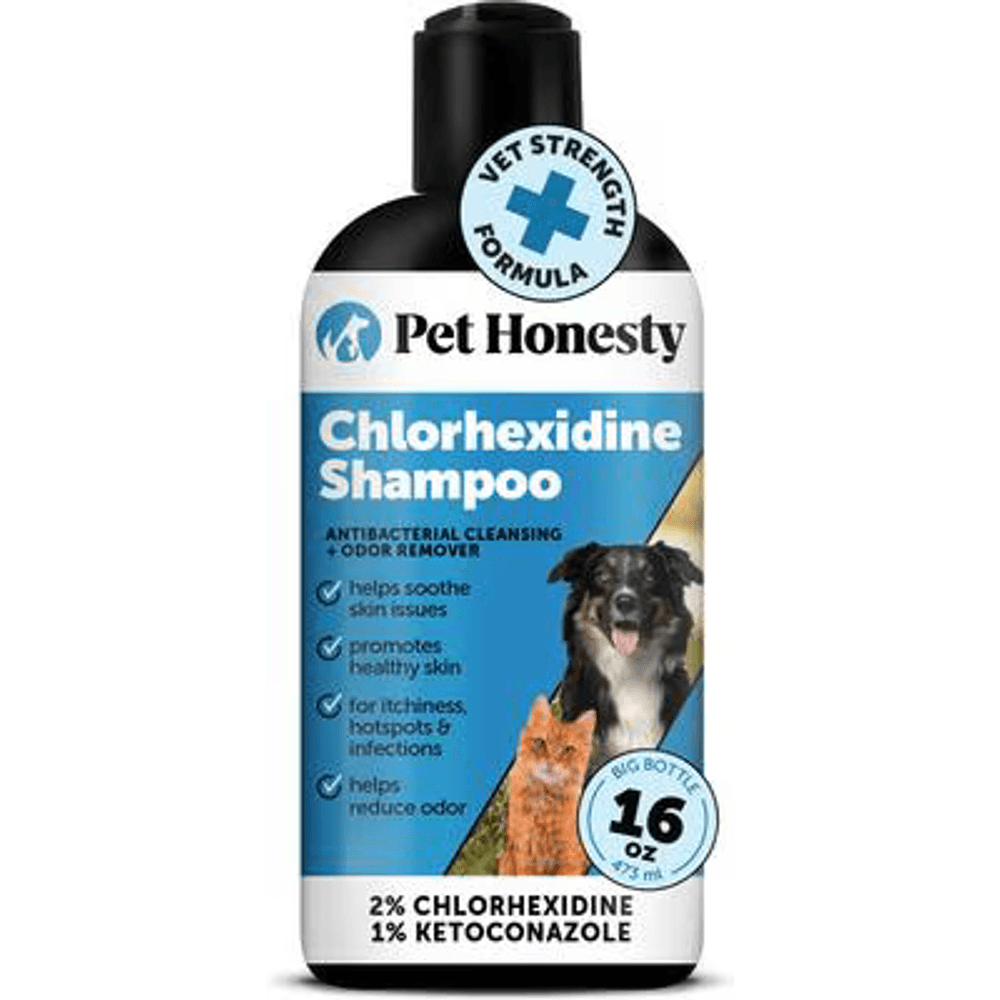
Pet Honesty Chlorhexidine Shampoo is a medicated dog shampoo made with chlorhexidine and ketoconazole.
Webvet may earn a commission when you click through to Chewy, at no extra cost to you.
What are the symptoms of hyperpigmentation?
The symptoms of hyperpigmentation are light-brown to black patches of velvety, rough, thickened skin, often without hair. Hyperpigmentation in the dog groin and on the legs is the usual starting point. With time, Merck says, it can spread to the lower neck, belly, hocks, the skin around the eyes, the ears, and the area between the anus and genitals.

The typical pattern is a dark, leathery belly or groin. For side-by-side photos of other dark marks, our guide to black spots on dog skin pictures shows how flat spots differ from thickened patches.
As the condition progresses, Merck says secondary hair loss, fluid discharge, and infections develop. Signs to note when you check your dog:
- Color: light brown, dark brown, or black skin
- Texture: velvety, rough, or leathery thickened skin
- Hair: thinning or bald patches over the dark area
- Smell: a musty or yeasty odor from the skin
- Edges: red rims, moisture, or discharge around the patch
Skin folds and the inner thighs rub with every step, and that constant friction keeps the area warm and damp. Wiping these zones clean and drying them well is a simple habit that helps you see changes early, and it gives your vet a cleaner surface to examine.
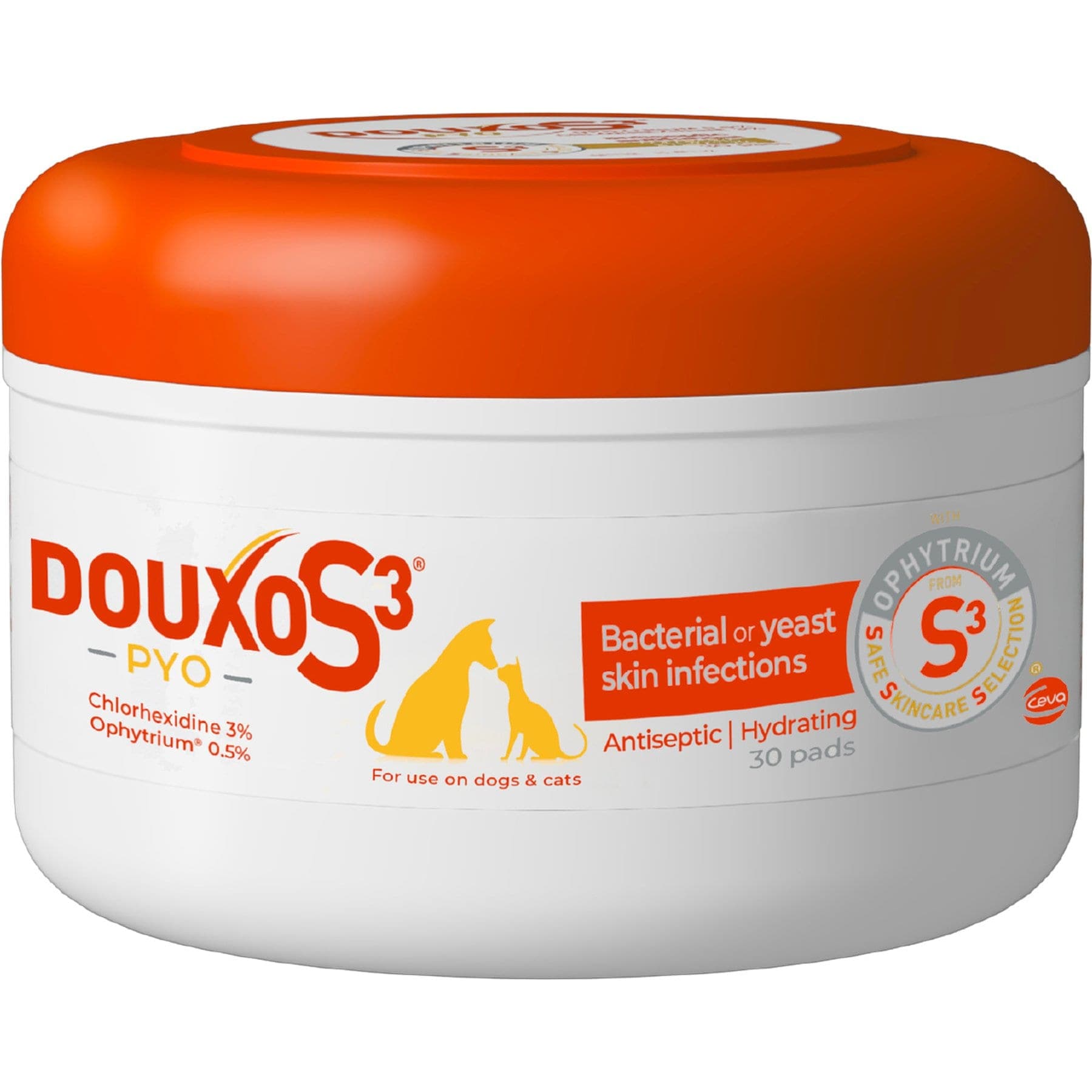
Douxo S3 PYO Wipes are chlorhexidine pads for dogs and cats, handy for skin folds and small areas.
Webvet may earn a commission when you click through to Chewy, at no extra cost to you.
For a wider view of rashes, scabs, and color changes, see our dog skin problems pictures guide.
What Causes Hyperpigmentation in Dogs?
Chronic irritation, yeast, allergies, friction, and hormonal disease are the main causes of hyperpigmentation in dogs. Merck says secondary hyperpigmentation is triggered by inflammation and/or friction and can occur in any breed.
The dogs most often affected, per Merck, are those prone to obesity, hormonal abnormalities, allergies, contact dermatitis, and skin infections. Merck's professional entry adds body shape, food allergy, atopic dermatitis, and keratinization disorders to the list of triggers for post-inflammatory hyperpigmentation.

What disease can cause hyperpigmentation?
Several diseases can cause hyperpigmentation in dogs. The most common are Malassezia yeast dermatitis, skin allergies, Cushing's disease, hypothyroidism, alopecia X, and bacterial skin infections. Each causes darkening through ongoing inflammation or hormone change, and each comes with other clues, such as itch, odor, thin skin, or symmetrical hair loss, that point a vet toward the right test.
Malassezia is a yeast. VCA Animal Hospitals lists its common signs as itching and redness, a musty odor, thickened "elephant skin," and darkly pigmented skin. Our dog yeast infection skin pictures guide shows what that looks like on the skin.
Hormonal disease is the other big group. In hyperpigmentation linked to Cushing's disease, the skin lesions are part of a wider picture: VCA lists thin skin, chronic skin infections, dark-colored spots, and poor healing as common signs. Merck says the signs come from chronic excess cortisol, and 85% to 90% of cases are caused by a pituitary tumor.
What are the first signs of Cushing's disease in dogs?
The first signs of Cushing's disease in dogs are usually increased appetite, increased thirst, and increased urination, according to VCA. Panting, thin skin, chronic skin infections, dark spots, and poor healing are also common. A vet confirms it with the ACTH stimulation test or the low-dose dexamethasone suppression test. Our Cushing's disease in dogs guide covers treatment.
Hypothyroidism can darken the skin too. VCA lists these signs:
- Increased dark pigmentation in the skin
- A very thin to nearly bald coat
- Hair that fails to regrow after clipping
- More skin and ear infections
Screening uses a total thyroxine (TT4) blood level, with free T4 or a thyroid panel to confirm. See our hypothyroidism in dogs guide for more.
Alopecia X causes hair to thin in a mirrored pattern on the neck and body, and VCA says the affected skin becomes darker. It is not painful, and dogs usually do not itch, which helps separate it from allergies and yeast. Our hair loss in dogs guide covers other patterns.
The table below matches where the dark skin is and what else is present (itch, odor, hair loss, thickening) to the likely cause and the test that confirms it.
| Location and signs | Likely cause | How it is confirmed |
|---|---|---|
| Itch, redness, musty odor, thickened skin | Malassezia yeast dermatitis | Skin scraping, tape or swab sample viewed under a microscope |
| Rubbed areas such as skin folds, often in overweight dogs | Friction | Exam and history, with samples to rule out infection |
| Ongoing itch and skin inflammation | Allergies or contact dermatitis | Exam and history, ruling out parasites and infection |
| Patchy dark skin with red edges, odor, or discharge | Bacterial or yeast skin infection | Skin samples viewed under a microscope |
| Dark spots with thin skin, more thirst, appetite, and urination | Cushing's disease | Blood work, then ACTH stimulation or LDDS test |
| Dark skin with thin coat, weight gain, lethargy, repeat ear infections | Hypothyroidism | TT4 blood test, then free T4 or thyroid panel |
| Symmetrical hair loss on neck and body, darker skin, no itch | Alopecia X | Ruling out other causes |
| Armpits and groin of a young Dachshund, no inflammation | Primary acanthosis nigricans | History, breed, and exam |
Allergies drive a large share of cases because scratching and licking keep the skin inflamed. If itching comes first and the darkening follows, our guides on dog skin allergies and why is my dog so itchy cover the common triggers, and dog allergy testing explains how vets narrow them down.
Allergy plans often include diet and supplement decisions alongside medication. Your vet can tell you whether an omega-3 product fits your dog's plan and at what dose.
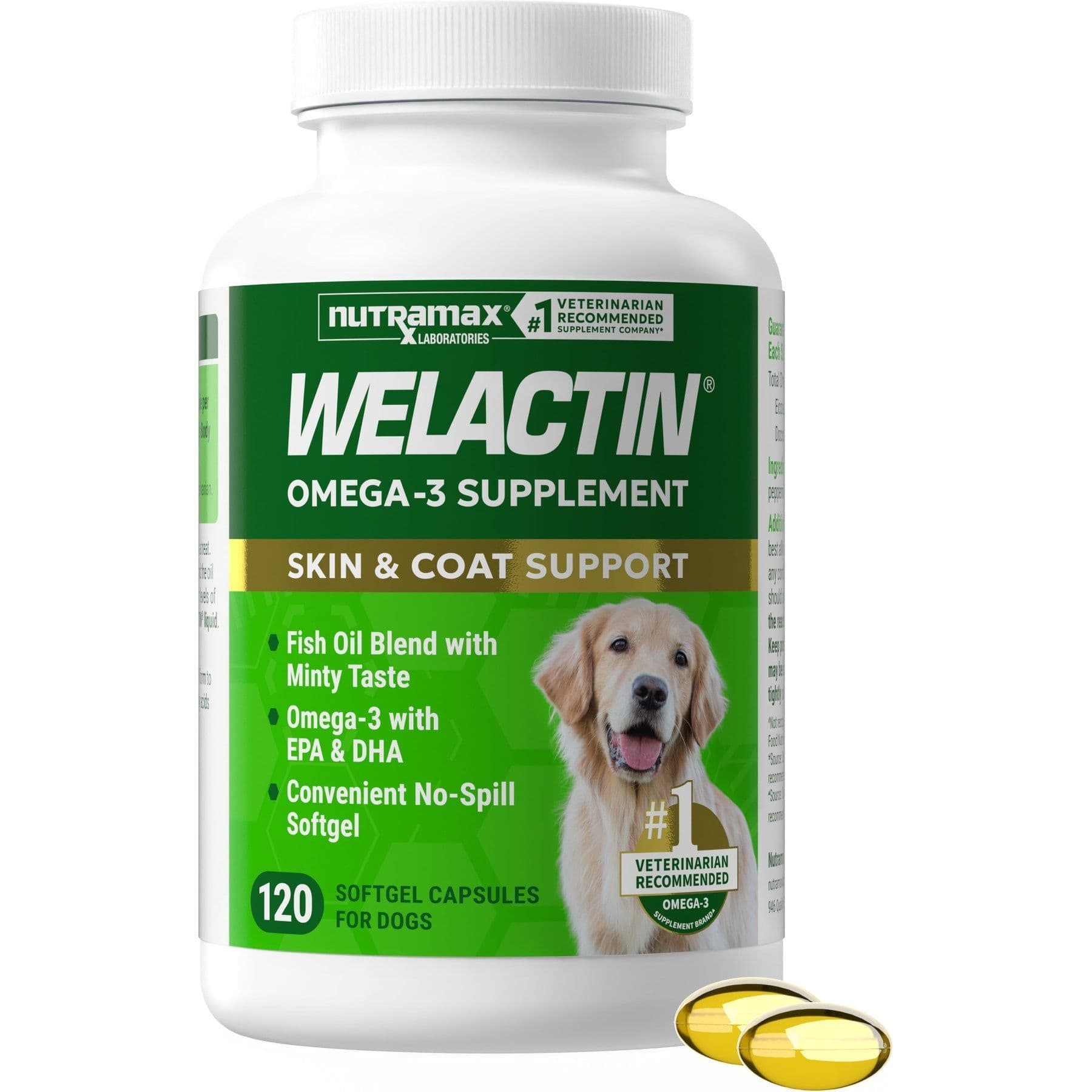
Nutramax Welactin is an omega-3 fish oil softgel supplement for dogs.
Webvet may earn a commission when you click through to Chewy, at no extra cost to you.
Primary vs Secondary Hyperpigmentation
Primary hyperpigmentation is a condition of Dachshunds that is believed to be inherited, while secondary hyperpigmentation is a common reaction to another problem in any breed. The two can look similar at first but behave very differently.
The rare primary form in Dachshunds and the common secondary form have different causes and outlooks. Merck's professional entry says primary acanthosis nigricans occurs almost exclusively in Dachshunds, is believed to be inherited in a recessive pattern, and starts as noninflammatory pigmentation in the armpit and groin areas. Signs are usually clear by 1 year of age.
How the two forms compare, per Merck:
- Primary hyperpigmentation in dogs is diffuse, noninflammatory, and uniform
- Secondary hyperpigmentation in dogs is patchy and often starts with a lacy look
- Primary hyperpigmentation in Dachshunds is not curable, though in some dogs it is only cosmetic and needs no treatment
- Secondary hyperpigmentation fades once its trigger is treated
Acanthosis nigricans is the name for the primary Dachshund form.
Merck's professional entry calls post-inflammatory hyperpigmentation a clinical sign of an underlying disease. That is why a Dachshund with new dark skin still needs a workup: an inflamed, patchy pattern points to the secondary form even in that breed.
The secondary form is far more common, and it always comes back to the trigger. Keeping folds and darkened patches clean between vet-directed baths is part of managing it, especially where infection keeps returning.
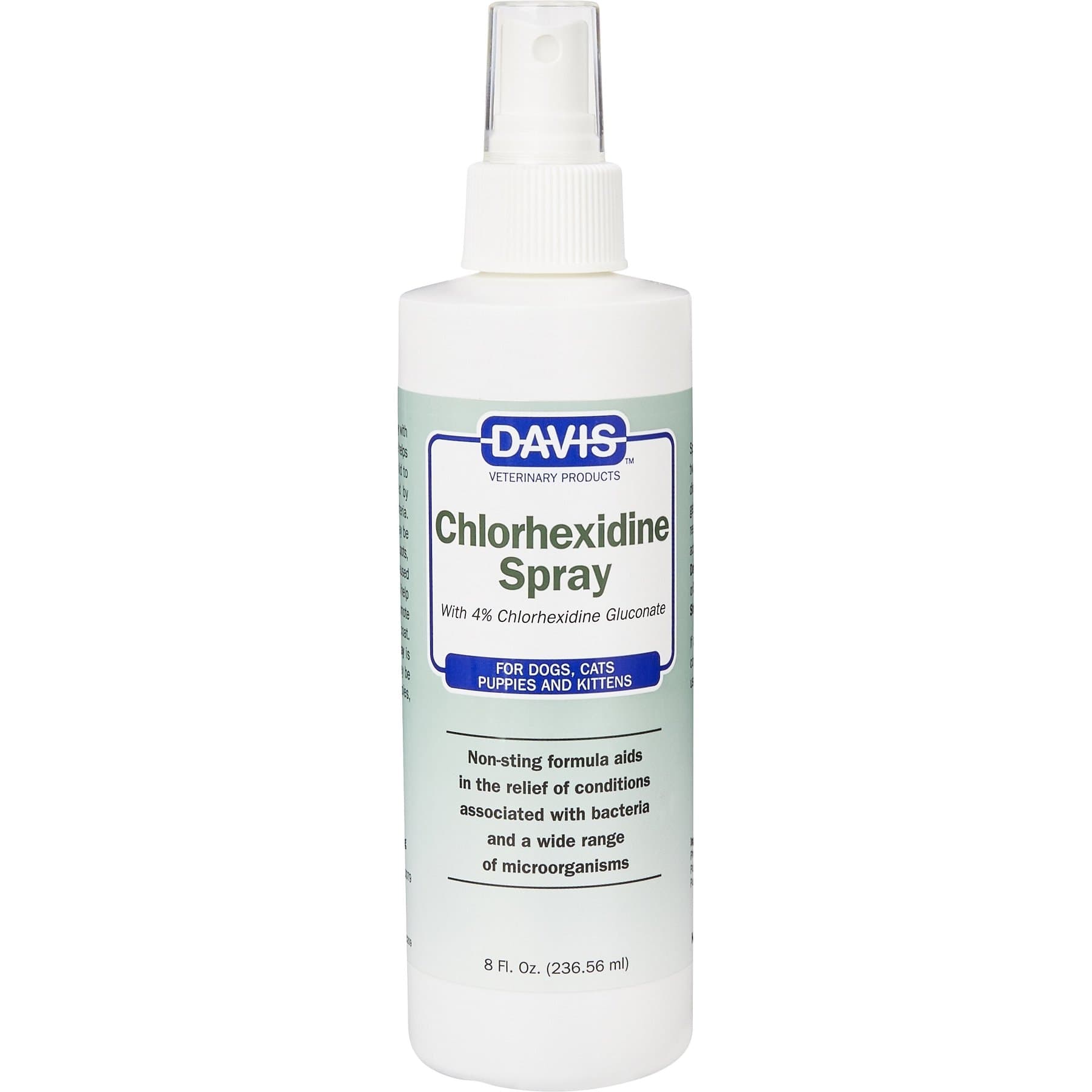
Davis Chlorhexidine Dog & Cat Spray is an antiseptic chlorhexidine spray for dogs and cats.
Webvet may earn a commission when you click through to Chewy, at no extra cost to you.
Is Hyperpigmentation in Dogs Dangerous?
The darkening itself is usually harmless, but the cause may not be. Merck says secondary hyperpigmentation always suggests an underlying disease, while the color change itself is sometimes only cosmetic.
That means the real risk comes from what is driving it. Untreated yeast or bacterial infection can leave the skin sore and smelly, and hormonal diseases such as Cushing's disease and hypothyroidism affect the whole body, not just the coat.
Flat darkening is also different from a pigmented growth. Melanoma is a tumor of pigment cells, and the Merck Veterinary Manual says most malignant melanomas appear as raised, generally ulcerated nodules, which is different from a flat color change. Benign melanocytomas can be flat patches or raised masses, mostly on the head and forelimbs of middle-aged or older dogs, and complete removal cures them.
What does melanoma look like on a dog's skin?
Merck says most malignant melanomas on a dog appear as raised, generally ulcerated nodules, often at the lip margin, in the mouth, or in the nail beds. That is a raised mass, not the flat, velvety darkening of hyperpigmentation. Canine malignant melanomas are locally aggressive and spread readily, so any raised or sore dark lump needs a vet exam.
 Sponsored
Vet care that's always there
Unlimited video calls and messaging with licensed vets for less than a typical vet visit. One membership covers up to five pets.
Use code Pets60
Plans start at $12/month · covers up to 5 pets
- Licensed vets in most states
- Rx for 150+ conditions
- 4.7 on Trustpilot
How Is Hyperpigmentation Diagnosed?
Hyperpigmentation is diagnosed by its appearance, and the work is finding the cause. Merck says vets take a careful history and do a physical exam to identify the underlying problem.

Most dogs need skin scrapings, a look at skin cells under the microscope, and sometimes blood tests. Skin scrapings exclude parasites, especially in young dogs. For yeast, VCA describes scrapings, impression smears, swabs, acetate tape, or biopsy, and says most of these samples can be examined in the clinic under a microscope. Looking at skin cells this way is called cytology.
Blood tests come in when hormones are suspected. Tests your vet may use:
- Skin scraping to rule out mites and other parasites
- Tape, swab, or impression samples to look for yeast and bacteria
- Baseline blood count and chemistry panel
- ACTH stimulation or LDDS test for Cushing's disease
- Total T4, then free T4 or a thyroid panel, for hypothyroidism
Alopecia X is a diagnosis of exclusion, VCA notes, and a biopsy alone cannot confirm it. Primary acanthosis nigricans is suspected from the history, the breed, and the exam.
Treatment for Hyperpigmentation in Dogs
Treatment for hyperpigmentation in dogs means treating the underlying cause and using medicated shampoos. The color follows the health of the skin, so the cause comes first.
Merck's approach pairs treating the cause with medicated bathing. Many affected dogs benefit greatly from appropriate antibiotics and medicated shampoos 2 to 3 times per week, and Merck's professional entry says treating secondary bacterial and yeast overgrowth is critical. That is how to treat hyperpigmentation in dogs in most cases.
For yeast, VCA says a degreasing shampoo may come first, followed by an antifungal shampoo, and severe cases may need oral antifungal medication. Allergies must be managed at the same time, and if the yeast returns after successful treatment, VCA says the dog should be re-evaluated. Typical dog skin hyperpigmentation treatment steps:
- Confirm and treat any bacterial or yeast infection
- Find and control the trigger, such as allergies, friction, or hormone disease
- Bathe with a vet-recommended medicated shampoo 2 to 3 times per week
- Recheck if signs return after treatment
Hormonal causes such as Cushing's disease and hypothyroidism need medical treatment from your vet. Secondary darkening clears slowly once its cause is treated, while primary darkening in Dachshunds is not curable.
A shampoo with chlorhexidine and ketoconazole, such as Pet Honesty Chlorhexidine Antibacterial Itchy Skin, Allergy Relief & Sensitive Skin Dog Shampoo, is one option to discuss with your vet. Our medicated dog shampoo guide compares the main ingredient types.
Does Hyperpigmentation in Dogs Go Away?
Secondary hyperpigmentation in dogs usually goes away once the underlying cause is identified and treated. The change is slow, and Merck says it may take months for the skin to return to normal.
Does hyperpigmentation go away on its own?
Hyperpigmentation does not go away on its own while the trigger is still active. Merck says secondary darkening fades after the underlying cause is identified and treated, and that it resolves slowly over months. Merck's professional entry adds that some residual lacy darkening might remain. Primary hyperpigmentation in Dachshunds does not go away, because it is not curable.
Fading depends on keeping the cause under control. Fading usually takes months. If allergies or yeast flare again, the skin can darken again, so steady management matters more than any single treatment.
Home Care for Dark Skin on Dogs
Safe home care supports your vet's plan; it does not replace it. Merck says medicated shampoos remove excess oil and odor but must be used regularly, and owners need to be patient with these programs.

Safe home care comes down to one rule: use the shampoo your vet chooses, and ask your vet before using any product, oil, or home remedy on the dark skin. The right shampoo for hyperpigmentation in dogs depends on whether yeast, bacteria, or allergies are driving it.
You cannot treat an infection or a hormone problem naturally at home, so the steps that help are habits:
- Bathe on the schedule your vet sets, often 2 to 3 times per week at first
- Follow the label directions on contact time before rinsing
- Dry skin folds, armpits, and the groin fully after baths and walks
- Ask your vet about a weight plan if your dog is heavy, since obesity adds friction in folds
- Track the color and size of patches with dated photos
- Ask your vet before using any product on the skin
When to See a Vet
See your vet whenever dark skin appears with other signs, spreads, or changes texture. Because secondary hyperpigmentation always suggests an underlying disease, new darkening is worth an appointment.
The signs that need a vet visit include:
- Itching, redness, a musty odor, and thickened skin, which point to yeast dermatitis
- More thirst, appetite, or urination, panting, thin skin, poor healing, or lethargy, which point to Cushing's disease
- Weight gain without more appetite, tiredness, a thin coat, and repeat skin or ear infections, which point to hypothyroidism
- Hair loss, fluid discharge, or infection, which Merck says means the condition is advancing
- Any raised, sore, or bleeding dark lump
Hyperpigmentation in Dogs FAQs
Frequently Asked Questions
Is hyperpigmentation in dogs dangerous?
The darkening itself is usually not dangerous, and in some dogs it is only cosmetic. The concern is the underlying cause, because Merck says secondary hyperpigmentation always suggests an underlying disease such as an infection, allergy, or hormone disorder.
How do you treat black skin disease in dogs?
In alopecia X, VCA says hair thins in a mirrored pattern on the neck and body and the affected skin becomes darker. VCA says melatonin may stimulate hair regrowth in 40% to 60% of dogs, though it can cause sedation and should not be used in diabetic dogs. Alopecia X is diagnosed by ruling out other causes.
Why is my dog's belly turning black?
A belly turns black most often from ongoing inflammation or friction. Yeast infection, allergies, skin infection, and hormone disease are common triggers, and VCA lists darkly pigmented skin as a classic sign of yeast dermatitis. A vet can sample the skin to find out which one it is.
Can hyperpigmentation in dogs be treated at home?
Home care helps, but the cause needs a vet. A medicated shampoo used 2 to 3 times per week is part of most plans, and your vet decides which shampoo and whether antibiotics or antifungals are needed.
What is acanthosis nigricans in dogs?
Primary acanthosis nigricans is a form of hyperpigmentation, believed to be inherited, seen almost only in the Dachshund. Merck says it starts as noninflammatory dark skin in the armpit and groin, usually by 1 year of age. It is not curable, but in some dogs it is only cosmetic.
Does hyperpigmentation mean my dog has Cushing's disease?
No, most dark skin comes from allergies, yeast, or friction. Cushing's disease is more likely when dark spots come with thin skin, more thirst and urination, and a bigger appetite, and a vet confirms it with a blood test such as the ACTH stimulation or LDDS test.
Will my dog's skin go back to normal color?
Usually yes, once the cause is treated. Merck says secondary darkening fades slowly and may take months, and some faint lacy darkening can remain. Primary darkening in Dachshunds does not fade.

Editor
The Webvet Editorial Team is the in-house group of pet-care editors and writers behind Webvet, operated by Smart Pet Collective. The team researches, writes, and maintains Webvet's pet health, behavior, and medication content. Every article follows a defined editorial process: research from reputable veterinary and scientific sources, careful drafting, mandatory review of medical content by a credentialed veterinarian, and dated publication. Health and medication articles are medically reviewed by a licensed veterinary professional before they go live and are kept current over time.
Veterinarian · BVMS MRCVS
Dr. Pippa Elliott, BVMS, MRCVS, is a veterinarian with nearly 30 years of experience in companion animal practice. Dr. Elliott earned her Bachelor of Veterinary Medicine and Surgery from the University of Glasgow. She was also designated a Member of the Royal College of Veterinary Surgeons. Married with 2 grown-up kids, Dr. Elliott has a naughty Puggle named Poggle, 3 cats and a bearded dragon.


