Dog Allergy Testing: Types, Costs, and What Results Can Tell You
Allergy tests answer different questions. Learn when environmental skin or blood testing helps, why food trials matter, and how to prepare for a useful veterinary results discussion.

BVMS MRCVS
Medically reviewed by Dr. Pippa Elliott, BVMS MRCVS · Last reviewed

This article contains affiliate links. Webvet may earn a commission when you buy through them, at no extra cost to you.
Dog allergy testing is most useful when the result will change treatment. Skin or blood testing can help select environmental allergens for immunotherapy after a veterinarian has established the clinical diagnosis. Food allergy requires a different approach: a carefully controlled elimination diet followed by a supervised food challenge.
What dog allergy testing can and cannot tell you
- 1Atopic dermatitis is a clinical diagnosis based on history, examination, and exclusion of other causes of itching.
- 2Environmental allergy tests help select allergens for allergen immunotherapy; a positive result alone does not diagnose the disease.
- 3A veterinarian-directed elimination diet and challenge remain central to diagnosing food allergy.
Common allergy signs include itching, licking or chewing the paws, recurrent ear problems, redness, and hair loss from scratching. Food-related disease may also involve digestive signs. These findings overlap with parasites, infections, and other conditions. A panel that lists positive allergens cannot establish which problem is making this particular dog uncomfortable.
Skin comfort may need attention during that workup. If the veterinarian recommends bathing, Douxo S3 CALM shampoo is one product to discuss for the skin-care plan. Confirm whether bathing fits the current skin condition and appointment preparation. Shampoo does not diagnose an allergy, identify a food trigger, or replace treatment for an infection.
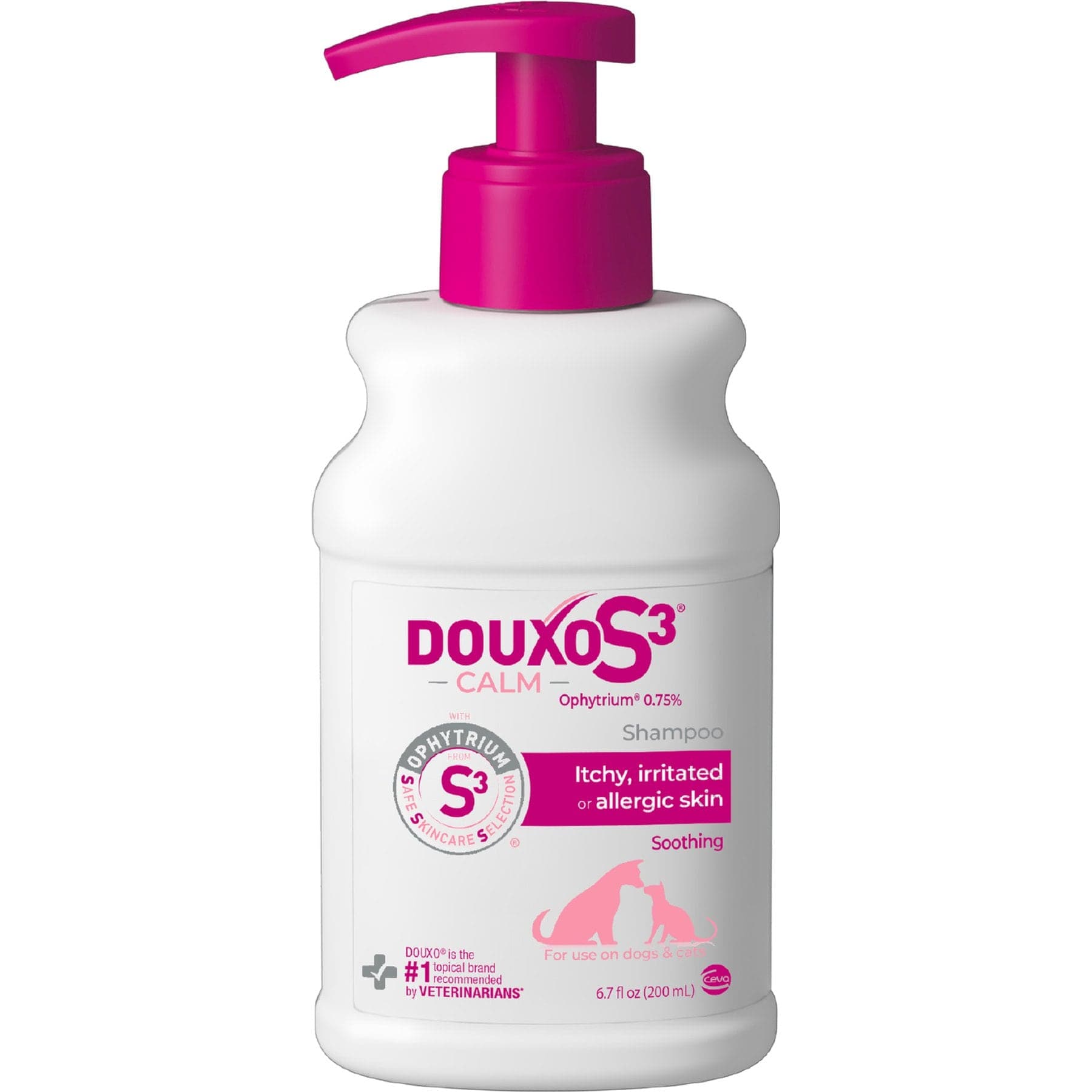
Discuss this skin-care shampoo with your veterinarian and confirm bathing fits the treatment and test-preparation plan.
Webvet may earn a commission when you click through to Chewy, at no extra cost to you.
| Clinical question | Appropriate test or diagnostic step | What it can establish | Important limit and next step |
|---|---|---|---|
| Is this environmental allergic disease? | Clinical workup, then selected skin or blood testing | Relevant sensitization to help plan allergen immunotherapy | A false positive is possible; interpret alongside the clinical diagnosis |
| Is food causing the problem? | Strict elimination diet followed by a supervised challenge | Whether signs improve on the trial and return with the challenged food | An isolated positive blood, hair, or saliva panel is not a substitute |
| Could fleas be responsible? | Veterinary assessment and effective flea-control evaluation | Whether flea exposure and response support flea allergy | Not seeing fleas does not settle the question |
| Will a home sensitivity kit identify the cause? | Discuss the method and claimed purpose with the veterinarian | It may produce a list of results | Do not use that list as a diagnosis or a reason to impose an unbalanced diet |
 $65 · no membership
Is your dog's itching or skin issue getting worse?
A licensed vet can examine your dog over video and prescribe treatment online when it's appropriate.
 Talk to a vet
- Licensed vets
- All 50 states
- same-day Rx
Webvet may earn a commission if you book.
The workup before an allergy panel

The first appointment should establish the pattern: when itching began, affected areas, seasonality, prior diets, parasite prevention, and response to treatment. Skin or ear samples may identify secondary bacterial or yeast problems. The AAHA diagnostic approach starts with this clinical workup, including parasite and infection assessment, rather than ordering an allergy panel for every itchy dog.
If a food trial is being planned, discuss the exact prescription diet before buying a large bag. Royal Canin Veterinary Diet Hydrolyzed Protein HP is one option a veterinarian may select. The right trial depends on the dog's diet history and medical needs. Do not combine it with other foods merely because they also say “hypoallergenic.”
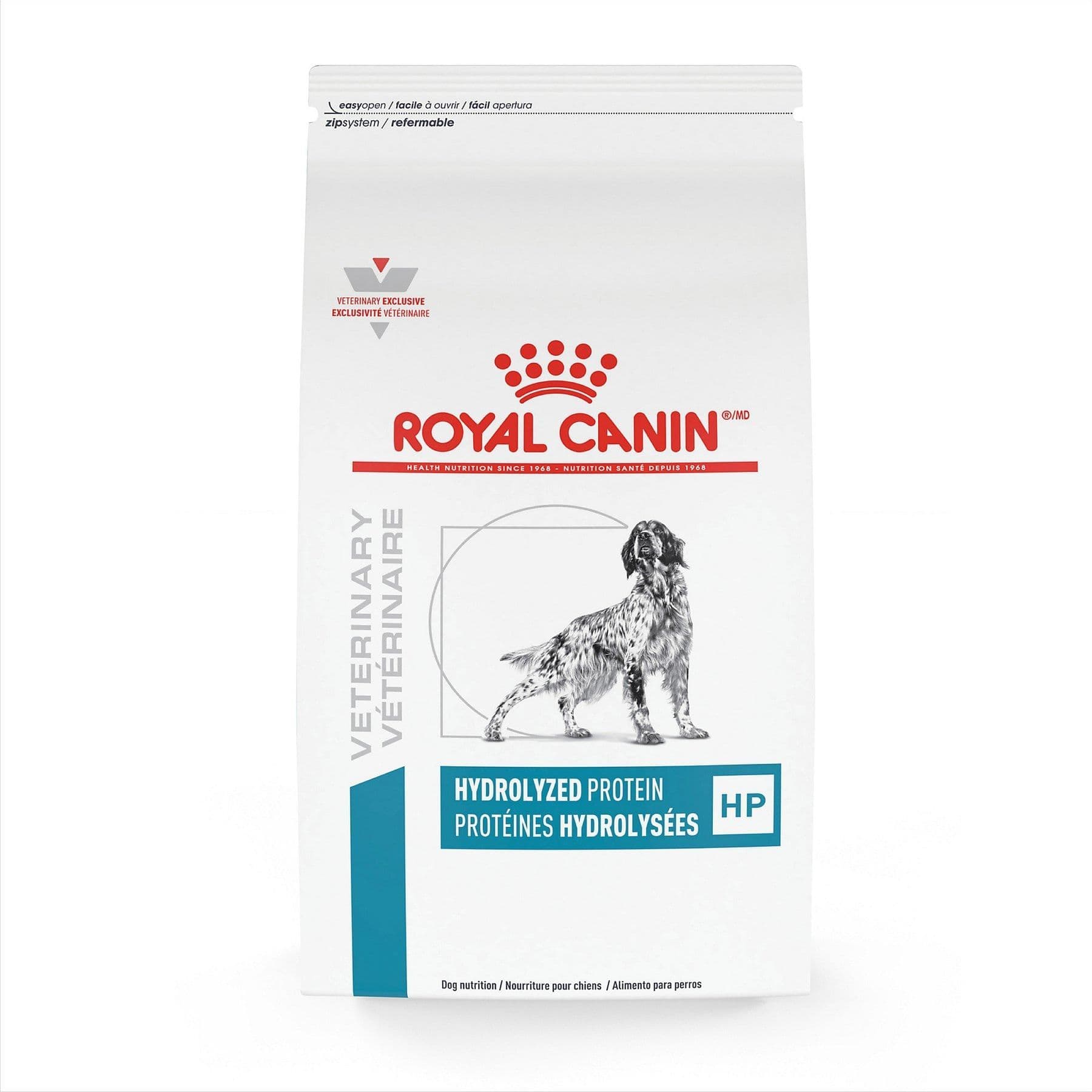
A prescription hydrolyzed diet is one possible trial choice; your veterinarian should select the exact food and permitted extras.
Webvet may earn a commission when you click through to Chewy, at no extra cost to you.
How a veterinary dermatologist helps with dog allergies
A veterinary dermatologist can help diagnose and manage dog allergies, particularly persistent or complicated itching. The specialist can interpret previous tests, perform skin testing, and plan immunotherapy. Bring records instead of starting the history from memory. Referral is particularly useful when repeated short-term treatments have not established a workable diagnosis or several problems seem to overlap.
When vets recommend dog allergy testing
Vets recommend dog allergy tests when the results will guide treatment, commonly to select environmental allergens for immunotherapy. If the immediate plan is to investigate fleas, treat infection, or run a food trial, an environmental panel may not be the next useful purchase. Ask what the clinician would do differently with a positive or negative result.
Intradermal testing versus a blood allergy test
Skin testing and blood testing examine different evidence of environmental sensitization. Intradermal testing observes skin reactions to small allergen injections. Serum testing measures allergen-specific antibodies in a blood sample. Neither independently proves atopic dermatitis or reliably identifies a food allergy. The choice depends on the diagnostic question, specialist access, medication use, and the individual dog.
VCA's explanation of canine allergy testing describes intradermal testing as a specialist procedure usually involving sedation and a clipped patch of skin. A blood sample is generally simpler to collect and usually does not require sedation. Ask which test the clinician prefers for designing treatment and how current medication could affect it.
Who performs testing
A primary-care veterinarian can arrange a blood test and coordinate the workup. A veterinary dermatologist commonly performs intradermal testing and interprets the results in the context of the examination. If a clinic refers your dog elsewhere, ask who will explain the findings, prescribe treatment, and handle follow-up questions.
How intradermal allergy testing works
Intradermal allergy testing means injecting small amounts of selected allergens into a clipped area of the dog's skin. The team evaluates the local reactions alongside controls. The result is a pattern for clinical interpretation, not a pass-or-fail allergy diagnosis. The clinic should explain the sedation plan and the specific preparation before the appointment.
Is intradermal allergy testing painful?
Intradermal allergy testing can cause discomfort from multiple small needle injections; it should not be described as painless. Sedation helps the team perform and read the test while limiting distress. Ask how your dog's comfort will be monitored and what behavior to expect afterward. A routine blood draw is less involved, but individual anxiety and handling needs still deserve discussion.
Accuracy and interpreting a positive result
Neither method is universally “more accurate” for every clinical situation. A positive result indicates sensitization that must fit exposure history and signs; false positives can occur. A negative result also needs interpretation. The relevant question is which findings the clinician considers meaningful enough to include in treatment, and why.
A hydrolyzed diet uses broken-down proteins; an appropriate novel-protein trial uses ingredients chosen around the dog's actual history. Purina Pro Plan Veterinary Diets HA is another prescription hydrolyzed option to discuss. It is an alternative trial choice, not an extra food to rotate with the Royal Canin diet. Select one plan with the veterinarian and follow it consistently.
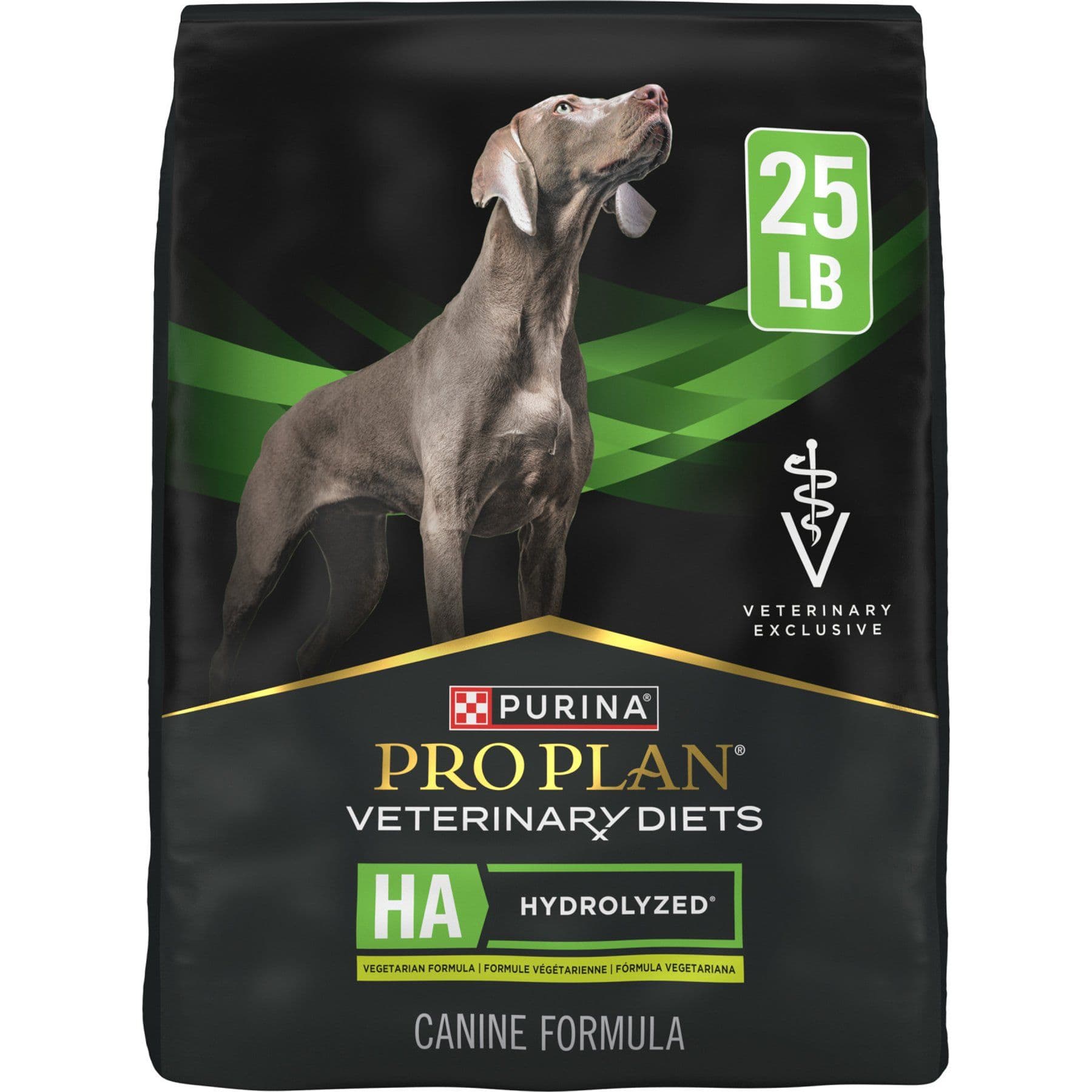
This prescription hydrolyzed diet is an alternative trial option, not a food to rotate into another elimination diet.
Webvet may earn a commission when you click through to Chewy, at no extra cost to you.
Heska ALLERCEPT is a named allergen-specific IgE testing system, as described in the manufacturer's owner material. A brand name does not remove the need for clinical interpretation. Ask which environmental panel your veterinarian is ordering and whether its findings will guide immunotherapy; do not treat every listed positive as a food to remove. If your quote names Spectrum, Nextmune or IDEXX, ask for the exact panel and method, the evidence supporting its intended use, and who will interpret it. This guide does not rank those individual laboratory products.
Food allergy testing and the elimination diet trial
For reliable food allergy testing in dogs, veterinary guidelines favor a strict elimination diet followed by a veterinarian-directed challenge. The University of Illinois veterinary food-trial guidance describes an eight-week restricted trial and explains that blood, intradermal, saliva, and hair tests are not dependable substitutes for diagnosing food allergy. Accuracy depends on keeping the trial controlled; the clinician may adapt its duration and follow-up to the patient.
Keeping a food trial interpretable
Do not feed unapproved treats, table scraps, flavored chews, or another pet's food during the trial. Tell the veterinarian about flavored medicines and supplements so necessary treatment can be accommodated safely. Do not stop essential medication yourself. Keep a simple diary of food intake, itching, ears, stool, and any accidental exposures.
If signs improve, the supervised challenge tests whether the previous food brings them back. Improvement alone can be misleading when infection treatment or other changes happened at the same time. Read more about common food allergens and food intolerance before assuming every adverse food response is an allergy.
Budgeting for a food trial also means deciding how rewards will work. Royal Canin hydrolyzed protein treats are an option only if the veterinarian confirms compatibility with the exact trial diet. A hydrolyzed label alone is not permission to add them. If treats are not approved, ask whether measured pieces of the trial food can serve that role.
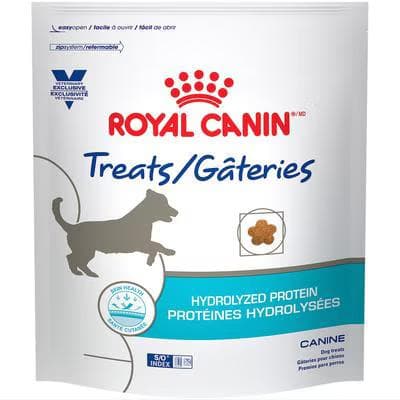
Use hydrolyzed treats only when your veterinarian confirms they are compatible with the exact food trial.
Webvet may earn a commission when you click through to Chewy, at no extra cost to you.
Home kits, hair tests, and DNA claims
If you are comparing a 5Strands, EasyDNA, UCARI or ImmuneIQ offering, identify the exact product, sample type, and claimed purpose. A sensitivity result, genetic result, and veterinary environmental IgE result are different kinds of information. Brand recognition or a long list of tested substances does not show that a kit can diagnose your dog's food allergy. No hands-on comparison or product-specific accuracy validation is claimed here.
The AAHA guidelines do not support serum, saliva, or hair panels for diagnosing food allergy. Bring any existing report to the clinic, but do not remove many ingredients or formulate a home diet around it. A hypoallergenic food plan needs to remain nutritionally appropriate as well as diagnostically useful.
How much does dog allergy testing cost?

As a published US procedure benchmark checked October 2, 2026, CareCredit's veterinary cost guide lists an average of US$296 for canine skin allergy testing. That is not a complete dermatology visit estimate or a quote for a blood panel. The total depends on the examination, prior workup, test method, sedation, location, and later treatment.
What does a dog allergy test cost at the vet?
The dog allergy test price at your vet may be only one line of a larger bill. Ask the clinic to separate examination, rule-out testing such as skin or ear sampling, the blood panel or skin test, sedation, referral consultation, and the results appointment. Request later immunotherapy and recheck costs separately. The published skin-test average above does not establish a local all-in price or the price in another country. For insurance, ask your existing insurer whether this particular diagnostic workup is covered, what exclusions and deductible apply, and whether you must pay first. A test recommendation does not guarantee reimbursement.
Skin-test sedation and referral charges
For intradermal skin testing, ask whether the quote includes the dermatologist's consultation, sedation and monitoring, the allergen panel, and discharge care. A previously completed workup may reduce duplication if records are transferred. Immunotherapy preparation and refills are separate ongoing costs unless explicitly included. Request a written estimate before the appointment, including possible additions.
Preparing for the appointment and interpreting results
Send a complete list of medicines, supplements, shampoos, parasite products, and recent injections. Ask about fasting if sedation is planned, what to do with morning doses, and whether bathing should be delayed. A skin test and a blood test may have different preparation requirements; follow the instructions for the actual booked procedure.
Bring three useful records:
- A timeline of itching and ear problems, including seasonal changes and treatment responses.
- The names of previous foods, treats, chews, and flavored medicines.
- Previous laboratory reports and details of any completed food trial or challenge.
At the results visit, ask which positives match realistic exposure and symptoms. A long report does not mean every allergen needs to be eliminated from the environment. Ask what will change now, how improvement will be measured, and when the treatment plan should be reviewed if your dog remains uncomfortable.
What comes after testing
There is no single best medicine or supplement for every allergic dog. Treatment may address flea exposure, secondary infection, itch and inflammation, a confirmed food trigger, or environmental allergic disease. Allergen immunotherapy uses selected allergens over time to alter the response; it is a longer-term plan, not immediate rescue treatment for severe itching.
Agree on practical goals: fewer disrupted nights, less paw chewing, healthier ears, and a manageable routine. Ask which therapies provide short-term relief and which aim at longer-term control. Keep a review date rather than waiting indefinitely for a test-directed treatment to work. Report worsening skin, painful ears, or suspected medication effects promptly.
Skin appearance alone does not identify the trigger. The guide to food allergy rash pictures explains those visual limits, while hypoallergenic treats addresses reward choices after the clinician defines the diet. Testing should lead to an understandable care plan, not an unexplained list of things to avoid.
Dog allergy testing questions
Frequently Asked Questions
Is allergy testing for dogs worth it?
It can be worthwhile when the result will guide allergen immunotherapy after a clinical diagnosis of environmental allergic disease. It is less useful as a standalone search for why a dog itches or as a substitute for a food trial. Ask which treatment decision depends on the result before paying for a panel.
What are the top 3 things dogs are allergic to?
Food allergy, flea allergy, and environmental allergy are useful categories, not a universal ranking of three individual substances. A dog's relevant triggers depend on its history and diagnosis. Pollen or mites may matter for one dog, while another needs flea control or a supervised food investigation.
What are the worst months for dogs with allergies?
Seasonal itching varies with location, local pollen, and the dog's triggers. Year-round allergens can cause signs outside a pollen season, while different plants peak at different times. There are no universally worst months for every allergic dog. Keep a symptom calendar and share travel or household changes with the veterinarian rather than assuming a nationwide allergy season.
Is Benadryl or Zyrtec better for dog allergies?
Neither is a universal best choice. The prescribing veterinarian should decide whether an antihistamine is appropriate, which formulation to use, and how it fits other treatment. Test preparation also matters because medication may affect testing instructions. Do not start, switch, or stop a product without checking with the treating team.
What is the 3 day rule for allergies?
There is no universal three-day rule that diagnoses a dog's allergy, completes an elimination diet, or sets medication washout before testing. Food trials usually require weeks, while preparation depends on the drug and test. Ask the clinic what a particular instruction means for your dog and get the timing in writing.
$65 · no membershipIs your dog's itching or skin issue getting worse?
A licensed vet can examine your dog over video and prescribe treatment online when it's appropriate.
Talk to a vet- Licensed vets
- All 50 states
- same-day Rx
Webvet may earn a commission if you book.
Veterinarian · BVMS MRCVS
Dr. Pippa Elliott, BVMS, MRCVS, is a veterinarian with nearly 30 years of experience in companion animal practice. Dr. Elliott earned her Bachelor of Veterinary Medicine and Surgery from the University of Glasgow. She was also designated a Member of the Royal College of Veterinary Surgeons. Married with 2 grown-up kids, Dr. Elliott has a naughty Puggle named Poggle, 3 cats and a bearded dragon.


