Stud Tail in Cats: Causes, Treatment, and Grooming That Helps
Stud tail is an overactive gland at the base of a cat's tail that leaves greasy, waxy fur and blackheads. Learn which cats get it, when it needs a vet, which treatments work, and the cleaning routine that keeps it away.

BVMS MRCVS
Medically reviewed by Dr. Pippa Elliott, BVMS MRCVS · Last reviewed

This article contains affiliate links. Webvet may earn a commission when you buy through them, at no extra cost to you.
What stud tail in cats is and what the greasy patch at the base of the tail means
Stud tail in cats is an overactive tail gland. VCA Animal Hospitals describes it as an enlargement of the oil glands on the top side of the tail near its base, which leaves greasy, waxy fur, blackheads, and sometimes a bald patch.
Intact males get it most, but stud tail in cats also shows up in neutered males and females. Gentle degreasing baths usually control it, while redness, swelling, or pain need a vet.
The tail gland behind stud tail in cats is the supracaudal gland, a patch of oil-making sebaceous glands. What the tail gland does is make oil: sebaceous glands secrete sebum into the hair follicles and onto the skin, according to the Merck Veterinary Manual.
- 1What the tail gland does: the supracaudal gland on top of the tail makes oil, and in stud tail it overproduces.
- 2Signs of stud tail at the tail base: greasy or waxy fur, blackheads, scaly skin, and a thinning or bald patch.
- 3Intact males are most at risk, but spayed, neutered, and female cats can get it too.
- 4Degreasing washes and grooming help control most cases; redness, swelling, discharge, or pain mean a vet visit.

A 1997 anatomy study indexed on PubMed says the cat supracaudal gland is usually considered a cluster of large sebaceous glands, though one earlier description classed it as a hepatoid gland. Its cells secrete protein and water-repelling lipids through wide ducts connected to coarse hairs.
When the glands enlarge, VCA explains, they press on the hair follicles and cause hair loss. Their extra oil plugs the follicles, greases the fur, and leaves the skin scaly. Inflammation and secondary infection can follow, and inflammation of the hair follicles is known as folliculitis.
The reassuring part: VCA says mildly affected cats may not need any treatment, because the problem is mainly a cosmetic bald spot, and that most cases can be managed with shampoos and topical degreasing products. VCA adds that the outlook is generally good, especially when the underlying cause is found and grooming improves.
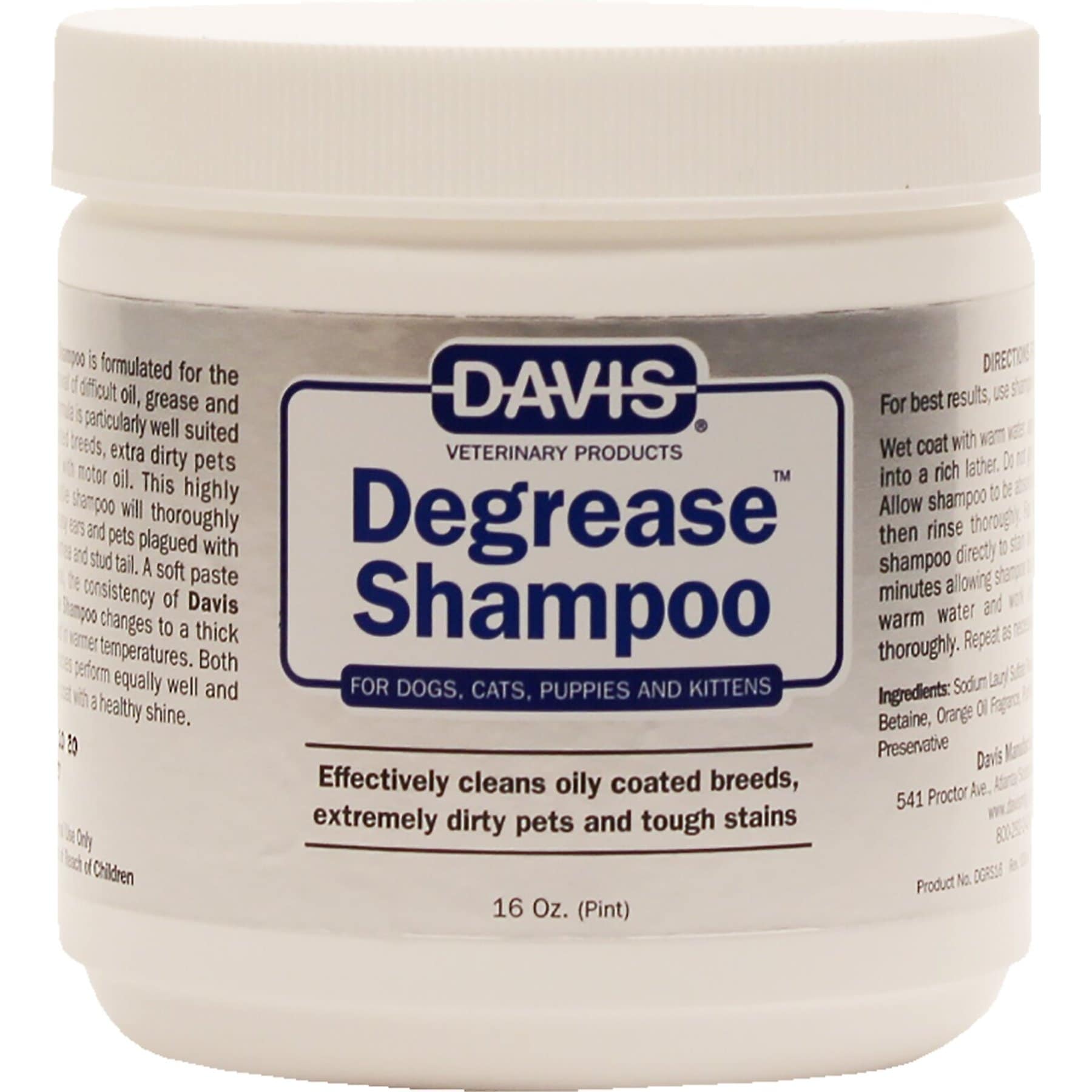
A concentrated degreasing shampoo for dogs and cats whose listing names stud tail and oily seborrhea among its uses.
Webvet may earn a commission when you click through to Chewy, at no extra cost to you.
VCA's flea control guidance calls fleas the most common reason for itching and skin infection in cats, says flea-allergy hair loss and scabbing often show up at the base of the tail, and notes that cats often groom away the evidence. A bare tail base is not proof of stud tail.
Tail swishing, a raised rear during petting, and a tail that flicks while a cat purrs are body language rather than signs of a tail gland problem. WebVet's guide to cat tail language explains what those signals mean.
 Sponsored
Want a vet's take on your cat's skin or coat?
Talk to a licensed vet at Dutch over video, often the same day. They can recommend treatment and prescribe it when it's appropriate.
Use code Pets60
Plans start at $12/month · covers up to 5 pets
- Licensed vets in most states
- Rx for 150+ conditions
- 4.7 on Trustpilot
Stud tail symptoms: grease, blackheads, matted fur, and hair loss near the tail
The signs of stud tail at the tail base build in stages, starting on the upper side of the tail. When comparing a cat's tail with pictures of stud tail, here is what it tends to look like, following VCA's list from mildest to most advanced:
- Mild: a patch of hair loss over the gland, with greasy fur around it
- More severe: scaly skin, crusts, comedones (blackheads), and darker skin pigment
- Long-standing: skin that looks thickened and bumpy
- Infected: redness, swelling, discharge, and draining tracts
- Itchy: rubbing and chewing that can injure most of the tail
Blackheads, or comedones, form when excess keratin gets trapped in a hair follicle, VCA explains in its guide to acne in cats. The same guide notes that a benzoyl peroxide product or shampoo can cleanse the area and flush out plugged follicles, the same blockage behind blackheads on the tail.
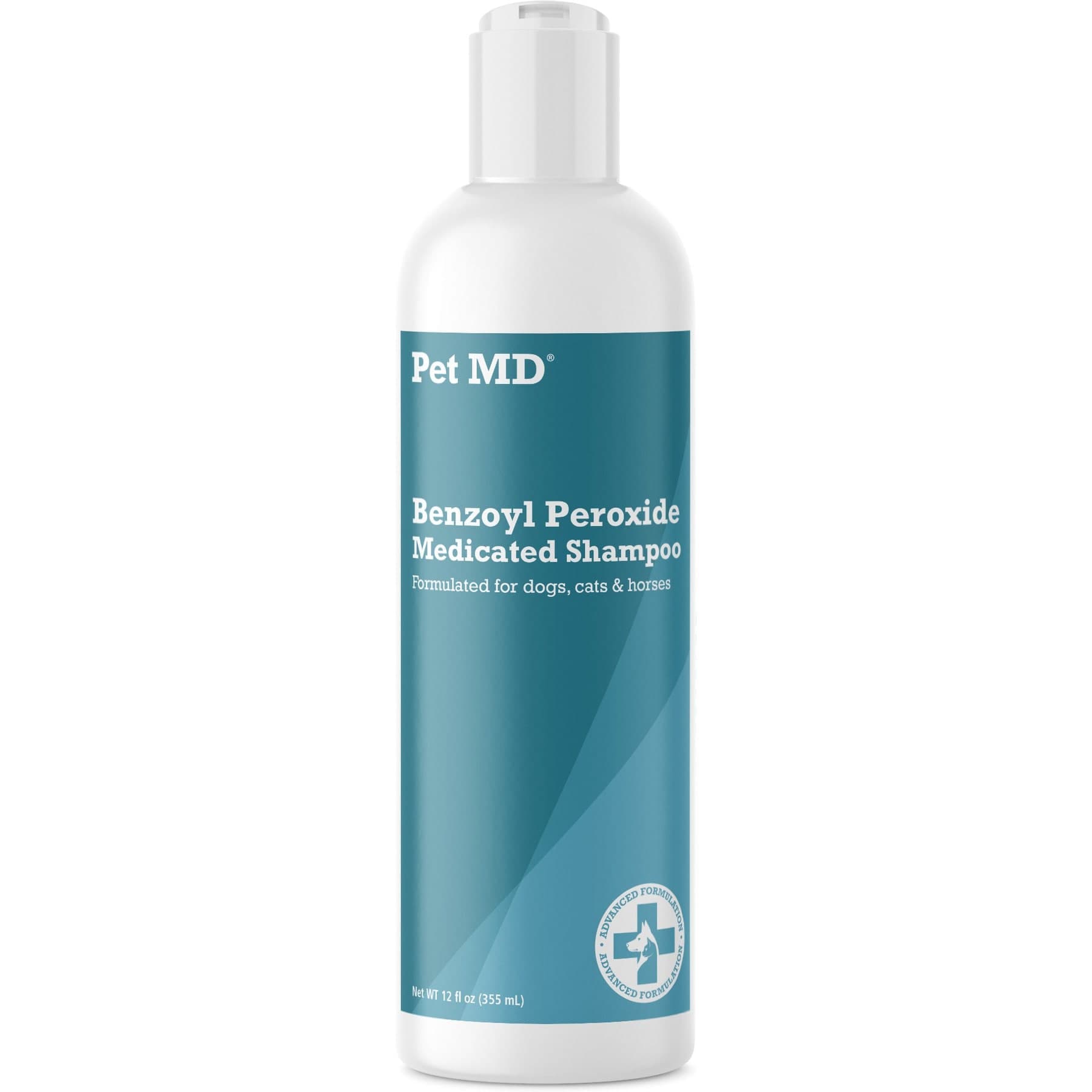
A soap-free benzoyl peroxide and salicylic acid shampoo listed for removing grease and easing scaling from plugged follicles.
Webvet may earn a commission when you click through to Chewy, at no extra cost to you.
Many owners describe the patch as matted. VCA's sign list describes greasy fur rather than true matting, so fur that sticks together in oily clumps at the tail base fits stud tail rather than pointing to a separate problem.

Coat color changes how the patch shows. On a white cat, the darker skin pigment VCA describes can stand out clearly. On a black cat, pigment change is harder to see, so running a finger along the top of the tail base to feel for greasy, waxy fur is the more useful check.
Itching is easy to miss. The Merck Veterinary Manual's guide to hair loss in cats notes that many cats hide their itching, and Merck's list of dermatitis signs in cats includes scaling, redness, thickening, darker pigment, oil buildup, an abnormal odor, and hair loss, several of which show up at a greasy tail base.
Other conditions can affect the same area or the same kind of gland, which is why a greasy or crusty tail base is not always stud tail:
- Miliary dermatitis: VCA says this rash often affects the lower back and the base of the tail, most often from flea-bite allergy; WebVet covers it in miliary dermatitis in cats
- Bacterial pyoderma: Merck says its most common sign in cats is excessive scaling, particularly on the back near the tail
- Ringworm: Merck lists the tail among the most common sites, along with the face, ear tips, and feet
- Sebaceous gland hyperplasia: Merck describes these benign overgrowths of the oil glands as usually smaller than 1 centimeter and most likely on the head or abdomen
SponsoredVet care that's always there
Unlimited video calls and messaging with licensed vets for less than a typical vet visit. One membership covers up to five pets.
Use code Pets60
Plans start at $12/month · covers up to 5 pets
- Licensed vets in most states
- Rx for 150+ conditions
- 4.7 on Trustpilot
What causes stud tail in cats and which cats get it
Hormones are the main driver, and they explain which cats are most likely to get it. VCA names an excess of androgen sex hormones, including testosterone, as the most common cause of stud tail, so intact male cats are affected most often and neutering comes up in their treatment.
Female cats can get stud tail too, and so can neutered males. VCA says it can occur in any cat, even after spaying or neutering, and the 1997 anatomy study found no difference in the gland's structure between the sexes. Hormones raise the risk; they do not decide which cats have the gland.
Grooming is the other big factor. In cats, VCA says poor grooming is often a primary cause, and it names what can get in the way:
- Obesity, which VCA's guide to obesity in cats also links to skin and coat problems and to difficulty fighting infection
- Orthopedic issues
- Stress
- Other underlying illnesses
No published age pattern exists for stud tail in older cats. For a senior cat, the practical question is whether weight gain, joint trouble, or another illness has made grooming harder, because VCA counts helping a cat resume normal grooming as part of treatment.
Where a cat lives can matter as well. VCA notes stud tail can be more common in shelters and cat breeding facilities, though it gives no figure. Seborrhea, a skin disorder in which the skin makes too much oil, is a less common cause, and VCA says it takes two forms:
- Primary: a disorder with a genetic basis
- Secondary: a result of allergic skin disease, skin parasites, hormonal imbalances, or chronic yeast or bacterial skin infections
The Merck Veterinary Manual's chapter on seborrhea adds that it is more common in dogs than in cats. For Maine Coon and Sphynx cats, no published breed figure exists. A 2009 case report in a Persian describes a single cat and gives no risk numbers.
A long coat like a Maine Coon's needs more upkeep, and WebVet's guide to grooming long-haired cats covers that routine. Whatever the breed, a cat that has stopped grooming its rear needs its owner to take over light cleaning there while the cause is sorted out.
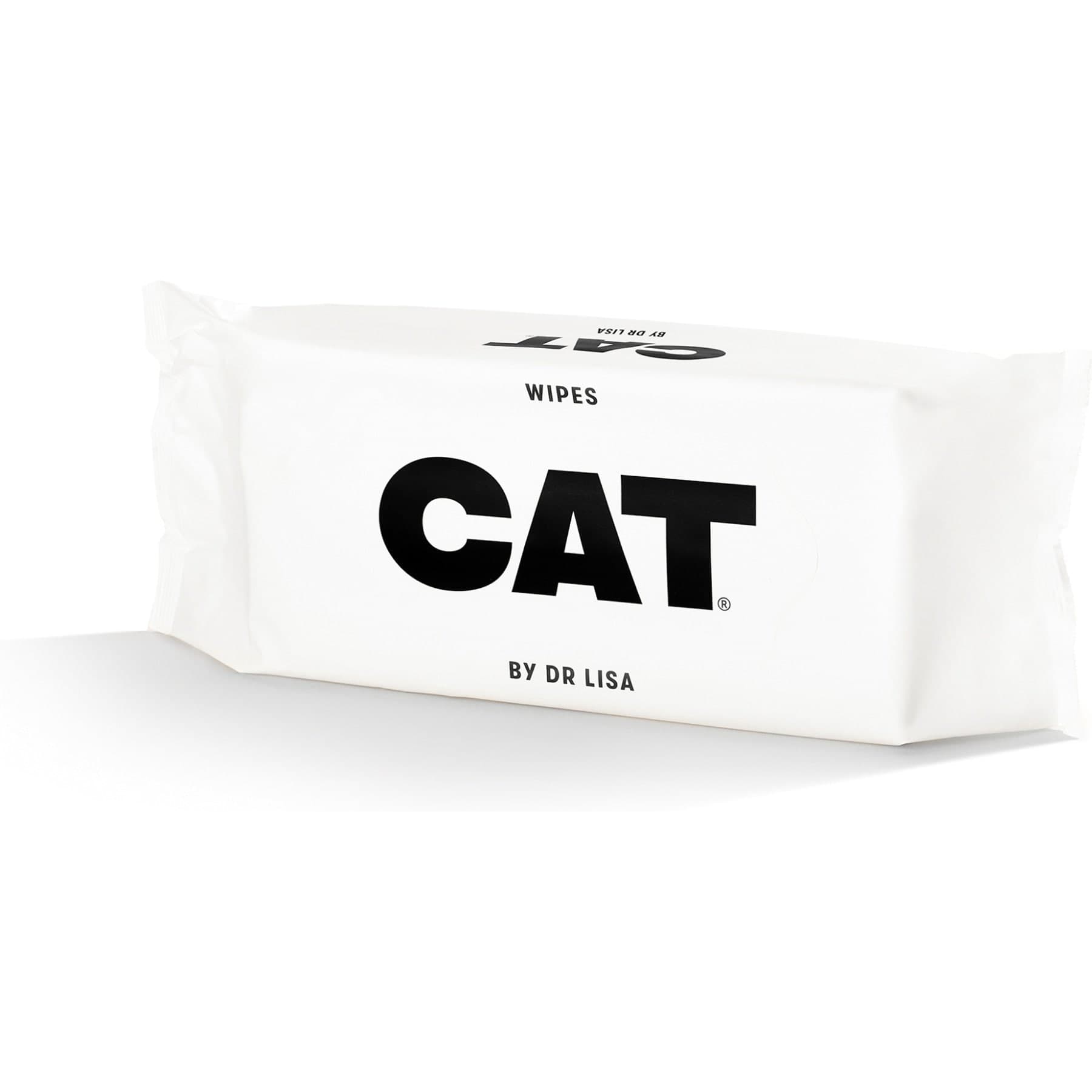
Gentle bamboo grooming wipes made for cleaning a cat's face, paws, and rear between baths.
Webvet may earn a commission when you click through to Chewy, at no extra cost to you.
How a vet checks a greasy tail: ruling out fleas, infection, and other causes
VCA says a veterinarian usually diagnoses stud tail from the way the tail looks and checks intact males for testicular tumors. A thorough look at the rest of the skin shows whether the grease is limited to the tail or part of a generalized seborrheic disorder. Biopsy is rarely needed.
Here is how a vet rules out fleas or infection, using the tests VCA and Merck describe:
- Skin cytology, often done to look for yeast and bacteria
- A sample from any crusts or draining tracts to identify the bacteria present
- A skin scraping to rule out mites
- A fungal culture to rule out ringworm, which Merck calls the most accurate test, though results can take up to 3 weeks
- Flea combing to look for fleas or flea dirt
- Bloodwork for blood cell counts, serum chemistry, and thyroid and adrenal function, to find underlying conditions
Because fleas are so common and so easily groomed away, VCA says a vet may recommend flea control even when none turn up.
Owners can look for flea dirt too. The Merck Veterinary Manual's guide to fleas describes it as reddish black, comma-shaped specks that dissolve into a reddish brown color on a damp paper towel.
Because many skin diseases have similar signs, Merck's guide to diagnosing skin disorders cautions that an immediate diagnosis may not be possible. A vet may also weigh other inflammatory conditions, such as eosinophilic granuloma complex in cats.

Since poor grooming is so often the root cause, VCA says the vet also evaluates the cat for conditions that affect normal grooming. While those are treated, a cat with a medium or long coat needs its owner to take over the combing it has let slide.
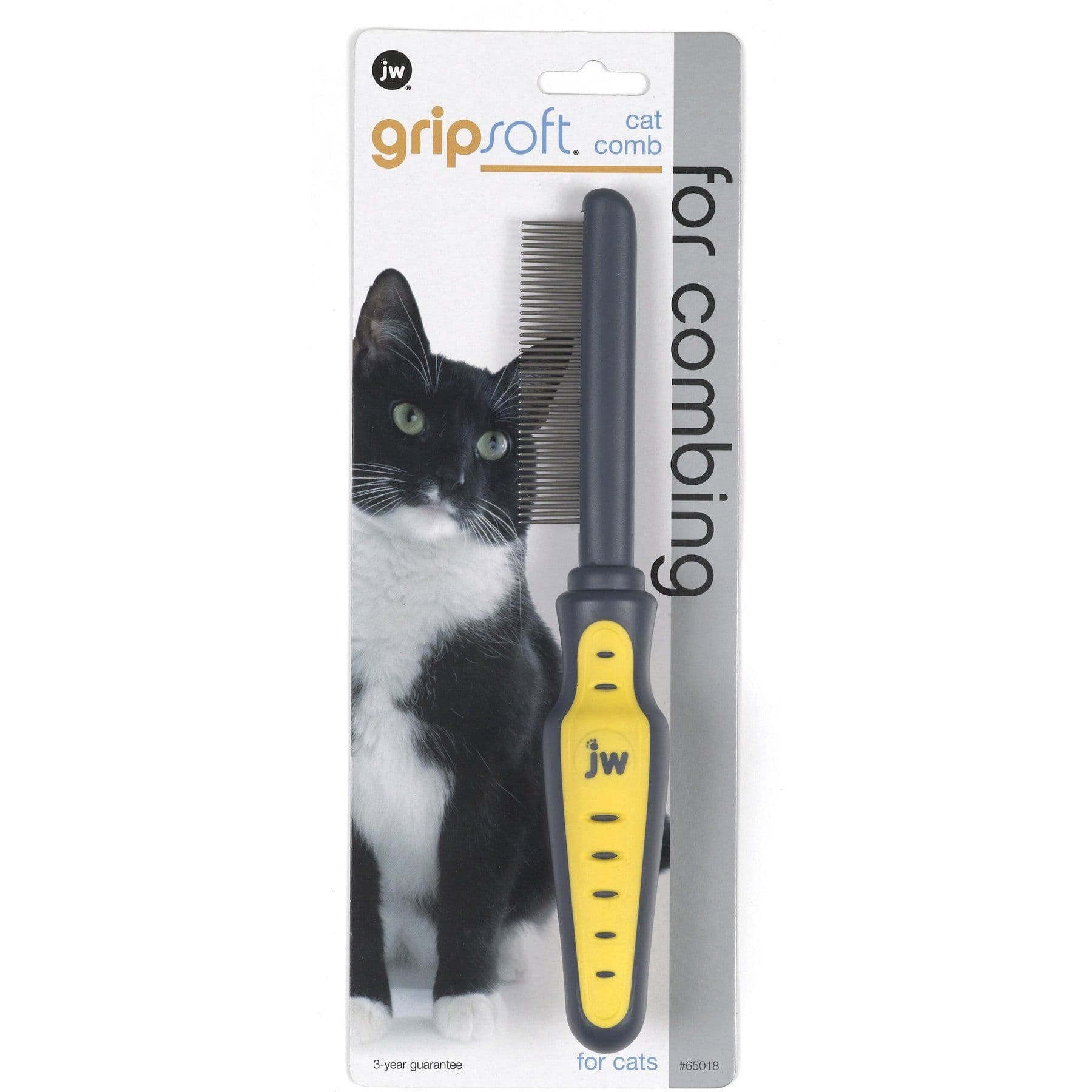
A grip-handled comb sold for daily grooming of medium and long-haired cats, where regular combing helps prevent matting.
Webvet may earn a commission when you click through to Chewy, at no extra cost to you.
My cat has a lump on the back near the tail. What could be causing this?
A distinct lump is not the typical picture of stud tail, which VCA describes as a greasy patch that can turn thickened and bumpy over time. An abscess is one possibility: VCA's guide to abscesses in cats says it typically appears suddenly as a painful swelling, and cats that fight or go outside face higher risk.
WebVet's cat abscess guide covers that cause in detail. A lump can also be a skin growth: Merck says skin tumors are usually small lumps or bumps, that identifying them should be left to a veterinarian, and that a fine needle aspiration or biopsy can tell a benign growth from a cancerous one.
When stud tail needs the vet: infection, pain, and swelling
Mild stud tail is mainly a cosmetic problem, in VCA's words, though the skin can itch. It starts to hurt with infection or deep inflammation: Merck notes that skin disease reaching the deeper dermis can cause fluid discharge, pain, and skin sloughing. A painful tail base calls for a vet visit.
Here is when a greasy tail needs the vet:
- Redness, swelling, discharge, or draining tracts, the infection signs VCA lists
- Open sores or bloody crusts, which Merck ties to deep skin infection
- Chewing or rubbing that injures the tail
- A new lump, or one that grows fast or ulcerates
- Fever, lethargy, withdrawal, or poor appetite, which VCA ties to abscesses
- Infection that keeps coming back
Fever, a changing lump, or repeated infection need prompt attention. VCA warns that delayed abscess treatment can lead to chronic draining tracts or organ system compromise, and Merck links recurrent, nonhealing deep skin infection in cats to diseases such as feline immunodeficiency virus and feline leukemia virus.
VCA describes tail amputation only as a last resort for a severe, painful infection that does not respond to treatment. WebVet also explains how to tell a skin infection apart in cats.
Stud tail treatment: degreasing baths, medicated shampoos, and neutering
Vets treat stud tail mainly by clearing the excess oil. VCA says most cases can be managed with shampoos and topical products that contain benzoyl peroxide, salicylic acid, or other degreasing agents. Because most cats dislike baths, Merck says a vet may suggest washing only the affected area instead of the whole cat.
The best shampoo for stud tail has these features:
- A degreasing agent: benzoyl peroxide or salicylic acid, as VCA names
- A cat label: VCA warns that some dog products can be poisonous to cats
- Gentle use: Merck's general seborrhea chapter says benzoyl peroxide can irritate and dry the skin
- Patience: the same chapter says scale-loosening shampoos often make scaling look worse for the first 14 days
Pet MD Benzoyl Peroxide Dog & Cat Shampoo, 12-fl oz bottle pairs benzoyl peroxide with salicylic acid in a soap-free formula, and its listing says it can be used on smaller affected areas. It was listed at $21.99 on Chewy when we checked in October 2026.
A gentle cleanser such as Burt's Bees Hypoallergenic Cat Shampoo, 10-fl oz bottle, pH balanced for cats, suits routine baths but is not a degreaser of the kind VCA describes; WebVet's best cat shampoo guide covers everyday picks.
VCA's feline acne guidance also lists antibacterial wipes and chlorhexidine products alongside or instead of benzoyl peroxide. Douxo S3 PYO Antiseptic Antifungal Chlorhexidine Dog & Cat Wipes 30 count is a chlorhexidine wipe whose listing describes antiseptic cleaning of infected skin, so it suits infection rather than routine degreasing.

Neutering helps when hormones drive the problem. VCA says castration can stop stud tail from progressing but may not resolve it completely, so it works alongside cleaning rather than replacing it.
Antibiotics require a vet's prescription, even through a pharmacy such as Chewy's, and VCA says the choice should ideally follow a bacterial culture. Merck says feline skin infections usually need at least 3 weeks of treatment, deep or recurrent ones 8 to 12 weeks or longer. VCA notes an e-collar may be necessary to prevent self-trauma.
What you see at the tail base decides between a degreasing wash at home and a vet visit:
| What you see | Likely stage | Home step | When the vet takes over |
|---|---|---|---|
| Greasy, waxy fur at the tail base, calm skin | Mild stud tail | Spot degreasing wash, then combing | Routine vet visit to rule out fleas |
| Blackheads, scale, or thinning fur | Plugged follicles | Regular degreasing wash labeled for cats | Vet visit if it spreads or returns |
| Bare, scabby, itchy skin | Possible flea allergy | Check for flea dirt | Vet visit for flea control and skin tests |
| Redness, swelling, or discharge | Secondary infection | Pause home products | Vet visit for culture and antibiotics |
| Sudden painful swelling, fever, or lethargy | Possible abscess | None | Prompt vet visit |
| A lump that grows or ulcerates | Needs identifying | None | Vet visit for a needle sample or biopsy |
Home care for stud tail: cleaning, grooming, and keeping it from coming back
Most owners can treat stud tail at home once fleas and infection are ruled out. When the underlying cause cannot be fixed, VCA says regular shampooing and topical therapy keep most cases under control, though recurring infection can be a complication.
A safe home cleaning routine for stud tail builds on the basics in WebVet's guide on how to bathe a cat:
- Check the tail base for flea dirt before you clean it.
- Wet only the greasy patch, not the whole cat.
- Work in a degreasing shampoo labeled for cats, following its directions.
- Rinse until no product is left.
- Towel-dry, then comb out loosened grease and scale.
- Repeat on the schedule your vet sets; no standard schedule is published.
To get rid of the grease, Davis Degrease Dog & Cat Shampoo, 16-fl oz bottle is a concentrated degreaser whose listing names stud tail and oily seborrhea among its uses. It was listed at $13.25 on Chewy when we checked in October 2026.
Between washes, CAT By Dr Lisa Cat Grooming Wipes, 80 count, made for cleaning a cat's face, paws, and rear between baths, suit light spot cleaning. The JW Pet Gripsoft Cat Comb, sold for daily grooming of medium and long-haired cats, covers regular combing.

Keeping stud tail from coming back depends on grooming the cat can manage. VCA lists weight loss, pain medication if needed, and a stress-free home as ways to restore normal grooming; WebVet's guide on how to groom a cat covers routine coat care.
Two shortcuts fall short. VCA notes flea shampoos kill fleas only when applied, with little lasting effect, so flea prevention needs its own product labeled for cats. Home remedies for stud tail in cats, such as apple cider vinegar or homemade sprays, have no support from veterinary sources.
Stud tail in cats questions
Frequently Asked Questions
Is stud tail contagious to other cats?
Stud tail is not contagious: VCA describes it as an overactive tail gland driven mainly by hormones and poor grooming. Ringworm, a lookalike that also favors the tail, is contagious by direct contact, per VCA, so a crusty tail in a multi-cat home deserves a vet check.
Can I use dish soap on my cat's stud tail?
No veterinary guidance recommends dish soap for stud tail. Merck's seborrhea advice for dogs says never to use a shampoo made for people without a vet's consent, and VCA's approach uses pet products with a degreasing agent. Whatever your vet approves, rinse it out completely.
How long does stud tail take to clear up?
No published timeline puts a number of weeks on it. VCA calls the outlook generally good once the cause is found and grooming improves; when the cause persists, cleaning becomes ongoing and recurring infection can be a complication. Infections usually need at least 3 weeks of antibiotics, per Merck.
Should I shave my cat's stud tail?
No veterinary guidance calls for shaving a mildly greasy tail. Clipping has a place in specific cases: Merck advises it for cats with deep skin infection, and VCA's feline acne guidance notes some cases need the hair kept clipped short. Leave clipping near the tail to your vet or a professional groomer.
Does stud tail go away after neutering?
Not always. VCA names excess testosterone and other androgens as the most common cause, and neutering an intact male can stop stud tail from progressing. It may not clear completely, though, and neutered cats can develop it too, so neutering works best as one part of the plan.

Editor
The Webvet Editorial Team is the in-house group of pet-care editors and writers behind Webvet, operated by Smart Pet Collective. The team researches, writes, and maintains Webvet's pet health, behavior, and medication content. Every article follows a defined editorial process: research from reputable veterinary and scientific sources, careful drafting, mandatory review of medical content by a credentialed veterinarian, and dated publication. Health and medication articles are medically reviewed by a licensed veterinary professional before they go live and are kept current over time.
Veterinarian · BVMS MRCVS
Dr. Pippa Elliott, BVMS, MRCVS, is a veterinarian with nearly 30 years of experience in companion animal practice. Dr. Elliott earned her Bachelor of Veterinary Medicine and Surgery from the University of Glasgow. She was also designated a Member of the Royal College of Veterinary Surgeons. Married with 2 grown-up kids, Dr. Elliott has a naughty Puggle named Poggle, 3 cats and a bearded dragon.
Related reading

Eosinophilic Granuloma Complex in Cats: Rodent Ulcers, Plaques, and Treatment

Miliary Dermatitis in Cats: Causes, Treatment, and Flea Control

Cheyletiella in Dogs (Walking Dandruff): Signs, Treatment, and Contagion
