Grooming Long Haired Cats: A Complete Routine
A long coat mats from underneath, not on top. Here is the complete routine for grooming long haired cats: how often to brush, the line-brushing technique, the seven places mats actually start, sanitary trims, and when a lion cut is the right call.

This article contains affiliate links. Webvet may earn a commission when you buy through them, at no extra cost to you.
Grooming long haired cats is less about how much time you spend and more about where the comb ends up. A Persian or Maine Coon coat can be brushed every single day and still mat, because a brush skims the top layer while the undercoat underneath quietly felts against the skin.
The whole job comes down to treating it as a routine rather than a rescue mission. This guide covers how often a long coat actually needs work, how to part it and brush down to the skin, the seven places mats really start, and where a sanitary trim or a full lion cut fits in.
None of it is difficult. It is mostly a matter of doing a small amount often, checking the places that matter, and knowing the point at which the job stops being yours.
 Sponsored
Want a vet's help with your cat's anxiety or behavior?
Talk to a licensed vet at Dutch over video, often the same day. They can recommend treatment and prescribe it when it's appropriate.
Use code Pets30
Plans start at $11/month · covers up to 5 pets
- Licensed vets in most states
- Rx for 150+ conditions
- 4.7 on Trustpilot
How often a long haired cat needs brushing
Check a long coat daily and groom often enough that loose hair and tangles do not build up. VCA recommends daily brushing for long, silky, or curly coats. Comfort, coat density, and ability to self-groom determine how much to do in each sitting.
There is no validated minute count for each breed. Work in small sections while your cat stays relaxed, and split the coat across short sittings rather than forcing a complete session.
- 1Check a long coat daily and divide necessary brushing into comfortable sections.
- 2A suitable comb checks beneath the surface. Stop at a snag instead of pulling through.
- 3Check hidden friction areas, including armpits, britches, tail base, behind the ears, ruff, belly, groin, and hocks.
- 4Firm mats, close clipping, and painful skin need professional help.
What decides your cat's frequency
- Undercoat density. A Maine Coon, Norwegian Forest Cat, or Siberian carries a thick woolly undercoat beneath the guard hairs, and that undercoat is what mats. A Turkish Angora or a Balinese carries far less of it and forgives a missed day.
- How well the cat grooms itself. A young, flexible, healthy cat does a large share of the work. An overweight, arthritic, or senior cat often cannot reach its own back or britches at all.
- Coat texture. A soft, cottony coat of the kind Persians, Himalayans, and many Ragdolls carry tangles faster than a coarse, silky one.
- Season. Some cats shed more heavily in spring and autumn, while indoor cats may shed throughout the year. Adjust care to the loose hair and tangles you find.
- Access to outdoors. Burrs, damp, and dust all speed matting up considerably.
Nothing on that list is fixed. A cat who managed fine on every other day at four years old can genuinely need daily work at twelve, and the coat will tell you before you notice why.
| Coat | Routine | Comfort limit | During shedding |
|---|---|---|---|
| Dense long coat | Daily coat check and brushing | Short comfortable sections | Remove loose coat gently |
| Soft long coat | Daily attention to tangles | Stop before resistance | Check friction areas |
| Silky long coat | Daily check; adapt brushing | No fixed minute target | Watch loose hair buildup |
| Domestic longhair | Daily check and gentle combing | Only areas accepted comfortably | Use suitable tools |
| Senior or arthritic cat | Help with missed areas | Avoid painful positioning | Discuss reduced self-grooming with the vet |
What the routine actually costs you per week
Plan for regular attention rather than a fixed weekly time allowance. A daily coat check may lead to a few comfortable brush strokes or several short sessions. Coat density, tangles, health, and tolerance determine the work.
Set against that, a coat allowed to felt means a long groomer appointment, sometimes a clip under sedation at a vet practice, and a cat who has learned that being touched leads to being hurt. The routine is the cheaper option by a wide margin.
Regular combing is treated as core care for long coated cats rather than an optional extra, both in International Cat Care's owner advice and in the ASPCA's cat care guidance. The frequency is the part most owners underestimate.
The long haired cat grooming routine, step by step

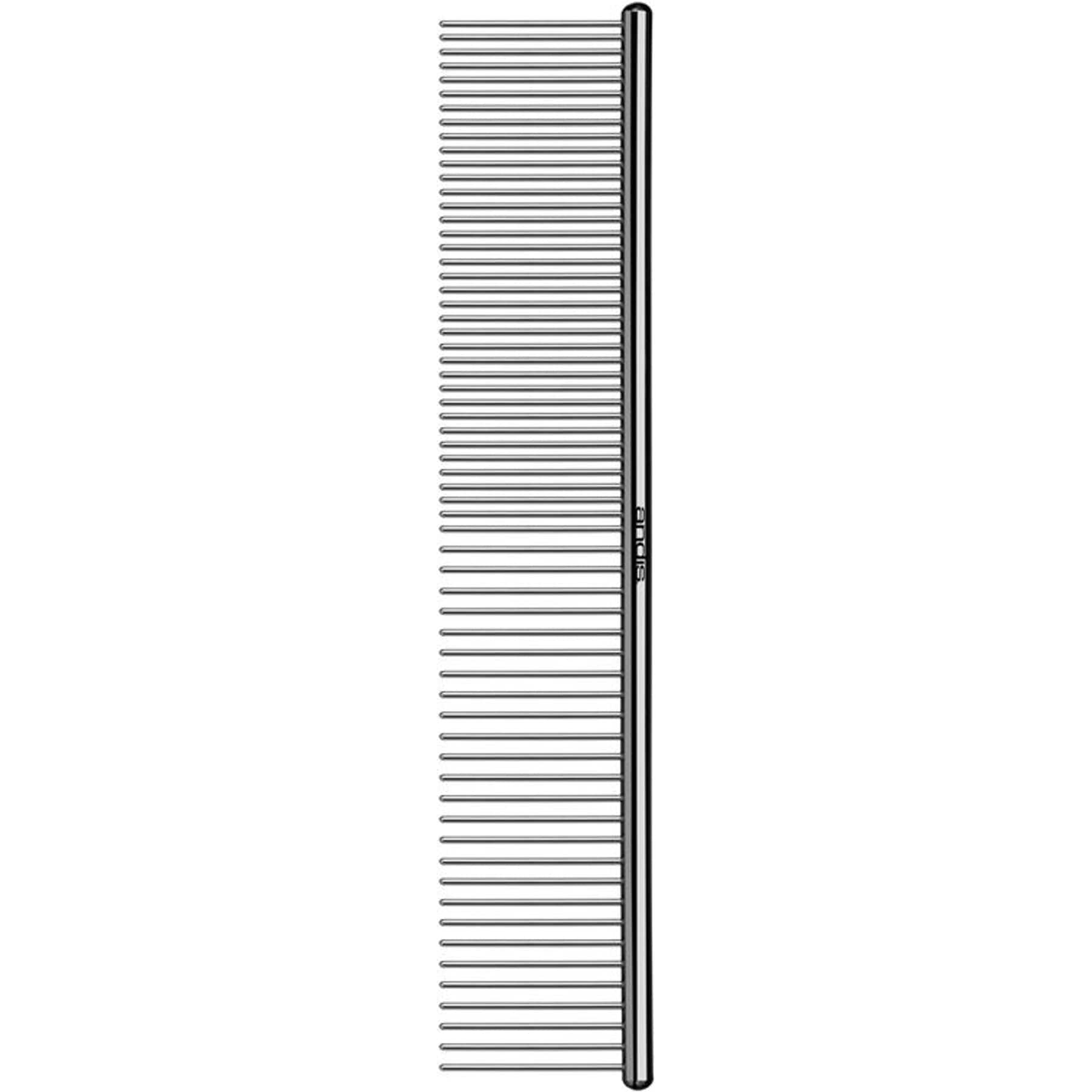
Two tooth spacings help check loose coat and minor tangles without pulling through snags.
Webvet may earn a commission when you click through to Chewy, at no extra cost to you.
The best way to groom a long haired cat is to work in sections from the skin outward, not in long sweeping strokes over the top of the coat. Lift a layer, brush that layer, comb it through, then move to the next one.
That technique is called line brushing, and it is the entire difference between a coat that looks groomed and a coat that is groomed. Everything else below is detail sitting on top of it.
The sequence, start to finish
- Pick your moment. A fed, sleepy cat on a warm surface is a completely different animal from one you have just chased off a windowsill.
- Start where the cat likes being touched. Cheeks, chin, and the top of the head first, with your hand, then with the brush. You are buying goodwill for the parts that come later.
- Work the top coat with a slicker or pin brush. Short, light strokes in the direction the fur lies, one body section at a time.
- Part the coat and line brush. Push the fur up against the direction it grows until you can see a clean parting with skin visible, then brush the layer below that parting downward. Let the parting drop a little and repeat.
- Comb each section as you finish it. A wide-tooth metal comb goes through the same patch you have just brushed. This is where you find what the brush missed.
- Do the underneath. Armpits, belly, groin, britches, and tail base, with the cat standing or lying on its side. This is the half almost everybody skips.
- Finish the tail and ruff. Comb the tail in short sections working from the base outward. Lift the chin and comb the ruff upward from the chest.
- Check each comfortable, detangled section with a gentle comb pass. If it catches, stop. Use fingers only on a small loose tangle that releases easily; leave dense or painful mats to a professional.
What line brushing looks like in practice
The cue you are looking for is the parting itself. If you cannot see skin at the parting, you are brushing hair against hair, and the layer sitting next to the skin is untouched. That layer is the one that mats.
Short strokes also beat long ones. A long stroke glides over the surface and feels productive. A short stroke on a parted section is doing the actual work.
- Use one hand to support a loose section of coat without pinching the skin. Support may reduce tugging, but it cannot prevent skin movement or make a resisted stroke safe.
- Use your wrist, not your arm. A stroke of an inch or two is plenty.
- Use the slicker with light pressure and follow its directions. The pins should move through the hair without scraping the skin.
- Never work the same spot over and over in one session. Slicker burn on thin skin is real, and the armpits and belly are where it happens.
- Talk to the cat and keep the pace slow. A comb moving quickly across a coat feels very different from one moving deliberately.
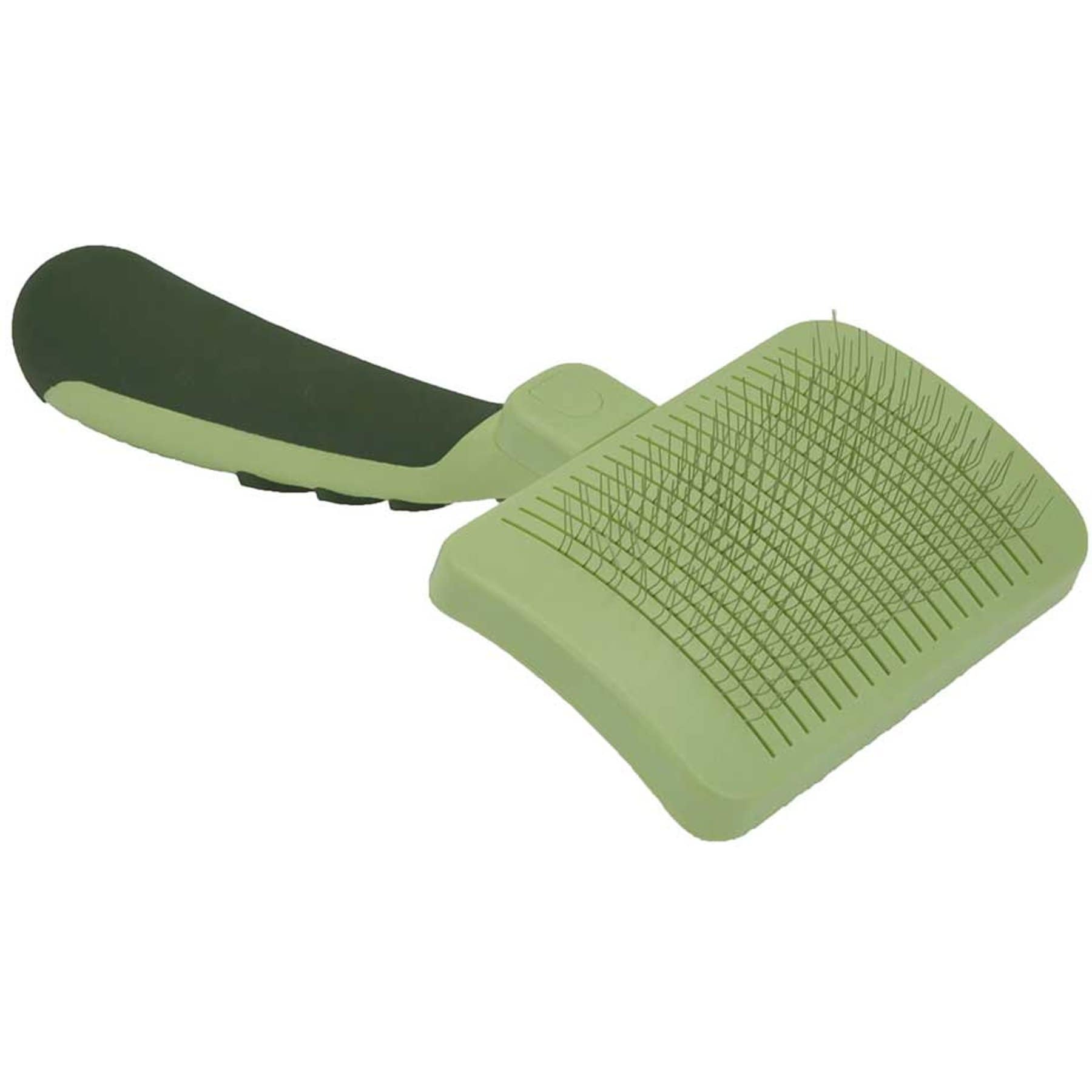
Coated pins and push-button cleanup for cats that tolerate gentle slicker grooming.
Webvet may earn a commission when you click through to Chewy, at no extra cost to you.
Claws get checked in the same sitting. A cat already lying still for a comb is the easiest cat to trim, and an overgrown claw catches in a long coat as readily as it catches in a carpet, so trimming a cat's claws safely belongs in the same handling habit.
Dental care needs its own gradual introduction. Our guide to brushing your cat's teeth explains the steps; the cat teeth cleaning guide covers the broader dental routine.
Where mats start on a long coat, and how to stay ahead of them
Matted cat fur forms when loose hair tangles with the surrounding coat and is compacted by friction, moisture, or reduced grooming. Check the armpits, britches, tail base, behind the ears, ruff, belly and groin, and hocks because problems can hide in these areas.
Several of these areas are hidden from above. A smooth-looking back does not show whether the underside or hindquarters are clear.
| Zone | Check | Safe response |
|---|---|---|
| Armpits | Clumps close to loose skin | Firm mats need professional help |
| Britches | Tangles behind thighs | Comb freely moving hair only |
| Tail base and rear end | Grease or attached waste | Spot clean fresh mess; get help with stuck debris |
| Behind ears | Loose tangle or firm knot | Stop at a dense core |
| Ruff and collar | Felted sheet | Professional removal |
| Belly and groin | Clumps pulling skin | No home close clipping |
| Hocks and toes | Debris or pain | Clean loose debris gently; leave cutting to a professional |
Check these areas regularly in whatever order your cat comfortably allows. Split the checks across sittings if necessary.
Why prevention and removal are different jobs
Routine brushes, combs, and gentle finger separation can help prevent mats and release easy loose tangles. Bladed dematting tools and clippers carry additional injury risks and belong with a trained professional.
The working rule is simple. If the comb goes through, you are preventing. If the comb stops, you have crossed into removal, and removal has its own safety limits.
When a coat starts matting for no obvious reason
A coat that has been easy for years and suddenly mats is usually telling you something about the cat rather than something about the brush. Cats groom themselves constantly, and when that stops the coat changes within a few weeks.
- Arthritis or pain. An older cat who cannot twist to reach the middle of its back or its britches will mat in exactly that stripe, the one place it can no longer touch.
- Weight gain. A cat who cannot reach past its own ribs stops grooming its lower back and rear entirely.
- Dental pain. Cats groom with the mouth, and a sore mouth means a great deal less of it.
- Feeling unwell. A cat who is off colour often stops grooming altogether, and the coat goes greasy and clumped before anything else becomes obvious.
- Overgrooming one patch while the rest mats points the other way, and it is worth a vet visit in its own right.
When several zones felt at once and the routine has not changed, the coat is the symptom. That process, where mats spread and join into a single sheet across the body, is called pelting, and it moves faster than most owners expect.
Skin disease changes a coat too. Fur that flakes, breaks, thins in patches, or mats where it never used to needs a veterinary look rather than a new brush, and skin problems that change a cat's coat are diagnosed rather than guessed at. Dermatitis and fungal infections both show up in the coat first.
Keeping a long haired cat's rear end clean
To keep a long-haired cat's bum clean, check the rear fur regularly, remove fresh ordinary soiling gently with a warm damp cloth, and dry afterward. Do not pull attached stool or cut near the anus. Repeated soiling may need a professional sanitary trim and a veterinary check for diarrhea, pain, or mobility problems.

A sanitary trim is a short clip of the fur around the anus, the underside of the tail base, and the inside of the back legs. It is a hygiene trim rather than a haircut, and on most cats it is invisible when they are standing.
Signs a long coat needs one
- Stool catching in the fur, or dried debris you have to comb out.
- A smell around the hindquarters that a clean cat should not have.
- Marks left on bedding, furniture, or your lap.
- The cat over-licking the area, or refusing to settle down properly.
- Litter sticking to the britches and to the fur between the pads.
There is a second reason to keep the area clear. A cat who finds its own rear end unpleasant sometimes starts avoiding the litter box, and a matted britch is one of the easiest causes to rule out early.
Doing a light tidy at home
- For a small fresh mess, gently clean surrounding fur with a warm damp cloth and dry it afterward. Do not pull on dried stool or cut close to the anus, genitals, or skin folds.
- Book a cat-experienced professional for a sanitary haircut. Round-tipped scissors can still cut skin, especially if your cat moves.
- If debris is stuck tightly, the area is matted, or your cat seems painful, stop and contact your veterinarian.
When it becomes a groomer's job
A groomer can assess whether a sanitary trim is needed and choose an appropriate clipping technique. A veterinarian should assess soreness, swelling, discharge, or persistent soiling.
Agree on maintenance timing with the professional who sees your cat's coat. Rebook according to regrowth and hygiene needs.
Grooming is also one of the few times anybody handles that part of a cat closely. If you notice swelling, discharge, redness, or the cat reacting sharply to a light touch there, that is a vet appointment rather than a trim.
SponsoredVet care that's always there
Unlimited video calls and messaging with licensed vets for less than a typical vet visit. One membership covers up to five pets.
Use code Pets30
Plans start at $11/month · covers up to 5 pets
- Licensed vets in most states
- Rx for 150+ conditions
- 4.7 on Trustpilot
Haircuts for long haired cats, from a tidy trim to a lion cut
The best haircut for a long haired cat is the smallest one that solves the actual problem. For most cats that means a sanitary trim, or a light tidy of the britches and the fur between the pads, and nothing more.

A comb cut or a full lion cut is a different order of decision. Those are for coats already beyond combing, or for cats who genuinely cannot be groomed, not for a cat whose owner has fallen a fortnight behind.

| Style | What it involves | When it may help | Limit |
|---|---|---|---|
| Sanitary trim | Professional clipping of areas collecting waste | Repeated soiling | Timing depends on regrowth and cause |
| Tidy-up | Small professional trim | Debris retention | No close home cutting |
| Belly clip | Selected underside coat removal | Individually assessed need | Loose skin increases risk |
| Comb cut | Even length with more coat retained | Suitable tangle-free coat | Guard combs do not solve firm mats |
| Lion cut or welfare clip | Shorter body coat | Severe matting or assessed care need | Extent and regrowth vary |
What shaving does and does not fix
- It does fix a pelted coat that cannot be combed out without hurting the cat. That is the one genuinely good reason to clip.
- It does not stop shedding. A clipped cat still sheds, in shorter pieces that work their way into fabric more easily rather than less.
- It does not reliably make a hot cat cooler. A long coat slows heat transfer in both directions and shades the skin underneath.
- It does not fix the routine. The coat grows back, and unless the combing habit changes the same coat mats again.
- It does not cure skin problems. Clipping can make skin easier to treat, but the treatment itself is a separate veterinary decision.
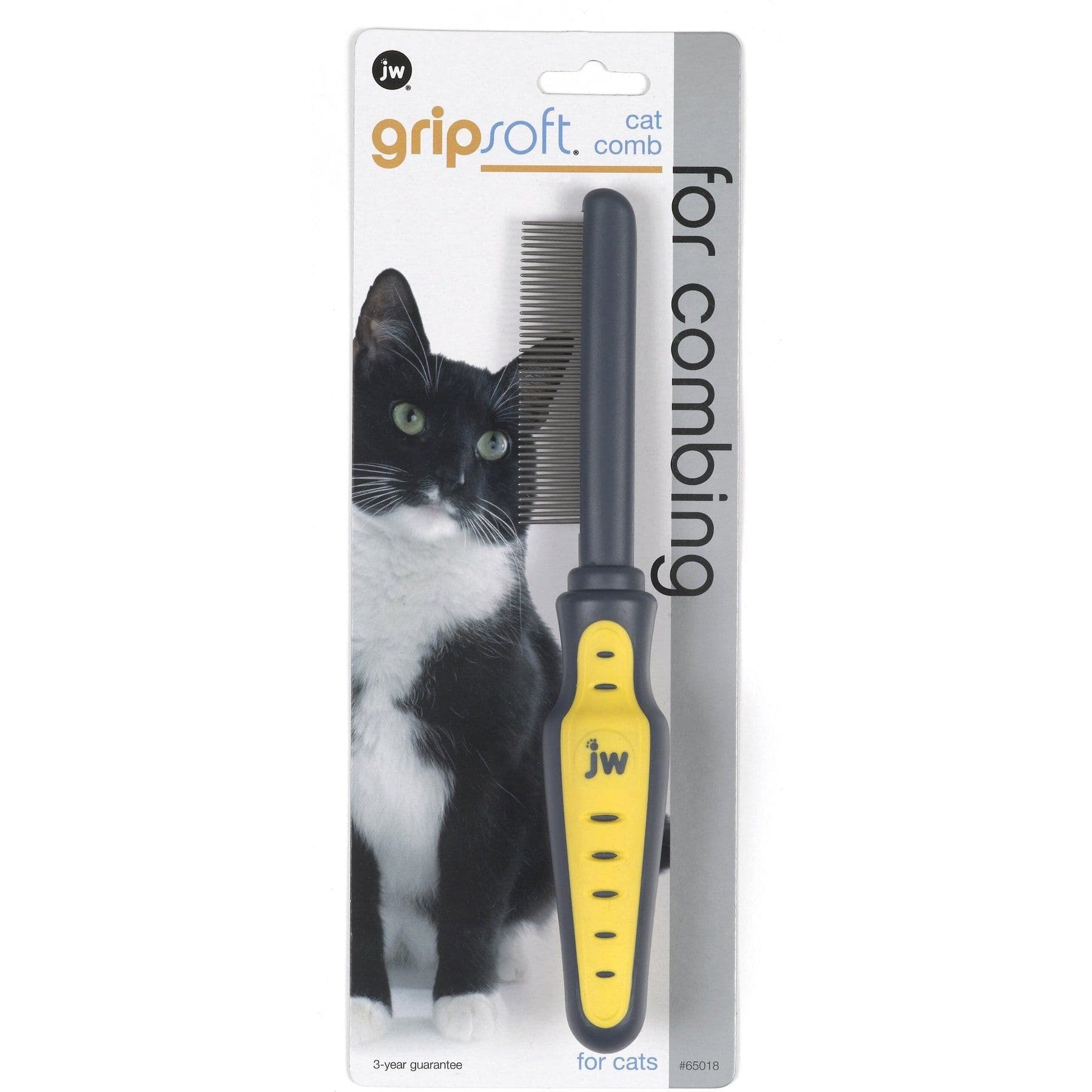
A handled comb for loose hair and checking suitable coats for remaining snags.
Webvet may earn a commission when you click through to Chewy, at no extra cost to you.
None of that makes a lion cut wrong. It makes it a decision with a real cost, taken because the coat is beyond rescue or the cat cannot be groomed, rather than because summer has arrived.
If a clip is the right answer, it is worth having a groomer or vet do it. Clipper blades run hot, feline skin is thin and mobile, and a nick on a wriggling cat is easier to cause than most people imagine.
Spring and fall coat blow: what changes in the routine
Some long-haired cats shed more noticeably in spring and fall; indoor cats may shed throughout the year. Check the coat and adjust gentle combing to the loose hair and tangles you actually find. Coat length alone does not tell you how much a cat will shed: undercoat, season, health, and the individual cat all matter. Long strands can simply make the shed hair more visible.

Indoor cats living under artificial light tend to shed more evenly all year and get a softer version of it. Cats with outdoor access usually get the sharper, more obvious shedding season, tied to daylight and temperature.
What actually changes
- Frequency. Check for accumulating loose hair and tangles, then adjust gentle grooming to what your cat comfortably accepts. Do not automatically double the sessions.
- Use an undercoat tool only if it suits your cat's coat, following that model's directions. Shedding can occur outside spring and autumn, especially indoors.
- Check the skin and gently comb out tangles before using a deshedding tool. Never run the tool through a matted coat.
- Vigilance. Loose hair can become tangled, especially in friction areas. Inspect those areas regularly rather than relying on a predicted number of days before matting.
- Cleanup. Fur on the furniture goes up regardless. That is the season, not a problem to solve with clippers.
The trouble zones matter more than usual during these weeks, because shed undercoat collects in exactly the places it cannot fall out of. The armpits and britches are the ones to check first.
When shedding stops being seasonal
Shedding is a coat matter right up until it arrives with a skin matter. These are the signs it is time to book a vet appointment rather than buy another rake:
- Bald patches, or fur coming out in clumps and leaving thin skin behind.
- Redness, scabs, scaling, or a greasy coat.
- A marked increase from your cat's usual shedding pattern, especially with skin changes or other signs of illness.
- The cat licking or chewing one area until it is bare.
- Weight loss, appetite change, or lethargy alongside the coat change.
Any of those alongside heavy shedding is a veterinary question, and the Merck Veterinary Manual's cat owner section covers the coat and skin conditions that sit behind them. A cat's coat is one of the first places illness shows itself.
When your long haired cat hates being brushed
If your cat dislikes brushing, begin with only the contact it accepts comfortably, even if that is one stroke. Stop at discomfort and build gradually; a timed session is not a target to finish.
A cat flattening its ears, thrashing its tail, going stiff, growling, or turning its head toward your hand is not being difficult. It is giving you the last warnings before a bite, and the correct response is to stop.
Reading the stop signals
- Tail thumping or lashing, especially against the floor.
- Skin rippling along the back, or a sudden turn to look at the brush.
- Ears going flat or sideways, whiskers pulling back.
- Going very still and very tense, which is easy to mistake for cooperation.
- A low growl, a hiss, or a paw placed deliberately on your hand.
Stopping at the first of those is what teaches a cat that grooming ends before it gets bad. Pushing through teaches the opposite, and that lesson is far harder to undo than it ever was to avoid.

A pair of textured gloves for supervised, gentle surface grooming. Choose the size for your hands.
Webvet may earn a commission when you click through to Chewy, at no extra cost to you.
Building tolerance with brief, comfortable sessions
- Leave the comb out where the cat can investigate it. A tool that only appears for an ordeal becomes part of the ordeal.
- Start with your hand. Stroke the zone you intend to comb, then stop while the cat still wants more.
- Do one zone per session. Behind one front leg. That is the entire job for that day.
- End on a good moment every single time, and follow it with something the cat values: food, a treat, or simply being left alone.
- Build tolerance by adding a small area when your cat is ready. The number of sessions needed depends on the coat and how much your cat comfortably allows.
Position matters more than most owners expect. Plenty of cats tolerate far more on a lap or lying on their side on a bed than they ever will standing on a table, and many tolerate a comb better than a slicker because the sensation is more predictable.
What not to do
- Do not scruff, wrap, pin, or restrain a cat to get a session finished. It works once, and it costs you every session afterwards.
- Do not chase a cat who has left. Leaving is the cat using the exit you gave it, which is exactly the behaviour you want.
- Do not give any sedative, human medication, or calming product before grooming without your vet directing it. Sedation is a prescribing decision, not a grooming shortcut.
- Do not save the whole cat up for one long session. Long sessions are the single most common reason cats come to hate grooming.
If a cat bites or scratches hard enough to break your skin, clean the wound properly and get it seen, because cat bites infect readily. Then rebuild the routine on shorter sessions rather than on more determination.
A cat who cannot be groomed at all despite genuinely short sessions is not a failure of patience. That is a cat who needs a groomer or a vet involved, and the American Association of Feline Practitioners publishes handling guidance built around exactly that problem.
Should you take a long haired cat to a groomer?
Yes, take a long haired cat to a groomer when the coat has gone beyond what a comb can clear, when a clip is needed, when the cat will not tolerate handling at home, or when you simply cannot keep up. A groomer is maintenance, not an admission of defeat.
Some long-haired cats benefit from recurring professional care alongside home grooming. The interval should reflect coat, health, handling tolerance, and how quickly tangles or soiling return.
What to look for in a groomer
- Cat-only, or genuinely cat-experienced. Cats are not small dogs, and a salon that mostly handles dogs is a loud and frightening place for one.
- Low-stress or Fear Free handling. Ask what happens when a cat says no, then listen carefully to the answer.
- A clear medication policy. Only a veterinarian should prescribe or direct medication or sedation for your cat; the groomer should not select or administer it independently.
- A short appointment, alone, with no cage drying and no long wait in a room full of dogs.
- A willingness to stop. The groomer who offers to finish another day rather than force it is the one you want.
It is entirely fair to ask for before and after photographs of long coats they have worked on. What you want to see is coats combed out and tidied, not every single cat leaving in the same lion cut.
Book earlier than feels necessary. Groomers who take cats are often booked weeks ahead, and the appointment you need urgently is the one you cannot get.
Which brush and comb a long coat actually needs
A long coat needs three tools, plus an optional fourth. A slicker or pin brush for the surface coat, a wide-tooth metal comb for the working pass, and a finer comb for the face, ears, and tail. The optional fourth is an undercoat rake for coat-blow weeks.
The metal comb is the one that matters most, and it is the tool most long-coat owners are missing. Brushes make a coat look good. The comb is what tells you whether it actually is.
- Slicker brush. Fine angled pins on a flat head. Lifts loose fur and works the surface coat. Held at a slant, in short strokes, and never dragged repeatedly over one spot.
- Pin brush. Rounded-tip pins set further apart. Kinder on a soft or cottony coat than a slicker, and a better fit for a cat who dislikes the slicker sensation.
- Wide-tooth metal comb. Often sold as a greyhound comb, with wide teeth at one end and fine teeth at the other. This is the tool that decides whether a coat is genuinely clear.
- Fine comb. For behind the ears, around the face, and finishing the tail.
- Undercoat rake or long-hair deshedding tool. An optional tool for a suitable coat, used according to its directions after checking for tangles.
- Mat splitter or bladed dematting tool. Leave these cutting tools to someone trained in feline grooming; they are not a substitute for gently separating a loose tangle.
Grooming gloves are pleasant and some cats adore them, but they work the very top of the coat only. On a long coat treat a glove as a way of getting a nervous cat used to being handled, not as a substitute for a comb.
Whatever you buy, check that the pins and teeth are smooth and rounded at the tips. Rough or worn tips catch skin, and a cat only needs that to happen once to decide that grooming hurts. For the full method and its limits, see choosing a cat brush.
Deshedding tools and undercoat rakes
An undercoat tool can help remove loose hair from a suitable coat. It does not replace checking the skin, brushing, or dealing with tangles before use.
Tool designs differ. Pressure, repeated passes, or use on an unsuitable coat can cause irritation or damage. Do not assume every deshedding edge works like a cutting dematting blade.
- Use only on a dry coat that has already been checked and gently combed free of tangles.
- Light pressure, short strokes, following the direction the fur lies.
- Follow the tool's directions for passes and pressure, and stop earlier if your cat becomes uncomfortable or the skin looks irritated. Do not keep working until no more hair comes out.
- Never on the belly, armpits, face, or anywhere the skin is thin or loose.
- Never on a matted coat. It will pull hard, and the cat will remember it.
For the full method and its limits, see comparing cat deshedding tools.
Mats that have already formed
The moment a comb stops travelling, you are no longer preventing mats. You are removing one, and removal carries rules that this routine deliberately does not cover.
Only a small loose tangle that separates readily without pulling skin or upsetting your cat is suitable for gentle home care. Supporting the fur does not make pulling safe.
A dense mat needs professional help even if it lifts away from the body. Pain, abnormal skin, sensitive locations, or a pelted coat warrants veterinary assessment.
- Never cut a mat off with scissors. The skin tents up into the mat, and you cannot see where the mat ends and the cat begins.
- Never use household scissors or hardware-shop clippers anywhere near a mat.
- Never soak a mat in oil or a home remedy. It does not release the mat, and the cat will swallow whatever you put on it.
- Never work at one mat for more than a moment at a time, and stop completely the second the cat objects.
A pelted coat is beyond a home grooming task. Arrange veterinary assessment and professional removal; the veterinarian decides whether medication or monitored sedation is needed. For the full method and its limits, see handling matted cat fur safely.
If you are asking how to dematt a cat at home, the conservative answer is that you only work loose tangles. Hold the hair at the base so the skin is not pulled, tease the tangle apart with your fingers, then follow with a wide-tooth comb. Anything firm, tight to the skin, or uncomfortable goes to a groomer or vet.
The best dematting tool for long haired cats is usually a sturdy wide-tooth metal comb, with a finer comb to finish. Bladed dematting rakes and splitters cut through the coat, so they belong in experienced hands and only on loose tangles, never on dense mats sitting close to the skin.
Bathing a long haired cat
Most long haired cats never need a routine bath. Cats are efficient self-cleaners and a well-combed coat stays clean on its own. Baths are for a specific reason: something stuck in the coat, a cat who has stopped cleaning itself, a medicated wash a vet has asked for, or a show coat.
What a long coat changes is not really the bath itself. It is the two things either side of it.
- Before a planned grooming bath, check for tangles and gently clear only those that release comfortably. Firm mats need professional removal first. Do not delay veterinary instructions for urgent contamination to complete a brush-out.
- Blot the coat with dry towels and keep your cat in a comfortably warm room until dry. Do not force a dryer on a frightened cat; if one is accepted, use unheated gentle airflow and keep it moving away from the face.
- Check comfortable sections for snags once your cat is warm and settled. Stop if a comb catches or your cat becomes uncomfortable.
Fleas require a veterinary parasite-control plan; a bath alone cannot clear an infestation. Read the separate flea shampoo guide for that decision, or compare ordinary cat shampoos when the issue is routine dirt.
Whatever the reason, one wet cat handled badly can undo months of patient grooming work. If the bath is optional and the cat is telling you no, it is optional. For the full method and its limits, see safe cat bathing and drying.
If you do need to bathe a long-haired cat, rinse for longer than feels necessary. Shampoo left deep in a dense coat can irritate the skin and leaves fur that tangles as it dries.
Long coats, swallowed fur, and hairballs
Long-coated cats can swallow substantial loose fur during self-grooming. Brushing and combing remove some of that fur before it is swallowed, but coat length alone does not predict an individual cat's hairball frequency.

Brushing may reduce swallowed loose fur, but there is no guaranteed timeline for fewer hairballs. Frequent hairballs or vomiting still needs veterinary assessment.
Understanding why cats get hairballs is worth doing before you change anything, and hairball prevention covers the diet, fibre, and lubricant side that brushing alone never touches.
When a hairball stops being a grooming problem
Frequent hairballs, retching that produces nothing, repeated vomiting, appetite loss, or constipation are not grooming problems. A wad of swallowed fur that has stopped moving is a blockage and an emergency, and that is a vet visit rather than a longer brushing session.
The same goes for a cat who has started producing hairballs after years of not doing so. That is a change worth investigating rather than a signal to comb harder.
Long haired cat grooming questions
Frequently Asked Questions
Should I shave my long haired cat in summer?
Usually no. A cat's coat insulates in both directions: the same guard hairs and undercoat that hold warmth in also slow heat coming in and shade the skin underneath. Shaving removes all of that, and a clipped cat can sunburn, particularly a pale-skinned cat who likes lying in a window.
Clipping also does not stop shedding, and regrowth on some cats comes back patchy or with a noticeably different texture. Shade, cool flooring, and fresh water do considerably more for an overheated cat than clippers do. The genuine reasons to clip a long coat are a pelted coat that cannot be combed out, a cat who cannot be groomed at all, and a medical need identified by a vet.
Why has my long haired cat suddenly started matting?
Usually because the cat has stopped grooming itself, not because the coat changed. Cats do a large share of their own coat care, and when that drops off the mats appear in the exact places the cat can no longer reach: the middle of the back, the britches, and the tail base.
The common causes are arthritis or other pain, weight gain, dental disease, or simply feeling unwell, and every one of them is worth a vet appointment rather than a new brush. Skin disease is the other possibility, so a coat that flakes, breaks, thins, or mats where it never used to needs looking at properly.
When does a long haired kitten need real grooming?
Start gentle brushing and coat checks while your kitten is young. A kitten's coat can still tangle, so adjust care to the coat you have rather than waiting for an adult coat.
Use brief, pleasant sessions to introduce a suitable brush and gentle handling. Early experience may help later care but does not guarantee cooperation. Check the coat daily and adapt grooming to its condition as it develops.
Does brushing a long haired cat reduce hairballs?
Brushing and combing can reduce loose fur available to swallow, which may help reduce hairballs. It does not guarantee a particular result or replace assessment of frequent hairballs or vomiting.
It is not a treatment for frequent hairballs, though. A cat bringing up hairballs often, retching without producing anything, vomiting repeatedly, or going off food needs a vet rather than more brushing, because frequent hairballs often turn out to be a digestive or skin issue rather than a grooming one.
The bottom line
Check a long coat daily, including hidden friction areas, and groom as needed to keep it comfortable and free of loose tangles. A comb should move easily through a finished section. Stop at resistance.
Keep the sessions short and end them early. Book a sanitary trim before it becomes urgent, and treat a sudden change in the coat as a health question rather than a brushing one.
These habits help reduce matting, but they cannot prevent every coat problem. Tools, professional grooming, and veterinary care should support your cat's individual needs. Further reading: VCA coat-care guidance

Editor
The Webvet Editorial Team is the in-house group of pet-care editors and writers behind Webvet, operated by Smart Pet Collective. The team researches, writes, and maintains Webvet's pet health, behavior, and medication content. Every article follows a defined editorial process: research from reputable veterinary and scientific sources, careful drafting, mandatory review of medical content by a credentialed veterinarian, and dated publication. Health and medication articles are medically reviewed by a licensed veterinary professional before they go live and are kept current over time.


