Lick Mat for Dogs: What It Does, Best Fillings, and Which to Buy
A lick mat is a textured silicone or rubber mat you spread with soft food so your dog licks slowly, which can occupy them during baths, nail trims, or alone time. Safe fillings, chewing and xylitol risks, cleaning, and the best mats to buy.

This article contains affiliate links. Webvet may earn a commission when you buy through them, at no extra cost to you.
What a lick mat does for dogs: calm, slow licking, and when one helps
A lick mat for dogs is a textured silicone or rubber mat that you spread with soft food. The grooves trap the food, so your dog licks slowly instead of gulping, which can help with calm, slower eating, baths, nail trims, and quiet time alone.
The two rules that matter most: any spread on a lick mat for dogs must be xylitol-free, and a dog who chews should be supervised so the mat stays a licking toy, not a snack. Get those right and most dogs take to a mat quickly.
| Lick mat | Best for | Material and grip | Price on Chewy (checked November 2026) |
|---|---|---|---|
| LickiMat Classic Buddy Slow Feeder Dog Lick Mat, Turquoise | Gentle lickers and first-time users | Thin flexible rubber, lies flat | Listed at $8.99 |
| LickiMat Tuff Buddy Non-Skid Thermoplastic Rubber Dog Bowl, Turquoise | Dogs that chew thin mats | Thermoplastic rubber with a rigid non-skid base | Listed at $16.99 |
| SodaPup Emat Honeycomb Dog Lick Mat, Large | Frozen fillings and bigger dogs | Rubber, large honeycomb surface | Listed at $13.99 |
| Sassy Woof Silicone Dog Lick Mat, Mint | Baths, grooming, and crate time | Silicone, wipes clean | Listed at $17.99 |
| Woof LickMat No Slip Silicone Dog Slow Feeder Mat, Forest Green | Budget non-slip use | Silicone with a built-in mixing bowl | Listed at $9.99 |
- 1What licking does for a dog: a lick mat slows eating and gives a calm, focused job during stressful moments.
- 2Safe spreads for a lick mat include plain wet dog food, plain cooked pumpkin, and xylitol-free peanut butter in small amounts.
- 3Never use spreads with xylitol, grapes or raisins, onion or garlic, or chocolate.
- 4Count the filling as treat calories and supervise dogs that chew.
So what is the purpose of a lick mat? It turns a few spoonfuls of food into a slow, repetitive activity for fast eaters, restless dogs, and dogs who find handling stressful. Licking behavior is easy for almost any dog, which makes a mat one of the simplest forms of food-based enrichment.
The benefits of a lick mat line up with broader veterinary guidance. The Merck Veterinary Manual describes a work-for-food approach that can "limit the quantity of food consumed and prevent gorging," and the World Small Animal Veterinary Association (WSAVA) notes that food treats provide enrichment and mental stimulation.
If gulping meals is your main concern, a dedicated bowl may suit you better; see our guide to the best slow feeder dog bowls.

How do you use lick mats for dogs?
Spread a thin layer of soft food into the grooves, set the mat down or stick it to a smooth surface, and let your dog lick. Start with an easy, tasty spread. LickiMat's FAQ says dogs need to be trained to lick the mat, so stay nearby early on and pick it up when the food is gone.
Do vets recommend lick mats?
Veterinary sources support the idea. VCA Animal Hospitals suggests smearing peanut butter on a surface to occupy a puppy during nail trims or a bath, and the Merck Veterinary Manual recommends food-stuffed toys and puzzle feeders for dogs who need an outlet. Published research on lick mats themselves is thin, so treat them as a helpful tool, not a treatment.
Are lick mats actually good for dogs?
For most dogs, yes, when the filling is safe and portion-controlled. Is a lick mat good for every dog? Not always. A dog who swallows rubber, or a dog on a strict or medical diet, needs a different approach or a talk with your vet first. Otherwise, a mat is a low-cost way to add calm, slow licking to the day.
 Sponsored
Want a vet's help with your dog's anxiety or behavior?
Talk to a licensed vet at Dutch over video, often the same day. They can recommend treatment and prescribe it when it's appropriate.
Use code Pets60
Plans start at $12/month · covers up to 5 pets
- Licensed vets in most states
- Rx for 150+ conditions
- 4.7 on Trustpilot
Our picks: the best lick mats for dogs
The best lick mat for dogs depends on the job. A gentle licker can use almost any mat, a chewer needs a rigid base, and a bath helper needs suction. Each pick matches one job, and the same healthy fillings, such as wet food or plain pumpkin, work in all of them.
Some mats add extras, such as a built-in bowl for mixing spreads, but texture, size, and toughness matter more. For the best lick mat for puppies, start with a small, soft mat and supervise while your puppy learns to lick rather than chew.
LickiMat Classic Buddy Slow Feeder Dog Lick Mat: best classic lick mat
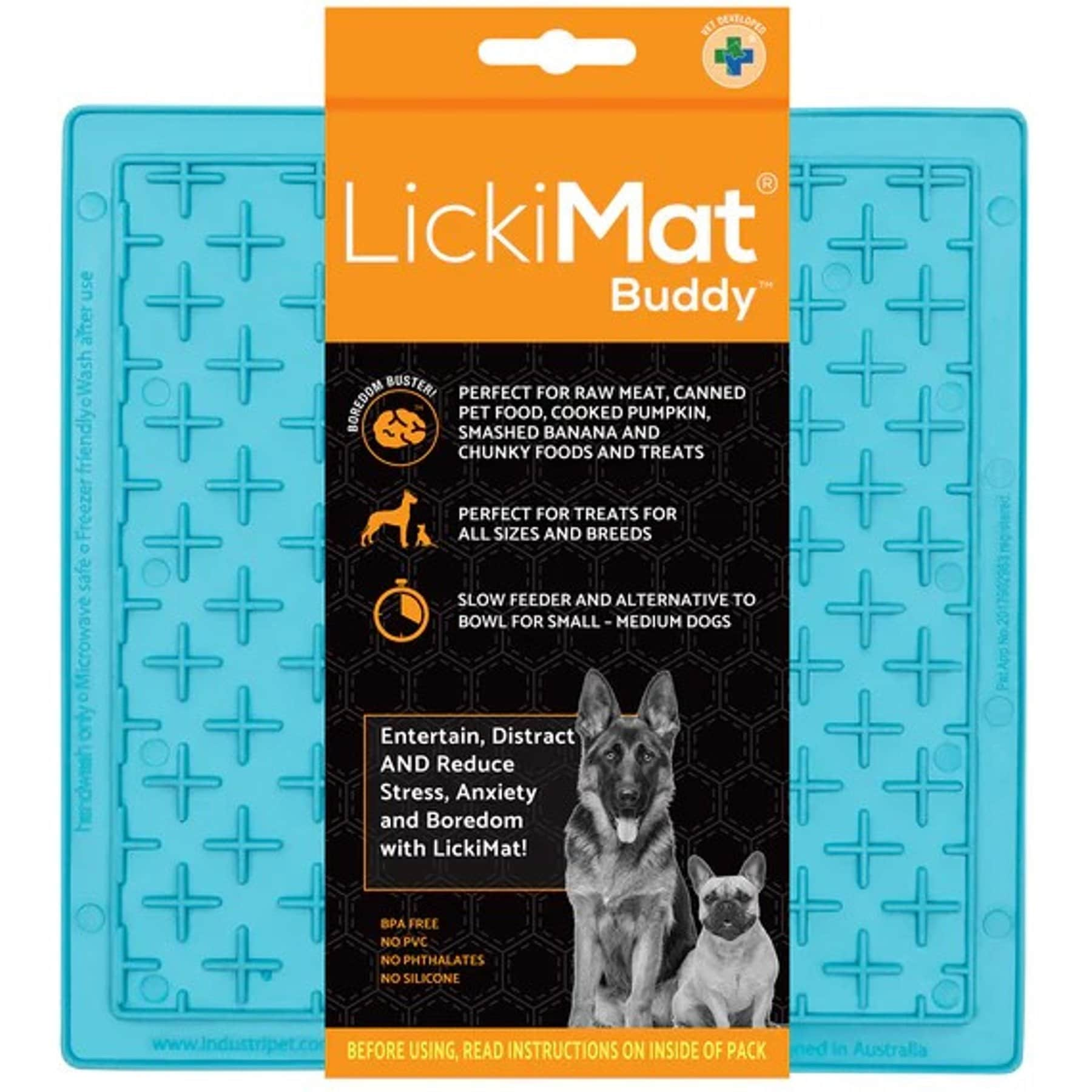
A flexible, textured lick mat for gentle lickers that holds soft food, yogurt, or pumpkin for slow, calm licking.
Webvet may earn a commission when you click through to Chewy, at no extra cost to you.
The LickiMat Classic Buddy Slow Feeder Dog Lick Mat, Turquoise is the simple, flat mat most people picture. Its textured surface holds food, treats, yogurt, pumpkin, banana, and chunky treats, according to the product listing, so it works with nearly any filling on the safe list.
It suits dogs who lick gently and leave the mat alone once the food is gone. LickiMat describes its Classic mats as rubber and does not recommend putting them in the dishwasher, so plan to hand wash. Because it is thin and soft, it is not the right pick for a dog that chews.
LickiMat Tuff Buddy Non-Skid Thermoplastic Rubber Dog Bowl: best tougher lick bowl for chewers
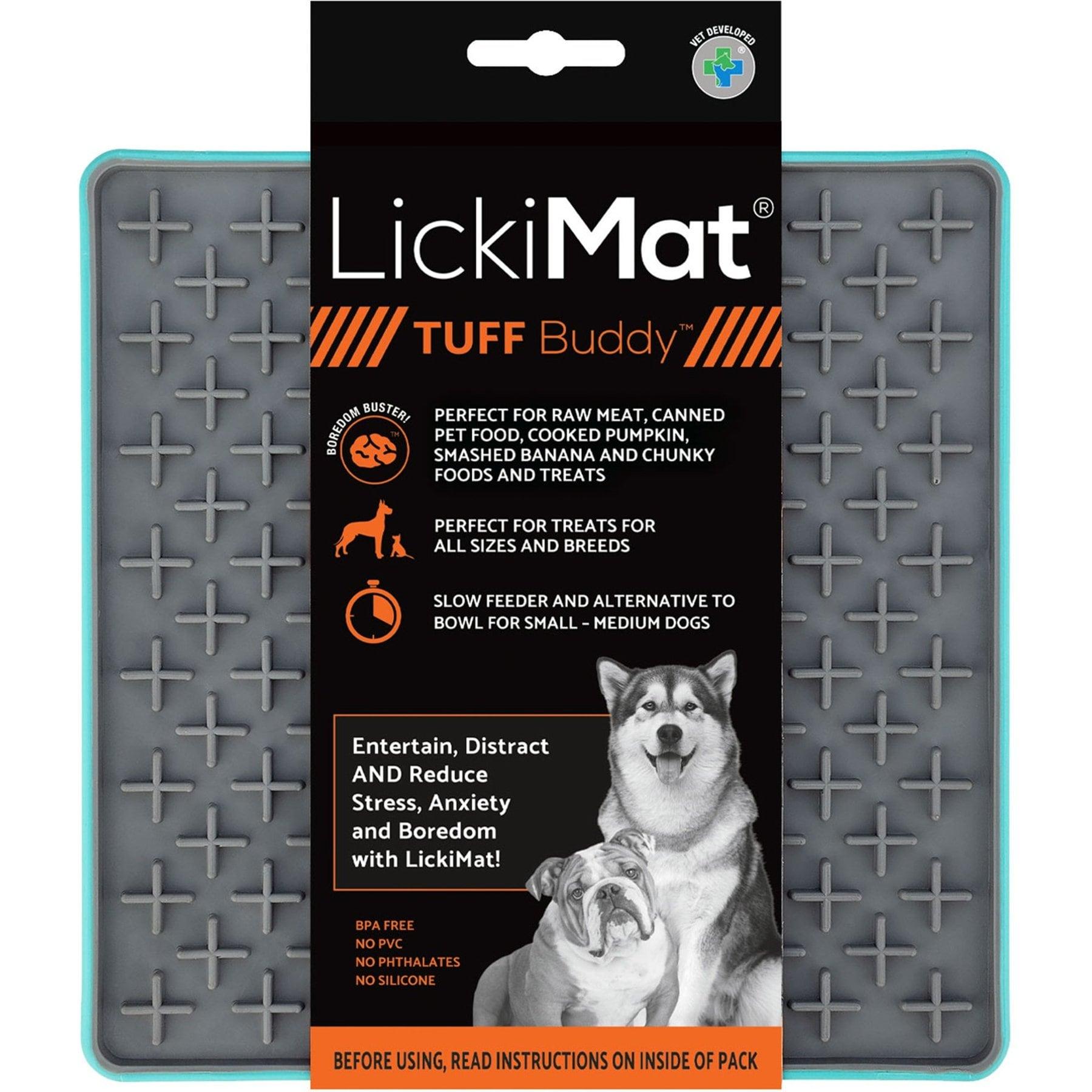
A thermoplastic rubber lick bowl with a rigid non-skid base for dogs that tend to chew through thin mats.
Webvet may earn a commission when you click through to Chewy, at no extra cost to you.
The LickiMat Tuff Buddy Non-Skid Thermoplastic Rubber Dog Bowl, Turquoise uses soft rubber crosses that encourage repetitive licking, set on a firm base. The listing says it suits raw, wet, and frozen foods, which makes it flexible for frozen recipes.
LickiMat says its Tuff range has a polypropylene base supporting the soft rubber surface, and that Tuff models are dishwasher safe. Tougher does not mean indestructible, so a determined chewer still needs supervision and a quick check for bite marks after each use.
SodaPup Emat Honeycomb Dog Lick Mat: best rubber lick mat for frozen fillings
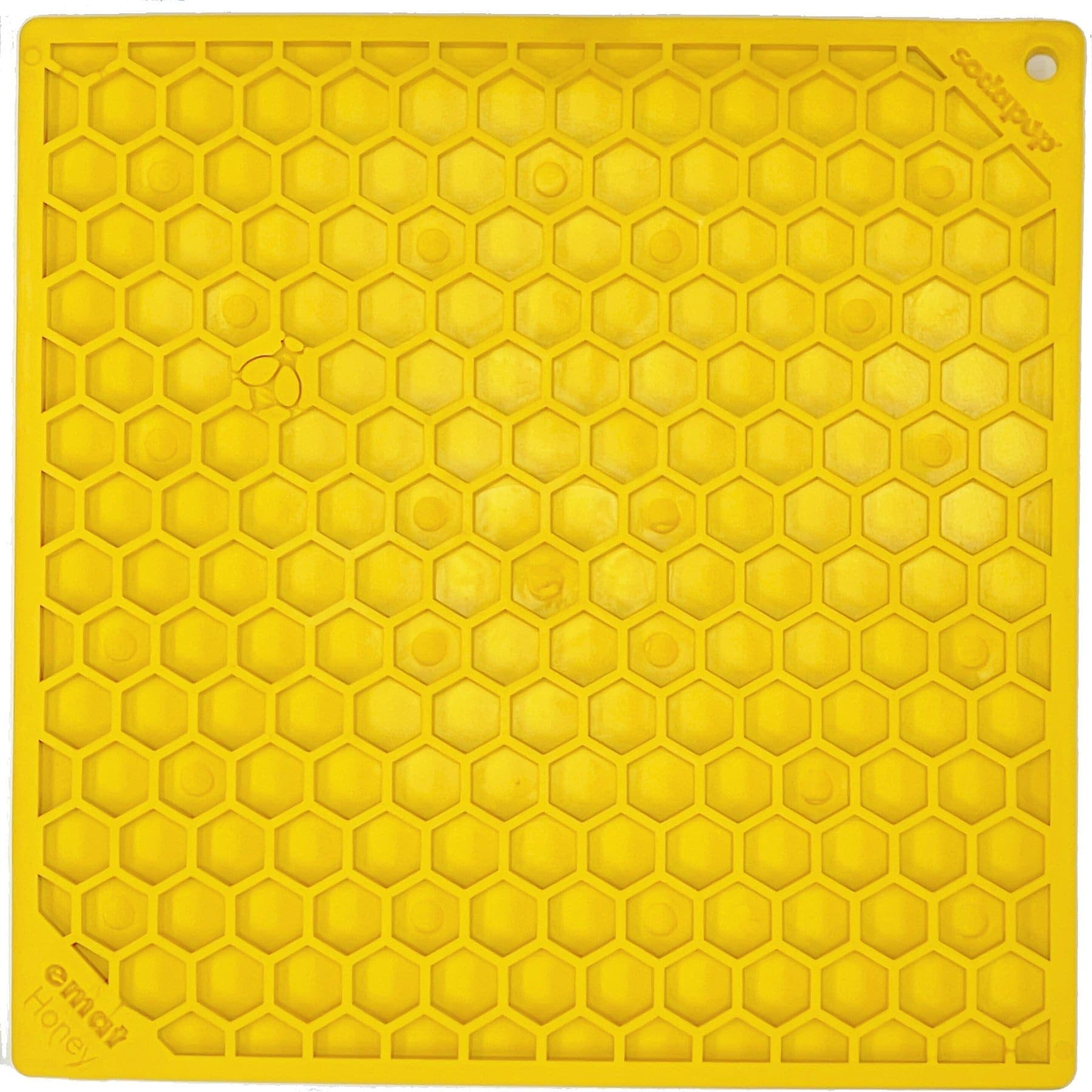
A large honeycomb lick mat you can fill with wet food or soft treats and freeze for a longer licking session.
Webvet may earn a commission when you click through to Chewy, at no extra cost to you.
The SodaPup Emat Honeycomb Dog Lick Mat, Large is built for spreading soft treats or wet food, and the listing notes you can freeze the filled mat before serving for longer-lasting engagement. The honeycomb cells hold a frozen layer well.
The large size gives bigger dogs more surface to work on, so the session lasts longer without adding much food. It is a good match for crate time or the minutes before you leave the house.
Sassy Woof Silicone Dog Lick Mat: best silicone lick mat for grooming sessions
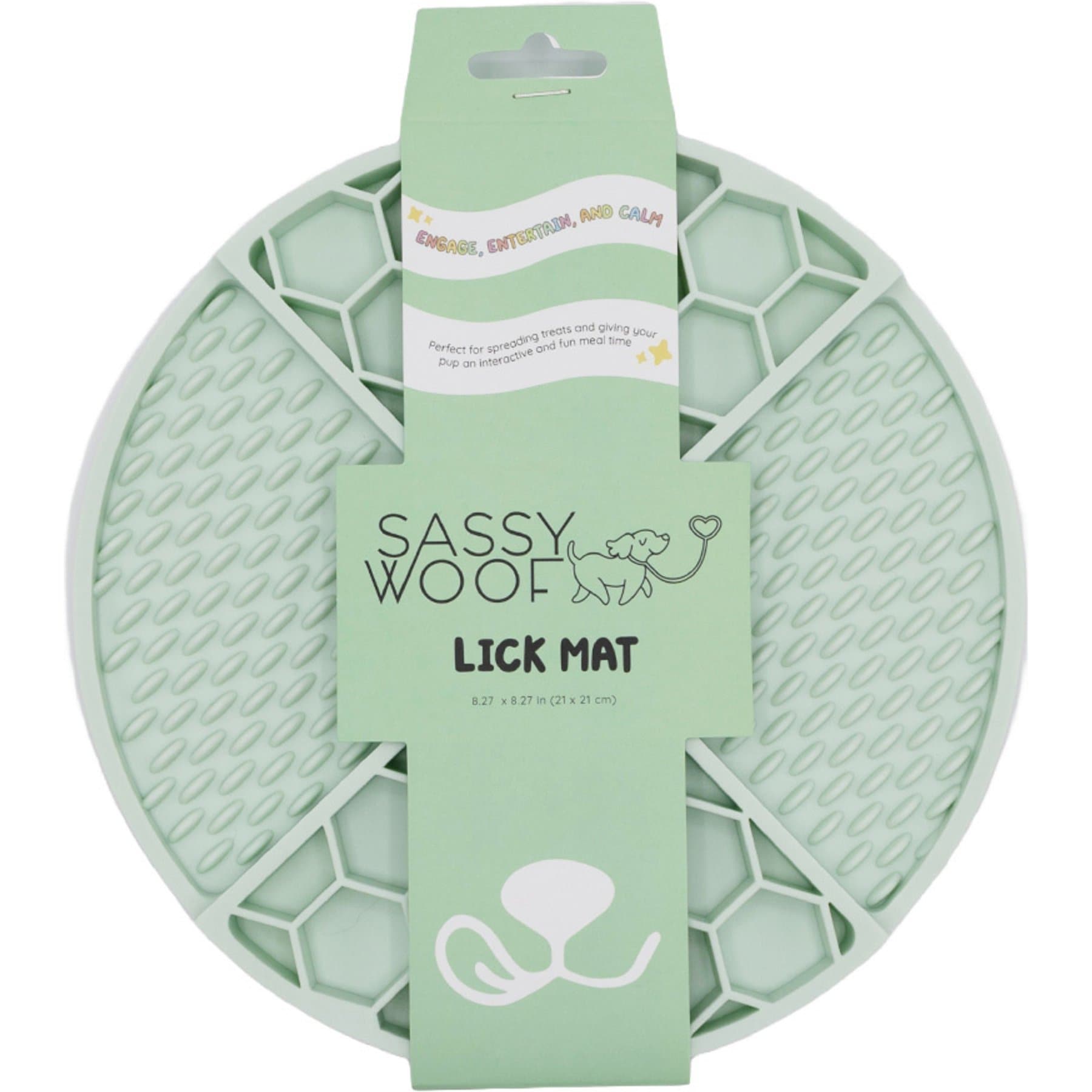
A silicone lick mat for crate time, baths, and grooming sessions that keeps a dog occupied with a soft spread.
Webvet may earn a commission when you click through to Chewy, at no extra cost to you.
The Sassy Woof Silicone Dog Lick Mat, Mint is a silicone mat aimed at crate time, grooming sessions, and everyday enrichment, according to its listing. Silicone is easy to wipe down after a bath, and it suits crate time and brushing as well.
Choose it if your main goal is a calmer bath or brushing session. Spread the filling before you start, so the mat is ready the moment your dog steps in.
Woof LickMat No Slip Silicone Dog Slow Feeder Mat: best budget non-slip lick mat
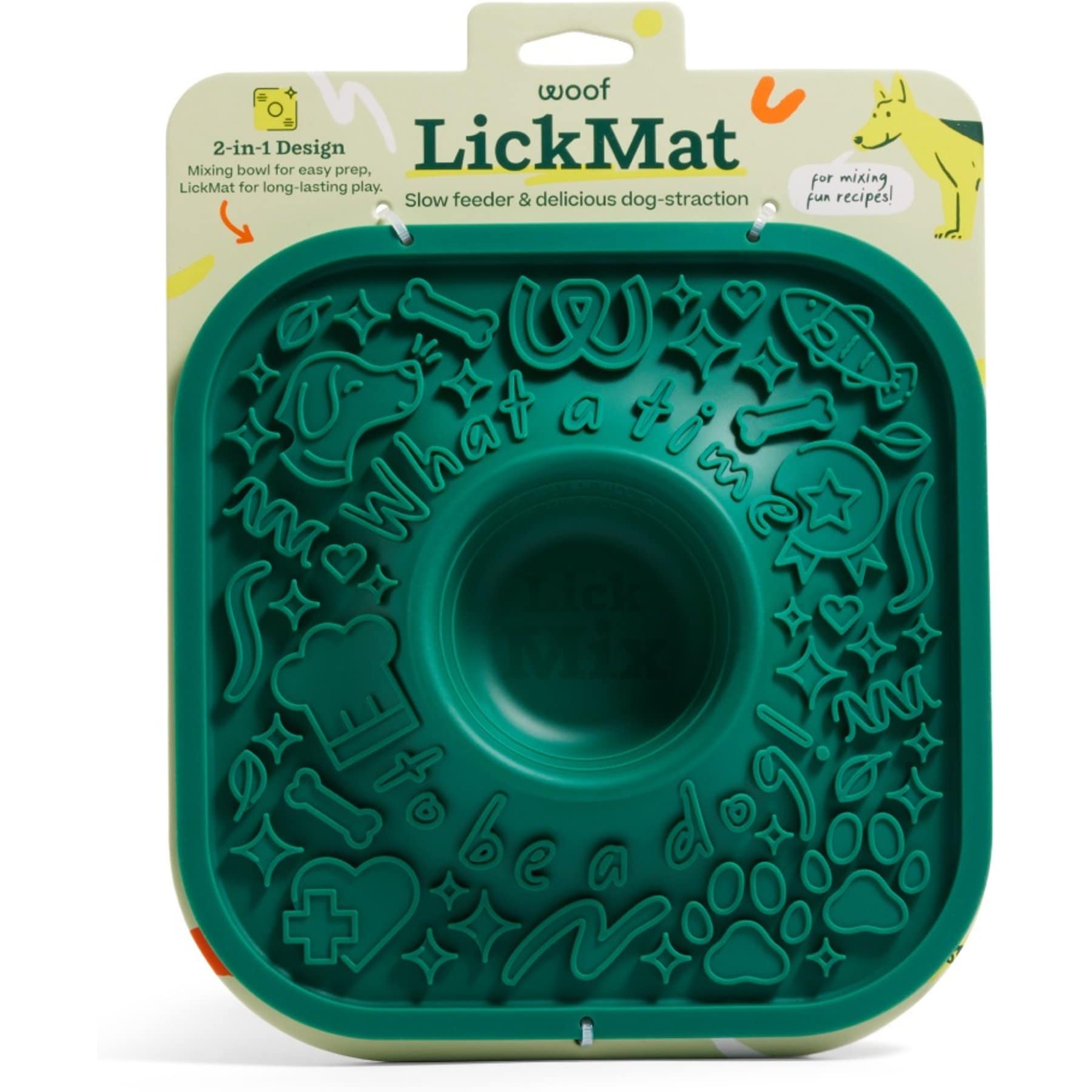
A non-slip silicone lick mat with a built-in bowl for mixing a spread, at a budget-friendly price.
Webvet may earn a commission when you click through to Chewy, at no extra cost to you.
The Woof LickMat No Slip Silicone Dog Slow Feeder Mat, Forest Green combines a lick surface with a built-in bowl for mixing a spread, according to its listing. A Mud Bay listing for a related model, the Woof LickMat Slow Feeding Mat, describes food-grade silicone and push-button suction cups for smooth surfaces.
It is the most affordable silicone pick here and a sensible first mat if you are not sure your dog will take to licking.
Silicone vs rubber vs stainless steel: choosing a lick mat material and size
| Dog profile | Best material | Why it fits | Watch for |
|---|---|---|---|
| Gentle licker | Flexible rubber or silicone mat | Soft texture holds spreads well | Hand wash Classic rubber mats |
| Chewer | Thermoplastic rubber on a rigid base, or stainless steel | Harder to grab and tear | Supervise every session; no mat is chew-proof |
| Small dog or puppy | Small soft mat | Easy to reach every groove | Tiny portions keep calories low |
| Large dog | Large or X-Large mat | More surface, longer session | Spread thin so the portion stays small |
| Bath or grooming helper | Silicone with suction cups | Sticks to tile, tubs, or a wall | Only on smooth, clean surfaces |
| Every dog, every mat | Any material | The filling matters as much as the mat | Check every spread for xylitol |
The material decides how a mat feels to lick, how it cleans, and how it holds up to teeth. Silicone lick mats for dogs are soft and flexible, and food-grade silicone is a common choice for mats that go in the freezer or dishwasher. Many silicone mats add suction cups so they stick to a wall or tub.
Rubber lick mats, including thermoplastic rubber (TPR), feel slightly grippier and often have deeper textured patterns. LickiMat's FAQ describes its mats as TPR rubber (it calls the Classic line natural rubber) and says its Tuff models sit on a rigid polypropylene base. A rigid base makes a mat more durable because there is no loose edge to grab.
A stainless steel or metal lick mat cannot be chewed apart, and it cleans easily. The tradeoff is a smoother, slipperier surface that holds less food in each groove, so sessions can be shorter. Steel suits a strong chewer when swallowed pieces are the main worry. Before you buy, match these features to your dog:
- Texture: deeper grooves and 3D patterns hold food longer than shallow ones.
- Suction: a suction cup lick mat stays put in the tub, and some models stick to a wall at nose height.
- Toughness: for a chewer, look for a rigid base like the LickiMat Tuff Buddy Non-Skid Thermoplastic Rubber Dog Bowl, Turquoise, and remember that no mat is truly indestructible.
- Size: match the mat to your dog's head and appetite.
Size matters more than most people expect. The best lick mat for small dogs is one they can cover without stepping on it, with a filling of a teaspoon or so. A small mat also makes portion control easier, since a big mat invites a big spread.
For a large lick mat for dogs, choose something your dog cannot fold with one paw. The LickiMat Buddy Slow Feeder Dog Lick Mat, Turquoise, X-Large gives big dogs more room, and a thin spread on a large surface lasts longer than a small mat piled high. Cats follow the same logic; see our guide to the lick mat for cats.
 Sponsored
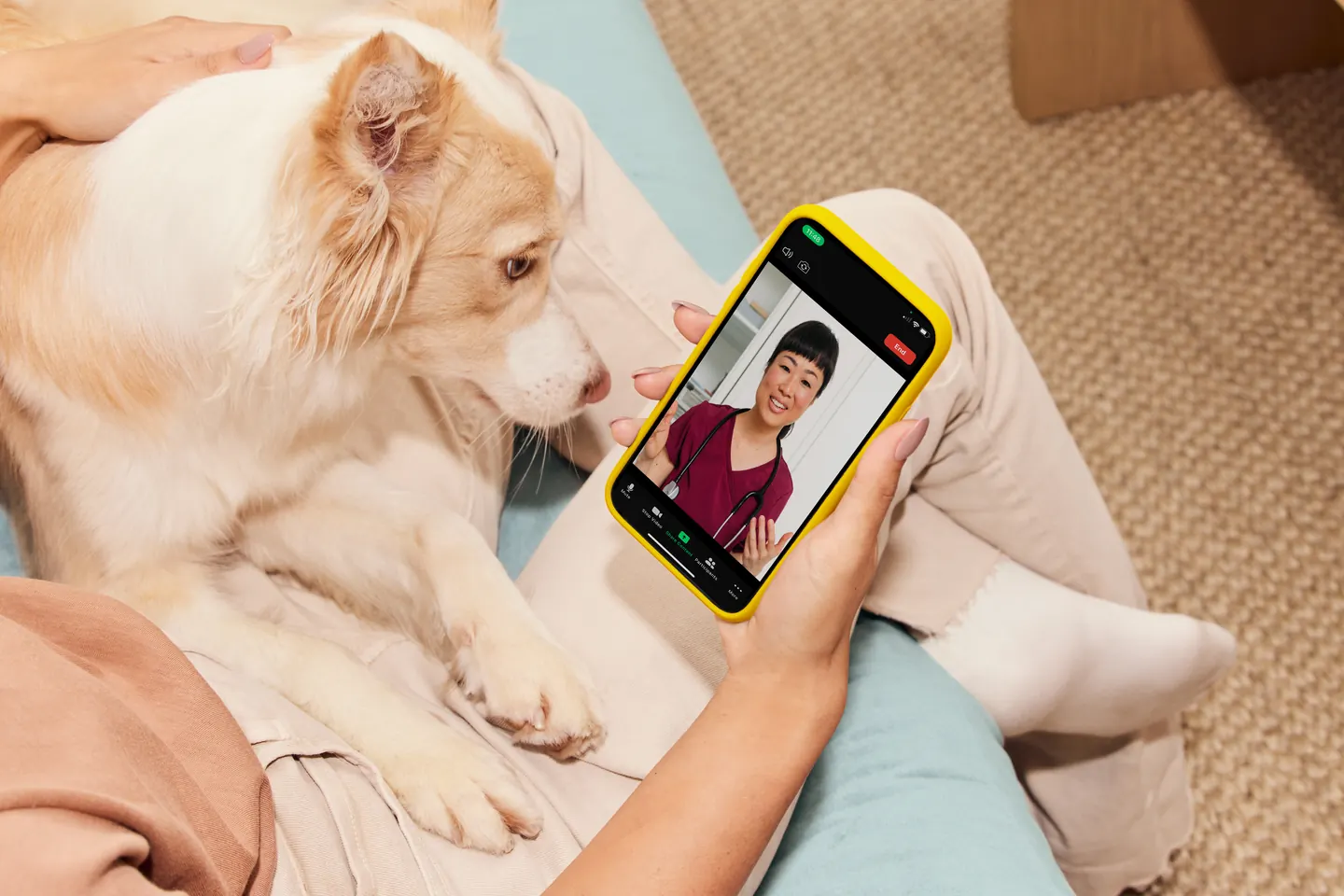
Vet care that's always there
Unlimited video calls and messaging with licensed vets for less than a typical vet visit. One membership covers up to five pets.
Use code Pets60
Plans start at $12/month · covers up to 5 pets
- Licensed vets in most states
- Rx for 150+ conditions
- 4.7 on Trustpilot
Best fillings for a dog lick mat: safe spreads and frozen ideas
| Filling | Rating | Notes |
|---|---|---|
| Plain wet dog food | Safe | Use part of the daily ration |
| Plain cooked or canned pumpkin | Safe | Not pumpkin pie filling |
| Mashed banana or blueberries | Safe | Small amounts |
| Plain unsweetened yogurt | Use sparingly | Dairy can upset some stomachs |
| Xylitol-free peanut butter | Use sparingly | About 81 calories per tablespoon |
| Cream cheese or cheddar | Use sparingly | High in calories and fat |
| Raw egg | Never | Can carry Salmonella and E. coli |
| Any spread with xylitol or birch sugar | Never | Can cause dangerously low blood sugar |
| Grapes, raisins, currants | Never | Linked to kidney damage |
| Onion, garlic, chives | Never | Can damage red blood cells |
| Chocolate or macadamia nuts | Never | Toxic to dogs |
| Salty or seasoned leftovers | Never | Salt and seasonings can make dogs ill |
What to put on a lick mat for dogs comes down to three tests: is it safe, spreadable, and within your dog's calorie budget? The healthiest options start with food your dog already eats. Wet dog food is easiest, since it can come from the daily ration.
The safest everyday fillings include:
- Wet dog food: spread straight from the can, or mix with a little water.
- Plain pumpkin: VCA Animal Hospitals calls cooked pumpkin, not pie filling, a low-calorie, high-fiber treat.
- Fruit and vegetables: VCA says most fresh produce is fine, as long as you avoid grapes, raisins, and currants.
- Soaked kibble: soften your dog's own kibble with warm water and mash it into the grooves.
Peanut butter is the most popular of all lick mat treats, and also the one that needs the most care. The U.S. Food and Drug Administration warns that some peanut and nut butters contain xylitol, which may be listed as birch sugar or wood sugar. Read the label every time, even on a brand you have bought before.
Peanut butter is also calorie-dense. WSAVA lists one tablespoon at about 81 calories, and VCA suggests saving peanut butter and cheeses for when a high-value treat is truly needed. A thin smear goes much further on a lick mat than a scoop.

Yogurt sits in the middle. The ASPCA Animal Poison Control Center notes that dairy can cause diarrhea in some pets, so start with a spoonful of plain, unsweetened yogurt. Skip raw egg; the ASPCA warns raw eggs can carry Salmonella and E. coli.
Freezing a filled mat makes a session last longer. Keep frozen lick mat ideas for dogs simple and build these lick mat recipes from the safe list:
- Pumpkin and yogurt swirl: plain pumpkin with a spoonful of plain yogurt, spread thin and frozen.
- Wet food freeze: part of the dinner ration pressed into the grooves and frozen.
- Banana and blueberry mash: a little ripe banana with a few crushed blueberries.
- Low calorie option: pumpkin thinned with water, for dogs watching their weight.
What is the best food to put on a dog lick mat?
The best food is usually your dog's own wet food, because it adds enrichment without extra calories when you take it from the daily ration. Plain cooked pumpkin is a good low-calorie alternative. Xylitol-free peanut butter works as an occasional high-value treat, spread thinly. Avoid anything sweetened, seasoned, or on the never list.
Lick mat safety: xylitol, chewing, calories, and supervised use
The FDA explains that xylitol triggers a potent insulin release in dogs, which can drop blood sugar within 10 to 60 minutes. Pet Poison Helpline adds the risk of acute liver failure, and the ASPCA Animal Poison Control Center says xylitol can cause low blood sugar and potentially liver damage, depending on the amount eaten. LickiMat's own FAQ also says foods containing xylitol must be avoided. Stick to the safe list above, checked label by label.
Chewing is the second big risk after the filling: a dog who swallows pieces of rubber or silicone can end up with a blocked gut. The Merck Veterinary Manual lists lethargy, loss of appetite, and vomiting as usual signs, and dogs do well when treated quickly. If you see those signs after a chewed mat, call your vet.
No mat is truly indestructible, whatever the packaging says. WSAVA advises supervising dogs with chews, treats, and toys, and that applies to lick mats. These rules keep sessions safe:
- Stay in the room for the first several sessions.
- Pick the mat up as soon as the food is gone.
- Check edges for bite marks, and replace a damaged mat.
- Choose a rigid-base or steel mat for chewers.
- Skip unattended crate sessions until you trust your dog with the mat.

Calories are the quiet risk. WSAVA says treats should always make up less than 10 percent of a dog's daily calories, while VCA suggests a stricter limit of 5 percent. Either way, count lick mat fillings as treats or take them from the daily food allowance. Our guide on how much to feed a dog can help you set that baseline.
How often should my dog get a lick mat?
A daily session is reasonable for most healthy dogs if the filling fits the calorie budget and the mat is washed after each use. Many owners save it for predictable stress points, such as bath day, nail trims, or departures. If your dog is on a weight plan or special diet, ask your vet which fillings fit.
Using a lick mat for anxiety, baths, nail trims, and crate time
A calming lick mat for dogs works best when it becomes part of a routine your dog already knows. The goal is a dog that associates baths, brushing, or crate time with something pleasant, not a dog that gets tricked through a scary moment.
That distinction matters. VCA Animal Hospitals warns against giving a spoonful of peanut butter and then rushing a nail trim, because feeling tricked can erode trust. VCA advises moving at the dog's pace and pairing each touch with a treat. The Merck Veterinary Manual says handling for care is best addressed with cooperative care training.
Is a lick mat stimulation for dogs? Yes, of a calm kind. Licking holds a dog's attention without the excitement of a chase toy, so a mat suits quiet times when you want your dog settled. For more ideas, browse our guide to dog enrichment toys.

Common ways to use a lick mat:
- Bath time: stick a suction mat to the tub wall before your dog gets in. VCA suggests a similar trick with peanut butter on the shower wall for puppies.
- Nail trims and grooming: let your dog lick while you handle one paw, then pause. A grooming-table mat such as the Dandylion Dog Grooming Table Lick Mat sits on a smooth surface while you work.
- Crate time and departures: offer the mat in the crate so being settled starts with something good.
- Handling practice: pair gentle ear and paw handling with licking, a simple step toward cooperative care.
For bath sessions specifically, the Sassy Woof Silicone Dog Lick Mat, Mint is designed for grooming and crate use. Spread the filling before the water starts, so your dog is focused on licking from the first moment.
A lick mat for anxious dogs fits into broader routines. The Merck Veterinary Manual describes teaching dogs with separation distress to relax in a designated place with independent activities such as puzzle feeders. A mat can be one of those activities, alongside other tools covered in our guides to calming chews for dogs and dog anxiety at night.
A lick mat is not a fix for severe fear. If your dog panics, shows aggression during handling, or cannot settle even with high-value food, talk with your vet about a behavior plan.
Cleaning a lick mat and homemade alternatives
Food left in the grooves spoils quickly. LickiMat advises washing its mats after every use, especially if peanut butter is left over. Cleaning a lick mat properly takes a few minutes:
- Rinse the mat in warm water right after use, before food dries.
- Scrub the grooves with a small brush and mild dish soap.
- Soak dried or frozen residue in warm water for a few minutes first.
- Rinse well and let the mat air dry fully before storing.
- Use the dishwasher only if the maker says that model is dishwasher safe.
Dishwasher rules differ by model. LickiMat's FAQ says its Tuff, Slomo, Wobble, Splash, and Deluxe models are dishwasher safe, but it does not recommend the dishwasher for Classic mats, which are natural rubber. Check the instructions for any mat before you load it.

Are woof lick mats dishwasher safe?
A retailer listing says so for one model. The Mud Bay listing for the Woof LickMat Slow Feeding Mat describes BPA-free, food-grade silicone and says to hand wash the mat or drop it in the dishwasher. Check the care instructions that come with the version you buy. Hand washing is gentler on the built-in bowl and suction cups, so it is a good habit for daily cleaning.
What can I use instead of a lick mat?
A stuffable rubber toy, a snuffle mat, or a plain plate can do a similar job. A stuffed toy works well for chewers; see our picks for the best Kong toys for dogs. A snuffle mat for dogs swaps licking for sniffing out kibble, and a spread on a clean plate is a quick fix.
How to make a homemade lick mat for dogs?
A DIY lick mat for dogs can be as simple as a silicone baking mat, an ice cube tray, or a textured silicone trivet that you already own. Spread a safe filling into the texture, and freeze it for a longer session. Only use food-safe items with no small parts your dog could chew off.
Homemade options work best for gentle lickers. Here is how to make a lick mat for dogs from kitchen basics:
- Pick a clean, food-safe silicone item with grooves or cells.
- Spread a thin layer of wet food, pumpkin, or plain yogurt.
- Freeze for a longer session, or serve right away.
- Supervise, then wash it like any other mat.
If you like making enrichment at home, the same approach works for scent games; our DIY snuffle mat guide walks through a fabric version.
Lick mat for dogs questions
Frequently Asked Questions
How long should you freeze a lick mat?
A few hours is usually enough to firm up a thin layer, and many owners simply freeze a filled mat overnight so it is ready the next day. LickiMat confirms food can be frozen on its mats. Let a very hard frozen mat sit for a minute before serving.
Is peanut butter safe on a dog lick mat?
Plain peanut butter without xylitol is generally fine in small amounts. Check the label for xylitol or birch sugar every time, because the FDA warns some nut butters contain it. Keep portions to a thin smear, since peanut butter is high in calories.
Do lick mats help dogs with anxiety?
They can help some dogs stay calm during predictable stressors, such as baths or being left alone, by giving them a focused, pleasant job. A mat works best as part of gradual training, not as a way to rush through something frightening. Dogs with severe anxiety need a plan from a vet.
What size lick mat is right for a small dog?
Small dogs do best with a mat they can cover easily, around the size of their head and shoulders, so they reach every groove without standing on it. A smaller size also keeps the filling, and the calories, in proportion to a small body.
How do you use a lick mat during a bath?
Fill a suction mat before the bath, press the suction cups onto clean, smooth tile or the tub wall at nose height, and let your dog start licking before the water runs. Keep the filling thin so it lasts through washing and rinsing.

Editor
The Webvet Editorial Team is the in-house group of pet-care editors and writers behind Webvet, operated by Smart Pet Collective. The team researches, writes, and maintains Webvet's pet health, behavior, and medication content. Every article follows a defined editorial process: research from reputable veterinary and scientific sources, careful drafting, mandatory review of medical content by a credentialed veterinarian, and dated publication. Health and medication articles are medically reviewed by a licensed veterinary professional before they go live and are kept current over time.
Related reading

Snuffle Mat for Dogs: Benefits, How to Use One, and the Best Picks

Why Your Dog Panics the Moment You Pick Up Your Keys

What to Do When the Usual Calming Advice Hasn’t Helped Your Dog
