Lick Mat for Cats: Safe Fillings, Benefits, and Which to Buy
A lick mat for cats is a shallow textured mat you spread with wet food or a lickable treat so your cat eats slowly and stays busy. This guide covers cat-safe fillings, foods to avoid, whisker-friendly designs, cleaning, and the best mats to buy.

This article contains affiliate links. Webvet may earn a commission when you buy through them, at no extra cost to you.
What a lick mat does for cats: slower eating, calm, and enrichment
A lick mat for cats is a shallow, textured mat or plate that you spread with wet food or a lickable treat. Your cat has to lick the food out of the grooves, so it eats slowly, the snack lasts several minutes instead of seconds, and the cat stays busy and focused.
The fillings must be cat-safe, and anything you spread counts toward the day's food and calories. Used that way, a lick mat for cats is a simple, low-effort form of environmental enrichment that can also help during nail trims, brushing, and time alone.
- 1A lick mat is a textured surface spread with food that a cat licks clean slowly.
- 2What licking does for a cat: it turns a quick snack into several minutes of calm, focused work.
- 3Stick to cat-safe fillings such as plain wet food, smooth pate, or a lickable cat treat.
- 4Never use onion, garlic, chocolate, grapes, or anything containing xylitol.
- 5Count every filling toward daily calories and supervise cats that chew.
Cats are built to eat little and often. The AAFP and ISFM Feline Environmental Needs Guidelines note that, as solitary hunters, cats may eat 10–20 small prey a day, and they call meeting a cat's environmental needs essential, not optional. Their advice includes puzzle feeders and feeding practices that make a cat work for its food.
A food puzzle review in the Journal of Feline Medicine and Surgery, Dantas et al. 2016, describes the lick-style version directly. Wells filled with wet food make the cat lick the food out, which mimics the way cats use their jaw muscles to pull meat off bone. A cat's tongue suits the job: Noel and Hu in PNAS describe it as covered in rear-facing spines called papillae.
In the Dantas review's case reports, food puzzles, sometimes used alongside other behavior changes, were followed by:
- Weight loss in overweight cats.
- Less aggression toward people and other cats.
- Reduced anxiety and fear.
- Fewer attention-seeking behaviors.
- An end to litter box avoidance in some cats.
Those were retrospective cases, not a controlled trial, and the authors call the effect of food puzzles on cats a relatively new area of study. None of this research tested lick mats on cats specifically. The fair expectation is slower eating, a calmer snack time, and a bit of daily work for a bored indoor cat.
A lick mat is one tool among several. Cats that love to chase and bat may get more from cat puzzle toys that release kibble as they paw at them, or from interactive cat toys that move like prey. Many owners rotate all three.

Five mats cover most cats, from fast eaters and treat lovers to cats that chew silicone:
| Mat | Material or style | Best fit |
|---|---|---|
| LickiMat Variety Pack Slow Feeder Cat Lick Mat, Green & Turquoise, 2 count | Low-profile textured mats, two patterns | Everyday wet food snacks for most cats |
| Catit Creamy Mat Fish Shape Cat Mat, Orange | Small soft silicone fish shape | Stretching out a lickable treat |
| Feedoo Double Layer Chew Proof & Whisker Friendly Non-Skid Stainless Steel Dog & Cat Lick Mat, Large | 304 food-grade stainless steel | Cats that bite or chew silicone |
| Frisco Square Silicone Dog & Cat Lick Mat, Gray | Silicone, four textures | A low-cost first mat |
| Awoo Lick Dish Silicone Dog & Cat Lick Mat Slow Feeder Dish, Almond | Silicone dish with curved edge | Serving part of a wet food meal |
 Sponsored
Want a vet's help with your cat's anxiety or behavior?
Talk to a licensed vet at Dutch over video, often the same day. They can recommend treatment and prescribe it when it's appropriate.
Use code Pets60
Plans start at $12/month · covers up to 5 pets
- Licensed vets in most states
- Rx for 150+ conditions
- 4.7 on Trustpilot
Our picks: the best lick mats for cats
The best lick mat for cats is sized for a cat's face, has grooves shallow enough to lick clean without pushing the face into them, and is made from a material your cat will not chew apart. Many mats are sold for both dogs and cats, and those work well for cats when the texture is fine and the filling is spread thin.
LickiMat makes cat-specific versions of its classic mat, Catit designs around its own lickable treats, and Frisco is Chewy's house brand. The right mat depends on the cat in front of you: a fast eater, a treat lover, a chewer, or a cat that needs a calm distraction.
LickiMat Variety Pack Slow Feeder Cat Lick Mat: best cat-sized classic lick mats
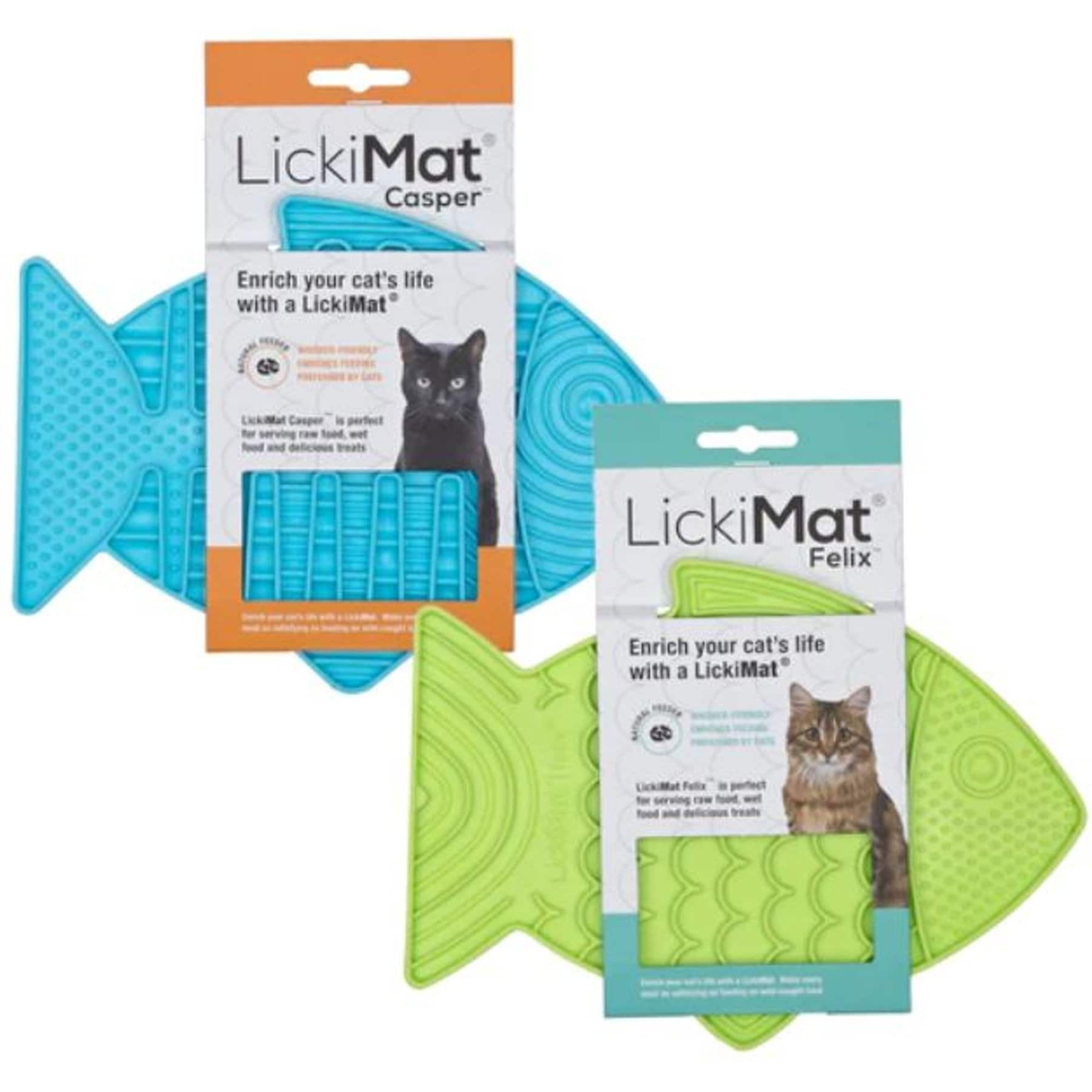
Two low-profile textured cat mats for spreading wet food or pate so a cat licks slowly between meals.
Webvet may earn a commission when you click through to Chewy, at no extra cost to you.
This two-pack gives you two textured patterns, so one mat can be in the wash while the other is in use. LickiMat describes a low-profile design with ribs and ridges that lets a cat crouch naturally while it eats, and the maker calls it whisker friendly.
It is listed at $21.99 on Chewy when checked in November 2026.
- Good for: fast eaters, everyday wet food snacks, and cats new to licking.
- Keep in mind: supervise cats that nibble edges, and set the mat on a surface where it will not slide around.
Catit Creamy Mat Fish Shape Cat Mat: best lick mat for lickable treats
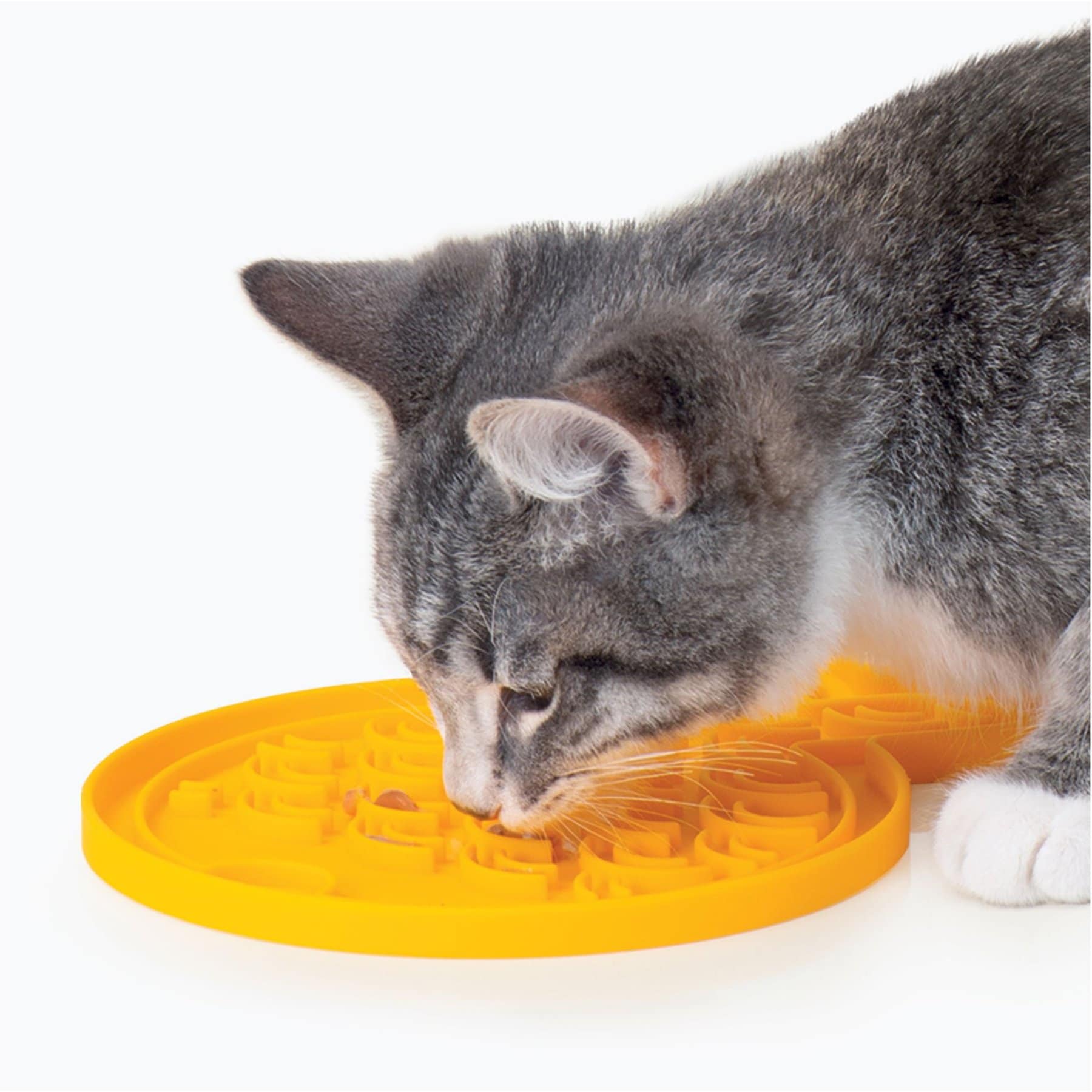
A small fish-shaped soft silicone mat for streaking a lickable treat so a cat savors it instead of gulping it.
Webvet may earn a commission when you click through to Chewy, at no extra cost to you.
This small fish-shaped mat is made from soft silicone and is designed for spreading a lickable treat across its fins. Catit built it around its own creamy lickable treats, though a thin layer of plain pate works on it too.
It is listed at $6.26 on Chewy when checked in November 2026.
Because it is built for treats, it is the mat where calories add up fastest. A thin streak across the fins goes further than a full tube squeezed out at once.
Feedoo Chew Proof & Whisker Friendly Stainless Steel Dog & Cat Lick Mat: best stainless lick mat for chewers
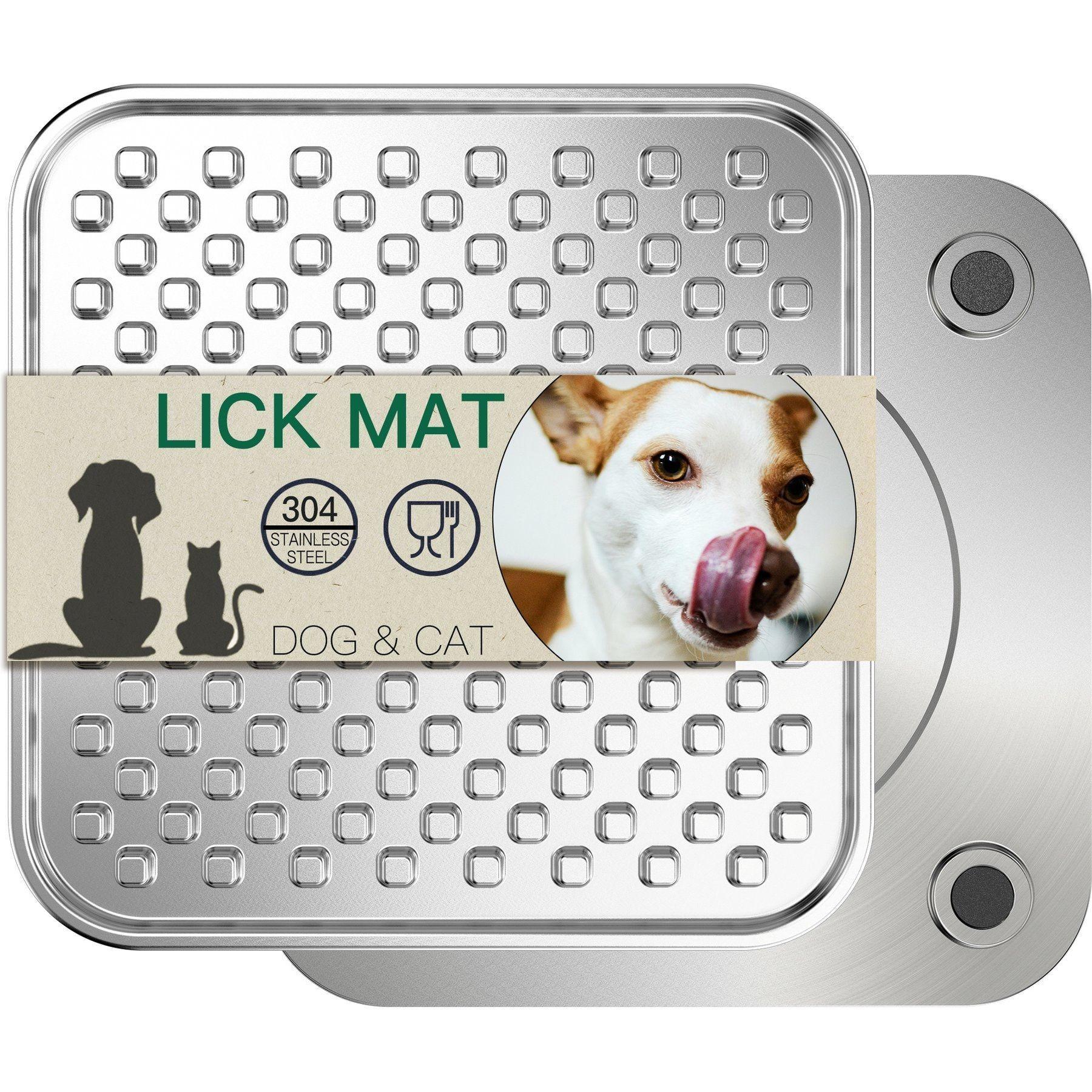
A 304 stainless steel lick mat for cats that bite or chew through silicone mats during licking sessions.
Webvet may earn a commission when you click through to Chewy, at no extra cost to you.
This double-layer mat is made from 304 food-grade stainless steel and has non-skid feet. Feedoo describes it as chew proof and bite-proof, which makes it the obvious step up for a cat that has already torn a silicone mat. Metal also scrubs clean easily.
It is listed at $19.99 on Chewy when checked in November 2026.
- Good for: cats that bite edges, multi-pet homes, and owners who want a mat that lasts.
- Keep in mind: this is the Large size made for dogs and cats, so check that it fits your cat's feeding spot. No mat replaces watching a cat that chews.
Frisco Square Silicone Dog & Cat Lick Mat: best budget lick mat for cats
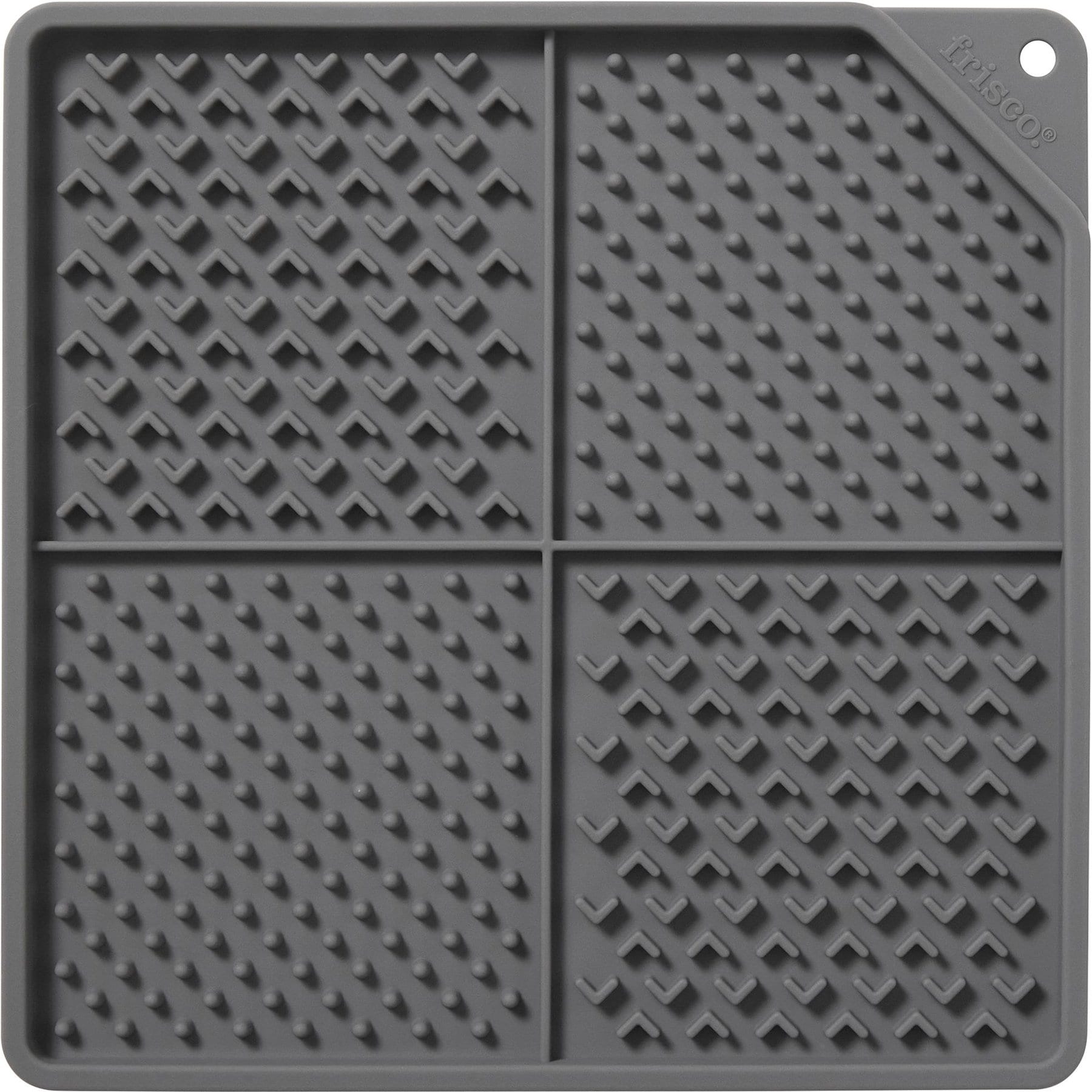
A low-cost square silicone mat with four textures for rotating wet food spreads at snack time.
Webvet may earn a commission when you click through to Chewy, at no extra cost to you.
Frisco by Chewy makes this silicone mat with four squares, each with a different texture, so you can see which pattern your cat licks longest. It is an inexpensive way to find out whether your cat enjoys a lick mat at all.
It is listed at $7.99 on Chewy when checked in November 2026.
Its listing suggests xylitol-free peanut butter, which is a dog snack. For a cat, fill the squares with wet cat food instead.
Awoo Lick Dish Silicone Dog & Cat Lick Mat Slow Feeder Dish: best dish-style lick mat for wet food
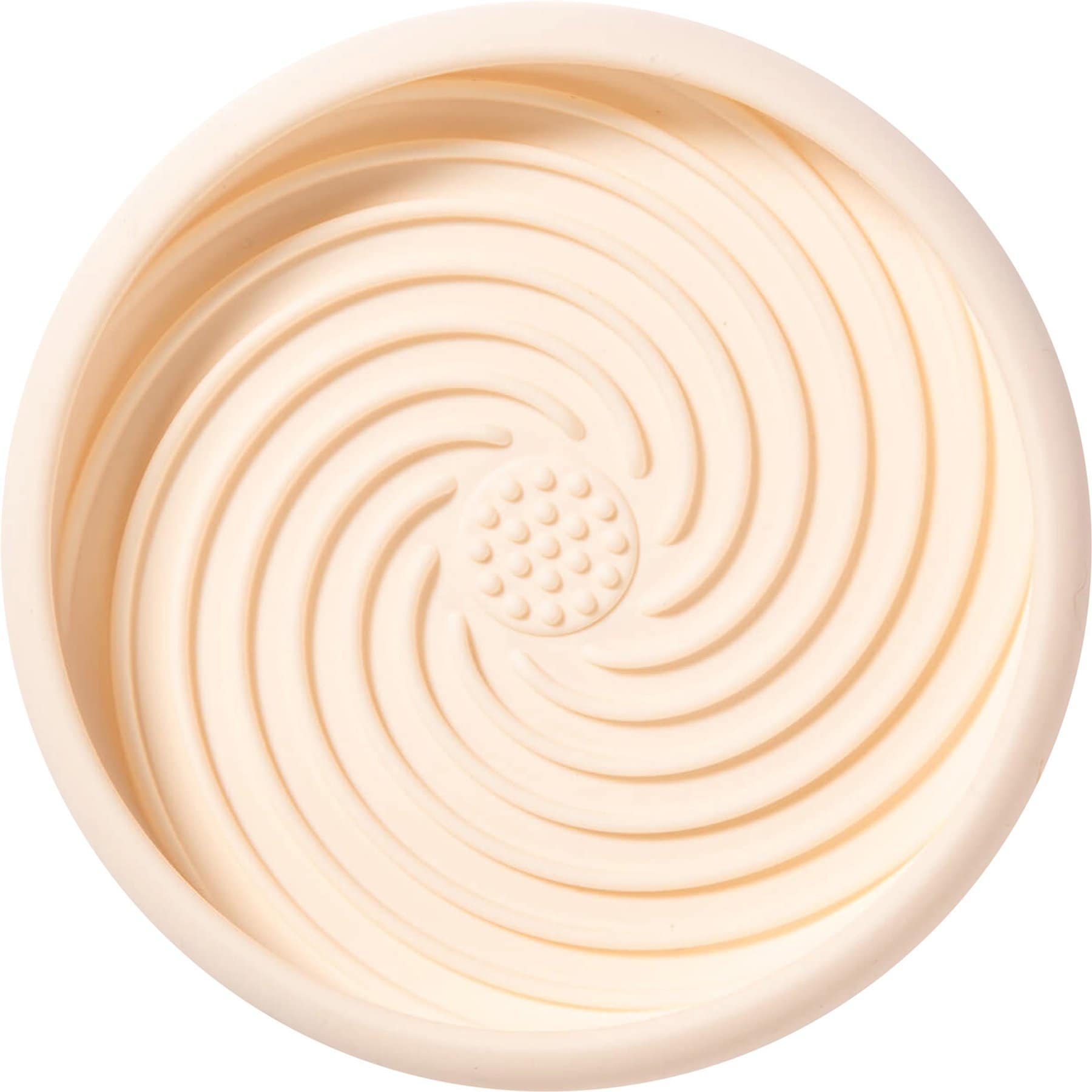
A silicone dish-style lick mat with a curved edge that holds a portion of a wet food meal while a cat licks.
Webvet may earn a commission when you click through to Chewy, at no extra cost to you.
This silicone dish combines a lick surface with a curved edge, which Awoo says encourages slow, methodical licking. Awoo designs it for dogs and cats as both a slow feeder and a lick mat.
It is listed at $16 on Chewy when checked in November 2026.
It suits owners who want to serve part of a measured wet food meal slowly rather than add an extra snack, which keeps the daily total where it should be.
SponsoredVet care that's always there
Unlimited video calls and messaging with licensed vets for less than a typical vet visit. One membership covers up to five pets.
Use code Pets60
Plans start at $12/month · covers up to 5 pets
- Licensed vets in most states
- Rx for 150+ conditions
- 4.7 on Trustpilot
Choosing a cat lick mat: shallow grooves, whisker comfort, and material
| Cat profile | Design to look for | Filling approach |
|---|---|---|
| Fast eater who gulps meals | Fine, dense texture or a lick dish | Part of the measured wet food meal, spread thin |
| Whisker-sensitive or picky cat | Flat, shallow grooves with an open surface | Smooth pate pressed into shallow grooves |
| Chewer who bites silicone | Stainless steel or a heavy ceramic plate | Any cat-safe filling, with supervision |
| Nervous about nail trims or brushing | Small mat that can sit on a table or floor | A lickable treat in a thin streak |
| Bored indoor cat left alone | A mat the cat has never chewed | Frozen wet food for a longer session |
| Kitten | Small, size-appropriate mat or bowl | Kitten wet food in small amounts |
Texture depth matters more for cats than for dogs. A cat has a much smaller mouth than most dogs, so a fine pattern of shallow ridges keeps them working without forcing the face into deep channels. Very deep grooves designed for a large dog's tongue can leave food stuck where a cat cannot reach it.
Material is the next decision:
- Food-grade silicone: flexible, light, and molded into fine textures, but it can be chewed. The Frisco Square Silicone Dog & Cat Lick Mat, Gray is an inexpensive way to try it.
- Stainless steel: rigid, hard to damage, and easy to scrub. A stainless mat like the Feedoo Double Layer Chew Proof & Whisker Friendly Non-Skid Stainless Steel Dog & Cat Lick Mat, Large suits chewers.
- Ceramic: heavy, so it does not slide, with a smooth glaze that cleans well. Ceramic plates usually have broader ridges and can chip or break if it is dropped.
- Thermoplastic rubber bowls: the LickiMat Kitty Non-Skid Thermoplastic Rubber Cat Bowl, Pink, Standard is made for kittens and small cats, with several textures and a water well, for cats that push flat mats around. It is listed at $8.99 on Chewy when checked in November 2026.
Size matters too. The AAFP and ISFM guidelines advise size-appropriate toys and puzzle feeders for kittens to prevent injury, so a small mat or bowl is the better start for a young cat.
Many owners pick shallow designs to avoid whisker fatigue, the idea that whiskers brushing against a dish stresses cats. The evidence is thin. In Slovak and Foster's 2021 study of 40 indoor cats, a whisker-friendly dish showed no evidence of changing eating time, food dropped, or amount eaten, although some cats seemed to prefer it.
So a shallow, open surface is a reasonable comfort choice for a cat that seems fussy, not a medical fix. A cat that suddenly stops eating or avoids food needs a vet visit, because appetite changes usually have a cause that a new dish will not solve.

Safe fillings for a cat lick mat
| Filling | Verdict | Why |
|---|---|---|
| Plain wet cat food, pate style | Safe | A complete cat food that spreads well and is high in moisture |
| Wet cat food blended with a little warm water | Safe | Spreads thinner and takes longer to lick clean |
| Plain cooked chicken or turkey, unseasoned, shredded fine into pate | Safe in small amounts | Plain meat suits a carnivore but is not a complete diet |
| Lickable cat treats in tubes or pouches | Use sparingly | Treat calories add up quickly |
| Milk, cream, or other dairy | Use sparingly, if at all | Many cats are lactose intolerant |
| Peanut butter and dog lick mat spreads | Not recommended | Made for dogs; some nut butters contain xylitol |
| Raw meat | Never | Not recommended for cats because of infection risk |
| Onion, garlic, chives, or foods seasoned with them | Never | Cats are the species most sensitive to onion and garlic |
| Grapes and raisins | Never | Linked to acute kidney injury |
| Chocolate | Never | On Cornell's list of foods off-limits for cats |
| Anything containing xylitol | Never | On Cornell's list of foods off-limits for cats |
Cats are obligate carnivores: the Cornell Feline Health Center explains that they rely on nutrients found only in animal products. That makes your cat's own wet food the best base for any lick mat.
Cornell also notes that canned cat food is at least 75 percent moisture, a useful bonus for cats that drink little.
Lickable cat treats are smooth purees sold in tubes or pouches. They spread easily and most cats love them, but they are treats. Some lickable cat food products are labeled as complete meals rather than treats, so read the label to see which one you are holding.
What can I put on my cat's lick mat?
Start with your cat's regular wet food, especially a smooth pate, spread thin into the grooves. A little warm water makes it easier to spread. For variety, add a thin streak of lickable cat treat or a small amount of plain, unseasoned cooked chicken. Skip anything seasoned, sweetened, or made for dogs or people.
These ideas keep things simple and cat-safe:
- Plain pate spread: a thin layer of wet food pressed into every groove.
- Thinned pate: wet food mixed with warm water until it spreads like a paste.
- Pate with a topper: a thin layer of wet food with a streak of lickable treat on top.
- Chicken and pate: finely shredded, plain cooked chicken pressed into pate.
- Frozen spread: any of the above, frozen on the mat for a longer session.
A frozen lick mat for cats is the same filling, just firmer, so it takes longer to lick away. Let it sit for a few minutes after it comes out of the freezer so it softens a little. You do not need special ingredients: the safest lick mat recipes for cats start and end with food made for cats.
Introduce the mat the way Dantas and colleagues suggest for any food puzzle: set it next to the usual bowl at mealtime, filled with the cat's usual food, when the cat is likely to be hungry. Cats that are wary of new objects often warm up within a few tries.

Lick mat safety for cats: unsafe foods, calories, and chewing
Many lick mat recipes online are written for dogs, and some of them are unsafe for cats. The Cornell Feline Health Center's list of common cat hazards names these foods as off-limits for cats:
- Grapes and raisins.
- Onions.
- Avocados.
- Anything containing xylitol.
- Chocolate.
Onion and garlic deserve extra care. The Merck Veterinary Manual calls cats the most susceptible species and notes that cats have been affected by less than a teaspoon of cooked onion. Powders, dried flakes, and soup mixes are concentrated forms, so check broths, baby food, and leftovers for onion or garlic powder.
Grapes and raisins can cause acute kidney injury in pets, which is why a vet treats any exposure seriously. A 2026 study of UK emergency records by Altman and colleagues found grape ingestion less common in cats than in dogs, but more often fatal when it happened.
Xylitol is a sweetener found in some peanut and nut butters, according to the FDA. The FDA says xylitol does not seem as dangerous for cats as for dogs, partly because cats are not drawn to sweets. Cornell still lists it as off-limits, and there is no reason to put a xylitol product near a cat's food.
Cornell also advises against three fillings that turn up in homemade recipes:
- Raw meat, which is not recommended as a cat food or treat because of infection risk.
- Milk and other dairy, since many cats are lactose intolerant.
- Canned fish meant for people, which has been linked to serious neurological problems in some cats.
Calories are the safety issue most owners miss. Cornell calls obesity the most common nutrition-related problem in cats and suggests treats stay under 10 to 15 percent of daily calories. Keeping lickable treats at the low end of that range leaves more room for real food.
The simplest fix is to fill the mat from your cat's measured daily portion rather than adding food on top. If you are not sure how much that portion should be, start with how much to feed a cat and your vet's advice on your cat's ideal weight.
Chewing is the other risk. Some cats lick happily for years; others bite edges once the food runs out. Pick the mat up as soon as it is licked clean, check it for tears and bite marks each time, and switch a determined chewer to stainless steel or ceramic.
Using a lick mat for stress, nail trims, and grooming
Feline vets already use food as a calming tool. The 2022 AAFP/ISFM Cat Friendly Veterinary Interaction Guidelines say treats are often helpful for distraction and for rewarding calm behavior, and list liquid or tube treats and canned food among the options. They note some cats will allow an examination while they are busy eating.
The same guidelines describe cooperative care: training that helps cats feel comfortable and in control during handling they would otherwise find stressful. A lick mat fits neatly into that approach at home, because it keeps the cat's head still and its attention on something pleasant. More calming ideas are in this look at cat stress relief.
To use a lick mat for nail trims:
- Practice with the mat alone first, so the cat links it with good things, not clipping.
- Place the mat on the floor or a table instead of holding it out; the guidelines advise offering treats passively rather than by hand.
- Start by touching a paw while the cat licks, then give the mat back with no trim.
- Get the cat used to the sound: the guidelines suggest snipping dried spaghetti to mimic clipping.
- Trim one or two nails per session with sharp, cat-sized cat nail clippers, then stop while the cat is still relaxed.
The same steps work for brushing, ear checks, and giving a pill pocket. If a cat stops licking and starts to tense, the session has gone too far; end it and try a shorter one tomorrow.
Do cats get sad when you leave the house?
Some do. In a 2020 PLOS ONE survey of 223 cats, about 13 percent showed at least one sign of a separation-related problem, such as destructive behavior, excess vocalizing, or urinating outside the litter box. Cats without access to toys were more likely to show these signs.
A lick mat offered as you leave can give a cat something good to do in the first quiet minutes. Use only a mat your cat has never chewed, and pick it up when you get home. Ongoing distress deserves a closer look at cat separation anxiety with your vet.
Where do cats not like to be touched?
The AAFP and ISFM environmental needs guidelines report that cats prefer petting on the head, cheeks, and chin. Petting the belly or other parts of the body can lead to aggressive behavior. That matters for grooming sessions: start brushing around the face and neck while your cat licks, and work toward the back and legs slowly.

Cleaning a cat lick mat and homemade options
Wet food left in grooves spoils fast, so clean the mat after every session. The FDA's pet food handling tips advise washing pet food bowls and utensils with soap and hot water after each use. A 2022 PLOS ONE study by Luisana and colleagues found that following those steps cut bacteria on dog food dishes, and hot water worked better than cold or lukewarm.
A simple routine for cleaning a cat lick mat:
- Rinse right after your cat finishes, before food dries in the grooves.
- Scrub with hot, soapy water and a small brush that reaches the texture.
- Check the maker's care instructions before putting a mat in the dishwasher.
- Dry fully before storing or refilling.
- Refrigerate or throw out leftover opened wet food, tightly covered, as the FDA advises.
- Replace any mat with tears, deep scratches, or bite marks.
Stainless steel and glazed ceramic are the easiest to get fully clean. Silicone holds onto smells and oily residue more, so a deeper scrub now and then helps.
A DIY lick mat for cats can be as simple as a clean, shallow saucer or flat ceramic plate. Spread a thin layer of pate across it, then drag a fork through the food to make ridges your cat has to lick between. Dantas and colleagues note that food puzzles can be made from recyclable materials, and a plate is the easiest version.
To make a homemade mat last a little longer:
- Use a heavy, shallow plate so it does not slide.
- Spread the pate thin and score it with a fork.
- Freeze the filled plate for a slower session.
- Skip cardboard, foam, or anything your cat could chew and swallow.
Dog owners use the same idea with a lick mat for dogs, but dog spreads such as peanut butter and yogurt do not carry over to cats. Fabric mats like a snuffle mat for dogs or a DIY snuffle mat are built for hiding dry food, not for wet fillings.

Lick mat for cats questions
Frequently Asked Questions
What should I put on a lick mat for cats?
Your cat's own wet food is the best choice, and a smooth puree or pate spreads most evenly. A thin streak of lickable treat or a little plain cooked chicken adds variety. Leave out seasoned leftovers, dairy, and any spread made for dogs.
Can you freeze a lick mat for a cat?
Yes. Spread the filling, then put the mat in the freezer until the food is firm. A frozen mat takes longer to lick clean, which helps on days when your cat is home alone or restless. Let it soften for a few minutes first, and check the maker's instructions for freezer use.
Is a stainless steel lick mat better for cats that chew?
For a cat that bites or tears silicone, stainless steel is the safer choice, because it is hard to damage and easy to clean. A cat that chew-tests anything new still needs supervision, whatever the mat is made of.
Can cats lick peanut butter off a lick mat?
Peanut butter is a dog favorite, not a cat food, and it offers a cat nothing it needs. Some nut butters contain xylitol, which Cornell lists as off-limits for cats even though the FDA says it seems less dangerous for cats than for dogs. Wet cat food is the better filling.
What are the benefits of a lick mat for cats?
The main benefits are slow, unhurried eating, a calm and focused few minutes, and an easy daily dose of enrichment for indoor cats. A lick mat also makes nail trims and brushing easier by giving your cat something pleasant to focus on.

Editor
The Webvet Editorial Team is the in-house group of pet-care editors and writers behind Webvet, operated by Smart Pet Collective. The team researches, writes, and maintains Webvet's pet health, behavior, and medication content. Every article follows a defined editorial process: research from reputable veterinary and scientific sources, careful drafting, mandatory review of medical content by a credentialed veterinarian, and dated publication. Health and medication articles are medically reviewed by a licensed veterinary professional before they go live and are kept current over time.
Related reading

Lick Mat for Dogs: What It Does, Best Fillings, and Which to Buy

Snuffle Mat for Dogs: Benefits, How to Use One, and the Best Picks

Why Your Dog Panics the Moment You Pick Up Your Keys
