Snuffle Mat for Dogs: Benefits, How to Use One, and the Best Picks
A snuffle mat hides kibble or treats in fleece strips so your dog sniffs and forages for food, which slows eating and gives the nose a workout. This guide covers how to use one, which dogs should not, how to wash it, and the best mats to buy.

This article contains affiliate links. Webvet may earn a commission when you buy through them, at no extra cost to you.
A snuffle mat for dogs is a mat covered in fleece strips, or soft rubber or silicone shapes, where you hide kibble or small treats so your dog has to sniff and forage to find each piece. It slows eating, gives the brain a real job, and suits most dogs, with one rule that comes first.
That rule is supervision. A snuffle mat for dogs that chew or shred fabric should only come out while someone is watching, because swallowed fleece can block the gut. Matching fleece depth and size to the dog, introducing the mat slowly, and washing it often make the difference between a mat that gets used and one that gets torn apart.
 Sponsored
Want a vet's help with your dog's anxiety or behavior?
Talk to a licensed vet at Dutch over video, often the same day. They can recommend treatment and prescribe it when it's appropriate.
Use code Pets60
Plans start at $12/month · covers up to 5 pets
- Licensed vets in most states
- Rx for 150+ conditions
- 4.7 on Trustpilot
What a snuffle mat does for dogs: sniffing, slower eating, and calm
A snuffle mat is a fleece-strip mat that hides food so your dog has to sniff it out. Scattering a meal into the strips slows eating and gives the dog mental work, and any dog that chews or shreds fabric should only use one under supervision.
Here is how the five picks compare at a glance.
| Pick | Best for | Material | Price | Supervision note |
|---|---|---|---|---|
| PAW5 Wooly Snuffle Dog Feeding Mat | Most dogs, full meals | Deep fleece strips | Listed at $39.95 on Chewy, checked November 2026 | Watch dogs that pull at strips |
| Frisco Snuffle Mat, Grey | Trying the idea on a budget | Shaggy fleece, suction cups | Listed at $14.99 on Chewy, checked November 2026 | Machine washable; supervise chewers |
| PuzzleFeeder Dog Snuffle Mat, Green, All Breed Sizes | Large dogs, wipe-clean meals | Non-toxic silicone | Listed at $27.99 on Chewy, checked November 2026 | Still supervise dogs that chew |
| Pet Parents Forager Snuffle Mat & Slow Feeder Dog Bowl, Meadow Natural | Fast eaters at mealtime | Bowl-style soft strips | Listed at $16.99 on Chewy, checked November 2026 | Pick up after the meal |
| Outward Hound Nina Ottosson Snuffle Palz Interactive Plush Puzzle & Snuffle Mat Dog Toy, Bird | Small dogs, gentle sniffers | Plush with pockets | Listed at $11 on Chewy, checked November 2026 | Not for dogs that shred plush |
- 1What sniffing does for a dog: smell is a dog's main sense, and a snuffle mat for dogs gives it a daily job by hiding kibble in fleece strips to forage out.
- 2A snuffle mat slows a fast eater and turns part of a meal into foraging.
- 3Introducing a snuffle mat step by step works best: start with food on top, then hide it deeper.
- 4Supervise every session for chewers, shredders, and puppies, and pick the mat up afterward.
- 5Wash fabric mats often with hot water and replace them when strips fray or tear.
What sniffing does for a dog
Dogs read the world nose first. A review of canine olfaction in Animals describes smell as the dog's main sense and notes that dogs have more olfactory receptor cells and a larger olfactory bulb than people. The same review says a single sniff can be enough for a dog to tell apart very similar odors.
That ability needs an outlet. A 2019 study of pet dogs by Duranton and Horowitz, published in Applied Animal Behaviour Science and summarized by the Purdue University Center for Canine Welfare, compared two weeks of daily nose work with two weeks of heelwork. Only the nose work dogs became quicker to approach an ambiguous cue in a judgment bias test afterward, which the authors read as a more optimistic outlook.
A snuffle mat is not the formal nose work used in that study, but it draws on the same scent enrichment: searching, sniffing, and finding. It is a reasonable, low-effort way to give canine olfaction a daily workout indoors.

Foraging, slower eating, and calmer days
Dogs seem to like working for food. The Cornell Richard P. Riney Canine Health Center notes that dogs prefer food rewards they earn by solving a problem, and it lists snuffle mats, which it likens to extra shaggy rugs, among simple enrichment ideas. That is why many dogs like snuffle mats once they learn the game.
The benefits of a snuffle mat for dogs fall into three groups:
- Foraging and mental work. Rooting through fleece strips for each piece of kibble uses the nose and the brain, not just the mouth.
- Slow feeding. The ASPCA says food puzzles slow down a dog's eating and provide mental stimulation.
- Less boredom. The ASPCA also warns that dogs without stimulation tend to find their own, which can show up as unwanted behaviors.
For a dog that seems restless or worried, a sniffing session can be one calm part of the day. It does not treat anxiety on its own, and dogs with ongoing fear or panic do better with a plan from a vet, starting with ideas in our guide to anxiety relief for dogs.
Gulping is worth slowing for a separate reason. The Merck Veterinary Manual lists rapid eating among the factors linked to bloat (gastric dilation and volvulus), which mainly affects large and giant breeds. A snuffle mat is not a proven way to prevent bloat, and Merck is clear that bloat needs immediate veterinary and surgical care.
What is a snuffle mat for dogs?
A snuffle mat for dogs is a feeding or play mat made of a base covered in long fleece strips, loops, or molded rubber or silicone "grass." You scatter kibble or treats into it, and your dog sniffs, noses, and paws through the layers to find each piece. It turns eating into a short foraging search instead of a few seconds at a bowl.
Are food mats good for dogs?
Yes, for most dogs, as long as the mat fits the dog. Food mats slow eating and add mental work, which the ASPCA supports for food puzzles in general. The exception is a dog that chews or swallows fabric: that dog needs constant supervision or a sturdier option such as one of the best slow feeder dog bowls. The right mat is the one matched to your dog's eating speed, size, and chewing habits.
Our picks: the best snuffle mats for dogs
The best snuffle mat for dogs depends on the dog in front of it, so each pick below names the dog it suits, the material, and the supervision rule that goes with it. Product details come from each listing on Chewy. Mats sold elsewhere, such as the Sniffiz Smelly Matty, can be judged the same way: strip length, base grip, washability, and size.
If your dog picks up the mat and shakes or carries it off, choose a heavier or anchored mat, keep sessions short, and stay in the room.
PAW5 Wooly Snuffle Dog Feeding Mat: best overall deep-fleece snuffle mat
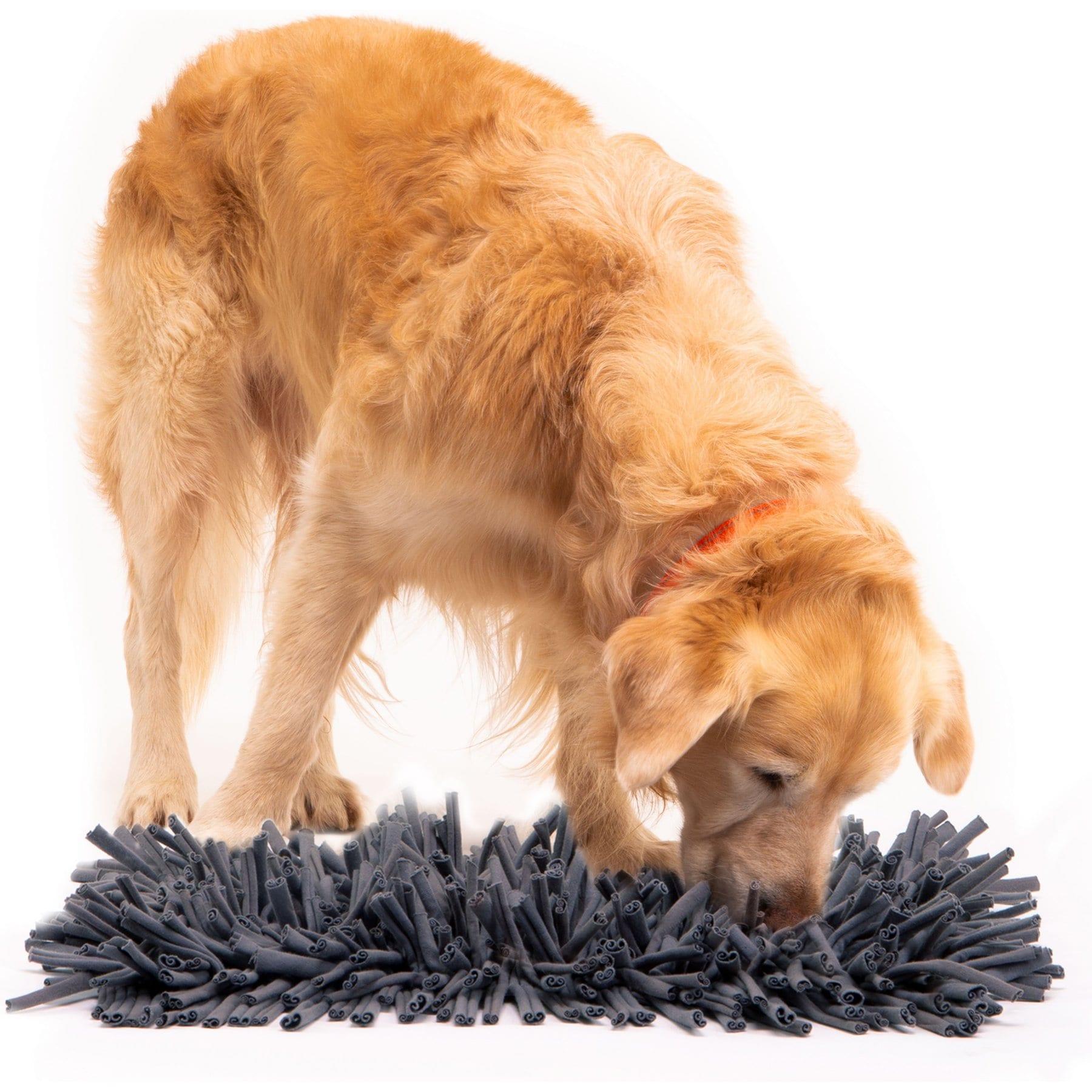
A deep fleece-strip feeding mat that turns a meal into a sniffing search, for most dogs under supervision.
Webvet may earn a commission when you click through to Chewy, at no extra cost to you.
The PAW5 Wooly Snuffle Mat is a full-size feeding mat with dense fleece strips that PAW5 says mimic the search for food in grass and fields. PAW5 describes it as made from non-toxic materials and built to be durable. It is listed at $39.95 on Chewy when checked in November 2026.
Who the PAW5 Wooly suits:
- Suits dogs that eat full meals from a mat, including older dogs that enjoy a slow sniff more than a long walk.
- Deep strips give a real challenge once a dog understands the game.
- Supervise any dog that tugs or chews strips; a deep mat has more fabric to pull loose.
Frisco Snuffle Mat: best budget snuffle mat
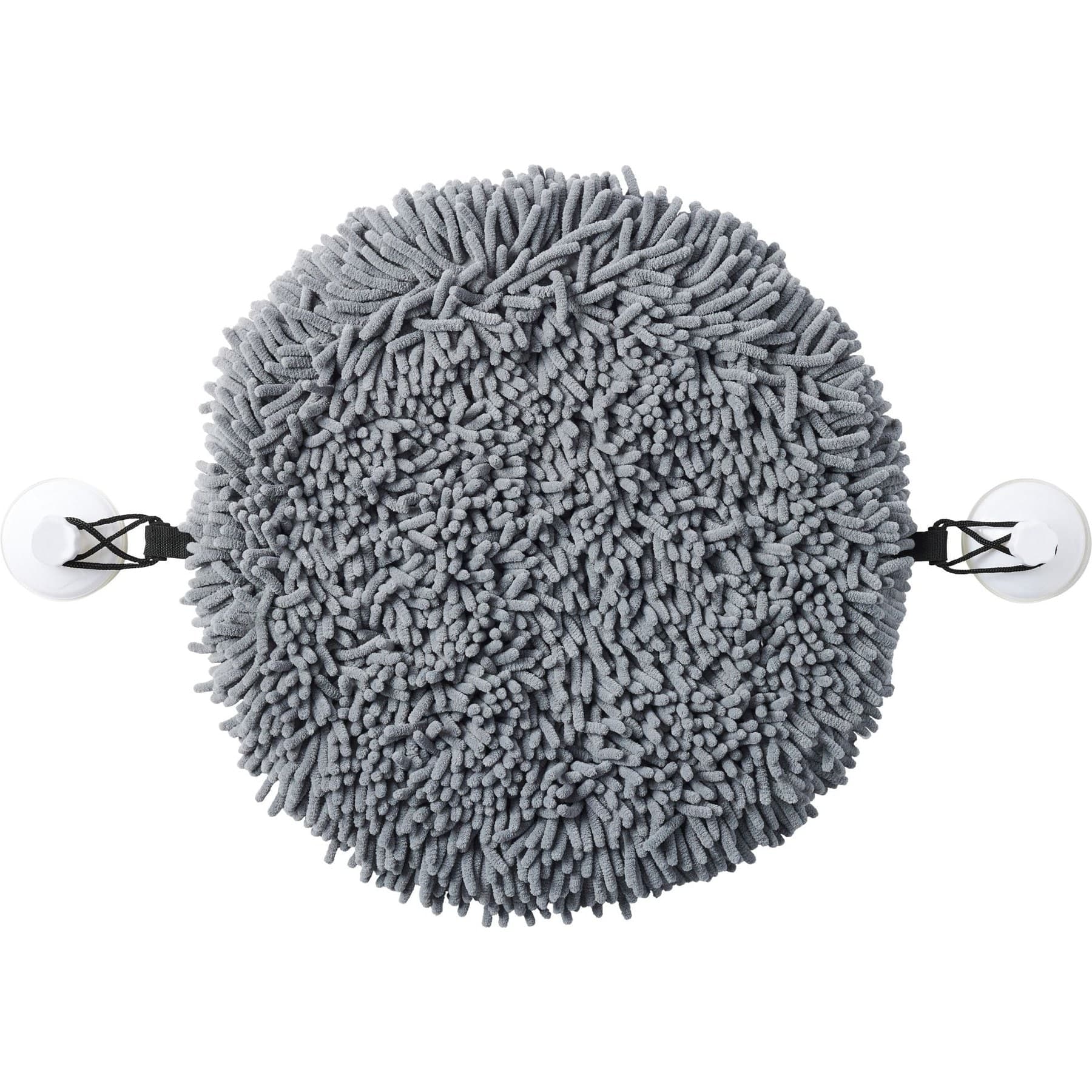
A low-cost shaggy fleece mat with suction cups and a machine-washable build, for trying nose work at home.
Webvet may earn a commission when you click through to Chewy, at no extra cost to you.
The Frisco Snuffle Mat, made by Chewy's Frisco brand, is a shaggy fleece mat for scattering kibble or treats. Its listing notes suction cups that attach to the base to help hold it on smooth floors, and it is machine washable. It is listed at $14.99 on Chewy when checked in November 2026.
At that price it is an easy way to find out whether your dog enjoys foraging before spending more. The suction cups help with dogs that push the mat around, though a determined dog can still flip it, so the supervision rule stays the same.
PuzzleFeeder Dog Snuffle Mat, All Breed Sizes: best snuffle mat for large dogs
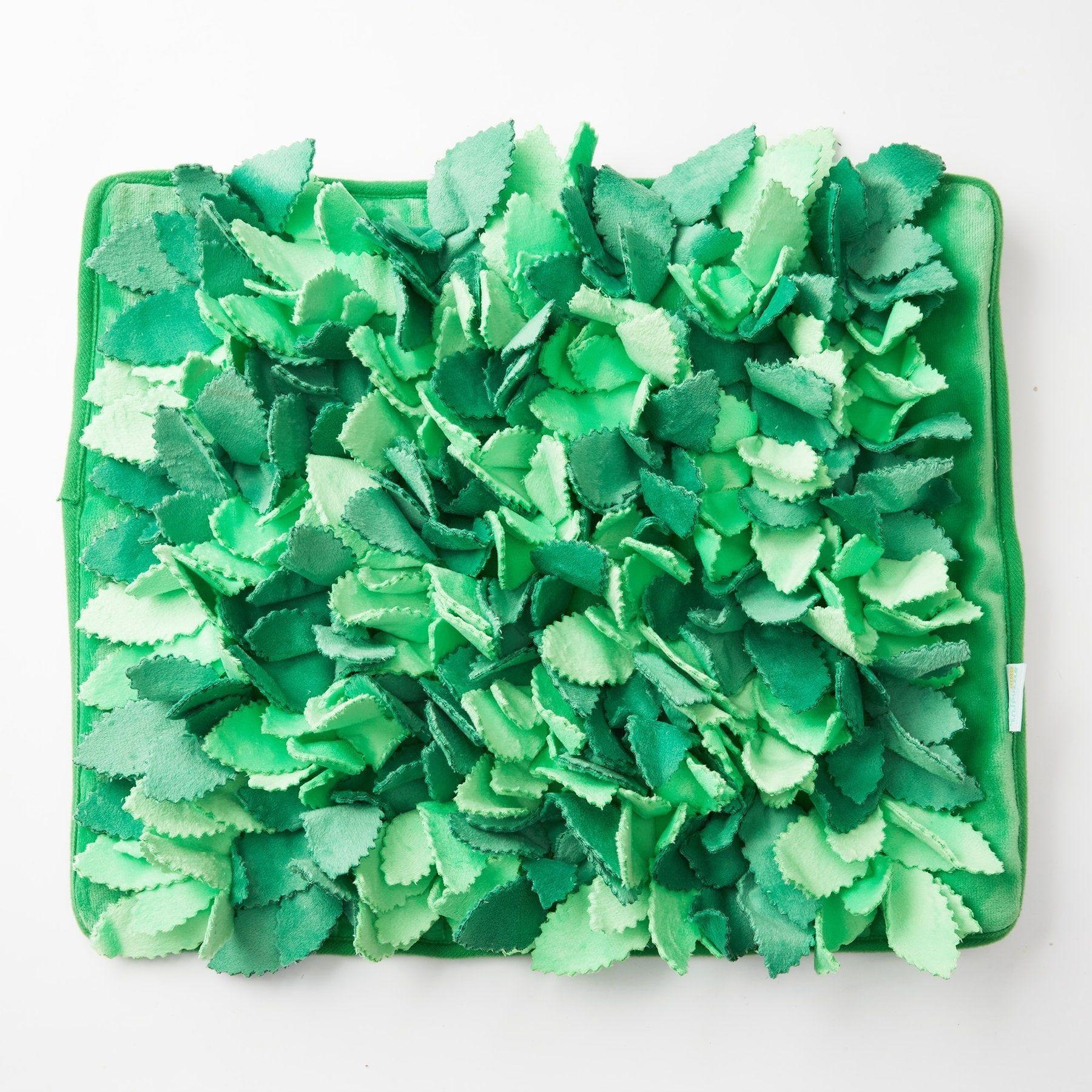
A roomy silicone snuffle mat with molded grass and flower shapes, for large dogs and wipe-clean meals.
Webvet may earn a commission when you click through to Chewy, at no extra cost to you.
The PuzzleFeeder Dog Snuffle Mat is made from non-toxic silicone molded into flower and grass petal shapes, according to its listing, and the product name says it is sized for all breeds. It is listed at $27.99 on Chewy when checked in November 2026.
Silicone suits big dogs with wet jowls and owners who would rather rinse than launder. The shapes are shallower than long fleece, so it is an easier search, which makes it a good first mat for a large dog that loses interest quickly.
Pet Parents Forager Snuffle Mat & Slow Feeder Dog Bowl: best bowl-style snuffle feeder for fast eaters
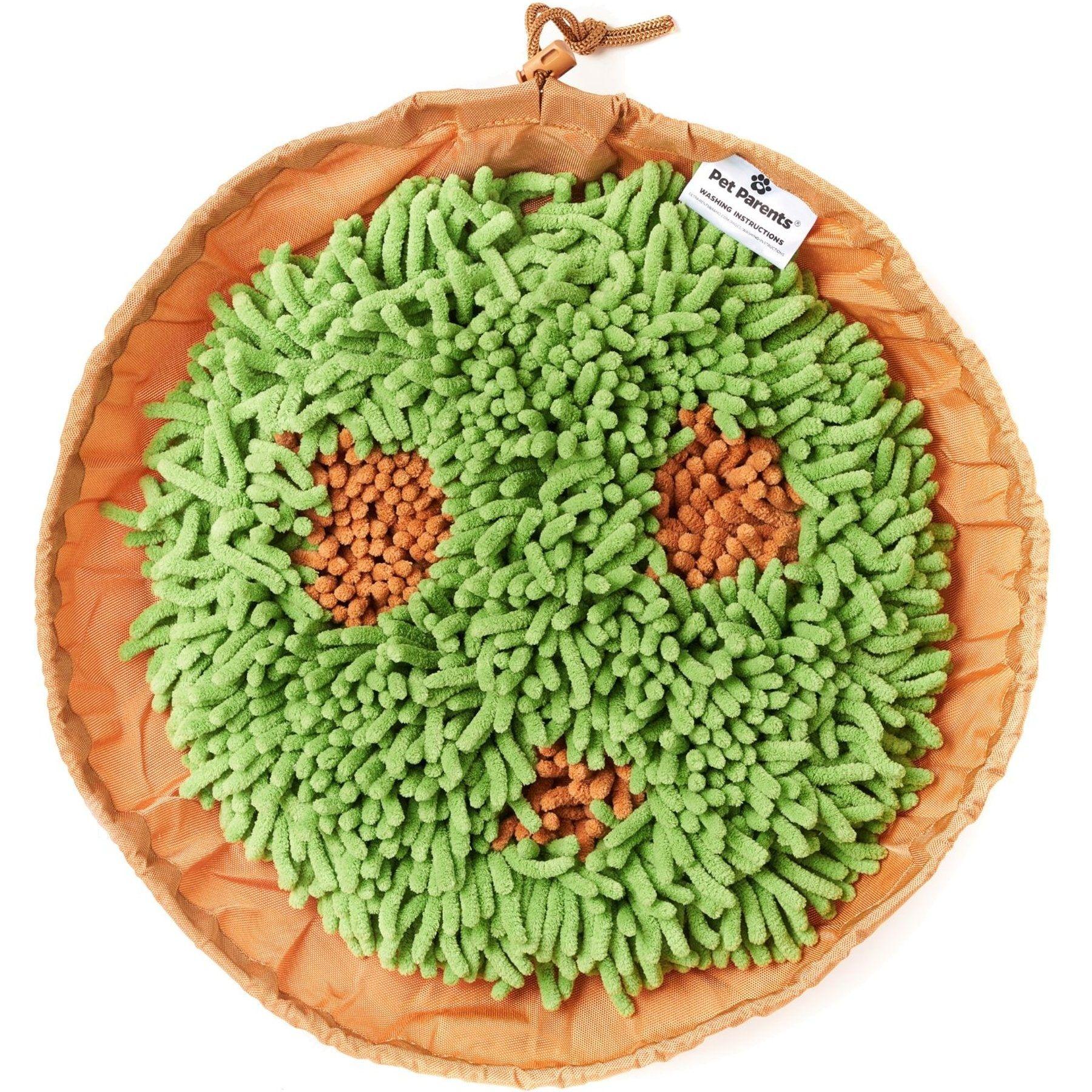
A bowl-style snuffle feeder that spreads kibble through soft strips to slow down fast eaters at mealtime.
Webvet may earn a commission when you click through to Chewy, at no extra cost to you.
The Pet Parents Forager is a snuffle mat shaped to work as a food bowl replacement, with strips made from the brand's SoftSnout material. The listing aims it at pups who eat too quickly. It is listed at $16.99 on Chewy when checked in November 2026.
The bowl shape keeps kibble in one place, which helps if your dog scatters food across the floor. Treat it like any feeding bowl: serve the meal, stay nearby, and pick it up afterward rather than leaving it out as a chew item.
Outward Hound Nina Ottosson Snuffle Palz Snuffle Mat Dog Toy: best small snuffle toy for small dogs
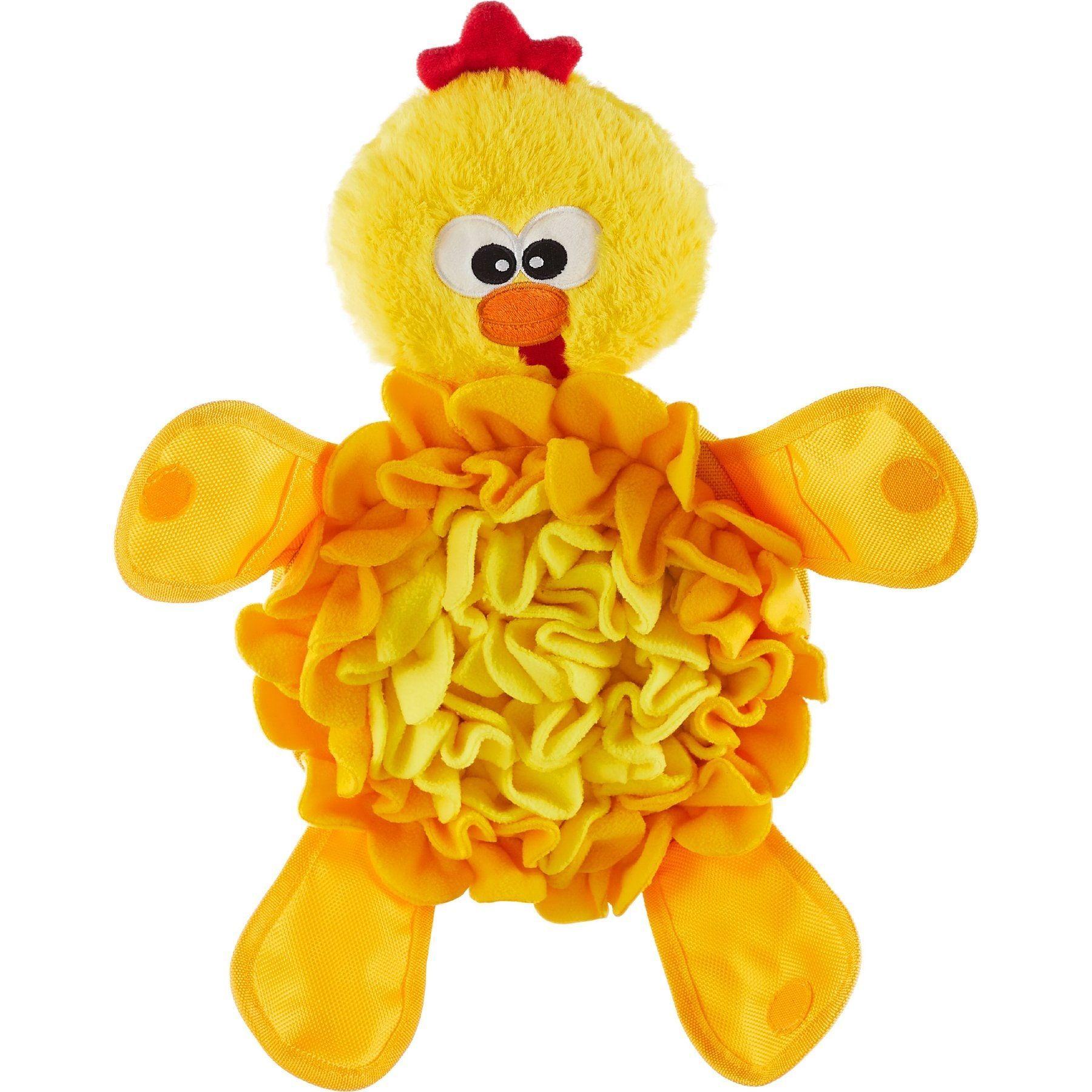
A small plush snuffle toy with pockets for hiding treats, for small dogs and gentle sniffers under supervision.
Webvet may earn a commission when you click through to Chewy, at no extra cost to you.
The Outward Hound Snuffle Palz combines a plush bird toy, a non-slip snuffle mat, and a treat puzzle with pockets to hide food, according to its listing. It is listed at $11 on Chewy when checked in November 2026.
Its small footprint suits toy breeds and gentle sniffers who use it for treats rather than full meals. Plush is the easiest material to tear, so it is not a match for dogs that shred stuffed toys.
 Sponsored
Vet care that's always there
Unlimited video calls and messaging with licensed vets for less than a typical vet visit. One membership covers up to five pets.
Use code Pets60
Plans start at $12/month · covers up to 5 pets
- Licensed vets in most states
- Rx for 150+ conditions
- 4.7 on Trustpilot
Choosing a snuffle mat: fleece depth, size, and difficulty
| Dog profile | Fleece depth | Size | Difficulty | Supervision | Matching pick |
|---|---|---|---|---|---|
| Fast eater | Medium to deep fleece depth, or a bowl-style feeder | Fits a full meal | Easy to moderate | Stay nearby for the whole meal | Pet Parents Forager Snuffle Mat |
| Bored or anxious dog | Deep fleece depth for a longer search | Medium | Moderate to hard | Supervision in short daily sessions | PAW5 Wooly Snuffle Dog Feeding Mat |
| Puppy | Shallow fleece depth | Small to medium | Easy | Full supervision; remove after use | Frisco Snuffle Mat |
| Senior dog | Shallow to medium fleece depth | Medium, flat and stable | Easy | Supervision for stability and chewing | Frisco Snuffle Mat |
| Blind dog | Medium fleece depth with strong-smelling food | Medium, same spot each time | Easy, then moderate | Supervision until the routine is known | PAW5 Wooly Snuffle Dog Feeding Mat |
| Large dog | Molded silicone or deep fleece depth | Large or XL | Easy to moderate | Supervision if the dog mouths the mat | PuzzleFeeder Dog Snuffle Mat |
| Small dog | Shallow fleece depth | Small | Easy | Supervision with plush styles | Outward Hound Snuffle Palz |
| Chewer or shredder | Short strips or silicone, no loose fabric | Any | Easy | Constant supervision, mat picked up after | PuzzleFeeder Dog Snuffle Mat |
Three choices shape how a snuffle mat works for a particular dog: fleece depth, size, and difficulty. Get those right and the mat gets used; get them wrong and a dog either gives up or treats it as a chew toy.
Fleece depth. Short strips make food easy to find and suit beginners, puppies, and seniors. Long, dense strips, like those on the PAW5 Wooly Snuffle Dog Feeding Mat, hide food deeper and make a harder search once a dog knows the game. Mats with knotted or gathered fabric pockets add another layer of challenge that some dogs love.
Material. Fabric mats give the most natural foraging feel but need laundering. A rubber or silicone mat, such as the PuzzleFeeder Dog Snuffle Mat, Green, All Breed Sizes, trades depth for easy rinsing and has no loose strips to pull. Small plush snuffle toys are better for treats than for full meals.
What makes a high-quality snuffle mat
A high-quality snuffle mat for dogs shares a few traits regardless of brand:
- Strips sewn or knotted firmly to the base, with no loose threads.
- A non-slip or anchored base so the mat stays put.
- Washable materials that hold up to repeated hot washes.
- A size that matches your dog's head and body, so the dog can reach the center without standing on the mat.
For dogs that finish an easy mat quickly, interactive dog toys and stuffable rubber toys from our guide to the best Kong toys for dogs give another kind of puzzle to rotate with the mat.
How to use a snuffle mat: first sessions, how often, and harder hides
Most dogs need a short lesson before a snuffle mat makes sense. The ASPCA describes the basic method simply: place and hide kibble throughout the mat. Introducing a snuffle mat step by step keeps early sessions easy so the dog wins quickly and wants to keep going.
- Pick a quiet spot on a flat floor and lay the mat out where your dog already eats or relaxes.
- Drop a few pieces of kibble or treats on top of the strips where your dog can see them.
- Let your dog sniff and eat them, and praise calmly.
- Next session, push the food a little deeper into the fleece strips.
- Once your dog searches confidently, scatter a portion of the meal across the whole mat.
- Pick the mat up when the food is gone so it does not become a chew toy.

What to put in a snuffle mat
Dry kibble is the simplest filling, because it does not smear or soak into fabric. Small, dry treats work too, but count them. VCA Animal Hospitals advises that treats stay within 10% of a dog's daily calorie intake, so subtract mat treats from the day's total and use our guide to how much to feed a dog to size meals.
Using part of the regular meal is the easiest way to keep calories steady. Wet food, peanut butter, and soft fillings belong on a lick mat instead, which is easier to clean.
Snuffle dog training and harder hides
Snuffle mat sessions double as simple scent training. The ASPCA suggests a find it game: say the cue, toss a treat nearby, praise the find, and make it harder over time. Using the same cue at the mat builds a habit your dog can use elsewhere.
Cornell's Riney center notes you can progressively make enrichment games more challenging. Ways to raise the difficulty:
- Roll or fold the mat so food sits in a tube or pocket.
- Hide food at the bottom of the deepest strips.
- Use smaller pieces that take more sniffing to find.
- Add a hiding game around the room, which Cornell describes as letting your dog hunt and sniff for each piece.
Do snuffle mats make dogs tired? Many owners find a dog settles after a session, and the mental work of searching is real. There is little research on tiredness after snuffle mat use specifically, so treat it as a calm, satisfying activity that adds to walks and play rather than replacing exercise.
How often should my dog use a snuffle mat?
Most dogs can use a snuffle mat once or twice a day, often for part or all of a meal. How often to use one depends on the dog: sessions of a few minutes suit puppies and seniors, while healthy adult dogs can forage longer. Keep every session supervised, and cut back if your dog gets frustrated or starts chewing the strips.
What can I use instead of a snuffle mat?
Several tools give a similar sniff-and-search experience. A slow feeder bowl, a stuffed rubber toy, scattering kibble on grass, or a towel rolled around treats all slow eating and add foraging. For licking rather than sniffing, a lick mat for dogs suits soft food, and households with cats can find a lick mat for cats too. Owners who like to sew can follow our DIY snuffle mat guide.
For a dog that needs longer stretches of occupation, rotating several toys works better than any single one; our roundup of dog enrichment toys covers toys that keep a dog busy for longer.
Snuffle mat safety: chewing, shredding, and supervised use
Snuffle mats are safe for most dogs when they are used as a supervised game rather than a toy left on the floor. Supervision for chewers or shredders is not optional. The ASPCA asks owners to supervise closely and actively whenever enrichment items are out, and to remove any item a dog tries to swallow straight from its mouth.

No fabric snuffle mat is chew-proof. A heavy-duty or "most durable" label means the strips are harder to pull, not that a dog can safely chew them. When shopping for a durable mat, look for:
- Tightly sewn or knotted strips with no loose threads.
- A thick, non-slip base that resists tearing.
- A non-toxic label from the maker, plus no small detachable parts.
- Silicone instead of fabric for dogs that pull at strips.
Silicone mats are one non-toxic, wipe-clean answer for dogs that tug at fleece. The Awoo Meadow Snuffle Mat Silicone Dog & Cat Lick Mat Slow Feeder, Sage is made from food-grade silicone according to its listing and is listed at $18 on Chewy when checked in November 2026. Silicone can still be chewed, so the same rules apply.
Supervision rules for every session
- Stay in the room for the whole session.
- Pick the mat up as soon as the food is gone.
- Stop the session if your dog starts tearing or swallowing strips.
- Check the mat after each use for loose or missing pieces.
- Store the mat out of reach between sessions.
The Cornell Richard P. Riney Canine Health Center lists toys and pieces of clothing among the objects dogs commonly swallow, warns that string-like objects can cause more severe damage, and calls GI obstructions emergencies that often need surgery. Signs it lists include vomiting, lethargy, loss of appetite, and belly pain.
Snuffle mats for puppies, senior dogs, large dogs, and blind dogs
Different dogs need different mats. Size matters most for very young or very big dogs, but age and eyesight change the right choice too.
Puppy snuffle mats
A puppy snuffle mat should be small, shallow, and supervised. VCA Animal Hospitals explains that puppies normally explore by sniffing, tasting, and chewing, that teething chewing happens around 3 to 6 months of age, and that puppies need supervision at all times or no access to chewable items. The best snuffle mat for puppies is one you hand over for a meal and take back afterward.

Snuffle mats for small dogs
The best snuffle mat for small dogs is sized so a short muzzle can reach the food without climbing onto the mat. A small snuffle mat with shallow strips works well for toy breeds. The Outward Hound Nina Ottosson Snuffle Palz Interactive Plush Puzzle & Snuffle Mat Dog Toy, Bird is a compact plush option for treat sessions, best for gentle dogs that do not shred toys.
Snuffle mats for large and big dogs
The best snuffle mat for large dogs needs room for a wide muzzle and enough surface for a full meal. Look for large or XL mats with a heavy base that a big dog cannot easily flip. Silicone or deep fleece both work; the PuzzleFeeder pick above is sized for all breeds and has no loose strips to pull.
Snuffle mats for senior dogs
A snuffle mat for senior dogs keeps the brain busy when long walks are harder. Veterinarians, including a board-certified veterinary behaviorist, writing in Clinician's Brief note that enrichment for senior dogs can slow age-related cognitive decline, and that pets with less stamina benefit from mental or sensory stimulation. Choose a flat, stable mat with shallow strips so stiff dogs can stand comfortably while they sniff.
Snuffle mats for blind dogs
Snuffle mats for blind dogs make good use of the senses they rely on most. The RSPCA notes that smell and hearing are far more important to dogs than sight, suggests scent work for blind dogs, and says most adjust well to blindness over six to eight weeks once any underlying disease is managed. Keep the mat in the same spot each time and use strong-smelling kibble so the search starts easily.
Washing a snuffle mat and when to replace it
A snuffle mat is a food dish, so it needs cleaning like one. The FDA advises washing pet food bowls with soap and hot water after each use and washing hands before and after handling pet food. A PLOS ONE study of 417 dog owner surveys and 68 food dish swabs found that following FDA hygiene steps significantly reduced dish contamination, and that hot water cut bacterial counts more than cold or lukewarm water.

Washing a fabric mat is simple if you do it often:
- Shake out crumbs after every session.
- Wash fabric mats in hot water as often as the maker's label allows; the FDA standard for food bowls is after each use, so wash right away whenever a mat gets damp, greasy, or smelly.
- Choose a washable snuffle mat for dogs if you plan to use it daily; the Frisco Snuffle Mat, Grey, for example, is listed as machine washable.
- Rinse silicone or rubber mats with hot, soapy water after each use.
- Dry fully before the next session so the strips do not stay damp.
If a dog urinates on the mat, wash it promptly in hot water and dry it completely before reuse, because a lingering scent can draw the dog back to the same spot.
Replace a snuffle mat when strips fray, thin out, or come loose, when the base tears, or when a smell remains after washing. A worn mat is easier to pull apart, which matters most for dogs that chew.
Snuffle mat for dogs questions
Frequently Asked Questions
How do you use a snuffle mat for dogs?
To start, scatter a handful of kibble across the mat, push some down into the strips, and let your dog sniff it out while you watch. Start with food on top for the first few sessions, then hide it deeper. When the kibble is gone, pick the mat up.
Do snuffle mats make dogs tired?
Many dogs settle after a session and can look pleasantly tired, because sniffing and searching are mental work. A snuffle mat is not a substitute for walks and play, though. Think of it as a calm add-on that leaves a dog content rather than worn out, and keep exercise in the routine.
Can you put a snuffle mat in the washing machine?
Many fabric snuffle mats can go in the washing machine; check the label first. A hot wash removes food residue well. Afterward, air dry the mat fully, or follow the maker's drying directions, so the fleece does not stay damp between sessions.
Is a snuffle mat good for a puppy?
A snuffle mat can be a good mealtime game for a puppy if it is small and shallow. Puppies explore with their mouths, so supervise every session, keep it short, and put the mat away afterward so it never becomes a chew toy.
Can blind dogs use a snuffle mat?
Yes. Blind dogs rely on scent and hearing, so a snuffle mat suits them well. Keep the mat in one familiar spot, start with food on top, and use kibble with a strong scent so the search begins easily.

Editor
The Webvet Editorial Team is the in-house group of pet-care editors and writers behind Webvet, operated by Smart Pet Collective. The team researches, writes, and maintains Webvet's pet health, behavior, and medication content. Every article follows a defined editorial process: research from reputable veterinary and scientific sources, careful drafting, mandatory review of medical content by a credentialed veterinarian, and dated publication. Health and medication articles are medically reviewed by a licensed veterinary professional before they go live and are kept current over time.
Related reading

DIY Snuffle Mat: How to Make One, Plus Slow-Feed Mat Options

Lick Mat for Cats: Safe Fillings, Benefits, and Which to Buy

Lick Mat for Dogs: What It Does, Best Fillings, and Which to Buy
