Dog Enrichment Toys: DIY Builds, Picks, and Daily Routines
Dog enrichment toys only work when your dog has to solve something to get paid. Here is what each format makes a dog do, six picks by activity, household builds you can make today, no-food ideas, and how much food belongs inside.

This article contains affiliate links. Webvet may earn a commission when you buy through them, at no extra cost to you.
Dog enrichment toys make a dog work for what it gets instead of being handed it. That one difference separates them from the tennis ball in the corner: your dog has to sniff, lick, roll, shred, or search before anything good happens.
Fifteen minutes of that kind of problem solving settles most dogs more reliably than another lap around the block, and it uses food you were going to feed anyway. This guide is built around what the toy makes your dog do.
Below you will find the six enrichment formats, six picks chosen by job rather than price, six household builds, a routine that uses no food at all, and a plan for the workday. It also settles how much food is allowed to go inside all of this.
 Sponsored
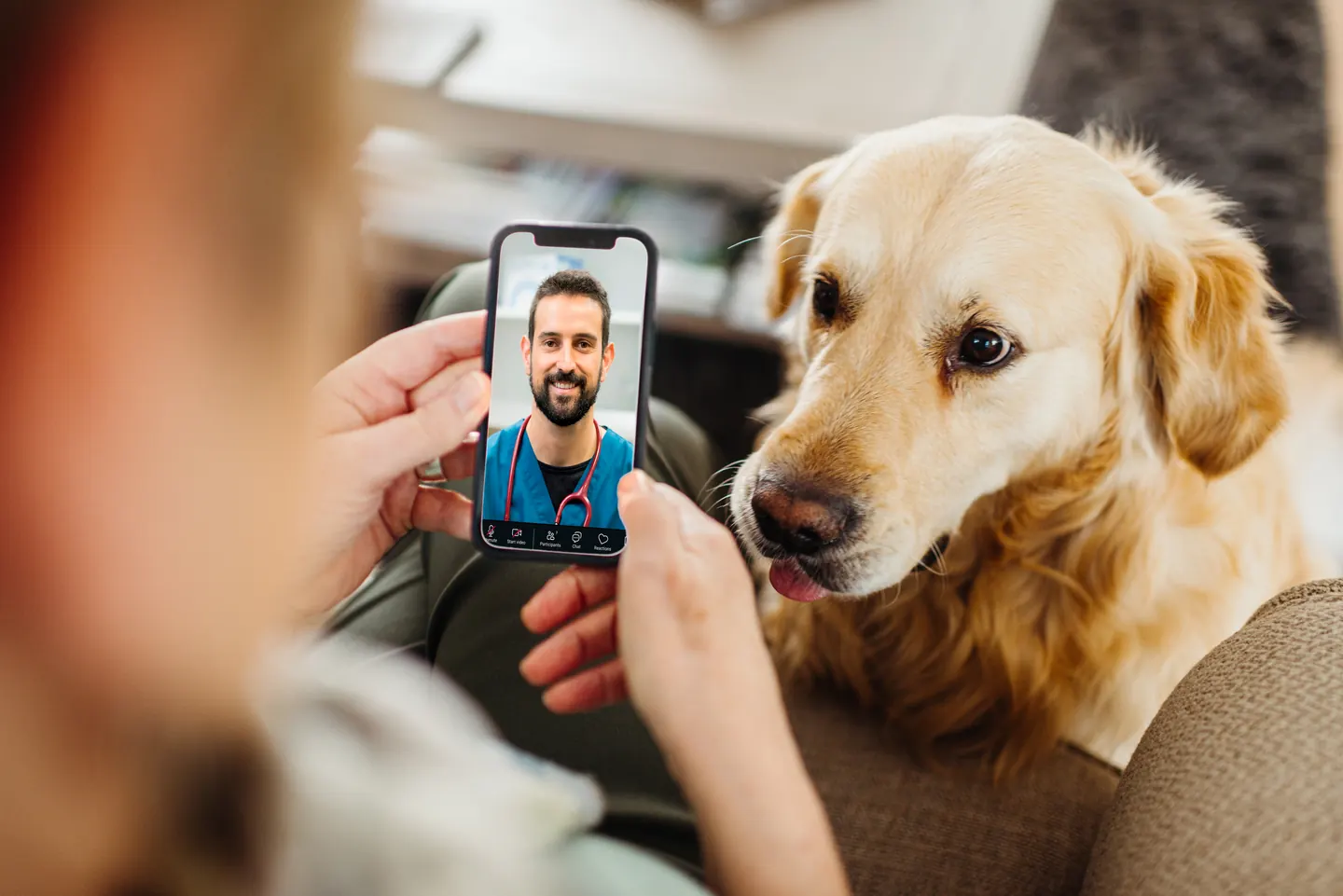
Want a vet's help with your dog's anxiety or behavior?
Talk to a licensed vet at Dutch over video, often the same day. They can recommend treatment and prescribe it when it's appropriate.
Use code Pets60
Plans start at $12/month · covers up to 5 pets
- Licensed vets in most states
- Rx for 150+ conditions
- 4.7 on Trustpilot
What counts as a dog enrichment toy
An enrichment toy is a toy your dog has to solve before it pays out. An ordinary toy is entertaining because you are throwing it. An enrichment toy is a job your dog can do alone, and it runs whether you are in the room or not. What can mentally stimulate a dog is anything that makes it sniff, search, lick, or solve for its food, and a toy only counts as enrichment when it does one of those.
That job is the point. Sniffing, foraging, chewing, and problem solving are normal dog behaviours rather than habits to train away. Both the ASPCA dog care guidance and the American Kennel Club expert advice library treat enrichment as a legal outlet for them.
Three things separate an enrichment toy from an ordinary one:
- Your dog controls the payout. Food appears because of something the dog did, not because you handed it over.
- There is a problem in the way. The toy withholds just enough that your dog has to think, sniff, or work at it.
- It runs without you. Set it down, walk out of the room, and your dog keeps going.
- 1An enrichment toy only counts if the dog has to solve something to get paid. It makes your dog work for the food instead of receiving it in a bowl.
- 2Choose the format by the activity you want: foraging, licking, dispensing, searching, shredding, or chasing. Price is not the variable that matters.
- 3The food that goes into the toy comes out of the daily ration, not on top of it.
- 4Decide before you leave the house which toys can stay on the floor unattended and which get picked up.
- 5Keep three or four toys in play and put the rest out of sight for a week, so the toy still works in week three.
An enrichment toy is not a replacement for walks, company, or training. Treat it as the third leg of the day, sitting alongside physical exercise and time with you.
Long lasting dog enrichment comes from food the dog has to work out slowly, usually a stuffed and frozen rubber toy, while a toilet roll stuffed with kibble is the five-second version of the same idea ; the build is in the DIY section below.
The six enrichment formats and what each one makes a dog do

Six formats cover almost everything sold as enrichment, and each one makes a dog perform a different activity. Choose by the activity you want, because a dog who needs to settle and a dog who needs to move are not helped by the same toy.
- Snuffle mats and foraging fabric. Your dog sweeps its nose through a dense pile to find food buried in it. Best for fast eaters, puppies, and older dogs.
- Lick mats. Your dog licks a thin spread off a textured surface. Licking is repetitive and calming, so this is the format for settling a dog.
- Treat-dispensing balls and rollers. Your dog nudges and chases the toy until food drops out. This is what gets a dog moving indoors on a wet day.
- Stuffable rubber toys. Your dog works food out of a hollow cavity. Freeze one filling and it can hold a dog for half an hour.
- Hide-and-seek plush toys. Your dog finds and pulls squeaky pieces out of a soft holder, then you reload it. The softest format for a gentle mouth.
- Shredding and destructible enrichment. Your dog tears a container apart to reach what is inside. The messiest format, and the one you already own the materials for.
Formats also come in difficulty tiers. A starter toy pays out with a nudge, a working toy takes real effort, and an advanced toy is a working toy made harder by freezing. The supervision needed per format matters as much as the tier.
| Format | What it makes your dog do | Difficulty tier | Mess | Supervision | Best fit |
|---|---|---|---|---|---|
| Snuffle mat | Sweeps the nose through fabric to find scattered food | Starter | Low, crumbs in the pile | Can stay down with a dog who does not shred fabric | Fast eaters, puppies, senior dogs |
| Lick mat | Licks a thin spread off a textured surface | Starter | Medium, sticky | Supervise, or use on a wipeable floor | Settling, nail trims, storms |
| Treat-dispensing ball | Nudges and rolls the toy so food drops out | Working | Low, food scatters | Fine alone once the size is right | Dogs who need to move indoors |
| Stuffable rubber toy | Licks and works food out of a cavity | Working, advanced when frozen | Low | Fine alone once you know how your dog chews it | Long solo sessions |
| Hide-and-seek plush | Finds and pulls squeaky pieces out of a holder | Working | High if the plush loses | Supervise every time | Searching, soft-mouthed dogs |
| Shredding box or destructible toy | Tears the container apart to reach food | Starter | Very high | Supervise every time | Dogs who demolish things anyway |
Two signals tell you the difficulty tier is wrong. If your dog empties it in ninety seconds, the toy is too easy: freeze the filling solid, pack it tighter, or plug the opening with a larger biscuit.
If your dog walks away after one sniff, it is too hard. Leave the lid off, switch to loose dry food instead of a spread, and let your dog watch you load it once.
Size and life stage matter more than breed. Small dogs need shallow mats and small openings. Large dogs need a toy too big to swallow. Senior dogs with worn teeth do better with a flat mat than a ball that rolls away. Matching difficulty to the dog means the toy is neither abandoned in ninety seconds nor given up on after one failed try: start a tier below where you think your dog sits, and move up the moment the session gets short.
The best dog enrichment toys, by activity

Each pick below is here for the activity it creates, not for its place on a general best-toys list. WebVet has not physically tested these toys. These are researched, vet-informed selections based on published enrichment guidance, manufacturer specifications, and how each format behaves at home.
One toy is usually enough to start. Add a second once you know which activity your dog actually enjoys, because a dog who loves to sniff and a dog who loves to demolish will not use the same toy.
Frisco Snuffle Mat: best for foraging
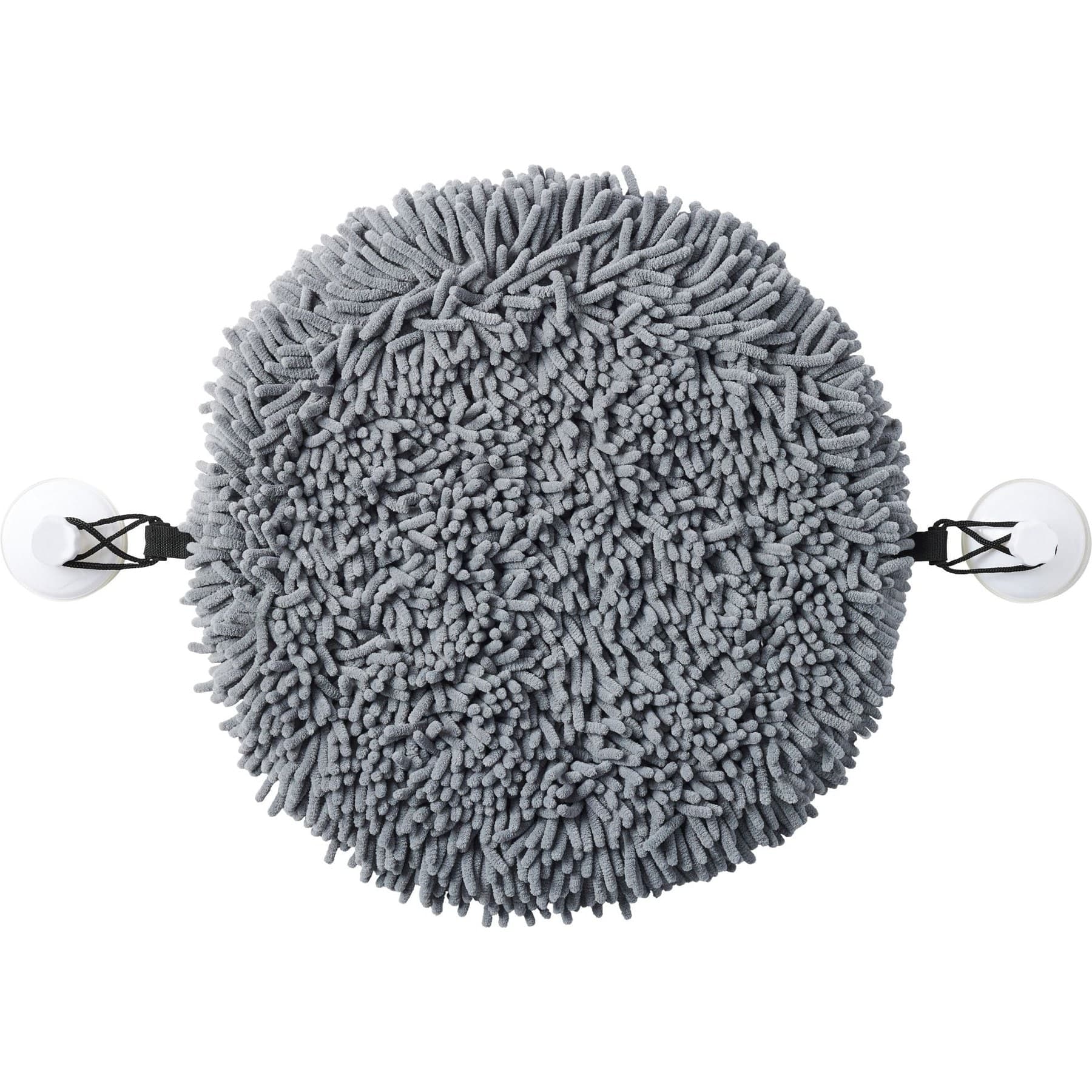
A shaggy mat you scatter kibble into for five to ten minutes of nose work. Machine washable, with suction cups for smooth floors. Supervised, since the pile is chewable.
Webvet may earn a commission when you click through to Chewy, at no extra cost to you.
A snuffle mat is a dense fabric pile you scatter dry food into, and your dog works it out nose first. The Frisco mat's shaggy pile holds a full meal without the food dropping straight through, and suction cups on the base keep it put on a smooth floor. A dog who clears a bowl in twenty seconds will spend five to ten minutes on the same breakfast.
It suits puppies, seniors, and small dogs because nothing has to be chased or crunched. Shake it out after every session and machine wash it when it starts to smell like dinner.
LickiMat Soother: best for a slow, settling session
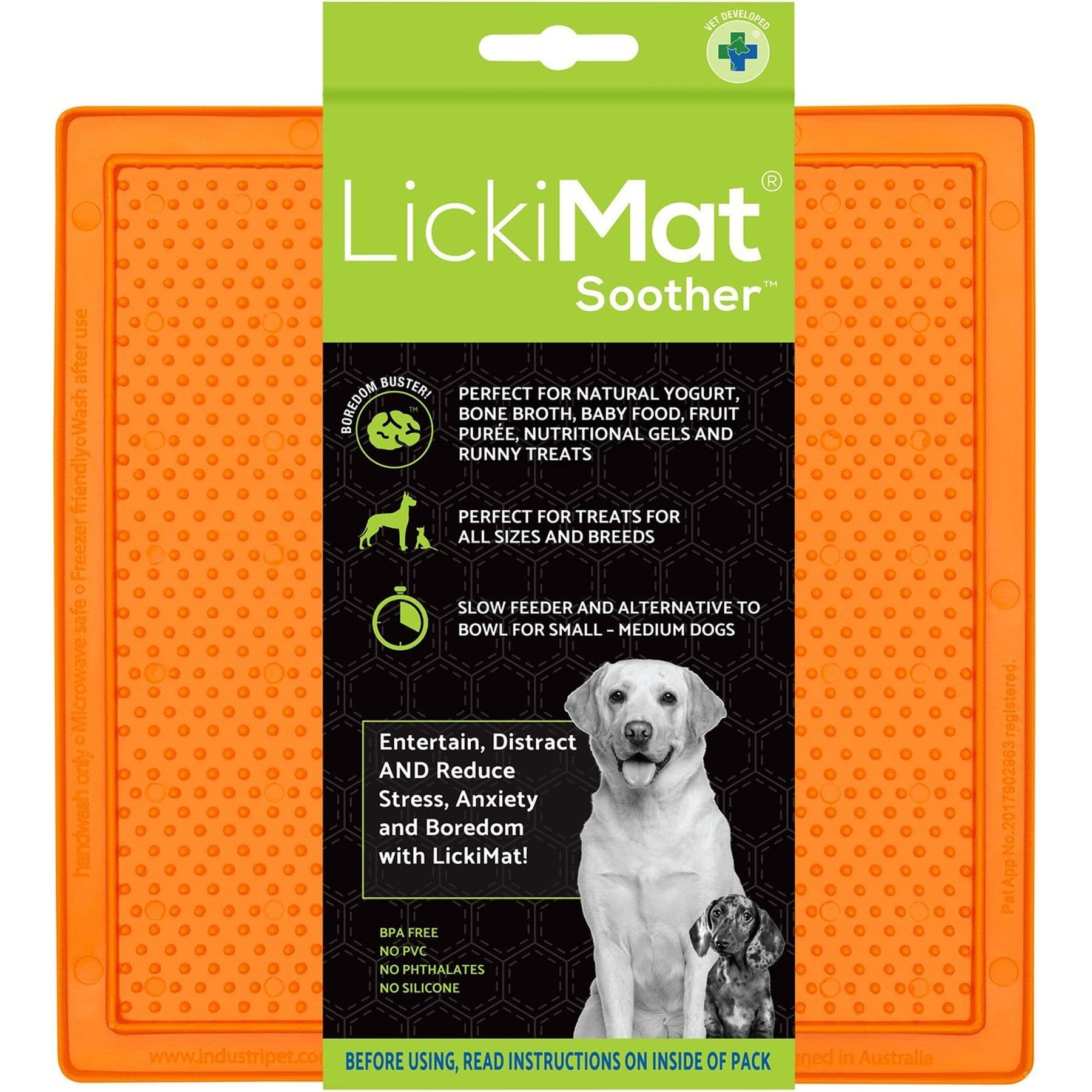
Soft rubber nubs hold a thin spread of wet food for twenty minutes of licking, the calmest activity here. Use it before a nail trim or a storm, freeze it to run longer, rinse the same day.
Webvet may earn a commission when you click through to Chewy, at no extra cost to you.
Licking is the calmest activity on this list, and a lick mat turns two tablespoons of wet food into twenty minutes of it. The Soother has a surface of fine soft nubs that hold a thin spread, so your dog has to keep working instead of clearing it in one pass.
Reach for it before a nail trim, during a storm, or when a dog needs to settle in a crate. Freeze it to make the session run longer, and rinse it the same day you use it.
PetSafe Busy Buddy Kibble Nibble: best for dispensing on the move
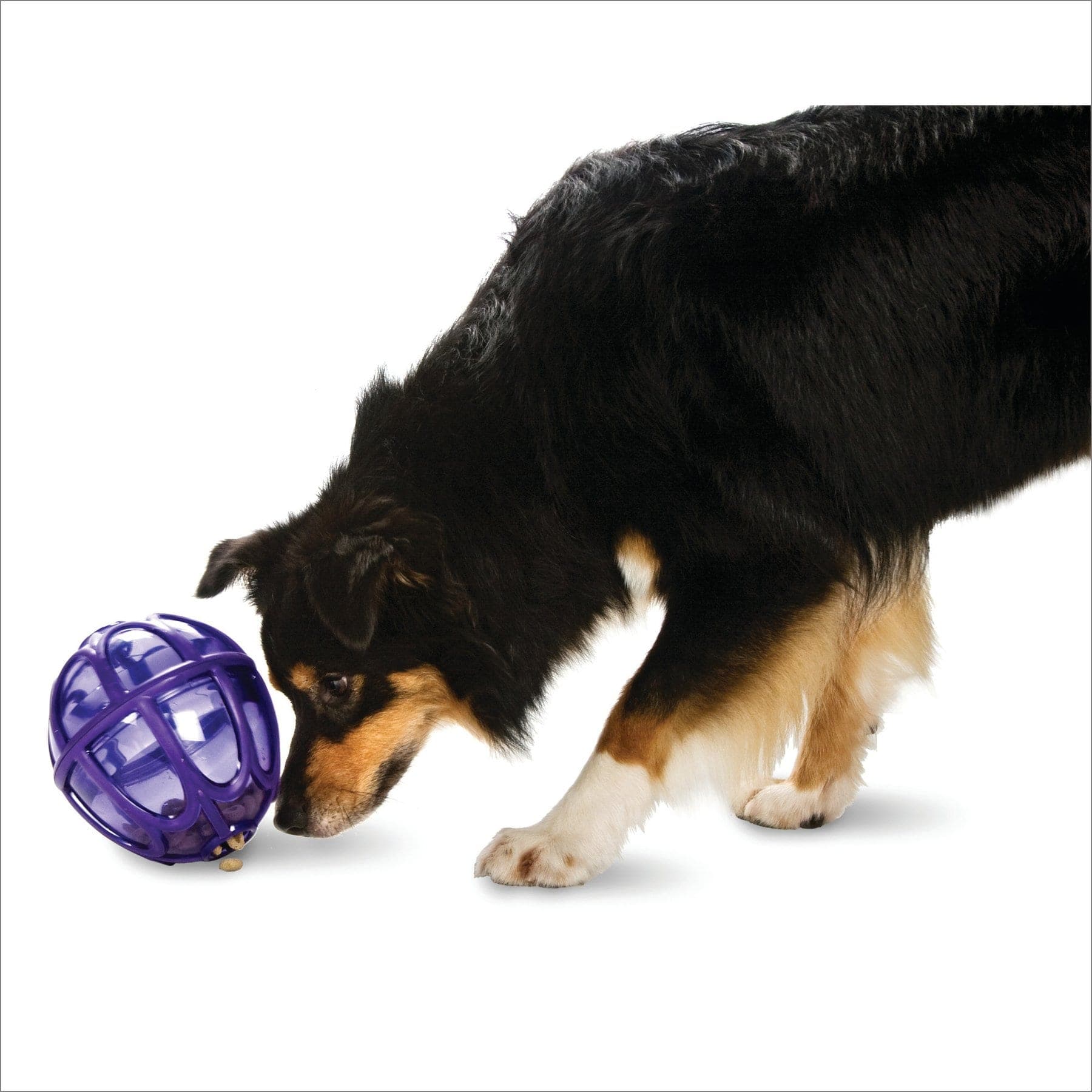
A two-piece ball that twists apart to fill and drops kibble through flexible prongs as your dog noses it around the floor: ten to fifteen minutes of trotting and problem solving. Rubber bumpers keep it quiet on hard floors.
Webvet may earn a commission when you click through to Chewy, at no extra cost to you.
This is the pick for a dog who needs to move rather than settle. The Kibble Nibble is a two-piece ball that twists apart to fill with dry food, then drops pieces at random through its flexible Treat Meter prongs as your dog noses it around the floor.
It turns a meal into ten or fifteen minutes of trotting and problem solving, which earns its place on a rainy day. Choose the size for your dog rather than your floor space, and trim the prongs a little at a time if food comes out too slowly.
West Paw Toppl: best for a long frozen session
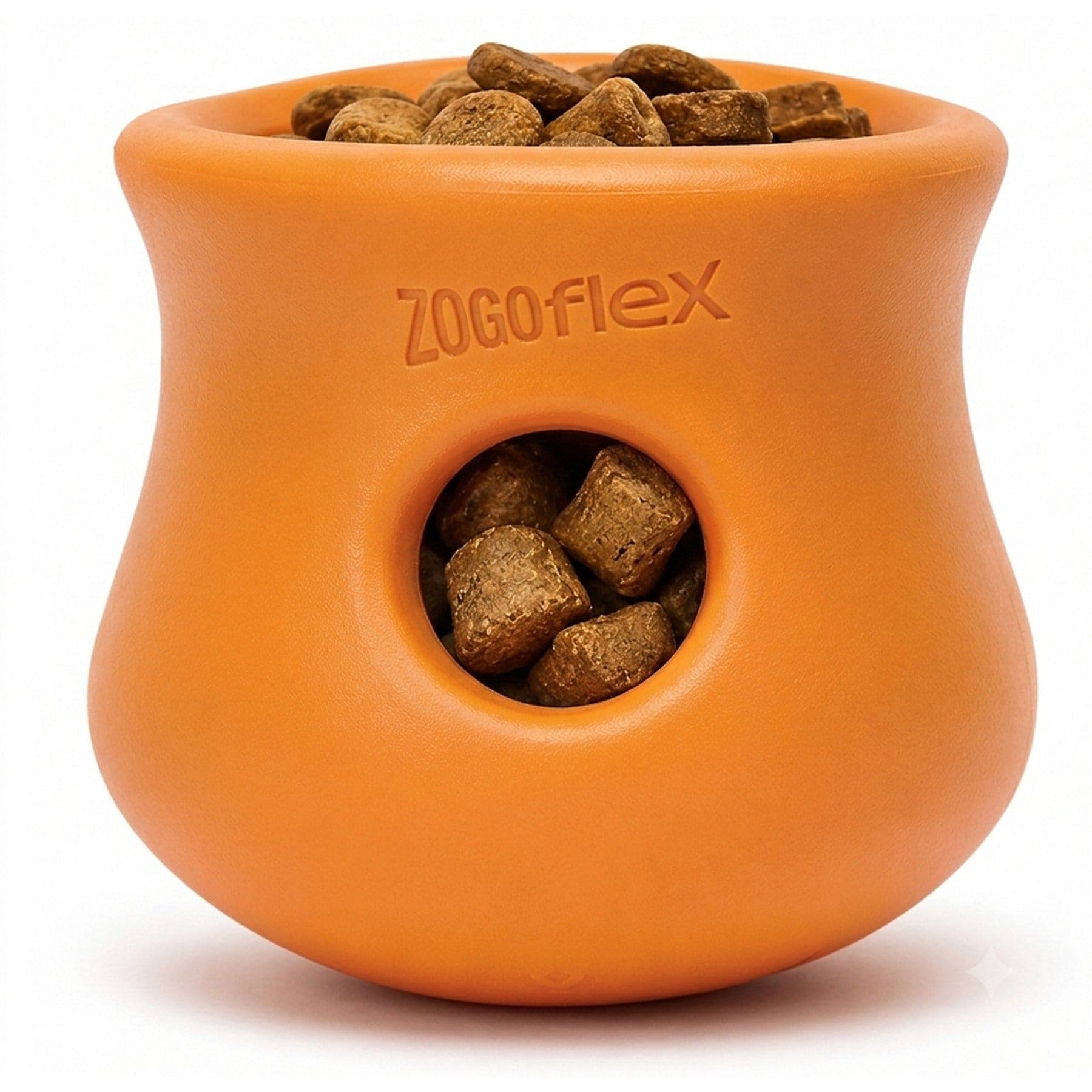
An open-topped Zogoflex cup with internal ridges and a wide mouth that takes wet food or soaked kibble. Filled and frozen it can hold a dog for half an hour, and it is dishwasher safe.
Webvet may earn a commission when you click through to Chewy, at no extra cost to you.
When one toy has to carry a long stretch alone, use a stuffable rubber toy and freeze it. The Toppl is an open-topped Zogoflex cup with internal ridges and a wide mouth that takes wet food, soaked kibble, or a mash of both.
Filled and frozen, it can hold a dog for half an hour. Freezing is the whole trick, and rubber is the easiest format to clean because most of these toys are dishwasher safe.
Planet Dog Orbee-Tuff Snoop: best for a dog who empties everything else
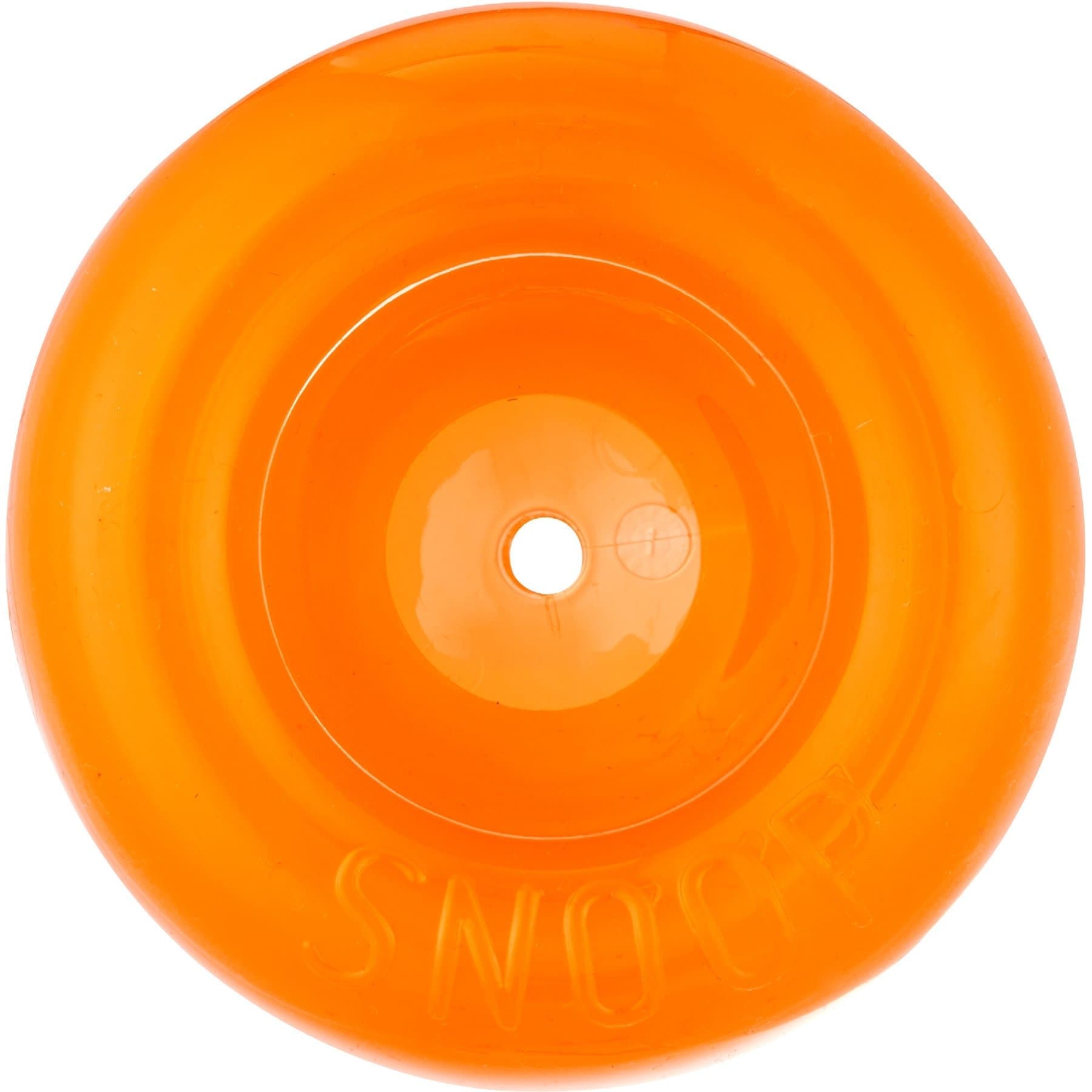
A flexible cone that folds in on itself so treats sit in a pocket your dog has to squash, roll, and nose open. Harder than a plain dispensing ball, and quiet on hard floors.
Webvet may earn a commission when you click through to Chewy, at no extra cost to you.
Some dogs solve the starter formats in a minute and lose interest by Tuesday. The Snoop is a squishy, see-through ball whose lip folds in on itself, so treats sit in a pocket your dog has to squash, roll, and nose open to reach.
It is genuinely harder than a standard dispensing ball, and harder again when packed with something sticky and frozen. It suits adolescent dogs with more energy than patience, and it is quiet on hard floors. Hand wash it, and treat it as a supervised toy rather than one to leave down.
Outward Hound Hide-A-Squirrel: best for searching and extraction
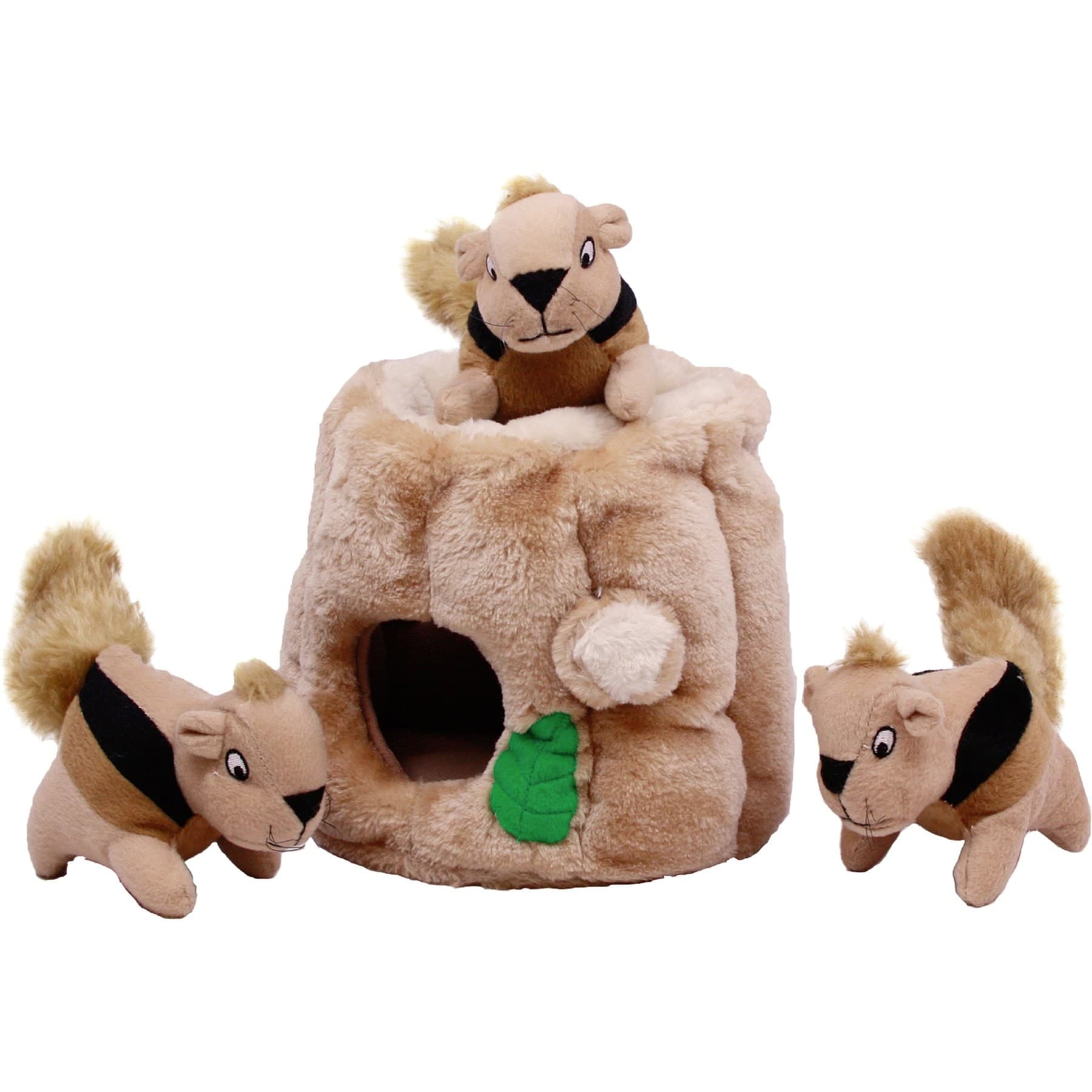
Three squeaky squirrels in a plush trunk: a toy for dogs that like searching more than destroying. Match the squirrel to your dog's mouth, and watch for torn seams.
Webvet may earn a commission when you click through to Chewy, at no extra cost to you.
This is the format for a dog who would rather hunt than chew. Small squeaky squirrels sit inside a plush log, and your dog has to find and pull each one out before you reload it and start again.
No food is involved, which makes it useful for a dog on a weight plan. It only suits a soft mouth: plush is never left down unattended, and the squirrels need checking for holes each time.
There is deliberately no bought pick for the shredding format. A cardboard box costs nothing, does the job better than anything on a shelf, and goes in the recycling afterwards. That is where the next section starts.
How much mental stimulation a dog actually needs

Most healthy adult dogs do well on roughly fifteen to thirty minutes of deliberate mental work a day, split across two or three short sessions. It sits alongside physical exercise rather than replacing it, and works better spread through the day than saved for the evening. Think of that as the daily dose.
Fifteen minutes of mental work is smaller than it sounds. A normal day might be:
- Breakfast scattered into a snuffle mat instead of a bowl: five minutes.
- A find-it game with three pieces of kibble hidden while you make coffee: three minutes.
- A frozen lick mat with two spoons of wet food after the afternoon walk: seven minutes, often longer.
- Ten seconds of shaking out the mat and putting it away.
Nearly all of that involves food, and the food has to come from somewhere. Here is the rule worth memorising: the food in the toy comes out of the bowl, not on top of it.
A measuring scoop of kibble set aside from the morning ration is the whole system. Keep toy food and treats together to about ten percent of your dog's daily calorie allowance, and subtract it from meals.
The table below gives rough daily allowances by weight, drawn from published veterinary feeding guidance such as the VCA pet health library. Energy needs vary with age, neutering, and activity, so ask your veterinarian for the real number for any dog on a weight plan.
| Dog weight | Rough daily calorie allowance | About 10 percent for toys and treats | Roughly what that looks like |
|---|---|---|---|
| 10 lb (4.5 kg) | 300 to 400 kcal | 30 to 40 kcal | 1 to 2 tablespoons of dry food |
| 20 lb (9 kg) | 500 to 650 kcal | 50 to 65 kcal | 2 to 3 tablespoons of dry food |
| 40 lb (18 kg) | 850 to 1,100 kcal | 85 to 110 kcal | About a quarter cup of dry food |
| 60 lb (27 kg) | 1,150 to 1,450 kcal | 115 to 145 kcal | A scant third of a cup |
| 80 lb (36 kg) | 1,450 to 1,800 kcal | 145 to 180 kcal | About half a cup |
Food energy density varies between brands, so check your own bag rather than assuming a cup is a cup. Training rewards live inside that ten percent too, so toy food and training food share one allowance rather than getting one each.
 Sponsored
Vet care that's always there
Unlimited video calls and messaging with licensed vets for less than a typical vet visit. One membership covers up to five pets.
Use code Pets60
Plans start at $12/month · covers up to 5 pets
- Licensed vets in most states
- Rx for 150+ conditions
- 4.7 on Trustpilot
Daily enrichment routines and what to load a toy with
The best filling is the food your dog already eats. Soaked kibble from the day's ration is the default answer: it packs, it sticks, it freezes, and it costs nothing extra.
Things that work well inside a toy:
- Soaked or moistened kibble from the daily ration, packed in and frozen.
- Plain canned food, spread thinly on a lick mat or pressed into a cavity.
- Plain unsweetened yogurt or a spoon of plain canned pumpkin, if your dog handles dairy and fibre well.
- Small, low-calorie rewards at the very front of the toy so the first attempt succeeds. Our guide to dog training treats covers which ones are small enough to use every day.
- Treats chosen for daily use rather than as an occasional extra. Read our roundup of healthy dog treats before you start loading a toy every morning.
Things to keep out:
- Anything containing xylitol, including some peanut butters. Read the label every single time.
- Onion, garlic, chocolate, grapes, and raisins, in any quantity.
- Cooked bones and anything that splinters.
- Rich, fatty leftovers, a well-known trigger for a very unhappy digestive system.
Freezing is the biggest single upgrade to any routine. A filling that lasts five minutes at room temperature can last twenty or thirty frozen, because your dog has to melt a way in. Fill in the evening, freeze overnight, serve in the morning.
Nothing keeps a dog occupied for literal hours on one toy. A frozen stuffable toy or a frozen lick mat is the longest single session most dogs get, usually twenty to forty-five minutes.
Hours come from stacking sessions instead: a food toy in the morning, a sniffing walk at lunch, a shredding box in the afternoon. A workable week looks like this:
- Two food-toy sessions a day, one of them frozen.
- One sniffing-led walk where your dog picks the route and the pace.
- One shredding or digging session, outdoors when the weather allows.
- Three or four toys in play at any time, with everything else out of sight for a week.
DIY dog enrichment toys worth building

You can build a real enrichment toy in under five minutes from household objects you already have, and it is the sensible place to start. Build first, learn which activity your dog likes, then buy the format that matches.
DIY dog mental stimulation does not need a shopping list: every build here uses things already in the house, and the dog cannot tell the difference between a bought toy and a towel.
The comparison below covers build time in minutes, difficulty, mess, and whether each one is safe to leave the dog with it, so you can see which household DIY builds are genuinely safe and which ones are not.
| Build | What you need | Build time | Difficulty tier | Mess | Safe to leave the dog with it |
|---|---|---|---|---|---|
| Towel roll | A bath towel and dry food | 1 minute | Starter | Low | No, supervise |
| Muffin tin puzzle | Muffin tin, tennis balls, treats | 2 minutes | Starter to working | Low | No, supervise |
| Cardboard shredding box | A box, newspaper, treats | 3 minutes | Starter | Very high | No, supervise every time |
| Toilet roll dispenser | An empty roll and kibble | 2 minutes | Starter | Medium | No, never |
| Tea towel snuffle mat | Rubber sink mat, strips of old towel | 15 minutes | Working | Low | No, supervise |
| Egg carton foraging tray | Cardboard egg carton and treats | 1 minute | Starter | High | No, supervise |
Here is how each one goes together:
- Towel roll. Lay a bath towel flat, scatter dry food across it, roll it up loosely, and let your dog unroll it. The gentlest introduction to foraging there is.
- Muffin tin puzzle. Drop a treat into some of the cups, then seat tennis balls over every cup so your dog has to lift them to find which ones pay. Use balls too large to swallow.
- Cardboard shredding box. Half fill a box with scrunched newspaper and hide food through it. Dogs go hardest at this one, and it leaves your living room looking like a parade route.
- Toilet roll dispenser. Put a few pieces of kibble inside an empty roll and fold both ends in. It lasts about ninety seconds and costs nothing at all.
- Tea towel snuffle mat. Cut an old towel into strips and knot them through the holes of a rubber sink mat until the surface is dense. It washes like the bought version.
- Egg carton foraging tray. Put treats into some of the cups, close the lid, and let your dog work it open. Cardboard cartons only, never foam.
Two things are not worth building at all. Anything with string, ribbon, or elastic can cause a serious internal injury if it is swallowed, and plastic bottles crack into sharp shards. If it is the crinkle noise your dog wants, use paper.
Dog enrichment ideas without food
Enrichment does not have to involve food, and for a dog on a weight plan, a dog who guards food, or a dog who has already eaten, it should not. The principle is the same: your dog has a job that takes real effort.
- A sniffing-led walk, twenty minutes. Long lead, no destination, and you let the dog set the pace. It tires most dogs more than a brisk walk of the same length.
- Find-it with an object, ten minutes. Show your dog a favourite toy, hide it in another room, and send them to look. No food goes into this one, and the search is the reward.
- A shredding session with an empty box, five minutes. Newspaper and nothing else. Plenty of dogs shred happily for the shredding alone.
- A digging box, ten to fifteen minutes. A shallow crate or paddling pool filled with soil, sand, or shredded paper, with a toy buried somewhere in it.
- Novel object rotation, five minutes. Put something new and safe on the floor: a cardboard tube, a broom, an upturned laundry basket. Investigating unfamiliar objects is genuine mental work.
- A new route, at no extra cost in time. Walk the same twenty minutes somewhere your dog has never been.
- 1A sniffing-led walk is the strongest no-food option there is. Let the dog set the pace and stop steering.
- 2Find-it with a hidden toy gives the searching without the calories. No food goes into this one at all.
- 3An empty cardboard box and some newspaper covers the shredding urge for nothing.
- 4A digging box redirects digging away from your lawn and takes ten minutes to fill.
- 5Rotate one new safe object into the room each day. Investigating something unfamiliar is real mental work.
The one rule with no-food enrichment is patience. Rushing a sniffing walk turns it straight back into an ordinary walk. Environmental variety of this kind is a core welfare recommendation in the Ohio State indoor pet initiative guidance for dogs.
For a dog on a weight plan, or one off food rewards, the no-food version of enrichment is sniffing, scent work, shredding a cardboard box, digging in a sand box, and a slower walk where the dog sets the pace.
Enrichment for a dog home alone while you are at work

Answer first: an enrichment toy makes a workday easier, but it does not make an eight-hour absence acceptable on its own. Most healthy adult dogs cope routinely with about four to six hours alone.
Eight hours is the outer edge, and what fixes it is a midday break or a walker rather than a better toy. What happens before you leave matters more than what you leave down.
A toilet break, a proper walk, and breakfast worked out of a toy get most dogs to the settled part of the morning. A workable workday looks like this:
- A walk and a toilet break before you leave, not five minutes before.
- Breakfast delivered through a food toy rather than a bowl.
- One frozen toy set down as you go, to cover the first thirty to forty minutes.
- One safe toy left on the floor for later: a rubber dispenser or a washable mat, nothing shreddable.
- A midday visit from you, a neighbour, or a walker whenever the day runs past six hours.
- Everything soft, stringy, or homemade picked up before you leave.
- 1Keep three or four toys in play at a time and put everything else out of sight for a week.
- 2A toy your dog ignored last week is interesting again after seven days in a cupboard.
- 3Own four to six enrichment toys in total. More toys permanently available is worse than fewer that come and go.
- 4Rotate the filling as well as the toy: yogurt one day, soaked kibble the next.
- 5If a toy is ignored twice in a row, it is the wrong format for your dog rather than the wrong week.
One thing no toy can do: a dog who panics when left, who barks, destroys, or soils the moment the door closes, is showing separation-related distress rather than boredom.
That is a conversation for your veterinarian and a qualified behaviourist, and the Merck Veterinary Manual dog owner section is a reasonable place to read up first. A food toy handed over on the way out can make it worse.
The best outdoor dog toys to keep them busy while you are out are the same solid rubber stuffables, left in the shade, because anything with fabric, batteries, or small parts stays indoors and supervised.
Using enrichment toys safely

Every enrichment toy sits in one of three supervision tiers. Rubber dispensers and washable mats can usually stay on the floor unattended. Plush and hide-and-seek toys are supervised only. Anything cardboard, fabric, or homemade is supervised every time and picked up before you leave.
Retire the toy the moment any of this is true:
- A rubber toy is cracked and chewed through, or a rim has split.
- You can tear a piece off with your fingers.
- A piece is already missing and you cannot account for it.
- A plush seam is open, or a mat has bite holes punched through it.
- The rubber has gone soft and tacky, which is what old rubber does before it comes apart.
A toy that is coming apart has stopped being an enrichment toy and become a swallowing hazard. A swallowed piece can cause a blockage that needs surgery, and replacing the toy is far cheaper than that appointment.
Food toys are the most reliable trigger for a fight between dogs who otherwise get on. A high-value item that pays out slowly is exactly what dogs guard, and a dog who never guards a bowl may still guard a stuffed toy.
There are three supervision tiers, from leave it down to stay in the room. The throw-it-away test for a chewed toy is simple: a missing piece, an exposed squeaker, or a crack through the body retires it that day. Resource guarding is the other risk, so in a multi-dog household food toys go in separate rooms and get collected before the dogs are back together. The cleaning cadence is after every wet-food session, and which formats are dishwasher safe is covered below.
Cleaning is straightforward once you know which format goes where:
- Rubber dispensers and silicone lick mats: most are top-rack dishwasher safe, and anything that held wet food should be washed the same day.
- Fabric snuffle mats: machine wash cool and air dry, roughly every two weeks or whenever they start to smell.
- Plush toys: wash cool inside a pillowcase, then check every seam before it goes back into rotation.
- Cardboard builds: bin them at the end of the session, with no exceptions.
How puzzle toys differ from DIY enrichment
A puzzle board is one of the six formats rather than the whole category. Boards use sliding covers, flip lids, and pegs your dog has to move in order, and they are sold in difficulty levels running roughly from level one to level five.
They give more concentrated problem solving than a snuffle mat and less physical work than a dispensing ball. Puzzle levels and individual board picks are covered in a separate guide, so this page names a board only as one of the formats. That is our dog puzzle toys guide, which places every format on one difficulty ladder.
Interactive toys and mental stimulation toy picks
Everything on this page is what your dog does alone. Interactive toys are the other half of the job: tug ropes, flirt poles, fetch launchers, and the mental stimulation toys you work together rather than hand over.
If the problem is boredom while you are in the room, the answer is usually play rather than another food toy. Ranked mental stimulation picks and human-led play toys are covered in their own guide. Our interactive dog toys guide ranks those picks, and our best dog toys roundup sorts play toys by play style.
When a chew toy is the better answer
If your dog's real need is chewing rather than thinking, an enrichment toy will disappoint you both. Heavy chewers open plush in minutes and treat a dispensing ball as something to crack rather than solve.
The signal is the first thirty seconds. A dog who works at the opening wants mental work. A dog who carries the toy to a corner to grind it down wants a chew. For a chew with a dental benefit, start with our guide to vet recommended dog dental chews. For toy chews sorted by chewing style, see our dog chew toys guide.
Stuffable rubber toys and which KONG to buy
Stuffable rubber toys appear here as one of the six formats, and that is deliberate. Which one to buy is mostly a size and firmness question: puppy formulas are softer, and a toy sized for a spaniel is a choking hazard in a labrador.
Model comparison, the size chart, and the ranked stuffable picks belong to a dedicated guide. For this article what matters is the activity: fill it, freeze it, and it becomes the longest solo session on the list. That is our KONG dog toys guide.
Slow feeder bowls for fast eaters
If your only goal is slowing a meal down, a slow feeder bowl does that with less mess. It has ridges your dog has to eat around, turning a thirty-second meal into a five-minute one without asking your dog to solve anything.
A slow feeder bowl solves speed. An enrichment toy solves boredom and slows the meal as a side effect. If your dog inhales food, our guide to why your dog eats so fast explains what drives it, and our roundup of the best slow feeder dog bowls covers the bowls.
Puzzle levels, ranked mental stimulation picks, KONG models, and chew durability each have their own guide above, and slow feeder bowls are in the slow feeder roundup instead of a second ranking here.
Dog enrichment toy questions
Frequently Asked Questions
Can a dog be left alone for 8 hours a day?
Occasionally, yes, for a healthy adult dog who is house trained and settles alone. As a daily routine it is the outer edge of what most dogs cope with well, and no toy changes that.
A toy is not a substitute for the day: it covers the first thirty to forty minutes, and after that your dog is simply alone. If your working day regularly runs past six hours, arrange a midday break or a walker. Puppies and senior dogs need much shorter absences.
Do I feed my dog less if I use food toys?
Yes. The food in the toy comes out of the bowl, not on top of it. Measure the whole day's ration in the morning and take the toy food out of that same measure, so the total never moves.
Keep toy food and treats together to roughly ten percent of the daily calorie allowance. Loading toys daily without adjusting meals makes weight gain the predictable result, and a dog on a weight plan should have the number set by a veterinarian.
How many enrichment toys does one dog need?
Four to six owned, with three or four toys in play at a time. Rotation is what keeps them working: leave the rest out of sight for a week, bring them back, and a toy ignored in week one is interesting again in week three.
Owning eight toys that are all permanently available is worse than owning four that come and go, because familiarity is what kills a format rather than the toy itself.
Are enrichment toys safe to leave with a dog unsupervised?
Some formats, not all. A size-appropriate rubber dispenser and a washable mat can stay on the floor unattended once you have watched how your dog treats them.
Plush toys, hide-and-seek toys, and every homemade cardboard or fabric build are supervised only and must be picked up before you leave. The deciding question is what happens when your dog stops solving the toy and starts eating it.
My dog solves the toy in two minutes. What now?
Make the toy you already own harder before you buy a harder one. Freeze the filling solid, which is the single biggest change available to you. Pack it tighter and make the opening smaller by plugging it with a larger biscuit.
You can also switch from loose kibble to a spread, or put the whole toy inside a cardboard box so there are two problems instead of one. If your dog still empties it in ninety seconds, the format is wrong rather than the difficulty.
Can two dogs share enrichment toys?
Not at the same time. Feed food toys in separate rooms behind a closed door, and collect every toy before the dogs are back together. Food toys pay out slowly and unpredictably, which is exactly the situation that triggers guarding.
A fight can start between two dogs who share a water bowl happily every other day. Never let two dogs work one toy at once, and if either dog stiffens, freezes, or eats faster when the other comes near, keep them separated for food toys permanently.
Can I make dog enrichment toys at home instead of buying them?
Yes, and homemade dog enrichment toys are a sensible way to start. Build it from things you already own, a towel, a muffin tin, a cardboard box, and you learn which activity your dog enjoys before spending anything.
Household builds have two limits: they are all supervised only, and most last a single session. A bought toy is the safer choice when you need to leave your dog with it, when your dog swallows what it shreds, or when you want a frozen session that runs half an hour.

Editor
The Webvet Editorial Team is the in-house group of pet-care editors and writers behind Webvet, operated by Smart Pet Collective. The team researches, writes, and maintains Webvet's pet health, behavior, and medication content. Every article follows a defined editorial process: research from reputable veterinary and scientific sources, careful drafting, mandatory review of medical content by a credentialed veterinarian, and dated publication. Health and medication articles are medically reviewed by a licensed veterinary professional before they go live and are kept current over time.


