Best Dog Toys for Every Play Style
Most dog toy roundups sort by product category. This one sorts by how your dog plays: squeaky, fetch, tug, or plush. Watch a five-minute play session, find your dog's style, then buy the toy that matches it in a size that stays safe.

This article contains affiliate links. Webvet may earn a commission when you buy through them, at no extra cost to you.
Walk down the pet aisle and dog toys look like an unsolvable problem: rubber, rope, plush, balls, discs, and a hundred squeaky shapes in between. Choice is not the issue. The issue is that almost nothing on the shelf tells you which of those toys your particular dog will actually pick up and use.
Dogs sort themselves into recognizable play styles, and you can spot your dog's style in a single five-minute play session. A dog that kills the squeaker wants something very different from a dog that brings the ball back, plants and pulls against you, or carries a soft toy to bed.
So this guide is organized by behavior rather than by product category. Below you will find picks for each of the four play styles, a hands-on size check you can run at home, and a clear threshold for the moment a favorite toy has to be thrown away.
- 1Watch your dog play for five minutes before you buy anything. Play style is observable, and it decides which toy family fits.
- 2Four styles cover most dogs: the squeaker hunter, the fetcher, the tugger, and the carrier.
- 3Size the toy to the dog. If it fits entirely behind the back teeth, it is a swallowing risk, whatever the label says.
- 4There is no single best toy. The best one matches how your dog plays and survives how hard your dog plays.
- 5Retire a toy on damage, not on a schedule: an exposed squeaker, loose stuffing, frayed rope strands, or cracked rubber all mean bin it.
Every pick below is a researched, vet-informed selection judged on materials, construction, published size ranges, and the way that type of toy typically fails. Nothing here was lab-tested by us, and no product is included because a brand asked.
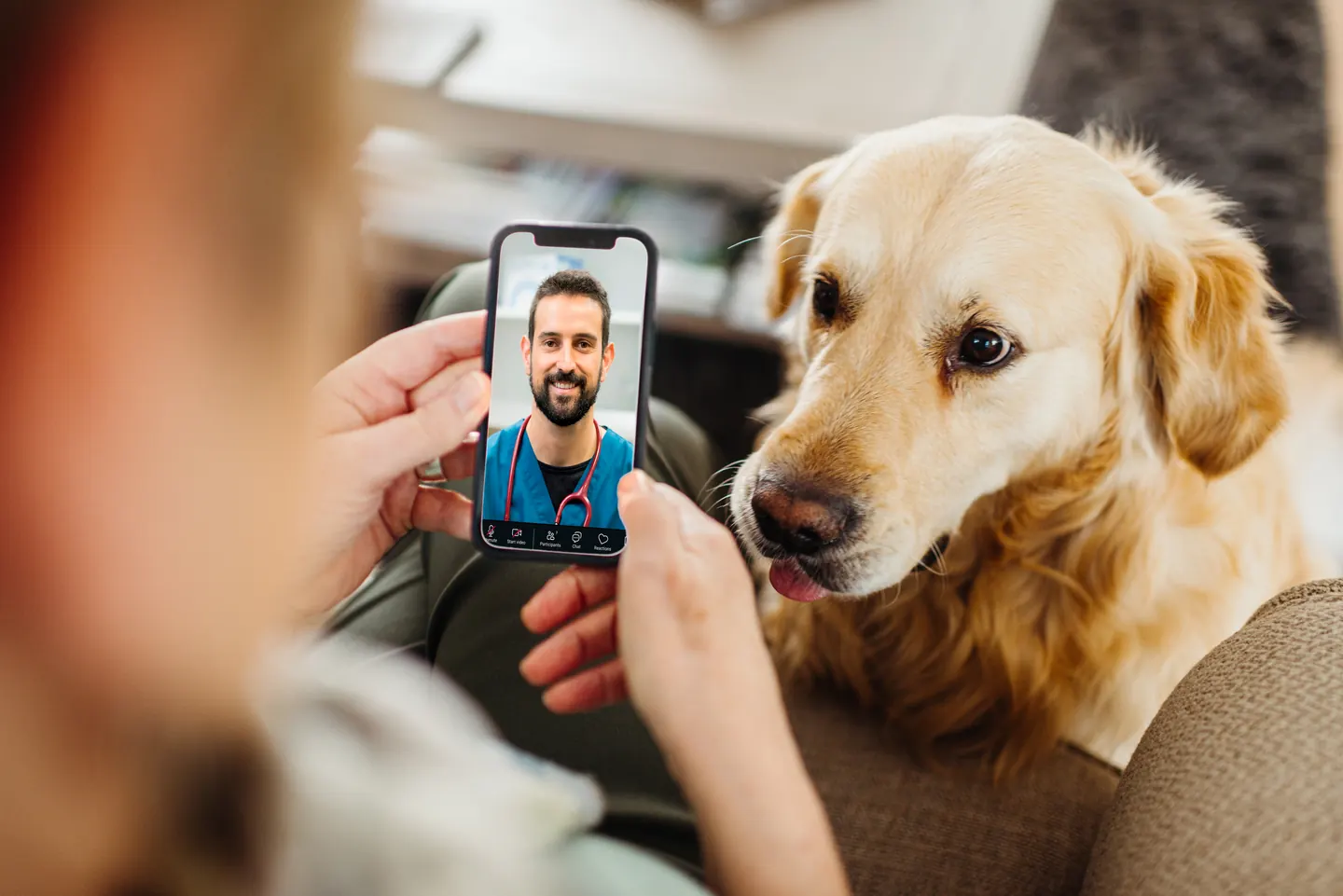
 Sponsored
Want a vet's help with your dog's anxiety or behavior?
Talk to a licensed vet at Dutch over video, often the same day. They can recommend treatment and prescribe it when it's appropriate.
Use code Pets60
Plans start at $12/month · covers up to 5 pets
- Licensed vets in most states
- Rx for 150+ conditions
- 4.7 on Trustpilot
How to choose dog toys by play style
Choose a toy by what your dog does with it in the first five minutes, not by the label on the packaging. Four behaviors cover most dogs, and each one points at a different toy family and a different way that toy will eventually fail.
- Kills the squeaker. The dog grabs the toy, shakes it hard, and works it in the front teeth until the noise stops. This dog is following a prey-sound response, and the squeaker is the whole point of the toy.
- Brings it back. The dog chases the thrown object, turns, and returns it to your feet for another throw. Motion is the reward here rather than the object, which is why a plain ball outperforms a clever one.
- Plants and pulls. The dog takes one end, braces the back legs, and leans away from you. This dog wants resistance and a partner, not a solo toy left on the floor.
- Carries it to bed. The dog picks a soft toy up, walks it around the house, and settles down with it. This is comfort carrying, and it needs a soft toy that survives being carried rather than shredded.
Plenty of dogs run two styles at once. A retriever that brings the ball back all afternoon may still carry a plush toy to bed at night. Buy for the dominant behavior first, then add one toy for the secondary style instead of buying four toys the same day.
| Play style | What you see in five minutes | Toy family that fits | Failure mode to expect |
|---|---|---|---|
| Squeaker hunter | Grabs, shakes, and works the toy in the front teeth until the noise stops | Latex, heavy vinyl, and plush with a fully sealed squeaker | Squeaker chewed free and swallowed once the outer layer opens |
| Fetcher | Chases the throw, turns, and drops the object at your feet for another go | Rubber balls, ball launchers, and soft flying discs | Abrasive felt wearing enamel, or a ball narrow enough to slip behind the back teeth |
| Tugger | Plants the back legs, leans away, and pulls against you | Rope, moulded rubber handles, and layered tug rings | Frayed strands swallowed, and hands too close to the mouth on a re-grab |
| Carrier | Picks the toy up, carries it around, and settles down with it | Light plush, no-stuffing plush, and soft rubber | Stuffing, seam thread, and squeaker discs eaten if the carrier turns de-stuffer |
The failure-mode column matters more than it looks. Every toy family fails in a predictable way, and knowing that way in advance tells you exactly what to inspect and roughly when to replace.
Run the five-minute play test
You do not need a formal assessment. You need five minutes, two or three toys you already own, and a willingness to watch instead of joining in straight away.
- Put three different toys on the floor at the same time: something squeaky, something ball-shaped, and something soft. Do not point at any of them.
- Watch what gets picked up first, and more importantly what gets picked up second once the novelty of the first one fades.
- Throw one object once. A dog that brings it back is a fetcher. A dog that carries it to a corner and lies down with it is a carrier.
- Offer one end of a long toy and hold on gently. A dog that braces and pulls is a tugger. A dog that lets go immediately is not.
- Note what happens to the squeaker. Working it in the front teeth until it dies is a different behavior from mouthing a toy quietly.
Repeat that over a few days before you spend real money. Dogs behave differently after a walk, before dinner, and when a visitor is in the house, so a single session can easily mislead you. Watch your dog mid-play for five minutes and one of the four play styles will show itself.
KONG Classic Dog Toy
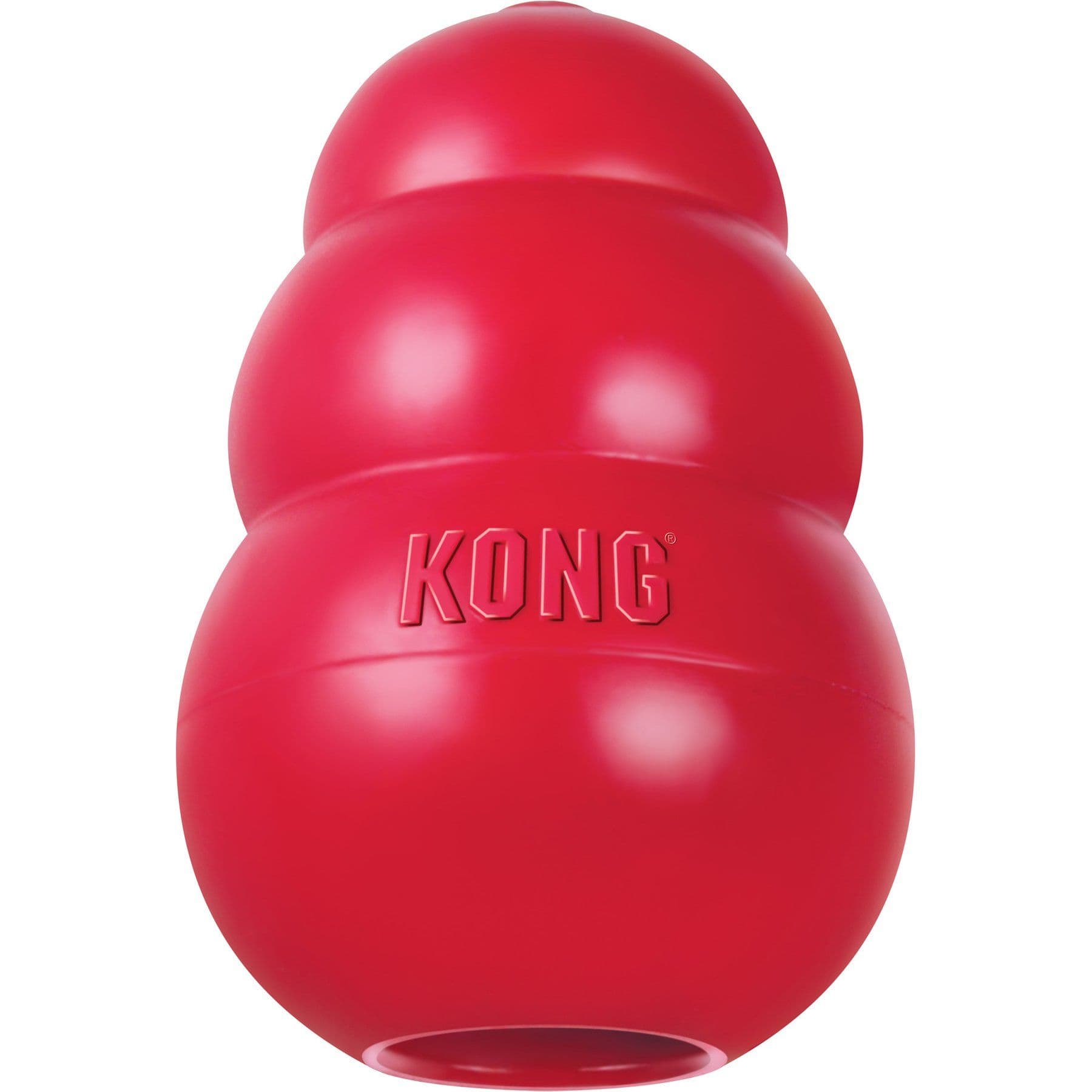
The red natural rubber cone that passes the thumbnail test and turns a five-minute toy into an hour of work once it is stuffed and frozen. Buy the largest size your dog can carry.
Webvet may earn a commission when you click through to Chewy, at no extra cost to you.
If you are buying only one toy while you work out your dog's style, buy this one. The KONG Classic is a hollow natural rubber shape that partly suits every play style on this list, which is unusual.
It bounces unpredictably instead of rolling straight, which appeals to chasers. It flexes rather than shatters under sustained mouthing. And the hollow center takes food, which turns it into a quiet occupation toy on days when nobody has time for a long walk.
- Best for: dogs you have not classified yet, and households that need one toy to cover several jobs at once.
- Sizing: KONG publishes size bands by dog weight. Size up rather than down, and re-check the fit every month while a puppy is growing.
- Watch for: deep tooth punctures and any piece torn loose from the rim. Rubber that has been breached is finished, whatever it cost.
The red Classic is the general-purpose grade. A dog that destroys it inside a week is telling you it belongs in the heavy-chewer conversation rather than this one.
Is there one best dog toy?
No. There is no single best dog toy, and any page that names one is quietly answering a different question than the one you asked.
The honest version is that the best toy is the one that matches how your dog plays and survives how hard your dog plays. Those are two separate tests, and a toy has to pass both to be worth buying.
A plush lamb is the best toy in the house for a gentle carrier and a genuine hazard for a dog that opens seams in ninety seconds. Same toy, opposite verdict, and the only variable that changed is the dog.
- Match the behavior first. A dedicated fetcher does not care how clever a puzzle is.
- Then match the durability. Chew force decides whether the right-shaped toy survives the first week.
- Then match the size. A perfectly chosen toy in the wrong size is the most dangerous object in the toy box.
If you want the closest thing to a universal answer, it is a correctly sized rubber toy from a brand that publishes weight-based size bands. It fits the widest range of dogs, and it fails slowly and visibly rather than all at once.
Squeaky toys for dogs that hunt sound

Squeaky toys work because the squeak imitates the high-pitched distress sound of small prey, and a dog wired for that sound will keep working the toy until the noise stops. That is not a design flaw. That is the toy doing its job.
It also explains the main risk. The dog is not trying to play with the squeaker. The dog is trying to kill it, which means the outer layer is under attack from the first minute onward.
- A fully sealed, enclosed squeaker, not a disc pressed into a thin pocket of fabric that opens at the first seam failure.
- Latex or heavy vinyl for dogs that shake and crush; plush only for dogs that mouth their toys gently.
- No hard plastic eyes, buttons, or stitched-on noses, which come off first and are exactly the right size to swallow.
- A body long or wide enough that your dog cannot get the whole toy behind its back teeth.
Some dogs lose interest the moment the squeak dies. That is useful information rather than a problem: for those dogs a silent version of the same toy is wasted money, and a fresh squeaky toy is a genuine treat.
Multipet Loofa Dog Toy
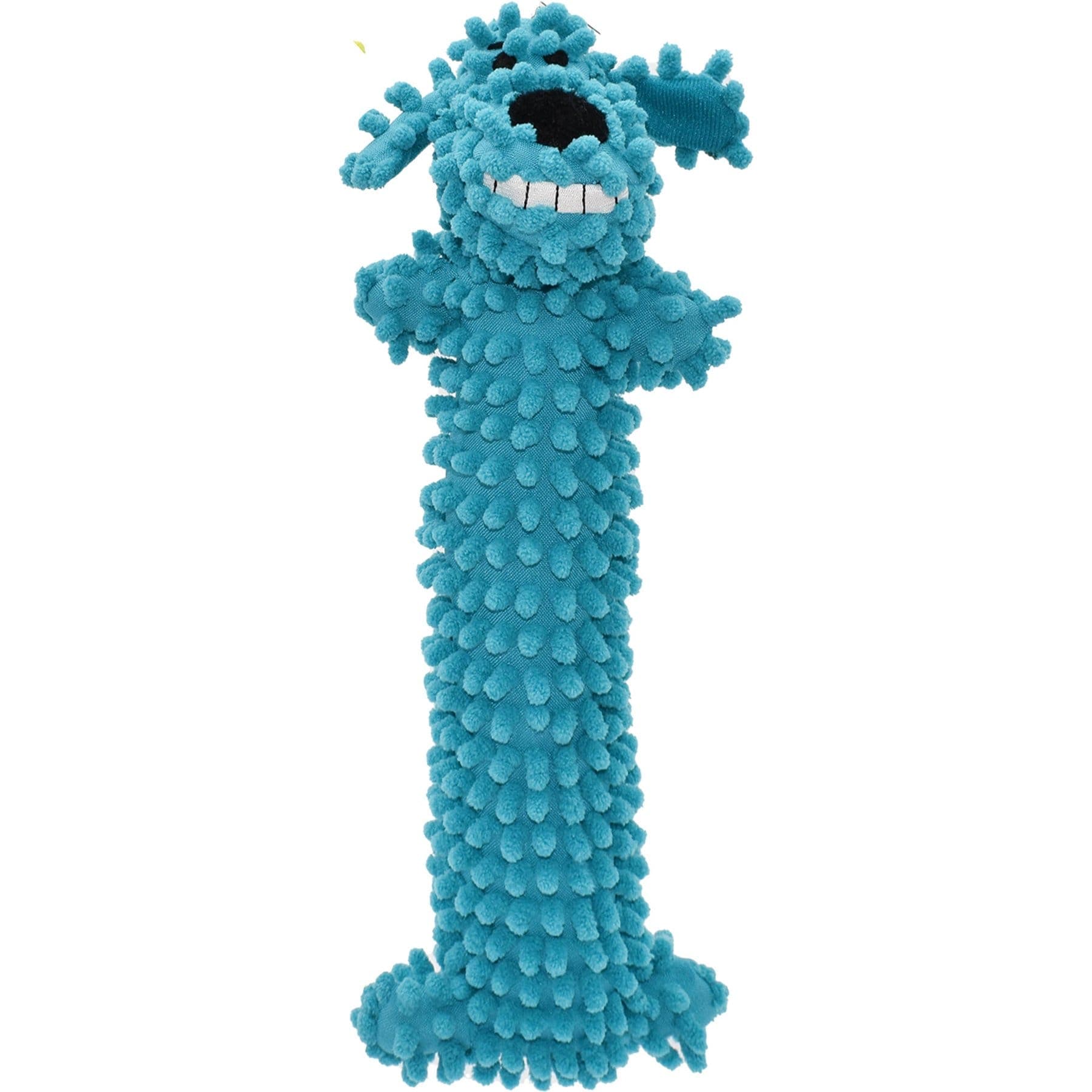
A long, flat, lightly stuffed squeaky dog with very little to come out. Take a size clearly longer than your dog's muzzle, and replace it on sight of an open seam.
Webvet may earn a commission when you click through to Chewy, at no extra cost to you.
The Loofa is one of the most widely stocked squeaky toy lines in the category, and it earns that position by being simple. It is a long, flat, lightly stuffed dog shape with a squeaker in the body and very little else to come apart.
The flat build is the point. There is minimal stuffing to pull out, and the length gives a dog something to shake properly without swinging a heavy object into the furniture or into your shins.
- Best for: medium shakers, and dogs that like carrying a long floppy toy from room to room.
- Sizing: sold from roughly 6 to 18 inches. Take the size where the toy is clearly longer than your dog's muzzle.
- Watch for: the seam that runs along the body. Once it opens, the squeaker is reachable and the toy is done.
Treat it as a consumable rather than a permanent fixture. It is cheap enough to replace on sight of damage, which is exactly the right relationship to have with a squeaky toy.
Outward Hound Hide-A-Squirrel Squeaky Puzzle Plush Dog Toy
The Hide-A-Squirrel is the crossover pick: a plush tree trunk with three squeaky squirrels tucked into holes in the side. The dog pulls the squirrels out, you push them back in, and the whole game resets in about four seconds.
It suits a squeaker hunter that also likes solving something, and it works well for dogs that tire of a single toy quickly, because the squirrels can be thrown and carried separately from the trunk.
- Best for: gentle-to-moderate mouths that enjoy searching more than destroying.
- Sizing: several sizes from junior up to ginormous. Match the squirrel to your dog's mouth, not the trunk.
- Watch for: a squirrel with a torn seam. Loose stuffing and a freed squeaker are the two failure points here.
This is not a toy for a determined shredder. A dog that empties the squirrels of stuffing in one session belongs in the durable-toy conversation instead, and no amount of supervision fixes that mismatch.
Fetch toys: balls, launchers, and flying discs

For a committed fetcher the object barely matters and the throw does. What you are actually buying is distance, visibility, and something that survives being carried in a wet mouth several hundred times a month.
That is why the most common fetch toy in the world is also the one veterinary dentists have the most reservations about. The felt covering on a tennis ball is abrasive, it picks up grit from the ground, and dogs that chew tennis balls constantly can wear their teeth down over years.
A standard tennis ball measures roughly 2.7 inches across. That sits under the safe minimum for a dog over 50 pounds, which is how large dogs end up at an emergency clinic with a ball lodged at the back of the throat.
- Buy a purpose-made rubber ball rather than a sports ball, and buy the size band above the one that looks right.
- Buy visibility. Blue reads well against grass to a dog. Orange and red do not, whatever they look like to you.
- Buy buoyancy if there is any water at all on your usual walk.
- Buy two. A second identical ball ends the standoff where your dog will not give the first one back.
Chuckit! Ultra Ball
The Chuckit! Ultra Ball is the default fetch ball for most dogs. It is solid high-bounce rubber, brighter than anything on a lawn, it floats, and it carries none of the abrasive felt that makes tennis balls a dental question.
It also bounces high and erratically, which stretches a throw considerably in a small garden and gives a dog something to read in the air rather than a predictable roll along the ground.
- Best for: committed fetchers of any size, and any dog currently living on a diet of tennis balls.
- Sizing: small at 2 inches, medium at 2.5, large at 3, extra large at 3.5. Cross-check against the weight bands in the sizing table below.
- Watch for: any bite that actually removes rubber. This is a fetch ball, not a chew toy, and a dog chewing it apart needs a different product.
Buy the largest size your dog can comfortably carry rather than the size that looks proportionate in your hand. Comfort and safety point the same way here, which is not true of every toy decision.
For indoor play, the same toys come in softer builds: a fabric-covered indoor ball rolls down a hallway without marking the walls, and it keeps an active dog's fetch habit going on the days the garden is off limits.
Chuckit! Classic Launcher Dog Toy
A Chuckit! Classic Launcher is not a gimmick if you throw a ball fifty times a day. It roughly doubles most people's throwing distance, and it takes the strain off a shoulder that was never built for repetitive overhead throwing.
The hygiene argument is the better one. The cup picks the ball up off the ground, so you never handle a wet ball, and your dog never waits while you look for something to wipe your hand on.
- Best for: high-energy dogs that outlast their owners, and anyone with a sore shoulder or elbow.
- Sizing: each launcher is matched to a ball diameter, so buy the pair together rather than assuming your existing balls will sit in the cup.
- Watch for: dogs that chase the launcher instead of the ball. Teach a sit before the throw, or you will eventually get hit with it.
One caution worth stating plainly: a launcher makes it very easy to over-exercise a dog that will not self-regulate. Count throws rather than minutes, and stop while your dog still looks comfortable.
Chuckit! Paraflight Flyer Dog Toy
Flying discs are the one fetch toy that changes the game rather than the distance. A disc glides, so the dog runs a curve and reads the flight instead of sprinting a straight line to a bounce.
Hard plastic discs are the wrong tool for that job because they meet teeth like a dinner plate. The Paraflight is a soft nylon and rubber build: it flies well, it floats, and it is soft enough to catch without wincing on your dog's behalf.
- Best for: athletic dogs that can already catch, and owners who want a lower-impact alternative to a ball.
- Sizing: small and large. The disc should be wider than your dog's muzzle is long.
- Watch for: a dog that lands badly on the catch. Throw low and flat rather than high, especially with a young dog.
Skip discs entirely for dogs with known joint problems, flat-faced breeds that struggle to catch, and puppies whose growth plates are still open. Ask your veterinarian if you are not sure which group your dog is in.
When to stop throwing
Fetch is the easiest way to over-exercise a dog, because a dog that loves it will not stop on its own. Watch the return leg rather than the sprint out, because that is where fatigue shows first.
- Slowing on the return while still sprinting out is the first sign your dog is running on drive rather than on energy.
- Wide, flat-tongued panting that does not settle within a minute or two of stopping means the session ran long.
- Any stumble, skid, or awkward landing ends the session for the day, not just for the next throw.
Heat matters more than distance. On a warm day a short session in shade beats a long one on open grass, and flat-faced breeds should not be doing sustained fetch in heat at all.
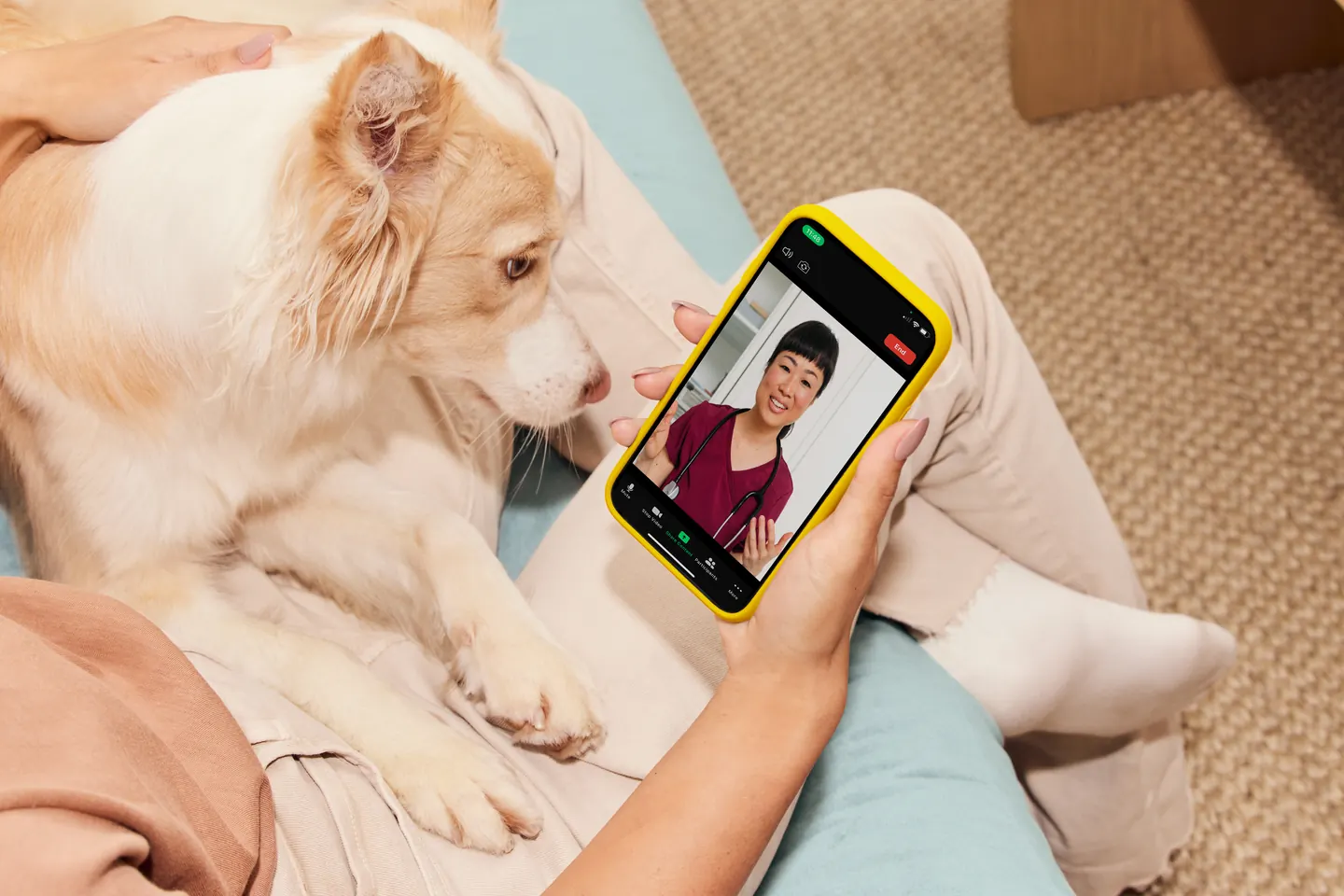 Sponsored
Vet care that's always there
Unlimited video calls and messaging with licensed vets for less than a typical vet visit. One membership covers up to five pets.
Use code Pets60
Plans start at $12/month · covers up to 5 pets
- Licensed vets in most states
- Rx for 150+ conditions
- 4.7 on Trustpilot
Tug and rope toys

Tug of war does not make a dog aggressive. The belief has been repeated for decades, but work on play between dogs and their owners has not found that tug games create aggression toward people. What tug does need is structure.
Tug is also one of the very few toys that requires you. That makes it valuable: it builds the habit of playing with a person rather than at one, and it gives you a reward you can use in training that is not food.
Stop the game if your dog's teeth land on your hand, even accidentally. Ending the session immediately is the clearest feedback a dog gets, and it works far better than correcting mid-game.
Jolly Pets Tug-N-Toss Dog Toy
The Tug-N-Toss is a puncture-resistant ball with a moulded handle running through it, and it solves the main problem with tug toys: it gives you something rigid to hold while keeping your hand a fixed distance from your dog's mouth.
It doubles as a fetch and shove toy. Dogs push it around the garden with their noses and chase it downhill, which is why it turns up as often in paddocks and yards as in living rooms.
- Best for: strong pullers, and households that want one toy covering tug and solo play.
- Sizing: roughly 4.5 to 14 inches. Take the size where the ball is obviously too wide to fit behind the back teeth.
- Watch for: punctures. The ball is built to keep working after one, but a handle chewed thin should be retired.
The handle is the part that matters for tug. Hold it near the far end rather than close to the ball, and the entire hand-clearance problem disappears without you thinking about it.
Tuffy Ultimate Ring Dog Toy
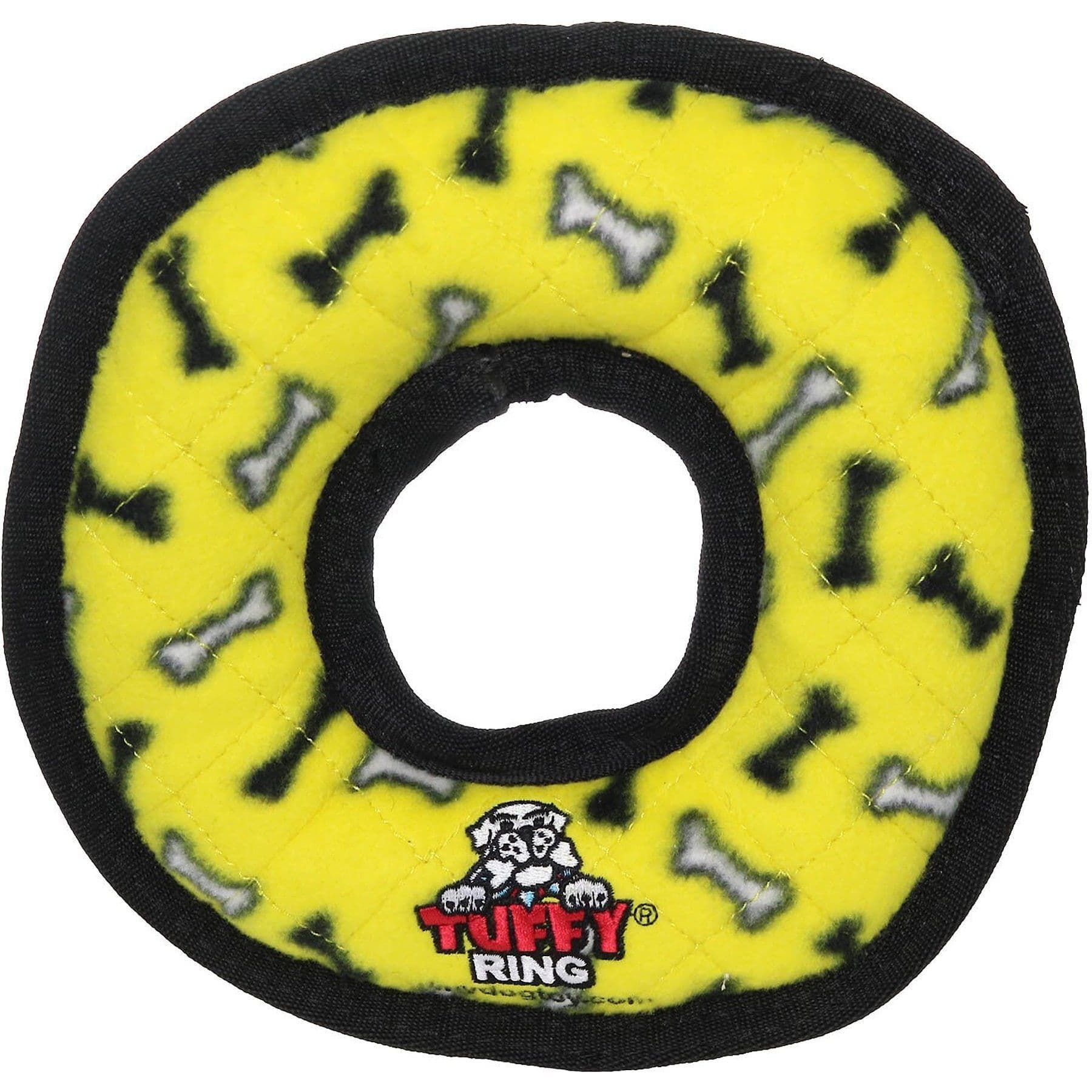
Layered fabric with multiple rows of stitching and no limbs for a shredder to target. Supervised sessions only, and retire it the moment an inner layer shows.
Webvet may earn a commission when you click through to Chewy, at no extra cost to you.
For dogs that want something with give rather than a rigid handle, the Ultimate Ring is a fabric ring built from several stitched layers rather than a single glued panel. It flexes like a soft toy while resisting the tearing that ends most soft tugs.
A ring shape is genuinely useful for tug. Two people can hold opposite sides, one hand fits comfortably without wrapping fingers through the middle, and a dog can carry it without dragging it under its own feet.
- Best for: medium-to-strong tuggers whose owners want a softer grip than moulded rubber.
- Sizing: the ring should be wide enough that your dog cannot fold it into its mouth.
- Watch for: a torn outer layer. Layered construction gives you a warning before it fails, so act on the warning.
No fabric toy is indestructible, whatever the packaging suggests. Layered toys buy you time and visible warning, which is a more honest promise than invincibility and a more useful one.
What rope toys shed, and why it matters
Rope is the one tug material that needs its own warning. Cotton rope sheds strands, dogs swallow them, and swallowed string behaves very differently inside the gut from a swallowed lump.
A long strand can catch at one end while the rest is pulled onward, which pleats the intestine around it. Veterinarians call that a linear foreign body, and it is one of the more serious blockages there is.
The practical rule is short. Rope toys are supervised toys, never leave-out toys. The Merck Veterinary Manual's owner section explains what a digestive obstruction looks like and why it becomes an emergency quickly.
- Trim nothing. A frayed end is not repairable, and a rope shedding strands is finished.
- Never leave rope with an unsupervised dog, in a crate, or overnight.
- Call your veterinarian if you see a strand at either end of your dog, and do not pull on it.
Plush and stuffed toys

Plush toys divide dogs into two groups, and the difference decides whether a soft toy is a comfort object or a trip to the clinic. Carriers pick a plush toy up and take it somewhere. De-stuffers open it and remove what is inside.
Carriers can keep plush toys indefinitely. De-stuffers cannot, and no amount of reinforced stitching changes that, because the problem is the dog's goal rather than the toy's construction.
There is a middle group worth naming. Some dogs open one seam, extract the squeaker, and then lose interest completely. Those dogs can have plush toys, provided you take the toy away the moment the seam goes.
Multipet Lamb Chop Dog Toy
Lamb Chop is the plush toy dogs pick when they choose for themselves. It is soft, light, floppy, and close to the size and shape a dog wants to carry, which is why it turns up on beds and in crates rather than shredded across the floor.
The build is deliberately plain: minimal stitched detail, no hard eyes, and a single squeaker in the body. Fewer components is the right design for a toy that will be carried in a mouth every single day.
- Best for: carriers, comfort seekers, and dogs that like to sleep with a toy.
- Sizing: several sizes from mini upward. The classic size suits medium dogs, and small dogs do better with the mini. The linked jumbo suits large dogs.
- Watch for: the neck and leg seams. Those go first, and once they open the stuffing is available.
This is not a chew toy and it is not sold as one. Given to a de-stuffer it will last one evening, and that failure is predictable rather than unlucky.
The Outward Hound Hide-A-Squirrel belongs in this group too: it is a soft carry toy as much as a squeaky puzzle, and the same seam and stuffing rules apply. It is covered under squeaky toys above.
West Paw Toppl Treat Toy
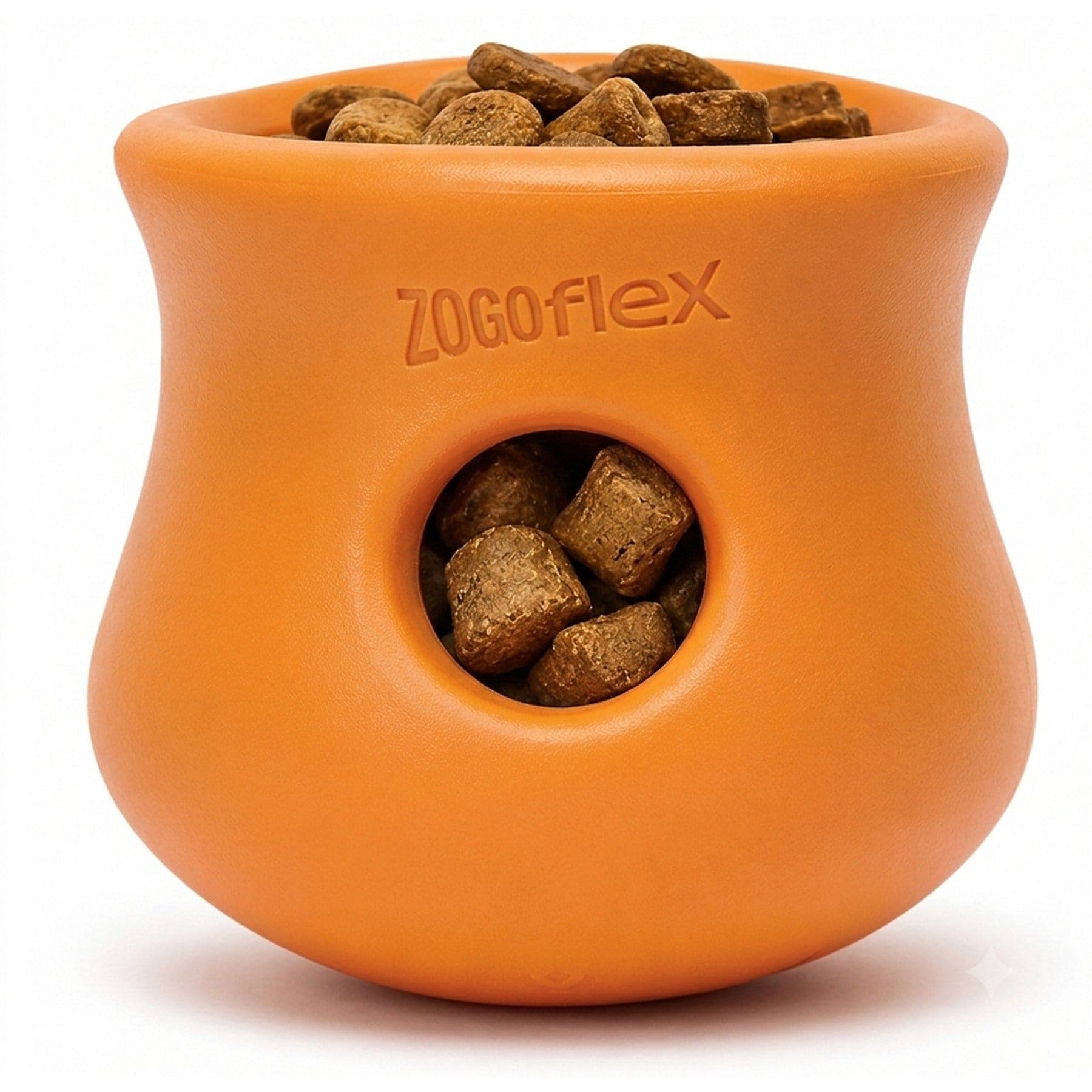
A thick, flexible Zogoflex cup with internal ridges, made to be stuffed, frozen, and worked at. Two sizes lock together to make the puzzle harder, and it survives the dishwasher.
Webvet may earn a commission when you click through to Chewy, at no extra cost to you.
The Toppl is here as the durable counterweight to the plush picks. It is a thick, flexible, dishwasher-safe rubber pot with an open top and internal ridges, made to be stuffed with food and worked at rather than shaken.
For a dog that wants to carry something soft but destroys anything actually soft, this is the substitute that works. It has enough give to be pleasant to hold and enough structure to survive a determined mouth.
- Best for: de-stuffers, food-motivated dogs, and anyone who needs twenty genuinely quiet minutes.
- Sizing: small, large, and extra large. A small locks into a large (or a large into an extra large) to make the puzzle harder.
- Watch for: rubber punctured all the way through. Flexible does not mean invulnerable.
Stuffed and frozen it becomes a slow, absorbing job. If your dog inhales meals as well as toys, the logic behind slow feeder dog bowls applies here too, and it is worth reading why your dog eats so fast before changing anything about feeding.
When a plush toy stops being a toy
A plush toy is finished the first time a seam opens far enough for stuffing to come out. It does not matter how new the toy is or how attached your dog has become to it.
- Any hole big enough to see stuffing through. Not a loose thread: an actual opening.
- A squeaker you can feel through a thinning layer of fabric. The next serious chew reaches it.
- A missing eye, nose, or tag, which means a piece is already somewhere it should not be.
- Wet, matted, and starting to smell. Wash it hot, and if it does not survive the wash it was already finished.
If your dog is genuinely attached to one specific toy, buy a duplicate before the first one wears out. Swapping in an identical toy is far easier than taking the only one away.
Sizing and safety: what to check before you hand a toy over

Size is the single most important safety decision you make about a toy, and it is the one most people get wrong by going smaller than they should. Two checks settle it, and both take about ten seconds.
- The two-finger rule. With your dog holding the toy, you should still be able to slide two fingers between the toy and the corner of the mouth. If the toy vanishes inside the mouth, it is too small.
- The swallow test. If the toy fits entirely behind the back teeth with the mouth closed, your dog can swallow it. That is not a maybe, and no size label on the packaging overrides it.
Both checks are about the dog in front of you rather than about a chart. A 40-pound dog with a deep chest and a wide muzzle needs more toy than a 40-pound dog with a narrow one, and only the hands-on check catches that.
| Dog weight | Minimum ball or round-toy diameter | Usual size label | The trap in this band |
|---|---|---|---|
| Under 10 lb (4.5 kg) | About 1.75 in (4.5 cm) | Extra small | Toys sold as puppy toys for puppies of any adult size |
| 10 to 25 lb (4.5 to 11 kg) | About 2 in (5 cm) | Small | Mini tennis balls and vending-machine bouncy balls |
| 25 to 50 lb (11 to 23 kg) | About 2.5 in (6.5 cm) | Medium | A standard tennis ball sits right at the edge of this band |
| 50 to 75 lb (23 to 34 kg) | About 3 in (7.6 cm) | Large | A standard tennis ball is about 2.7 in and is under the minimum |
| Over 75 lb (34 kg) | About 3.5 in (9 cm) or wider | Extra large | Any ball the dog can hold sideways behind the canine teeth |
Treat those diameters as floors rather than targets. If your dog sits between two bands take the larger one, and take the larger one again for any dog that carries toys at the back of the mouth rather than the front.
ZippyPaws Skinny Peltz Dog Toy
Small dogs are where sizing goes wrong most often, in both directions. Skinny Peltz are the useful example: a set of three no-stuffing plush animals, long and thin, with a squeaker at each end.
The no-stuffing build removes the biggest plush hazard for a small dog, and the length gives a terrier-shaped dog something to shake properly instead of a compact lump it can fit entirely into its mouth.
- Best for: small and toy breeds that like to shake and thrash their toys.
- Sizing: sold in small and large sets. A small dog still needs a toy longer than its own muzzle.
- Watch for: the end squeakers, which are the first components to work free.
Do not solve small-dog sizing by buying a puppy toy. Puppy toys are built for milk teeth, and an adult small dog with a full adult bite goes through one in minutes.
Big dogs fail in the other direction. A large dog needs a toy wide enough that it cannot sit behind the back teeth, which usually means the size above the one that looks right in your hand.
When a toy has to be thrown away

Replace toys on damage, not on a schedule. A rubber toy still in one piece after three years is fine. A brand new plush toy with an open seam is not, and the price paid last week is not a reason to keep it.
The missing-piece line is the one to take most seriously. If a chunk is gone and you cannot find it, assume your dog ate it and call your veterinarian for advice rather than waiting to see what happens.
Signs of a blockage include repeated vomiting, refusing food, straining without producing stool, a painful belly, and unusual lethargy. Those are same-day veterinary problems. General owner guidance from the AVMA covers when a symptom becomes an emergency.
What can stay with a dog nobody is watching

The rule for a crated, penned, or home-alone dog is stricter than the rule for supervised play, for the obvious reason: there is nobody there to notice the moment a toy fails.
- Safe to leave: one solid rubber toy in the correct size, with no removable parts and no existing damage.
- Safe to leave: a food-stuffed rubber toy, provided your dog has already used it successfully while you watched.
- Never leave: anything with a squeaker, anything plush, anything rope, and anything already showing wear.
- Never leave: a toy small enough to swallow, even if your dog has never tried to swallow one.
The same rule applies overnight and in the car. A dog alone with a toy is a dog with no help available, and the toys that are perfectly fine for an hour of supervised play are exactly the ones that fail quietly.
Rotation helps here too. Keeping four or five toys out and putting the rest away means the ones in circulation get inspected regularly, instead of damage accumulating in a pile nobody has looked at in a month.
Chew toys and heavy chewers
If your dog's real hobby is chewing rather than playing, this roundup is not the guide you need. Chew toys are judged on a different axis: hardness, chew grade, and how the material fails under sustained pressure rather than how well it suits a play style.
The short version worth carrying away is the thumbnail test. If you cannot dent a chew toy with your thumbnail, it is hard enough to fracture a tooth, and slab fractures of the large upper chewing teeth are among the most common dental injuries veterinarians treat.
- Too hard: antlers, hooves, weight-bearing bones, and rigid nylon that does not flex at all.
- About right: flexible rubber that gives slightly under a thumbnail and marks rather than shatters.
- Wrong tool entirely: anything from this article's squeaky, plush, or rope sections.
A dog that destroys every toy in this guide inside a week needs the heavy-chewer conversation, which is a decision about material grade and chew rating rather than about play style.
Our dog chew toys guide sorts that decision by chewing style, and our indestructible dog toys roundup covers the dogs that destroy everything. Genuinely tough dog toys are judged by material and wall thickness, not by the word indestructible on the label.
Puppy and teething toys
Puppies need different toys, and the reason is physical rather than behavioral. A teething puppy has loose milk teeth and sore gums, and the same firm rubber that suits an adult dog is uncomfortable and can damage an emerging adult tooth.
- Softer rubber grades made specifically for puppies, which flex noticeably more than the adult versions of the same toy.
- Chilled, not frozen. A cold toy soothes gums, while a rock-solid frozen one is a hardness problem in disguise.
- Nothing with removable parts, because a teething puppy will find them and will swallow them.
- Re-check size monthly. Puppies outgrow toy sizes considerably faster than most owners expect.
Teething runs roughly from three to six months, and the toy that fits at twelve weeks is usually wrong by five months. That life-stage decision has its own material rules and deserves a dedicated guide rather than a paragraph here. Our puppy teething toys guide covers that window stage by stage. Our best dog toys for puppies guide covers the rest of the first year by age.
KONG toys
KONG is a whole product line rather than a single toy, and picking the wrong one in that line is a common and surprisingly expensive mistake. The colors are grades, not decoration.
- Red Classic: the general-purpose adult version, and the right default for most dogs.
- Black Extreme: the toughest rubber in the range, for dogs that destroy the red one.
- Blue and pink Puppy: softer rubber formulated for milk teeth.
- Purple Senior: softer again, for older mouths and worn or missing teeth.
Sizing runs by dog weight and is printed on the packaging. The most common error is buying by breed name rather than by weight, which puts a great many medium dogs in a toy one size too small for them.
Which grade suits which dog, and what is actually safe to put inside one, is a longer decision than this section can carry responsibly. Our KONG dog toys guide carries it: every formula, size, and shape, plus what to stuff.
Puzzle toys
Puzzle toys are a different purchase from play toys. You are buying difficulty rather than a play style, and the single biggest mistake owners make is starting a beginner dog on an expert puzzle.
- Level one: a toy the dog solves by nosing or rolling, with food falling out almost immediately.
- Level two: sliders and flip lids that need a deliberate paw or nose movement to open.
- Level three: multi-step puzzles where one action has to be completed before the next unlocks.
A dog that fails a puzzle twice usually stops trying altogether, and some dogs skip straight to chewing the puzzle instead of solving it, which is how a plastic puzzle becomes a swallowing hazard.
Start one level below where you think your dog sits, and stay in the room the first several times. Difficulty progression is its own topic and has its own guide. Our dog puzzle toys guide ranks picks by difficulty level and shows how to move a dog up the ladder.
Interactive and self-moving toys
Powered toys, rolling balls, and automatic launchers get judged on completely different criteria: battery life, motor noise, whether the dog can break the housing, and whether the dog finds the thing frightening rather than interesting.
- Noise sensitivity comes first. A motor hum ends the game for a lot of dogs before it has started.
- Check the housing, because a cracked battery compartment is a far worse problem than a torn plush toy.
- Automatic launchers need training, and a dog that has not learned to drop the ball into the funnel will simply stand there waiting.
They also cannot be left with an unsupervised dog, which undercuts the main reason people buy them in the first place. That trade-off is worth understanding properly before spending the money. Our interactive dog toys guide covers the formats, the realistic attention spans, and the safety rules.
Enrichment and beating boredom
Boredom is not solved by owning more toys. It is solved by giving a dog something to work at, and the toys that do that are food-based, scent-based, or problem-based rather than simply present on the floor.
- Food-based: stuffed rubber toys, snuffle mats, and lick surfaces that stretch a meal into twenty minutes.
- Scent-based: hiding treats around a room and letting your dog find them, which tires a dog faster than most walks do.
- Rotation: four or five toys out at a time, the rest put away, swapped weekly so returning toys read as new.
A tired dog is usually a mentally worked dog rather than a physically exhausted one, and ten minutes of sniffing work often does more than an extra mile of walking. How far to take that is a bigger subject than this section. Our dog enrichment toys guide covers the routines, the DIY builds, and the picks. The toys that stimulate a dog's mind are the food-holding and scent-based ones above, and the effect comes from the search rather than from the price of the toy.
Edible chews are not toys
This is the boundary the whole category tends to blur. A toy is something a dog gnaws and gives back. An edible chew is something a dog consumes, and that puts it in a completely different risk class.
Antlers, hooves, bones, and hard dental chews get mixed into toy lists constantly, and that is exactly where the harm happens. They are judged on hardness, digestibility, and calories, none of which apply to a squeaky loofa.
If what you actually want is something for your dog to work on and eat, start with vet recommended dental chews, and look at healthy dog treats for the calorie side. For reward-based play, dog training treats is the guide you want.
What dog toys do vets recommend
Veterinarians recommend categories rather than brands, and the categories are consistent: correctly sized, made of a material that flexes, free of removable parts, and matched to how hard the individual dog chews.
- Flexible rubber toys in the right size, which fail slowly and visibly instead of shattering without warning.
- Food-holding toys that give a dog a job, because occupation prevents more problems than any single product solves.
- Toys the dog cannot swallow, which is the check that comes before every other consideration on this list.
- Supervision for anything that sheds, including rope, plush, and anything containing a squeaker.
What they warn against is equally consistent: objects harder than a tooth, anything small enough to swallow, anything shedding string, and cheap unbranded toys with glued-on eyes and noses.
Owner guidance from the American Kennel Club and the ASPCA's dog care section covers the same ground. Your own veterinarian is the right person to ask about a dog with dental disease, a history of swallowing objects, or a jaw that has been operated on. Our vet-reviewed safe dog chew toys guide sets out the hardness standard and the inspection routine in full.
Dog toy questions owners still ask
Frequently Asked Questions
What is the most popular dog toy right now?
The toys that appear most often in shopping listings for dog toys are the KONG Classic, Chuckit! rubber balls, Multipet's Lamb Chop and Loofa plush lines, and rope tug toys. Popularity is a useful signal about availability and price, and a poor signal about fit.
A best-selling plush toy is still the wrong purchase for a dog that opens seams, and a best-selling ball is still the wrong size for a dog that outgrew it two years ago. Use popularity to narrow a shortlist, then use your dog's play style and the two size checks to make the actual decision.
Why do dogs like squeaky toys?
The squeak imitates the high-pitched distress sound of small prey, and most dogs are wired to respond to that sound by grabbing and shaking. That is why the behavior looks so intense, and why it usually stops the moment the squeaker dies: the toy has stopped answering back.
Dogs with strong prey drive tend to be the most committed squeaker hunters, and they are also the ones most likely to reach the squeaker itself and swallow it.
If your dog loses interest as soon as the noise stops, that is completely normal. It also tells you that a silent version of the same toy will never get used.
How many toys should a dog have out at once?
Four or five at a time works for most dogs, with everything else stored away and rotated in every week or two. A floor covered in twenty toys makes each individual toy less interesting, and it makes damage much harder to spot, because nobody inspects a pile.
Rotation solves both problems at once: returning toys feel new again, and the small set in circulation actually gets looked at. Keep your dog's genuine favorite permanently available if there is one, and rotate everything else around it.
Does playing tug of war make a dog aggressive?
No. Work on play between dogs and their owners has not found that tug games create aggression toward people, and tug is cooperative play rather than a contest over status. Letting your dog win sometimes is fine and does not create a problem.
What tug does need is structure. Use a toy long enough to keep your hands several inches from your dog's mouth, teach a reliable release cue before you start, and stop the game immediately if teeth touch skin, even accidentally. Do not jerk or lift, especially with puppies and senior dogs.
How often should you replace a dog toy?
Replace on damage rather than on a schedule. A rubber toy that is intact after two years is fine, and a plush toy bought yesterday is finished the moment a seam opens. Bin any toy with an exposed or reachable squeaker, stuffing coming out, frayed rope strands, cracked or punctured rubber, or a missing piece.
Check the toys in circulation once a week, which takes about a minute if you keep only four or five out at a time. If a chunk of a toy is gone and you cannot account for it, assume your dog swallowed it and call your veterinarian rather than waiting for symptoms.
The bottom line
Buy for the dog you actually have. Watch a five-minute play session, work out whether your dog kills the squeaker, brings it back, plants and pulls, or carries it to bed, then buy one good toy for that behavior in a size that passes the two-finger rule.
- Squeaker hunters: one simple sealed squeaky toy, treated as a consumable and replaced on damage.
- Fetchers: a bright rubber ball a size larger than looks right, plus a second identical one.
- Tuggers: something long or ring-shaped, plus a release cue taught before the first game.
- Carriers: a light plush toy, with a duplicate bought before the first one wears out.
Then inspect what you own once a week and throw away whatever has failed. Choosing the right toy is a one-time decision. Retiring the wrong one is the weekly habit that keeps the toy box safe.

Editor
The Webvet Editorial Team is the in-house group of pet-care editors and writers behind Webvet, operated by Smart Pet Collective. The team researches, writes, and maintains Webvet's pet health, behavior, and medication content. Every article follows a defined editorial process: research from reputable veterinary and scientific sources, careful drafting, mandatory review of medical content by a credentialed veterinarian, and dated publication. Health and medication articles are medically reviewed by a licensed veterinary professional before they go live and are kept current over time.


