DIY Snuffle Mat: How to Make One, Plus Slow-Feed Mat Options
A DIY snuffle mat turns fleece strips and a rubber sink mat (or an old towel) into a sniffing game that slows down mealtime. This guide covers materials, step-by-step builds, no-sew versions, safe supervised use, and washing.

This article contains affiliate links. Webvet may earn a commission when you buy through them, at no extra cost to you.
A DIY snuffle mat is a shaggy square of fleece strips tied through the holes of a rubber sink mat, or a towel rolled and knotted around food, that hides kibble or small treats for a dog to sniff out. It slows eating, gives the nose a job, and costs little to make.
The catch is chewing. A homemade snuffle mat is for supervised use with dogs that sniff rather than shred, because swallowed fabric can lodge in the gut. For the right dog, all it takes is a sturdy base, non-fraying fleece, sharp scissors, and an evening of knotting.
 Sponsored
Want a vet's help with your dog's anxiety or behavior?
Talk to a licensed vet at Dutch over video, often the same day. They can recommend treatment and prescribe it when it's appropriate.
Use code Pets60
Plans start at $12/month · covers up to 5 pets
- Licensed vets in most states
- Rx for 150+ conditions
- 4.7 on Trustpilot
DIY snuffle mat: what it is, whether it is worth making, and what you need
- 1Here is what a snuffle mat does for a dog: it turns a handful of kibble into a sniffing and foraging game that slows mealtime and works the brain.
- 2The classic build is fleece strips knotted through a rubber sink mat; a rolled towel works when there is no base.
- 3Choose materials for a sturdy base and non-fraying fabric: a holed rubber mat plus anti-pill fleece.
- 4Supervise every session and pick the mat up afterward, especially with dogs that chew fabric.
- 5Machine wash fabric mats gently and air dry; replace them once strips tear or knots loosen.
Is a DIY snuffle mat worth making?
For most dog owners, yes, if the dog is a sniffer rather than a chewer and the owner enjoys a simple craft. A homemade mat earns its keep in a few situations:
- A fast eater who finishes dinner in seconds and would benefit from slow feeding.
- A bored dog on a rainy day who needs a calm job, alongside other dog enrichment toys in the rotation.
- A dog that settles better with sniffing, as part of a broader plan for anxiety relief for dogs worked out with a vet or trainer.
- Large dogs whose owners want a bigger mat than most stores sell; a DIY snuffle mat for large dogs can be built to any size by joining two sink mats.
- Multi-pet homes that want one mat per pet without buying several.
Buying makes more sense for owners short on time or for dogs that will shred anything with strips. A basic ready-made option is the Frisco Snuffle Mat, Grey, which the maker describes as machine washable with suction cups to anchor it on smooth floors. It is listed at $14.99 on Chewy when checked in November 2026.
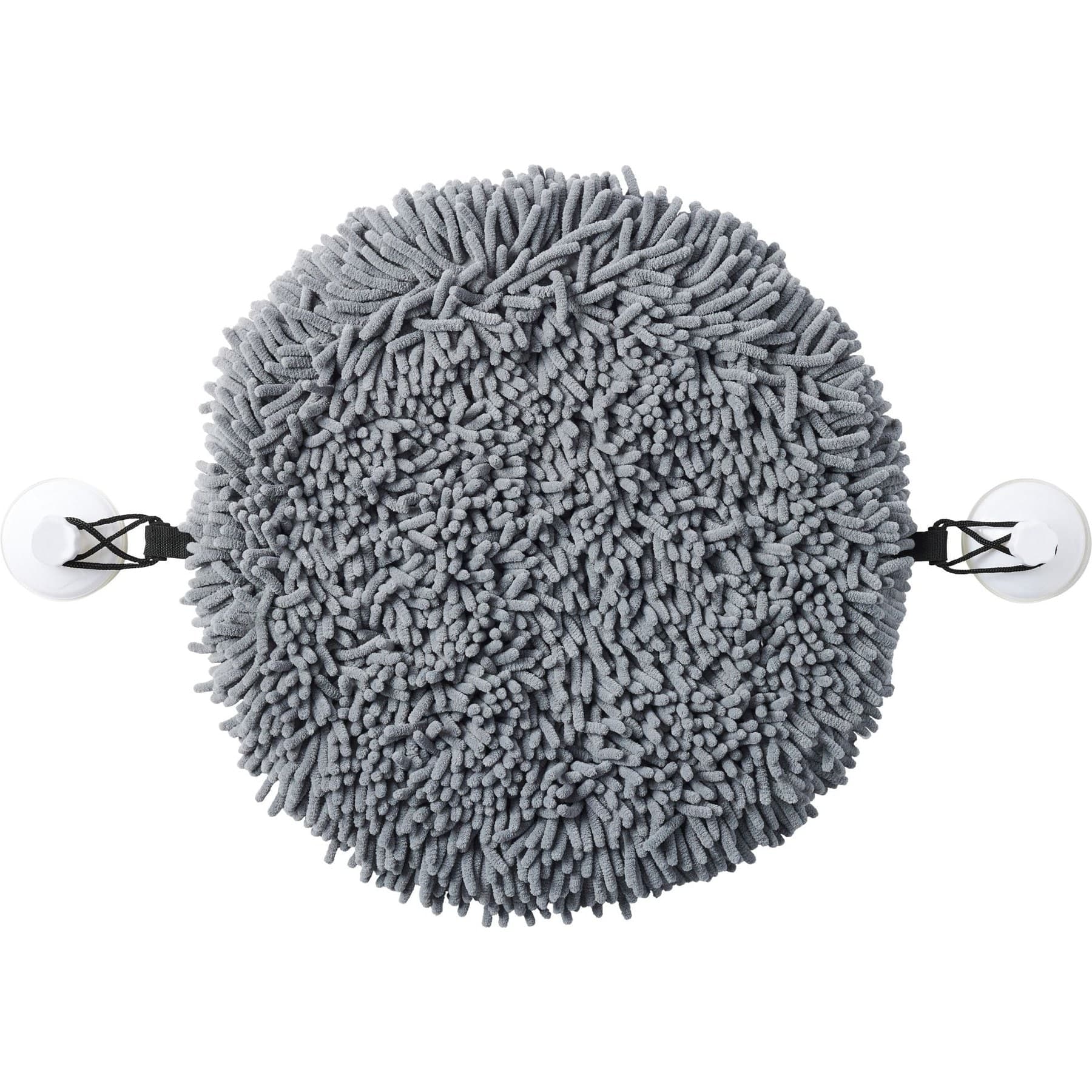
A ready-made fleece snuffle mat with suction cups for owners who would rather buy than build.
Webvet may earn a commission when you click through to Chewy, at no extra cost to you.
What a snuffle mat does for a dog
Dogs explore the world through scent, and a snuffle mat gives that nose work a tidy indoor outlet. The American Veterinary Society of Animal Behavior (AVSAB) describes the idea simply: food is hidden among the loops and the dog has to snuffle it out. AVSAB adds that food puzzle toys give a dog something to do and make mealtime fun.
Slow feeding is the second benefit. VCA Animal Hospitals notes that food puzzles slow the rate of eating while keeping a pet mentally stimulated, and that dogs and cats need dedicated time for mental stimulation. VCA also notes that dogs living in kennels and fed with food toys were found to bark less and be more active.
There is evidence that sniffing itself matters. In a study summarized by Purdue University's Canine Welfare Science center, Duranton and Horowitz (2019) had pet dogs practice nosework or heelwork daily for two weeks. Only the nosework group became quicker to approach an ambiguous stimulus afterward, a sign researchers read as a more optimistic outlook; the heelwork group did not change.

What you need for a DIY dog snuffle mat
The short shopping list for the classic tied build:
- A rubber sink mat or anti-fatigue mat with evenly spaced holes, which forms the base.
- Fleece fabric or old fleece blankets, cut into strips.
- Sharp fabric scissors or a rotary cutter with a cutting mat.
- A ruler or a strip of cardboard as a cutting guide.
- Dry kibble or small, crumbly treats to hide.
Materials for a DIY snuffle mat: base, fabric, and tools
Materials decide how long a mat lasts and how well it washes. It comes down to three choices: the base, the fabric, and the tools for cutting it cleanly.
The base: rubber sink mats and other options
The base needs holes big enough to push a doubled fleece strip through and a grid tight enough that the finished strips stand close together. Kitchen sink mats, drawer liners with an open weave, and holed anti-fatigue mats all work.
A rubber sink mat is the most common base because the holes are already in a regular grid. A dollar-store sink mat and an inexpensive fleece throw keep the cost low. Look for these qualities in any base:
- Flexible rubber that bends without cracking.
- Holes spaced evenly so knots sit in neat rows.
- A size that suits the dog; small dogs do well with a single sink mat, while large dogs need a bigger mat or two joined together.
- No strong chemical smell, since the dog's face will be pressed against it.
For owners who would rather skip sourcing a base and cutting fabric, the PAW5 Wooly Snuffle Dog Feeding Mat is a ready-made fabric mat that copies the grass-like texture many DIY builds aim for. It is listed at $39.95 on Chewy when checked in November 2026.
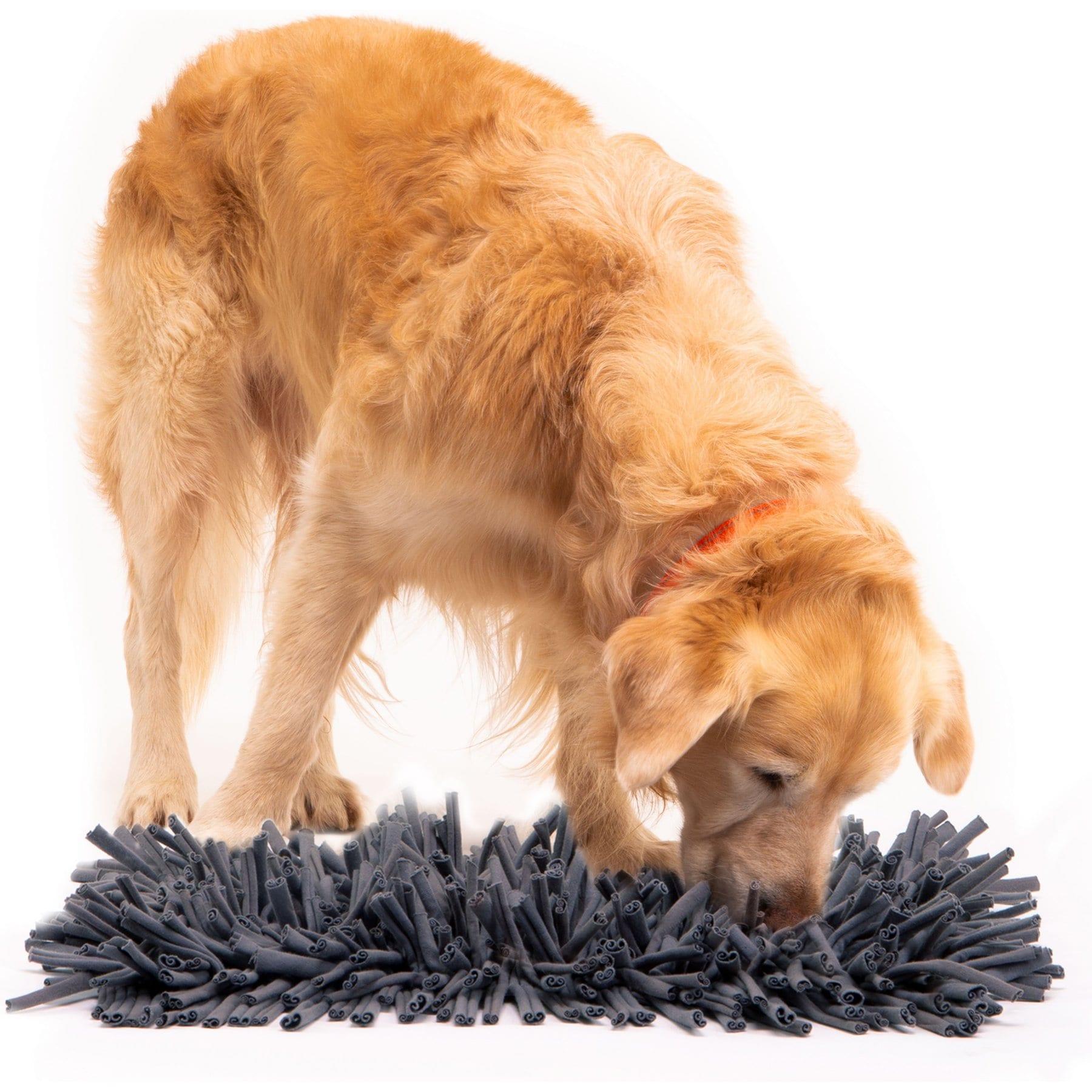
A ready-made fleece-style snuffle feeding mat for owners who want the DIY look without the knotting.
Webvet may earn a commission when you click through to Chewy, at no extra cost to you.
The best fabric for a snuffle mat
Fleece is the best fabric for a snuffle mat for one practical reason: polyester fleece does not fray when cut, so the strip edges stay clean without hemming. Loose threads from fraying fabric are exactly what a dog should not swallow.
Anti-pill fleece is the better choice because it sheds fewer fuzz balls after washing, and polyester fleece dries faster than cotton. Fabrics to skip:
- Cotton T-shirt jersey or flannel, which can fray or shed threads after a few washes.
- Thin yarn or string, since veterinary sources class string and yarn as linear foreign bodies with higher risk if swallowed.
- Fabric with sequins, glitter, or glued decorations.
- Towels with loose loops, unless used for the rolled no-sew version, where the towel stays whole.
Tools and kit options
A rotary cutter, cutting mat, and long ruler make cutting dozens of even strips far faster than scissors. Sharp fabric scissors work too; just mark the cutting lines first. A DIY snuffle mat kit, sold by some craft and pet shops, bundles a precut base and fleece strips, which saves the cutting step but costs more than buying the parts.
How to make a snuffle mat step by step: the tied fleece method
This is the version most people picture: fleece strips knotted through a rubber sink mat until the surface is a thick shag. It needs no sewing machine and is the easiest build for a first mat.

How to make a DIY snuffle mat
- Wash and dry the fleece first so it will not shrink or bleed color after the mat is built.
- Cut the fleece into strips. There is no standard size; a practical starting point is about 1 inch wide and 6 to 8 inches long; wider, longer strips make a deeper, harder hunt, and shorter strips make an easier one.
- Lay the sink mat flat with the smoother side down, since that side will face the floor.
- Push one end of a strip down through a hole and bring it back up through the neighboring hole, so both ends point up and the ends are even.
- Tie the two ends in a single knot snug against the mat. A double knot holds better for dogs that paw hard.
- Work row by row across the mat, filling every hole or every other hole depending on how dense the strips should be.
- Fluff the finished mat and trim any strip that is much longer than the rest.
- Check the underside: no strip should hang loose, and every knot should be tight.
Most first builds take an evening, and the time goes into cutting and knotting rather than skill. Mixing two or three fleece colors makes it easier to see where rows end.
Sewn and crochet snuffle mat patterns
A snuffle mat pattern is any repeatable layout for attaching strips to a base, and owners who sew or crochet have more options. A sewn mat stitches folded fleece strips or ruffled fleece panels in rows onto a fleece or canvas backing, and many sewing patterns add pockets, flaps, and ruffles so the dog has to nose under layers.
A crochet pattern usually works a mesh base in chunky cotton or acrylic, then ties fleece strips through the mesh in place of a rubber mat. Free crochet patterns are easy to find; for safety, tie fleece strips into the base rather than leaving thin yarn loops as the foraging surface.
Any sewn mat benefits from heavy-duty thread and backstitched seams, since a dog's nose and paws pull hard. Whatever the pattern, the safety rules stay the same: no loose threads, no small decorations, and supervision during use.
 Sponsored
Vet care that's always there
Unlimited video calls and messaging with licensed vets for less than a typical vet visit. One membership covers up to five pets.
Use code Pets60
Plans start at $12/month · covers up to 5 pets
- Licensed vets in most states
- Rx for 150+ conditions
- 4.7 on Trustpilot
No-sew and no-rubber-mat versions: towel rolls and fabric-only builds
The tied fleece mat already needs no sewing, but some owners have no rubber mat on hand or want something even faster. Fabric-only builds cover that.

The rolled towel snuffle knot
The towel version takes a few minutes and uses nothing but an old bath towel:
- Lay the towel flat and scatter kibble or treats across it.
- Roll the towel tightly from one long edge to the other, trapping the food inside.
- Tie the roll into a loose knot in the middle, or fold it into a horseshoe for a beginner.
- Hand it to the dog and let the dog nose and paw the roll open to reach the food.
This towel game is a good test of whether a dog enjoys foraging before anyone spends an evening on a full mat. The towel stays whole, so there are no cut strips to pull loose.
For large dogs that outgrow a towel roll quickly, a roomy ready-made mat is an alternative. The PuzzleFeeder Dog Snuffle Mat, Green, All Breed Sizes is a molded silicone mat with flower and grass shapes, listed at $27.99 on Chewy when checked in November 2026.
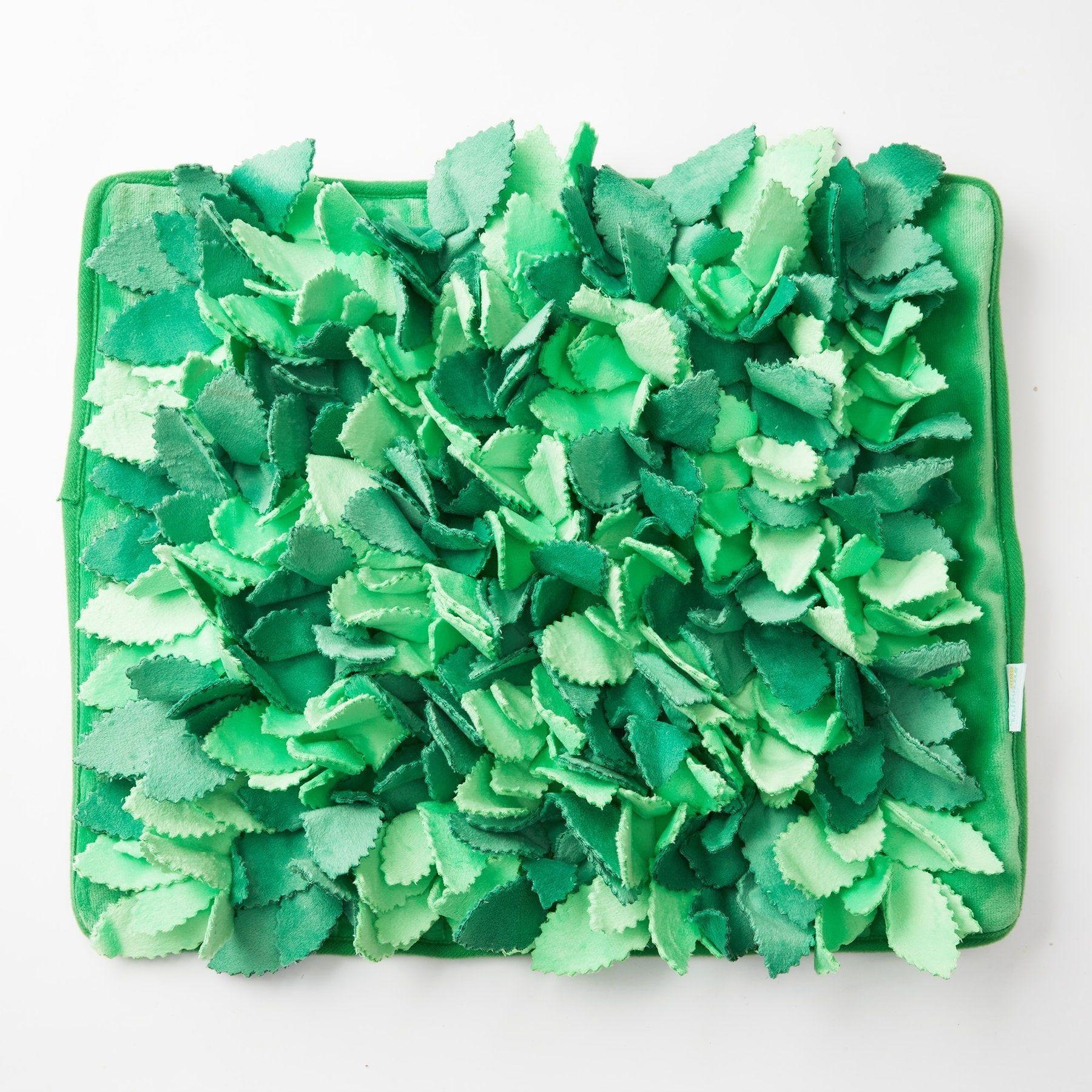
A roomy silicone snuffle-style mat for larger dogs that outgrow a towel roll or small sink-mat build.
Webvet may earn a commission when you click through to Chewy, at no extra cost to you.
Snuffle mat without rubber mat: fabric-only bases
A mat with no rubber base can still have the classic shaggy look. Options include:
- Cutting a grid of small slits in a sturdy fabric shopping bag or canvas and tying fleece strips through the slits.
- Tying strips onto a plastic canvas sheet from a craft store, which has a ready-made grid.
- Sewing strips in rows onto a heavy fleece or canvas backing, which is the sewn pattern approach.
To make a fabric-only mat last, choose a backing heavy enough that the slits will not tear when the dog tugs, and keep slits small so knots cannot pull through. A mat without a rubber base is lighter and easier to fold into the washing machine, though it slides more on smooth floors.
Snuffle mat safety: supervision, chewers, and food choices
A snuffle mat is a sniffing toy, not a chew toy. The safety plan rests on watching the dog, matching the mat to the dog's habits, and choosing food that will not soil the fabric.
Supervision and dogs that chew fabric
AVSAB advises owners to always supervise dogs with food toys, and VCA gives the same advice. Stay in the room for the whole session, then pick the mat up once the food is gone, before a bored dog starts tugging strips.
Some dogs are simply not snuffle mat candidates. Signs a dog needs a fabric-free option include:
- Chewing or ripping strips instead of sniffing between them.
- A history of eating socks, towels, or toy stuffing.
- Puppies in a heavy chewing phase.
- Dogs that grab the whole mat and carry it off to shake.
For those dogs, AVSAB notes that some food toys are designed for extreme chewers, and rubber food toys such as the ones in this guide to Kong toys for dogs can fill the same foraging role.
A molded silicone mat is another route for dogs that pull at fabric, such as the Dexypaws Enrichment Snuffle Mat Dog Slow Feeder, Sage Green Bone, listed at $16.99 on Chewy when checked in November 2026. It still needs supervised use and is not for dogs that shred.
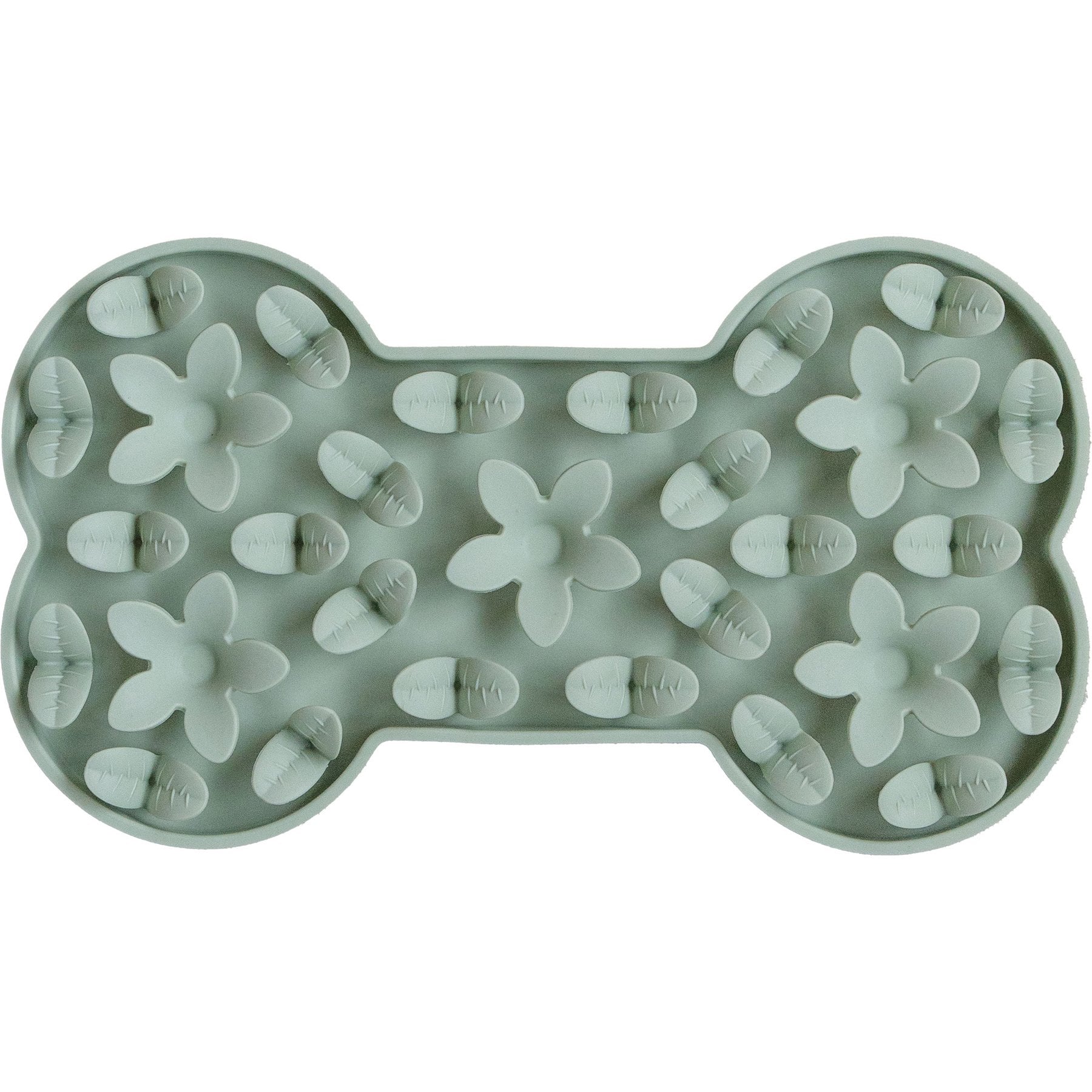
A molded silicone slow-feed mat with no loose strips, for supervised use with dogs that tug at fabric.
Webvet may earn a commission when you click through to Chewy, at no extra cost to you.
Food choices for a snuffle mat
Dry food works best in a fabric mat. Good choices and habits:
- The dog's regular dry kibble, measured out of the daily ration; VCA advises using part of a pet's daily allotment in a food puzzle so treats do not add extra calories.
- Small, dry, crumbly treats broken into kibble-sized pieces.
- Skip wet food, greasy treats, and soft spreads in fabric mats; they soak into fleece and turn rancid.
- For any spread used on a lick or silicone mat, read the label: the ASPCA warns that xylitol, found in some peanut butters, causes low blood sugar and liver damage in dogs.
Start easy. AVSAB recommends introducing food toys slowly and building difficulty gradually, and VCA notes that some puzzles are simple enough for a dog to figure out quickly while others need a demonstration. A simple progression:
- Scatter food on top of the strips so the dog finds it in seconds.
- Once the dog is confident, sprinkle food lower between the strips.
- Work some pieces down near the knots for a deeper search.
- End every session while the dog is still interested, then put the mat away.

If a dog swallows fabric
The Cornell Riney Canine Health Center lists toys, socks, and pieces of clothing among common foreign bodies in dogs, and notes that string or ribbon can cause more severe damage. Cornell lists these signs of a blockage:
- Vomiting
- Loss of appetite
- Abdominal pain
- Diarrhea
- Dehydration
- Lethargy
The Merck Veterinary Manual states that gastrointestinal obstruction should be treated as an emergency. Cornell adds that prompt veterinary care is critical to the best outcome, so a dog showing any of these signs after chewing a mat needs a vet right away.
How to wash a DIY snuffle mat and when to replace it
Crumbs, saliva, and food oils build up fast, so washing a fabric mat is part of owning one. Shake it out over a trash can after every session, then wash it once it smells or looks grimy.

Washing a DIY machine washable snuffle mat
A tied fleece mat on a rubber sink mat can go in the washing machine as long as the base tolerates water and gentle agitation. Practical steps:
- Shake out or vacuum loose crumbs first.
- Place the mat in a pillowcase or large mesh laundry bag to protect the strips and the washer drum.
- Wash on a gentle cycle with mild, unscented detergent.
- Skip fabric softener, which leaves a coating on fleece.
- Air dry the mat flat or hanging, since dryer heat can warp or crack some rubber mats.
How often to wash depends on use. A mat used for a daily meal of kibble needs a wash every week or so, while an occasional treat game can go longer. Between washes, spot clean any drool patches with warm water and let the mat dry fully before the next session, since a damp mat holds odors.
For a mat that holds up to frequent laundry, double knots and anti-pill fleece make the biggest difference. A towel roll or fabric-only mat can go straight in with the regular towels.
For less laundry, silicone is an option. The Awoo Meadow Snuffle Mat Silicone Dog & Cat Lick Mat Slow Feeder, Sage is described by the maker as food-grade silicone, with no fabric strips to trap crumbs, listed at $18 on Chewy when checked in November 2026. Silicone rinses clean with warm, soapy water.
When to replace a snuffle mat
Replace or rebuild a homemade mat when any of these show up:
- Strips torn, chewed short, or missing.
- Knots that loosen after washing and pull through the holes.
- A cracked or brittle rubber base.
- A smell that stays after washing.
- Visible pilling or fuzz that comes off on the dog's muzzle.
Re-tying a handful of strips is quick, and one advantage of a homemade build is that worn sections can be repaired instead of replacing the whole mat.
DIY vs store-bought snuffle mats and slow-feed mat options
| Option | Build time | Cost | Washability | Chewer risk | Best fit |
|---|---|---|---|---|---|
| Tied fleece on a rubber sink mat | An evening of cutting and knotting | Low: a sink mat and fleece | Good: gentle machine wash, air dry | Moderate: strips can be pulled loose | Sniffers and fast eaters, any size with joined mats |
| Rolled towel snuffle knot | A few minutes | None: an old towel | Excellent: washes with regular towels | Lower: no cut strips, but towels can be chewed | Testing interest, quick games, beginners |
| Sewn or crochet fabric mat | Several sessions for most crafters | Low to moderate: fabric and thread | Good: machine wash in a bag | Moderate: seams and loops can be pulled | Crafters wanting pockets, flaps, and custom sizes |
| Store-bought fabric snuffle mat | None | $14.99 to $39.95 listed on Chewy, November 2026 | Varies by brand | Moderate: same strip risk as DIY | Owners short on time who want a finished look |
| Silicone slow-feed or snuffle-style mat | None | $16.99 to $27.99 listed on Chewy, November 2026 | Easy: no fabric to hold crumbs | Lower for strip pullers, but still supervise | Dogs that tug fabric, wet food, frequent cleaning |
The right version depends more on the dog than on the craft. Washability and chewer risk are the two columns that decide most cases: a dog that pulls at strips belongs on a silicone mat or a rubber food toy, while a gentle sniffer can enjoy any fabric version.
Cost and time pull in opposite directions. A tied fleece mat costs little but takes an evening, while a ready-made mat costs more and is ready the moment it arrives. A towel roll costs nothing and takes minutes, which makes it the obvious first step for any owner unsure whether the dog will enjoy foraging at all.
Choosing between DIY and store-bought
A DIY mat wins on cost and custom sizing. A store-bought mat wins on time and finish. Questions to settle the choice:
- Does the dog sniff or shred? Shredders need a fabric-free toy.
- Is there time for an evening of knotting? If not, buy.
- Does the dog eat wet food? Silicone handles wet food; fleece does not.
- How big is the dog? Large dogs may need a joined DIY mat or a roomy store-bought one.
For a full look at ready-made fabric mats, see this roundup of the best snuffle mat for dogs picks. A ready-made fabric mat such as the PAW5 Wooly Snuffle Dog Feeding Mat suits owners who like the shaggy texture but not the cutting.
Other slow-feed mat and toy options
Snuffle mats are one tool among many. Rotating several keeps the game fresh, and AVSAB suggests that experienced dogs can get different food puzzle toys on different days of the week. Options to mix in:
- Lick mats, which suit soft foods and a calmer licking activity; see this guide to the lick mat for dogs, and for households with cats, the lick mat for cats guide.
- A simple rubber lick mat such as the LickiMat Classic Soother Slow Feeder Dog Lick Mat, Green, listed at $8.99 on Chewy when checked in November 2026, filled with plain foods from the dog's diet.
- Slow feeder bowls for everyday meals; compare designs in this guide to the best slow feeder dog bowls.
- Puzzle boards with sliders and flaps, covered in this guide to dog puzzle toys.
- Treat balls and toys the dog works with an owner, from this roundup of interactive dog toys.
AVSAB notes that owners sometimes worry food toys frustrate dogs, but the challenge is fun for dogs. The key is matching difficulty to the dog: if a dog walks away from a mat, make the hunt easier for a while rather than giving up on foraging altogether.
When a store-bought mat is the better fit
A finished mat is the sensible choice in a few cases:
- The owner has no time for cutting and knotting this week and wants the dog foraging tonight.
- The dog eats wet or raw food, which belongs on silicone rather than fleece.
- The household wants a mat that matches a specific size or shape the DIY materials cannot easily reach.
- A DIY mat keeps coming apart at the knots despite double knotting, which suggests the dog is too rough for tied strips.
DIY snuffle mat questions
Frequently Asked Questions
Can you make a snuffle mat without a rubber mat?
Yes. The quickest version is an old towel with kibble scattered on it, rolled up and knotted. For a shaggy mat, tie fleece strips through small slits cut in a sturdy canvas bag or through a plastic canvas sheet. Both work without any rubber base, though a fabric-only mat slides more on smooth floors, so set it on a rug or a non-slip pad.
Can a DIY snuffle mat go in the washing machine?
Most can. Put a tied fleece mat in a pillowcase or mesh bag, wash it in the washing machine on a gentle cycle with mild detergent, and air dry it. Skip the dryer, because heat can damage some rubber bases. Make sure the rubber is fully dry before the next use so the mat does not smell musty.
What fabric is best for a snuffle mat?
Polyester fleece, ideally anti-pill fleece. It does not fray at cut edges, so strips stay neat without hemming and do not shed loose threads. Cotton jersey and flannel tend to fray, and thin yarn is risky if swallowed. Solid colors also make it easier to spot a missing or chewed strip.
Is a no-sew snuffle mat as sturdy as a sewn one?
A well-tied no-sew mat holds up well for gentle sniffers. Double knots pulled snug against the base keep strips in place through washing. Sewn mats with heavy-duty thread resist hard pawing a little better, but neither style is safe with a dog that chews.
Can you make a snuffle mat from a towel?
Yes. Lay a bath towel flat, sprinkle treats or kibble across it, roll it tightly, and tie the roll in a loose knot. The dog noses and paws the towel open to find the food. It takes minutes and washes with the laundry. Start with a loose roll so the dog succeeds quickly, then roll tighter as the dog gets the idea.

Editor
The Webvet Editorial Team is the in-house group of pet-care editors and writers behind Webvet, operated by Smart Pet Collective. The team researches, writes, and maintains Webvet's pet health, behavior, and medication content. Every article follows a defined editorial process: research from reputable veterinary and scientific sources, careful drafting, mandatory review of medical content by a credentialed veterinarian, and dated publication. Health and medication articles are medically reviewed by a licensed veterinary professional before they go live and are kept current over time.
Related reading

Lick Mat for Cats: Safe Fillings, Benefits, and Which to Buy

Lick Mat for Dogs: What It Does, Best Fillings, and Which to Buy

Snuffle Mat for Dogs: Benefits, How to Use One, and the Best Picks
