Anxiety Relief for Dogs: Signs, Treatment, and How to Help
A vet-reviewed guide to dog anxiety signs, immediate support, behavior treatment, medication, and choosing calming products as evidence-aware adjuncts.

BVMS MRCVS

This article contains affiliate links. Webvet may earn a commission when you buy through them, at no extra cost to you.
Anxiety relief for dogs starts with one question: what is making this dog feel unsafe? Move the dog away from immediate danger, reduce the trigger when you can, and allow access to a quiet place. Do not punish fear, force the dog toward the trigger, or give human medication. A dog that may hurt itself or someone else needs urgent veterinary or behavior-professional help. See WebVet’s guide to why dogs burrow under blankets.
Lasting improvement usually comes from a plan that combines medical assessment, trigger management, gradual behavior modification, and sometimes prescription medication. Calming products can support that plan, but a bed, chew, diffuser, wrap, camera, or playlist is not a cure for an anxiety disorder.
Dog Anxiety Signs and What They Mean
Dog anxiety can look dramatic, but it can also begin with small changes in body language. Common dog anxiety symptoms include panting when the dog is not hot, trembling, pacing, whining, barking, drooling, lip licking, yawning, turning the head away, showing the whites of the eyes, lowering the body, tucking the tail, hiding, freezing, trying to escape, destructiveness, house soiling, and refusing food. Dog anxiety and panting belong in a pattern, since panting also has medical causes.
- 1Create distance from the trigger and give the dog a safe exit. Do not punish, corner, or force exposure.
- 2A sudden or worsening behavior change needs a veterinary check because pain, illness, sensory loss, medication effects, and cognitive change can resemble anxiety.
- 3Use a trigger intensity and recovery-time log before applying the five-level anxiety treatment ladder. Video can help when it is captured without provoking the dog.
- 4Training works below the panic threshold. Gradual desensitization and counterconditioning are different from flooding.
- 5Calming products are optional adjuncts. Moderate or severe anxiety often needs a veterinarian-led behavior and medication plan.
Signs matter most as a pattern. Note what happened immediately before the behavior, how intense it became, how long the dog took to recover, and whether the same pattern occurs in other situations. A dog that paces only when the owner picks up keys has a different pattern from a senior dog that paces and seems disoriented at night. A trigger intensity and recovery-time log connects those observations to the five-level anxiety treatment ladder later in this guide.

An unscented surface spray for dog bedding or carriers. Follow the label and let surfaces dry before use; never spray directly on your dog.
Webvet may earn a commission when you click through to Chewy, at no extra cost to you.
Sudden or worsening behavior can reflect pain, neurologic disease, sensory loss, endocrine disease, medication effects, or another medical problem that needs veterinary assessment. Anxiety can also overlap with itch, gastrointestinal discomfort, urinary urgency, and canine cognitive dysfunction. Schedule an examination when behavior is new, escalating, unexplained, or paired with appetite, weight, sleep, mobility, elimination, or neurologic changes.
What to Do When Your Dog Is Anxious Right Now
Practical ways to help an anxious dog calm down start with space: increase distance from the trigger and offer a familiar quiet retreat with an open escape route. Reduce noise and activity. Let the dog choose whether to approach you; crowding or restraining a frightened dog can increase distress. Speak calmly and offer food only if the dog wants it.
Prevent self-injury and keep a safe escape route available. Avoid punishment and forced exposure. If the dog is panicking, calm handling and distance take priority over training; a familiar person can provide comfort without crowding or restraining the dog. Do not give a home remedy to sedate the dog or mask new physical symptoms; seek veterinary advice when the cause is unclear.

For predictable noise, travel, or visitor triggers, prepare before the event. Close windows, provide a quiet interior room, start familiar background sound, and offer a safe activity only if the dog can still eat. A dog that will not take food is often too distressed for training at that moment. Increase distance and use the management plan instead.
After medical causes are addressed, a comfortable retreat can support recovery. A calming-style dog bed may make a familiar resting area more inviting, but it should remain optional and should never be used to confine a panicking dog.
Find the Trigger Before Choosing Treatment
Keep a simple log when the dog is safe: trigger, first sign, intensity, recovery time and what helped. For example: “Delivery van at 2 p.m.; barking and pacing for four minutes; settled after the curtains closed.” Share a short safe video and the pattern with your veterinarian. You do not need a long record before asking for help.
A camera can show what happens when no person is present. It can document pacing, vocalizing, door focus, rest, or normal behavior, but it cannot diagnose separation anxiety. Use a pet camera as an observation tool, not as remote treatment, and do not repeatedly leave a distressed dog alone just to collect more footage.
Patterns commonly include:
- Fear-related anxiety: a specific sound, person, animal, surface, handling event, or place predicts distress.
- Separation-related distress: departure cues or being alone predict vocalizing, escape attempts, destruction, elimination, or inability to settle.
- Generalized anxiety: the dog has difficulty settling across several contexts and recovers slowly after ordinary events.
- Age-related change: a senior dog may pace, vocalize, reverse sleep patterns, become clingy, or seem disoriented.
- Medical or medication-related behavior: pain, itch, nausea, urinary urgency, sensory loss, or a medication change may alter behavior without a primary anxiety disorder.
Separation Anxiety in Dogs
Distress around departures or being alone may include vocalizing, exit-focused destruction, drooling and inability to settle. See separation anxiety in dogs for diagnosis, gradual-departure training and medication considerations.
The pattern matters: a dog may cope when a trusted sitter is present but panic when completely alone. Boredom, incomplete house training and reactions to outside sounds can look similar on a damage report. Video from a safe, necessary absence helps the veterinarian distinguish those causes without deliberately provoking another episode.
Dog Anxiety at Night
Dog anxiety at night can follow noise, pain, urinary urgency, vision or hearing loss, changed sleep patterns, or canine cognitive dysfunction. Nighttime anxiety in dogs deserves a medical review when it is new or worsening, especially in a senior dog. Record pacing, vocalizing, disorientation, sleep, elimination, and recovery time, then use WebVet's focused guide to dog anxiety at night for the nighttime rule-outs and next steps.
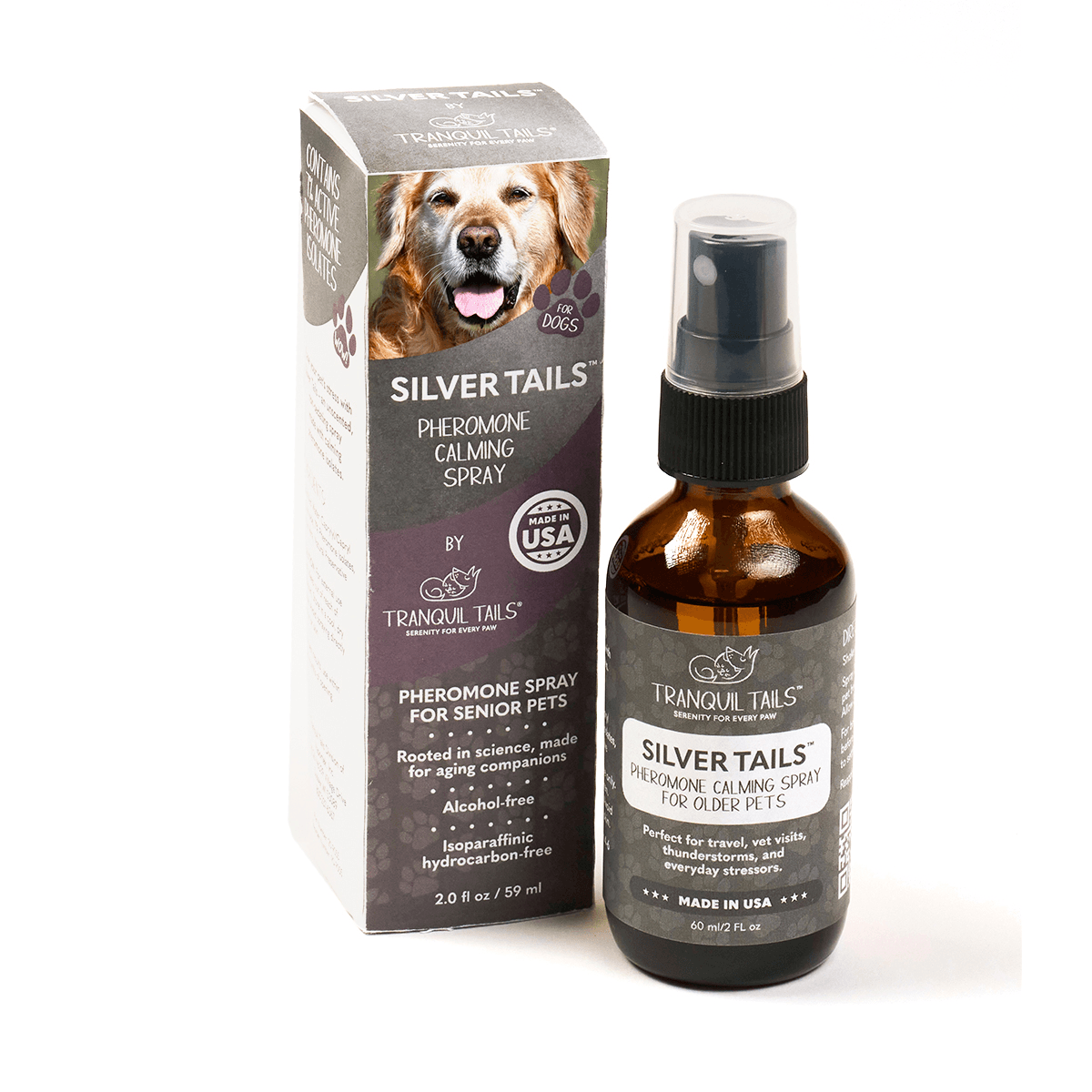
A senior-dog pheromone surface spray for optional calming support. It does not treat pain, cognitive decline or other medical causes of distress.
Webvet may earn a commission when you click through to Chewy, at no extra cost to you.
A Treatment Ladder for Dog Anxiety
Use the five-level anxiety treatment ladder below to match the response to your dog’s distress. Mild worry with quick recovery may respond to distance and gentle training; frequent fear or panic needs a veterinarian-led plan. Medical assessment can be necessary at any level, especially when behavior changes suddenly.
Severe anxiety attack symptoms can include frantic escape attempts, trembling, drooling and an inability to settle. If your dog’s anxiety is getting worse or recovery takes longer, contact the veterinarian to revise the plan. Do not repeatedly expose the dog to the trigger to see whether it can cope. Distress matters even when there is no barking.
| Level | What you observe | Best next action | Stop condition |
|---|---|---|---|
| 1: Mild, short-lived concern | Dog notices a trigger, can eat, responds to cues, and recovers quickly | Increase distance, keep routine predictable, and pair the safe exposure with something positive | Stop if body language becomes more tense or food refusal begins |
| 2: Repeat situational fear | Same trigger causes pacing, panting, hiding, or avoidance, but the dog remains safe | Ask your veterinarian or qualified trainer for a gradual desensitization and counterconditioning plan | Stop the session before panic, escape behavior, or shutdown |
| 3: Frequent or slow recovery | Several triggers cause distress or the dog takes a long time to settle | Schedule a veterinary examination and discuss a coordinated behavior plan | Do not keep testing triggers while awaiting care |
| 4: Panic or impaired daily life | Dog cannot eat, sleep, stay alone, travel, or tolerate routine care | Ask about veterinary behavior referral and whether situational or daily medication is appropriate | Avoid forced exposure and prevent rehearsal of severe episodes |
| 5: Immediate safety risk | Self-injury, escape attempts, redirection, aggression, collapse, or severe disorientation | Use barriers and distance without cornering the dog, then seek urgent professional help | Do not attempt hands-on restraint unless needed to prevent imminent harm |
The ladder is not a diagnosis. Dogs can move between levels depending on the trigger, and a medical problem can increase the intensity of a previously manageable response. Share the log and video with the veterinary team.

A room-based option for dogs. The standard kit includes scented pads; compatible unscented pads are sold separately. Follow this device's own directions.
Webvet may earn a commission when you click through to Chewy, at no extra cost to you.
What not to do with an anxious dog
Several intuitive responses can make anxiety harder to treat. Avoid repeatedly testing whether the dog is "better" by exposing it to the full trigger. Do not punish barking, growling, hiding, house soiling, or destruction that occurs during panic. Punishment may suppress a warning behavior without creating a safer emotional response.
Before considering sound-based bark-control equipment, read our anti-bark device comparison and its evidence limitations.
Do not use food to lure a frightened dog closer than it would choose to go. Food is useful in counterconditioning only while the dog remains below threshold and can move away. A dog that stretches toward a treat while keeping its back feet planted may still be conflicted rather than comfortable.
Do not make several changes at once. Starting a chew, diffuser, wrap, new crate, new training routine, and medication on the same day makes both benefit and adverse effects difficult to interpret. Emergency safety measures are the exception. Otherwise, agree on a sequence and outcome measure with the veterinary or behavior team.
Finally, do not wait for the problem to become severe before asking for help. Early fear signs are easier to work with because the dog can still eat, think, and recover. A written plan created before the next thunderstorm, trip, departure, visitor, or veterinary appointment is more useful than improvised restraint during the event.
Training and Behavior Modification
Behavior modification uses gradual exposure below the panic threshold and positive reinforcement; flooding can worsen fear. Desensitization begins with a version of the trigger mild enough that the dog can remain relaxed. Counterconditioning pairs that safe exposure with something the dog values. Progress is gradual, and the dog, not a calendar, determines when intensity can increase.
Keep sessions brief. Watch for the earliest tension signs and lower the challenge before the dog stops eating, freezes, flees, or reacts. Positive reinforcement can teach alternative behaviors, such as moving to a mat, orienting to the owner, or leaving a doorway, but obedience alone does not erase fear.

Unscented replacement pads for a compatible Tranquil Tails diffuser, sold separately. These are diffuser pads, not a spray refill or starter kit.
Webvet may earn a commission when you click through to Chewy, at no extra cost to you.
A worked example: fear of visitors
If your dog tenses when a visitor enters, start with a barrier and enough distance for relaxed movement. Have the visitor ignore the dog. Reward the dog for calmly noticing the person, then allow retreat. If the dog freezes, refuses food or barks repeatedly, increase distance or end the session. Do not lure the dog into a greeting. Progress might mean resting behind the barrier while a visitor sits quietly, before any closer interaction.
A dog that panics despite distance needs more support, not a harder training session. The veterinarian can assess medical contributors and discuss whether medication could make gradual learning possible.
Flooding is the opposite approach. It exposes the dog to a strong version of the trigger until the response changes or the dog shuts down. That can worsen fear and create a safety risk. Punishment can suppress growling or barking while leaving the dog just as frightened, which makes later behavior harder to predict.

When Medication Is Part of the Plan
Medication is not a last resort or a substitute for training. Prescription medication may be situational or daily and should be selected, dosed, and monitored by a veterinarian. Dog anxiety attack treatment may include a veterinarian-prescribed situational drug, while frequent or generalized distress may justify a daily medication. Over-the-counter calming products can have weak evidence or unsafe ingredients, so review the exact label with a veterinarian. For some dogs, appropriate medication lowers distress enough that learning becomes possible. A veterinarian may prescribe a pill to help a dog calm down, but the choice must fit the diagnosis and the behavior plan.
Veterinarians may use a situational medication before predictable events, a daily medication for ongoing anxiety, or both. Some drugs act within hours, while daily medications such as selective serotonin reuptake inhibitors can take several weeks to show their full effect. Follow the prescribed timing and do not change or stop a daily drug without veterinary guidance.
A veterinarian may discuss trazodone for a situational plan, fluoxetine for a daily plan, or another medication that better fits the dog. WebVet's guide explains trazodone for dogs in more detail; fluoxetine-specific timing and monitoring should come from the prescribing veterinarian. Do not give a dog human sedative, leftover prescription, cannabis product, melatonin, diphenhydramine, or another over-the-counter product without veterinary direction.
Calming Products: Useful Adjuncts, Not Cures
Supplements, pheromones, beds, wraps, cameras, and music are adjuncts with variable evidence and do not replace diagnosis or a behavior plan. Natural remedies for dog anxiety and products marketed as natural dog anxiety relief still need ingredient, dose, interaction, and evidence review. A product trial is most useful when the trigger, goal, start date, and outcome measure are written down. Change one adjunct at a time and keep the behavior plan stable.
Common categories include:
- Probiotic or nutritional adjuncts: These may support some dogs as part of a broader plan, but they are not fast-acting rescue treatment. Purina Calming Care is one daily powder option to discuss with the veterinary team.
- Pressure wraps: Some dogs accept gentle pressure; others become hotter, restricted, or more distressed. Introduce the wrap while the dog is calm and remove it if tension rises.
- Music, white noise, beds, and retreat spaces: These can reduce environmental stimulation and support a predictable routine. They do not treat pain, separation anxiety, phobia, or cognitive dysfunction by themselves.
Dog Calming Diffusers
A dog calming diffuser releases a synthetic dog-appeasing pheromone into one room. A dog pheromone diffuser may be a low-handling adjunct for mild situational stress, but studies do not support treating it as a universal answer or rescue medication. Place it according to the manufacturer's room and airflow directions, track a defined behavior, and reassess after a planned trial. The dog calming diffuser guide explains evidence, setup, and safety in depth.
Calming Chews for Dogs
Calming chews for dogs contain widely varying ingredients and doses, so "dog calming chews" is a format rather than one treatment. Review active and inactive ingredients, calorie load, timing, quality controls, and interactions with medications or other supplements. Do not use a chew to delay care for panic, self-injury, or aggression. WebVet's guide to calming chews for dogs explains ingredients and product selection.
Choose the detailed guide that matches your dog’s immediate difficulty using the links above. For prescription questions, discuss the intended role of fluoxetine or trazodone, the expected response time and the monitoring plan with the prescribing veterinarian.
For occasional-stress support, Zesty Paws Calming Bites is one chew format to discuss with your veterinarian. Review the complete label with your veterinarian, account for calories and other supplements, and stop if gastrointestinal or behavior changes occur.
When to Call a Veterinarian or Behaviorist
When should I talk to a veterinarian about dog anxiety? Schedule a veterinary assessment when anxiety is new, frequent, worsening, disrupting sleep or normal activities, or paired with physical signs. Call sooner when the trigger and recovery pattern changes, recovery takes longer, or the dog can no longer eat, rest, or respond safely. A veterinarian can examine the dog, review medications and supplements, and decide whether bloodwork, urinalysis, pain assessment, neurologic evaluation, or another test is appropriate.
Seek urgent help when the dog may injure itself or another person or animal, repeatedly attempts to escape through doors or windows, cannot settle after the trigger ends, collapses, has a seizure, seems severely disoriented, or may have ingested a medication or toxin. Use barriers and distance without cornering a frightened dog.
Bring the behavior log, video, medication list, supplement labels, sleep and appetite changes, and a description of what has already been tried. The goal is a coordinated plan with clear roles for management, training, medication, and follow-up.

Dog Anxiety FAQs
Frequently Asked Questions
What is the best anxiety relief for dogs?
Vets recommend choosing calming support according to the dog’s cause and severity of anxiety. The best anxiety relief for dogs is a plan matched to the cause, severity, and trigger and recovery pattern. The five-level anxiety treatment ladder begins with a medical rule-out before product selection, then combines veterinary assessment, trigger management, gradual positive behavior work, and predictable routines. Moderate or severe cases may also need prescription medication selected and monitored by a veterinarian. Chews, diffusers, beds, wraps, cameras, or music can be optional adjuncts, but none is a universal cure or substitute for diagnosis and behavior treatment.
Should you comfort an anxious dog?
You can calmly support an anxious dog without forcing contact. Create distance from the trigger, allow access to a safe retreat, speak and move normally, and let the dog choose whether to approach. Comfort does not reward fear, but crowding, restraining, or excited reassurance can add pressure. Watch the trigger and recovery pattern. If recovery is slow, behavior is worsening, or safety is uncertain, arrange a veterinary assessment.
Can anxiety cause panting and shaking in dogs?
Anxiety can cause panting, shaking, pacing, drooling, and other arousal signs, but those signs can also come from pain, heat, breathing trouble, nausea, toxins, medication effects, or neurologic disease. Note the trigger and recovery pattern, then move the dog to a safe, comfortable setting. Seek a veterinary assessment for signs that are sudden, severe, persistent, unexplained, or paired with collapse, breathing difficulty, weakness, vomiting, or disorientation.
Sources

Jared Bilski is a Philadelphia-based journalist whose work has appeared in The New York Times, The Washington Post, Parents, and McSweeney's. He serves as editor-in-chief of AORN's Outpatient Surgery Magazine, covering health care for professional audiences, and shares his home with a Boston Terrier named Judith.
Veterinarian · BVMS MRCVS
Dr. Pippa Elliott, BVMS, MRCVS, is a veterinarian with nearly 30 years of experience in companion animal practice. Dr. Elliott earned her Bachelor of Veterinary Medicine and Surgery from the University of Glasgow. She was also designated a Member of the Royal College of Veterinary Surgeons. Married with 2 grown-up kids, Dr. Elliott has a naughty Puggle named Poggle, 3 cats and a bearded dragon.


