Cat Won't Use the Scratching Post? Quick Tips
Get your cat to stop clawing the furniture and enjoy their scratching post instead.


This article contains affiliate links. Webvet may earn a commission when you buy through them, at no extra cost to you.
The Love of the Scratch
One of the most common problems faced by people with cats is their cat’s love of scratching… everything. From the furniture to your carpet, it can seem like your cat is on a mission to destroy your home. We bet your cat won't use the scratching post either.
This can cause a great deal of frustration and stress for you. Furniture isn’t cheap, so seeing your cat wrecking your prized positions is unsettling to say the least.
With all this in mind, Webvet has created a comprehensive guide to understanding and resolving the problem of cat scratching. From quick solutions to long-term strategies, we’ll cover everything you need to know to protect your furniture and keep your cat happy and healthy.
Why Do Cats Scratch?
Cats scratch for a variety of reasons. The first step in training your cat to use a scratching post and protecting your furniture is to understand why they scratch.
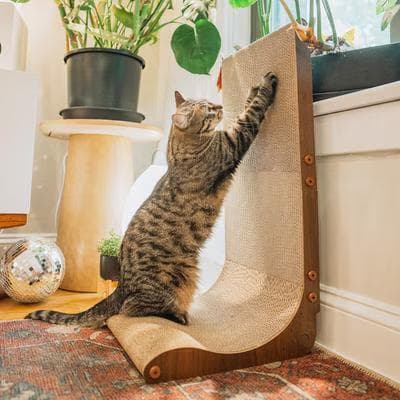
Curved cardboard wall scratcher with a wood frame that protects walls and gives cats a satisfying vertical scratch surface.
Webvet may earn a commission when you click through to Chewy, at no extra cost to you.
Here are a few of the most common reasons:
- Marking territory: Cats have scent glands in their paw pads, and scratching is a way for them to mark their territory by leaving their scent behind.
- Stretching and exercising: Scratching allows cats to stretch their muscles, an important form of exercise that helps keep them in good physical condition.
- Wearing down nails: Scratching also helps cats wear down their nails, which can become overgrown and painful if left untrimmed.
- It just feels good: Just like humans scratching their backs, when cats scratch their claws on material, the feeling gives them a sense of relaxation.
Keep these motivations in mind if your cat won't use the scratching post. The more you understand why they scratch, the more effective you’ll be in protecting your furniture.
Yelling or punishing your cat won’t stop the scratching. The concept of punishment makes no sense to your cat. Instead, provide a strong, sturdy scratching post with a surface they can sink their claws into, and entice your cat to the post with treats or toys.
Trimming Your Cat’s Nails
Trimming your cat’s nails is an important step in preventing destructive scratching. Regular nail trims can help keep your cat’s claws in check and reduce the urge to scratch.
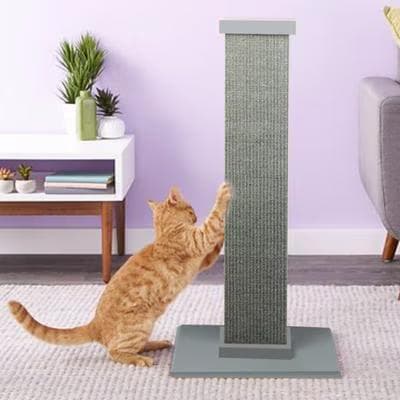
Webvet may earn a commission when you click through to Chewy, at no extra cost to you.
When trimming your cat’s nails, start young and get them used to the process. If you have an adult cat, effective trimming may be trickier, especially if the cat is skittish. In this case, it may be helpful to work with a professional to help your cat become comfortable with the process.
Here are a few other tips:
- Make trimming a positive experience: Offer treats or praise after each nail trimming session to help your cat associate it with positive experiences.
- Use the right tools: Invest in a good pair of cat nail clippers or scissors, and make sure they are sharp to prevent any discomfort to your cat.
- Trim just the tip: Trim only the very tip of the nail, avoiding the quick (the pink part of the nail that contains nerves and blood vessels). If you accidentally cut the quick, it will bleed, so be careful.
- Go slowly: Take your time and only trim a few nails at a time. If your cat gets restless, take a break and try again later.
- Offer distractions: Distract your cat with toys or treats during the nail trimming session to keep them calm.
Cat Won't Use the Scratching Post?
Getting your cat to use a scratching post can be a challenge, but with the right training techniques, it can be done.
One of the most important things is to place the scratching post in a location that will catch your cat's attention, such as near a window or in a room where your cat spends a lot of time. Not only will this give your cat the feeling that this is their property, but it also provides a sense of comfort.
Enticing your cat to the post with treats or toys can be effective, too. Try holding treats near the post and gradually moving them higher, or using a favorite cat toy and swinging or danging it around the post. Some people use catnip as a training tool by sprinkling it on the surface of the scratching post and rubbing it in.
The most important aspect of getting your cat used to the scratching post is ensuring the post is made out of a material they enjoy. Rope or carpet material is a popular one, but it's best to observe your cat’s preferences and choose a material they are attracted to, especially if your cat won't use the scratching post.
Compare coverage choices for your pet, then request a quote directly on Lemonade.
- Check a price for your pet
- Review available coverage choices
- See the terms before you decide
Eligibility, waiting periods, limits and exclusions apply.
Webvet may earn a commission when you click through to Lemonade, at no extra cost to you.
Protecting Your Furniture
If your cat won't use the scratching post, protecting that expensive furniture is also important. Protecting every piece of furniture may seem overwhelming, so begin with the pieces your cat seems especially keen to destroy.
Here are some tips for minimizing damage and protecting your furniture:
- Cover with a throw or blanket: A throw or blanket can protect your furniture from scratches and hide any existing claw marks. Old bed sheets also work and are easy to wash.
- Use Sticky Paws tape: Sticky Paws tape is double-sided tape you can apply along the edges of your upholstered pieces. Cats dislike its sticky feel, making it an effective deterrent. However, it will need to be replaced every now and then as it becomes grungy over time.
- Switch to cat-friendly furniture: Microfiber fabrics hold up well to cat scratching, so consider switching to furniture made of this material.
- Trim your cat’s nails regularly: As we touched on above, trimming your cat's nails regularly can help prevent destructive scratching.
By taking these steps, you can protect your furniture from scratches and keep your home looking great.

Webvet may earn a commission when you click through to Chewy, at no extra cost to you.
Building or Buying Your Own Scratching Post
Building or buying a scratching post gives your cat a designated place to scratch.
A homemade scratching post can be just as effective as one you bought from a store. Plus, you can customize it to fit your cat’s height, which is great if your cat won't use the scratching post.
To build a scratching post, select any size of material you need, like wood for the base. Be sure the height is at least as long as your cat, since most cats like the fully stretch out when scratching. Wrap the post in carpet or another flexible material your cat enjoys.
When choosing a store-bought scratching post, ensure it has a sturdy base and is tall enough for your cat to stretch and scratch comfortably. Regular maintenance, such as cleaning and replacing the material when necessary, will keep the post appealing to your cat.
The Inhumane Practice of Declawing
Declawing is a highly controversial practice that involves surgically removing a cat’s claws. This procedure not only causes physical pain to your cat, but can cause long-lasting psychological effects as well.
While declawing was once accepted as a way to ensure your cat did not scratch furniture or hurt anyone with their claws, research now shows that declawing causes many issues. Those issues include:
- Biting
- Aggression
- Litter box problems
- Increased likelihood of back pain
Train Your Cat to Scratch on the Post
Training your cat to use a scratching post is an effective way to protect your furniture and allow your pet to engage in their natural scratching behavior. With a little bit of patience, love, and maybe a few treats, your cat will soon be happily digging their claws into their new scratching post.
Remember, trimming your cat’s nails regularly and providing approved surfaces for scratching are key to reducing destructive scratching.
So, let’s give our furry friends the love and respect they deserve, and create a safe and scratch-free home for everyone.
FAQs
What is the best type of scratching post for my cat?
The best type of scratching post will depend on your cat's preferences and scratching habits. Some cats prefer rough materials like sisal rope, while others prefer softer materials like carpet. Additionally, the height, stability, and overall design of the post will also play a role in determining its suitability for your cat. Observe your cat's scratching behavior and choose a post that meets their needs.
Can I train my cat to use a scratching post even if they are an adult?
Yes, it's possible to train an adult cat to use a scratching post. The training process may take a bit longer and require more patience, but with a little effort and persistence, you can help redirect your cat's scratching behavior to a designated scratching area.
Can I use a scratching post for both indoor and outdoor cats?
Yes, you can use a scratching post for both indoor and outdoor cats. Outdoor cats may benefit from having a scratching post outside to use after hunting or exploring, while indoor cats can use a scratching post as a designated place to scratch and maintain their claws.
Resources:
- https://www.humanesociety.org/resources/why-declawing-bad-your-cat
- https://www.petmd.com/cat/behavior/how-to-stop-cats-from-scratching-furniture
- https://www.hillspet.com/cat-care/resources/easy-diy-cat-scratching-post-ideas
- https://www.thesprucepets.com/destructive-scratching-by-cats-555118
- Photo by Seven Song on Unsplash

Wendy Toth is an entrepreneurial writer, editor, and mom of two humans, two dogs and one cat. She’s currently Content Director here at PetFul. For the last 15 years she has held positions at Parents Magazine, NBC, PetSmart, and GreatPetCare, where she was co-founder. Her writing has appeared in many national outlets including Pet Lab Co., Retail Me Not, Ask Men, Wild Society Nutrition, and The New York Times. Because she loves her work so much, she’s obsessed with helping others find career fulfillment, and covers it regularly at PowerSuiting.


