Why Your Dog Panics the Moment You Pick Up Your Keys
If your dog starts pacing when you reach for your keys, the leaving routine may already predict distress. Learn what to observe and how to make the first steps toward calmer departures manageable.

This article contains affiliate links. Webvet may earn a commission when you buy through them, at no extra cost to you.
You have not left yet. You have only picked up your keys. But your dog panics: they follow you into the hallway, pant beside the door, or pace between your work bag and the window. The difficult part of leaving has already started.
For some dogs, that familiar sequence predicts something they find frightening. Understanding the prediction gives you a more useful starting point than another rushed goodbye. First, notice what changes. Then work with your veterinary team on practice your dog can manage comfortably.
Paid partnership with PawOrigins.
 Sponsored
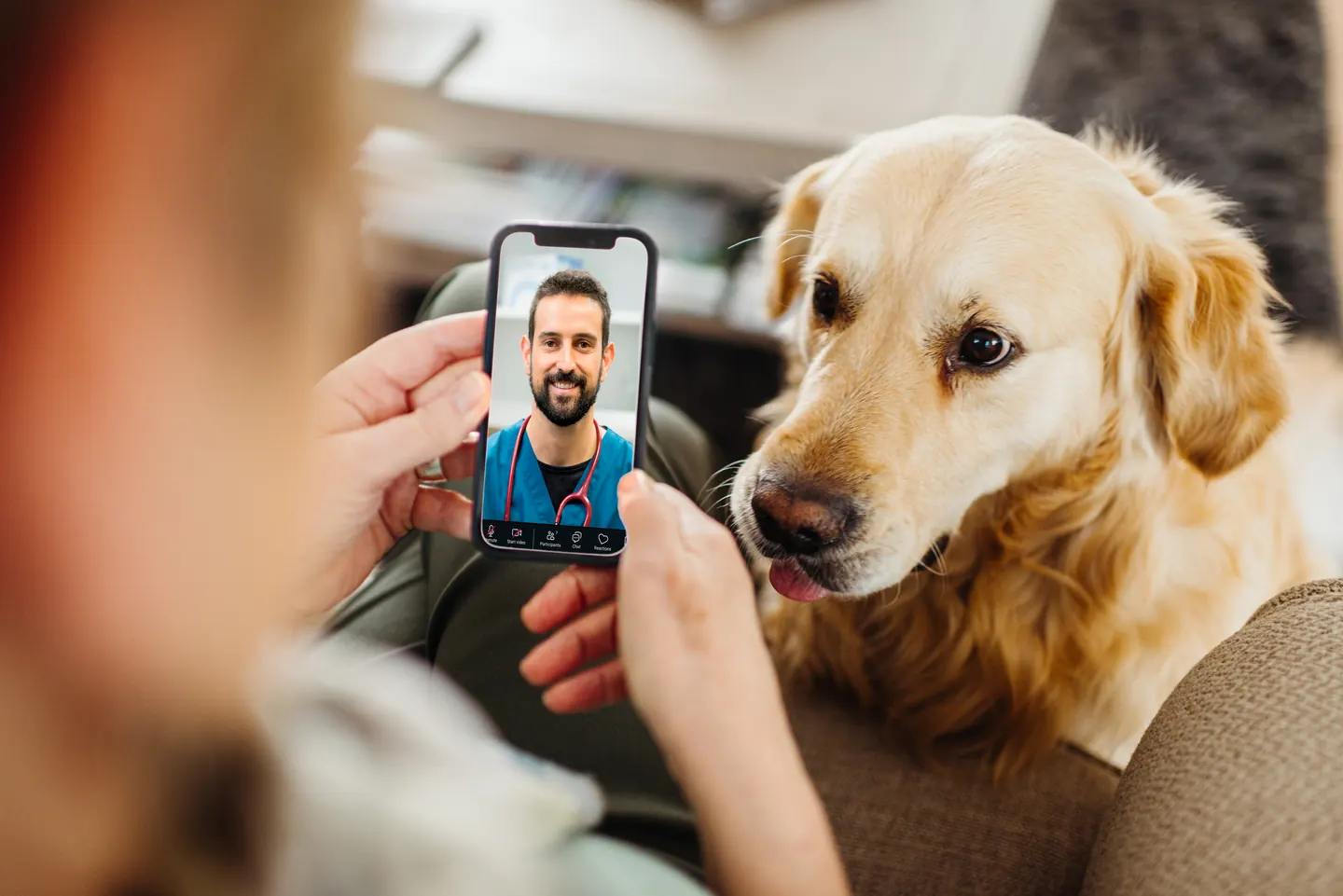
Want a vet's help with your dog's anxiety or behavior?
Talk to a licensed vet at Dutch over video, often the same day. They can recommend treatment and prescribe it when it's appropriate.
Use code Pets60
Plans start at $12/month · covers up to 5 pets
- Licensed vets in most states
- Rx for 150+ conditions
- 4.7 on Trustpilot
Why your dog panics before you leave
If your dog panics before you leave, keys can become a predictor of being left alone. Dogs learn patterns in everyday life, including the shoes you wear, where you put your bag, and what happens after you reach for the door. A dog who struggles with separation may react to those clues before the door closes. The useful starting point is the first action that changes their behavior, rather than the last action you take on your way out.
- 1Keys can become a predictor of separation before the door closes.
- 2Look for the earliest change in your dog's comfort, not just barking or destruction.
- 3Gentle cue practice belongs inside an individualized plan for comfortable alone time.
Dog departure cues are actions that predict you are about to go. If your usual sequence repeatedly ends in a difficult absence, changing the final goodbye alone may miss the point where your dog first becomes distressed. MSPCA-Angell describes this early response and recommends paying attention to what happens around leaving.

Soft chews formulated to support joint function and mobility, for dogs whose stiffness makes walks and rest harder. Ask your veterinarian whether a joint supplement suits your dog.
Webvet may earn a commission when you click through to PawOrigins, at no extra cost to you.
The association is individual. Keys might predict a walk for one dog and an empty house for another. Your dog may respond to your work shoes but barely notice the shoes you wear in the garden. Some dogs react to the entire sequence rather than one object.
- Note whether the response starts with getting dressed, collecting belongings, or approaching the exit.
- Compare ordinary household movement with the complete leaving routine.
- Notice whether the same actions predict an enjoyable outing together.
That distinction matters when you are investigating dog anxiety before leaving. Following you is an observation, not a diagnosis. The important question is what the rest of your dog's behavior tells you about that moment.

A beef organ and bone broth protein powder you scoop over meals for everyday nutritional support. Review the label with your veterinarian before adding it to your dog's diet.
Webvet may earn a commission when you click through to PawOrigins, at no extra cost to you.
Read the whole dog before practicing
Start by describing what you can actually see. Does your dog remain loose and able to return to resting, or do they become tense, restless, and increasingly focused on the exit? Notice the first change rather than waiting for a dramatic reaction. This gives your veterinarian a clearer picture than simply saying your dog hates the keys.

Write down the action immediately before the change, your dog's response, and what happens when you stop getting ready. An observation such as “stood up when I put on my coat, then resumed resting when I sat down” is useful. So is “continued pacing after I put the coat away.” Neither observation establishes the cause by itself.
What to notice around the leaving routine
| Observation | What it may mean | Useful next step |
|---|---|---|
| Loose body and interest in a familiar activity | Anticipation of going somewhere together | Compare with the dog's usual walk routine |
| Panting before departure; notice the first change | Possible cue-linked distress | Stop and make the next repetition easier |
| Distress behind a barrier | Confinement may be contributing | Choose a comfortable space with professional guidance |
Use that comparison as a conversation aid, not a home diagnostic test. A loose body and interest in a familiar activity can suggest anticipation. Panting before departure or distress behind a barrier deserves a different question. If you see a change during practice, make the next repetition easier rather than demanding a quieter performance.
A short recording can help distinguish a response to your departure from barking at activity outside. Place the camera safely and look at the whole sequence, including preparation. Camera observation does not diagnose separation anxiety, and you do not need to provoke a long episode to collect evidence. Share existing recordings and ask your veterinarian how to observe safely.
Change the prediction without rehearsing panic
Cue practice means presenting a manageable part of the leaving routine without following it with a frightening absence. This gradual process is called desensitization. That might mean briefly touching your keys and then continuing a quiet activity at home. It does not mean rattling them repeatedly while your dog becomes more upset. Keep the action small enough that you can observe comfort and stop before the exercise becomes overwhelming.
The ASPCA's separation-anxiety guidance describes separating familiar departure signals from actual departures. The useful principle is gradual exposure that your dog can tolerate, with professional help for more serious distress.
Choose a calm moment when you have time to stop. Consider the difference between these two sessions:
- In one, the owner puts on a coat, grabs a bag, opens the door, and waits for the dog to stop whining.
- In the other, the owner starts with a smaller action the dog can handle, watches the response, and finishes before distress develops.
The second approach makes the learning task clearer. You are changing one part of the prediction, not testing how much worry your dog can withstand. If even reaching toward the keys causes tension, that starting point may already be too difficult. A qualified professional can help choose an easier version.
Keep a brief record of what you practiced and how your dog responded. Avoid adding several new cues simply because one repetition went well. And avoid a rigid number of repetitions: the dog's response, recovery, and wider circumstances are more informative than completing a checklist.
 Sponsored
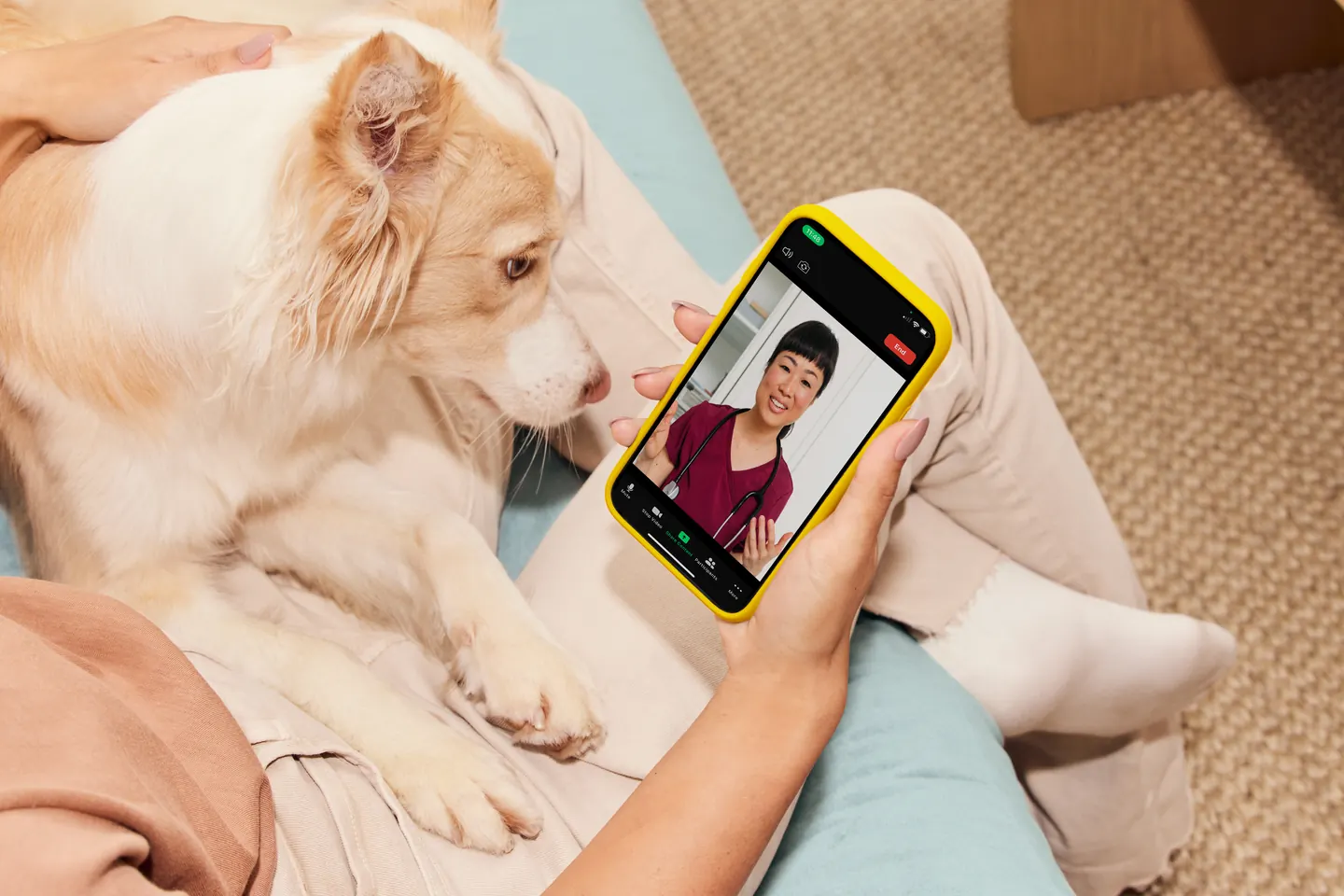
Vet care that's always there
Unlimited video calls and messaging with licensed vets for less than a typical vet visit. One membership covers up to five pets.
Use code Pets60
Plans start at $12/month · covers up to 5 pets
- Licensed vets in most states
- Rx for 150+ conditions
- 4.7 on Trustpilot
Start with a departure your dog can handle
Comfort around keys does not automatically establish comfort alone. A dog can become less interested in your bag and still struggle when you leave. Cue work therefore belongs alongside gradual absence practice, not in place of it.
If you are thinking “my dog panics when I leave,” bring that specific pattern to your veterinarian. Explain whether the response begins during preparation or only afterward. When a dog panics when left alone, simply making the preliminary routine less obvious does not resolve what happens during the absence itself.

The Merck Veterinary Manual describes graduated departure work for separation anxiety. The starting duration and progression need to suit the individual dog. Practice below the distress threshold: the point before your dog shows the worried response you are trying to prevent.

Full-spectrum hemp extract in coconut-derived MCT oil, with a dropper for measured servings. Bring the label and lab information to your veterinarian.
Webvet may earn a commission when you click through to PawOrigins, at no extra cost to you.
For a dog already distressed before the door opens, an initial exercise may involve staying inside. Another dog may be ready for a very brief step outside. These are examples of different starting points, not a prescribed schedule. Returning while your dog is comfortable matters more than reaching a particular number of seconds.
- Keep the chosen resting space familiar and safe.
- Introduce a calm activity while you are home, if your dog enjoys it.
- Watch comfort as well as duration, and reduce difficulty when needed.
- Arrange help for unavoidable absences that exceed the current plan.
A food toy cannot prove comfort alone. A dog may eat while you get ready and become distressed afterward; another may refuse food when worried. Choose suitable activities with supervision first, and assess the dog's behavior beyond the food. The aim is a comfortable dog throughout the exercise, not merely an occupied dog at the doorway.

Soft chews with a probiotic blend and omega-3s, formulated for itch, seasonal allergy and immune support. Ask your veterinarian whether they fit your dog's skin and allergy plan.
Webvet may earn a commission when you click through to PawOrigins, at no extra cost to you.
If your dog panics in crate confinement
A crate can be a familiar resting place for a dog who already feels comfortable there. It can also add another difficulty if confinement itself is frightening. When being enclosed is part of the problem, stronger containment does not address the dog's emotional distress.
VCA's veterinary behavior guidance cautions that anxious escape attempts in crates can cause injuries. Discuss a safe arrangement with your veterinary team instead of repeatedly placing your dog in a setup where they struggle.
“My dog panics in the crate” and “my dog panics when I leave” may describe overlapping problems, but they are not interchangeable. Help the professional assess confinement, separation, or both by noting:
- Whether distress occurs behind a gate when you remain visible.
- What changes when you move out of sight.
- Whether a closed door creates a similar response while you are still home.
If a rescue dog panics in a crate, their history may be incomplete. You can still describe the present behavior without guessing what happened before adoption. Choose a comfortable space based on the dog's response and practical safety, not the assumption that every dog should settle in the same place.
Why ignoring and punishment miss the problem
An instruction to ignore the dog may sound simple when you are trying to get out the door. But withholding attention does not automatically change what your departure predicts. Calm, ordinary interaction and an individualized plan are more useful than treating every request for contact as something you caused.
Do not punish the aftermath. A damaged door, scattered belongings, or an accident tells you something happened while you were away; punishment afterward cannot teach the dog to feel safe during that absence. It may add fear to your return. Keep the focus on preventing distress and understanding its timing.
Likewise, do not turn a successful brief exercise into a much longer absence to see whether the problem has disappeared. Build duration gradually within the professional plan. Progress should mean your dog is coping more comfortably, not that they have become less able to show you they are struggling.
Build the rest of the support plan
Departure practice works within a dog's daily life. Review rest, predictable care, appropriate exercise, and environmental stressors alongside medical contributors and veterinary help. A sudden behavior change, signs of pain, or a change in appetite or movement should not be written off as a training problem. Tell your veterinarian when the change began and whether it occurs at other times, including when the family is home. Bring a list of current medications and supplements so the assessment considers the whole dog rather than the leaving routine alone.
For broader anxiety relief for dogs, a familiar routine and a calm home can support the work you do around departures. Dog anxiety relief is not one identical intervention for every dog: your observations help determine which parts of the routine need attention.
Tell your veterinarian what is realistic for your household. A practical plan needs to account for tomorrow morning as well as longer-term progress. Help during difficult absences is support for the training process, not an admission that you have failed.
- Can a trusted person cover an absence?
- Does your dog relax with that person?
- Can work schedules temporarily overlap?
Some dogs also need prescription treatment or specialist behavior care. Ask how the proposed care will be assessed, which changes to monitor, and when to review the plan. Avoid changing several supplements or routines at once without guidance, because that makes it harder to understand what is helping.
Where Happy-Furever fits
For owners exploring plant-based supportive care, Happy-Furever is PawOrigins' full-spectrum CBD oil. It can be discussed with your veterinarian as one possible addition to a broader plan that includes gradual departure work and environmental support. Its place is after understanding the dog's needs, not as a substitute for that investigation.

The endocannabinoid system is a physiological signaling system involved in functions that include stress regulation. That provides context for research into cannabinoids. It does not mean a dog reacting to keys has a diagnosed defect in that system, or that an oil can repair a “broken brake.” Understanding the biological research and choosing care for an individual dog are separate steps; your observations and your veterinarian's assessment still guide the practical plan.
Research is still developing. In a blinded, placebo-controlled study of CBD and canine stress, some measures improved during separation or car-travel tests. The study used a different formulation in healthy research dogs. It was not a Happy-Furever trial or proof of treatment for dogs with diagnosed separation anxiety. CBD evidence does not establish a cure.
That distinction leaves room for an informed supportive-care discussion. The FDA advises veterinary discussion about cannabis products for animals; CBD products are not FDA-approved animal treatments. Bring your veterinarian:
- The exact product label.
- Current product testing information.
- Your dog's medication and supplement list.
Learning how Happy-Furever fits into your dog's support plan starts with those questions. Keep tracking the same meaningful changes: comfort as you prepare, the earliest response to separation, and recovery afterward. The most useful next step is one your dog can handle and your care team can assess.
Questions about leaving your dog
Frequently Asked Questions
What is the 3-3-3 rule for dog anxiety?
The 3-3-3 rule is a popular shorthand for an adopted dog's adjustment over the first few days, weeks, and months. It is not a treatment schedule for separation anxiety. The individual dog may progress at a different pace, and distress during departures deserves attention regardless of how long they have lived with you. Base the next step on observed comfort and veterinary guidance.
Is it cruel to leave a dog with separation anxiety?
Leaving a dog with separation anxiety in ongoing panic compromises their welfare, but calling yourself cruel does not help you plan the next departure. Arrange help where possible so unavoidable absences do not repeatedly exceed the dog's distress threshold. Discuss realistic coverage with your veterinarian or behavior professional. The aim is to protect welfare while building comfortable alone time, rather than asking the dog to endure an absence they cannot currently manage.
Can a dog be left alone for 8 hours a day?
A dog should not be left alone for 8 hours a day if they cannot cope comfortably with that absence. Health, age, toilet needs, previous experience, and emotional comfort all matter. For a dog already distressed during departure, 8 hours is not a training goal to attempt immediately. Arrange suitable care and build from an absence the dog can handle, with breaks and support appropriate to their needs.
Should you leave the TV on for a dog?
Familiar background sound may be part of a comfortable routine for some dogs, especially if it already accompanies quiet time while you are home. Keep it at a comfortable volume and observe the response. A television cannot treat separation anxiety or make an overwhelming absence safe. It should complement the dog's environment and care plan, not replace gradual practice.

Editor
The Webvet Editorial Team is the in-house group of pet-care editors and writers behind Webvet, operated by Smart Pet Collective. The team researches, writes, and maintains Webvet's pet health, behavior, and medication content. Every article follows a defined editorial process: research from reputable veterinary and scientific sources, careful drafting, mandatory review of medical content by a credentialed veterinarian, and dated publication. Health and medication articles are medically reviewed by a licensed veterinary professional before they go live and are kept current over time.
Related reading

What to Do When the Usual Calming Advice Hasn’t Helped Your Dog

Why Is My Dog So Quiet? What Withdrawal Can Signal

Best Puppy Crates: Divider Panels, Size-Up Timing, and Vet-Reviewed Picks
