What to Do When the Usual Calming Advice Hasn’t Helped Your Dog
Tried longer walks, a crate and calming products without much change? Learn what to observe, which questions to ask and how to connect your dog's care into a more useful plan.

This article contains affiliate links. Webvet may earn a commission when you buy through them, at no extra cost to you.
You bought the calming bed. You tried longer walks, a crate, background noise and the supplements a friend recommended. Yet your dog is still pacing, barking, trembling or struggling to settle. When calming advice keeps falling short, it can feel as though you are letting your dog down.
You are not failing because you have not found the perfect trick. Different strategies address different needs, and the missing piece may be understanding what is driving this particular dog's behavior. The next step is to connect the observations, environment, health assessment and behavior support into one plan.
Paid partnership with PawOrigins.
- 1Start with the trigger and a veterinary assessment, especially for new or worsening behavior.
- 2Check what each attempted strategy was meant to change.
- 3Track recovery and everyday comfort, not simply how quiet your dog becomes.
 Sponsored
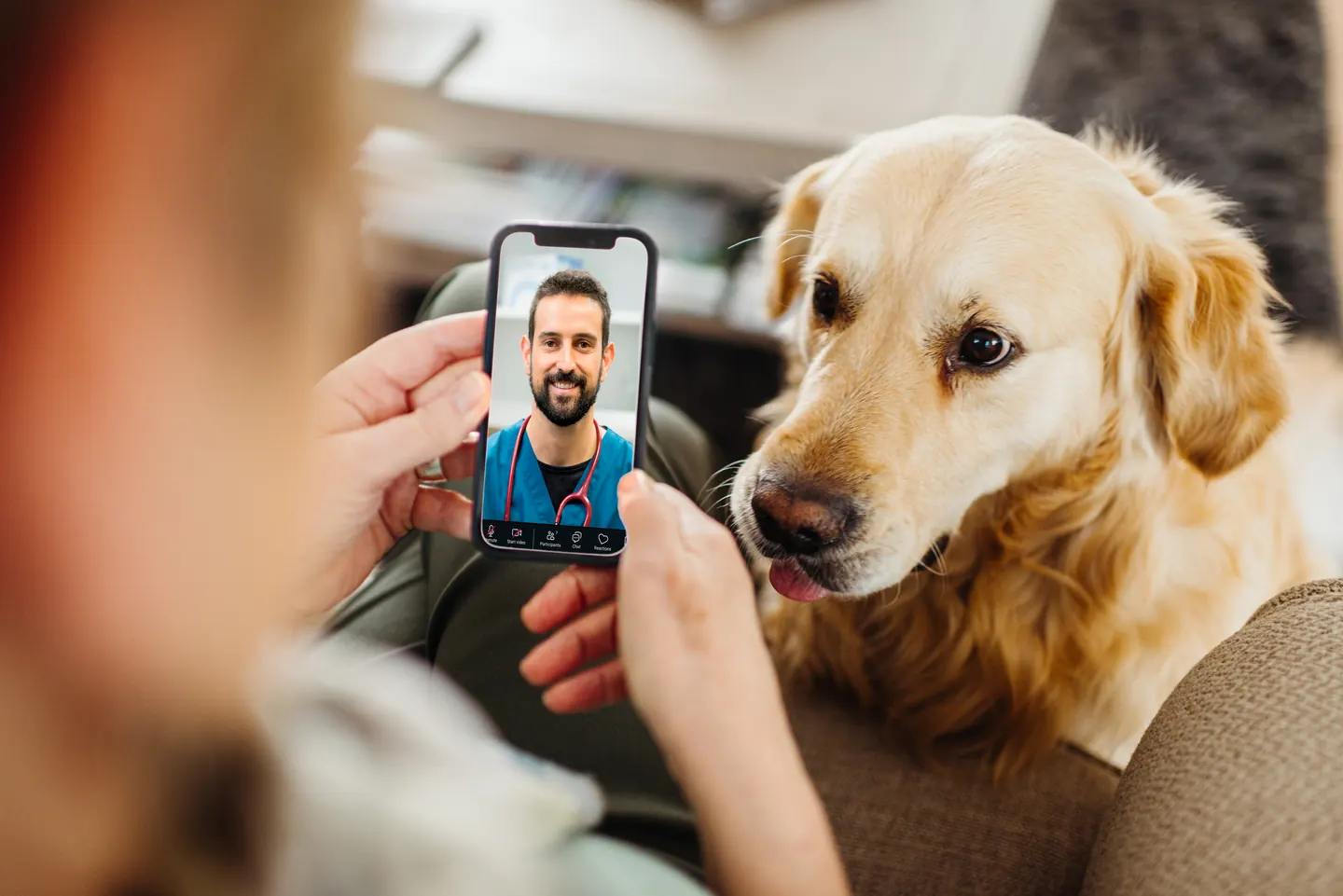
Want a vet's help with your dog's anxiety or behavior?
Talk to a licensed vet at Dutch over video, often the same day. They can recommend treatment and prescribe it when it's appropriate.
Use code Pets60
Plans start at $12/month · covers up to 5 pets
- Licensed vets in most states
- Rx for 150+ conditions
- 4.7 on Trustpilot
Why isolated calming advice can miss the problem
A strategy can be useful without being enough. To evaluate calming advice, ask what the tip can address before deciding whether it failed. A familiar crate may provide a comfortable resting place, but it cannot by itself change fear of being left alone. A walk meets activity needs, but it does not automatically resolve distress about another dog passing the window.

Soft chews formulated to support joint function and mobility, for dogs whose stiffness makes walks and rest harder. Ask your veterinarian whether a joint supplement suits your dog.
Webvet may earn a commission when you click through to PawOrigins, at no extra cost to you.
The question is not just, “Did this work?” Ask what the tip can address and what you expected to change. If the goal was fewer reactions to the doorbell, an exhausted dog after a long walk does not necessarily tell you whether the doorbell has become less frightening.

Turn a failed tip into a useful next question
| What you tried | What it can address | The next question |
|---|---|---|
| Longer walks | Appropriate physical activity and enrichment | Does the walk reduce tension or add more difficult encounters? |
| A crate | A familiar resting place for a dog comfortable with confinement | Does the dog choose to relax there or show distress when the door closes? |
| Music or white noise | Some environmental sound and predictability | Is the trigger something the sound can actually reduce? |
| A training video | A particular skill or response | Can the dog engage before the exercise becomes overwhelming? |
| A calming supplement | A possible supportive role in an individual plan | Were the product, goal and review period discussed with the veterinarian? |
Use this failed-tip audit to connect each attempted intervention with the missing question and your next observation. List what you tried, what it can address, when you used it and what happened afterward. A dog who settles more readily but still struggles with visitors may have made progress in one situation while needing a different approach in another. That is useful information about the plan, not a verdict on your effort.
That distinction matters because anxiety is not a single, simple diagnosis. Cornell's veterinary guidance on anxious behavior describes several different behavior problems and emphasizes matching support to the dog and situation.

A beef organ and bone broth protein powder you scoop over meals for everyday nutritional support. Review the label with your veterinarian before adding it to your dog's diet.
Webvet may earn a commission when you click through to PawOrigins, at no extra cost to you.
First, check whether something else has changed
Before adding another calming strategy, consider a pain or medical contributor. Tell your veterinarian if the behavior started suddenly, is worsening, or accompanies changes in appetite, drinking, sleep, movement or toileting. A dog avoiding touch, repeatedly changing resting positions or becoming reluctant to walk needs assessment, not an assumption that the problem is purely emotional.
Bring specifics rather than a label such as “anxious all the time.” A short video of naturally occurring behavior can help, provided recording does not delay help or put anyone at risk. Do not recreate a frightening situation for the camera.
- Note the first day you noticed a change and whether it followed an illness, move, household change or new routine.
- List prescription medicines, supplements and other products, including when each was started or changed.
- Describe activities the dog still enjoys and those they now avoid.
- Explain whether the problem occurs only in certain situations or also during otherwise quiet periods.
Identify the trigger and measure recovery
Try replacing “nothing works” with an observation you can compare: “After a delivery, my dog paces for 20 minutes and cannot return to resting.” Recording the exact trigger and recovery time gives your care team a situation, a behavior and a useful change to follow. The number is an example, not a threshold for diagnosing anxiety.
Record a few ordinary days without deliberately testing your dog's limits. A seven-day observation log can be a practical starting point, but seven days is not a deadline for improvement. If the problem is severe or changing quickly, seek help while you gather information.
- Before: What happened just before the behavior? Include sounds, people, other animals, departures and transitions.
- During: What did you see? Record pacing, trembling, hiding, vocalizing or difficulty disengaging without assuming a cause.
- After: How long before the dog returned to an ordinary activity, such as resting or exploring comfortably?
- Background: What were sleep and rest, activity, appetite and the household routine like that day?
Use a repeatable observation log to track recovery and everyday function instead of mistaking quietness for calm. Include sleep and rest as well as reactions to triggers: can your dog rest comfortably and return to familiar enjoyable activities? Several difficult encounters on one outing may explain why a training exercise is harder afterward. Conversely, changes across unrelated situations are useful information for the veterinarian. Your job is to notice the pattern, not diagnose it yourself.
 Sponsored
Vet care that's always there
Unlimited video calls and messaging with licensed vets for less than a typical vet visit. One membership covers up to five pets.
Use code Pets60
Plans start at $12/month · covers up to 5 pets
- Licensed vets in most states
- Rx for 150+ conditions
- 4.7 on Trustpilot
When a longer walk still does not help
If your dog won't settle after a walk, more distance is not automatically the next answer. The route may include traffic, unfamiliar dogs or other experiences your dog finds difficult. Physical activity can be valuable while the particular outing still leaves the dog overstimulated or fearful.
To work out how to calm a dog down after a walk, review what happened on the walk first. Did your dog repeatedly freeze, pull away, scan the surroundings or struggle to disengage? A familiar route at a quieter time, more distance from triggers or a shorter outing may be more useful than simply extending the same experience.
- Match activity to your dog's health, age and veterinary advice.
- Include comfortable opportunities to sniff and explore, rather than making every outing an intense exercise session.
- Allow a predictable, low-pressure transition home with water and a suitable resting place.
When a dog can't settle after a walk, also consider discomfort, heat and changes from their normal behavior. A new pattern deserves a veterinary discussion. The aim is a dog whose needs are met and who can recover comfortably, not a dog too tired to move.
What to do during the next difficult moment
Nothing reliably calms every dog immediately. Start by reducing the demand: increase distance from a trigger when safe, lower avoidable noise and give your dog access to a familiar quiet space. Stay calm yourself and avoid crowding, restraining or repeatedly cueing a dog who is already struggling.
If your dog welcomes gentle contact, you can offer it; if they move away, give them room. A familiar food activity may help a dog who is comfortable enough to engage, but it should not be used to lure them closer to something frightening. Refusing food is one observation to share, not a stand-alone diagnosis.
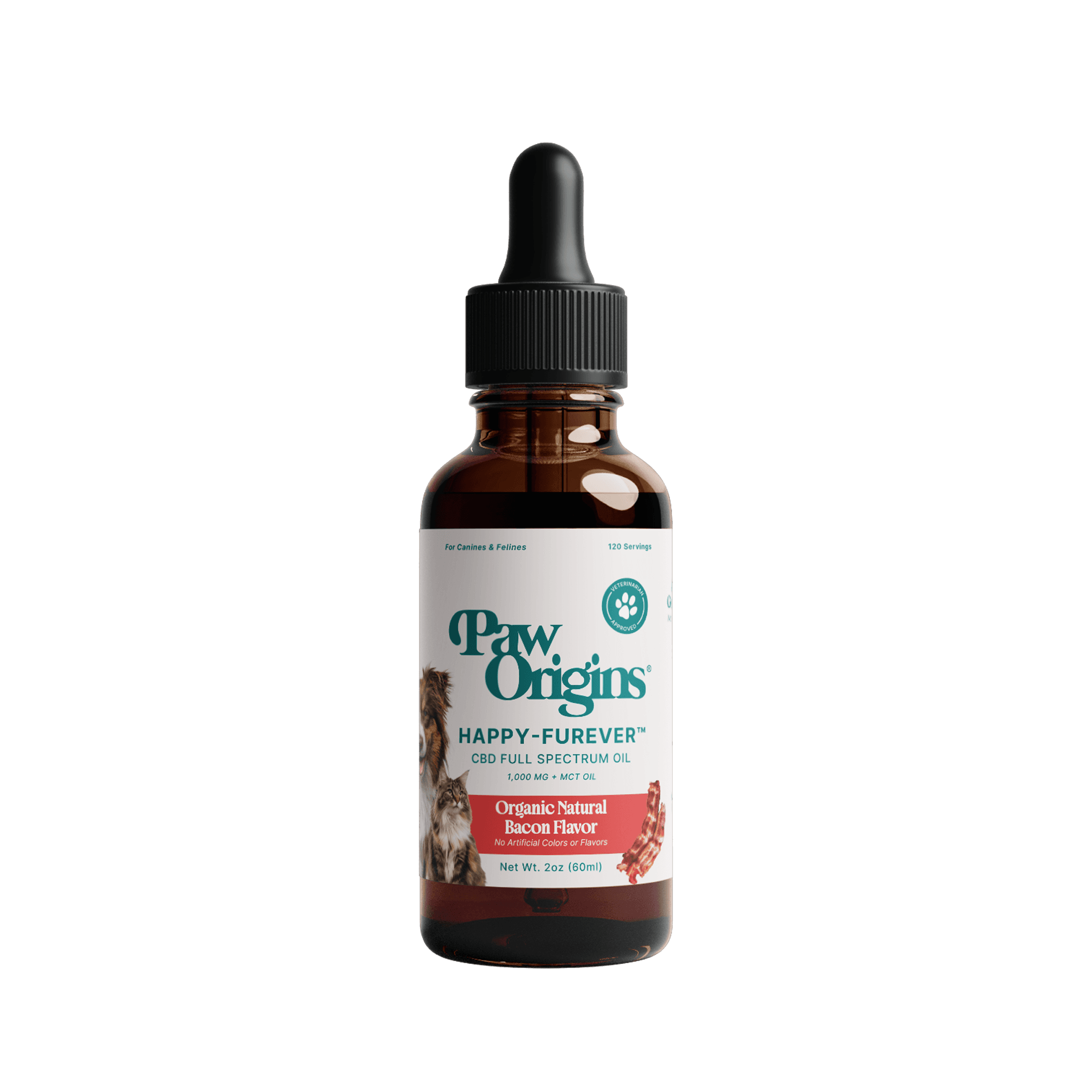
Full-spectrum hemp extract in coconut-derived MCT oil, with a dropper for measured servings. Bring the label and lab information to your veterinarian.
Webvet may earn a commission when you click through to PawOrigins, at no extra cost to you.
For a dog distressed by confinement, closing a crate door is not a universal calming step. Use the safe environment agreed with your veterinarian or qualified behavior professional. Immediate management reduces pressure and protects safety; it does not replace the longer-term work of changing the dog's response.
Help your dog recover before the next lesson
To help an overstimulated dog calm down, reduce what is happening around them before asking them to participate in learning. Pause the challenging activity, offer a familiar low-demand space and allow time to recover. Watch the whole dog: an ability to disengage, move normally and resume familiar activities is more informative than silence alone.

Behavior support should start below the fear threshold, at an intensity your dog can handle. That might mean practicing farther from a trigger, at a lower sound level or for a shorter duration. A qualified professional can help you choose the starting point and recognize when the exercise needs to become easier.
Merck Veterinary Manual's behavior-modification guidance explains desensitization and counterconditioning: gradual, controlled exposure and building a more positive association. It also warns that punishment and confrontational approaches can increase fear and aggression. More exposure is not automatically better exposure.
If your dog becomes more distressed, stop escalating the exercise. Reduce the challenge and review the plan. Successful practice is not a contest to see how much the dog will tolerate. It creates manageable opportunities to learn while protecting rest, safety and normal daily activities.
Build one coordinated plan with your veterinarian
The most useful answer to how to calm an anxious dog depends on the cause, severity and setting. Our guide to anxiety relief for dogs covers the broader foundation. Here, the priority is connecting that foundation to the parts of your existing plan that have not helped.

Soft chews with a probiotic blend and omega-3s, formulated for itch, seasonal allergy and immune support. Ask your veterinarian whether they fit your dog's skin and allergy plan.
Webvet may earn a commission when you click through to PawOrigins, at no extra cost to you.
When discussing calming dog anxiety, agree on one or two observable goals and when to review them. For example, you might track recovery after an everyday trigger or the ability to rest comfortably in a familiar room. Avoid changing several optional products and routines at once, because that makes the pattern harder to interpret. Necessary medical changes should follow your veterinarian's advice.
There is no single best anxiety relief for every dog, and internet timelines are not treatment schedules. The popular 3-3-3 rule for newly adopted dogs is a loose adjustment framework, not a promise that anxiety will resolve after three days, weeks or months. A rescue dog with severe separation distress needs an individualized assessment and safe absence-management plan rather than waiting out a rule.
Share critical signs of stress such as persistent trembling, pacing, escape attempts or inability to return to ordinary activities. Also mention less disruptive changes. Reduced interaction, less interest in familiar activities and altered rest can raise questions about wellbeing, but they cannot tell you alone that a dog is depressed or suffering. Our companion article on why a normally engaged dog becomes quiet explains what to observe and when to investigate. Trying to cheer the dog up with more stimulation may miss the reason for the change.
Merck's treatment guidance describes care that can combine environmental management, behavior modification and appropriate medication or other support. A veterinary medication review is particularly useful when a prescribed plan seems ineffective or side effects are a concern. Do not stop, increase or combine treatments on your own.
Make the next step clear
Before the appointment ends, ask for a few clear instructions:
- Which change should you make first, and which parts of the existing routine should remain consistent?
- What improvement are you watching for, and what would mean the plan needs an earlier review?
- Who should you contact if an exercise is difficult to carry out or the dog becomes more distressed?
A plan that sounds reasonable in a consultation may need adjusting to fit the household. Describe those practical difficulties openly. If the recommended practice depends on a quiet setting that is rarely available, or family members are using different approaches, the care team needs that information. Clear instructions and shared expectations make observations more useful than another round of unrelated tips.
What a calming product can and cannot tell you
Do calming supplements work for dogs? Some may have a supportive role for some dogs, but ingredients, evidence, individual response and the problem being addressed all matter. Neither an attractive label nor one unsuccessful trial can tell you why your dog's broader plan is falling short.
The question “does CBD work on calming dogs?” also needs a specific answer. In a controlled study of 40 healthy research dogs, a tested CBD formulation improved some stress measures during separation or car travel. It was not a trial of Happy-Furever and did not establish treatment of diagnosed separation anxiety. A separate noise-fear experiment did not find the hoped-for calming benefit under its tested conditions.
Those findings support careful questions, not a guaranteed result. The endocannabinoid system, or ECS, is a biological signaling system involved in several regulatory functions, including stress-related processes. Its existence does not mean that a particular dog's anxiety is caused by a faulty ECS or that one product can restore calm on its own.
Where Happy-Furever fits in the conversation
PawOrigins offers Happy-Furever Oil as a plant-based supportive option for families considering CBD within a wider care plan. According to the brand, the formula uses full-spectrum hemp extract, coconut-derived MCT oil and CO2 extraction. This is a useful point to ask what those formulation terms mean for your dog's situation.

- Full-spectrum and isolate: Full-spectrum describes an extract containing a range of hemp compounds; CBD isolate centers on the isolated CBD compound. Full-spectrum does not mean THC-free, and the label alone does not establish better anxiety outcomes than isolate.
- Carrier and extraction: A carrier such as MCT oil is part of the finished formulation, while extraction describes how compounds are obtained from the plant. These details do not, by themselves, prove superior absorption or a clinical benefit for this dog.
- Batch testing: PawOrigins states that its products undergo third-party testing. Ask for the certificate of analysis associated with the product's batch and review measured cannabinoid content and contaminant testing with your veterinarian. Testing supports understanding what is in a bottle; it does not prove that the product treats anxiety.
Batch testing is most useful when the report can be connected to the bottle being considered. Bring the product label and its certificate of analysis to the veterinary discussion, and ask which findings matter for your dog's health and existing treatments. Do not treat a testing claim as a guarantee of effectiveness. The separate question is whether that product makes sense within this dog's care plan.
For an interested owner, the constructive next step is to review the Happy-Furever formulation, product label and available testing with the veterinarian who knows the dog's health and current treatments. The FDA has not approved CBD for animals. Any decision belongs inside the coordinated plan, alongside environmental support, appropriate behavior work and monitoring.
Keep the goal practical: a dog who can recover, engage and enjoy ordinary life more comfortably. A supportive product can be one part of that conversation. The larger change is having a clear question, a consistent plan and a way to tell whether it is helping.
Questions about calming advice
Frequently Asked Questions
Why do calming treats not work on my dog?
Calming treats may not work for a dog when the product does not match the cause of the behavior or the whole plan needs adjustment. Individual response, ingredients, timing and the situation all matter. One unsuccessful trial does not prove poor absorption or that every product in a category is ineffective. Review what was given, the intended goal and what you observed with your veterinarian before adding or switching products.
Why is my dog so hyper and won't calm down?
A dog who seems hyper and won't calm down needs an assessment of the context, not simply a label. Activity needs, rest, stimulating events, fear and medical issues can lead to different next steps. Record when it happens and how the dog recovers. A new or persistent change warrants a veterinary discussion; repeatedly adding exercise without reviewing the context may miss the problem.
Will Benadryl calm a dog down?
Do not give Benadryl to calm a dog down without veterinary guidance. Drowsiness is not evidence that fear has improved, and your veterinarian needs to assess the reason for the behavior, your dog's health and other treatments before recommending medication. If your dog already receives a prescribed treatment, ask about the plan rather than adding an over-the-counter product or using sedation as the measure of success.
How can I naturally sedate my dog?
Do not try to naturally sedate your dog with a home remedy or a stack of calming products. “Natural” does not guarantee that a substance is suitable for your dog or safe alongside other treatments. Reduce avoidable stress, provide a familiar quiet space and contact your veterinarian about the underlying problem. Sedation, when medically appropriate, needs veterinary guidance; it is different from helping a dog feel safe.

Editor
The Webvet Editorial Team is the in-house group of pet-care editors and writers behind Webvet, operated by Smart Pet Collective. The team researches, writes, and maintains Webvet's pet health, behavior, and medication content. Every article follows a defined editorial process: research from reputable veterinary and scientific sources, careful drafting, mandatory review of medical content by a credentialed veterinarian, and dated publication. Health and medication articles are medically reviewed by a licensed veterinary professional before they go live and are kept current over time.
Related reading

Why Your Dog Panics the Moment You Pick Up Your Keys

Why Is My Dog So Quiet? What Withdrawal Can Signal

Best Puppy Crates: Divider Panels, Size-Up Timing, and Vet-Reviewed Picks
