Best Dog Chew Toys, Chosen by How Your Dog Chews
Match a chew toy to how your dog actually chews. Four chewing styles, the hardness test veterinary dentists use, a sizing rule keyed to the dog rather than the package, and nine researched picks grouped by style.

This article contains affiliate links. Webvet may earn a commission when you buy through them, at no extra cost to you.
Most dog chew toys are sold on how tough they claim to be, which is the wrong end of the problem. The toy that survives a Labrador who works one spot for an hour is not the toy that survives a terrier who unpicks seams.
The toy that suits a five-year-old with perfect teeth can also fracture a tooth in a nine-year-old whose enamel has taken years of wear. Toughness on its own tells you almost nothing about whether a toy is right for your dog.
So this guide starts with your dog rather than the shelf. You will identify which of four chewing styles fits the animal in front of you, run two hardness tests with your own hand, size the toy to the dog, then read picks grouped by those same styles.
 Sponsored
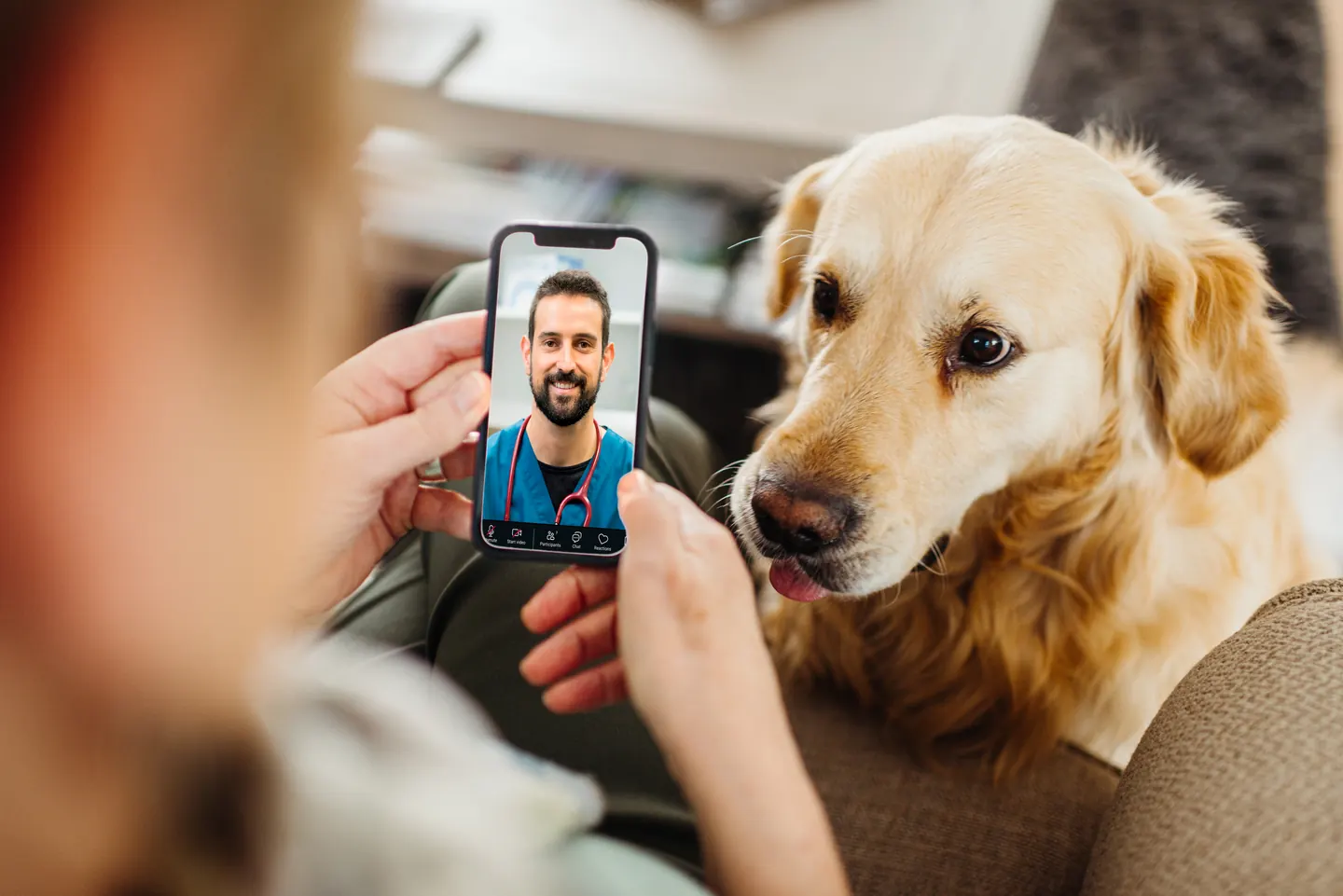
Want a vet's help with your dog's anxiety or behavior?
Talk to a licensed vet at Dutch over video, often the same day. They can recommend treatment and prescribe it when it's appropriate.
Use code Pets60
Plans start at $12/month · covers up to 5 pets
- Licensed vets in most states
- Rx for 150+ conditions
- 4.7 on Trustpilot
How to match a chew toy to your dog's chewing style

The best toy for a dog to chew on is a pliable rubber or thermoplastic chew, sized so your dog cannot fit it entirely behind the back teeth, in a shape that suits how that particular dog destroys things.
For most adult dogs that means a hollow natural rubber toy you can stuff and freeze. It survives sustained pressure, gives slightly under the tooth instead of resisting it, and holds attention long after a plain shape has been abandoned.
Chewing style is more useful than breed or body weight because it describes behaviour you can already see. Look at the last three chew toys for dogs your household has wrecked. The wear pattern tells you which format to buy and which to stop buying.
- 1Chewing style, not breed or body weight, decides which chew toy format survives in your house.
- 2Run the thumbnail test before you buy: if your thumbnail leaves no impression in the surface, the toy is hard enough to fracture a tooth.
- 3Size the toy so your dog cannot fit it entirely behind the back teeth, and move up a size band for a strong-jawed dog at the bottom of a weight range.
- 4Hard nylon and rigid bone-shaped chews are conditional picks for one specific dog under supervision, never a tooth-safe default.
- 5Retire any chew toy at the first missing chunk, crack, splinter, or sharp edge, whatever the guarantee says.
The destroyer
A destroyer destroys toys within minutes. The toy comes apart rather than wearing down: a seam bursts, the squeaker is out inside two minutes, and the stuffing is on the rug before you have finished making coffee.
Damage is spread across the whole toy rather than concentrated in one place. Formats that survive are thick-walled natural rubber, moulded thermoplastic elastomer, and seamless rubber rings. Plush, rope, latex, and thin vinyl are ingestion risks here, not just durability failures.
The gnawer
A gnawer gnaws one spot. Sessions are long and quiet, the dog settles with the toy pinned between both front paws, and after a week you can see a single worn crater rather than general damage.
This is the chewer most exposed to hardness, because steady pressure on one point is what fractures a tooth. Dense but pliable formats survive: thick natural rubber, ridged shapes, and treat-holding tubes. Hard nylon and rigid moulded bones are the wrong answer.
The shredder
A shredder is after the fabric rather than the toy. You will find a shredded plush carcass with the outer layer peeled off, threads pulled out of a rope, and the squeaker extracted and left intact on the floor.
Multi-layer stitched fabric survives a shredder for a while, and hollow rubber survives indefinitely. The real question is not durability but whether the material gets swallowed, because rope fibre and fabric strips are a genuine gastrointestinal obstruction risk.
The gentle chewer
A gentle chewer works a toy without ever trying to open it. Toys last months, the surface picks up tooth marks and nothing else, and the dog will chew the same object for years. Seniors, dogs with worn teeth, and small dogs with fine jaws land here.
This dog does not need a tougher toy and is actively harmed by one. Soft chew toys for dogs with bad teeth are the correct choice rather than a compromise, and the pliable standard applies here without exception.
The four styles side by side
Set the styles against each other and the shopping decision gets much smaller, because each one has a short list of formats that survive it and a short list that fails.
| Chewing style | How the damage looks | Formats that survive | Formats to avoid |
|---|---|---|---|
| Destroyer | Seams burst, squeaker out fast, damage spread over the whole toy | Thick-walled natural rubber, moulded thermoplastic elastomer, seamless rubber rings | Plush, rope, latex, thin vinyl |
| Gnawer | One deep worn crater after long, quiet sessions | Dense pliable rubber, ridged shapes, treat-holding tubes | Hard nylon, rigid moulded bone, real bone, antler |
| Shredder | Outer fabric peeled off, threads pulled, squeaker removed intact | Multi-layer stitched fabric under supervision, hollow food-stuffable rubber | Single-layer plush, loose rope, anything with appendages |
| Gentle chewer | Tooth marks on the surface and nothing else, toys last months | Soft to medium natural rubber, pliable stuffable toys, reinforced plush | Hard nylon, anything that fails the thumbnail test |
Match the format to the style and the pick list further down reads as four short lists rather than one long one.
Chew toy materials, and how long each one lasts

Chew toy material settles two questions at once: how long the toy lasts, and whether it can damage a tooth. Those two run in opposite directions.
The materials that survive longest are the hardest, and the hardest materials are the ones veterinary dentists warn about. That is why shopping for durable dog toys by toughness alone backfires, and why the better standard is hard enough to matter, soft enough to be safe.
The thumbnail test and the kneecap rule
Two rules of thumb published by veterinary dentists settle the hardness question in about five seconds each, and they cost nothing to run in a shop aisle.
- The thumbnail test: press your thumbnail hard into the toy. If it leaves a visible impression, the material will give under a tooth and the toy clears the bar for unrestricted chewing. If your nail slides off the rubber surface without marking it, the toy is harder than a tooth.
- The kneecap rule: tap the toy firmly against your own kneecap. If that would hurt you, it will hurt a tooth.
Neither test is a WebVet invention and neither is a laboratory measurement. Both are long-standing veterinary dentistry rules of thumb, and the professional body behind that guidance is the American Veterinary Dental College.
Failing either test does not make a fracture certain. It raises the probability of a slab fracture of the upper fourth premolar, the large upper carnassial tooth that does the heavy work on a dog's chewing side.
A dog who has chewed the same hard toy for six years without damage has been lucky rather than proven right. That is worth saying plainly, because it is the argument every owner of a hard chew makes. Run both tests on every material below.
| Material | Thumbnail test | Realistic lifespan | Best-suited chewer |
|---|---|---|---|
| Natural rubber, softer formulations | Passes easily | Months to years with a light mouth; an afternoon with a determined power chewer on a thin wall | Gentle chewers, seniors, dogs with worn teeth |
| Natural rubber, firm formulations | Passes | Wears gradually: surface scoring, then gouges, then a torn rim | Destroyers and power chewers |
| Thermoplastic elastomer such as Zogoflex | Passes | Long, but fails by tearing outward from a bite mark rather than wearing evenly | Destroyers, water dogs, dishwasher households |
| Hard nylon | Fails | Longest of any format, but shaves off in fine slivers and holds sharp edges | Conditional only: dogs who swallow pieces of pliable toys, under supervision |
| Layered stitched fabric | Passes, though hardness is not the issue | Outlasts supermarket plush by a wide margin, but every layer is a countdown | Shredders who do not swallow fabric |
| Rope | Passes, though hardness is not the issue | Sheds fibre continuously from first use | Supervised tug sessions only, never a basket toy |
Natural rubber
Natural rubber passes the thumbnail test in almost every formulation sold for dogs, and it sits behind most of the picks below. It deforms under pressure instead of resisting it, which is exactly what you want against a tooth.
It also fails gradually: surface scoring, then shallow gouges, then a torn rim. That is a safety feature, because it gives you something to inspect. Realistic lifespan tracks wall thickness more closely than brand. That gradual wear pattern is the one you want to see on any chew toy.
Thermoplastic elastomer
Thermoplastic elastomer, the family that includes West Paw's Zogoflex, behaves like a firmer rubber. It passes the thumbnail test, holds moulded detail better than natural rubber, floats, and is usually dishwasher safe.
That matters more than it sounds once a toy has been stuffed with food. Zogoflex tends to fail by tearing outward from a single bite mark, so inspect the edges of any dent rather than the surface around it.
Hard nylon
Hard nylon is the material this whole argument is about. It fails the thumbnail test, it fails the kneecap rule, and it is routinely sold to owners of a heavy chewer without any mention of teeth.
Nylon does not wear down so much as shave off in fine slivers the dog swallows, and it holds its edges, so a well-used nylon bone often ends up with a chisel-shaped point.
It does last, and for a dog who swallows pieces of everything softer that longevity is a real argument rather than a marketing one. It is a conditional argument, and the conditions are in the pick list.
Rope and layered fabric
Rope and layered fabric are not hardness problems, they are ingestion problems. A rope toy sheds fibre continuously, and swallowed strands can behave as a linear foreign body, one of the more serious obstruction patterns a vet has to deal with.
Multi-layer stitched fabric toys of the kind Tuffy builds survive far longer than a supermarket plush, but they are still fabric. Both belong to supervised sessions that end when you pick the toy up, not to the toy basket.
What can a dog chew on for hours?

A dog can chew for hours on a hollow rubber toy that has been stuffed and frozen. That is the honest answer, and it is a preparation answer rather than a product answer.
An empty rubber toy holds most dogs for a few minutes. The same toy packed with something worth working for and frozen solid holds that dog for a genuinely long session, because the reward comes out slowly and the cold soothes the gums. Freezing and stuffing a rubber toy is the cheapest way to extend chew time, and it works on every hollow pick below.
Fill it with any of the following, then freeze it upright in a mug:
- Part of the dog's own daily kibble, softened with a little water.
- A spoonful of dog-safe wet food, or plain canned pumpkin with no added spice.
- The small soft training treats you already keep in the cupboard.
Keep the filling inside the daily calorie allowance rather than on top of it. For a dog who inhales every meal in under a minute, a stuffed toy doubles as a slowdown, and a slow feeder bowl handles the same problem at mealtimes.
Rotation extends a session too, and it is free. Three toys kept out of reach and swapped every few days will out-hold nine toys permanently available. If your dog needs occupation rather than chewing, our interactive dog toys and dog puzzle toys guides cover the formats that hold attention longest.
Toys and objects that are too hard to chew safely

Dogs should not chew on anything that fails both hardness tests. In practice that is a short and specific list, and most of it is not sold as a toy at all.
- Real bones, cooked or raw, sawn or whole. Bone is harder than tooth, and cooked bone splinters.
- Antlers, split or whole, and dried hooves.
- Rigid moulded plastic bones, and any toy that rings rather than thuds when tapped on a table.
- Ice cubes and stones, both of which come up far more often than they should.
- Hard nylon chews used as an unsupervised default rather than a supervised, conditional choice.
- Sticks, which splinter lengthways and puncture the mouth and throat.
The mechanism is the same every time. The dog works the object back onto the carnassial teeth, pins it there, and applies close to full jaw pressure to something that will not give. What gives instead is a piece of the tooth.
That is a slab fracture. It usually exposes the pulp, and the treatment is extraction or root canal work by a veterinary dentist rather than anything that heals on its own.
Bones deserve their own warning because they stack a second risk on top of the dental one: obstruction and perforation from swallowed fragments. The full case against bones for dogs is worth reading before the next trip past a butcher's counter.
Chewing itself is normal canine behaviour rather than a fault. Owner guidance from sources such as the Merck Veterinary Manual owner pages frames destructive chewing as a need to be redirected rather than suppressed, which is the entire job of this guide.
A longer veterinary safety standard sits behind all of this, covering what vets actually recommend dogs chew on, how supervised chewing works in practice, and what to do when a piece goes missing. Our dedicated chew safety guide carries that in full. The short version, which the rest of this article applies without exception:
- Pliable beats hard. Anything that fails the thumbnail test is a conditional choice at best.
- Supervised beats unattended. A chew session ends when you pick the toy up, not when the dog gets bored.
- Inspected beats assumed. Check the toy after the session rather than assuming it survived.
Getting the size right for a small, medium, or large dog

Size a chew toy so your dog cannot fit the whole thing behind the back teeth. That rule beats the weight band printed on the package every time, because the package is guessing at your dog and you are looking at it.
If a toy disappears entirely into the mouth it can be swallowed or lodged, and no amount of durability fixes that. The reverse failure is real but far less dangerous: a toy that is much too large simply gets ignored.
You are aiming for the largest size your dog can actually carry and settle down with. Use the weight band below as a starting point, then adjust for the dog in front of you.
| Dog weight band | Typical toy size | The check that actually matters | Move up a band when |
|---|---|---|---|
| Under 10 lb | Extra small or small | The toy will not pass behind the back teeth, and the dog can still carry it | The dog is a destroyer, or shares toys with a bigger dog |
| 10 to 25 lb | Small | Part of the toy stays visible when the dog holds it in the mouth | Broad head, heavy jaw, or terrier-style determination |
| 25 to 50 lb | Medium | The toy cannot be worked entirely behind the carnassial teeth | The dog is a gnawer or a destroyer rather than a gentle chewer |
| 50 to 90 lb | Large | The toy is too wide to be swallowed if it comes free suddenly | Bully breeds and heavy-jawed working crosses at the bottom of the band |
| Over 90 lb | Extra large or giant | Ball shapes in particular are wider than the back of the throat | Almost always, for balls and round shapes specifically |
When to move up a size band
Buy the next size band up whenever any of the following is true, and treat it as the default rather than an upgrade.
- Your dog sits in the bottom third of a weight band but has a broad head and a heavy jaw. Bully breeds, many terriers, and most working crosses should buy above their body weight.
- Your dog is a destroyer or a gnawer rather than a gentle chewer.
- Your dog shares a toy basket with a bigger dog, in which case buy for the bigger dog and supervise the smaller one.
- The toy is a ball or any round shape, which is the shape most likely to lodge at the back of the throat.
The cost of going one band up is that the toy is slightly less comfortable to carry. The cost of going one band down is an emergency. That asymmetry is the whole argument.
Small dogs are not scaled-down large dogs
A ten-pound terrier generates more than enough force to open a toy built for its weight band, and dog chew toys for small dogs are often built to a lower durability standard on the assumption that small means gentle.
If your small dog is a destroyer, buy the medium version of a pliable rubber toy rather than the toughest small one, and check it is still light enough to carry.
The logic runs the other way too. Dog chew toys for large dogs are usually right on hardness and wrong on shape, because the shapes that scale up best are the ones a large dog can most easily pin against the back teeth. Putting two sizes side by side settles it faster than any chart.
 Sponsored
Vet care that's always there
Unlimited video calls and messaging with licensed vets for less than a typical vet visit. One membership covers up to five pets.
Use code Pets60
Plans start at $12/month · covers up to 5 pets
- Licensed vets in most states
- Rx for 150+ conditions
- 4.7 on Trustpilot
Our picks: the best dog chew toys by chewing style

Give a dog who loves to chew a pliable rubber or thermoplastic toy in the largest size it can comfortably carry, stuff it with food, freeze it for long sessions, and rotate two or three rather than leaving one down permanently.
We did not destroy these toys in a laboratory and will not pretend otherwise. Each is a researched, vet-informed selection filtered through published material specifications, the maker's own safety design, and the hardness standard set out above.
The nine picks are grouped by the four chewing styles, so read the group that matches your dog and skip the rest. Two of the nine fail the thumbnail test, and those two carry conditions rather than a recommendation. If you arrived from the shopping product carousel at the top of a search, this is the same shelf sorted by chewing style instead of by price.
KONG Classic
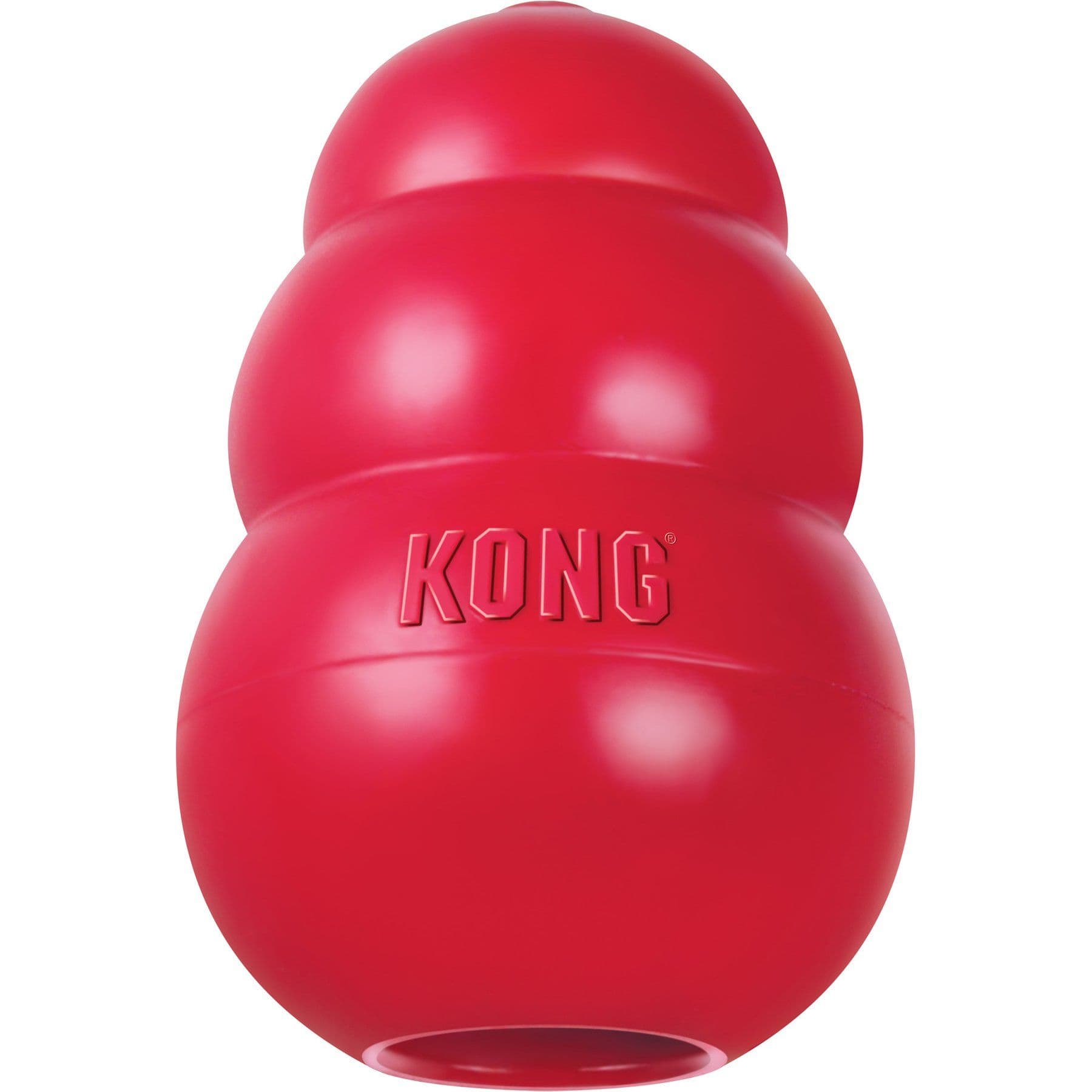
The red natural rubber cone that passes the thumbnail test and turns a five-minute toy into an hour of work once it is stuffed and frozen. Buy the largest size your dog can carry.
Webvet may earn a commission when you click through to Chewy, at no extra cost to you.
Best for: average chewers, gentle chewers, and anyone who wants a genuinely long session.
The red natural rubber cone that everything else in this category gets compared against, and it earns that on its stuffing cavity rather than on toughness. The hollow centre turns a five-minute toy into an hour of work once it is stuffed and frozen.
- Material: natural rubber in the mid-firmness formulation, hollow through the centre.
- Thumbnail test: passes comfortably.
- Watch for: a genuine power chewer will eventually open the narrow end. Buy the largest size your dog can carry rather than the size printed for its weight.
KONG Extreme
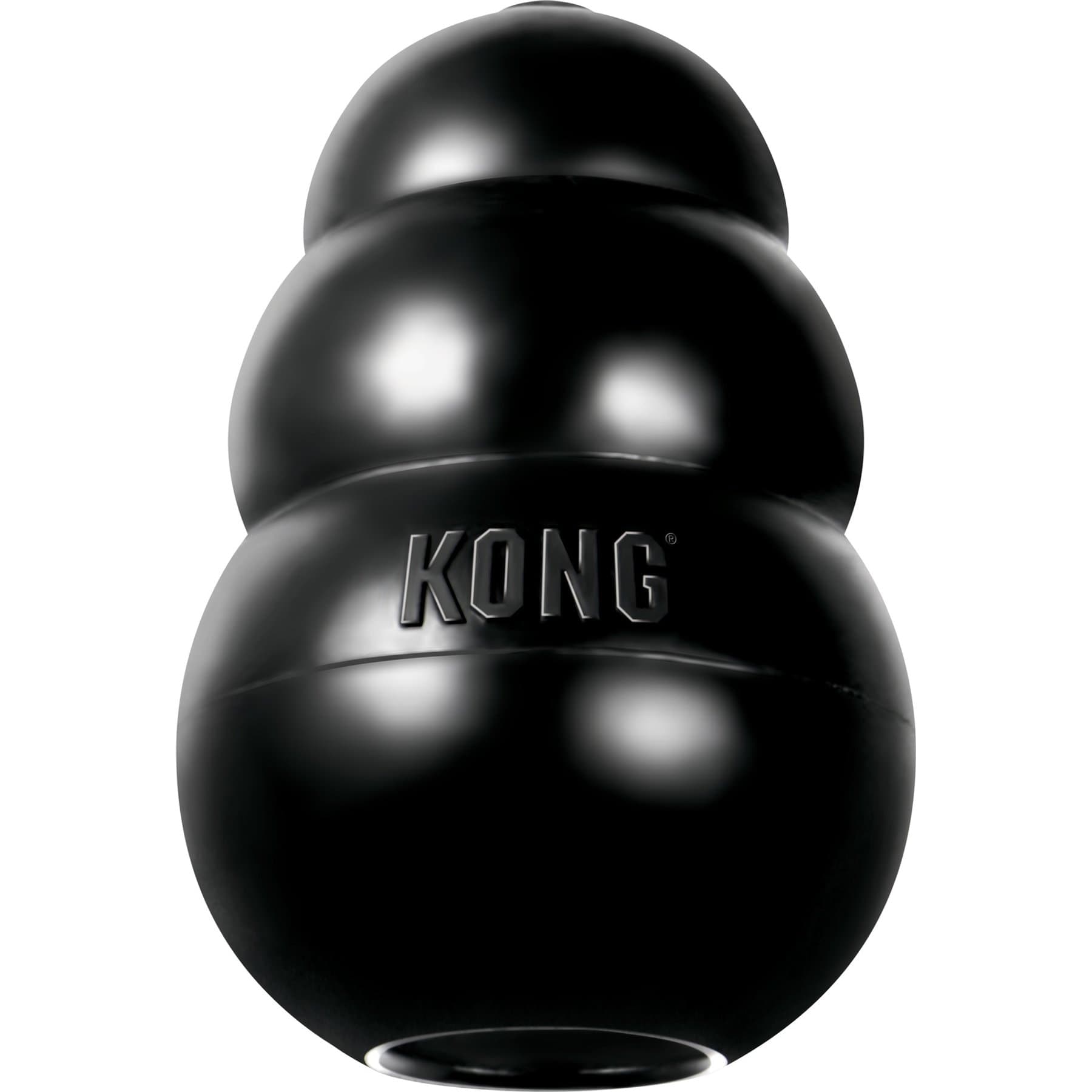
KONG's firmest rubber in the same hollow shape: denser rather than tooth-hard, so a destroyer who has opened a Classic gets more sessions without crossing the hardness line.
Webvet may earn a commission when you click through to Chewy, at no extra cost to you.
Best for: power chewers who wreck pliable toys but do not swallow the pieces.
The black version of the same cone in the firmest rubber compound in the line, and the pick for a destroyer who has already gone through a Classic. It buys durability by being denser rather than by being hard enough to threaten a tooth, and it stuffs and freezes identically.
- Material: KONG's firmest rubber formulation, in the same hollow shape.
- Thumbnail test: passes.
- Watch for: firmer rubber tears outward from a bite mark rather than wearing evenly, so check the rim of any dent. No rubber toy is indestructible, whatever the packaging beside it claims.
West Paw Zogoflex Hurley
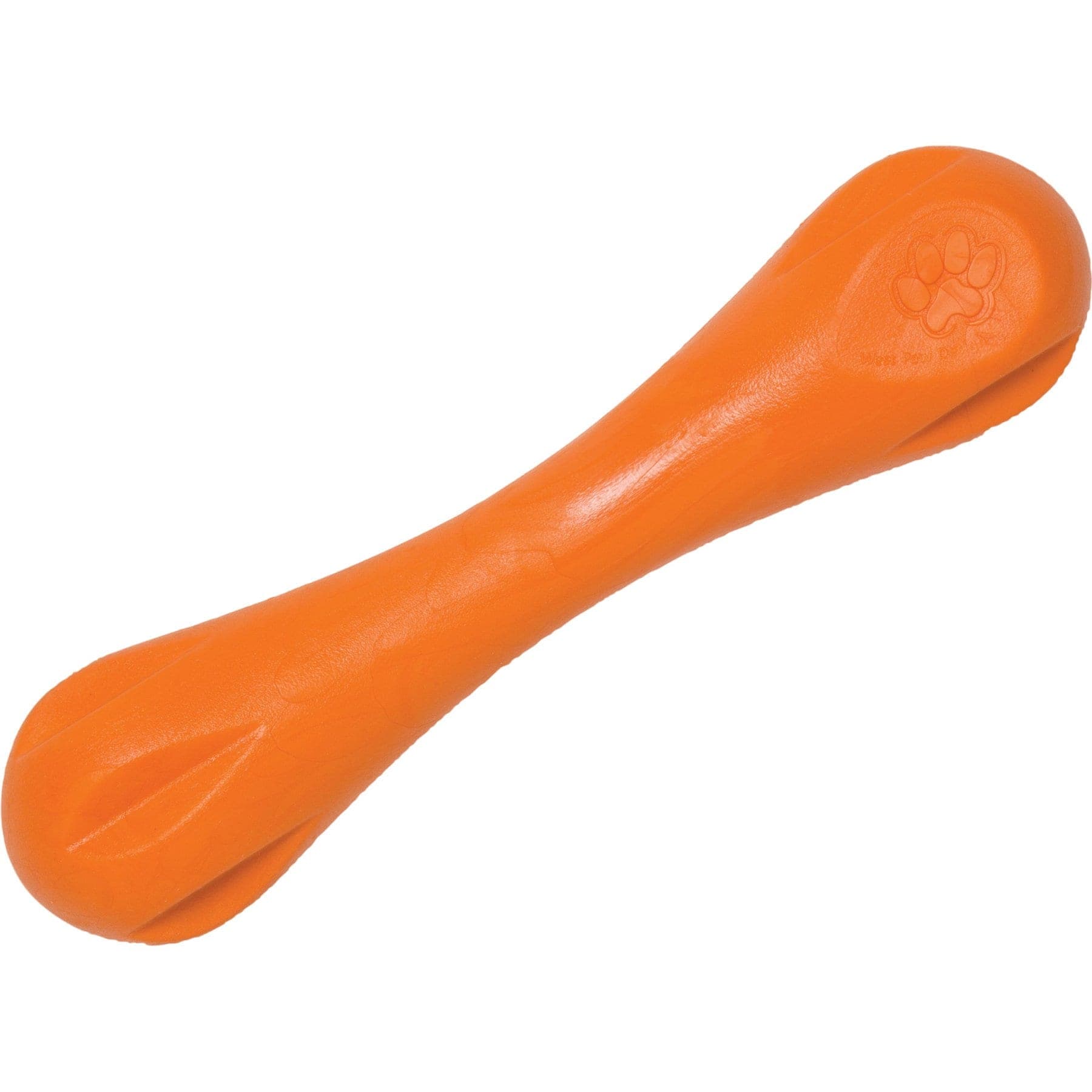
A moulded Zogoflex bone that floats, goes in the dishwasher, and stays easy to grip when wet. Pair it with a stuffable toy, since it has no cavity of its own.
Webvet may earn a commission when you click through to Chewy, at no extra cost to you.
Best for: destroyers, water dogs, and households that want a toy they can put in the dishwasher.
A moulded bone shape in Zogoflex, West Paw's thermoplastic elastomer. It floats, it is dishwasher safe, and it holds moulded detail better than natural rubber, so it stays easy to grip when wet.
- Material: Zogoflex thermoplastic elastomer, solid throughout.
- Thumbnail test: passes.
- Guarantee: West Paw publishes a replacement policy on the Zogoflex range that replaces a destroyed toy once. That is a purchase term worth knowing about, not a safety claim.
- Watch for: no cavity, so it will not hold a dog the way a stuffable toy does. Pair it with a stuffable toy rather than making it the only option in the basket.
West Paw Zogoflex Qwizl
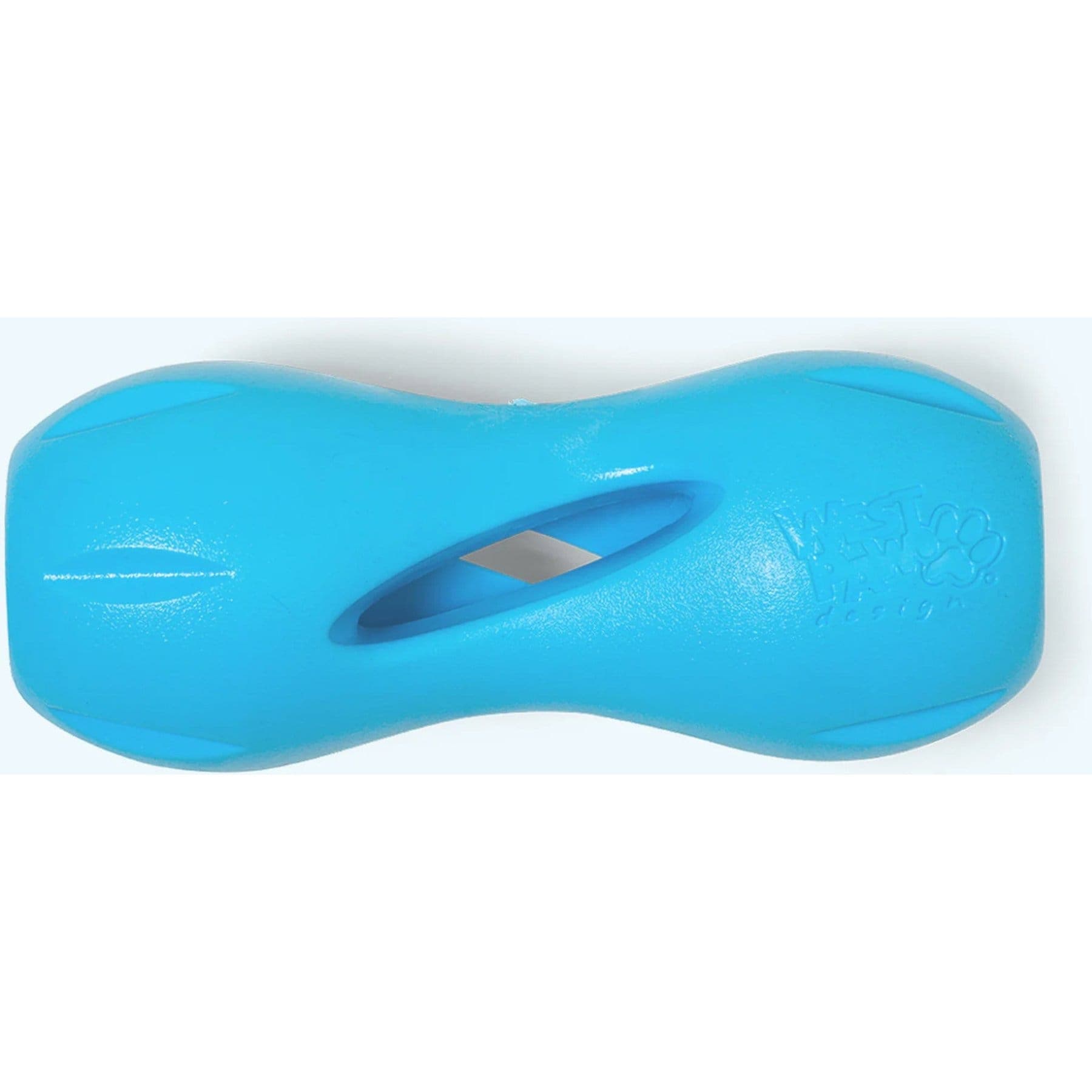
A slotted Zogoflex tube that holds a soft chew and releases it slowly, so a gnawer's reward sits exactly where the pressure already is. Inspect both ends of the slot after long sessions.
Webvet may earn a commission when you click through to Chewy, at no extra cost to you.
Best for: gnawers, and any dog who needs the reward in the same place it is already working.
A curved Zogoflex tube with a slot down one side, designed to hold a soft chew or a smear of food and release it slowly. For a dog who gnaws one spot for an hour, that architecture puts the payoff exactly where the pressure already is.
- Material: Zogoflex thermoplastic elastomer, slotted tube.
- Thumbnail test: passes.
- Watch for: the slot is the structural weak point. Inspect both ends of it after every long session and retire the toy if either has torn through.
GoughNuts Original Ring
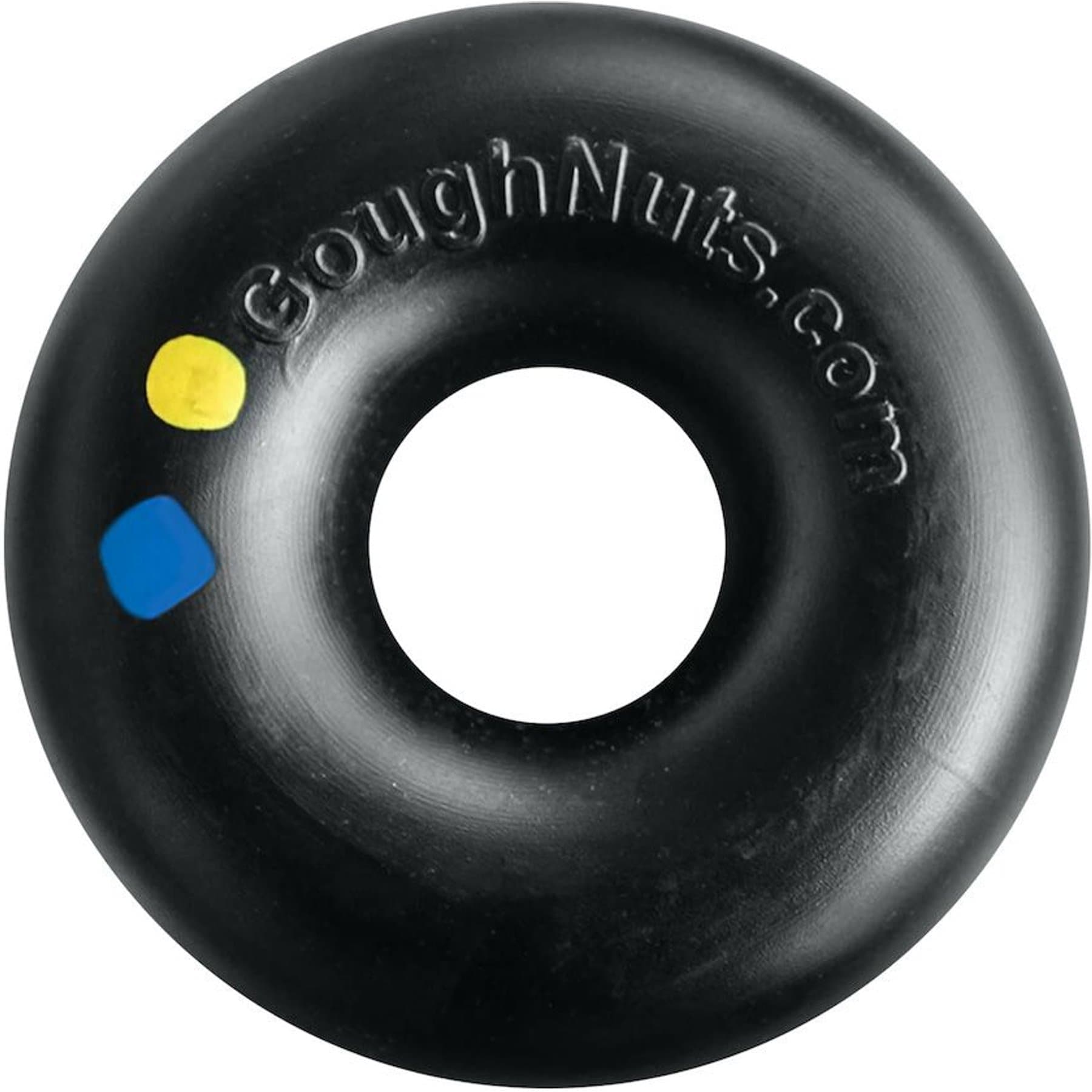
Solid natural rubber ring with a red inner layer: when red shows, the toy has failed its inspection and comes out that day. Heavy, awkward to pin on the back teeth, and built for power chewers.
Webvet may earn a commission when you click through to Chewy, at no extra cost to you.
Best for: destroyers and power chewers whose owners want an inspection cue built into the toy.
A solid natural rubber ring with a red inner layer sitting under a black outer layer. The design intent is genuinely useful: if the dog chews through far enough to expose red, the toy has failed its inspection and comes out of circulation immediately.
- Material: solid natural rubber, two layers, with a red safety indicator layer.
- Thumbnail test: passes.
- Guarantee: GoughNuts publishes a replacement policy tied to that red indicator.
- Watch for: it is heavy and it does not stuff, so treat it as a chewing tool rather than an all-purpose toy. The ring shape is deliberately awkward to pin against the carnassial teeth.
Planet Dog Orbee-Tuff Strawberry
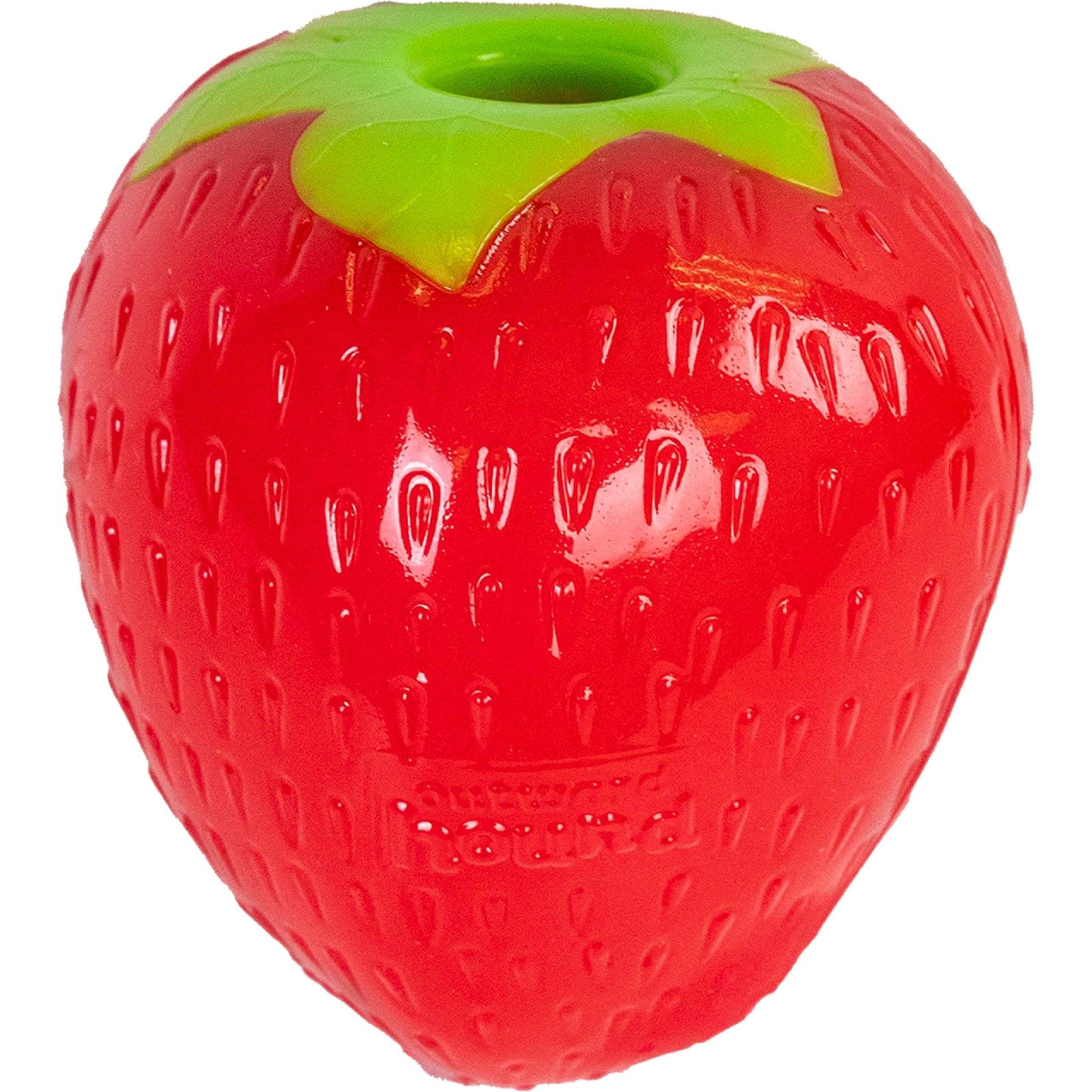
A soft Orbee-Tuff treat toy for gentle chewers, seniors, and worn teeth: it stays on the pliable standard with no exceptions. One 3-inch size, so it suits small and medium dogs only.
Webvet may earn a commission when you click through to Chewy, at no extra cost to you.
Best for: gentle chewers, seniors, and dogs with worn or previously damaged teeth.
A soft, slightly tacky, mint-scented Orbee-Tuff compound moulded as a strawberry, with a dimpled surface for grip and a small opening that takes a treat. It is on this list precisely because it is soft: dogs with worn or damaged teeth stay on the pliable standard with no exceptions, and this is what that standard looks like in a ball-sized toy.
- Material: Orbee-Tuff compound, with a dimpled, strawberry-textured surface.
- Thumbnail test: passes easily.
- Watch for: it is not a power chewer's toy and is not sold as one. It comes in one 3-inch size, so it suits small and medium dogs only; a larger gentle chewer needs a bigger Orbee-Tuff shape that cannot pass behind the back teeth.
Tuffy Ultimate Ring
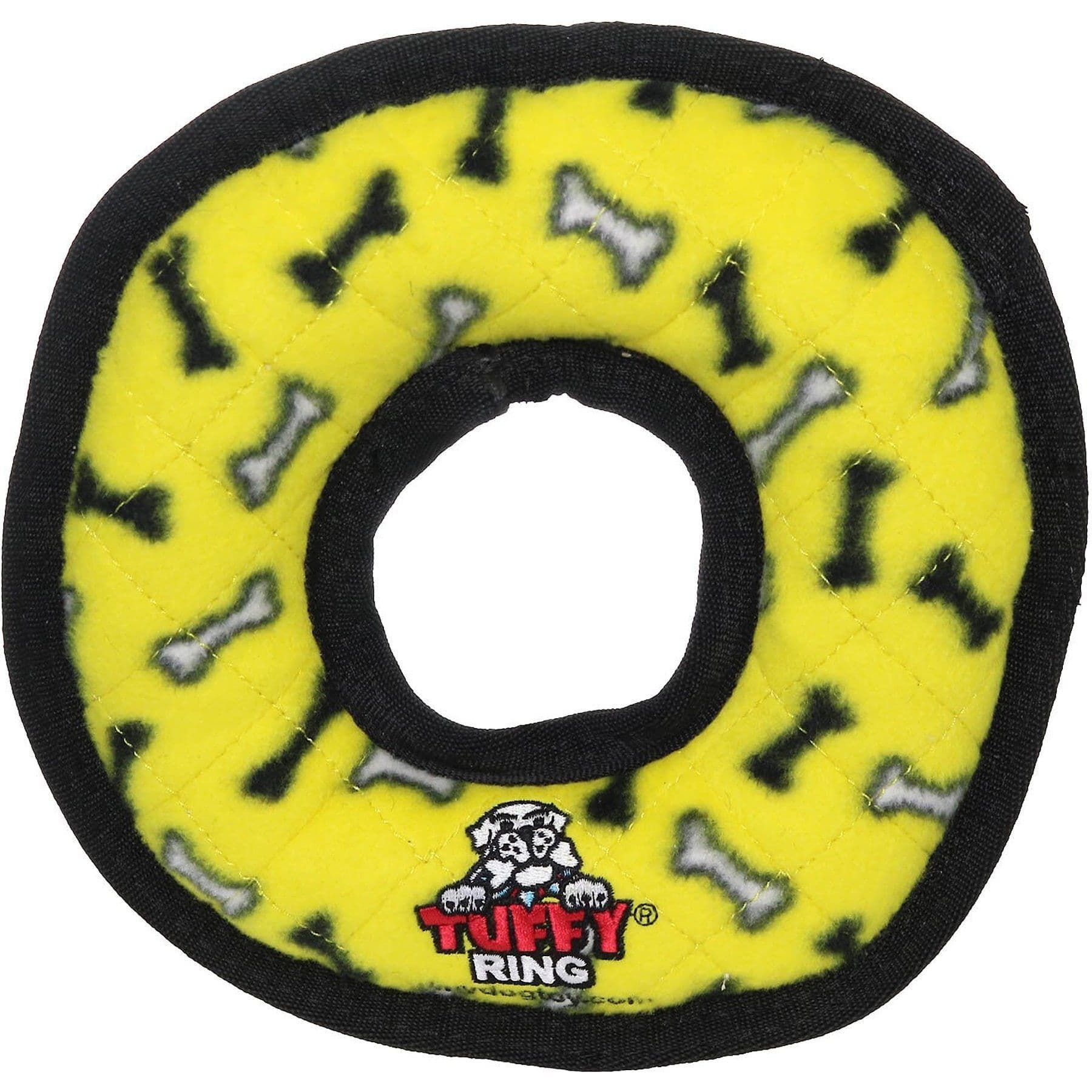
Layered fabric with multiple rows of stitching and no limbs for a shredder to target. Supervised sessions only, and retire it the moment an inner layer shows.
Webvet may earn a commission when you click through to Chewy, at no extra cost to you.
Best for: shredders who play with fabric but do not swallow what comes off.
Tuffy builds layered fabric toys from multiple material layers and rows of stitching, and rates its own range on a published durability scale. The ring shape removes the seams, ears, and limbs a shredder normally targets first.
- Material: multiple stitched fabric layers, no stuffing to release.
- Thumbnail test: not applicable, since fabric is soft on teeth by definition.
- Watch for: the condition is absolute. Layered fabric is only safe for a dog who does not swallow fabric. Use it in supervised sessions, put it away afterwards, and retire it the moment an inner layer is exposed.
Benebone Wishbone
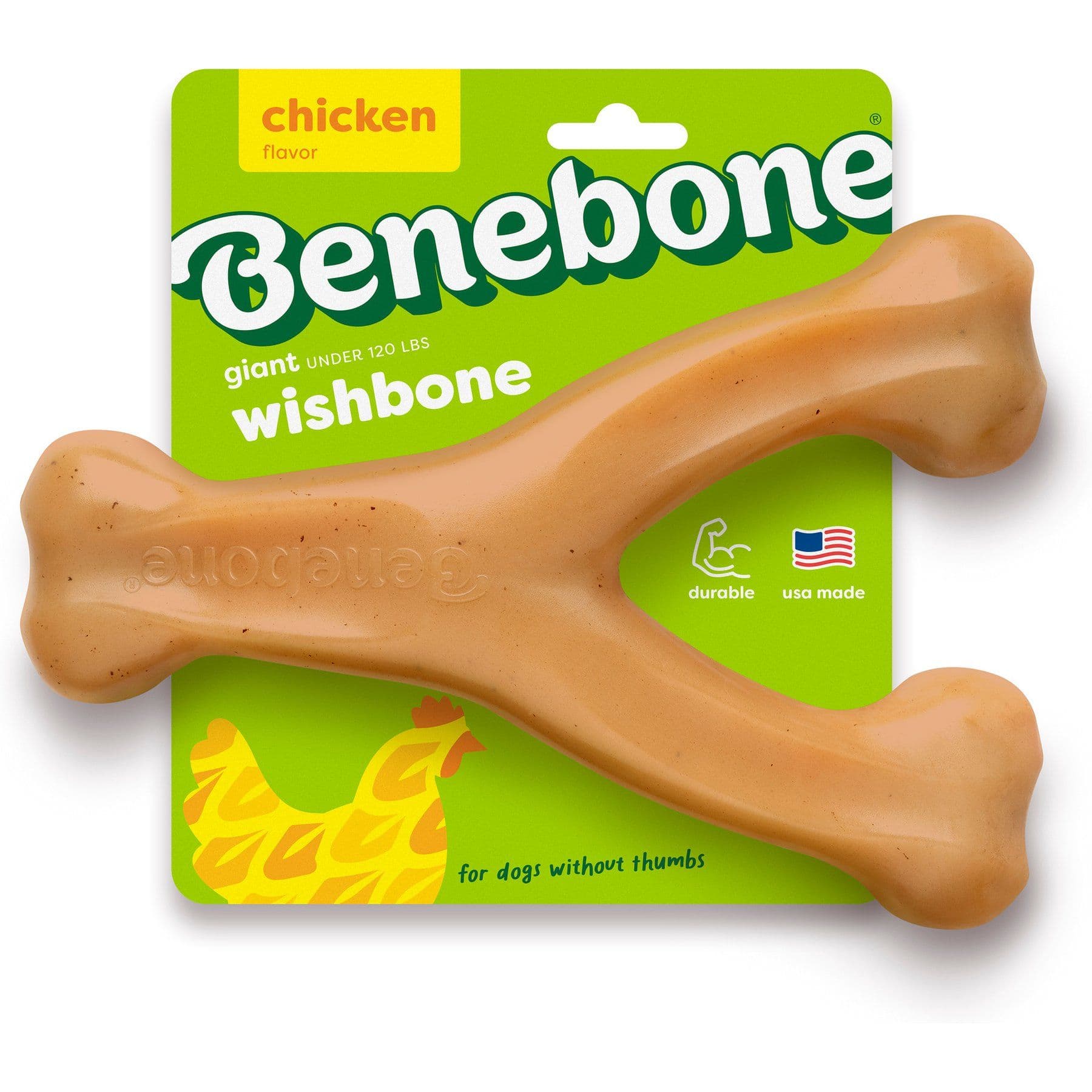
Flavoured hard nylon a dog can pin under a paw. It fails the thumbnail test, so it is a supervised, conditional pick for dogs who destroy and swallow pliable toys, never the household default.
Webvet may earn a commission when you click through to Chewy, at no extra cost to you.
Best for: one narrow case, under strict conditions, and never as the household default.
Hard nylon with flavour worked through the material and a wishbone shape designed so a dog can pin one arm under a paw. Stated plainly: it fails the thumbnail test.
Nylon is harder than tooth enamel, and a dog who works it onto the upper carnassial tooth under full jaw pressure can suffer a slab fracture. That risk is real without being certain, and a dog who has chewed one for years without damage does not disprove it.
- Material: hard nylon, flavoured through the body of the toy.
- Thumbnail test: fails.
- Why it is here at all: for a dog who destroys and swallows pliable toys, where the ingestion risk is the larger of the two, and only under the conditions below.
Nylabone Power Chew
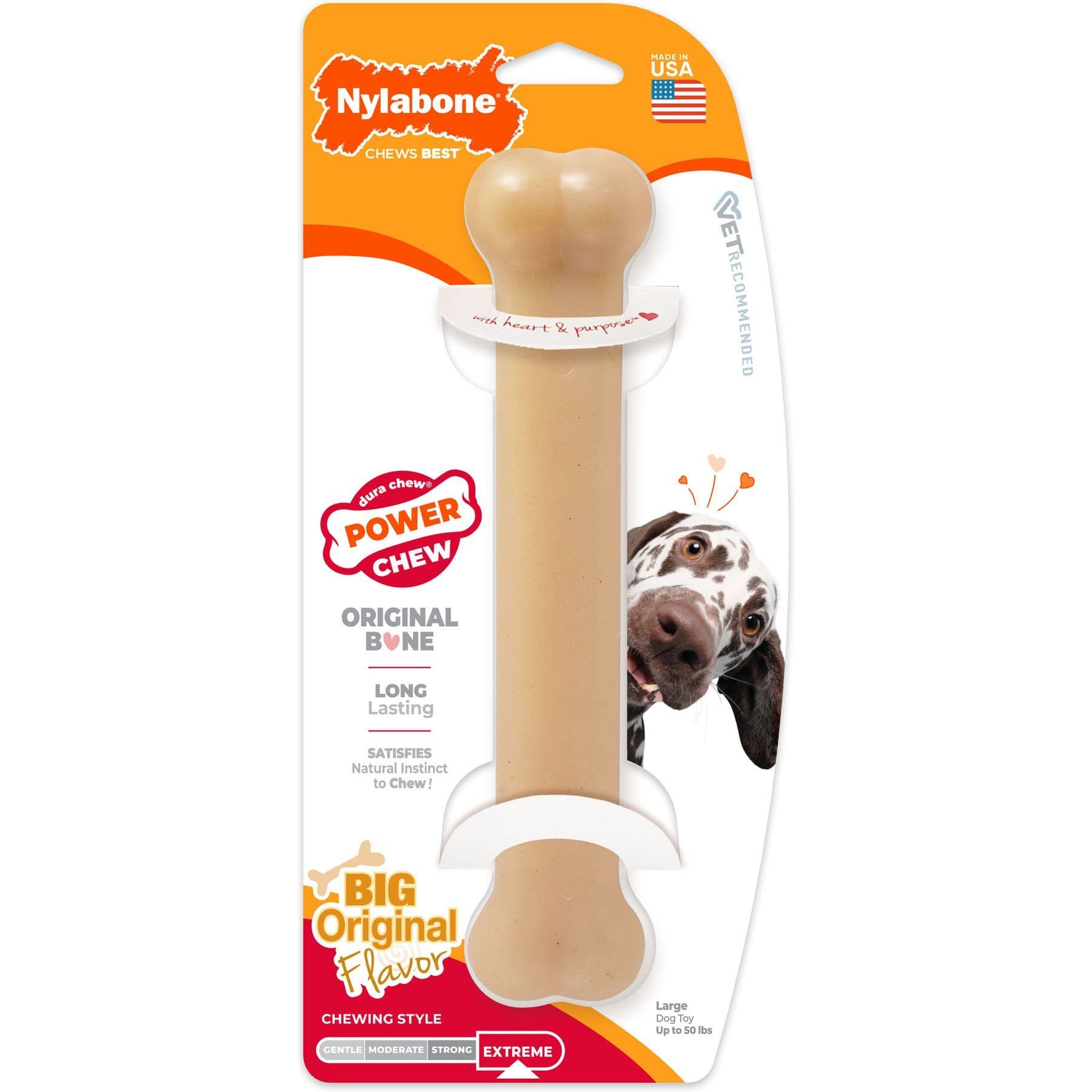
Nylabone's durable nylon line for the same narrow case as the Benebone: supervised sessions, a dog with sound teeth, sized so it cannot be pinned on the carnassials, retired at the first crack.
Webvet may earn a commission when you click through to Chewy, at no extra cost to you.
Best for: the same narrow case as the Benebone, with the same conditions attached.
Nylabone's durable nylon line, and the toy most often handed to a dog labelled a heavy chewer by default. It also fails the thumbnail test, and nylon shaves off in fine slivers rather than wearing smooth, so a well-used one can carry a chisel edge.
Neither of these two nylon picks is a tooth-safe default, and neither should be presented as one. If you choose either, these conditions are not optional extras.
- Supervised chewing only, in the same room: never in a crate, never unattended, never overnight.
- The dog has no existing dental disease and no worn, chipped, or previously fractured teeth. Seniors and dogs with worn teeth stay on the pliable standard with no exception.
- The toy is sized and shaped so the dog cannot work it back onto the carnassial teeth and pin it there under full jaw pressure.
- Sessions are short and ended by you, rather than a toy left down all day.
- The toy is inspected after every session and retired at the first crack, splinter, gouged edge, or missing piece.
A dog who destroys and swallows pliable toys faces a real ingestion risk, and a harder toy used under those conditions is a narrowed-risk choice for that one dog. It is not a contradiction of the hardness standard, and it is not permission to ignore it.
Toys for genuine power chewers
A genuine power chewer is a narrower category than the shopping listings suggest. Most dogs labelled aggressive chewers are ordinary destroyers who have been given the wrong toys. A true power chewer opens a firm rubber toy inside a single session, repeatedly, across more than one brand.
A tough chewer needs a tougher format, not a harder one, and that distinction is the whole safety argument. If your dog qualifies, the hardness standard does not change, but guarantee terms and built-in inspection cues start to matter more than shape.
Our guide to indestructible dog toys for aggressive chewers works through that shortlist and the claims behind it.
Where KONG fits
KONG appears twice in the pick list because the line covers different dogs, not because one toy does everything. The colour tiers are a rough hardness ladder rather than a marketing scheme: the puppy formulation is softest, the red Classic is the general-purpose middle, and the black Extreme is firmest.
All of them pass the thumbnail test, which is why the line turns up so often in vet-adjacent recommendations. Choosing between shapes and sizes inside each tier is a longer job than this article can do properly, and our KONG toys guide takes it on directly.
Toughest toy brands at a glance
Three brands come up constantly once the conversation turns to toughness, and they solve the problem in three different ways.
- West Paw: moulded thermoplastic elastomer, backed by a published replacement policy.
- GoughNuts: solid natural rubber with a red indicator layer that tells you when the toy has failed.
- Tuffy: layered stitched fabric, rated on the maker's own durability scale.
Those are different products aimed at different chewing styles, and ranking them on a single toughness number misses what separates them. Our head-to-head comparison of Tuffy, West Paw, and GoughNuts sets them against each other properly.
Chuckit! sits outside that group. Its rubber balls are built for fetch first and chewing second, so treat them as supervised fetch equipment rather than basket chews left down all day.
When to throw a chew toy away, and what a lifetime guarantee covers

Throw a chew toy away the first time it fails one of four checks, and go through the whole basket once a week rather than waiting to notice something. Only one of the four needs to be true.
A retirement trigger is a binary rather than a judgement call about how much life is left. The one owners most often talk themselves out of is a missing chunk, because the toy still looks fine from the other side and the piece has usually already been swallowed.
Treat a piece you cannot find as a piece that went down, and watch for vomiting, loss of appetite, or straining over the following days.
Inspect a hard nylon chew after every session and everything else once a week, squeezing pliable toys rather than eyeballing them. If you are unsure whether a swallowed fragment matters, treat it as a phone call rather than a wait-and-see, which is what owner guidance such as VCA's pet health library advises. Those four checks are the retirement criteria for a worn or damaged chew toy, and they do not soften for an expensive one.
What a lifetime guarantee actually covers
A lifetime guarantee on a chew toy is a replacement policy, not a safety claim, and it should be read as a purchase term. The details vary a great deal between brands, so read the actual terms before paying a premium for the promise.
- Usually covered: one free or discounted replacement of a toy the dog has destroyed, often inside a stated window.
- Usually required: proof of purchase, and sometimes the return of the damaged toy.
- Never covered: a veterinary bill for a swallowed piece, or any implication that a damaged toy is safe to leave down.
A manufacturer who publishes a guarantee is making a durability bet, which is a reasonable signal they expect the toy to survive real use. Guarantee-led shoppers will get more out of our indestructible dog toys guide, which works through which claims mean what.
Chew toys versus edible dental chews
A chew toy is played with. An edible dental chew is eaten. That single distinction settles most of the confusion in this category, and getting it wrong is what sends owners reaching for the hardest objects in the shop.
Edible dental chews are food. They carry calories, they are consumed rather than played with, they are gone by the end of the session, and their claim is about plaque and tartar rather than durability. A chew toy carries no calories, survives the session, and does its dental work incidentally.
Dogs benefit from both jobs being done, and neither replaces toothbrushing or a professional veterinary dental. If you are shopping for the edible kind, our guide to vet recommended dog dental chews covers what the evidence supports and what it does not. Keep edible chews out of the toy basket.
The healthiest thing a dog can chew
The healthiest thing a dog can chew is a pliable rubber toy that passes the thumbnail test, stuffed with part of the dog's own daily food and frozen. It carries no fracture risk, no obstruction risk from fragments, and no calories beyond what you put inside it.
That answer disappoints anyone who wanted a consumable, so here is the honest ranking underneath it.
- A stuffed and frozen pliable rubber toy comes first, because it is the only option with no fracture and no fragment risk at all.
- Softer edible chews a dog can genuinely break down come second, counted against the daily calorie budget rather than added on top.
- Rawhide, hooves, antlers, and bones come last, and the final three are on the avoid list further up this page.
If you want the consumable end handled properly, our guide to healthy dog treats and natural chews covers formats and portions. Whichever you choose, chewing is normal behaviour and enrichment rather than a problem to stamp out, and the goal is to give it somewhere safe to go.
Puppies and teething
Puppy teething is a different problem with a different jaw and a different timeline, and most of the picks above are wrong for it. A teething puppy has deciduous teeth that are actively loosening and needs relief rather than a workout.
The short version is everything soft, everything the puppy cannot get a piece off, and nothing hard. A frozen damp flannel and the softest formulation of a hollow rubber toy do more for a sore mouth than any durable chew.
A puppy should never be handed a hard nylon chew on the theory that it will last longer. Our puppy teething toys guide covers the timeline, the right formats at each stage, and what to avoid. For everything beyond teething, our best dog toys for puppies guide covers the first year stage by stage.
Dog chew toy questions
Frequently Asked Questions
Can a chew toy break my dog's teeth?
Yes. Hard chew toys are one of the more common causes of dental fracture in dogs, and the mechanism is specific. The dog works a hard object onto the upper fourth premolar, the large upper carnassial tooth, pins it there, and applies close to full jaw pressure. A piece of the tooth shears off.
That is a slab fracture. It usually exposes the pulp and it hurts, even though most dogs hide it and carry on eating. Any toy that fails the thumbnail test can do this, including hard nylon chews, rigid plastic bones, real bone, antlers, and hooves.
If one of those is in the house, take it out of circulation and look at the large upper back teeth on both sides for a chipped, flattened, or discoloured surface. A veterinary dentist is the right person to assess anything you find.
How long should a chew toy last before I replace it?
There is no useful answer in weeks, because a gentle chewer and a power chewer get wildly different life out of the same toy. Replace on condition rather than on the calendar: check the whole basket once a week, and check a hard chew after every session.
Retire it immediately if you find a missing chunk, a crack or split a tooth can get into, a sharp edge or chisel point, or an exposed safety indicator layer. Any one of those four is enough. Squeeze pliable toys while you inspect them, because a split that closes at rest opens under pressure.
Are rawhide and antlers chew toys?
No, and they fail in opposite directions. Rawhide is a consumable: it is consumed rather than played with, it softens and comes off in swallowable pieces, and those pieces are a choking and obstruction risk rather than a durability question.
An antler is bone. It fails the thumbnail test and the kneecap rule outright, and a split antler leaves an edge that splinters into shards. Both are on the avoid list in this guide. If your dog wants something to consume, pick a softer edible chew it can genuinely break down.
Is a lifetime guarantee on a dog chew toy worth anything?
It is worth something as a purchase term and nothing as a safety claim. A lifetime guarantee is a replacement policy: it usually covers one replacement of a destroyed toy, often inside a stated window, and often requires proof of purchase or the return of the damaged toy.
Read the actual terms before paying a premium for the promise, because they vary a great deal between brands. What no guarantee covers is a veterinary bill from a swallowed piece, and no guarantee makes a damaged toy safe to leave down while a replacement is in the post.
Why does my dog destroy every chew toy within minutes?
Usually it is one of two things, and they need opposite solutions. If the dog is genuinely powerful and works methodically through firm rubber, that is jaw strength, and the answer is a tougher format in a larger size.
If the dog attacks a new toy in a frenzy, loses interest the second it is opened, and does the same to the skirting board, that is under-stimulation. A tougher toy will not fix it. Add exercise, sniffing work, and food puzzles before you add durability.
Toy rotation helps in both cases: keep most toys put away and swap two or three every few days, because a familiar toy that reappears is more interesting than a new one that never leaves. Destructive chewing that starts suddenly in a previously settled adult dog is worth raising with your vet.
The bottom line
Start with the dog. Work out whether you have a destroyer, a gnawer, a shredder, or a gentle chewer, then match the format to that behaviour rather than to a toughness claim printed on a package.
Run the thumbnail test on anything you are about to buy and put it back on the shelf if your nail leaves no mark. Buy the largest size your dog can comfortably carry, stuff it, freeze it, rotate it, check it weekly, and retire it the first time it fails an inspection. If chewing is only part of your dog's day, our best dog toys roundup sorts fetch, tug, squeaky, and plush picks by play style.

Editor
The Webvet Editorial Team is the in-house group of pet-care editors and writers behind Webvet, operated by Smart Pet Collective. The team researches, writes, and maintains Webvet's pet health, behavior, and medication content. Every article follows a defined editorial process: research from reputable veterinary and scientific sources, careful drafting, mandatory review of medical content by a credentialed veterinarian, and dated publication. Health and medication articles are medically reviewed by a licensed veterinary professional before they go live and are kept current over time.


