Bully Sticks for Dogs: Are They Safe, and the Best Ones to Buy
Bully sticks are a single-ingredient beef chew most dogs can enjoy with supervision, but they carry real calories, a choking risk at the last piece, and a bacteria question. How to give them safely, which size fits your dog, and our picks.

BVMS MRCVS

This article contains affiliate links. Webvet may earn a commission when you buy through them, at no extra cost to you.
Bully sticks for dogs: what they are, whether they are safe, and how to give one safely
Bully sticks for dogs are dried beef pizzle, the bull or steer penis, sold as a single-ingredient chew. Most healthy adult dogs can have one with supervision, as long as the stick is sized to the dog and taken away before the last piece is small enough to swallow.
They are not risk-free. A study of bully sticks for dogs published in the Canadian Veterinary Journal found real calories in every stick and bacteria on some, and they do not replace brushing or a chew accepted by the Veterinary Oral Health Council (VOHC).
- 1Know what a bully stick is made of: dried beef pizzle, one ingredient, no hide.
- 2Count the calories per stick: researchers measured 9 to 22 calories per inch.
- 3Supervise every chew and take the last piece away before it can be swallowed.
- 4Wash your hands after handling, because some sticks carry bacteria.
- 5Bully sticks are a treat, not dental care; brushing and VOHC-accepted chews do that job.
How to give one safely comes down to a short routine:
- Match the stick to the dog: thin for small mouths, thick and long for big dogs and power chewers.
- Stay in the room while the dog chews, and end the session when chewing turns into gulping.
- Take the stick away once it is short enough to fit fully in the dog's mouth, or use a bully stick holder.
- Count the stick against the dog's daily treat allowance.
- Wash your hands afterwards and store sticks sealed and dry.

| Product | Stick style | Best for | Listed price on Chewy (November 2026) |
|---|---|---|---|
| Natural Farm Odor Free 6-inch Bully Stick Dog Chews, 15 count | 6-inch, odor-free, grass-fed beef | Indoor chewing, most sizes | $51.99 |
| Best Bully Sticks Thin 6" Bully Sticks Dog Treats, 24 count | 6-inch thin, about pencil width | Small dogs and gentle chewers | $42.99 |
| Bully Bunches 12-inch Thick Bully Sticks Dog Treats, 5 count | 12-inch thick | Medium and large dogs, power chewers | $39.90 |
| Barkworthies Braided 12" Bully Sticks Dog Treat | 12-inch braided | Dogs that finish plain sticks fast | $21.49 |
| Cadet Bully Sticks Dog Chews, 10 count | Large beef pizzle sticks | Households that go through sticks often | $39.59 |
| Bow Wow Labs Buddy Safety Device Bully Stick Treat Holder, Orange, Medium | Holder, sticks sold separately | Gulpers and fast chewers | $20.96 |
Our picks: the best bully sticks for dogs
The best bully sticks for dogs are the ones sized for the dog in front of you, sold as a single ingredient, and given under supervision. The picks below cover an odor-free stick, a thin stick, a thick 12-inch stick, a braided stick, a large-stick multipack, and a holder for dogs that try to swallow the end.
Dogs generally like bully sticks because they are meat, which is also why they carry calories. A large dog can work through a whole stick, but an average 6-inch stick is about 30 percent of a 10-pound dog's daily calories, according to Tufts University researchers, so small dogs do better with part of a stick.
Natural Farm Odor Free 6-inch Bully Stick Dog Chews: best odor-free bully stick
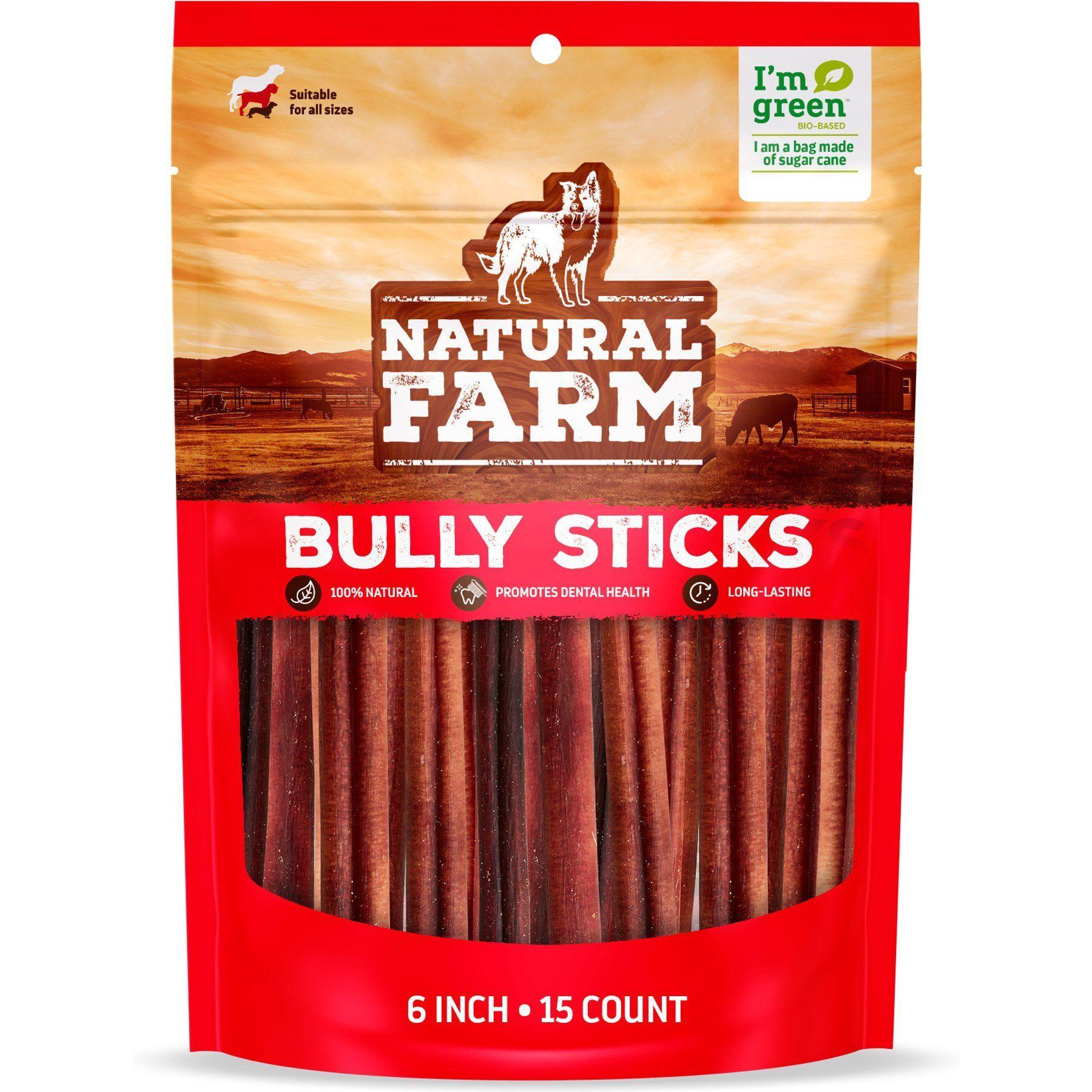
An odor-free 6-inch beef pizzle stick for supervised indoor chewing, sized for most adult dogs.
Webvet may earn a commission when you click through to Chewy, at no extra cost to you.
The Natural Farm Odor Free 6-inch Bully Stick Dog Chews, 15 count are made from free-range, grass-fed beef with no added preservatives, according to the maker's catalog description, and are labeled for small, medium, and large breeds. It is listed at $51.99 on Chewy when checked in November 2026.
- Suits: dogs that chew indoors, where the smell of a regular stick is a problem, and owners who want grass-fed bully sticks.
- Skip or adapt: very small dogs, which may need part of a stick for calorie reasons, and gulpers, which need a holder or a thicker stick.
- Rule that still applies: supervise, and take the stick away once the last piece fits in the mouth.
Best Bully Sticks Thin 6" Bully Sticks Dog Treats: best thin stick for small dogs
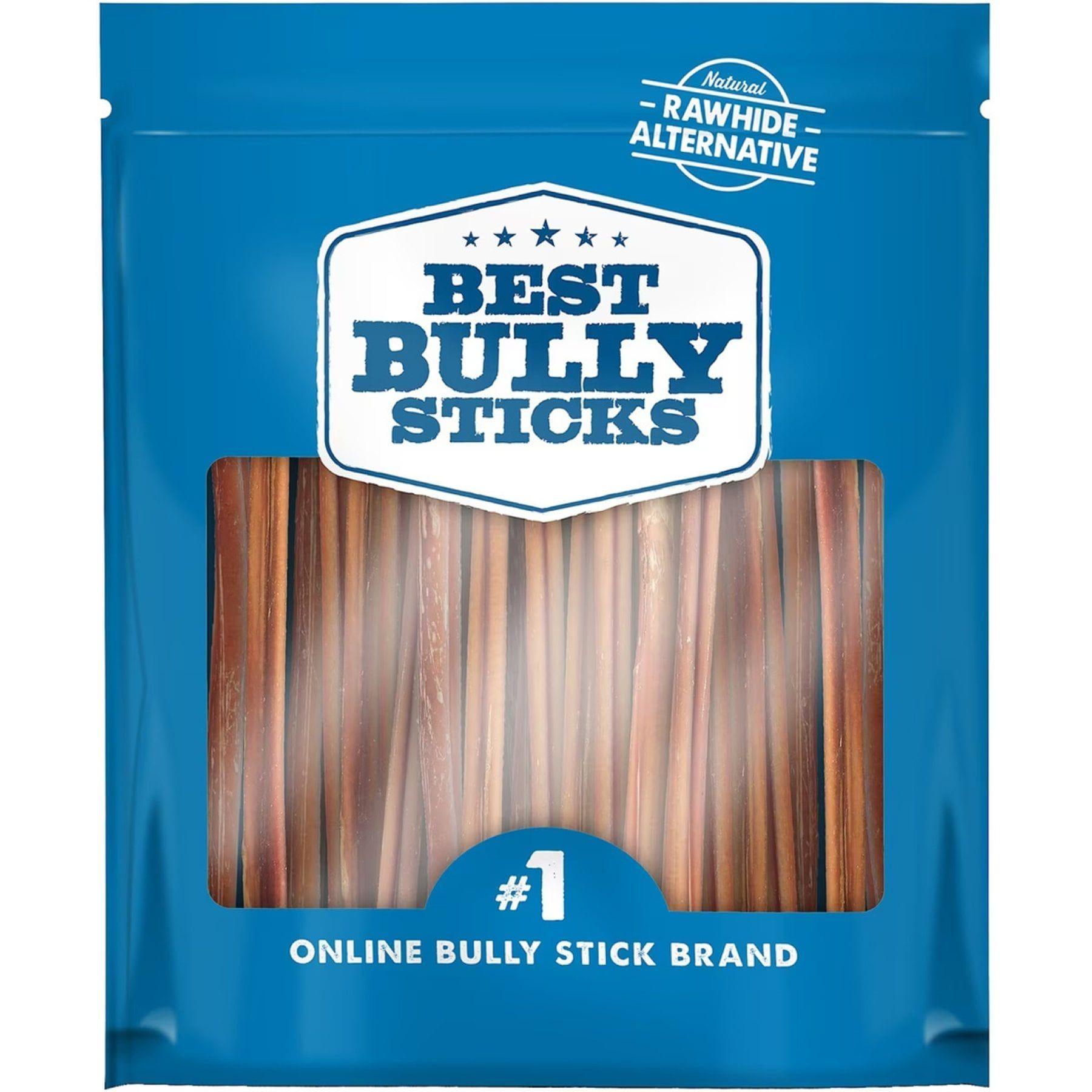
A pencil-width 6-inch bully stick for small dogs and gentle chewers that need a lighter chew.
Webvet may earn a commission when you click through to Chewy, at no extra cost to you.
The maker describes the Best Bully Sticks Thin 6" Bully Sticks Dog Treats, 24 count as about the width of a number 2 pencil, made from free-range Brazilian cattle and hand-inspected for consistent thickness. It is listed at $42.99 on Chewy when checked in November 2026.
- Suits: small dogs, toy breeds such as Chihuahuas, and dogs with a softer bite.
- Skip or adapt: large dogs and gulpers, because a thin stick becomes swallowable fast in a big mouth.
- Calories: a thin stick still counts toward the daily treat allowance, so many small dogs do better with a half stick.
Bully Bunches 12-inch Thick Bully Sticks Dog Treats: best for large dogs and power chewers
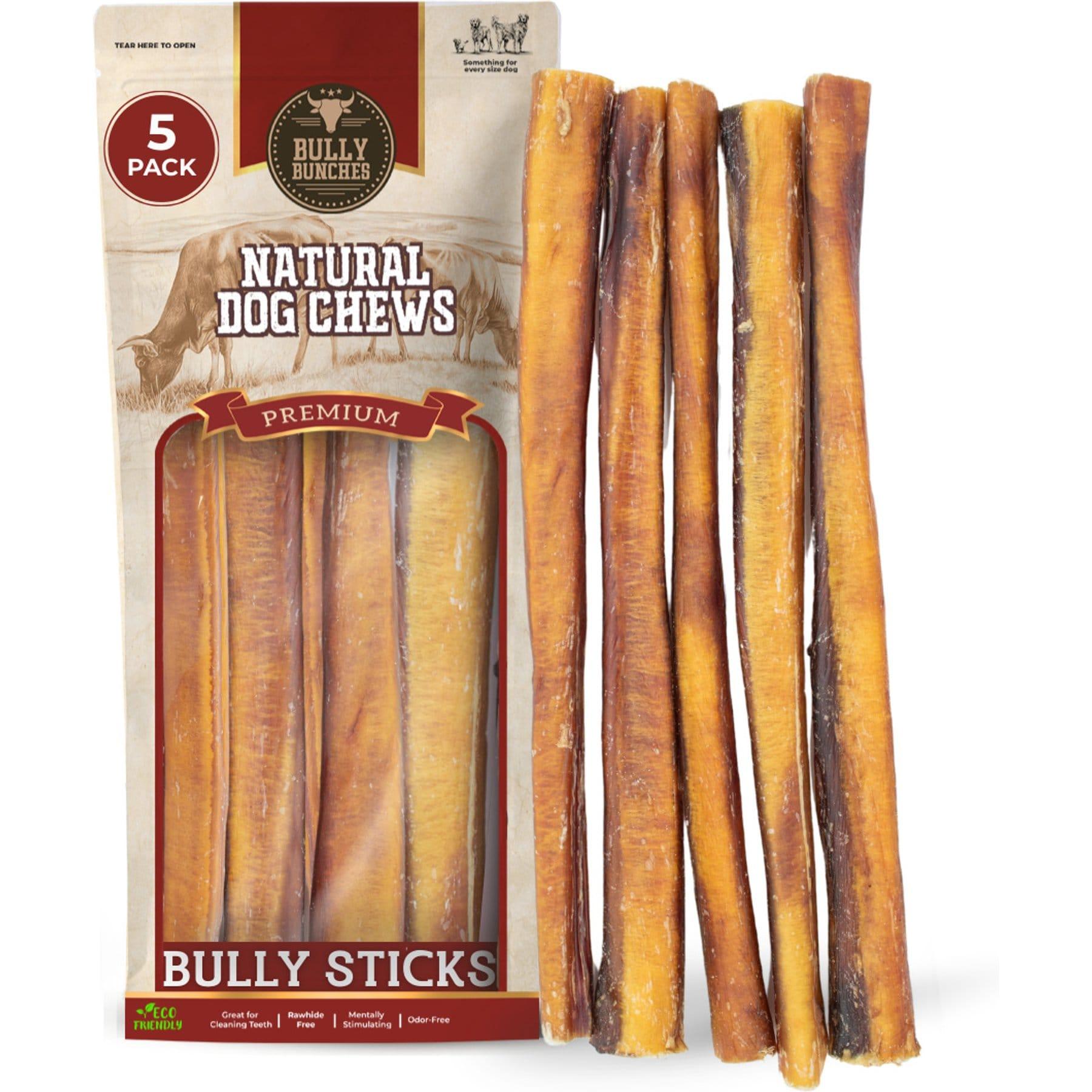
A thick 12-inch bully stick hand sorted for medium and large dogs and power chewers.
Webvet may earn a commission when you click through to Chewy, at no extra cost to you.
The Bully Bunches 12-inch Thick Bully Sticks Dog Treats, 5 count are hand sorted for medium and large dogs, according to the maker, and sold rawhide free. Length is the safety feature here: a 12-inch thick stick is far too long for a large dog to swallow at the start of the session. It is listed at $39.90 on Chewy when checked in November 2026.
- Suits: large dogs and power chewers that crush thin sticks in minutes.
- Skip or adapt: small dogs, for calorie and tooth reasons, since larger chews are harder.
- Rule that still applies: the thick stick gets short too; take it away at the last piece.
Barkworthies Braided 12" Bully Sticks Dog Treat: best braided bully stick
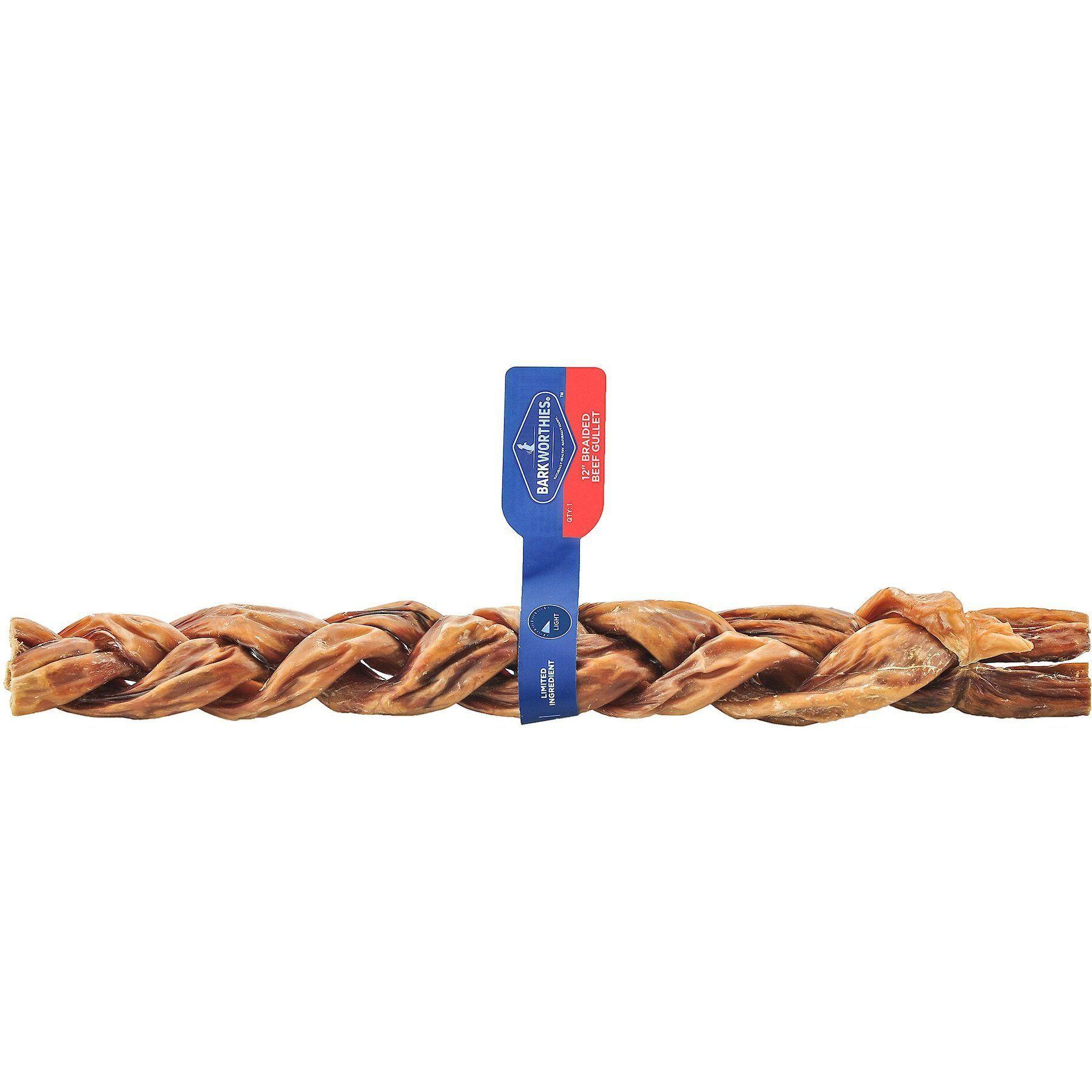
A braided 12-inch beef pizzle chew for dogs that finish a plain bully stick too quickly.
Webvet may earn a commission when you click through to Chewy, at no extra cost to you.
The Barkworthies Braided 12" Bully Sticks Dog Treat is made by braiding Barkworthies standard 12-inch bully sticks together, the maker says, as a single-ingredient chew from free-range beef pizzle sourced from Brazil. It is listed at $21.49 on Chewy when checked in November 2026.
- Suits: dogs that make a plain stick vanish, since the braid is longer lasting.
- Skip or adapt: small dogs, because a braid packs several sticks' worth of calories.
- Take-away point: a braid can loosen into strands near the end; remove it once the remaining piece fits in the mouth.
Cadet Bully Sticks Dog Chews: best large-stick multipack
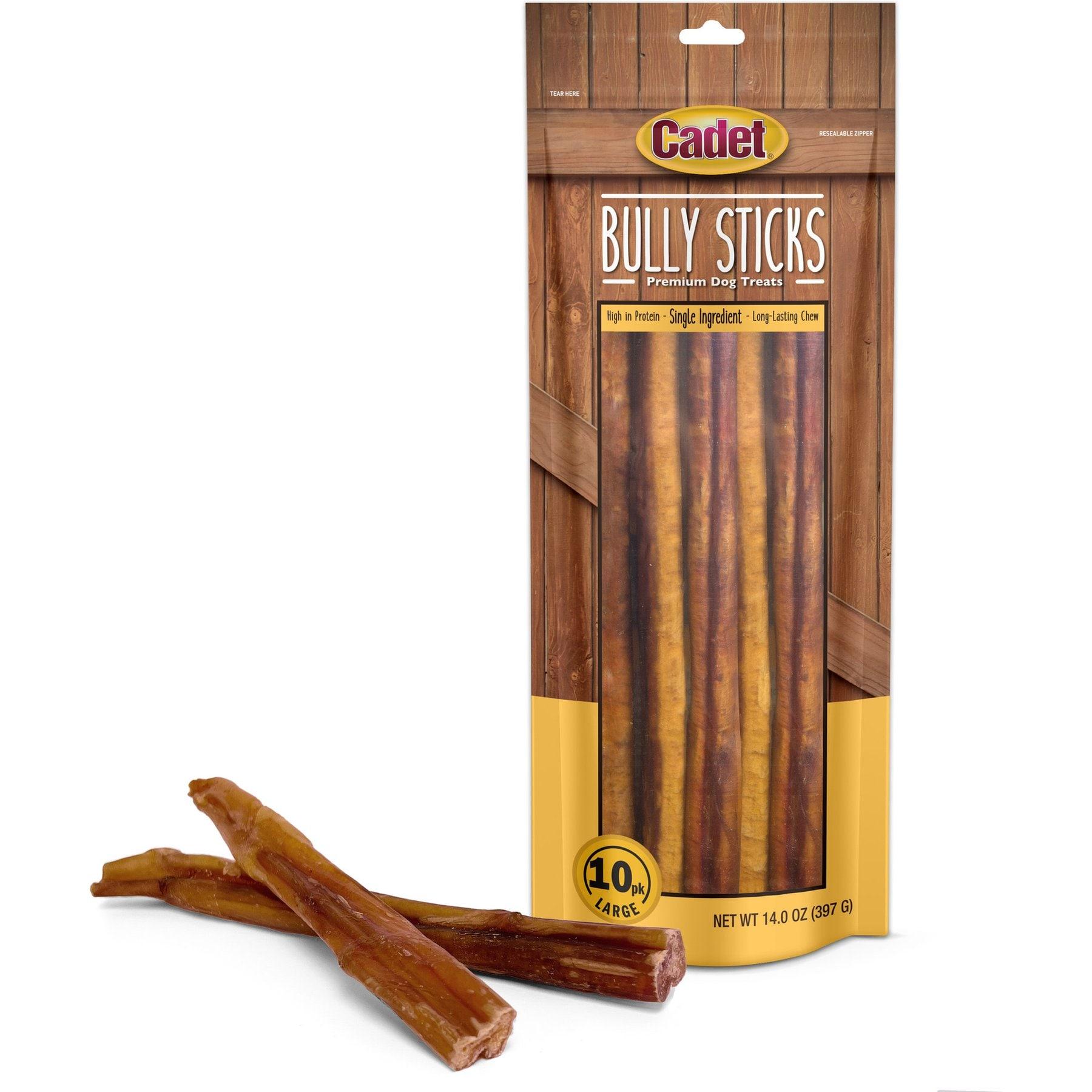
A 10-count pack of large beef pizzle sticks for households that give bully sticks regularly.
Webvet may earn a commission when you click through to Chewy, at no extra cost to you.
The Cadet Bully Sticks Dog Chews, 10 count are made of 100 percent beef pizzle with no artificial colors, flavors, or fillers, according to the maker, which describes them as slow-roasted. It is listed at $39.59 on Chewy when checked in November 2026.
- Suits: medium and large adult dogs in homes that hand out bully sticks often.
- Skip or adapt: small dogs and dogs on a diet, unless the stick is cut and the meal is adjusted.
- Calorie note: the more often sticks are given, the more they eat into the daily treat allowance.
Bow Wow Labs Buddy Safety Device Bully Stick Treat Holder: best bully stick holder
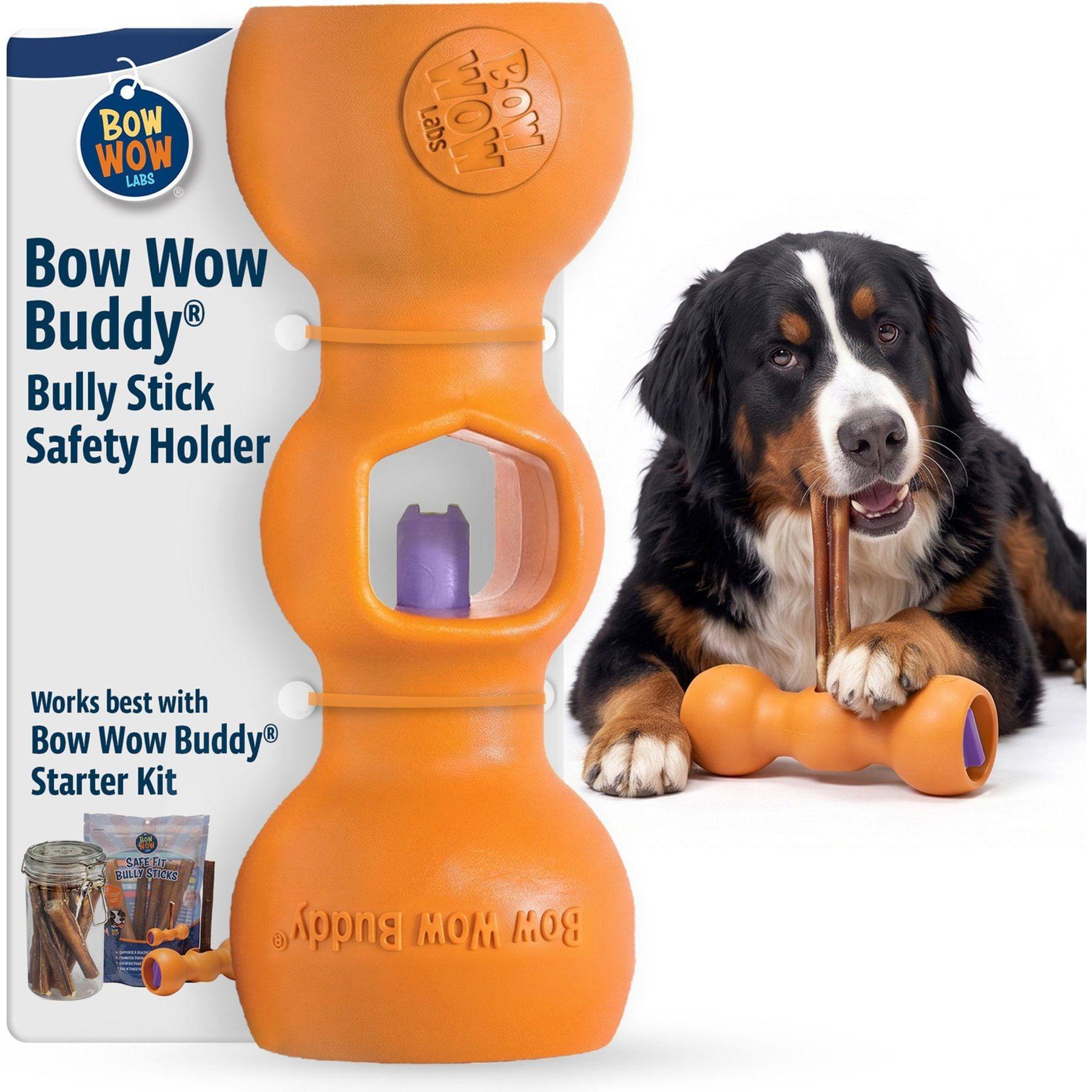
A holder that grips the end of a bully stick to help keep a fast chewer from swallowing the last piece.
Webvet may earn a commission when you click through to Chewy, at no extra cost to you.
The Bow Wow Labs Buddy Safety Device Bully Stick Treat Holder, Orange, Medium secures a bully stick so the dog chews the exposed end while the base stays locked in the device, which the maker says is meant to help prevent choking on the last bite. Sticks are sold separately. It is listed at $20.96 on Chewy when checked in November 2026.
- Suits: gulpers, puppies learning to chew, and any dog that tries to swallow the stub.
- Skip or adapt: dogs that chew the holder itself; a holder lowers the last-piece risk but does not replace supervision.
- Sizing: the linked holder is the Medium; pick the holder size that fits the dog and the stick thickness.
How to choose a bully stick: size, thickness, odor-free, braided, and puppies
| Dog | Stick length and thickness | Holder | Calorie note | When to take it away |
|---|---|---|---|---|
| Puppy (adult teeth still coming in) | Thin 6-inch, short sessions | Yes, recommended | Counts toward the 10 percent treat allowance; give part of a stick | When the last piece fits fully in the mouth, or after a short session |
| Small dog | Thin 6-inch | Helpful | An average 6-inch stick is about 30 percent of a 10-pound dog's daily calories | At the last piece, or cut the stick in half first |
| Gulper or fast chewer | Thick 12-inch or braided | Yes | Long sticks mean more calories; end the session early | As soon as chewing turns to gulping, and always at the last piece |
| Large power chewer | Thick 12-inch | Optional, useful | An average 6-inch stick is about 9 percent of a 50-pound dog's daily calories | At the last piece; check teeth if the dog chews hard |
| Dog on a diet | Thin stick or part of a stick | Optional | Subtract the stick from the treat allowance or meal, with the vet's plan | After a short session; save the rest for another day |
Choosing comes down to three things: the dog's size, how the dog chews, and how many calories the dog can spare. A 6-inch bully stick averages 88 calories, about 9 percent of a 50-pound dog's daily needs and 30 percent of a 10-pound dog's, according to Tufts University researchers. Across the sticks they measured, calories ran from 9 to 22 per inch.
Thickness changes both how long a stick lasts and how hard it is on teeth. The Cornell Riney Canine Health Center notes that larger chews are harder and may not suit a little dog, and advises choosing the chew size that fits the dog.

- Small dogs and Chihuahuas: a thin stick such as the Best Bully Sticks Thin 6" Bully Sticks Dog Treats, 24 count, often cut in half, keeps calories and hardness down.
- Large dogs: a thick stick such as the Bully Bunches 12-inch Thick Bully Sticks Dog Treats, 5 count gives a big mouth more to work through before the end gets small. The large Cadet sticks fill the same role.
- Long-lasting: thick or braided sticks last longest, like the Barkworthies Braided 12" Bully Sticks Dog Treat. Longer chewing also means more calories, so shorten the session for a dog on a diet.
- Soft bully sticks: a stick you can dent with a fingernail passes the Cornell thumbnail test, but a thin, soft stick reaches the last piece sooner, so watch closely.
Odor-free bully sticks and the smell question
A bully stick stinks because it is dried animal tissue, and many owners mind the smell indoors. Odor-free bully sticks, such as the Natural Farm Odor Free 6-inch Bully Stick Dog Chews, 15 count, are sold to cut that smell for indoor chewing. Odor-free describes smell, not safety: the same calorie, last-piece, and hand-washing rules apply.
Are bully sticks safe for puppies?
Bully sticks for puppies are possible with care, not a default. VCA Animal Hospitals notes that most veterinary dentists recommend against puppies chewing anything hard, that permanent teeth are usually in by six months, and that a puppy should be supervised even with recommended toys because no toy is 100 percent safe.
Sizing is the main decision. A teething puppy needs a thin, short stick, given for a few minutes with a holder and taken away early.
Even a 6-inch stick is a lot of calories for a puppy, so cut it down or give part of one. For softer teething options, the WebVet guide to puppy teething toys covers what fits a mouth still changing teeth.
Who makes the best bully sticks?
No independent body ranks bully stick makers, so no single maker is the best. Barkworthies, Natural Farm, Cadet, Best Bully Sticks, and Bully Bunches all sell beef bully sticks. Judge any maker by its label: a single ingredient, a stated source, sizes sold by length and thickness, and a sealed package. The picks above are matched to dog size and chewing style on those points.
What bully sticks are made of, and how they compare with rawhide and collagen chews
A bully stick is made of one thing: beef pizzle, the penis of a bull or steer. The Canadian Veterinary Journal study by Tufts and University of Guelph researchers confirms the source, and the Tufts team describes the sticks they studied as uncooked and dried. Some makers describe their own sticks as roasted, so check the label.
Many owners do not know that. In the same study, 28 percent of respondents who fed bully sticks did not correctly identify the source. The ingredient list on any brand should read beef pizzle and nothing else.
Are bully sticks digestible for dogs? Makers often call them digestible, including Cadet, but no published study has measured how well dogs digest them. What the veterinary sources do agree on is that a large swallowed piece of any chew can lodge in the throat or gut, so whether a puppy can digest a bully stick matters less than whether it can swallow a chunk.
Are bully sticks rawhide?
No. A bully stick is dried beef pizzle, an organ, while rawhide is made from animal hide. Both still need supervision: the Cornell Riney Canine Health Center says rawhides always require supervision, and swallowed pieces of either can cause trouble.
Collagen sticks vs bully sticks for dogs
Collagen sticks are a different product made from processed collagen, often wrapped in meat. The Best Bully Sticks 6-inch Collagen Chicken Wrapped Sticks Dog Treats, 12 count wrap collagen sticks in chicken. The catalog listing does not state where the collagen comes from, so check the ingredient label before giving one to a dog that reacts to beef. A collagen stick is not a pizzle chew, and the same supervision and last-piece rules apply to both.
When comparing the two, look at the protein source, the length and thickness, and the calories on the label. Neither type carries the VOHC Seal, so neither is a dental product. For a large adult dog, a pack such as the Cadet Bully Sticks Dog Chews, 10 count keeps the single-ingredient beef option on hand.
Bully stick safety: the last piece, calories, bacteria, teeth, and holders
Are bully sticks safe for dogs? For most healthy adult dogs, yes, with supervision. The documented side effects of bully sticks are choking or a blockage from a swallowed piece, weight gain, an upset stomach or bacterial illness, and broken teeth. Dogs can eat bully sticks every day only if the calories fit. How risky a stick is depends on its size, the way the dog chews, and how the risks below are managed.

- The last piece. The end of the stick is the choking point. Cornell advises against giving dogs items that can be easily swallowed. Take the stub away once it fits fully in the mouth.
- Calories. Bully sticks are not low calorie: tested sticks averaged 15 calories per inch. Too many bully sticks can cause weight gain, and VCA advises keeping treats to 10 percent of a dog's daily calories.
- Bacteria. Among 26 sticks tested, 1 carried Clostridium difficile, 1 carried MRSA, and generic E. coli turned up on 7 (27 percent).
- Teeth. Hard, non-bending chews can break teeth, covered below.
- Pieces in the stool. Bits of bully stick in a dog's poop mean chunks were swallowed before they were chewed down: size up or use a holder.
- Salt. A single-ingredient stick should list only beef pizzle; a dog on a low-sodium diet needs the vet's go-ahead before any new chew.
- Crates. A stick can make the crate a pleasant place, but only while someone is watching; take it out before leaving the dog alone.
Holders for gulpers
A bully stick holder for dogs grips the base of the stick so the dog cannot pull the last piece free and swallow it. For gulpers and fast chewers, a holder such as the Bow Wow Labs Buddy Safety Device Bully Stick Treat Holder, Orange, Medium lowers the last-piece risk. It does not replace watching the dog.
Bacteria and handling
The bacterial contamination finding comes from a small sample, and the researchers called for larger studies. Even so, the U.S. Food and Drug Administration advises washing hands for at least 20 seconds with soap and hot water before and after handling pet treats.
Dogs can carry Salmonella without looking sick, and the FDA names young children, pregnant women, older adults, and people with weakened immune systems as higher risk. The study authors advised that high-risk people avoid all contact with these treats.
The FDA lists animal food and treat recalls on its recalls and withdrawals page; check it before buying a new brand.
Stomach upset, constipation, and pancreatitis
Can bully sticks cause diarrhea or an upset stomach? They can, as any new treat can. VCA lists new foods and treats among the causes of gastroenteritis in dogs. Can bully sticks make dogs constipated? Large amounts of firm, poorly digested material are the most common cause of obstruction-type constipation, according to the Merck Veterinary Manual, so swallowed chunks matter more than the chew itself.
Can bully sticks cause pancreatitis? Merck names dietary indiscretion as a common pancreatitis risk factor in dogs. Fat content is not printed per stick on most labels, so a dog with a pancreatitis history should only get chews the vet has approved. Which other treats are worth avoiding is covered in the WebVet guide to healthy dog treats.
Can dogs break teeth on bully sticks?
Yes. Dogs can break teeth on hard chews, and bully sticks are on the list. VCA Animal Hospitals advises owners, to prevent tooth fractures, to eliminate bones, antlers, cow hoofs, nylon chews, and pizzle sticks. Most fractured teeth need treatment, and dogs often show no signs of the pain.
Why do vets not like bully sticks?
Vets are wary of bully sticks for four documented reasons: the last piece can be swallowed and block the throat or gut, the calories add up quickly in small dogs, some sticks carry bacteria such as C. difficile or MRSA, and hard chews can fracture teeth.
None of these rules out a supervised adult dog having a stick of the right size; they are why the size, holder, and take-away rules matter.
When a dog needs a vet after eating a bully stick
A dog that swallowed a bully stick, or a big piece of one, needs a call to the vet, even if it seems fine. Do not count on a swallowed piece to dissolve. The Merck Veterinary Manual notes that rawhide and dental chew treats can lodge in the esophagus, and a large piece of bully stick can cause an intestinal blockage further down.

Can dogs choke on bully sticks? Yes, once the stub is small enough to swallow, and puppies are at risk too. Merck lists drooling, gagging, difficulty swallowing, regurgitation, and repeated attempts to swallow as signs of a piece stuck in the esophagus, and says such pieces should be removed immediately.
Signs that call for the vet the same day:
- Choking, gagging, or trouble breathing normally: emergency.
- Vomiting after a chew, especially repeated vomiting after a swallowed piece.
- Loss of appetite, a painful belly, lethargy, or diarrhea after a dog or puppy swallowed a piece of any size.
- Bloody diarrhea after any chew or treat. The FDA lists vomiting and diarrhea, which may be bloody, among the signs of salmonellosis in dogs.
- Panting together with drooling, gagging, or repeated swallowing after a dog ate a stick fast.
The Cornell Riney Canine Health Center calls gastrointestinal obstruction an emergency that often needs surgery, with the best outcomes when the piece is found and removed promptly. The Merck manual adds that a blocked dog may be unable to stop vomiting, and that young, large-breed dogs are more likely to swallow a foreign object.
If a bully stick gave your dog mild, short-lived diarrhea and the dog is otherwise bright and drinking, call your vet for advice rather than waiting it out. VCA warns that dehydration can occur quickly when vomiting and diarrhea persist for more than 24 hours. A dog that ate a bully stick in one sitting and then vomits once still deserves a call.
When a dog gets aggressive with a bully stick
A dog that growls or snaps when someone comes near its chew is resource guarding.
The ASPCA says guarding is normal dog behavior, that some dogs only guard chew bones or toys, and that punishment can make it worse. The guarding comes from how much the dog values the chew, so give bully sticks in a crate or separate room, and get help from a qualified behavior professional if a bite seems likely.
Bully sticks for teeth, and safer alternatives for every chewer
Are bully sticks good for dogs teeth? Not in any proven way. No bully stick or pizzle product appears on the Veterinary Oral Health Council list of accepted dog products, and VOHC only awards its Seal when a product demonstrates dental efficacy for plaque, tartar, or both. Bully sticks are not a cleaning tool.
They can harm teeth, though. Thick, dry sticks may be too hard, and VCA lists pizzle sticks among chews to eliminate for dogs at risk of tooth fractures. The Cornell thumbnail test helps: veterinary dentists suggest you should be able to dent a chew with your fingernail.

Alternatives, by type of chewer:
- Dental care: a VOHC-accepted chew such as Greenies Dental Regular Dog Treats, sized to the dog. Canine Greenies appear on the VOHC list for plaque and tartar.
- Power chewers: durable rubber toys; Cornell names toys from Kong and Goughnuts as good options. The WebVet guide to the best dog chew toys compares more.
- Gulpers: a holder, or a toy too large to swallow; see safe dog chew toys for what passes the bend and thumbnail tests.
- Owners weighing harder chews: antlers for dogs covers the tooth-fracture questions that antlers raise.
Which dental chews to skip, and which hold up, is covered in the WebVet guide to vet recommended dog dental chews. On breeds, the Merck manual notes that small-breed dogs usually have more periodontitis than large breeds; the dog dental health guide goes further.
What is the healthiest thing for a dog to chew on?
The healthiest thing for a dog to chew on is a chew sized to the dog that passes the thumbnail test, is given under supervision, and, for teeth, carries the VOHC Seal. No single chew suits every dog: a power chewer needs a durable toy, a small dog a soft chew, and a gulper something it cannot swallow.
What keeps tartar off dog's teeth?
Daily toothbrushing keeps tartar off a dog's teeth best; the Merck Veterinary Manual says daily brushing is best and that gum disease will not develop around clean teeth. VOHC-accepted chews add help, and existing tartar needs a professional cleaning under anesthesia. More on removal is in tartar on dog teeth.
Bully sticks for dogs questions
Frequently Asked Questions
How long should a dog chew a bully stick?
There is no fixed time limit in the veterinary sources. Supervise the whole session, end it when the dog starts gulping, and take the last piece away once it fits fully in the mouth. For small dogs and dogs watching their weight, a few minutes on part of a stick is often enough.
Are bully sticks fattening for dogs?
They can be. Tested sticks held 9 to 22 calories per inch, and an average 6-inch stick is close to a third of a 10-pound dog's daily calories. Count every stick against the 10 percent daily treat allowance, and trim meals or cut sticks in half if the dog is gaining.
Can bully sticks cause diarrhea in dogs?
Yes, some dogs get diarrhea from a new chew. Introduce bully sticks slowly, starting with a small piece and one new treat at a time, as VCA advises. Diarrhea that is bloody, comes with vomiting, or lasts more than 24 hours needs the vet.
Are odor-free bully sticks as safe as regular ones?
Odor-free sticks are neither safer nor riskier as far as any published study shows. The label refers to smell after drying and processing, not to bacteria, calories, or hardness. Handle them the same way: wash your hands, supervise, and remove the last piece.
Why are bully sticks so expensive?
Supply is limited because each bull or steer yields only one pizzle, and makers sell the sticks as a single-ingredient chew sorted by length and thickness. Thick, long, braided, and odor-free sticks usually cost more than thin ones. Buying multipacks lowers the cost per stick.
Veterinarian · BVMS MRCVS
Dr. Pippa Elliott, BVMS, MRCVS, is a veterinarian with nearly 30 years of experience in companion animal practice. Dr. Elliott earned her Bachelor of Veterinary Medicine and Surgery from the University of Glasgow. She was also designated a Member of the Royal College of Veterinary Surgeons. Married with 2 grown-up kids, Dr. Elliott has a naughty Puggle named Poggle, 3 cats and a bearded dragon.
Related reading

Churu Cat Treats: Are They Healthy, and How Many Can a Cat Have?

Weight Management Cat Food: Best Picks for Safe Weight Loss

Diabetic Cat Food: Best Low-Carb Options and What Vets Recommend
