Weight Management Cat Food: Best Picks for Safe Weight Loss
Weight management cat foods range from over-the-counter light formulas to prescription diets built for real weight loss. Which tier fits your cat, how these foods work, why the pace of loss matters, and when a vet needs to run the plan.

BVMS MRCVS

This article contains affiliate links. Webvet may earn a commission when you buy through them, at no extra cost to you.
Weight management cat food is a complete diet with fewer calories per serving, usually with more protein and more fiber to keep a cat full while it eats less. Over-the-counter formulas suit a healthy cat that is only a little over its ideal weight. A cat that clearly needs to lose weight does best on a prescription weight loss diet in a plan your vet runs.
The pace matters as much as the food. Cats need to lose weight slowly, because a cat that stops eating can develop hepatic lipidosis, a serious liver disease. Choosing the right weight management cat food starts with your vet confirming the cat is overweight and healthy enough to diet, then matching the cat to the right tier of food.
Weight management cat food: what it does, which cats need it, and what makes a good one
Weight management cat food cuts the calories in each serving while staying a complete diet, and most formulas add protein to protect muscle and fiber to help a cat feel full. Over-the-counter formulas suit a healthy cat a little over ideal, while prescription diets such as Hill's Prescription Diet Metabolic, Royal Canin Satiety Support, and Purina Pro Plan Veterinary Diets OM are the weight loss diets vets use in a supervised plan. Either way, the loss has to be slow, because a cat that stops eating risks hepatic lipidosis.
Extra weight is the norm, not the exception. In the Association for Pet Obesity Prevention 2022 survey, 61% of cats were classified as overweight or having obesity. A clinician quoted by Cornell University College of Veterinary Medicine estimates that about half of the cats seen at veterinary clinics are overweight, if not obese.
The best cat food for overweight cats is not one product. It depends on how far over ideal the cat is, whether it has other health problems, and whether it eats wet food, dry food, or both. The six picks below are grouped into over-the-counter foods and prescription diets for that reason.
- 1Start by confirming a cat is overweight with the vet, using a body condition score and an exam to rule out disease.
- 2Weigh over-the-counter light formulas versus prescription diets: store weight foods suit a cat a little over ideal; real weight loss belongs on a vet-run prescription diet.
- 3Wet food adds water and volume for fewer calories, which can help a cat feel full.
- 4Aim for slow, steady loss; a cat that stops eating on a diet needs a vet the same day.
- 5Measured meals and daily play keep the weight off once it is gone.
Why extra weight matters
Small gains add up fast in a small animal. VCA Animal Hospitals notes that as little as two pounds above ideal body weight can put a cat at risk of serious conditions, and that an obese cat is three times more likely to develop type 2 diabetes than a cat of normal weight.
The conditions VCA links to excess weight include:
- Type 2 diabetes (see diabetes in cats)
- Heart disease and high blood pressure
- Osteoarthritis and joint injuries
- Some forms of cancer, especially in the abdomen
- Muscle loss from inactivity, which can make reaching the litter box harder
Heavier cats also move less, which makes slow changes in mobility easy to miss. If your cat is hesitating at jumps or stairs, the WebVet guide to cat mobility in senior cats explains what is normal aging and what is not.

Which cats need a weight management food
A cat needs a weight plan when its vet finds it above ideal body condition, not when it simply looks big. Ideal weight varies with frame, so use the cat weight chart as a starting point and let the body condition score settle it. VCA states plainly that an obese cat should never be put on a diet without veterinary supervision.
In practice, cats tend to fall into three groups:
- A little over ideal and otherwise healthy: a good candidate for a store-bought weight management cat food fed in measured portions.
- Clearly overweight: usually better served by a prescription weight loss diet and a calorie target set by the vet.
- Obese, or carrying extra weight alongside a medical condition such as diabetes, arthritis, or kidney disease: a vet-run plan from day one.
What makes a good weight management cat food
The best cat food for weight loss is the one that fits your cat's tier and that your cat will actually eat in measured amounts. On the label, look for:
- An AAFCO nutritional adequacy statement. AAFCO describes it as the statement that the food is complete and balanced for a particular life stage. For a weight food, that should be adult maintenance.
- A calorie content statement in kcal per cup, can, or kilogram, so you can compare foods and measure portions.
- A named animal protein first, such as chicken.
- A form your cat accepts: pate, chunks in gravy, or kibble.
- A maker that lists feeding directions for weight and, for prescription diets, defers the exact amount to your vet.
Royal Canin cat food for weight loss is a prescription product, not a store-shelf one. The Royal Canin Veterinary Diet Adult Satiety Support Weight Management Dry Cat Food, 7.7-lb bag is a veterinary-exclusive diet, so it belongs in a vet-run plan rather than on the over-the-counter shelf. The same split applies to the Hill's and Purina lines.
Our picks: the best weight management cat food
The picks are judged on the label and the maker, not on taste or testing. Each one is a complete and balanced adult diet from a manufacturer that publishes calorie and feeding information. The first three are over-the-counter choices for healthy adults a little over ideal, including indoor cats that simply need fewer calories.
The last three are prescription diets. They need a veterinarian's authorization.
Hill's Science Diet Adult Perfect Weight Management Chicken Recipe Dry Cat Food: best over-the-counter dry food
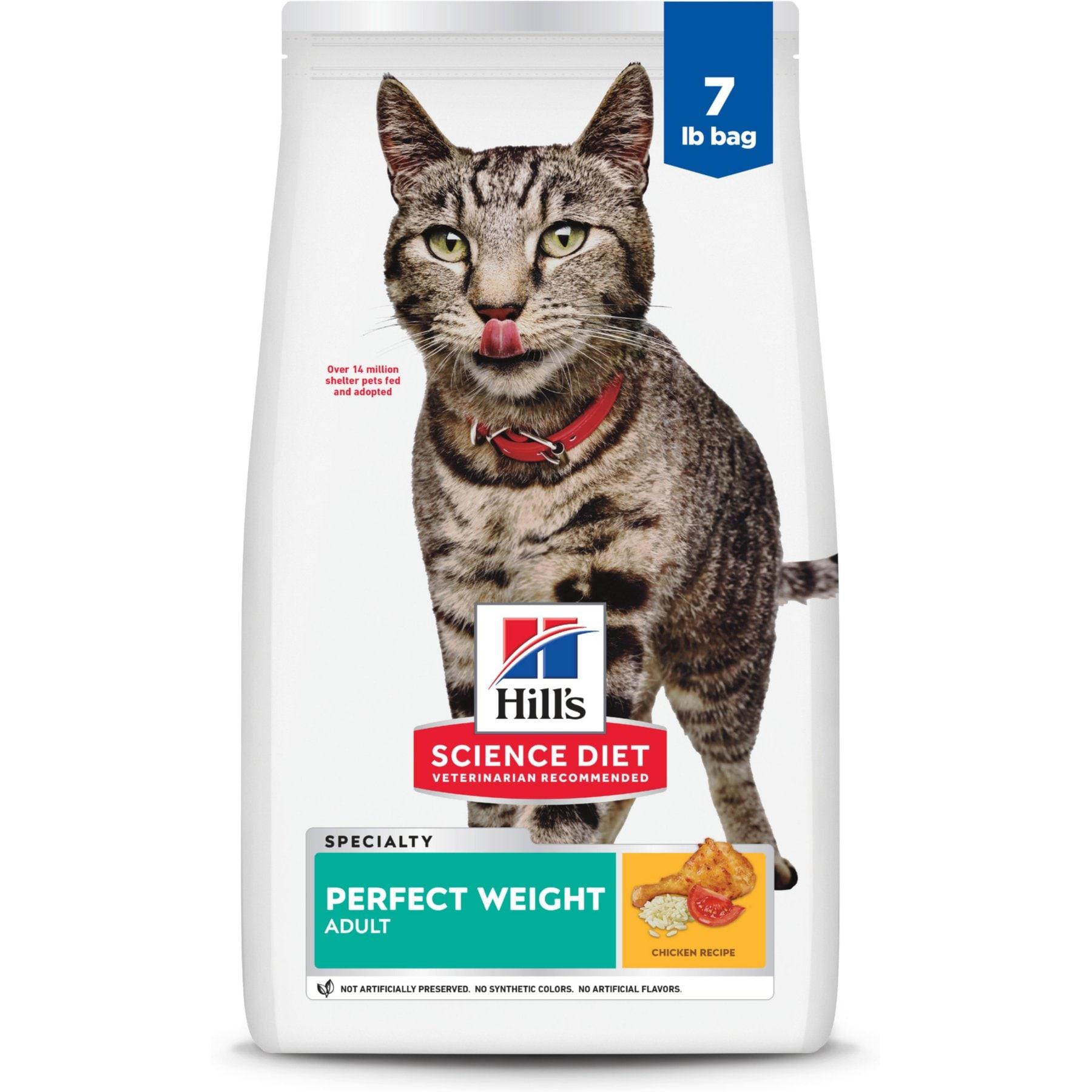
An over-the-counter dry weight food for a healthy adult cat that is only a little over its ideal weight.
Webvet may earn a commission when you click through to Chewy, at no extra cost to you.
Hill's Science Diet Perfect Weight is the Science Diet weight management cat food, sold without a prescription. On the Hill's product page, chicken is the first ingredient, crude fiber is listed at 6%, and the calorie content is 319 kcal per cup (3412 kcal/kg).
Hill's states that AAFCO feeding tests support it as complete and balanced for maintenance of adult cats. It is listed at $39.99 on Chewy when checked in November 2026 for the 7-lb bag.
- Suits: a healthy adult cat a little over ideal that prefers kibble, or a cat that needs to hold steady after losing weight.
- Skip it if: your cat is clearly obese and needs real weight loss, is a kitten, or has diabetes or kidney disease. Those cats need a diet your vet chooses.
- How it differs: it has more calories per cup than the prescription Hill's Metabolic pick, so portions must be measured carefully.
Purina Pro Plan Weight Management Chicken & Rice Entree in Gravy Wet Cat Food: best over-the-counter wet food
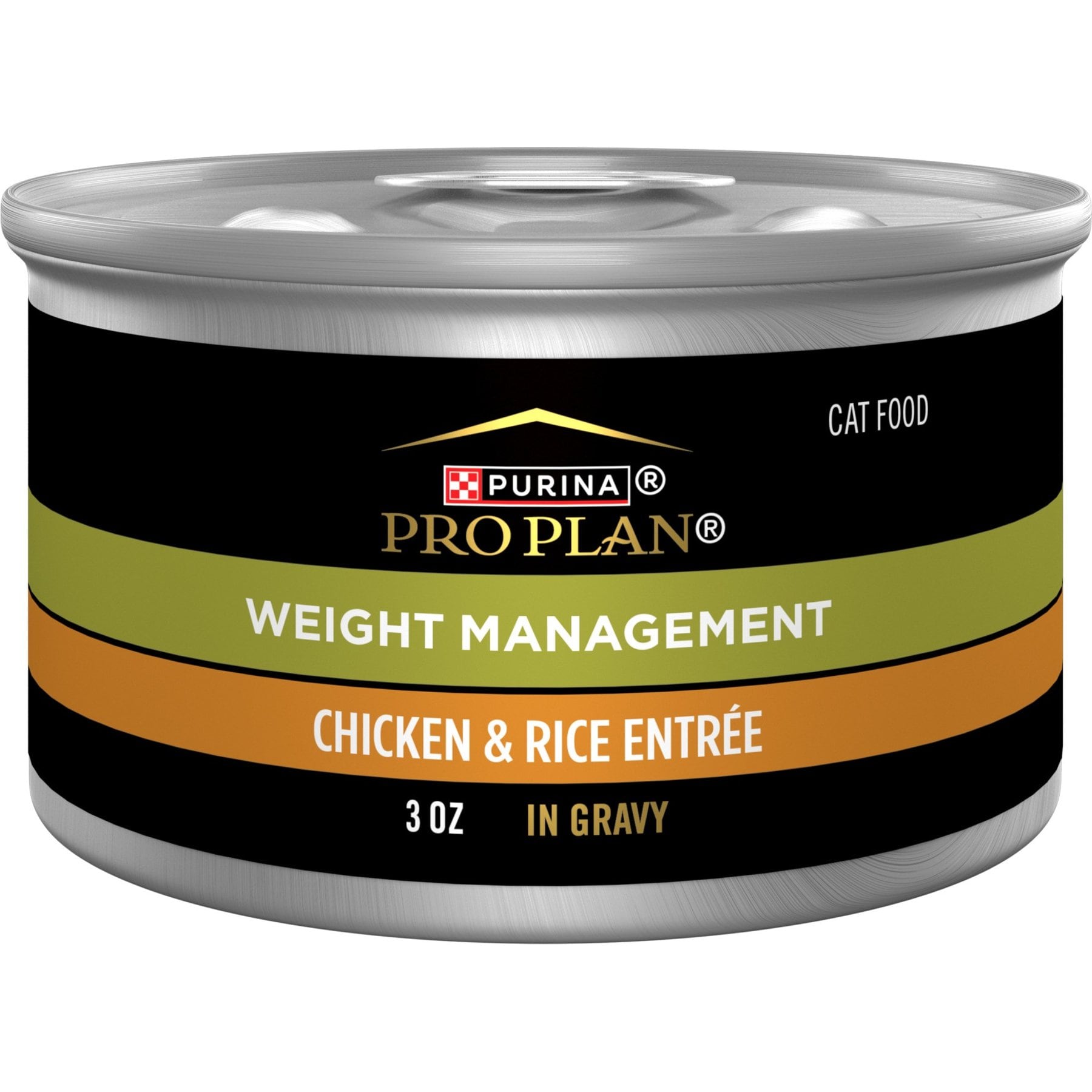
An over-the-counter wet weight food in gravy for a healthy adult cat that eats canned meals.
Webvet may earn a commission when you click through to Chewy, at no extra cost to you.
This Pro Plan formula is a wet entree with real chicken. Purina describes it as complete and balanced for adult cats, with high-quality protein to help maintain muscle mass during weight loss and 10 percent fewer calories than its Pro Plan Complete Essentials Chunky Chicken Entree Classic.
It comes in 3-oz cans, which makes portioning simple, and is listed at $47.04 on Chewy when checked in November 2026 for a case of 24. Check the calorie statement on the can label before setting the daily number of cans.
- Suits: a healthy adult a little over ideal that prefers wet food, or a cat that does better with the extra water in canned meals.
- Skip it if: your cat needs substantial weight loss or has a medical condition that calls for a prescription diet.
- How it differs: the only over-the-counter wet pick here; the Purina ONE and Hill's options are both dry.
Purina ONE +Plus Ideal Weight Natural High Protein Adult Dry Cat Food: best budget
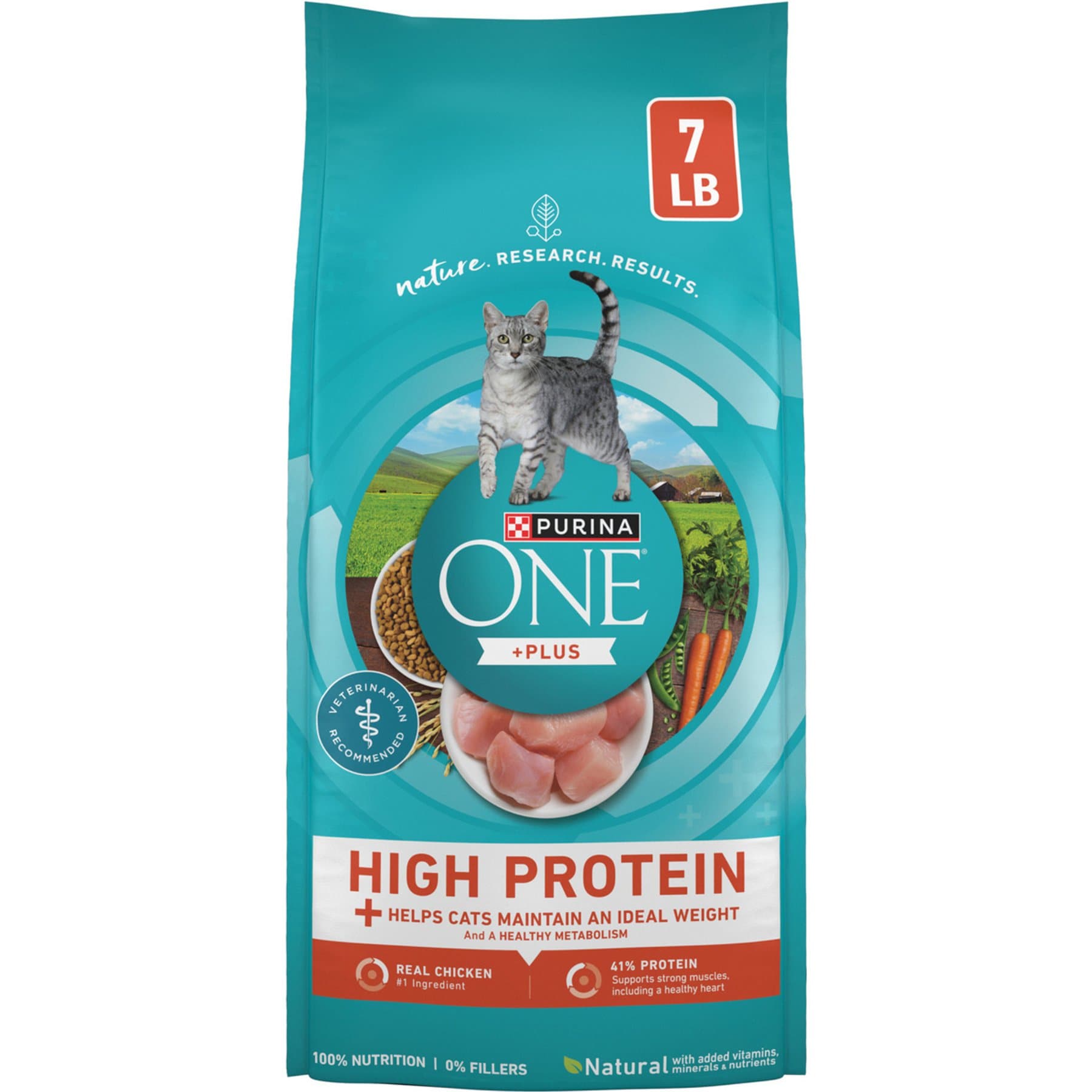
A lower-cost dry weight control food for a healthy adult cat that needs to hold or trim weight slowly.
Webvet may earn a commission when you click through to Chewy, at no extra cost to you.
Purina ONE Ideal Weight is the budget pick. Purina calls it a dry cat food for weight control, lists real chicken as the first ingredient, and gives 41 percent protein. Purina also says it adds L-carnitine to support a healthy weight.
It is listed at $17.98 on Chewy when checked in November 2026 for the 7-lb bag, well below the other dry picks. For indoor cats that only need to stop gaining, it is a reasonable everyday choice.
- Suits: healthy indoor adults a little over ideal on a tighter budget.
- Skip it if: your cat needs real weight loss, or your vet wants a specific calorie density only a prescription diet can give.
- How it differs: the highest stated protein of the over-the-counter picks; check the calorie statement on the bag before setting portions.
The next three are prescription diets. These are the foods vets use when a cat needs to lose a meaningful amount of weight, and each one is fed in an amount your vet sets, not the amount on the bag.
Hill's Prescription Diet Metabolic Weight Solution Cat Food: best prescription dry diet
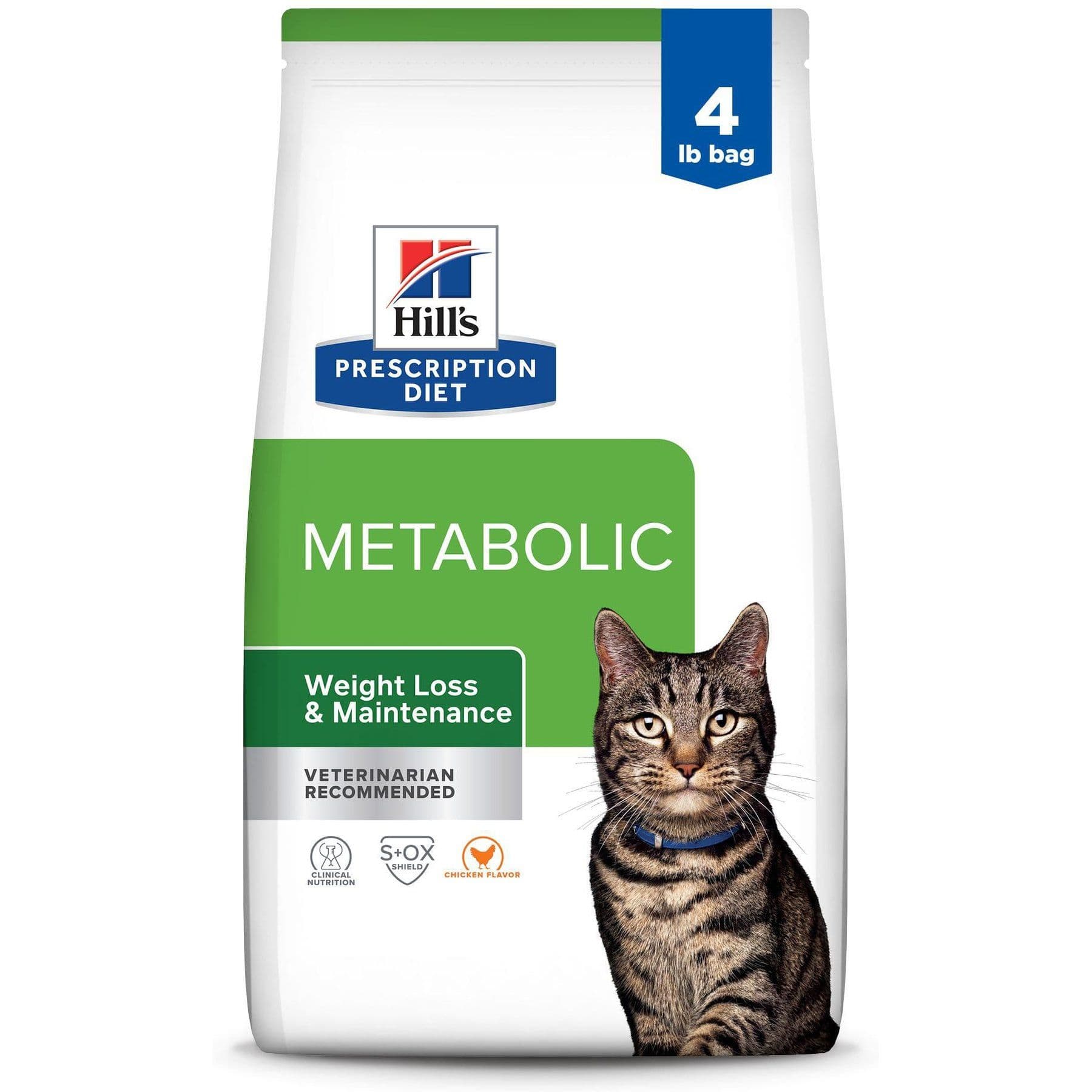
A prescription dry weight loss diet for a cat on a vet-run plan; needs your veterinarian's authorization.
Webvet may earn a commission when you click through to Chewy, at no extra cost to you.
Hill's Prescription Diet Metabolic is a prescription weight loss food that needs your veterinarian's authorization on Chewy. The Hill's product page lists 299 kcal per cup (3398 kcal/kg), chicken by-product meal as the first ingredient, and AAFCO feeding tests for maintenance of adult cats.
Hill's tells owners to ask the veterinarian for specific feeding instructions, measure in grams where possible, and transition over 7 days or more. It is listed at $38.99 on Chewy when checked in November 2026 for the 4-lb bag.
- Suits: a clearly overweight or obese cat whose vet has set a calorie target and weigh-in schedule.
- Skip it if: your vet has not examined the cat, or the cat has a condition that needs a different therapeutic diet.
- How it differs: fewer calories per cup than the over-the-counter Hill's pick.
Royal Canin Veterinary Diet Adult Satiety Support Weight Management Dry Cat Food: best prescription dry alternative
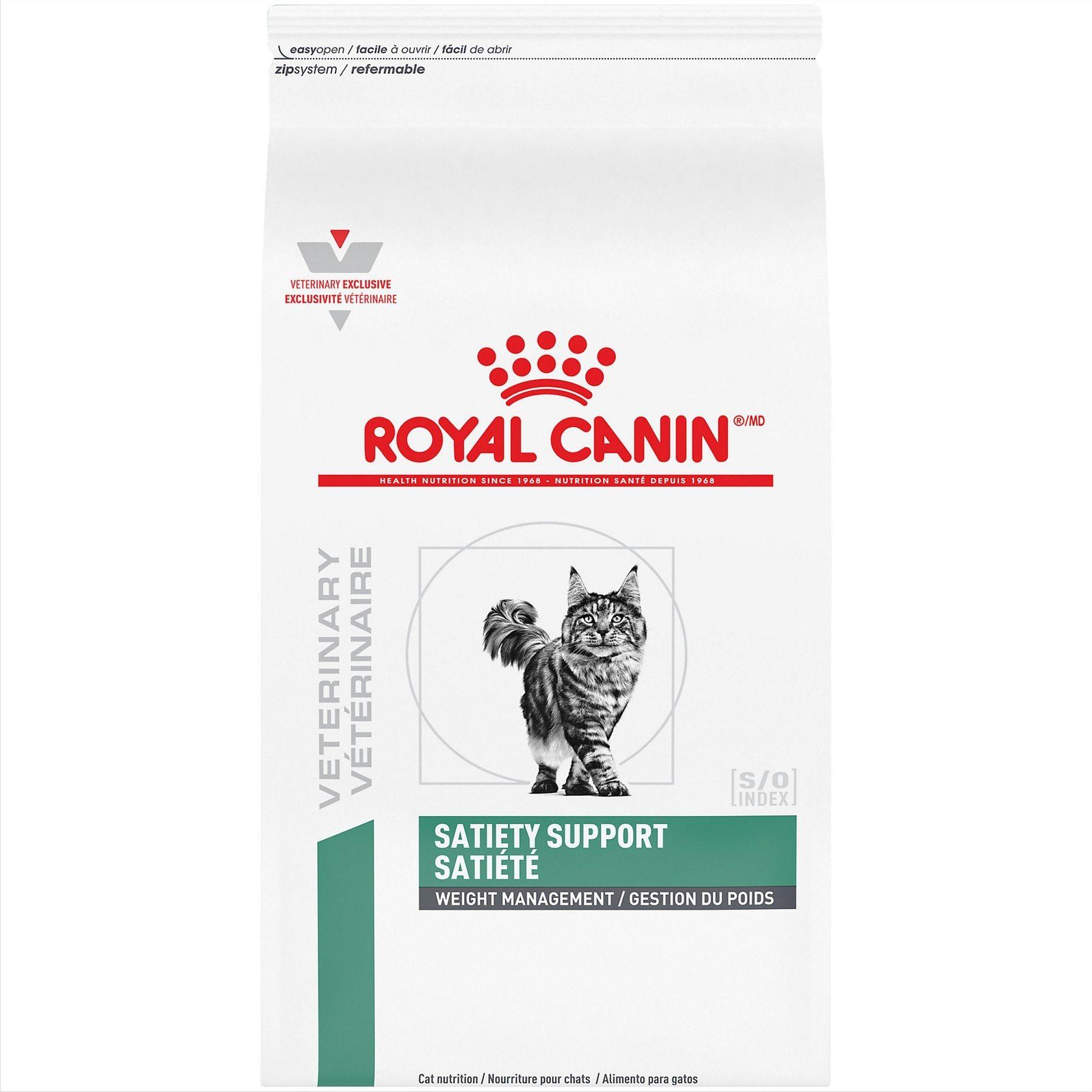
A veterinary-exclusive dry weight diet for a cat on a vet-run plan that begs between meals; needs vet authorization.
Webvet may earn a commission when you click through to Chewy, at no extra cost to you.
Royal Canin Satiety Support is part of a veterinary-exclusive line for overweight and obese cats, so it needs your vet's authorization. Royal Canin says it is formulated to promote satiety, meaning a feeling of fullness that helps the cat between meals.
It is listed at $69.99 on Chewy when checked in November 2026 for the 7.7-lb bag, the highest-priced dry pick here.
- Suits: a cat on a vet-run weight plan that is persistent about begging, where fullness is the main obstacle.
- Skip it if: your vet has not recommended it, or another therapeutic diet is needed for a second condition.
- How it differs: the alternative to Hill's Metabolic when a vet prefers a satiety-focused formula or a cat refuses the first diet tried.
Purina Pro Plan Veterinary Diets OM Overweight Management Savory Selects with Chicken Wet Cat Food: best prescription wet diet
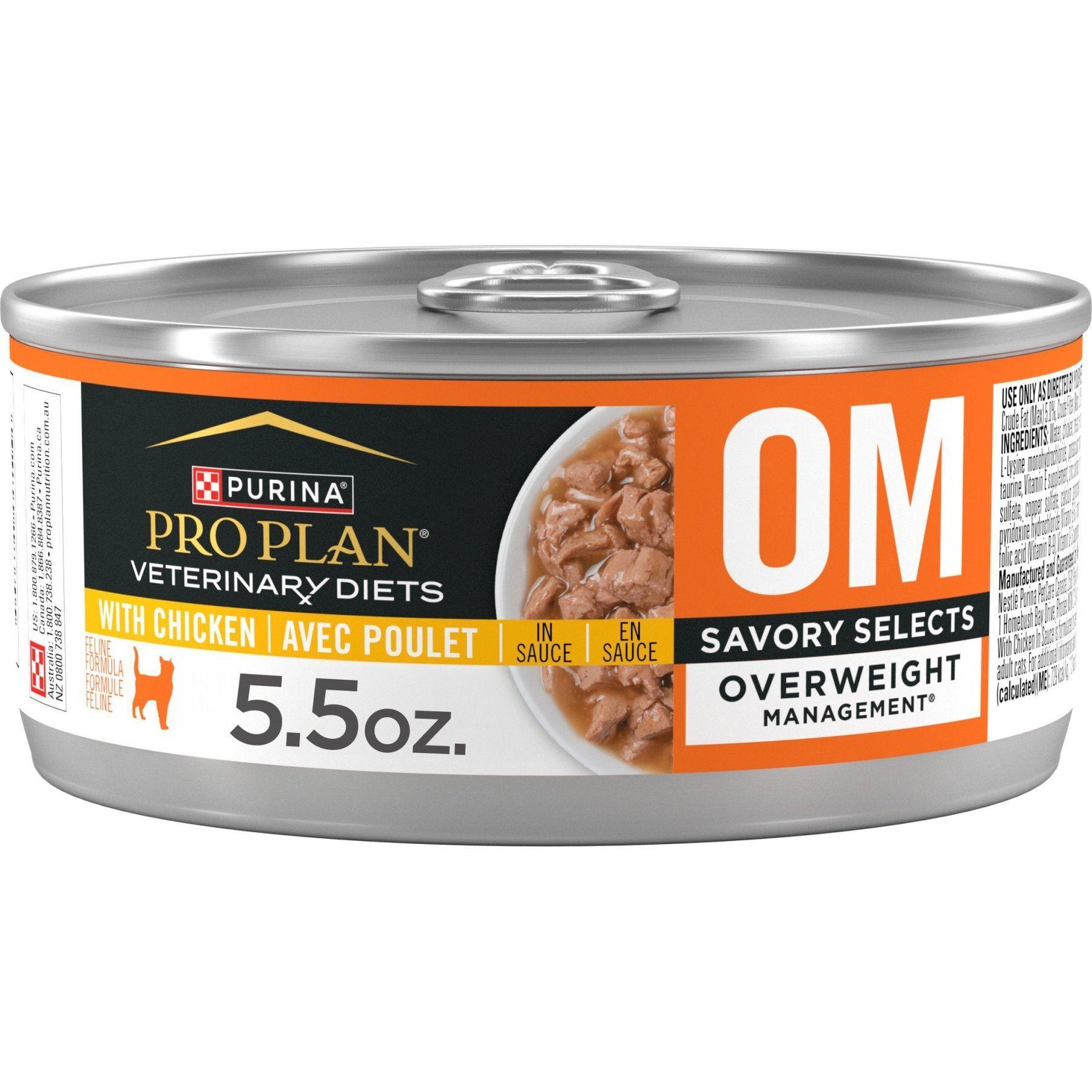
A prescription wet weight diet for a cat on a vet-run plan that prefers canned food; needs vet authorization.
Webvet may earn a commission when you click through to Chewy, at no extra cost to you.
Purina Pro Plan Veterinary Diets OM is the prescription wet choice. Purina describes a high protein-to-calorie ratio to help overweight cats lose weight while maintaining muscle, along with support for a healthy urinary system. It needs your vet's authorization on Chewy.
It comes in 5.5-oz cans and is listed at $74.99 on Chewy when checked in November 2026 for a case of 24.
- Suits: a cat on a vet-run plan that eats wet food best, or a household that wants wet meals for volume.
- Skip it if: your vet has not prescribed it or wants a different diet for another condition.
- How it differs: the only prescription wet pick; pairs with a vet-approved dry diet if the plan mixes forms.
Over-the-counter vs prescription weight loss food: which tier fits your cat
| Cat situation | Food tier | Wet or dry | Who runs the plan |
|---|---|---|---|
| A little over ideal body condition, otherwise healthy | Over-the-counter weight management food, measured portions | Either; wet adds volume | Owner, with vet confirming the body condition score |
| Clearly overweight, otherwise healthy | Prescription weight loss diet | Either, or a vet-approved mix | Vet sets calories and weigh-ins |
| Obese, or body condition well above ideal | Prescription weight loss diet, slower target pace | Either, or a vet-approved mix | Vet, with frequent weigh-ins to avoid hepatic lipidosis |
| Overweight with diabetes, kidney disease, arthritis, or another condition | Diet chosen for both problems | As the vet directs | Vet only; insulin or other treatment may need adjusting |
| Any cat eating little or nothing on a diet | Stop the diet change | Not applicable | Vet the same day; hepatic lipidosis risk |
The split between tiers is sharper than most store shelves suggest. VCA states that there is no over-the-counter weight-loss food for cats: foods in pet stores with a weight claim on the label are still adult maintenance diets and should not be fed in a calorie-restricted way, because doing so can lead to nutrient deficiencies.
Research backs that caution. Cornell Feline Health Center reports that therapeutic diets met more minimum nutrient requirements than over-the-counter products when used for weight loss. A University of Guelph study in the American Journal of Veterinary Research, summarized by the Ontario Veterinary College, advises against using over-the-counter maintenance or light diets for weight loss unless nutrient adequacy under restriction is confirmed.
So the choice between an over-the-counter light formula and a prescription diet is less about brand than about goal. A store weight food helps a healthy cat hold weight or trim a little. A prescription weight loss cat food is built for real calorie restriction.
The prescription weight loss diets vets use
The three prescription lines most vets reach for are:
- Hill's Prescription Diet Metabolic. The Hill's Prescription Diet Metabolic Weight Solution Cat Food, 4-lb bag is the dry chicken-flavor version; ask your vet whether a wet Metabolic food should join it.
- Royal Canin Veterinary Diet Satiety Support. The feline Satiety Support dry diet focuses on fullness; your vet can tell you whether a wet Satiety option fits too.
- Purina Pro Plan Veterinary Diets OM. The Purina Pro Plan Veterinary Diets OM Overweight Management Savory Selects with Chicken Wet Cat Food, 5.5-oz, case of 24 is the wet form. The feeding guide on the label is a starting point only; the amount comes from your vet.
These are the vet recommended weight loss cat food options, but none is a product an owner can pick off a shelf. Each one is a prescription diet chosen for a specific cat, with an amount calculated for that cat.

How the vet confirms a cat is overweight
The vet's tool is the body condition score. VCA explains that most practices use a 1 to 5 scale where 3 is ideal, or a 1 to 9 scale where 5 is ideal. The WSAVA Global Nutrition Committee provides body condition tools to assess fat stores at every visit, plus a muscle condition score for muscle loss from disease or aging.
VCA defines a cat as overweight at 10% to 20% above ideal body weight and obese at more than 20% above. Cornell uses the same 20 percent line for obesity, and suggests an at-home check: run both hands, palms down, across the ribcage. In a severely obese cat, the ribs cannot be felt under the fat.
The vet will also look for reasons the weight crept up or reasons a diet would be unsafe. That exam is what turns a guess into a plan.
Is 14 lb a healthy weight for a cat?
It depends on the cat's frame, so 14 lb can be healthy for a large-boned cat and overweight for an average one. The U.S. Food and Drug Administration notes that ideal weight depends on breed, age, and body type. The test is how far 14 lb sits above the ideal weight your vet calculates: VCA counts 10% to 20% above ideal as overweight and more than 20% as obese. A cat whose ideal weight is 11 lb is about 27% over at 14 lb, while a large-framed cat whose ideal is 13 lb is under 10% over. At home, run your hands along the ribcage; ribs you can feel under a thin layer of fat point to a healthy weight, and ribs you cannot feel point to a cat that needs a vet check.
Wet vs dry food for weight loss in cats
Both work when calories are counted. The difference is how full each form keeps a cat for the calories it supplies. Wet food carries a lot of water, so a cat gets more volume per calorie, and Cornell advises canned food because it typically has more protein and less carbohydrate than kibble.
The research on water and weight is encouraging but not complete. In a study of 69 adult cats published in the Journal of Nutritional Science in 2014, cats overfed a dry diet gained weight and body fat, while cats fed the same diet with water added did not, and cats on the 80% moisture version were more active.
A smaller 2017 study in the Journal of Nutritional Science, with eight cats, found intake was similar and 24-hour activity did not differ between canned and dry diets. Together, the studies suggest wet food for fullness is a reasonable strategy, while any effect on activity is unproven.

When wet food helps most
Wet weight management cat food is the better fit for:
- Cats that beg constantly and seem hungry on a smaller dry portion.
- Cats that drink little water.
- Owners who want simple portions: a 3-oz can is easy to count.
The Purina Pro Plan Weight Management Chicken & Rice Entree in Gravy Wet Cat Food, 3-oz can, case of 24 is the over-the-counter wet option among the picks. If you pair it with a dry Pro Plan weight food, count both toward the daily calories. The best wet food for any cat is one it eats reliably in measured amounts.
When dry food makes sense
Dry food suits cats that will not eat canned food, households where food sits out during the day, and food puzzles that need kibble. The catch is calorie density: kibble packs many calories into a small scoop, so a level cup is easy to overfill.
The Hill's Science Diet Adult Perfect Weight Management Chicken Recipe Dry Cat Food, 7-lb bag is the over-the-counter dry choice for a healthy cat; if you add a wet Hill's food, both count toward the daily total. Purina ONE Ideal Weight is the lower-cost dry option for indoor cats that need to hold steady. For broader kibble comparisons, see the WebVet roundup of the best dry cat food.
Many owners mix forms: a measured dry portion in a puzzle feeder plus a can of wet food at one meal. That works as long as the daily total stays within the calories your vet set.
What do I feed my cat to lose weight?
Feed a complete and balanced weight food in a measured daily amount your vet sets, ideally weighed in grams. VCA states there is no over-the-counter weight-loss food for cats, so a cat that needs real weight loss usually goes on a prescription diet, with treats kept to about 10% of daily calories.
Safe weight loss for cats: the right pace, hepatic lipidosis, and when to see the vet
Slow weight loss is safe weight loss. VCA says cats should ideally lose 1% to 2% of their initial body weight per week, and closer to 0.5% may be more appropriate for morbidly obese cats. Cornell gives the same one to two percent per week target.
The Association for Pet Obesity Prevention sets a more cautious planning range of about 2% to 5% of body weight per month, with about 2% per month as a conservative start. The sources differ on the top speed but agree on the direction: gradual, measured, and checked by the vet.
A safe pace of weight loss in practice
The pace depends on weigh-ins, not guesswork. VCA's schedule is:
- A recheck within one week of starting the diet plan, even during the food transition.
- Another check one to two weeks after the cat is fully on the new food.
- Weigh-ins at least every other week until the goal weight is reached.
- If your vet allows home weighing, a clinic check about once a month to confirm the home scale.
VCA also warns that rapid loss costs lean muscle, not just fat. That is why the vet adjusts the calorie target rather than letting the owner cut further when progress seems slow.

Why a cat must never stop eating on a diet
Hepatic lipidosis, or fatty liver, is the main reason weight loss in cats is vet-guided. The Merck Veterinary Manual calls it the most common acquired and potentially lethal feline liver disease, and explains that anorexia or food deprivation sets the stage for it in overconditioned cats.
When a heavy cat stops eating, fat moves out of storage faster than the liver can handle it. Cornell notes the disease is far more common in obese cats and is almost always preceded by a loss of appetite. Affected cats often avoid the food bowl and may show a yellowish tinge to the ears and gums.
Merck lists stress as a common trigger for a cat going off its food, including:
- Moving to a new home
- A new pet in the household
- Loss of a pet or family member
- Boarding
A food change is one more stressor, so introduce a new diet gradually and watch intake every day. If your cat refuses the new food, go back to the vet rather than waiting it out. The WebVet guide to a cat not eating covers what to check and when it is urgent.
When to see the vet
Call your vet promptly if your cat:
- Eats little or nothing for 24 hours.
- Loses weight faster than the plan your vet set.
- Vomits, has diarrhea, or seems lethargic on the new food.
- Has diabetes. Cornell Feline Health Center warns that insulin can push blood sugar dangerously low and that insulin needs change over time, so any diet change in a cat on insulin is made with the vet. The diabetic cat food roundup covers diets for those cats.
- Strains in the litter box with little or no urine, which is an emergency.
Why is my 14-year-old cat so skinny?
Unplanned weight loss in an older cat is usually a sign of illness, so it needs a vet visit rather than more food. VCA counts loss of more than 10% of normal body weight as clinically significant, with causes including diabetes, hyperthyroidism, organ disease, dental problems, and cancer.
Cornell Feline Health Center notes that hyperthyroidism mostly affects middle-aged and older cats, with weight loss, increased appetite, and increased thirst among the most common signs. If an older cat is also eating less, see the WebVet guide to an old cat not eating, and the senior cat food roundup for diets once the cause is known.
How weight management formulas work: calories, protein, fiber, and fullness
A weight loss diet has to do two things at once: supply fewer calories and still supply every nutrient. VCA lists the features that make veterinary weight loss foods different:
- Lower energy density: fewer calories per cup or per 100 grams, so the cat still gets a decent volume of food.
- Higher protein: preserves lean muscle and meets protein needs on fewer calories.
- Higher fiber: adds bulk, which helps with satiety.
- Lower fat: reduces energy density.
- Higher concentration of vitamins and minerals: so the cat meets its requirements even on a reduced calorie intake.
Calorie density: the number that matters most
Calorie density is the calories in a cup, can, or kilogram of food. It varies far more than the word "light" suggests. A Tufts University study by Linder and Freeman in JAVMA reviewed nearly 100 diets with weight management claims and found that cat foods marketed for weight control ranged from 235 to 480 kcal per cup, according to the Tufts University summary.
The same study found that if owners followed the label directions without adjusting for their own cat, pets on most of the diets would not lose weight or would actually gain weight. The FDA makes the same point: the amount on the bag or can may not be right for your pet.
That is why the food with the fewest calories on paper is not automatically the best choice for weight loss. A food with fewer calories per cup only helps if the portion is measured and the nutrients hold up at that portion. Among the picks, the Hill's Prescription Diet Metabolic Weight Solution Cat Food, 4-lb lists 299 kcal per cup, against 319 kcal per cup for the over-the-counter Hill's Perfect Weight.
Protein and lean body mass
Cats losing weight should lose fat, not muscle. Higher protein helps protect lean body mass while calories drop, which is why most weight foods lead with an animal protein. The Purina ONE +Plus Ideal Weight Natural High Protein Adult Dry Cat Food, 7-lb bag lists 41 percent protein. Whatever the label says, light, ideal weight, or weight control, the calorie statement and protein figure tell you more than the name.
For cats that need more protein for other reasons, the WebVet roundup of high protein cat food compares options outside the weight category.
Dietary fiber and fullness
Dietary fiber adds bulk without many calories, which helps a cat feel satisfied on a smaller calorie budget. That is the idea behind satiety diets such as Royal Canin Satiety Support, and behind the 6% crude fiber Hill's lists for Perfect Weight. Water does a similar job in wet food, adding volume for no calories.
Resting energy requirement and the calorie target
Vets set calories from the cat's resting energy requirement, the energy a cat uses at rest. The Merck Veterinary Manual lists maintenance energy at 1.2 times resting energy requirement for a neutered adult cat and 1 times for an obesity-prone cat.
For context, the WSAVA Global Nutrition Committee lists 240 to 270 kcal per day for a healthy 9.9-lb adult cat in ideal body condition, and stresses that these figures are guidance only. A weight loss target sits below maintenance and is calculated for the individual cat. The WebVet guide on how much to feed a cat explains maintenance portions in more detail.
How to switch to a weight loss food and make the plan stick
Switch to a weight loss food in four steps of two to three days each, mixing more of the new food into the old, and call the vet if your cat refuses it. The plan sticks when meals are measured, play is daily, and weigh-ins are regular, all inside a plan your vet sets. The full weight loss method is covered in the WebVet guide on how to help a cat lose weight; the steps below cover the food change itself.
Switch gradually
VCA suggests offering a little of the new food in a separate bowl first, then moving through these steps once the cat is eating it:
- Mix 25% new food with 75% old food.
- Mix 50% new food with 50% old food.
- Mix 75% new food with 25% old food.
- Feed 100% new food.
Each step lasts about two to three days, faster or slower depending on how the cat copes. Picky cats or cats with past stomach upsets may need about three weeks. If your cat refuses the new food, call the clinic rather than letting meals go uneaten.

Measured meals
Cornell calls free feeding a major factor in feline obesity and advises a distinct mealtime controlled by the owner. The practical habits that follow:
- Weigh food in grams. VCA calls a kitchen gram scale the preferred method because it is much more accurate than a measuring cup.
- Schedule meals. The Association for Pet Obesity Prevention recommends measured portions and scheduled meals or a portion-controlled feeder.
- Count the treats. VCA's typical rule is 10% of calories from treats and 90% from food; most cat treats contain 1 to 3 calories each, but some contain far more.
- Do not switch weight foods on your own. Each has a different calorie density, so the vet needs to recheck the amount.
An automatic feeder helps with the begging that derails many plans. VCA notes it teaches the cat to beg the feeder rather than you. The Cat Mate C300 Automatic Dog & Cat Feeder, 3-cup holds three meals, works with wet or dry food, and has an ice pack to keep wet food fresh between programmed meals.
Daily play
VCA suggests about ten minutes of play, twice a day, with feather toys, paper balls, or anything the cat likes to chase. Variety matters, because what is exciting today may be boring tomorrow. Other ways to add activity:
- Move the food bowl upstairs or away from favorite resting spots.
- Toss kibble down a hallway at mealtime.
- Use a food puzzle or snuffle mat with part of the daily ration.
The Cat Amazing Interactive Treat Maze & Puzzle Cat Toy is a treat maze with three difficulty levels; filled with a measured part of the dry ration, it slows meals and adds a little work. Cornell's review is honest about the limits of exercise: diets are effective, but exercise recommendations often fall flat in practice, so the food plan carries most of the load.

More than one cat
Weight foods often suit adult cats at maintenance too, so a second cat may be able to eat the same food in a larger portion. What matters is that the cats cannot share bowls. VCA's suggestions include:
- Feed cats in separate rooms for 15 to 30 minutes, then pick up leftovers.
- Feed the slimmer cat up high where the heavier cat cannot reach.
- Use a microchip-activated feeding station.
- Never leave food out while you are away.
Keeping the weight off
Once your cat reaches its goal, the vet will raise calories to a maintenance level and may move the cat from a prescription diet to an over-the-counter weight management food. Keep weighing the food and checking body condition at home, and keep the daily play.
Weight management cat food questions
Frequently Asked Questions
Is wet or dry food better for cat weight loss?
Either can work if calories are measured. Wet food is often easier for weight loss because its water adds volume for fewer calories, which can help a cat feel full. Dry food packs more calories into a small scoop, so portions need a scale. Many owners combine the two within the daily calorie target.
Do I need a prescription for weight loss cat food?
Yes, for true weight loss diets. Hill's Prescription Diet, Royal Canin Veterinary Diet, and Purina Pro Plan Veterinary Diets need a veterinarian's authorization. Over-the-counter weight management foods do not need a prescription, but VCA classes them as adult maintenance diets that should not be fed in a calorie-restricted way.
What is the lowest calorie cat food?
There is no single answer, because calorie content varies widely and changes with formulas. Compare the calories per cup or per can on each label's calorie content statement. Under AAFCO rules, a food that claims to be lite or low calorie must carry that statement and stay under set calorie limits, though a Tufts study found more than half of weight-claim foods exceeded the light maximum.
Is weight management cat food good for indoor cats?
Often, yes. The FDA notes that indoor cats are typically less active and more likely to be overweight than outdoor cats. A weight management food fed in measured portions suits a healthy indoor cat a little over ideal, especially alongside daily play to raise activity. Indoor cats that are clearly overweight still need a vet-run plan.
Is weight control cat food the same as weight management food?
On over-the-counter food, usually yes. Both weight control and weight management labels describe adult maintenance foods meant to help a cat hold a healthy weight, not prescription weight loss diets, although some prescription diets also use weight management in their names. AAFCO sets calorie limits for lite and low calorie claims, so compare the calorie statement rather than the wording on the front of the bag.
Veterinarian · BVMS MRCVS
Dr. Pippa Elliott, BVMS, MRCVS, is a veterinarian with nearly 30 years of experience in companion animal practice. Dr. Elliott earned her Bachelor of Veterinary Medicine and Surgery from the University of Glasgow. She was also designated a Member of the Royal College of Veterinary Surgeons. Married with 2 grown-up kids, Dr. Elliott has a naughty Puggle named Poggle, 3 cats and a bearded dragon.


