Diabetic Cat Food: Best Low-Carb Options and What Vets Recommend
For most diabetic cats, vets favor a low-carbohydrate, high-protein diet, usually canned. Prescription and over-the-counter options compared, how to check carbohydrates on a label, and why a cat on insulin never changes food without the vet.

BVMS MRCVS

This article contains affiliate links. Webvet may earn a commission when you buy through them, at no extra cost to you.
Diabetic cat food: what vets recommend and why low-carbohydrate food matters
Vets usually recommend a low-carbohydrate, high-protein diet for a diabetic cat, most often canned, and the AAHA Diabetes Management Guidelines for Cats prefer canned food over dry. The best diabetic cat food is one your vet approves: a prescription diet such as Purina Pro Plan Veterinary Diets DM or Hill's Prescription Diet m/d, or an over-the-counter low-carb canned food.
One rule comes first. A cat on insulin never switches diabetic cat food without the vet: a lower-carbohydrate diet can cut insulin needs, so the dose may need to change to prevent low blood sugar. VCA Animal Hospitals explains that this diet reduces glucose absorbed from the gut and lowers the insulin requirement.
| Food | Tier | Form | Who it suits |
|---|---|---|---|
| Fancy Feast Classic Pate Chicken Feast Grain-Free Pate Canned Cat Food, 3-oz can, case of 24 | Over-the-counter | Canned pate | Budget-minded owners of an adult cat whose vet approves the label |
| Dr. Elsey's cleanprotein Chicken Recipe Wet Cat Food, 5.3-oz can, case of 24 | Over-the-counter | Canned | Owners who want a chicken-first canned food described as low-carb |
| Dr. Elsey's cleanprotein Chicken Kibble Cat Dry Food, 6.6-lb bag | Over-the-counter | Dry kibble | Cats that refuse canned food |
| Purina Pro Plan Veterinary Diets DM Dietetic Management Savory Selects Wet Cat Food, 3-oz can, case of 24 | Prescription | Canned | Cats whose vet wants a therapeutic diabetic diet |
| Hill's Prescription Diet m/d GlucoSupport Chicken & Liver Stew Wet Cat Food, 2.9-oz, case of 24 | Prescription | Canned stew | Diabetic cats that also need to lose weight |
| Purina Pro Plan Veterinary Diets DM Dietetic Management Dry Cat Food, 3.5-lb bag | Prescription | Dry kibble | Cats on a prescription plan that will only eat dry |
- 1On why vets favor low-carbohydrate diets: carbohydrate can push blood sugar up, and AAHA suggests about 12 percent of calories from it.
- 2Canned food is preferred over dry because it is lower in carbohydrate and calories and adds water.
- 3On prescription diabetic diets versus over-the-counter canned food: both can work; the vet picks the tier.
- 4A cat on insulin changes food only with the vet, because the insulin dose may need to drop.

Feline diabetes mellitus in most cats looks a lot like type 2 diabetes in people. The AAHA overview describes insulin resistance placing prolonged stress on the pancreas until insulin output can no longer keep blood sugar normal. Food matters because dietary carbohydrate is the part of the meal that turns most directly into blood glucose.
AAHA's dietary section says carbohydrate intake should be limited because it may contribute to high blood sugar and glucose toxicity, and its task force recommends a diet with roughly 12 percent of calories from carbohydrate, while noting that expert opinions vary. The Merck Veterinary Manual agrees that a high-protein, low-carbohydrate diet should start alongside insulin.
The research behind that advice is real but modest in size:
- In a randomized trial of 63 diabetic cats published in the Journal of Feline Medicine and Surgery, 68 percent of cats fed a canned low-carbohydrate, low-fiber food came off insulin by week 16, against 41 percent fed a canned moderate-carbohydrate, high-fiber food.
- AAHA reports remission rates between 15 and 100 percent when a high-protein, low-carbohydrate diet is combined with insulin, and it does not typically recommend high-fiber diets for diabetic cats.
- The Cornell Feline Health Center states that a low-carbohydrate diet has been shown to improve blood sugar regulation in diabetic cats.
Food supports insulin; it does not replace it. Merck notes that diet and weight loss alone will not control diabetes at first, which is why insulin starts at diagnosis. Diabetic remission is the hoped-for result in some cats, not a promise.
Questions about the disease itself, rather than the food bowl, are answered in depth in the WebVet guide to diabetes in cats. In brief:
- How fast remission can happen: AAHA reports about a quarter of cats that reach remission do so within 2 to 3 months of diagnosis, and most within 6 months.
- How long an older diabetic cat lives: outlook depends on the individual cat, other illnesses, and how well blood sugar is controlled, which the vet tracks over time.
- When euthanasia is considered: that is a quality-of-life conversation with the cat's own vet, not a feeding decision.
- Why so many cats get diabetes: Cornell lists obesity, age, inactivity, male sex, and steroid use as the main risk factors.
- Whether diabetes is painful: AAHA describes nerve damage in some cats that weakens the back legs, which the vet should assess.
Our picks: the best diabetic cat food
The best cat food for diabetic cats is a low-carbohydrate, high-protein food the vet approves, and these picks cover both tiers: three over-the-counter foods and three veterinary diets. Each is judged on its label and its maker's description, including form, protein source, and who it suits. None of them replaces the vet's choice for a cat on insulin, and every switch follows a vet-led plan for the insulin dose.
Brand names alone do not tell you whether a food is low in carbohydrate.
Other over-the-counter pates, such as Tiki Cat Luau Chicken with Egg Pate Wet Cat Food, 2.8-oz can, case of 12, described in its product listing as a chicken and egg pate with no vegetables, fruit, or grains, can also suit a diabetic cat when the label passes the carbohydrate check and the vet agrees.
Fancy Feast Classic Pate Chicken Feast Grain-Free Pate Canned Cat Food: best budget over-the-counter canned food
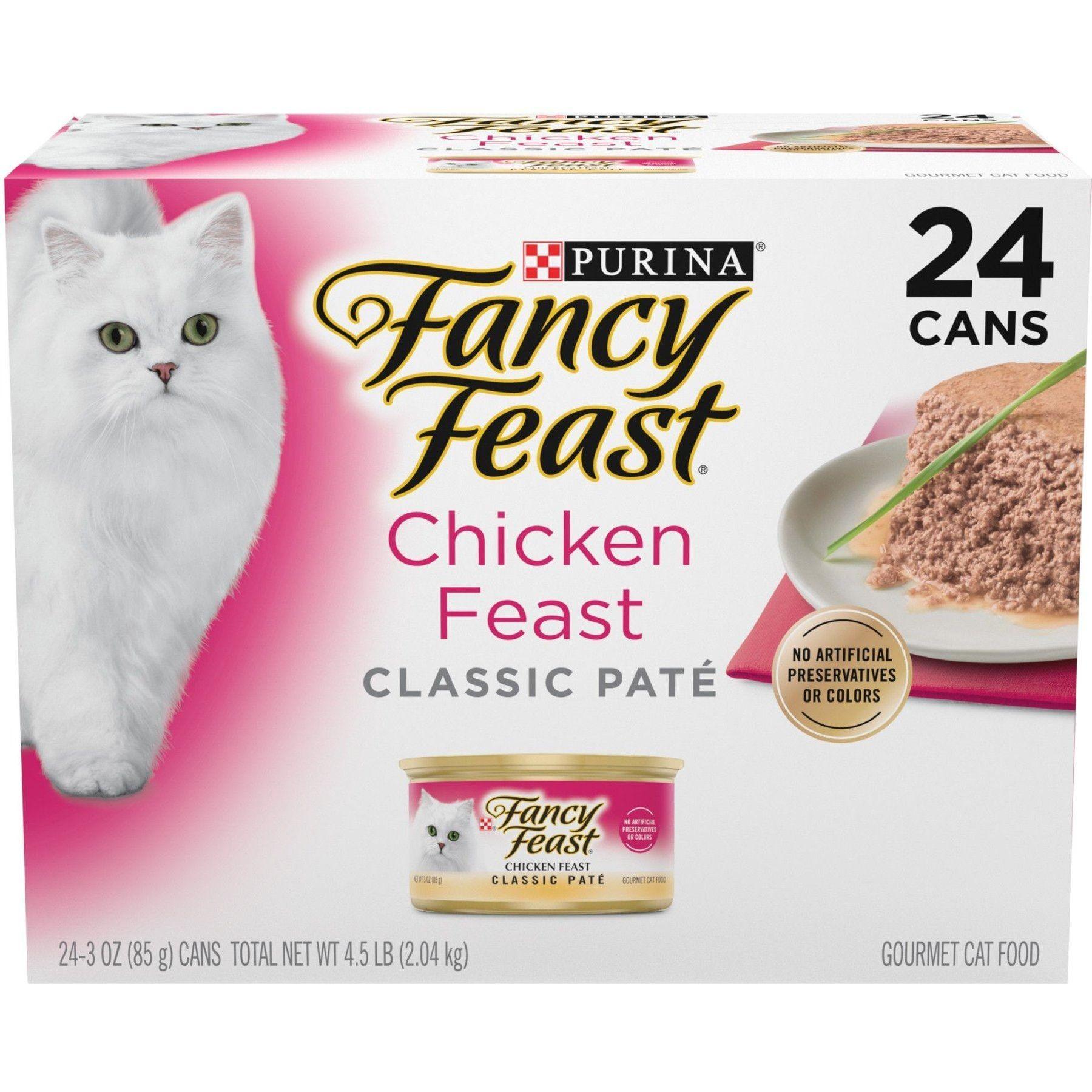
A low-cost grain-free chicken pate in 3-oz cans to discuss with your vet for an adult diabetic cat.
Webvet may earn a commission when you click through to Chewy, at no extra cost to you.
Fancy Feast Classic Pate Chicken Feast is a grain-free chicken pate sold in 3-oz cans, and its product description calls it a complete and balanced meal for adult cats. It is listed at $22.86 on Chewy for a case of 24 when checked in November 2026, which makes it the lowest-cost canned option here.
- Suits: an adult cat that likes smooth pate, in a home where the budget matters and the vet has approved the label estimate.
- Skip it if: the cat is a kitten, has kidney disease, or needs a calorie-controlled weight-loss plan the vet has designed.
- Check first: run the label carbohydrate estimate on the exact variety, because other Fancy Feast recipes are different formulas.
The small can makes portioning simple, which AAHA lists as one advantage of canned food for diabetic cats.
Dr. Elsey's cleanprotein Chicken Recipe Wet Cat Food: best premium over-the-counter canned food
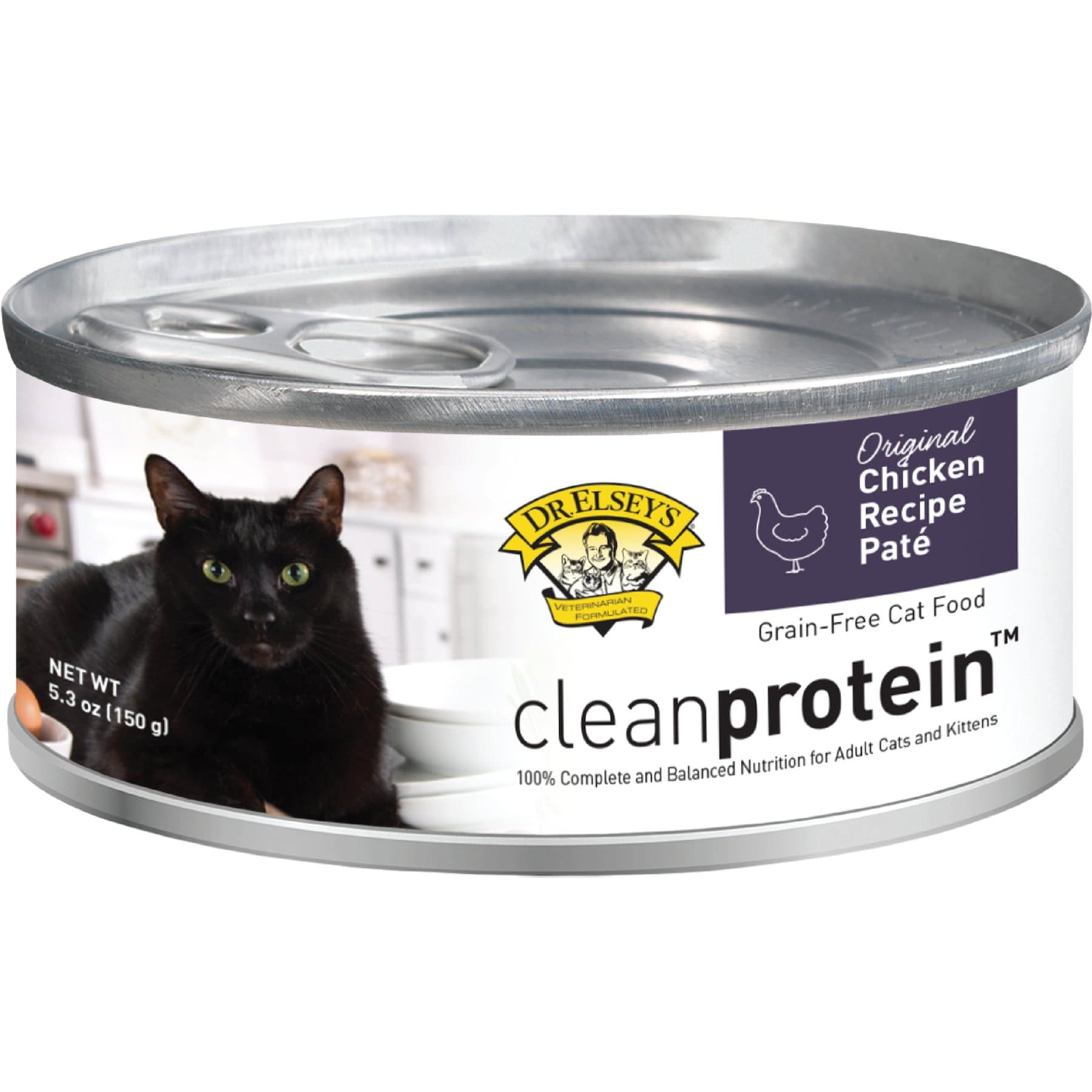
A chicken-first canned food its maker describes as grain-free and low-carb, for cats whose vet approves it.
Webvet may earn a commission when you click through to Chewy, at no extra cost to you.
Dr. Elsey's cleanprotein Chicken Recipe lists animal-based protein as its first ingredient, and its product description calls it a grain-free, low-carb food with balanced nutrition for cats of all ages. It comes in 5.3-oz cans and is listed at $50.28 on Chewy for a case of 24 when checked in November 2026.
- Suits: owners who want a canned food described as low-carb, without a prescription.
- Skip it if: the cat has kidney disease or another condition where the vet needs to choose the diet for that problem first.
- Note: the larger can means portions have to be measured against the calorie target the vet sets.
Dr. Elsey's cleanprotein Chicken Kibble Cat Dry Food: best over-the-counter dry food
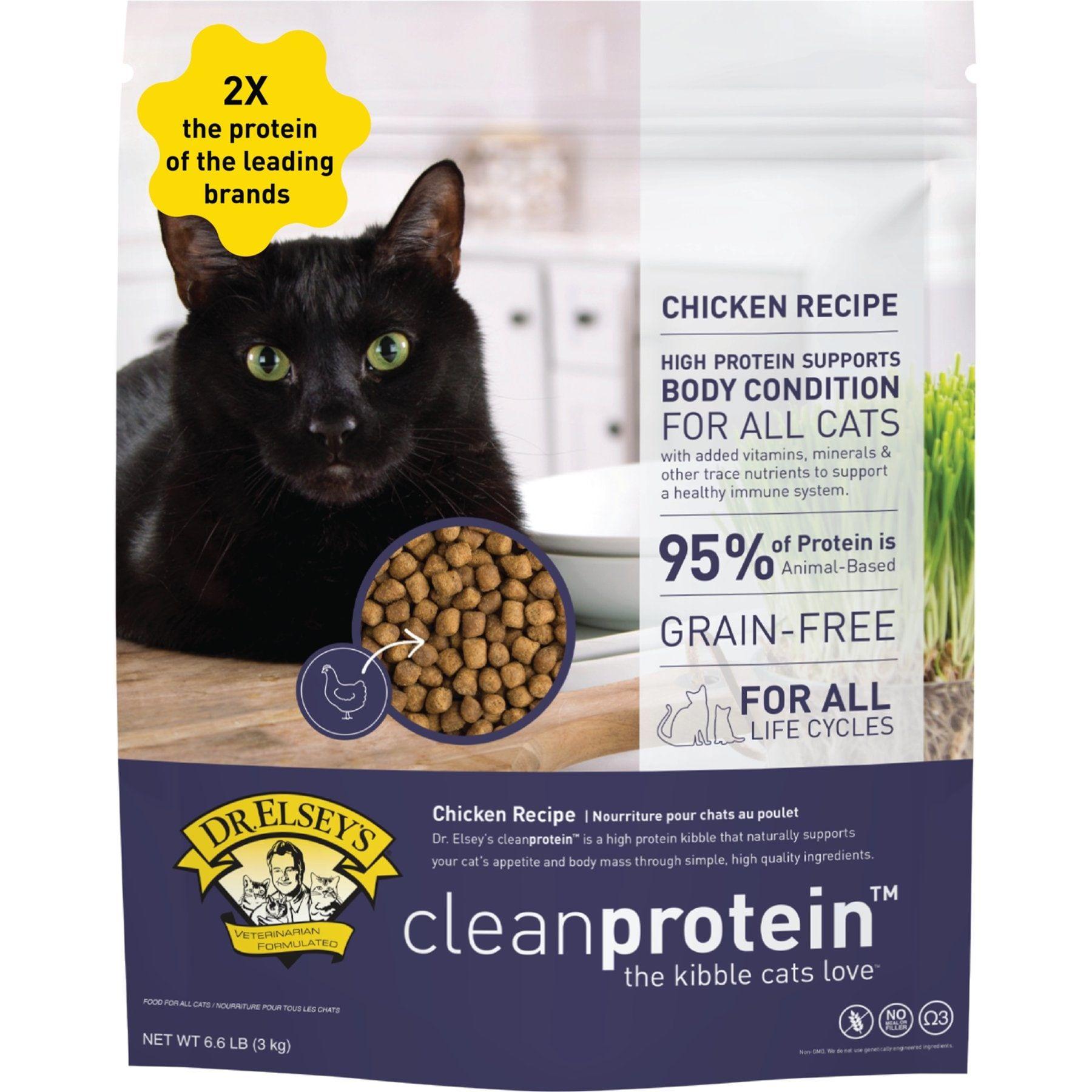
A chicken-first kibble for a diabetic cat that will not eat canned food, used with the vet's agreement.
Webvet may earn a commission when you click through to Chewy, at no extra cost to you.
Some diabetic cats simply refuse canned food. Dr. Elsey's cleanprotein Chicken Kibble has chicken as its first ingredient, and its product description says it can support the nutritional needs of active, overweight, and diabetic cats. It is listed at $57.99 on Chewy for a 6.6-lb bag when checked in November 2026.
- Suits: a cat that eats only dry food, or one moving slowly toward a mix of canned and dry, which AAHA accepts.
- Skip it if: the cat will eat canned food, since AAHA prefers canned for lower carbohydrate and calories.
- Note: dry food packs more calories into each bite, so measure every portion.
The next three foods are veterinary diets. Purina Pro Plan Veterinary Diets and Hill's Prescription Diet products need a veterinarian's authorization, and Chewy asks for it at checkout. They sit in their own tier because the vet prescribes them for a diagnosed condition.
Purina Pro Plan Veterinary Diets DM Dietetic Management Savory Selects Wet Cat Food: best prescription wet diet
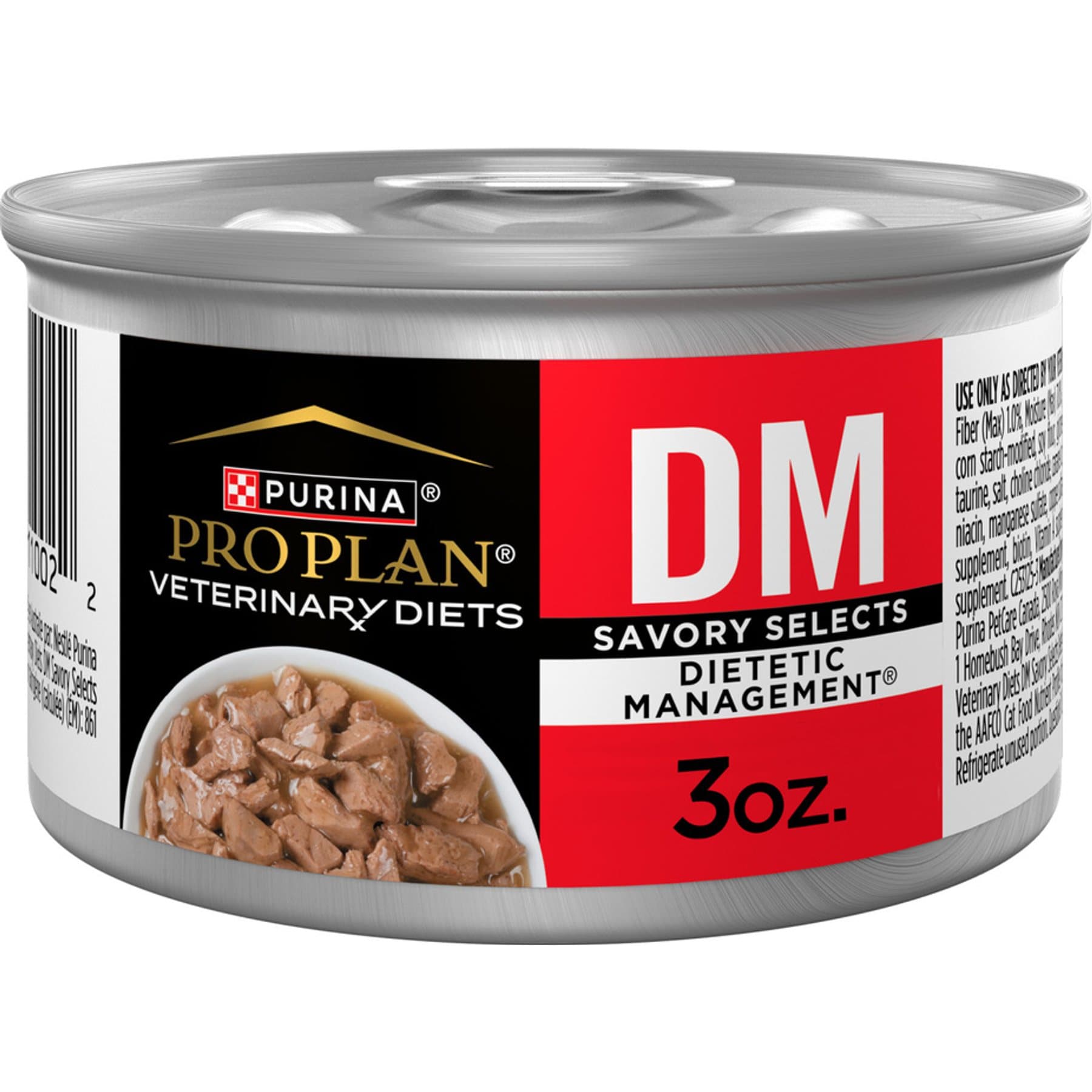
A prescription canned diabetic diet in 3-oz cans for cats whose vet authorizes it.
Webvet may earn a commission when you click through to Chewy, at no extra cost to you.
Purina Pro Plan Veterinary Diets DM Dietetic Management Savory Selects is a canned prescription formula, and its product description calls it nutritionally balanced, high in protein, and low in fat. It is listed at $53.99 on Chewy for a case of 24 3-oz cans when checked in November 2026.
- Suits: a newly diagnosed cat whose vet wants a therapeutic diabetic diet from the start.
- Skip it if: the vet has not authorized it, or another condition such as advanced kidney disease takes priority.
- Note: AAHA warns that therapeutic diabetic diets are often calorie dense, so portions follow the vet's calorie target.
Hill's Prescription Diet m/d GlucoSupport Chicken & Liver Stew Wet Cat Food: best prescription wet alternative
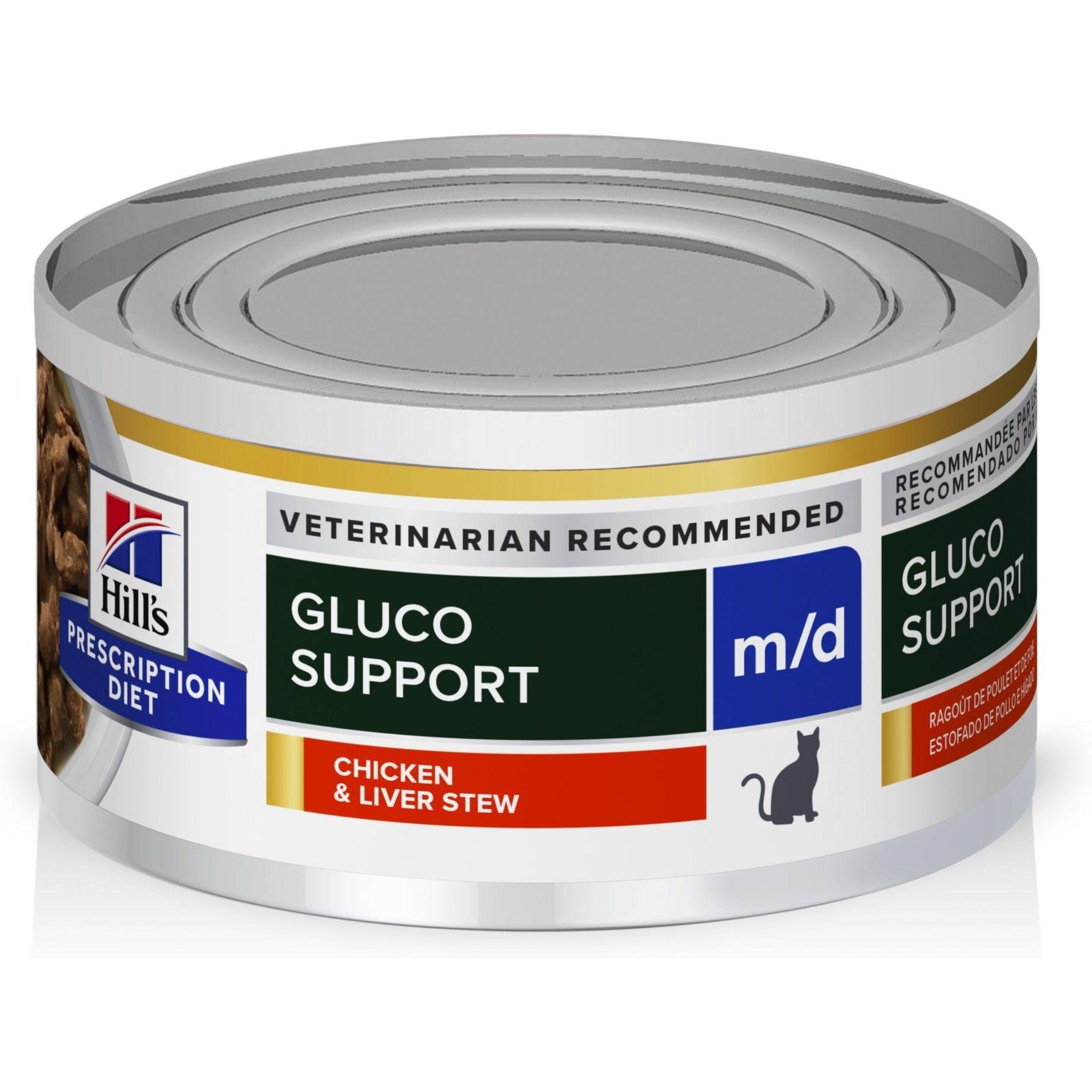
A prescription m/d GlucoSupport canned stew for diabetic cats whose vet also wants weight control.
Webvet may earn a commission when you click through to Chewy, at no extra cost to you.
Hill's Prescription Diet m/d GlucoSupport Chicken & Liver Stew is a prescription canned food whose product description says it was formulated by nutritionists and veterinarians, with a focus on healthy weight and therapeutic levels of L-carnitine. It comes in 2.9-oz cans and is listed at $57.99 on Chewy for a case of 24 when checked in November 2026.
- Suits: an overweight diabetic cat whose vet wants weight loss and glucose control in one diet.
- Skip it if: the vet has not prescribed it, or the cat refuses stew-style food.
- Dry version: the same line comes as Hill's Prescription Diet m/d Cat Food, Dry - 4 lb, listed at $40.99 on Chewy when checked in November 2026, also vet-authorized only.
Purina Pro Plan Veterinary Diets DM Dietetic Management Dry Cat Food: best prescription dry diet
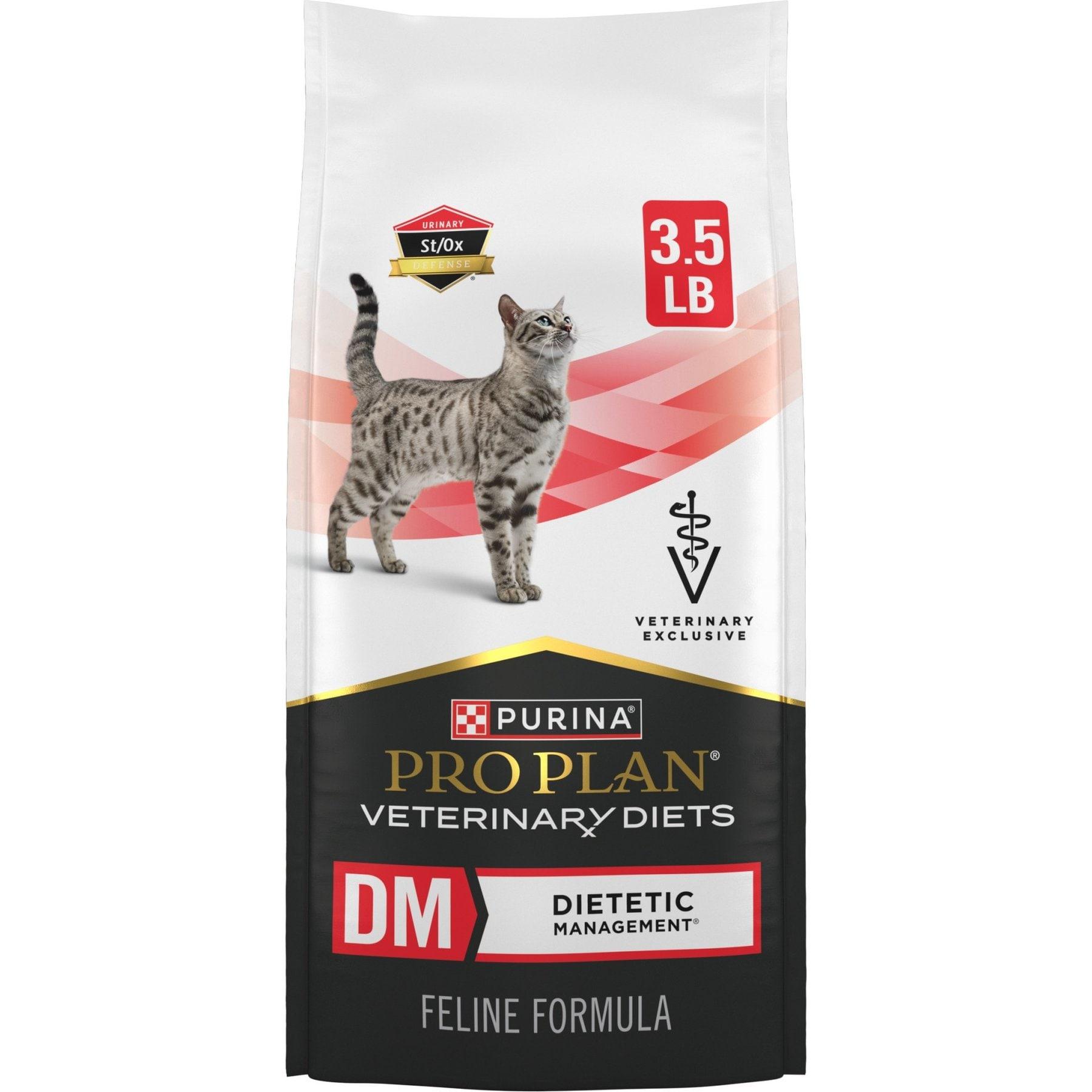
A prescription dry diabetic diet for cats on a vet plan that will only eat kibble.
Webvet may earn a commission when you click through to Chewy, at no extra cost to you.
The product description for Pro Plan Veterinary Diets DM Dietetic Management Dry calls it high in protein and low in carbs, made to support healthy glucose levels and lean body mass. It is listed at $37.99 on Chewy for a 3.5-lb bag when checked in November 2026.
- Suits: a cat on a prescription plan that eats only kibble, or a household that needs a dry option for part of the day.
- Skip it if: the cat will eat the canned DM formula, which brings the canned advantages AAHA lists.
- Note: measure each meal, because dry food is the most calorie-dense form.
Prescription vs over-the-counter diabetic cat food: which tier fits your cat
| Cat situation | Food tier | Wet or dry | Vet step before the change |
|---|---|---|---|
| Newly diagnosed and starting insulin | Prescription diabetic diet or a vet-approved low-carbohydrate canned food | Wet preferred | Vet chooses the food at diagnosis, sets the insulin dose, and schedules the first glucose curve |
| Stable on insulin and eating well | Either tier, if the carbohydrate estimate fits | Wet, or a wet and dry mix | Vet approves the switch first and plans a recheck, because insulin needs may fall |
| In diabetic remission, off insulin | Stay on a low-carbohydrate canned food | Wet preferred | Vet keeps regular rechecks to catch a relapse |
| Overweight with diabetes | Prescription diabetic or weight-loss diet chosen by the vet | Wet, measured portions | Vet sets the calorie target and a safe weekly rate of loss |
| Diabetes plus kidney disease | Diet chosen for the condition most likely to affect survival | Per the vet | Vet decides between a kidney diet and a diabetic diet |
| Multi-cat household | Over-the-counter complete and balanced food all cats can share, or separate feeding | Wet preferred | Vet confirms the shared food suits every cat; a timed feeder can help |
| Will only eat dry food | Low-carbohydrate dry food, prescription or over-the-counter | Dry, or a slow move to a mix | Vet sets measured portions and checks insulin needs after any change |

Both tiers can feed a diabetic cat well. The real difference is who chooses and how closely the food is matched to the cat.
Prescription diabetic cat food, such as Hill's Prescription Diet or a Royal Canin Veterinary Diet formula, is sold only with a vet's authorization. Over-the-counter (OTC) diabetic cat food is any regular food whose label fits the low-carbohydrate target, and it can be bought without a vet prescription.
What is the best food to feed a diabetic cat?
The best food for a diabetic cat is a complete and balanced, high-protein, low-carbohydrate diet the cat eats reliably, usually canned. AAHA's ideal is more than 40 to 45 percent of calories from protein and under 12 to 15 percent from carbohydrate. Whether that comes from a prescription diet or an over-the-counter food is the vet's call.
AAHA puts reliable eating first: it advises prioritizing steady intake of a complete and balanced diet over fine-tuning specific nutrients. A perfect formula the cat refuses is worse than a good one it eats every day.
When a prescription diet usually makes sense:
- The cat is newly diagnosed and the vet wants a known, consistent formula while the insulin dose is being set.
- The cat is overweight and needs a diet designed for weight loss. AAHA notes that obese diabetic cats may do better on a moderate-carbohydrate, lower-calorie weight-loss diet, which is also covered in WebVet's guide to weight management cat food.
- The cat has another condition the food has to address at the same time.
When an over-the-counter food can work:
- The cat is stable, eating well, and the vet agrees the label carbohydrate estimate fits.
- Cost or supply makes a prescription diet hard to keep up week after week.
- The cat is in diabetic remission and needs a canned low-carbohydrate diet long term, which AAHA recommends for all cats in remission.
Many owners ask for a non-prescription diabetic cat food list. In practice, the list is any complete and balanced canned food that passes the carbohydrate check. For a cat that will only eat kibble, a dry food such as the Dr. Elsey's kibble in the picks can also be bought without a vet prescription, once its label passes the same carbohydrate check.
A low-cost pate such as Fancy Feast Classic Pate Chicken Feast Grain-Free Pate Canned Cat Food, 3-oz can, case of 24 and a vet-only formula such as Purina Pro Plan Veterinary Diets DM Dietetic Management Savory Selects Wet Cat Food, 3-oz can, case of 24 can both land on the right side of that line.
Whichever tier the vet chooses, the label should show:
- An AAFCO complete and balanced statement for adult maintenance or all life stages.
- A carbohydrate estimate under AAHA's target of 12 to 15 percent of calories.
- A calorie count per can or cup that fits the daily target the vet sets.
Not every low-carb food is a good choice, though. VCA's nutrition guidance points out that many low-carbohydrate diets are calorie dense and linked to obesity, and that there is no single best diet for all diabetic cats. The calorie figure on the label matters as much as the carbohydrate estimate.
Other illnesses change the choice. AAHA recommends choosing the diet for the condition most likely to affect survival, for example a kidney diet instead of a diabetic diet in a cat with advanced kidney disease in cats. Owners weighing a phosphorus-restricted food can compare options in the guide to low phosphorus cat food, always after the vet's staging.
Can a non-diabetic cat eat diabetic cat food? Often, yes, when it is an over-the-counter complete and balanced food that matches the other cat's life stage. Prescription diets are a different matter, and the vet should confirm before a healthy housemate shares them.
Wet vs dry food for diabetic cats: the case for low-carb canned food
Canned food is usually the better choice for a diabetic cat. AAHA lists four reasons why canned food usually beats dry: lower carbohydrate levels, easier portion control, fewer calories per mouthful, and extra water intake. Cornell adds that a wet-food only diet may benefit many diabetic cats.

The calorie point is easy to overlook. VCA notes that canned diets are less calorie dense than dry kibble, so a cat can eat a larger, more satisfying volume for the same calories. That helps with weight control, which matters because obesity drives insulin resistance.
Water matters too. Diabetic cats often drink and urinate more, so constant access to fresh water is part of care, and WebVet's guide on how much water a cat should drink explains what normal intake looks like.
Choosing the best wet cat food for diabetic cats:
- Pick a complete and balanced canned food with a low carbohydrate estimate and a high protein share.
- Prefer pate or chunks without thick gravy unless the label estimate confirms the gravy recipe is still low in carbohydrate.
- Compare calories per can so the daily total matches the vet's target.
- Read grain free as a description of ingredients, not a carbohydrate figure, and run the label check anyway.
- A canned food such as Dr. Elsey's cleanprotein Chicken Recipe Wet Cat Food, 5.3-oz can, case of 24 is one over-the-counter example to run through that check.
Numbers matter more than brands. A Purina, Hill's, Royal Canin, or Fancy Feast food can be a good choice or a poor one depending on the exact recipe, so the label check decides which recipe qualifies. WebVet's roundup of the best wet cat food covers more canned options for healthy cats.
Can dry food cause diabetes in cats?
Dry food has not been proven to cause diabetes, but one large study links it to higher risk in normal-weight cats. In a Swedish study of 396 diabetic cats in the Journal of Veterinary Internal Medicine, normal-weight cats eating mostly dry food had higher diabetes risk than wet-fed cats. Obesity, inactivity, and greedy eating also raised risk.
The authors themselves urge caution, because the carbohydrate content of the foods in the study was unknown. Cornell's list of established risk factors names obesity, age, inactivity, male sex, and steroid use, and notes that obese cats are up to four times more likely to develop diabetes. Weight control matters more than form alone.
When dry diabetic cat food still has a place:
- The cat refuses canned food and would otherwise eat poorly, which AAHA treats as a bigger problem than food form.
- The vet approves a dry food whose label passes the carbohydrate check, either over-the-counter like Dr. Elsey's cleanprotein Chicken Kibble Cat Dry Food, 6.6-lb bag or prescription like Purina Pro Plan Veterinary Diets DM Dietetic Management Dry Cat Food, 3.5-lb bag.
- The household feeds a mix of canned and dry, which AAHA lists as acceptable for diabetic cats.
Dry cat food for diabetic cats works best in measured portions, with canned meals added wherever the cat accepts them. Some kibbles are high in protein and low in carbohydrate, but dry food still packs more calories into each bite than canned.
Never change a diabetic cat's food on insulin without your vet: the low blood sugar boundary
Never switch a cat on insulin to a new food without the vet's plan; this boundary comes before brand, price, or form. A new, lower-carbohydrate food can make the same insulin dose too strong. That mismatch is what causes low blood sugar after a diet change, and it is why the vet has to plan every switch.

The evidence for the risk is direct. VCA explains that a high-protein, low-carbohydrate diet lowers the requirement for insulin. In an earlier study summarized in the Journal of Feline Medicine and Surgery, nine diabetic cats moved to a low-carbohydrate canned diet all needed less insulin, and three stopped insulin entirely.
AAHA's remission section adds a second danger. A cat on insulin that goes into remission without anyone noticing is vulnerable to life-threatening insulin-induced hypoglycemia. A diet change can help bring on remission, which is good news only if the vet is watching.
Signs of hypoglycemia to know before any food change:
- Weakness, lethargy, or seeming sedated when called.
- Wobbling, lack of coordination, or a drunken walk.
- Shaking, vomiting, seizures, or collapse.
Cornell lists these signs and warns that hypoglycemia can be fatal if left untreated. VCA calls low blood sugar a medical emergency and advises checking blood glucose if there is a home meter, then seeking immediate veterinary attention.
The UC Davis owner instructions tell owners to offer food first, to rub a little corn syrup on the gums if the cat will not eat, and to contact the vet at once. They also say not to give more insulin until the vet says so.
What the vet does when a diet changes:
- Decides whether the insulin dose should be reduced before or during the switch.
- Schedules glucose checks, often a glucose curve or continuous glucose monitor readings, while the new food takes effect.
- Watches for the falling insulin needs that can signal diabetic remission.
Watch the litter box as well. Diabetic cats often urinate more, but a cat that strains and passes little or no urine may have a blockage, which the Cornell Feline Health Center's urinary guidance calls an absolute emergency.
Cornell is clear that owners who monitor at home should never change the insulin dose without talking to the vet first.
A cat that refuses its new food is also a concern: AAHA advises veterinary evaluation for any drop in appetite, and VCA notes that a missed meal may mean hypoglycemia. WebVet's guide to a cat not eating explains why appetite loss in cats is never something to wait out.
How to switch a diabetic cat to a new food and how often to feed
Switch a diabetic cat to a new food only on a plan agreed with the vet, and feed at least two meals a day timed with insulin unless the vet advises otherwise. The vet sets the pace, the recheck schedule, and any insulin change, and the owner keeps the routine steady while the cat adjusts.

Steps for switching a diabetic cat to a new food:
- Show the vet the new food's label and the carbohydrate estimate before buying a full case.
- Agree on the start date, whether the insulin dose changes, and when the next glucose check happens.
- Keep feeding and injection times the same each day while the new food is introduced.
- Watch appetite at every meal and know the signs of low blood sugar.
- Weigh the cat on the same scale once or twice a month, as AAHA advises.
- Report any change in thirst, urination, or energy to the vet.
UC Davis notes that a predictable, stable routine of feeding and medication is tremendously helpful for keeping a diabetic cat regulated. Its owner instructions also stress that the most important thing is that the cat keeps eating regularly.
How many times a day should a diabetic cat be fed?
Most diabetic cats do well on at least two meals a day, timed with twice-daily insulin, though grazing can also work. AAHA says meal feeding is ideal with insulins that peak within a few hours, recommends dividing the daily ration into multiple meals, and accepts grazing when a cat's habits cannot change.
Meal timing around insulin doses depends on the insulin the vet prescribes:
- Intermediate-acting insulin: AAHA prefers portioned meals, and Cornell notes many vets recommend feeding at the time of each injection to avoid a dangerous drop in blood glucose.
- Longer-acting insulin: Cornell says free-choice feeding may be acceptable for grazers on a low-carbohydrate diet, and AAHA says strict meal feeding is not required with glargine U-300.
- Meal before the injection: VCA notes insulin is often given right after the cat has eaten, so the owner knows the meal went down first.
Every clinic gives instructions for what to do with the insulin dose if a meal is refused. Follow that plan exactly and ask the vet if it is unclear.
Portion size comes from the calorie target. WebVet's guides on how much to feed a cat and the cat weight chart help owners see where their cat stands. For an obese diabetic cat, AAHA puts a healthy rate of weight loss at 0.5 to 2 percent of body weight per week.
Treats need a plan too. VCA says treats can be given with caution as part of the nutrition plan the vet agrees, often by setting aside part of the daily ration or giving chosen treats at the same time each day.
How to check carbohydrates on any cat food label
A low carb cat food for a diabetic cat gets under 12 to 15 percent of its calories from carbohydrate, AAHA's target, and most labels do not list that figure, but it can be estimated in a few minutes. AAHA notes that AAFCO's Pet Food Label Modernization rules require carbohydrates on labels, yet many current labels still leave them out. Estimating carbohydrate from a label is the skill that makes any diabetic cat food list usable.
The method comes straight from AAHA's dietary guidance. The guaranteed analysis on every label, which AAFCO requires to show minimum crude protein, minimum crude fat, maximum crude fiber, and maximum moisture, is the starting point.
Step-by-step carbohydrate estimate:
- Find the guaranteed analysis and write down protein, fat, fiber, moisture, and ash.
- If ash is missing, use 2 to 3 percent for canned food or 5 to 8 percent for dry food, as AAHA suggests.
- Add those five numbers and subtract the total from 100. The answer is the estimated carbohydrate as fed.
- The best way to compare foods fairly is to convert the result to a share of calories with a free tool such as the Tufts Petfoodology nutrient converter.
- Compare the result with AAHA's target of under 12 to 15 percent of calories from carbohydrate.
Here is how the arithmetic works on an example. These numbers are made up for illustration and do not come from a real product: a canned label reading 11 percent protein, 5 percent fat, 1 percent fiber, 78 percent moisture, and 2.5 percent ash. Those add up to 97.5, so carbohydrate is about 2.5 percent as fed. Run that through a converter to see the share of calories before deciding.
Why the estimate is only an estimate:
- Tufts Petfoodology notes that guaranteed analysis figures are minimums or maximums, not exact amounts, and that nutrients are usually given as fed.
- The maker's typical or average analysis is more accurate, so it is worth asking the company for it.
- For prescription diets, ask the vet for the maker's published carbohydrate data rather than relying on the label alone.
The goal is a high protein, low carb cat food, not low carbohydrate alone. AAHA's ideal is more than 40 to 45 percent of calories from protein, and WebVet's guide to high protein cat food explains how to compare protein across wet and dry foods.
Some clinics hand out a printed list of approved foods. The label method lets owners check any food that is not on it, and the vet can confirm the result before the cat ever tastes it.
Diabetic cat food questions
Frequently Asked Questions
Can a diabetic cat eat dry food?
Yes, if the vet agrees and the food is chosen carefully. AAHA accepts canned food or a mix of canned and dry, but dry food is usually higher in carbohydrate and calories per bite than canned. A cat that will only eat dry food needs a low-carbohydrate kibble and measured portions set by the vet.
Is there an over-the-counter diabetic cat food?
Yes. No regular food is labeled for diabetes, but many over-the-counter canned foods have a carbohydrate estimate low enough to suit a diabetic cat. Prescription diets need a vet's authorization; over-the-counter foods do not, though a cat on insulin still switches only with the vet's agreement and a plan for rechecks.
Is Fancy Feast good for diabetic cats?
Some Fancy Feast recipes can suit a diabetic cat, but it depends on the exact variety. Pate recipes and gravy recipes are different formulas, so a result for one pate does not carry over to a gravy line. Run the carbohydrate estimate on each label, check the calories per can, and confirm the choice with the vet.
Can non-diabetic cats eat diabetic cat food?
Often, yes, in a multi-cat home where an over-the-counter complete and balanced food carries an AAFCO statement for the other cat's life stage. Kittens need a growth or all life stages food. Prescription diets are formulated for a medical condition, so ask the veterinarian before a healthy cat eats one long term.
Can I make homemade food for a diabetic cat?
Only with expert help. A homemade diet has to be complete and balanced, which AAFCO defines as containing all required nutrients in the correct ratios. AAHA notes that a veterinary nutritionist can help design a nutrition plan, especially for cats with several conditions, and the vet still sets the insulin plan around it.
What should you not feed a diabetic cat?
Avoid making a high-carbohydrate food the main diet. AAHA advises limiting carbohydrate because it may contribute to high blood sugar, and it does not typically recommend high-fiber diets for diabetic cats. In practice, run the label estimate on dry kibble and gravy-style recipes before feeding them, keep treats inside the plan the vet agrees, and never add a new food for a cat on insulin without the vet.
Veterinarian · BVMS MRCVS
Dr. Pippa Elliott, BVMS, MRCVS, is a veterinarian with nearly 30 years of experience in companion animal practice. Dr. Elliott earned her Bachelor of Veterinary Medicine and Surgery from the University of Glasgow. She was also designated a Member of the Royal College of Veterinary Surgeons. Married with 2 grown-up kids, Dr. Elliott has a naughty Puggle named Poggle, 3 cats and a bearded dragon.


