How Much Water Should a Cat Drink a Day?
A healthy cat’s total daily water comes from food and drinking. Use this vet-reviewed weight chart and three-day measuring method to estimate intake and spot a meaningful change.

BVMS MRCVS
Medically reviewed by Dr. Pippa Elliott, BVMS MRCVS · Last reviewed

This article contains affiliate links. Webvet may earn a commission when you buy through them, at no extra cost to you.
How much water should a cat drink a day? A useful starting estimate is about 4 fluid ounces of total water for every 5 pounds of lean body weight. That means a healthy 10-pound adult cat may need roughly 8 ounces, or 1 cup, from food and drinking water combined. It does not mean the cat must empty an 8-ounce bowl.
Your cat’s usual pattern matters as much as a calculated number. Wet food can supply most of the day’s water, while a cat eating dry food generally needs to drink more. Weather, activity, life stage, health, and individual preference can also change what you see at the bowl. Use the chart and measurement method below to create a practical baseline, then call your veterinarian if intake changes suddenly or comes with illness signs.
 Sponsored
Have a health question about your cat?
Talk to a licensed vet at Dutch over video or message, including nights and weekends.
Use code Pets60
Plans start at $12/month · covers up to 5 pets
- Licensed vets in most states
- Rx for 150+ conditions
- 4.7 on Trustpilot
How much water should a cat drink a day?
The Cornell Feline Health Center gives owners a practical rule: cats generally need about 4 ounces of water per 5 pounds of lean body weight each day. For a 10-pound cat, that works out to about 8 ounces, or 1 cup. Cornell is describing the water the cat gets from every source, not just the amount missing from a bowl.
- 1Count total water, which includes moisture in food plus water your cat drinks.
- 2A practical baseline from Cornell is about 4 fluid ounces per 5 pounds of lean body weight per day.
- 3A 10-pound cat’s rough total is about 8 ounces, 1 cup, or 237 milliliters per day.
- 4Wet-fed cats may visit the bowl less because their food already contains substantial moisture.
- 5Measure at the same time for at least three days because one day may not represent your cat’s usual intake.
- 6Never restrict water. A clear rise or fall from your cat’s normal pattern deserves veterinary attention.

That distinction explains why two equally healthy cats can have very different drinking habits. A cat eating moisture-rich canned food may receive much of the estimate at mealtimes. A cat eating dry kibble receives relatively little water from food and needs to make up more of the difference by drinking. Both cats could reach a similar total while leaving very different evidence at their bowls.
Published research also shows why one number should not be treated as a pass-or-fail test. A 2026 scoping review of water intake in healthy cats found reported total-water values ranging from about 22.8 to 51.2 milliliters per kilogram per day across eligible studies. The authors concluded that the optimal minimum remains uncertain and that diet moisture is a major reason intake differs. Cornell’s rule converts to roughly 52 milliliters per kilogram, so it is best used as a practical planning estimate rather than a diagnostic cutoff.
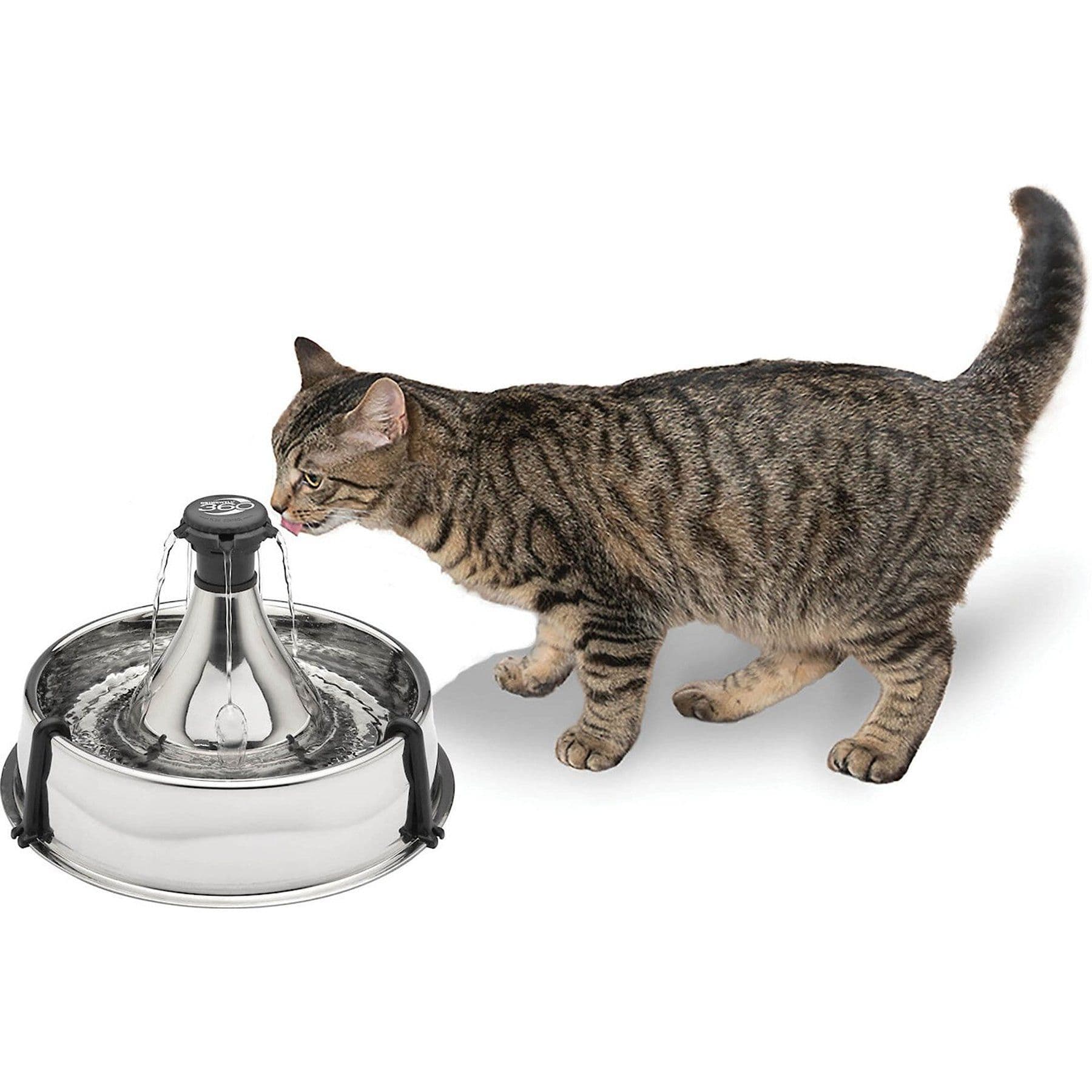
Webvet may earn a commission when you click through to Chewy, at no extra cost to you.
Think in ranges and patterns, not a perfect target
A healthy cat does not need to hit the same milliliter mark every day. The number on a chart is an estimate based mainly on body weight. It cannot fully capture water in treats, a few mouthfuls from a second bowl, a warmer afternoon, a vigorous play session, or normal day-to-day variation.
The most useful questions are therefore:
- Is the estimate based on your cat’s current lean or ideal body weight?
- Have you included the moisture in every food and treat?
- Is your measurement method consistent from one day to the next?
- Is the result close to your cat’s established pattern?
- Has drinking or urination changed noticeably, even if the calculated total still looks ordinary?
Total water is not the same as bowl water
Veterinary nutrition discussions distinguish total water intake from free water intake. Total water includes all moisture consumed in food and liquids. Free water is what a cat drinks from bowls, fountains, glasses, faucets, or outdoor sources. When you ask whether your cat drinks enough, total water is the more meaningful nutrition estimate, but free water is often the only part you can see directly.
This is why a bowl-only calculation can be misleading. Suppose two 10-pound cats each have a rough total-water estimate near 237 milliliters. One eats wet food that supplies about 180 milliliters and drinks another 55 milliliters. The other eats dry food that supplies only about 15 milliliters and drinks about 220 milliliters. Their bowl totals look dramatically different even though their combined totals are similar.
A 2026 study comparing privately owned and colony cats under wet, dry, and mixed feeding conditions observed this same direction of difference. Dry-fed cats consumed the most free water, while wet-fed cats consumed the most total water. The study also found considerable variation among privately owned cats, which is another reason to avoid declaring a cat underhydrated based only on infrequent bowl visits.
Terms to use in your notes
- Food water: Estimated moisture supplied by meals and moisture-rich treats.
- Free water: Water swallowed from bowls, fountains, faucets, or other sources.
- Total water: Food water plus free water.
- Observed water: The amount you can actually account for at home. This may still miss hidden sources and spills.
Cat water intake chart by body weight
The table below converts Cornell’s practical estimate of about 4 fluid ounces per 5 pounds of lean body weight into common household and metric units. Figures are rounded so they are usable at home. They describe approximate total daily water from food and drinking combined.
| Cat’s lean body weight | Approximate total water per day | Fluid ounces | Cups |
|---|---|---|---|
| 5 lb / 2.3 kg | 118 mL | 4 oz | 1/2 cup |
| 8 lb / 3.6 kg | 189 mL | 6.4 oz | 0.8 cup |
| 10 lb / 4.5 kg | 237 mL | 8 oz | 1 cup |
| 12 lb / 5.4 kg | 284 mL | 9.6 oz | 1.2 cups |
| 15 lb / 6.8 kg | 355 mL | 12 oz | 1 1/2 cups |
| 20 lb / 9.1 kg | 473 mL | 16 oz | 2 cups |
For a weight not shown, use either calculation:
- Pounds: Body weight in pounds multiplied by 0.8 equals approximate fluid ounces of total water per day.
- Kilograms: Body weight in kilograms multiplied by about 52 equals approximate milliliters of total water per day.
This is a weight-based cat water intake calculator, not a medical fluid prescription. It also answers the practical unit questions behind “how much water should a cat drink in mL?” and “how much water should a cat drink in oz?”
For example, an 11-pound cat has a planning estimate of 11 multiplied by 0.8, or 8.8 fluid ounces. That is about 260 milliliters. Some days may be lower or higher, and the value should not override a meaningful change in the cat’s normal behavior.
Which body weight should you use?
Use current body weight for a cat in healthy body condition. If your veterinarian has said your cat is overweight or underweight, ask whether an ideal or lean body weight is more appropriate for estimating routine needs. A chart based on excess body fat can produce an artificially high target, while an out-of-date weight can make the estimate too low.
Reliable weighing options include:
- A veterinary clinic scale at a routine visit
- A pet scale used on a stable, level surface
- A household scale by weighing yourself with and without the cat, recognizing that small differences may be imprecise
This chart is not appropriate for setting a medical fluid plan. Kittens, pregnant or nursing cats, cats with fever or fluid loss, and cats with kidney, heart, urinary, endocrine, or other disease may need individualized veterinary guidance. Never use a general chart to change prescribed subcutaneous fluids, tube-feeding water, medication dilution, or water access.
Count the water in wet food
Wet food can provide a large share of a cat’s total daily water. Cornell notes that canned food may contain up to about 80% water. Dry food usually contains far less. The useful number for your own calculation is the `moisture` percentage in the guaranteed analysis on the package, combined with the number of grams your cat actually eats.
A simple estimate is:
Grams of food eaten x labeled moisture percentage = approximate milliliters of water from food
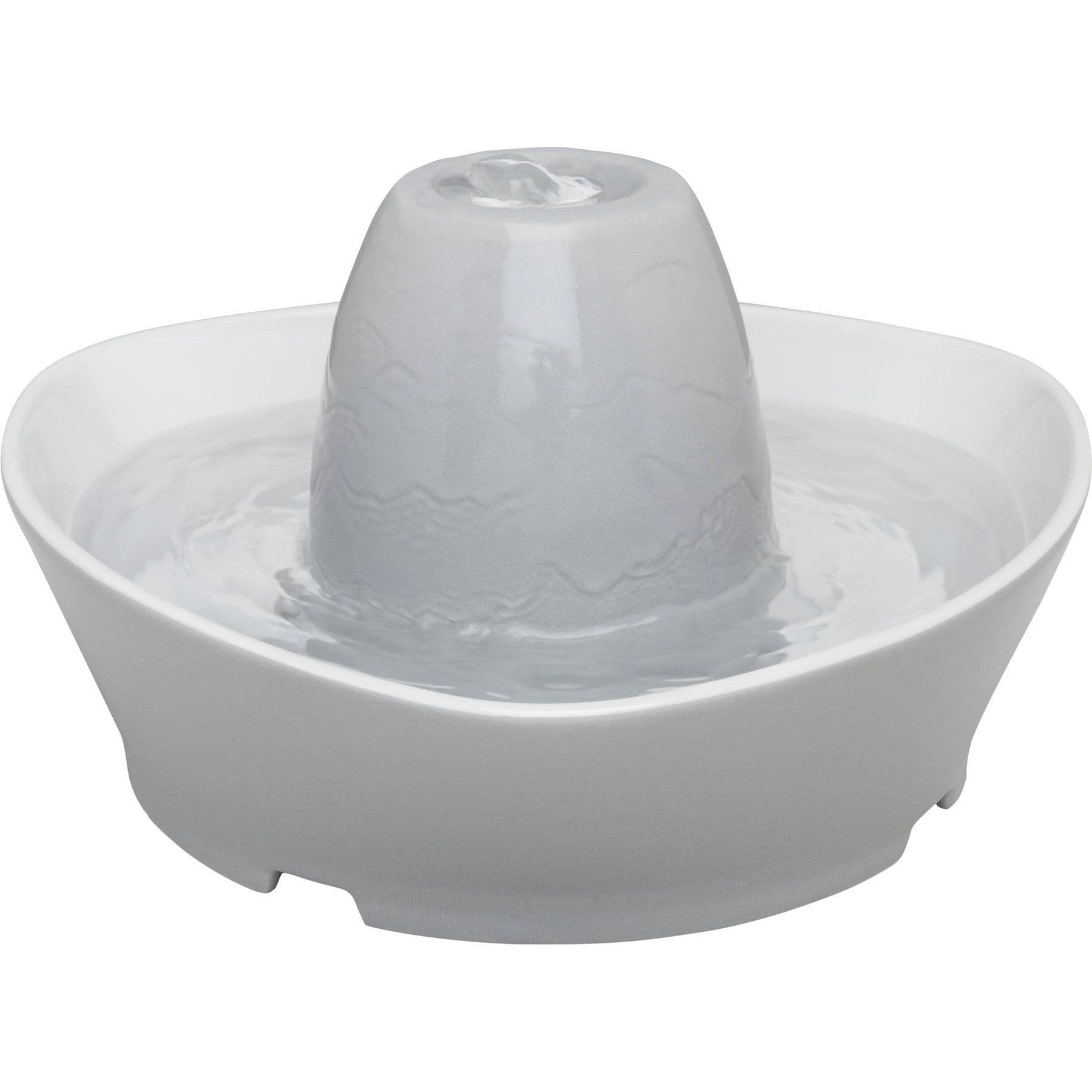
Webvet may earn a commission when you click through to Chewy, at no extra cost to you.

How much water should a cat drink on wet food?
Consider a healthy 10-pound cat with a rough total-water estimate of 237 milliliters per day. The cat is offered two 100-gram portions of food labeled 78% moisture and eats all of both portions.
The calculation is:
- Add the amount eaten: 100 grams plus 100 grams equals 200 grams.
- Convert 78% to a decimal: 0.78.
- Multiply: 200 grams x 0.78 equals about 156 milliliters of food water.
- Compare with the planning estimate: 237 minus 156 leaves about 81 milliliters.
The 81-milliliter difference is not a prescription telling the cat exactly what to drink. It is a rough way to understand why the bowl may fall by only a few ounces. The food label normally states a maximum moisture percentage, actual moisture can vary, and the cat may get water from another source.
How much water should a cat drink on dry food?
Now consider a 10-pound cat that eats 60 grams of dry food labeled 10% moisture. That meal supplies approximately 6 milliliters of water. Against the same 237-milliliter planning estimate, about 231 milliliters would need to come from free water or other moisture sources.
This comparison does not mean wet food is automatically right for every cat or that dry food is unsafe. Diet decisions also involve complete and balanced nutrition, calories, dental and medical needs, food acceptance, cost, and your veterinarian’s recommendations. The calculation simply shows why diet format changes visible drinking.
Include what was eaten, not just what was served
Food left in the dish did not supply water to the cat. For a more realistic estimate, weigh or record the portion served and subtract what remains. If you add water to food, measure that amount separately and include only what the cat consumes.
Also account for moisture-rich extras:
- Wet treats or puree treats
- Water mixed into a meal
- Rehydrated freeze-dried food
- Broth specifically formulated as safe for cats
- Water used with a veterinary nutrition plan
Do not improvise with salty stock, onion or garlic ingredients, milk, sports drinks, or flavored human beverages. If your cat will not take in normal food or water, seek veterinary advice rather than trying to disguise a potentially urgent problem with an unapproved liquid.
How to estimate your cat’s complete daily total
The most useful home estimate combines the weight baseline, food moisture, and observed free water. Each component answers a different question. The weight estimate creates a reference point. The food calculation explains hidden water. The drinking measurement reveals what the cat takes from visible sources.
Follow this framework:
- Calculate the planning baseline. Multiply pounds by 0.8 for fluid ounces, or kilograms by about 52 for milliliters.
- Estimate food water. Multiply grams actually eaten by the labeled moisture percentage written as a decimal.
- Measure free water. Track the amount offered and remaining across every source you can control.
- Add the observed parts. Estimated food water plus measured free water equals observed total water.
- Mark uncertainty. Note spills, evaporation, outdoor access, shared bowls, dripping faucets, and any source you cannot measure.
- Average at least three comparable days. Use the same method and similar feeding routine each day.
- Compare patterns, not just numbers. Look for a sustained or sudden shift from the cat’s own established result.
Complete example for one cat
Milo is a healthy 12-pound indoor cat in normal body condition. His planning estimate from the chart is about 284 milliliters of total water per day. He eats 170 grams of wet food labeled 78% moisture and 15 grams of dry food labeled 10% moisture.
His estimated food water is:
- Wet food: 170 x 0.78 = about 133 milliliters
- Dry food: 15 x 0.10 = about 1.5 milliliters
- Estimated food-water subtotal: about 134.5 milliliters
During a repeatable 24-hour measurement, the controlled bowl and fountain lose a combined 138 milliliters after the owner adjusts for an obvious spill. Estimated observed total water is therefore about 272.5 milliliters. That is close to the 284-milliliter planning estimate, but the useful conclusion is not that Milo is exactly 11.5 milliliters short. Food-label moisture is approximate, the fountain measurement has error, and normal needs vary.
The useful conclusion is that Milo’s combined pattern is in the neighborhood of the planning estimate. His owner now has a method and a baseline. If the same setup later loses 300 milliliters a day while food and weather stay similar, that change is more informative than whether one isolated day was above or below a chart value.
Why you should not subtract to a rigid drinking quota
It is tempting to calculate total estimate minus food water and treat the result as a required bowl amount. That creates false precision. The starting estimate is approximate, food labels usually give a maximum moisture value, and measured bowl loss includes more than water swallowed. Research has not established one optimal minimum that fits every healthy cat under every feeding and environmental condition.
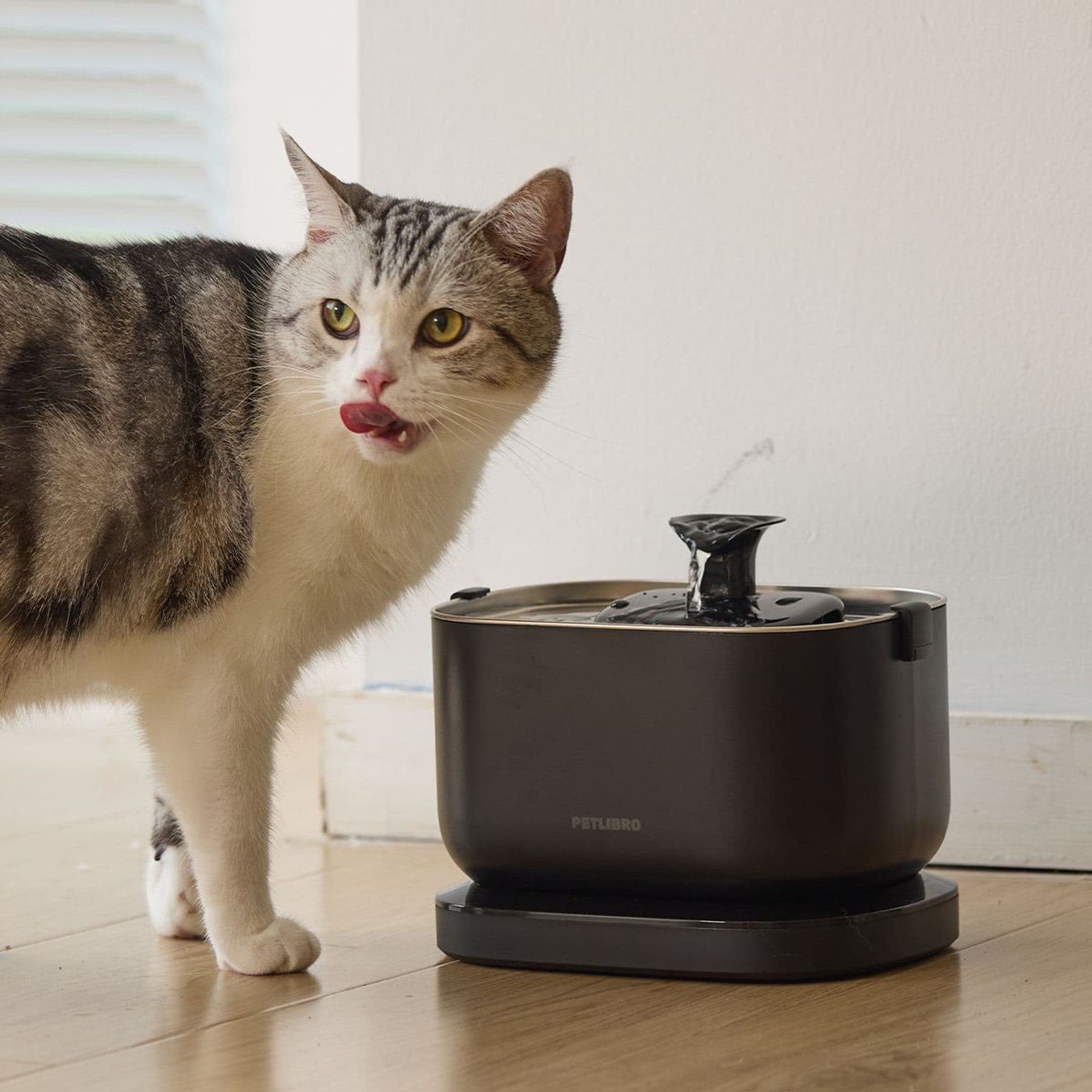
Webvet may earn a commission when you click through to Chewy, at no extra cost to you.
Use the subtraction as an orientation tool:
- A wet-fed cat may need much less visible bowl water than expected.
- A dry-fed cat normally relies more heavily on free water.
- A large mismatch repeated across comparable days deserves a closer look.
- A sudden behavioral change matters even when the arithmetic appears acceptable.
SponsoredVet care that's always there
Unlimited video calls and messaging with licensed vets for less than a typical vet visit. One membership covers up to five pets.
Use code Pets60
Plans start at $12/month · covers up to 5 pets
- Licensed vets in most states
- Rx for 150+ conditions
- 4.7 on Trustpilot
How to measure how much your cat drinks
A measured amount is more useful than impressions such as “the bowl looked low” or “I saw her drink twice.” Use containers you can control and measure at the same time each day. A gram scale is usually easier and more precise than reading a wide measuring cup.
How many times a day should a cat drink water? There is no universal visit count. Measure cat water intake as a combined daily total because one cat may take a few long drinks while another takes many small drinks.

The three-day bowl method
- Choose a normal period. Avoid starting on a travel day, immediately after a diet change, or during unusual heat unless that condition is what you need to document.
- List every accessible water source. Include bowls, fountains, dripping faucets, pet glasses, outdoor dishes, and another animal’s bowl.
- Remove unsafe or accidental sources. Close toilets, empty standing water, and prevent access to containers that could hold cleaners, antifreeze, plant treatments, or other toxins.
- Weigh the clean, dry bowl. Record the empty bowl’s weight so you do not mistake the container for water.
- Add a measured amount. Either pour a known volume or weigh the filled bowl. One gram of water is approximately 1 milliliter.
- Record every refill. Add refills to the day’s starting amount rather than resetting the count.
- Measure what remains 24 hours later. Use the same scale and the same time of day.
- Subtract leftovers from water offered. Then subtract any spill you can reasonably measure or document.
- Repeat for at least three days. Add the daily amounts and divide by the number of measured days.
- Record context. Note food type and amount, warm weather, vigorous play, vomiting, diarrhea, medications, and changes in urination or appetite.
If you use volume markings instead of weight, select a narrow container with clear milliliter lines. Wide bowls make small changes hard to see. Keep the fill level and measurement angle consistent, and avoid rounding every observation to a quarter cup because that can hide meaningful differences.
Account for evaporation and play
Not all missing water was swallowed. A cat may paw at the bowl, splash a fountain, tip a container, or carry droplets away on the chin. Warm, dry air also causes evaporation. These effects are especially noticeable when the expected daily change is small.
One way to estimate background loss is to place an identical control bowl in a location the cat cannot reach but that has similar temperature and airflow. Fill it with the same amount and compare the change after 24 hours. The control is imperfect because airflow and surface exposure may differ, but it can show whether evaporation is trivial or large enough to affect your record.
Use these correction rules consistently:
- Record obvious spills rather than silently treating them as drinking.
- Keep the same bowl shape, fill level, and location during the measurement period.
- Clean and refill on the usual schedule so stale water does not change behavior.
- Do not reduce access just to make the arithmetic easier.
- Stop the experiment and contact a veterinarian if the cat seems ill.
Why three days is the minimum useful window
The 2026 home-versus-colony study found that measurements from privately owned cats varied and that a single day may not adequately characterize intake. A three-day average is still a practical compromise, not a research-grade study, but it reduces the chance that one hot day, a spill, or an unusually wet meal defines the result.
For a clearer baseline, measure seven days if your cat tolerates the routine and nothing about the process limits access. Use consecutive days with the same food and household setup. If you change diet, move a bowl, add a fountain, or begin medication, label the change and start a new comparison period rather than blending two different conditions.
Measuring water in a multi-cat home
Shared resources make individual measurement difficult. A household total cannot tell you which cat drank the water, and competition may prevent a less confident cat from approaching while you are watching. Do not confine or separate cats in a way that causes distress merely to get a cleaner number.
Treat every bowl and fountain that more than one pet can reach as a shared water source in the measurement log.
The AAFP and ISFM feline environmental-needs guidelines emphasize multiple, separated resources so cats can access essentials without conflict. Protect that principle while observing intake. Measurement must not turn several safe water choices into one guarded station.

Practical options include:
- Measure the household total first and watch for a broad change.
- Place distinct bowls in the cats’ preferred areas and note who uses each one.
- Use a motion-activated pet camera for a short period to identify visits without hovering.
- Ask your veterinarian whether brief, comfortable separation around meals is appropriate for a specific concern.
- If food moisture is a meaningful part of the total, a microchip feeder can help identify how much wet food each cat ate.
- Track litter-box output, appetite, body weight, and behavior alongside water, while remembering that shared boxes also limit individual attribution.
- Bring every cat for evaluation if you cannot identify which one has changed and one appears unwell.
Webvet may earn a commission when you click through to Chewy, at no extra cost to you.
A camera can reveal who approaches a station, but visit counts do not equal volume. One cat may take a few large drinks while another visits often for a few laps. Smart fountains may report reservoir change or visits, but their figures should be treated as observations and checked against refills, cleaning losses, splashing, and other water sources.
Measuring a fountain reservoir
Turn off and disassemble the fountain only as the manufacturer directs. After cleaning, fill it to a consistent level, weigh or measure all water added, and record any top-ups. At the end of the interval, recover and measure the water in the reservoir and upper channels as completely as practical.
Fountains create more measurement uncertainty than simple bowls because filters and internal surfaces retain water. Pumps can increase evaporation and cats may splash. If accuracy is the goal, test the fountain’s 24-hour loss while it runs in the normal location but is temporarily inaccessible to pets, provided every cat still has another safe water source. Never leave a fountain running dry or block normal access during a health concern.
What changes a cat’s daily water needs?
Body weight is only the starting variable. The amount a cat needs and the amount you observe can move for ordinary reasons, which is why context belongs beside every measurement.
Diet moisture
Diet format often creates the largest visible difference. Wet food supplies substantial water with each meal, so a wet-fed cat may drink little free water. Dry-fed cats typically drink more from a bowl, yet studies have often found that they still consume less total water than cats eating wet food. Mixed feeding falls between those patterns and varies with the proportion actually eaten.
When comparing days, keep the diet details specific:
- Food format and recipe
- Grams offered and grams eaten
- Labeled maximum moisture
- Added water
- Wet treats or rehydrated foods
- Any abrupt appetite change
Temperature, humidity, and activity
Warm conditions and physical activity can raise water needs, although cats do not cool themselves exactly as people do. A hot room, sunny enclosed porch, longer play session, or stressful travel day can change drinking. Rapid breathing, weakness, collapse, drooling, or obvious overheating is not a routine intake-calculation question and needs prompt veterinary attention.
Indoor heating and air conditioning also alter evaporation from a bowl. If measured water loss rises but observed drinking does not, compare the control bowl and household conditions before assuming the cat swallowed the difference.
Age and life stage
Kittens have smaller bodies and may take small drinks around frequent meals. Pregnant and nursing cats can have different demands because they support developing kittens or milk production. Senior cats do not automatically require a special universal water target, but age increases the importance of noticing changes because several diseases that affect thirst become more common over time.
A healthy adult baseline should not be carried forward indefinitely. Weigh the cat periodically, recalculate after a meaningful weight change, and discuss life-stage needs at veterinary visits.
Health, medications, and fluid loss
Vomiting, diarrhea, fever, reduced appetite, pain, urinary problems, and many illnesses can alter water balance or drinking behavior. Some medications can also change thirst or urination. These situations require clinical context. A home chart cannot determine whether the body is retaining, losing, or using water normally.
Do not change a prescribed medication or fluid plan based on a household measurement. Instead, record:
- When the change began
- Estimated food and water intake
- Urination frequency and litter-clump size
- Vomiting or diarrhea
- Appetite and body-weight changes
- Energy, hiding, grooming, and comfort
- Every medication, supplement, and recent dose change
That record helps the veterinarian decide what examination or testing is appropriate without asking you to diagnose the cause.
Build a water setup your cat will use
A good setup makes normal drinking easy and makes observation more reliable. Cats differ in bowl material, shape, water movement, temperature, and location preferences. Offer safe choices, watch what the cat selects, and keep the resources predictable.
The International Cat Care caregiver guide to encouraging drinking recommends fresh, clean water, attention to individual preferences, and water placed away from food. The AAFP/ISFM guidelines likewise support multiple separated resources, especially where cats share a home. Provide fresh, clean water in multiple separated stations away from food and litter. A visible two-station example makes separated water access easier to reproduce in a multi-cat home.

Choose useful locations
Place water where a cat can approach, drink, and leave without feeling trapped. A quiet edge of a room is often better than a noisy appliance, busy hallway, or corner where another pet can block the exit. Keep water away from litter boxes and cleaning chemicals. Separating it from food can also suit feline preferences and prevents crumbs from quickly fouling the bowl.
In a multi-cat home, provide multiple water points in different areas rather than lining several bowls together. Bowls side by side still function as one resource if a confident cat can guard the entire station.
Keep water appealing and safe
Basic maintenance matters more than novelty:
- Replace water at least daily and whenever it is dirty.
- Wash bowls with a pet-safe method and rinse them thoroughly.
- Follow the fountain maker’s cleaning and filter schedule.
- Check pumps, cords, and reservoir levels regularly.
- Use stable containers that are difficult to tip.
- Keep bowls away from toxic plants, cleaners, treated ponds, and garages where automotive fluids are stored.
- Maintain access at all times unless a veterinarian gives a specific medical instruction.
Some cats prefer a wide, shallow bowl that does not press the whiskers. Others choose a tall glass, a ceramic bowl, stainless steel, or moving water. There is no need to force one format if the cat safely uses another. If a new bowl reduces drinking, restore the familiar option while you test the alternative beside it.
Make changes one at a time
Changing the food, bowl, location, water temperature, and fountain on the same day makes it impossible to know what helped. Keep the familiar resource and add one new option. Observe for several days, then decide whether to retain it.
A simple preference test can compare:
- Two safe bowl shapes made from easy-to-clean materials
- Two quiet locations with similar access
- Still water and a properly maintained fountain
- Fresh room-temperature water and the cat’s usual temperature preference
Do not withhold the familiar choice during the test. The goal is to increase voluntary access, not to make a cat thirsty enough to accept an unfamiliar resource.
Does a cat water fountain help?
A fountain helps some cats because they prefer moving water, enjoy the larger reservoir, or use the location where it is placed. It is not a universal hydration solution. The 2026 scoping review found no consistent evidence that fountains increase intake for every cat, and individual preference remains important. Water refusal, excessive thirst, and fountain product comparisons have dedicated guides. Keeping those decisions separate prevents a normal-intake estimate from becoming a diagnosis or a product review.
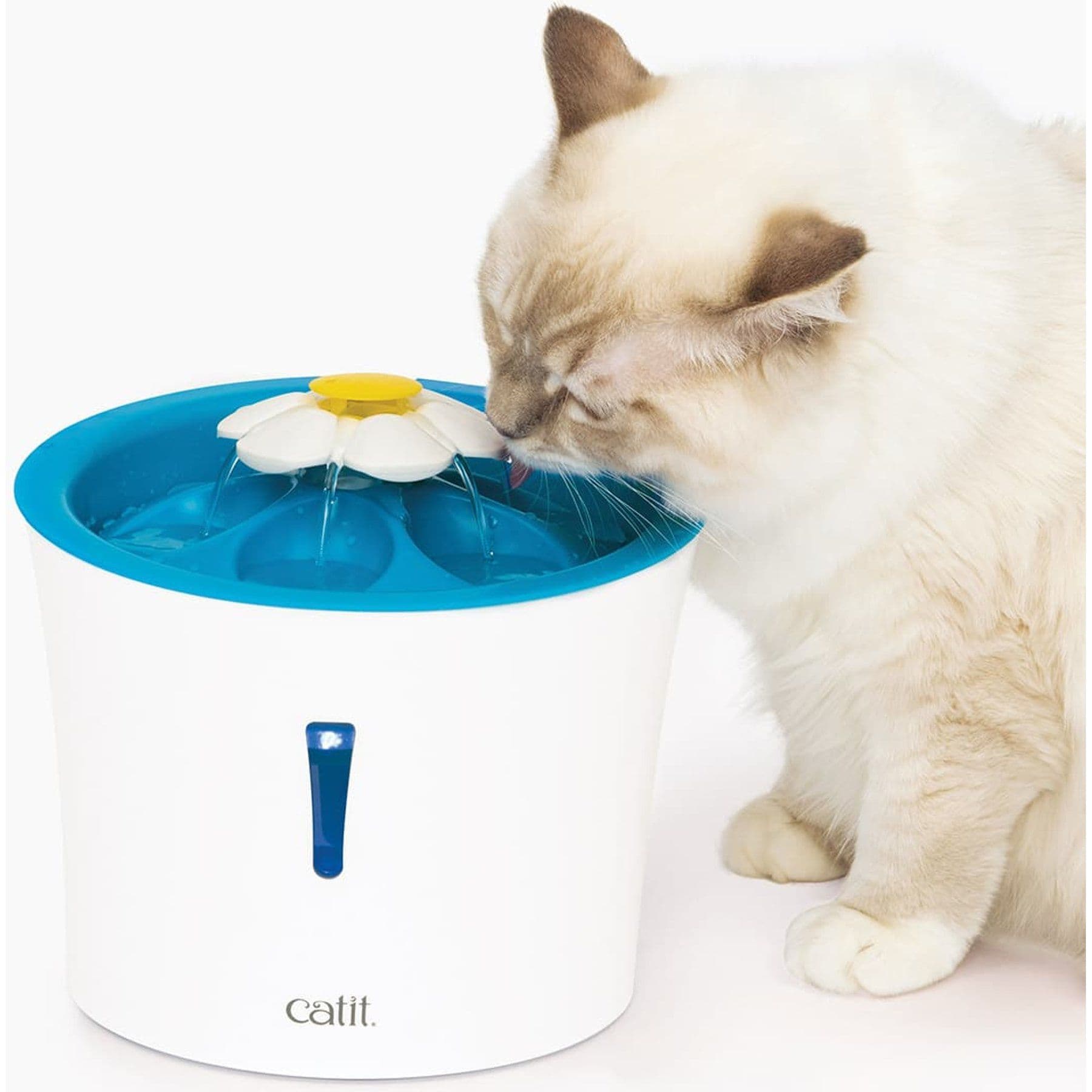
Treat a fountain as one resource in a broader setup. Keep at least one clean bowl available while the cat adapts, and monitor the fountain for noise, pump failure, slime, hair, and reduced flow. If easy-clean metal is a priority, a stainless-steel fountain is one format to compare. A fountain that is difficult to clean or frequently empty may be less useful than a simple bowl maintained well.
If you are choosing between pump styles, materials, capacities, filters, and cleaning requirements, see WebVet’s guide to the best cat water fountains. That roundup owns product comparisons. This intake guide owns the question of how fountain water contributes to the daily total.
When water intake changes: what is concerning?
How much water is concerning for a cat? There is no single household number that proves a problem for every cat. A repeated result far from the cat’s usual baseline, especially a sudden increase or decrease, is more concerning than one imperfect measurement. Contact a veterinarian promptly when the change persists or occurs with appetite loss, vomiting, diarrhea, altered urination, weakness, hiding, weight loss, pain, or other illness signs.
Is my cat dehydrated? A home calculation cannot determine whether a cat is dehydrated or why a cat is dehydrated. Dehydration can reflect reduced intake, fluid loss, illness, or several factors together, and a veterinarian may need an examination and testing to assess it. Use the chart and worksheet to describe a pattern, not to make a diagnosis. Seek prompt veterinary advice when low intake occurs with vomiting, diarrhea, weakness, tacky gums, reduced urination, or other illness signs.
Look for a change in the whole pattern
Drinking is only one part of water balance. A veterinarian will also consider diet, urine output, fluid losses, body weight, examination findings, and medical history. Your record becomes more useful when it connects those observations instead of presenting an isolated cup total.
Call for veterinary advice if you notice:
- A marked increase or decrease that repeats across comparable days
- Repeatedly empty bowls without a clear spill or environmental explanation
- Little or no apparent intake along with reduced eating
- Larger or more numerous urine clumps
- Straining, frequent litter-box trips, crying, or producing little urine
- Vomiting, diarrhea, fever, drooling, or rapid breathing
- Dry or tacky gums, unusual weakness, collapse, or marked lethargy
- New weight loss, poor coat care, hiding, or behavior change
Urinary straining with little or no urine can be an emergency, particularly in male cats. Do not wait to complete a three-day measurement if the cat repeatedly enters the litter box, cries, vomits, becomes weak, or cannot pass urine.
For a structured look at possible dehydration signs, use WebVet’s cat dehydration symptom checker. It can help organize observations, but it cannot confirm hydration status or replace an examination.
What a veterinarian may ask you to bring
A concise record saves time. Bring the food package or its nutrition label, your three-day worksheet, body-weight trend, photos of litter clumps if relevant, and a list of medications. Tell the clinic about every accessible water source, including toilets, sinks, outdoor containers, and another pet’s bowl.
Do not delay the visit to produce perfect data. If you have only one day, say so. Clear uncertainty is more useful than a falsely precise total.
What if your cat is drinking less than usual?
A cat that seems to drink little may be getting water from wet food, but a true decrease can also accompany pain, nausea, fever, mouth problems, stress, weakness, or other illness. Check every water source, confirm what food was eaten, and look for changes in appetite, urination, vomiting, diarrhea, energy, and behavior.
Do not force water into the mouth. A struggling cat can inhale liquid, and home rehydration can delay needed care. The question “How do you hydrate a cat that won’t drink?” depends on the cause and the cat’s condition. How to keep your cat hydrated when sick is also a veterinary question because the safe method depends on what is wrong, whether the cat can swallow normally, and whether professional fluid treatment is needed. Likewise, waiting to see whether a cat can go three days without water is unsafe. Read WebVet’s full guide to what to do when a cat is not drinking water for the dedicated low-intake steps and urgency guidance, or contact a veterinarian now if the cat seems ill.
What if your cat is drinking more than usual?
Excessive thirst is not defined reliably by one visual impression or a universal bowl count. Start by confirming the change with the same measurement method, while keeping unlimited clean water available. Note whether urination, appetite, weight, food, weather, or medication also changed.
Questions such as “What counts as excessive thirst in cats?” and “What are the early signs of kidney failure in cats?” require more than this normal-intake article can safely answer. Why does my senior cat drink so much water? Why does my old cat drink so much water? Age alone does not supply the answer, and symptoms cannot identify a cause. Kidney disease is only one possible explanation for increased thirst. WebVet’s guide to why a cat is drinking a lot of water owns the thresholds, possible causes, testing, and next steps. Contact your veterinarian rather than restricting water or trying to diagnose from a chart.
For one possible medical cause, our hyperthyroidism in cats guide explains the symptom pattern, diagnostic tests, treatment choices, and follow-up rather than diagnosing from thirst alone.
Cat water intake FAQs
Frequently Asked Questions
Does water in wet cat food count?
Yes. Moisture in wet food counts toward total water intake and may supply most of a wet-fed cat’s daily total. Estimate it by multiplying the grams actually eaten by the labeled moisture percentage written as a decimal. The result is approximate milliliters of food water. Because labels usually state maximum moisture and actual food varies, use the calculation as a planning estimate rather than an exact measurement.
How many times a day should a cat drink water?
How many times a day should a cat drink water? There is no universal number of daily drinking visits. A wet-fed cat may drink rarely because meals provide substantial water, while a dry-fed cat may visit a bowl more often. Visit counts also miss how much is swallowed each time. Track the combined daily total, food moisture, and your cat’s usual pattern instead of requiring a fixed number of trips.
Should I leave water out for my cat overnight?
Yes. Continuous access to fresh water includes overnight. Leave fresh, clean water out for your cat overnight in a stable bowl or properly maintained fountain. If you need to measure intake, record the overnight amount rather than removing the resource. Only limit access if a veterinarian gives a specific medical instruction for your cat.
Should I limit my cat’s water if they seem to drink too much?
No. Do not limit your cat’s water if they seem to drink too much, and do not ration or remove water from a cat that appears unusually thirsty. Water restriction can be dangerous and does not treat the reason for the change. Measure what you can, keep clean water available, and contact a veterinarian. The dedicated excessive-thirst guide explains what information the clinic may need.

Editor
The Webvet Editorial Team is the in-house group of pet-care editors and writers behind Webvet, operated by Smart Pet Collective. The team researches, writes, and maintains Webvet's pet health, behavior, and medication content. Every article follows a defined editorial process: research from reputable veterinary and scientific sources, careful drafting, mandatory review of medical content by a credentialed veterinarian, and dated publication. Health and medication articles are medically reviewed by a licensed veterinary professional before they go live and are kept current over time.
Veterinarian · BVMS MRCVS
Dr. Pippa Elliott, BVMS, MRCVS, is a veterinarian with nearly 30 years of experience in companion animal practice. Dr. Elliott earned her Bachelor of Veterinary Medicine and Surgery from the University of Glasgow. She was also designated a Member of the Royal College of Veterinary Surgeons. Married with 2 grown-up kids, Dr. Elliott has a naughty Puggle named Poggle, 3 cats and a bearded dragon.
Related reading

Cat Cremation Cost: Private, Communal, and Additional Charges

Cat Euthanasia Cost: Clinic, At-Home Care, and Aftercare

Dog Microchip Cost: Implantation, Registration, and Ongoing Fees
