Hyperthyroidism in Cats: Symptoms and Treatment Options Compared
Understand the signs of an overactive thyroid, compare medication, radioiodine, surgery, and dietary treatment, and plan feeding and follow-up around your individual cat.

BVMS MRCVS
Medically reviewed by Dr. Pippa Elliott, BVMS MRCVS · Last reviewed

This article contains affiliate links. Webvet may earn a commission when you buy through them, at no extra cost to you.
Hyperthyroidism in cats means the thyroid gland produces too much thyroid hormone. A cat may lose weight despite eating eagerly, become unusually restless, or drink and urinate more. Blood testing and a veterinary examination establish the diagnosis. Treatment can make a substantial difference, including for an older cat, but choosing a plan requires attention to kidney function, heart health, daily medication, and feeding arrangements.
Arrange an appointment for unexplained weight loss or a sustained change in appetite, thirst, or behavior. Difficulty breathing, collapse, sudden blindness, seizures, or profound weakness require urgent veterinary care. Do not assume those changes are simply the next stage of thyroid disease or wait for a routine recheck.
Hyperthyroidism symptoms in cats
- 1Weight loss with increased appetite is a classic clue, but some affected cats become quiet or stop eating.
- 2Hyperthyroidism usually involves noncancerous overactive thyroid tissue. A photograph or a lump felt at home cannot establish the diagnosis.
- 3Treatment and follow-up belong together: restoring normal thyroid function can reveal kidney disease that was previously masked.
The thyroid has two lobes in the neck. Its hormones influence how the body uses energy. Most feline hyperthyroidism comes from benign enlargement or nodules in thyroid tissue; thyroid cancer is a less common cause. A palpable enlargement may be called a goiter, but an enlarged gland does not by itself prove that hormone production is excessive.

Photograph ©Greene, via Pathology and Ponies, CC BY-SA 4.0. This documented cat has low body condition; appearance alone cannot separate thyroid disease from other causes of weight loss. Early hyperthyroidism may be much less obvious than an online photograph suggests.
Keep a simple record of food offered and food left over. A washable OurPets Durapet Premium Stainless Steel Bowl, Small can make that routine easier. The linked bowl holds 0.75 cups; that is its capacity, not a prescribed portion. Note whether the cat truly eats more, asks repeatedly but walks away, or eats while continuing to lose weight.
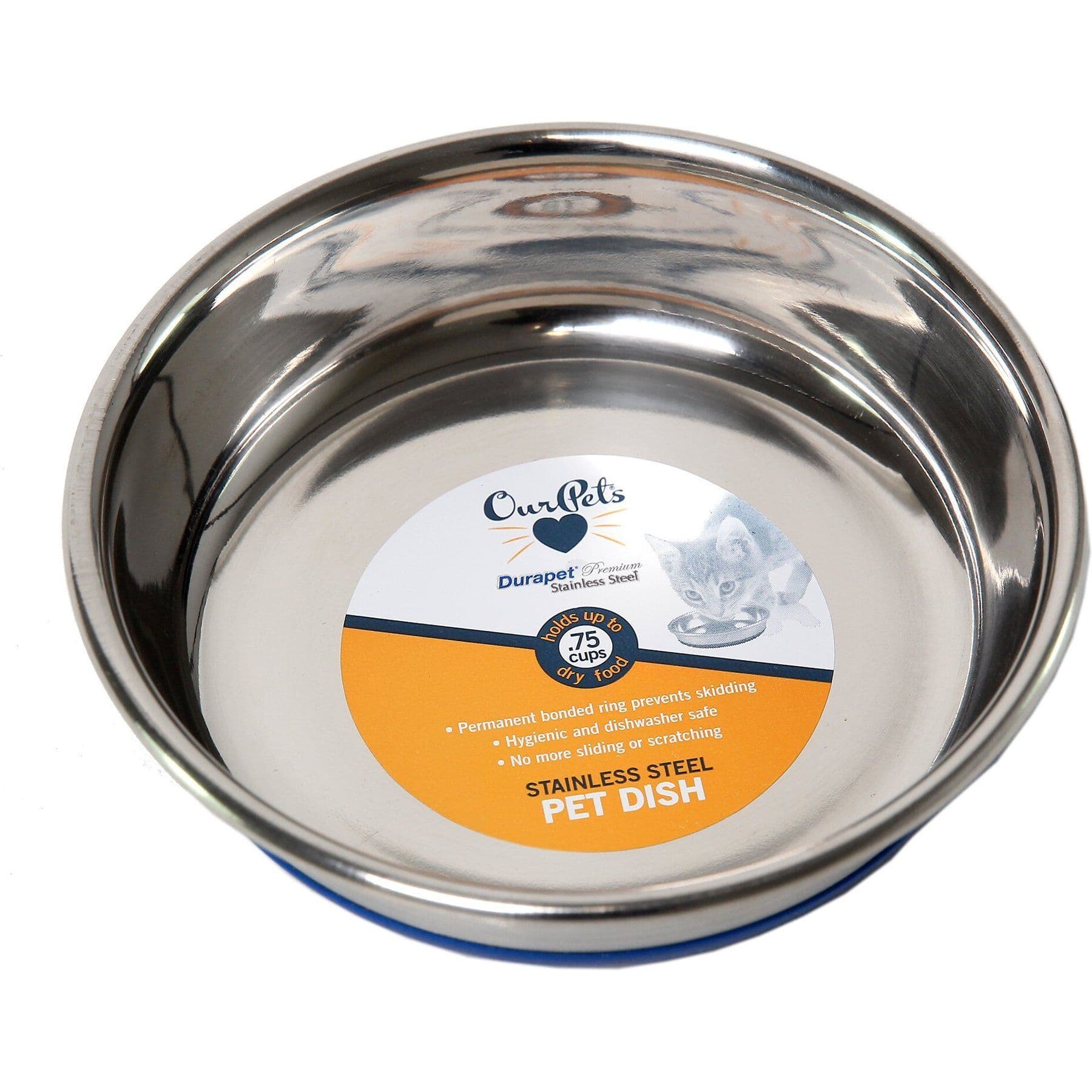
Record portions and leftovers with a washable bowl. Its 0.75-cup capacity is not a prescribed serving size.
Webvet may earn a commission when you click through to Chewy, at no extra cost to you.
What are the symptoms of hyperthyroidism in a cat?
Signs can develop gradually and occur in different combinations:
- Weight loss, sometimes with visible muscle loss, despite a normal or increased appetite.
- Increased thirst, larger urine clumps, or new litter-box accidents.
- Restlessness, pacing, irritability, increased meowing or nighttime yowling.
- Vomiting, loose stool, or diarrhea.
- A greasy, unkempt, matted coat or a change in grooming.
- A rapid heartbeat or reduced ability to tolerate activity.
Why a quiet or poorly eating cat still needs testing
Not every hyperthyroid cat is hungry and energetic. Some sleep a lot or seem withdrawn, and weak back legs can accompany muscle loss or another illness. A cat drinking lots of water needs assessment even if the change initially seems harmless. An apathetic presentation can include lethargy, weakness, and reduced appetite. An overweight cat can also develop thyroid disease before becoming visibly thin. Vomiting or refusing food needs assessment rather than an assumption that the condition must look like the classic example.
Hair pulling, overgrooming, scratching, watery eyes, sneezing, coughing, drooling, bad breath, or a changed voice are not specific thyroid tests. Skin, dental, respiratory, and other diseases may explain them. Likewise, apparent deafness, purring, twitching, or urinating outside the box should be described to the clinic rather than attributed to hyperthyroidism without examination. Trouble breathing, a seizure, or sudden loss of vision belongs in the urgent-care category.
What causes it, and can it be prevented?
Hyperthyroidism is predominantly a disease of middle-aged and older cats, though age alone cannot exclude it. It is unusual in a kitten or young cat. The reasons abnormal thyroid tissue develops are not fully understood. Research has examined diet and environmental exposures, but a household cannot reliably identify one food, stressful event, sex, or breed as the cause of an individual case.
There is no established home prevention routine that guarantees a cat will avoid hyperthyroidism. Do not add iodine, change to an unbalanced diet, or use a supplement in an attempt to protect the gland. Regular examinations and investigation of changes in weight, appetite, and behavior are more useful than waiting for a dramatic appearance.
Diagnosis and related kidney, heart, and blood-pressure concerns
For a planned visit, comfortable secure transport makes repeated checks more manageable. The Frisco Travel Safety Dog & Cat Carrier, Medium is one option when its dimensions suit your cat. Leave an appropriate carrier accessible between visits and introduce it gently; buying equipment should never delay an urgent examination.

Choose secure transport that fits your cat for examination and repeat checks. Introduce the carrier gently between planned visits.
Webvet may earn a commission when you click through to Chewy, at no extra cost to you.
Diagnosis combines the history, physical examination, and thyroid testing. The veterinarian checks weight and muscle condition, listens to the heart, and may feel an enlarged thyroid gland. Do not repeatedly squeeze the neck looking for a lump. Bring the timeline of changes and the names of all medicines, supplements, and foods.
| Thyroid change and body effect | What an owner may notice | What it does not establish |
|---|---|---|
| Excess thyroid hormone increases metabolism | Weight loss despite eating | The cause of weight loss without testing |
| Increased metabolism raises energy demands | Hunger, restlessness, or muscle loss | That every affected cat will eat eagerly |
| Effects on the cardiovascular system | Faster heartbeat or reduced tolerance of activity | Whether heart disease or high blood pressure is present |
| Thyroid hormone is too low rather than too high | A different problem, sometimes after treatment | That hyperthyroidism and hypothyroidism are interchangeable |
Understanding T4, borderline results, and additional tests
Total thyroxine (T4) is commonly the starting thyroid test. Persistently elevated T4 with compatible findings supports hyperthyroidism; an unexpected result warrants reconciliation rather than automatic treatment. A result is interpreted with the laboratory’s reference interval and the cat’s findings, not with an isolated internet cutoff. Borderline, high-normal, occult, or subclinical cases may need repeat testing or additional tests. Other illnesses can suppress thyroid hormone concentrations and complicate interpretation.
The Cornell diagnostic laboratory’s thyroid-test guidance explains the roles of total T4, free T4, and TSH. Free T4 can help in selected cases but should not be treated as an independent yes-or-no answer. A false-positive interpretation can occur when an isolated result is treated as definitive without the examination and other tests. A clinician may consider scintigraphy or other investigation when the results and examination do not agree. More tests are useful when they resolve a specific uncertainty.
A broader workup often includes:
- A blood count and chemistry panel to examine blood cells, liver values, kidney values, and electrolytes.
- Urinalysis and, when indicated, additional urine testing.
- Blood-pressure measurement.
- Further heart assessment when the examination or symptoms justify it.
Why kidney function can change after treatment
Excess thyroid hormone changes circulation and can increase blood flow through the kidneys. Muscle loss also affects interpretation of creatinine. A cat can therefore have kidney disease that becomes more apparent once thyroid hormone is controlled. Normal pretreatment results do not guarantee that the kidneys will remain normal afterward.
This is a reason for planned kidney reassessment, not a reason to leave hyperthyroidism untreated. A veterinarian may use a reversible medication trial when it helps evaluate treatment tolerance and renal response. The AAHA treatment guidance emphasizes assessing concurrent disease and monitoring for hypothyroidism after treatment. Our guide to kidney disease in cats explains the separate renal staging and care decisions.
Heart disease, blood pressure, and other concurrent problems
Hyperthyroidism can contribute to a fast heartbeat, heart-muscle thickening resembling hypertrophic cardiomyopathy, and hypertension. A murmur, gallop rhythm, breathing difficulty, or fluid around the lungs, called pleural effusion, needs its own assessment. Eye symptoms sometimes described as late-stage hyperthyroidism, including sudden blindness or dilated pupils, can be associated with severe hypertension; waiting to see whether thyroid medicine eventually helps is unsafe.
Diabetes, pancreatitis, inflammatory bowel disease (IBD), lymphoma, urinary infection, or another endocrine disorder can coexist with hyperthyroidism. They are not all consequences of thyroid excess, and treatment of one condition does not establish the diagnosis of another. Abnormal calcium, potassium, liver values, or blood-cell results require interpretation in the whole clinical picture. Tell the veterinarian about any established diagnosis so the plans can be coordinated.
Four treatment options compared
The main options are methimazole, radioactive iodine, thyroid surgery, and an exclusively fed iodine-restricted therapeutic diet. They differ in whether they suppress hormone production or remove the overactive tissue. The best choice also depends on referral access, comorbidities, the cat’s tolerance of handling, and what the household can sustain.
In a multi-cat household, a SureFeed Microchip Small Dog & Cat Feeder can help control access to individual meals. Introduce it before relying on it, and watch every cat use the arrangement. A feeder cannot make a therapeutic diet exclusive if the cat also eats another bowl, treats, prey, or food outdoors.
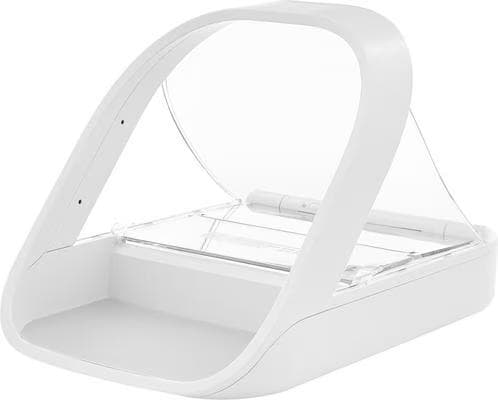
Help separate individually prescribed meals in a multi-cat home. Check that every cat uses the feeder comfortably and that no other food is accessible.
Webvet may earn a commission when you click through to Chewy, at no extra cost to you.
Medication and medication tolerance
Methimazole controls hormone production; it does not remove the abnormal tissue. It can be used long term or before another treatment. Oral tablets, liquids, and prescribed transdermal preparations have different handling requirements. A transdermal gel or ear cream is still medication with systemic effects, not an ordinary ear ointment.
The FDA identifies Felimazole tablets and Felanorm oral solution as approved feline methimazole products in the United States. Thyronorm is a thiamazole, also called methimazole, solution used in other markets; a brand’s availability and label are country-specific. Carbimazole products also require a veterinary prescription where used. Do not substitute a human tablet, leftover liquid, or compounded gel by assuming the same volume or strength applies.
Ask the team to demonstrate administration and provide written missed-dose and vomiting instructions. Follow the product’s handling precautions, including gloves and advice for pregnant or nursing people where specified. Store the medicine securely. If administration becomes a daily struggle, report it; changing formulation or treatment may be more realistic than silently missing doses.
Radioiodine and thyroid surgery
Radioiodine radiation therapy, usually described as I-131 treatment, is taken up by thyroid tissue. It can provide lasting control without daily antithyroid medicine, but treatment is delivered through an authorized facility. Hospitalization, contact restrictions, litter handling, and disposal instructions depend on the facility and local regulations. Obtain the actual written plan before arranging travel or care for the household.
Thyroidectomy removes affected tissue surgically. The assessment includes anesthesia risk, which gland or glands are involved, and the possibility of thyroid tissue elsewhere. Nearby parathyroid glands regulate calcium and must be considered. Surgery and radioiodine can lead to low thyroid hormone afterward, so potentially curative treatment still requires monitoring. Recurrence or incomplete control can also require reassessment.
When an exclusive therapeutic diet is practical
| Treatment option and daily commitment | Main goal | Practical limitation | Follow-up question |
|---|---|---|---|
| Methimazole treatment | Reduce thyroid hormone production while medicine is given | Ongoing administration and possible adverse effects | How will thyroid level, blood cells, liver and kidneys be checked? |
| Radioactive iodine | Destroy overactive thyroid tissue; often offers definitive treatment | Licensed facility, temporary hospitalization and radiation precautions | What are the discharge rules and plans for low thyroid hormone afterward? |
| Thyroid surgery | Remove affected thyroid tissue | Anesthesia and risk to nearby parathyroid tissue; case selection matters | Who performs the procedure and how will calcium and thyroid function be monitored? |
| Iodine-restricted diet | Restrict the iodine available for hormone production | Requires an exclusive diet and may be unsuitable with competing nutritional needs | Can this cat reliably eat only the prescribed food? |
A prescribed iodine-restricted diet is a treatment strategy, not simply any food marketed for an older cat. It works by limiting a necessary ingredient for hormone production. It does not remove the thyroid abnormality. The decision should consider response, nutritional needs, and whether the cat can truly avoid other food.
Costs and treatments advertised as natural
Ask for an itemized estimate separating initial testing, medication and laboratory checks, referral treatment, hospitalization, and aftercare. A lower initial medication bill and a larger one-time radioiodine bill cover different periods of care. Prices in the United States, UK, Australia, or New Zealand cannot be compared responsibly without knowing what is included. Discuss financial constraints early; the team can explain which decisions are essential now and what options are available locally.
Natural remedies and adjunctive care
Trying to treat hyperthyroidism naturally at home does not remove the need to control excessive hormone production. Homeopathic treatment and a holistic approach should not be presented as proven cures. Apathetic cats need the same diagnostic care and an individually selected thyroid treatment, with concurrent illness addressed.
Homeopathy, herbal mixtures, CBD oil, essential oils, colloidal silver, natrum muriaticum, and products promoted as natural thyroid remedies have not been established as substitutes for effective feline hyperthyroidism treatment. A supplement label does not demonstrate that it normalizes thyroid hormone or prevents heart and kidney complications. Acupuncture or comfort measures should not be used to postpone disease control.
L-carnitine, appetite stimulants such as mirtazapine, and other adjuncts are separate questions for the veterinarian. They do not remove overactive thyroid tissue. Prednisolone is not a routine antithyroid drug. Give the clinician the actual ingredient list of any proposed product, including potassium iodide or other iodine-containing supplements, before adding it to an existing plan.
 $65 · no membership
Have a health question about your cat?
A licensed vet can assess your cat over video and prescribe online when it's appropriate.
 Talk to a vet
- Licensed vets
- All 50 states
- same-day Rx
Webvet may earn a commission if you book.
Feeding and medication routines at home
The feeding plan depends on the chosen thyroid treatment and any other disease. A cat taking medicine or receiving radioiodine does not automatically need an iodine-restricted diet. Conversely, a cat managed with iodine restriction needs a deliberately exclusive plan. Keep these two situations clear when comparing wet food, dry food, treats, and household routines.
For a prescribed meal schedule, the Cat Mate C500 Digital 5 Meal Automatic Dog & Cat Feeder can provide timed access to portions. Check that the cat uses it comfortably and follow the manufacturer’s food-storage instructions. It does not confirm that a meal was eaten, replace a caregiver’s checks, or serve as an automatic medicine dispenser.
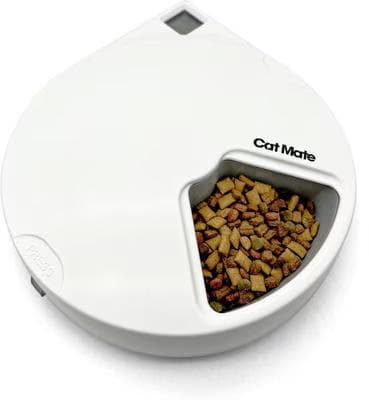
Support a prescribed meal schedule with timed portions. Follow food-storage instructions and check actual intake; the feeder does not administer medicine.
Webvet may earn a commission when you click through to Chewy, at no extra cost to you.

Separate feeding areas help owners confirm whose food is being eaten. Check portions directly rather than counting visits to a bowl. Record weight trends using a method recommended by the clinic, and report continued loss even if appetite seems strong. Calories and protein need individual consideration, especially when muscle loss and kidney disease coexist.
What not to feed a cat with hyperthyroidism?
If an iodine-restricted diet is the treatment, other foods can undermine it. Ask specifically about treats, flavored medicines, supplements, another cat’s food, table scraps, fish, tuna, chicken, and hunting. Do not assume a small amount is automatically acceptable. Cornell’s internal-medicine service describes the requirement for exclusive feeding when this strategy is used.
Hill’s Prescription Diet y/d is an example of a therapeutic iodine-restricted food; the veterinarian should confirm the exact formulation and suitability. An ordinary Hill’s product, a Weruva recipe, a grain-free label, or a senior-food label does not establish equivalent iodine restriction. Brand identity alone cannot answer whether a particular food fits thyroid therapy and another medical diet at the same time.
If iodine restriction is not the selected treatment, the goal is an appropriate complete diet with enough intake to support the cat’s condition. There is no universal rule that every hyperthyroid cat must avoid all fish or eat a particular over-the-counter brand. Avoid unbalanced homemade diets and improvised iodine restriction. Seek a veterinary nutritionist’s formulation if home-prepared food is necessary.
When the cat stops eating or keeps losing weight
Contact the clinic promptly if appetite falls, vomiting persists, or the cat cannot keep food down. Do not force-feed or simply increase calories while an underlying problem worsens. Persistent weight loss can reflect incomplete thyroid control, another illness, or inadequate intake; it needs reassessment rather than a new food chosen at random.
Our guides to helping a cat eat and an older cat who is not eating explain supportive steps and the need for timely assessment. Record water changes as well. The guide to how much water a cat should drink explains why food moisture and the individual cat matter when interpreting drinking.
Choosing treatment for an older cat
Older age is one part of the decision. Consider the cat’s other illnesses, current comfort, ability to eat, response to treatment, and burden of administration or hospital care. A 16- or 17-year-old cat should not be written off solely because of age, nor promised years of recovery solely because thyroid disease is treatable.
Is it worth treating an elderly cat for hyperthyroidism?
Often, yes: controlling the disease may improve appetite patterns, weight, activity, and comfort. The meaningful question is which plan offers a reasonable chance of benefit for this individual. Ask what improvement should be visible, when to reassess, and how concurrent kidney or heart disease affects the options. A medication trial may help answer some of these questions when the veterinarian considers it appropriate.
How long will a 17 year old cat live with hyperthyroidism?
There is no reliable lifespan prediction based on age and the thyroid diagnosis alone. Some treated cats do well for a substantial period, while serious concurrent disease can limit survival. Group survival estimates do not tell you how long your cat has. A more useful discussion covers the current problems, treatment response, and specific changes that would alter the prognosis.
Is it cruel to not treat a cat with hyperthyroidism?
Untreated hyperthyroidism can progress, cause major illness, and be fatal. It generally does not go away on its own. However, a person facing costs, medication difficulties, or a cat with several serious diseases needs a practical veterinary discussion, not blame. Explain the obstacle so that disease control or an explicit comfort-focused plan can be considered.
Hyperthyroidism often develops gradually, but how quickly it progresses varies; a sudden decline should prompt a search for complications or another illness. There is no universal sequence of late-stage hyperthyroidism or countdown after diagnosis. Signs that a cat may be dying are also signs that require urgent assessment, not a diagnosis an owner should make from a checklist. Increasing weakness, poor intake, ongoing weight loss, vomiting, breathing problems, or severe hypertension warrant reassessment. When suffering cannot be adequately relieved, discuss palliative care or euthanasia with the treating team. The decision about when to put a cat down, sometimes called putting the cat to sleep, rests on comfort, treatable problems, and response to care rather than thyroid disease alone. A single abnormal thyroid number, a thin photograph, or the cat’s birthday is not a humane endpoint by itself.
Follow-up testing and treatment side effects
Follow-up checks assess thyroid control, body weight, muscle condition, kidney function, blood pressure, and medication tolerance. The exact schedule depends on the treatment and the cat’s findings. Arrange the first recheck before leaving the clinic, and clarify which changes require an earlier call. Do not change a dose because the cat looks better or one symptom returns.

Figure 3: Stammeleer and colleagues (2025), CC BY 4.0. These before and after radioiodine scans show different thyroid uptake patterns in four cats six months after treatment. They are functional images, not body-transformation photographs or a prediction of what will happen to another cat.
What are the potential side effects of taking Thyronorm in cats?
Thyronorm contains thiamazole, also called methimazole. Possible adverse effects include vomiting, reduced appetite, lethargy, itching or injury around the head and neck, and abnormalities involving blood cells or the liver. The UK Veterinary Medicines Directorate’s product record provides the jurisdiction-specific product information. Use the leaflet supplied with your prescription rather than instructions for a similarly named product.
Call the prescribing clinic about suspected side effects and obtain instructions about the next dose. Marked illness, yellow gums or eyes, unusual bleeding, collapse, or breathing difficulty need urgent assessment. A cat taking thyroid medicine who stops eating should not wait until the next scheduled blood test. Do not deliberately rechallenge a cat after a serious reaction without veterinary direction.
What should be recorded between rechecks?
- The actual medicine, formulation, prescribed schedule, and any missed or vomited doses.
- Appetite, portions eaten, vomiting, stool changes, and water intake.
- Weight trend and changes in strength, activity, coat, or grooming.
- New scratching, facial sores, unusual bruising, yellow discoloration, or pronounced lethargy.
- Any difficulty maintaining the exclusive diet or administering treatment.
Overtreatment can produce iatrogenic hypothyroidism, meaning treatment has left too little thyroid hormone. After radioiodine or surgery, low thyroid function may also require treatment. A hyperthyroid cat still losing weight, a new low-energy state, or unexpected weight gain does not identify the cause by itself. The clinician compares examination findings with laboratory results and adjusts the plan accordingly.
Hyperthyroidism questions
Frequently Asked Questions
Is hyperthyroidism contagious?
No. Feline hyperthyroidism does not spread between cats through shared bowls, grooming, or ordinary contact. It involves abnormal hormone production by thyroid tissue. Separate feeding may be needed for a prescribed diet, but that is a treatment-management decision rather than infection control.
What is the best non-prescription cat food for cats with hyperthyroidism?
There is no equivalent over-the-counter diet that should be assumed to replace prescribed iodine-restricted therapy. If another thyroid treatment is being used, food selection depends on intake, body condition, and concurrent disease. Choose the feeding plan under veterinary supervision rather than treating a brand name, grain-free claim, or ingredient list as proof of thyroid control.
Are cats in pain with hyperthyroidism?
Hyperthyroidism can cause restlessness and weakness and can lead to serious discomfort through its complications. It is not safe to assume that a quiet cat feels well or that every painful behavior is caused by thyroid disease. Concurrent pain from arthritis, dental disease, or another illness needs its own assessment, alongside treatment of the thyroid disorder.
$65 · no membershipHave a health question about your cat?
A licensed vet can assess your cat over video and prescribe online when it's appropriate.
Talk to a vet- Licensed vets
- All 50 states
- same-day Rx
Webvet may earn a commission if you book.
Veterinarian · BVMS MRCVS
Dr. Pippa Elliott, BVMS, MRCVS, is a veterinarian with nearly 30 years of experience in companion animal practice. Dr. Elliott earned her Bachelor of Veterinary Medicine and Surgery from the University of Glasgow. She was also designated a Member of the Royal College of Veterinary Surgeons. Married with 2 grown-up kids, Dr. Elliott has a naughty Puggle named Poggle, 3 cats and a bearded dragon.


