Kidney Disease in Cats: Stages, Treatment, and Daily Care
Learn how veterinarians distinguish acute injury from chronic kidney disease, interpret stages, and build a workable food, hydration, monitoring, and comfort plan.

BVMS MRCVS
Medically reviewed by Dr. Pippa Elliott, BVMS MRCVS · Last reviewed

This article contains affiliate links. Webvet may earn a commission when you buy through them, at no extra cost to you.
Kidney disease in cats can develop suddenly or progress over months to years. Chronic kidney disease, or CKD, involves lasting loss of kidney function. Treatment aims to slow progression where possible, manage complications, and keep the cat comfortable. The right plan depends on the cause, laboratory findings, blood pressure, appetite, hydration, and response to care, not just one stage number.
Arrange an examination for increased thirst or urination, unexplained weight loss, poor appetite, or repeated vomiting. Sudden severe illness, possible lily or antifreeze exposure, inability to pass urine, collapse, or breathing difficulty needs urgent veterinary care. A cat with an established CKD diagnosis can develop a new emergency and should not automatically be managed as having an ordinary bad day.
Kidney disease signs and urgent changes
- 1Early kidney disease can have few visible signs. Increased thirst or appetite changes warrant assessment; blood tests, urine testing, and trends over time matter.
- 2IRIS staging applies after CKD is diagnosed in a stable hydrated patient; it is not a home symptom score.
- 3A renal diet, treatment of specific complications, and a workable monitoring routine are individualized to the cat.
The kidneys help remove waste, regulate fluid and electrolyte balance, and contribute to blood-pressure and red-blood-cell regulation. A cat with reduced kidney function may lose more water in urine and drink more to compensate. Drinking a great deal does not necessarily mean the cat is adequately hydrated.

Surface bubbles, pale color, cloudiness, or an unusual smell in a urine sample cannot diagnose kidney disease. Pictures of foamy or frothy cat urine are not a reliable kidney test. Urine testing evaluates properties that are not visible in a photograph, and the veterinarian interprets them with blood results and the examination. Blood in the urine or repeated unsuccessful attempts to urinate needs direct assessment.
Increased thirst and appetite changes are useful early observations, but they are not specific to CKD. Vomiting clear liquid, urine accidents described as peeing everywhere, or a new urine smell also needs context rather than a diagnosis from appearance.
Changes to record
- Larger urine clumps, more frequent drinking, or accidents outside the litter box.
- Weight or muscle loss, reduced appetite, nausea, vomiting, or drooling.
- Reduced activity, weakness, a changed gait, or reluctance to jump.
- Constipation, diarrhea, or a sustained change in stool habits.
- Poor coat condition, unusual breath odor, mouth sores, or pale gums in an unwell cat.
Offer easy access to fresh water while arranging assessment. A clean Petlibro Stainless Steel Dog & Cat Fountain, 101-oz can provide an additional drinking choice alongside ordinary bowls. Check that your cat actually uses it and keep it clean. A fountain cannot correct dehydration that needs veterinary treatment or show how well the kidneys are working.
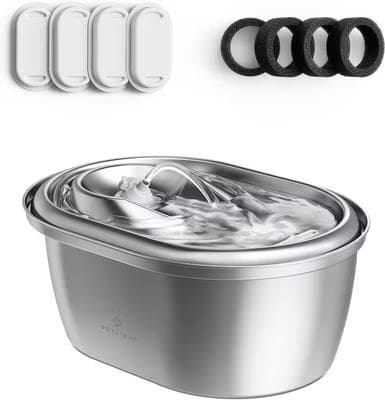
Provide an additional clean water option alongside bowls. A fountain cannot correct dehydration requiring veterinary care.
Webvet may earn a commission when you click through to Chewy, at no extra cost to you.
Symptoms do not identify the stage
Some early cases are found during routine screening before the owner notices illness. Conversely, vomiting, hair loss, sneezing, diarrhea, or bad breath can have causes unrelated to the kidneys. A cat with increased appetite and weight loss may need thyroid or diabetes testing as well. Avoid deciding that a familiar symptom proves that the kidney disease has worsened.
Back-leg weakness can involve potassium abnormalities, poor muscle condition, pain, or another problem. Sudden blindness, seizures, marked incoordination, or collapse require urgent assessment. A hunched or “meatloaf” posture, sunken-looking eyes, or a poor coat may indicate illness but cannot tell you which disease or IRIS stage is present. Report the whole pattern, including changes in eating, urination, and behavior.
Acute kidney injury versus chronic kidney disease
Acute kidney injury, or AKI, is a sudden decline in kidney function. CKD is a lasting disorder. A cat can also develop acute injury on top of chronic disease. The distinction matters because some acute causes can be treated with meaningful recovery, whereas established chronic damage generally cannot simply be reversed.
Cats normally have two kidneys located toward the back of the abdomen, on either side of the spine. Their location in the body is different from the bladder farther toward the pelvis. Having one functioning kidney can be compatible with life, but function and the remaining kidney’s health matter more than the count. Kidney disease and kidney failure are not exact synonyms: disease can exist before severe loss of function, while “failure” is often used for more substantial dysfunction. Ask the clinician what the term means in your cat’s case.
Record actual food intake during the diagnostic workup. The washable OurPets Durapet Premium Stainless Steel Bowl, Small can make offered portions and leftovers easier to compare. Its 0.75-cup capacity is not a recommended meal amount. Note a refusal to eat and contact the team rather than repeatedly changing bowls or foods while the cat becomes weaker.
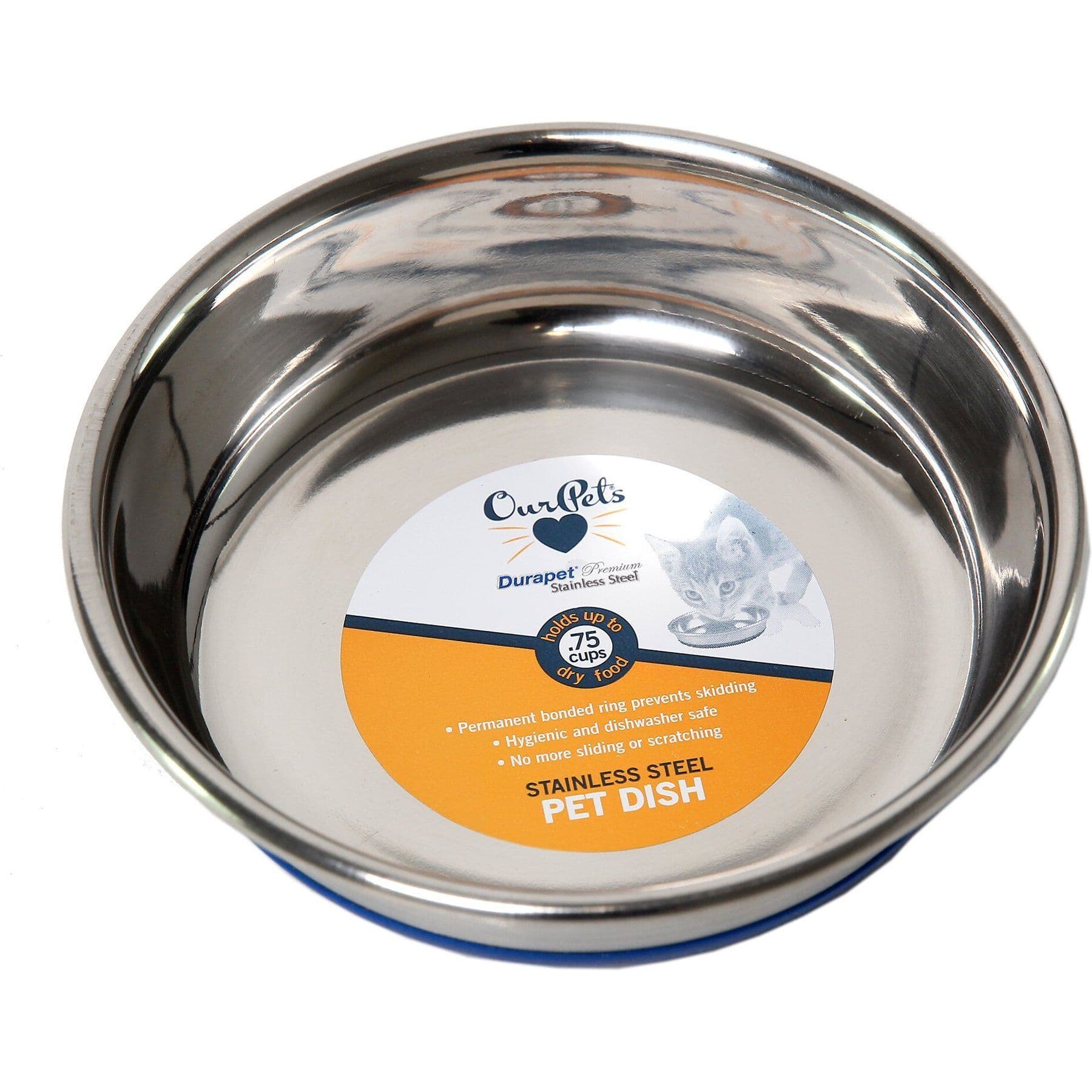
Record portions and leftovers in a washable bowl. Its capacity does not determine the amount your cat should eat.
Webvet may earn a commission when you click through to Chewy, at no extra cost to you.
Causes and conditions that need distinguishing
Blood in the urine can come from several parts of the urinary tract. Idiopathic renal hematuria describes kidney-origin bleeding without an identified cause after investigation; it should not be assumed to explain a CKD patient’s red urine. Imaging and urine testing help distinguish that from infection, obstruction, and other disease.
The workup considers several possibilities:
- Toxic injury, including lilies and certain drugs or chemicals, or reduced blood supply during serious illness.
- Infection involving the kidneys, an obstructed urinary tract, or another potentially treatable cause of acute deterioration.
- Chronic scarring for which one original trigger may no longer be identifiable.
- Congenital or inherited disorders, including renal dysplasia and polycystic kidney disease.
- Less common processes such as renal lymphoma, other tumors, or amyloid deposition.
Kidney size or shape alone does not establish the cause. Small or irregular shaped kidneys, one enlarged kidney, or a big kidney little kidney pattern can guide further testing. Ultrasound evaluates structure, including cysts, obstruction, masses, or other changes; blood and urine tests assess a different part of the problem. Normal-looking imaging does not rule out all early functional disease.
Polycystic kidney disease is particularly relevant in Persian-related cats, but breed appearance is not a diagnosis. Young cats can have congenital disease even though CKD is much more common in older cats. Discuss an appropriate genetic test or imaging assessment when family or breed history makes that useful. A named breed does not determine lifespan or replace assessment of actual kidney function.
Can kidney disease be prevented or caught earlier?
Not all cats develop CKD, and no routine guarantees prevention. Keep lilies and other toxins out of reach, avoid unsupervised medicines, and seek prompt care for illness or urinary obstruction. Regular examinations with appropriate blood and urine screening can detect changes before they become obvious. A previous normal result is a baseline for comparison, not permanent protection.
CKD itself is not generally an illness that spreads between cats through ordinary contact. An underlying infection is a separate question. Stress alone does not explain a kidney diagnosis, and a particular food brand should not be blamed without evidence. Diabetes, liver disease, FIV, and other concurrent conditions can alter the investigation and care plan rather than proving one shared cause.
Hyperthyroidism in cats can mask reduced kidney function through its effects on circulation and muscle condition. Renal abnormalities may become clearer after thyroid treatment. That calls for coordinated monitoring, not leaving the thyroid disorder untreated. Tell each treating clinician about the other diagnoses and medicines.
 $65 · no membership
Have a health question about your cat?
A licensed vet can assess your cat over video and prescribe online when it's appropriate.
 Talk to a vet
- Licensed vets
- All 50 states
- same-day Rx
Webvet may earn a commission if you book.
What CKD stages and substages mean
The International Renal Interest Society, or IRIS, uses four stages to help organize CKD treatment and monitoring. Staging follows the diagnosis. Initial blood creatinine or SDMA assessment should be repeated in a stable hydrated patient, and the veterinarian resolves results that do not agree. Dehydration or a sudden acute illness can make a one-time number misleading.
| IRIS stage and feline kidney values | Blood creatinine, mg/dL | Blood SDMA, micrograms/dL | How to interpret the stage |
|---|---|---|---|
| Stage 1, in a stable hydrated patient | Less than 1.6 | Less than 18 | CKD requires other evidence; a low creatinine alone does not diagnose or exclude it |
| Stage 2 | 1.6–2.8 | 18–25 | Mild biochemical changes; clinical signs may be mild or absent |
| Stage 3 | 2.9–5.0 | 26–38 | Moderate azotemia; the extent of illness varies |
| Stage 4 | More than 5.0 | More than 38 | Greater risk of systemic illness and uremic crises |
These feline values come from the 2026 IRIS staging guidelines. They are a clinical framework, not instructions to stage your cat from one report. IRIS notes that its SDMA recommendations are based on the specified IDEXX assay methodology. Persistent discrepancies may change the assigned stage; the veterinarian interprets both markers with the patient’s condition.
Why creatinine, BUN, and SDMA are different
Creatinine is influenced by factors including muscle mass and hydration. An older cat losing muscle can have a less dramatic creatinine increase than expected. SDMA adds information but is not an infallible standalone diagnosis. BUN is another measured waste-related value, yet it is not the number used in this CKD staging table and has other influences.
To test for kidney failure, veterinarians combine blood and urine tests with the examination and, when indicated, imaging. A diagnosis may also draw on urine concentration, protein loss, imaging, and serial changes. Ask for a copy of the results with units and reference intervals so that comparisons are meaningful. A “high kidney level” needs a name, a value, and context. It should not be translated directly into a survival estimate.
Proteinuria and blood-pressure substages
Urine protein-to-creatinine ratio, often written UPC, helps assess protein loss after other sources such as urinary inflammation or bleeding are considered. Blood pressure adds a separate assessment of risk to organs including the eyes, brain, heart, and kidneys. These substages help explain why two cats with similar creatinine values may receive different treatment.
Mineral disturbances can contribute to renal secondary hyperparathyroidism, in which parathyroid hormone regulation becomes abnormal as kidney disease affects phosphorus and calcium balance. High phosphorus, potassium abnormalities, anemia, or high calcium also affect care even though they are not interchangeable with the stage number. Repeat testing is especially important after treatment changes or an acute illness. The 2026 iCatCare consensus guidelines emphasize individualized monitoring, concurrent disease, and caregiver support alongside laboratory assessment.
Treatment priorities for your cat
Treatment targets the problems actually present. A cat hospitalized with acute kidney injury may need a very different plan from a comfortable cat with stable stage 2 CKD. Ask the team to identify the immediate goal of each medicine or dietary change, how response will be measured, and when it should be reviewed.

Set up accessible resting, feeding, and toileting areas as part of the care plan. These practical arrangements help the cat use resources comfortably while medical treatment addresses the identified problems.
How do you slow down kidney disease in cats?
For CKD, the plan commonly addresses appropriate renal nutrition, phosphorus control, blood pressure, protein loss, hydration, and complications that impair eating or comfort. The exact combination depends on laboratory findings and the cat’s response. Early diagnosis can make these decisions possible sooner, but treatment does not guarantee that progression will stop.
Typical treatment decisions include:
- A therapeutic renal diet when appropriate, introduced in a way the cat can tolerate.
- Prescribed treatment for persistent hypertension or proteinuria when indicated.
- Phosphorus management, sometimes including a binder if the diet and blood results justify it.
- Nausea, vomiting, appetite, constipation, or acid-base management according to findings.
- Potassium or anemia treatment when a demonstrated abnormality warrants it.
In a multi-cat home, a SureFeed Microchip Small Dog & Cat Feeder can help separate a prescribed renal diet from other meals. Introduce it gradually and confirm comfortable access. A feeder cannot compensate for a cat refusing the food or for another animal stealing meals when the lid is open.

Help separate individually prescribed meals in a multi-cat home. Confirm that the cat uses the feeder comfortably and eats enough.
Webvet may earn a commission when you click through to Chewy, at no extra cost to you.
Fluids, medicines, and monitoring
A cat can sometimes come back from an episode of acute kidney failure when the underlying cause is treatable, but recovery is variable and may leave chronic damage. Established CKD is generally managed rather than reversed.
Intravenous fluids may be needed for an acutely ill or dehydrated cat. Some cats benefit from prescribed subcutaneous fluids at home, but not every CKD patient needs them. The fluid type, amount, frequency, and suitability require veterinary assessment, particularly when heart disease or poor urine production is involved. More fluid is not automatically better.
Have the team demonstrate any home procedure and provide instructions for problems, supplies, and rechecks. Do not use a photograph as an injection tutorial. Report breathing changes, unexpected swelling, poor tolerance, or worsening illness. Drinking water and receiving prescribed fluids are not interchangeable solutions to every hydration problem.
Checking individual prescriptions
Medicines such as benazepril or other drugs for proteinuria, blood-pressure treatments, anti-nausea medicines, and appetite support have specific purposes. Mirataz, gabapentin, Solensia, or an antibiotic such as Clavamox should not be declared safe or unsafe for every kidney patient from the name alone. Kidney function, indication, other medicines, formulation, and monitoring matter. Ask the prescriber about adjustment rather than copying a dose or interval from another cat.
What not to give a cat with kidney disease?
Avoid unsupervised human pain medicines, leftover prescriptions, and supplements added without checking ingredients and laboratory findings. Potassium products such as Renal K, calcium-containing binders, or renal supplements are not universal requirements. Too much of a substance can be harmful even when a different cat needed supplementation.
Natural remedies for kidney failure do not replace urgent stabilization or restore established chronic damage. Products promoted as Kidney Support Gold, Renal Essentials, CBD, coconut oil, slippery elm, homeopathy, or red-light therapy should not replace diagnosis-based treatment. Fish oil and omega-3 supplementation also need discussion of the actual formulation and dose in the context of the complete diet. An ordinary treat, catnip product, or nutritional gel is not evidence of kidney protection.
Bring the entire medicine list before anesthesia or a new prescription. A needed dental or other procedure may still be possible with an individualized plan; the kidney diagnosis does not automatically prohibit all anesthesia. Equally, a previously tolerated medicine may need reassessment when hydration or renal function changes.
New treatments, transplantation, and costs
Reports about a Japanese “kidney vaccine” often refer to AIM-based drug research, not a routine preventive vaccine. IAM CAT announced an application for approval of FeliAIM in Japan on April 24, 2026. An application is not evidence of approval or availability in another country. Ask your veterinarian about verified local status; do not substitute supplements marketed around AIM for the studied medicine or delay established care while waiting for a new option.
Stem-cell treatments and other emerging therapies need evidence and case-specific discussion. Kidney transplantation is a specialized option for selected patients at a limited number of centers, with major screening, financial, donor-care, and lifelong treatment commitments. It is not a routine cure available to every cat. Ask a referral service what candidacy and follow-up actually involve.
An itemized cost estimate should separate diagnosis, hospitalization if needed, medicines, therapeutic food, home supplies, and repeat testing. Costs vary with the cat’s problems and local services, including between the UK, United States, and Australia. If the plan is unaffordable or impossible to carry out, say so promptly so the team can prioritize meaningful care and discuss alternatives.
Food and hydration: making the plan workable
Renal nutrition is a treatment decision, not a contest to find the lowest protein label. Phosphorus content, calorie intake, protein quality and amount, body condition, other disease, and what the cat will actually eat all matter. A food that fits one kidney patient may not fit another. Ask which nutritional target the team is trying to change and how success will be checked.
A comfortable floor-level rest area can make the daily routine easier for a weak or arthritic cat. The FurHaven NAP Ultra Plush Orthopedic Deluxe Bed, Gray, Jumbo is an option if its large footprint fits the space and your cat can step onto it easily. Place water and other resources within comfortable reach, with the litter area appropriately separate. A bed provides comfort, not renal treatment.

Create an accessible resting area. Check the Jumbo bed's footprint and step-on height against your room and your cat's mobility.
Webvet may earn a commission when you click through to Chewy, at no extra cost to you.
| Daily observation and next step | What to record | When to contact the team |
|---|---|---|
| Food eaten | Portions offered and left, interest in meals, vomiting | Reduced or absent intake, repeated vomiting, or difficulty eating |
| Water and urine changes | Drinking pattern, urine clumps, accidents, comfort in the box | A marked change; inability to pass urine is urgent |
| Weight trend and activity | Weight by the agreed method, strength, grooming, engagement | Continued loss, weakness, altered gait, or withdrawal |
| Prescribed care | Medicines or fluids actually given and tolerance | Missed treatment, adverse effects, or a routine that is no longer workable |
| Recheck findings | Laboratory trends, blood pressure, and the next appointment | Follow the individualized threshold or call sooner for new illness |
What is the best cat food for old cats with kidney problems?
For many cats with established CKD, a veterinary therapeutic renal diet is appropriate, but the best choice is one that meets the individual plan and is eaten adequately. Familiar product families include Hill’s Prescription Diet k/d, Royal Canin Renal Support, and Purina Pro Plan Veterinary Diets NF. These names identify renal-diet lines, not a ranking or a guarantee that every texture and formulation suits every cat.
Wet food can contribute water, while some cats prefer dry food or a mixture. Renal pouches, canned food, dry formulas, and liquid nutrition have different uses. Ordinary senior food, an over-the-counter “kidney support” claim, or a non-prescription recipe should not be assumed equivalent to a therapeutic renal diet. The clinic can review alternatives when acceptance, cost, or another illness complicates the first choice.
Transition gradually when the cat is stable and the clinician recommends it. Do not starve a nauseated cat into accepting a new food. If the cat eats poorly, first address the reason with the team. Cornell’s CKD guidance discusses dietary management and the importance of maintaining intake. Our guide to an older cat who is not eating explains when reduced appetite needs prompt help.
Treats, homemade diets, and ingredient questions
Ask how treats fit the total food plan. Churu, a Dave’s renal-friendly treat, bone broth, goat’s milk, tuna, or a nutritional gel is not automatically suitable because it is palatable or marketed for cats. The exact product’s phosphorus, sodium, calories, and portion matter. Avoid onion- or garlic-containing broths. Treats should not displace the nutritionally complete food the cat needs.
Do not formulate a homemade renal diet by choosing a list of low-phosphorus meats or simply removing protein. A veterinary nutritionist can formulate a complete recipe when home preparation is needed. Raw feeding adds food-safety concerns and does not establish renal benefit. Likewise, a grain-free, natural, or high-protein label alone cannot determine suitability.
Questions about Forza10 phosphorus content, Farmina Vet Life Renal, Iams, Blue Buffalo, Virbac, Tiki Cat Silver, or another named food need the current exact formula and nutritional data. Brand-level generalizations are unreliable. Ask the manufacturer and veterinarian to evaluate the actual product instead of transferring figures from another recipe or an old online chart.
Water and poor appetite
Keep several accessible water options and record substantial changes in drinking or urination. Water needs depend on food moisture, losses, and clinical status; do not restrict drinking because urine clumps are large. Our guide to how much water a cat should drink explains the context for interpreting intake.
If your cat refuses food, repeatedly vomits, or cannot keep water down, contact the clinic. Supportive ideas in how to get a cat to eat do not replace treatment of nausea, dehydration, mouth pain, or another cause. Appetite stimulants alone may not solve those problems. Do not force food or water into a struggling cat’s mouth.
A daily care and monitoring checklist
A useful home plan is short enough to carry out consistently. Record a few meaningful observations and know whom to call when they change. Avoid turning every movement into a test: the cat still needs undisturbed rest, ordinary interaction, and activities it enjoys.
What should I do if my 16-year-old cat has kidney disease?
Start by clarifying whether the diagnosis is acute injury, stable CKD, or acute deterioration on top of CKD. Ask which findings need treatment now, what the stage means in this cat, and what improvement is realistic. At 16 or 17, age alone cannot establish the prognosis or decide whether treatment is worthwhile.
Arrange the first follow-up and obtain a written care plan. Tell the team what you can administer reliably and what causes distress. Reducing an unnecessary struggle can be as important to a workable plan as choosing another product. A family member or caregiver should know the same medicine schedule, food plan, and urgent-contact instructions.
How to help a senior cat with kidney problems?
Make ordinary activities accessible. Use stable flooring, easy-entry litter facilities, comfortable resting places, and food and water the cat can reach without a difficult jump. Keep resources clean and allow a quiet retreat. Adapt play and interaction to the cat’s interest and physical ability.
Review arthritis, dental disease, constipation, and other sources of discomfort rather than attributing everything to CKD. Track whether the cat still enjoys preferred routines. Discuss changes at rechecks, together with the blood and urine results. The aim is a sustainable daily life for the cat and caregiver, not perfect record-keeping at the expense of both.
Advanced disease and quality-of-life decisions
When someone says a cat’s kidneys are shutting down, clarify whether they mean acute failure, severe chronic disease, or an acute crisis on top of CKD. Those situations have different treatment possibilities.
Advanced kidney disease can be life-limiting, but a stage number is not a countdown. Prognosis depends on the underlying disease, complications, rate of progression, response to treatment, appetite, body condition, and other illnesses. How long kidney disease takes to progress varies between cats. The course may be relatively stable for a time or change quickly with an acute problem.

Photograph: Stillwaterising (2011), Wikimedia Commons, CC BY-SA 3.0. This documented senior cat received supportive care for chronic kidney disease. Appearance cannot determine stage, and the photograph is not a demonstration of fluid-administration technique or a standard for deciding when another cat should be euthanized.
What are the last stages of kidney failure in a cat?
Severe disease may involve persistent poor appetite, vomiting, dehydration, profound weakness, weight and muscle loss, mouth discomfort, or reduced engagement. Uremia can affect several body systems. These signs need reassessment because some contributors, such as dehydration, nausea, infection, or another acute illness, may be treatable even in a cat with advanced CKD.
Stage 4 describes severe dysfunction under the staging conditions; it does not automatically mean that every cat has the same symptoms or the same remaining time. Stage 2 or 3 likewise cannot supply a fixed lifespan with or without treatment. Polycystic kidney disease, renal dysplasia, and other named causes still require an individualized prognosis rather than a breed- or diagnosis-based countdown.
When to discuss palliative care or euthanasia
Ask whether the cat can eat enough, rest comfortably, move to essential resources, and engage in activities it still values. Consider how often distress occurs and whether treatment relieves it. Persistent suffering despite an appropriate plan is a reason for an honest veterinary discussion about comfort-focused care and humane euthanasia.
Do not wait for a crisis to ask about this. Agree on the signs that should trigger a call, the options available out of hours, and what to do if the cat declines suddenly. A cat can be seriously unwell without crying. Equally, a diagnosis does not erase every good day; decisions should reflect the cat’s actual experience and clinical response.
Kidney disease questions
Frequently Asked Questions
Do cats suffer pain with kidney disease?
They can experience substantial discomfort, including nausea and dehydration, and may have concurrent pain from arthritis, dental disease, infection, or another condition. Pain is not determined by the creatinine number alone. Ask the veterinarian to assess comfort directly and choose analgesia or other symptom relief appropriate to the kidney condition.
What are some natural remedies for cats with kidney problems?
There is no herbal cure that restores established chronic kidney damage. Practical home support includes several clean water bowls, food the cat can reach and eat comfortably, and a quiet resting area; these measures support the prescribed plan rather than repair the kidneys. Laboratory-directed care and treatment of specific complications remain essential. Have the veterinarian review supplements before use; “natural” does not establish safety or effectiveness.
What is the best dry cat food for kidney disease without a vet prescription?
No single non-prescription dry food fits every kidney patient. Individual nutritional needs depend on stage, phosphorus, body condition, intake, and other disease. Ask for the current phosphorus and calorie data for any proposed non-prescription food so the veterinarian can compare it with this cat’s targets. A veterinary renal diet may be appropriate, but refusal to eat or practical barriers should lead to a tailored alternative with the clinical team, not an unsupported brand ranking.
$65 · no membershipHave a health question about your cat?
A licensed vet can assess your cat over video and prescribe online when it's appropriate.
Talk to a vet- Licensed vets
- All 50 states
- same-day Rx
Webvet may earn a commission if you book.
Veterinarian · BVMS MRCVS
Dr. Pippa Elliott, BVMS, MRCVS, is a veterinarian with nearly 30 years of experience in companion animal practice. Dr. Elliott earned her Bachelor of Veterinary Medicine and Surgery from the University of Glasgow. She was also designated a Member of the Royal College of Veterinary Surgeons. Married with 2 grown-up kids, Dr. Elliott has a naughty Puggle named Poggle, 3 cats and a bearded dragon.


