When Do Puppies Start Teething? Timeline, Signs, and How to Help
Puppies teethe twice, once as baby teeth erupt and again as adult teeth push them out. The timeline by age, normal signs, safe ways to soothe sore gums, retained baby teeth, and when to start brushing.

BVMS MRCVS
Medically reviewed by Dr. Pippa Elliott, BVMS MRCVS · Last reviewed

This article contains affiliate links. Webvet may earn a commission when you buy through them, at no extra cost to you.
When do puppies start teething? It happens twice. Baby teeth push through the gums at about 3 to 6 weeks old, and the bigger teething phase starts around 12 to 16 weeks, when baby teeth fall out and adult teeth come in.
Most puppies have their full set of adult teeth by 6 to 7 months. If a baby tooth is still sitting beside its adult replacement, that is a retained baby tooth, and it needs a vet check rather than a wait-and-see approach.

 Sponsored
Have a health question about your dog?
Talk to a licensed vet at Dutch over video or message, including nights and weekends.
Use code Pets60
Plans start at $12/month · covers up to 5 pets
- Licensed vets in most states
- Rx for 150+ conditions
- 4.7 on Trustpilot
When do puppies start teething? The timeline at a glance
- 1Know when teething starts: baby teeth erupt at about 3 to 6 weeks, and adult teeth begin replacing them at about 3 to 4 months.
- 2Learn the order baby teeth fall out: incisors usually go first, with canines and premolars following through about 7 months.
- 3Expect chewing, drool, and mild gum soreness, and steer it toward soft chews that bend.
- 4Two teeth in the same spot means a retained baby tooth that needs a vet visit soon.
- 5Start gentle tooth brushing as soon as your puppy comes home.
Puppy teething runs in two stages. According to the Merck Veterinary Manual, the deciduous teeth begin to erupt at 3 to 5 weeks of age, permanent teeth usually begin to appear at around 4 to 5 months, and all permanent teeth are present by 7 months.
Veterinary sources draw the line between stages slightly differently:
- One VCA Animal Hospitals article says baby teeth begin to fall out at around 12 weeks and all permanent dog teeth have normally erupted by six months.
- Another VCA article puts the start of adult-tooth teething at about 3.5 to 4 months and the finish at 6 to 7 months.
Counting only the replacement phase, VCA describes about 2 to 3 months, as a puppy goes from 28 baby teeth to 42 permanent teeth. In practice, teething usually lasts from around 3 to 4 months until 6 or 7 months of age.
Because the chewing urge starts early, have something safe to chew ready before teething peaks. VCA advises picking toys with a little bend, and the new puppy checklist covers the rest of the supplies.
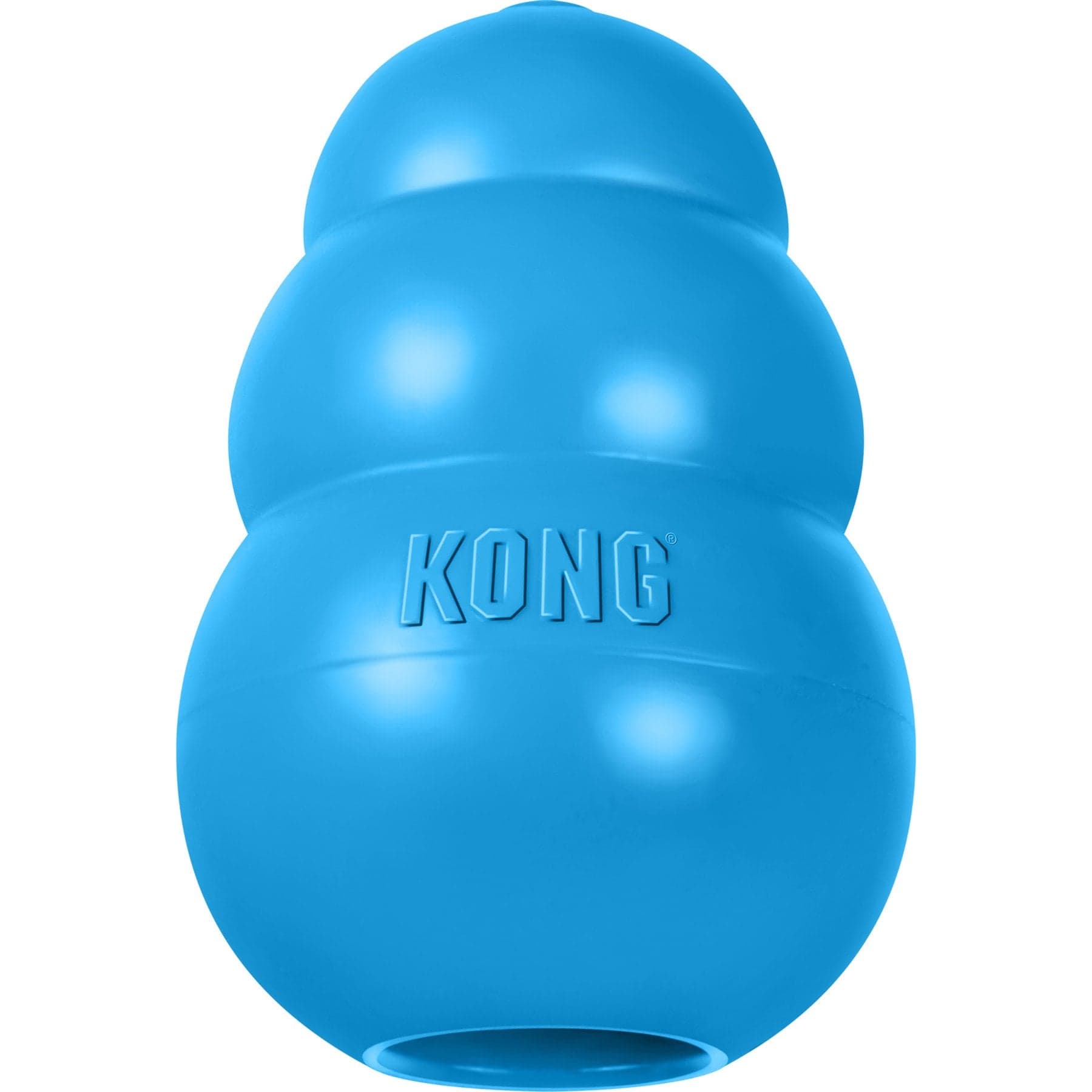
A small rubber puppy chew toy for supervised chewing while baby teeth come and go.
Webvet may earn a commission when you click through to Chewy, at no extra cost to you.
Here is the timeline by week and month, drawn from Merck and VCA:
- 3 to 6 weeks: baby canines, incisors, and premolars erupt.
- 8 weeks: all 28 baby teeth are in, per the Veterinary Partner eruption chart.
- 12 to 16 weeks: baby incisors loosen and the first adult incisors appear.
- 4 to 6 months: adult canines, premolars, and molars arrive; most puppies are mid-teething at 4 months.
- 6 to 7 months: the full set of 42 adult teeth is normally in place.
These ages apply to most breeds. A peer-reviewed study of Yorkshire terrier dentition notes that information on dentition development in different breeds is lacking, so no source gives separate schedules for individual breeds. The general timeline above is the best guide for most puppies.
Tiny breeds can run late. In that study, tooth loss and eruption tended to happen later in Yorkies weighing 3 kg or less, so toy breeds such as Chihuahuas may sit at the slower end of the range.

What are the worst weeks for puppy teething?
No veterinary source ranks individual weeks, but the replacement phase is the hardest stretch. VCA describes adult incisors arriving as early as 3 months, canines at around 5 months, and premolars and molars between 4 and 7 months. That puts the heaviest chewing at roughly 3 to 6 months, easing as the last adult teeth settle in. A chilled cloth toy gives sore gums something cool to mouth during those weeks.
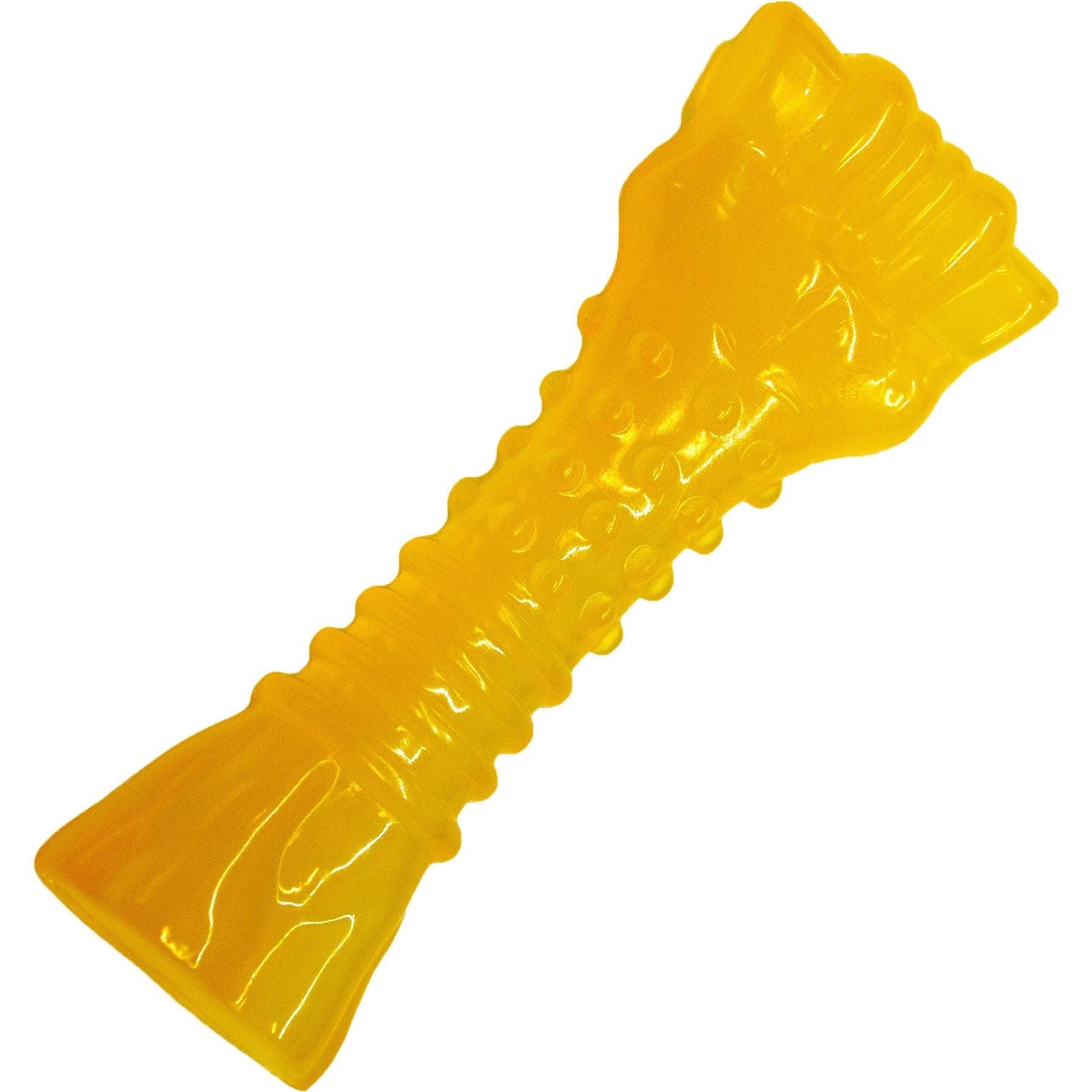
A cloth puppy chew made to be chilled in the freezer, for supervised chewing on sore gums.
Webvet may earn a commission when you click through to Chewy, at no extra cost to you.
Puppy teething timeline by age: losing baby teeth and getting adult teeth
| Age | What is happening in the mouth | What you may see | What to do |
|---|---|---|---|
| Birth to about 3 weeks | No visible teeth yet | Nursing only | Nothing needed |
| 3 to 6 weeks | Baby canines, incisors, and premolars erupt | Sharp needle teeth, mouthing littermates | No teething aids needed yet |
| 8 to 12 weeks | All 28 baby teeth are in | Nipping hands and chewing everything | Offer chews that bend, start mouth handling and gentle brushing |
| 12 to 16 weeks | Baby incisors loosen as adult incisors erupt | Tiny teeth on the floor, pink spots on toys, drool | Offer chilled soft toys and check the mouth weekly |
| 4 to 6 months | Adult canines, premolars, and molars come in | Peak chewing, sore gums, slower eating | Supervise chewing and look for two teeth in one spot, a retained baby tooth |
| 6 to 7 months and later | All 42 adult teeth are normally in | Chewing continues but eases | Ask your vet to check the bite and keep up daily brushing |
Yes, dogs have milk teeth. Puppies have 28 deciduous teeth, also called primary, baby, or milk teeth, and adult dogs have 42 permanent teeth, according to VCA Animal Hospitals. Dogs do not have any baby molars, which is why the adult set is larger.
Do puppies lose teeth the way children do? Yes, and VCA describes the same basic process:
- The adult tooth develops in the jaw and presses against the root of the baby tooth.
- That pressure makes the baby tooth root dissolve.
- The hollow crown falls out; you may find these shells on the floor or in bedding, though most puppies swallow them while eating with no ill effect.
At what age do puppies lose their teeth? The Merck Veterinary Manual says shedding normally begins around 14 weeks with the upper central incisors, and baby teeth are replaced over the next 3 months.
Baby teeth fall out in a rough order, though sources describe it slightly differently:
- Incisors usually go first, starting as early as 3 months.
- Canines follow at around 5 months, per VCA, so the baby canines are lost too, just later than the front teeth.
- Premolars and molars arrive between 4 and 7 months; the adult molars have no baby tooth to replace.
The Yorkshire terrier study found incisors were generally lost first, followed by premolars and then canines, so the canine and premolar order can swap. A puppy losing teeth at 5 or 6 months is right in the normal window. The Veterinary Partner eruption chart has the last permanent teeth in by seven to eight months.

Do dogs' teeth grow back after that? No. Merck notes that dogs, like people, get two sets of teeth in a lifetime, so an adult tooth that is broken or lost is not replaced. An adult tooth falling out after about 7 months is not teething and needs a vet visit.
Teeth give only a rough guide to a puppy's age. Merck cautions that estimating a young dog's age from its teeth is only somewhat accurate and is based mostly on when each tooth erupts.
How many teeth do adult dogs have?
Adult dogs have 42 permanent teeth, compared with 28 baby teeth in a puppy, according to VCA. The adult set is larger partly because dogs have no baby molars, so the molars arrive only as permanent teeth. Incisors sit at the front, canines beside them, then premolars and molars toward the back.
 Sponsored
Vet care that's always there
Unlimited video calls and messaging with licensed vets for less than a typical vet visit. One membership covers up to five pets.
Use code Pets60
Plans start at $12/month · covers up to 5 pets
- Licensed vets in most states
- Rx for 150+ conditions
- 4.7 on Trustpilot
Puppy teething symptoms: chewing, nipping, drool, and sore gums
Most puppy teething symptoms are mild and short-lived. VCA lists the classic signs as:
- Drooling more than usual
- Eating less eagerly than usual
- Irritability from a tender mouth
- A strong urge to chew, which almost all teething puppies have
- A distinctive puppy breath odor, which VCA calls normal while teething lasts
You may also see a little blood. VCA says some bleeding when teeth fall out is not unusual, but the amount is minuscule, usually just mild red staining on a chew toy.
How symptoms change with age:
- Around 4 months, signs center on the front of the mouth: loose baby incisors, the first adult incisors, and plenty of nipping with sharp needle teeth.
- Around 6 months, signs shift toward the back of the mouth as adult canines, premolars, and molars finish erupting.
Is a puppy tired from teething? Sources describe irritability and reduced appetite, but they do not list tiredness as a teething sign. A puppy that is truly listless, refuses food, or seems unwell should be treated as possibly sick, not just teething, and seen by a vet.
Chewing itself is part of the relief. VCA notes that chewing seems to ease what is assumed to be teething discomfort, which is why the goal is to redirect chewing rather than stop it.
How to help a teething puppy: safe chews, frozen options, and what to avoid
Helping a teething puppy comes down to three things: offer the right chews, take away the wrong ones, and supervise. The most useful test comes from veterinary dentists, who often advise, per VCA, that a dog should not chew anything that will not bend.
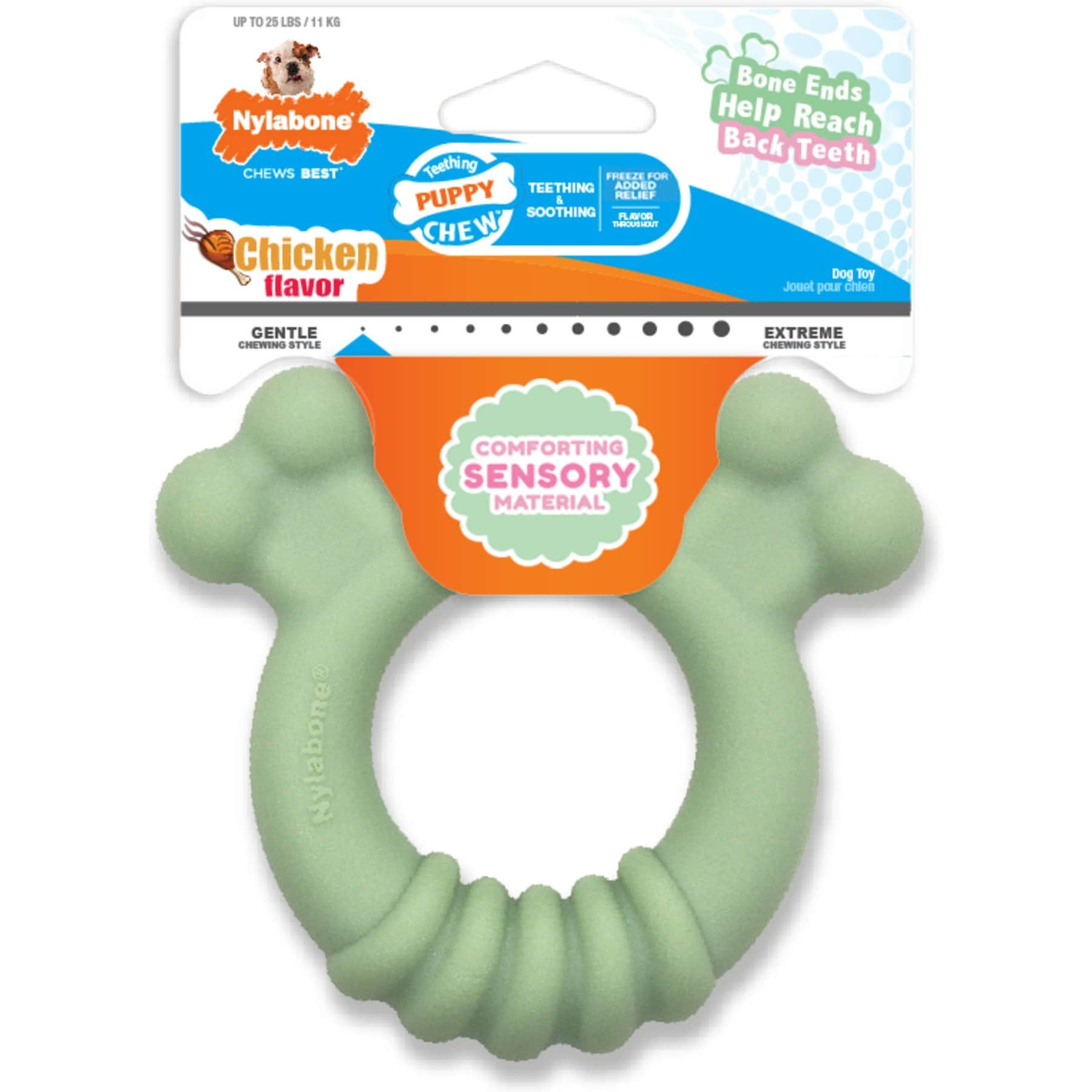
A puppy teething ring that can be frozen, sized for supervised chewing as adult teeth come in.
Webvet may earn a commission when you click through to Chewy, at no extra cost to you.
When choosing a teether for your puppy, look for:
- Soft rubber or fabric you can indent with a fingernail
- A size too big to swallow whole
- Something you can chill in the freezer for extra relief
- Sturdy construction that does not shed pieces

Choosing chews is easier once you know what to avoid. VCA advises against hard toys, nylon chews, cow hooves, ice cubes, and bones, cooked or otherwise, because they can damage teeth. Real bones, antlers, and hooves are classic causes of fractured teeth, per Merck.
Good options include a soft rubber chew such as the KONG Puppy Chew Dog Toy, Blue, Small or the Nylabone Puppy Rubber Teether Vanilla Yellow, Small. Nylabone also makes hard nylon chews, which are the kind VCA says to avoid, so check that any chew is a soft puppy version and passes the fingernail test.
Sore gums also make this a good time to start gentle tooth care, since VCA says the ideal time to begin brushing is as soon as a puppy comes home.
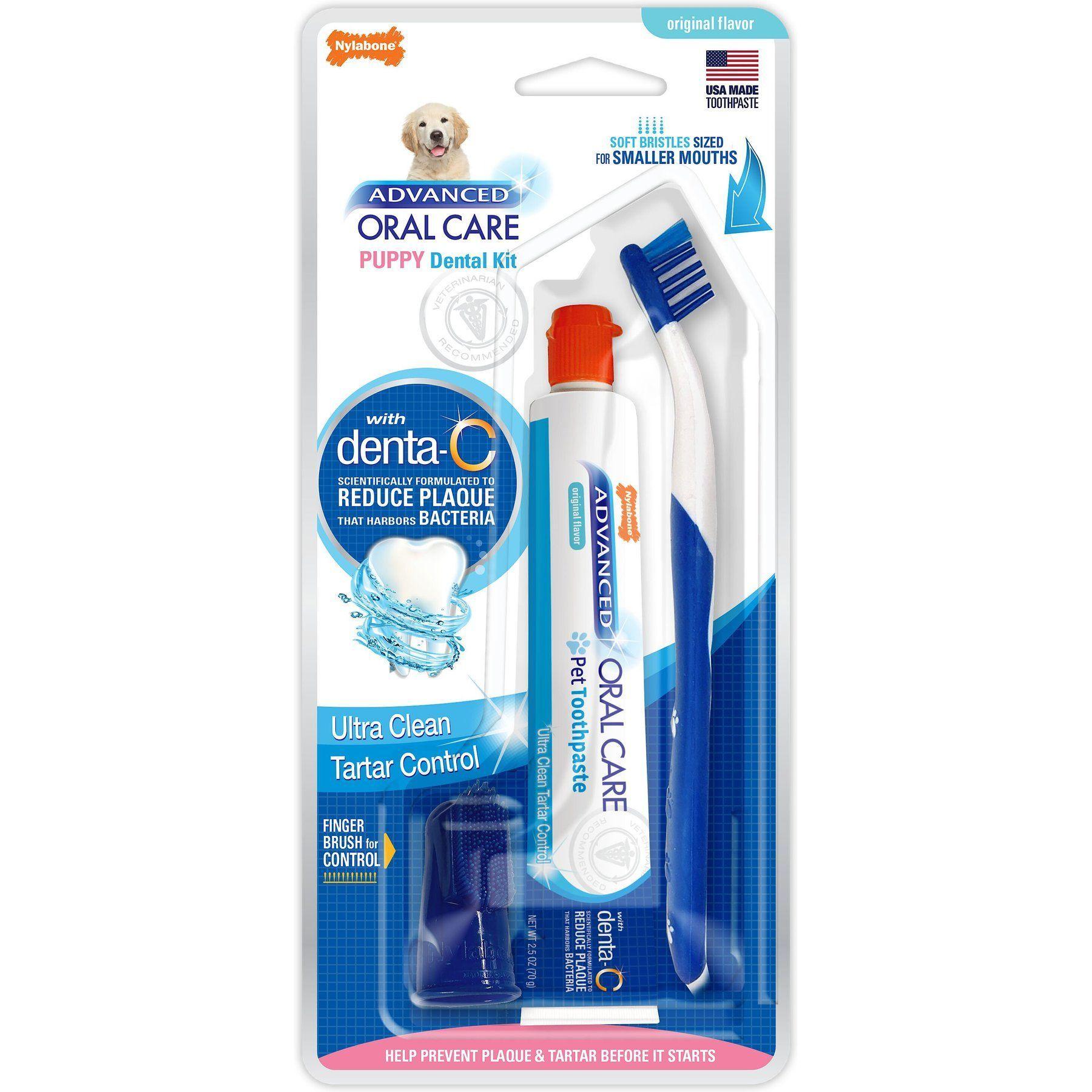
A puppy toothbrush and toothpaste kit for getting a young dog used to gentle brushing early.
Webvet may earn a commission when you click through to Chewy, at no extra cost to you.
Keep early sessions short and soft, letting your puppy lick the paste before the brush touches the gums.
Cold helps with sore gums. VCA says freezing toys and treats can ease inflammation and discomfort, much like chilled teethers for babies. Frozen toys are fine, but ice cubes are on VCA's avoid list because they are hard enough to damage teeth.
Simple steps at home help, and they do not need special products:
- Chill a soft rubber toy or a damp cloth toy in the freezer before playtime.
- Rotate a few chews so each one stays interesting.
- Swap a forbidden item for an approved chew, then praise your puppy for chewing it.
- Puppy-proof shoes, cords, and children's toys out of reach.
At night, start with a calm wind-down. Offer a chilled chew while you are watching, then put it away before bed. VCA stresses supervising even with recommended toys, since no toy is 100% safe, and says to remove any toy that is breaking apart or missing pieces.
The same rule covers edible teething chews: supervise, and take away anything breaking into pieces that could be swallowed. Teething gel is not part of VCA's teething advice, and human oral gels and dental products carry their own risk.
For specific picks, see our guides to puppy teething toys and safe dog chew toys.
Retained baby teeth and other teething problems that need a vet
Retained deciduous teeth are baby teeth that stay put after the adult tooth erupts. According to VCA, the most common are the upper canines, then the lower canines, then the incisors, and they are more common in small breeds and flat-faced breeds such as bulldogs, pugs, Boston terriers, and boxers.
They are common. The Yorkshire terrier study found persistent baby teeth in 69% of the puppies examined. Veterinary Partner explains that left in place, they cause overcrowding, plaque buildup, and malocclusion, a poor bite that can wear teeth or press on the gums and palate.
Timing matters, and the sources mostly agree:
- VCA says to schedule a vet visit as soon as you notice a persistent tooth, and that in most cases waiting until spay or neuter is not recommended.
- Removal requires general anesthesia, and early extraction usually lets the adult tooth move into its proper position.
- One VCA handout says extraction is commonly done during spay or neuter, while Merck says retained baby teeth removed as soon as they are noticed usually avoid later complications.
- Your vet weighs the timing for your puppy's mouth and bite.
Other reasons to call the vet during teething:
- A broken tooth, often from a hard chew, bone, or antler
- An adult tooth coming in at an odd angle or rubbing the roof of the mouth
- Swelling in the mouth or face, or refusing food
- Teeth that look damaged or discolored
Diarrhea and fever are not among the teething signs VCA lists. The Cornell Riney Canine Health Center says any puppy with vomiting and diarrhea should be tested for parvovirus, whose early signs include lethargy, poor appetite, and fever. A puppy still finishing its vaccines is at real risk, as covered in when can puppies go outside.
What about an older dog that seems to be teething? By Merck's timeline, all permanent teeth are in by 7 months, so a 1- or 2-year-old with sore-mouth symptoms is not teething. VCA notes heavy chewing often eases around 18 months, but loose teeth, bleeding gums, or pain at that age point to a dental problem; see dog dental health.
Teething and biting: what is normal and how to redirect it
Why do puppies bite when teething?
Puppies bite because their mouths are sore and because mouths are how they explore. VCA calls chewing on people, furniture, and objects within reach normal puppy behavior, notes that chewing seems to ease teething discomfort, and says mouthy breeds such as retrievers are especially prone to it. Sharp needle teeth make it hurt.

Normal does not mean acceptable on skin. VCA suggests these steps when a puppy chews on hands:
- Let out a high-pitched yelp, pull your hand away, and go play elsewhere.
- Redirect to an approved chew, then reward with praise or a treat once your puppy chews it.
- Never let anyone reward biting by continuing play after a nip.
- Add exercise, training, and puzzle feeders to burn off energy.
VCA warns that letting children play rough teaches a puppy that hands are acceptable toys. It also notes there is no consensus on the single best way to teach puppies not to chew, so ask your vet for a plan that suits your puppy.
For step-by-step training, see how to stop a puppy from biting, and for the usual age range, when do puppies stop biting.
Caring for new adult teeth: when to start brushing
Should I brush my puppy's teeth?
Yes. VCA Animal Hospitals says the ideal time to begin brushing is as soon as you bring your puppy home. Gums are sensitive while teeth erupt, so keep it gentle. Starting early also gets a puppy used to having its mouth handled before the permanent teeth need lifelong care.

To start tooth brushing on the right foot:
- Never use human toothpaste, which VCA says is not appropriate for dogs and can make them sick.
- Use a toothbrush and toothpaste made for dogs, such as the Nylabone Advanced Oral Care Original Flavor Puppy Dental Kit or a dog toothpaste like Sentry Petrodex Enzymatic Poultry Dog Toothpaste, 6.2-oz.
- Let your puppy sniff and lick the brush and paste first, and do not force it.
- Build toward daily brushing; VCA says most dogs can learn to tolerate or even enjoy it.
While you brush, look. VCA advises checking a puppy's mouth every week until about seven to eight months of age to make sure the teeth are coming in normally. Our guide on how to brush a dog's teeth walks through the technique.
Whether dental chews such as Greenies can stand in for brushing, how many is too many, and how they compare with Dentastix are covered in our guide to vet-recommended dog dental chews.
Puppy teething questions
Frequently Asked Questions
Do puppies lose teeth at 5 months?
Yes. Five months is the middle of the swap from baby teeth to adult teeth. Many puppies have already lost their front baby teeth by then, and the adult canines are usually erupting. If the baby canine is still in place once the adult canine shows, that is worth a vet check.
Which teeth do puppies lose first?
The incisors at the front usually go first, starting at around 3 to 4 months. The canines and premolars follow, and sources differ on which of those comes next: VCA puts canines at about 5 months, while a Yorkshire terrier study found premolars often went before canines.
What do puppy teeth look like when they fall out?
A shed baby tooth looks like a tiny, hollow white cap with little or no root, because the root dissolves before the tooth drops. Many are never found, because puppies often swallow them while eating. VCA says swallowing their own teeth is very common and harmless.
Can teething cause diarrhea in puppies?
Veterinary sources do not list diarrhea as a teething sign. Treat diarrhea in a puppy as its own problem: call your veterinarian, and go the same day if there is vomiting, blood, fever, or lethargy, since Cornell advises testing such puppies for parvovirus.
Is puppy teething gel safe?
Teething gels are not part of the VCA or Merck teething advice, which relies on chilled, bendable chews, and human gels and oral products carry a real risk. The U.S. Food and Drug Administration warns that xylitol, found in some toothpaste, mouthwash, and over-the-counter medicines, can drop a dog's blood sugar within 10 to 60 minutes. If your dog may have eaten xylitol, call your vet, an emergency clinic, or animal poison control right away. Chilled chews are the safer route; ask your vet before using any gel.

Editor
The Webvet Editorial Team is the in-house group of pet-care editors and writers behind Webvet, operated by Smart Pet Collective. The team researches, writes, and maintains Webvet's pet health, behavior, and medication content. Every article follows a defined editorial process: research from reputable veterinary and scientific sources, careful drafting, mandatory review of medical content by a credentialed veterinarian, and dated publication. Health and medication articles are medically reviewed by a licensed veterinary professional before they go live and are kept current over time.
Veterinarian · BVMS MRCVS
Dr. Pippa Elliott, BVMS, MRCVS, is a veterinarian with nearly 30 years of experience in companion animal practice. Dr. Elliott earned her Bachelor of Veterinary Medicine and Surgery from the University of Glasgow. She was also designated a Member of the Royal College of Veterinary Surgeons. Married with 2 grown-up kids, Dr. Elliott has a naughty Puggle named Poggle, 3 cats and a bearded dragon.
Related reading

When Can Puppies Go Outside? A Vet-Reviewed Timeline by Vaccine Stage

New Puppy Checklist: Supplies, First-Week Plan, and Vet Visits

IMHA in Cats: Signs, Causes, Treatment, and Survival
