When Do Puppies Stop Biting? Age Chart and Progress Signs
See how puppy biting can change with age, why adult teeth do not end every biting habit, and which progress signs matter more than a deadline.

This article contains affiliate links. Webvet may earn a commission when you buy through them, at no extra cost to you.
The answer to “when do puppies stop biting?” depends on learning and context, not a universal stopping age. Biting often becomes easier to manage as a puppy matures. Most dogs have permanent teeth by about seven months, but that dental milestone does not guarantee an end to biting people.
Use age to understand what may be changing, then watch the behavior itself. Fewer episodes, easier redirection, and calmer recovery are more useful signs than waiting for a birthday. Hard, fearful, or defensive biting deserves help at any age.
When do puppies stop biting? An age guide
Age can help explain how puppies change, but it cannot tell you when an individual will stop biting. Use the milestones below alongside a record of actual behavior. Continue teaching throughout the process, and seek help when contact is painful or frightening rather than assuming another month will solve the problem.
- 1An age range is not a deadline: learning and the puppy's daily experiences affect biting.
- 2Teething and play biting overlap, but permanent teeth do not end every learned habit.
- 3Track progress and get help for unsafe behavior instead of waiting for the next developmental stage.
The chart describes broad contexts, not a prediction for an individual puppy. A puppy may move through dental milestones earlier or later, and behavior changes do not follow a fixed calendar. Continue gentle teaching even when the mouth is no longer teething.
| Age | What may be happening | Helpful focus |
|---|---|---|
| Around 8 to 12 weeks | Exploration, playful mouthing, adjustment to a new household | Supervision, safe toys, short reward-based lessons |
| Around 3 to 5 months | Play learning continues while permanent teeth begin to emerge | Appropriate chewing options and consistent calm responses |
| Around 6 to 7 months | Many puppies are approaching a complete adult set of teeth | Keep teaching safe interaction; assess persistent hard biting |
| Later puppyhood and adolescence | Excitement and practiced habits may still produce nipping | Adjust the difficulty and compare progress in similar situations |
| At any age | Biting with fear, guarding, pain, freezing, or injury | Prevent repeat incidents and seek professional help |
An age range is not a deadline
An eight- or nine-week-old puppy does not have to wait until teething ends to learn. Offer appropriate toys, reward calm greetings, and keep interactions short enough to remain manageable. The lesson is repeated through everyday choices, rather than delivered in one long training session.
A supervised play option for a suitably sized puppy
For a larger puppy whose size and play style suit it, ZippyPaws Skinny Peltz is an optional soft toy for supervised redirection. The linked set is Large, which the manufacturer lists for medium and large dogs. It is not a small-puppy chew. Remove it if fabric, seams, or squeakers loosen; choose another toy for destructive chewing.
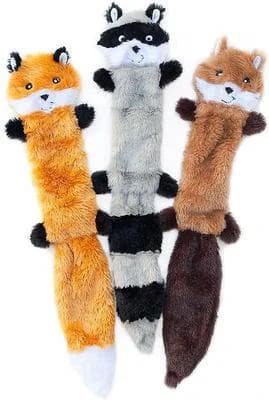
Large soft play toys for a suitably sized puppy under supervision. Not a teething treatment or a heavy-chewer option.
Webvet may earn a commission when you click through to Chewy, at no extra cost to you.
At this age, changes in home, routine, and people can be considerable. Help the puppy rest and recover between experiences. Constant handling and exciting play can make it harder to notice the moment they need a break.
Three to five months: separate chewing from play
A three-, four-, or five-month-old puppy may chew objects while also grabbing sleeves during social play. Those actions can happen in the same week for different reasons. An appropriate chew may help occupy the mouth, but safe interaction with people still needs teaching.
For example, a 17-week-old puppy who bites clothes whenever someone runs past needs a change to that moving-target game. Waiting for another tooth to fall out will not teach them what to do instead. Set up easier movement practice and reward the desired response.
Six months and beyond: assess the pattern
A six-month-old puppy who still mouths during excitement is not automatically abnormal. Look at whether the behavior is improving and whether everyone is safe. Persistent painful contact, increasing intensity, or new defensive behavior should prompt help, even if the puppy remains young.
Apply the milestones to the puppy you have

Compare the same situation over time. Is your puppy grabbing your hands less during quiet play, or releasing clothing more readily when someone walks past? Those changes show more than a breed label or birthday.
Match management to your puppy’s size and current skills. Recheck barriers and toy fit as they grow, and keep hands and faces out of reach even when the puppy is small.
Plan an appropriate individual space
A MidWest exercise pen can define a supervised area before an ordinary activity begins, when the puppy is already comfortable there. This is the 36-inch model; check height, panel spacing, and climbing ability. Introduce it gradually with support. It is not equipment for physically managing an active bite incident.

A 36-inch exercise pen for a preplanned, supported individual space. Check the puppy’s size and escape behavior before choosing.
Webvet may earn a commission when you click through to Chewy, at no extra cost to you.
Teething and play biting follow different clocks
Teething concerns developing teeth; play biting concerns an interaction. They can overlap without being interchangeable. A puppy may seek something to chew and also discover that grabbing a moving hand starts an exciting game. The response should fit the situation you observe.
Puppies do not necessarily stop biting when their baby teeth fall out. When puppies lose teeth, chewing may change, but they still need to learn how to play without biting people. That is why “when do puppies stop teething?” and “when will the biting stop?” can have different answers.
The Merck Veterinary Manual describes permanent teeth usually beginning to appear around four to five months, with the permanent set present by about seven months. These are dental-development milestones, not evidence that every puppy's biting stops at seven months.
Permanent teeth do not end every learned habit
If pulling at a sleeve repeatedly starts play, the sleeve can remain interesting after adult teeth arrive. If a puppy bites when frightened by handling, completing teething does not resolve that fear. Those situations require changes to the interaction and, where appropriate, professional assessment.
Conversely, a puppy can learn calmer play while still losing baby teeth. Do not postpone gentle teaching because the puppy is teething. Choose manageable activities, reward safe choices, and avoid repeatedly practicing the interaction that ends in painful contact.
Keep chewing options suitable and supervised
Offer toys intended for your puppy's current size and chewing style, and check them for damage. Follow the manufacturer's use instructions. No toy is a guarantee against swallowing pieces, and an item that suited the puppy last month may need reassessment as they grow.
Avoid replacing a training plan with a growing pile of products. A chew toy does one job; it does not teach every greeting, handling exercise, or response to moving feet. For the teaching sequence, use our guide to stopping puppy biting.
If your puppy seems painful, has trouble eating, or develops an unusual mouth-related change, contact your veterinarian. Do not assume every change is normal teething or try to inspect a painful mouth by force. Dental concerns and the biting timeline are separate questions.
Track progress instead of waiting for a birthday
An age chart cannot tell you whether yesterday's practice helped. A brief record can. Choose one recurring situation, such as evening play, and compare it under similar conditions. Note what happened beforehand, how the puppy responded, and what helped them return to a calmer activity.
Track intensity, frequency, and recovery
Track four features of the same recurring situation:
- Frequency: how often biting occurs during the interaction.
- Intensity: what the contact is like and whether it causes injury or fear.
- Redirection: how easily the puppy chooses a toy or another taught action.
- Recovery: how easily the puppy returns to an appropriate activity with suitable support.
These measures work together. Fewer bites are not reassuring if the remaining bites are much harder. A puppy who becomes silent but freezes when approached has not necessarily become comfortable. Notice the whole interaction, not just one number.
| Measure | Improvement | Reason to ask for help |
|---|---|---|
| Frequency in a similar situation | Fewer grabbing episodes during a short game | No useful change despite a manageable consistent plan |
| Intensity | Safer contact and less force | Increasing pressure, injury, or frightening bites |
| Redirection | Choosing a toy or another taught action more easily | Repeated escalation when you try to disengage |
| Recovery | Returning to a calm activity with support | Persistent distress, freezing, guarding, or inability to settle |
Compare like with like
Keep the observation simple enough to repeat. A five-minute game in a quiet room differs from a crowded family gathering. If the setting changes, write that down rather than interpreting one difficult evening as proof that all progress has disappeared.
You might record: “Offered toy before sitting down; two sleeve grabs; settled after a quieter restart.” A few concrete notes are more useful than “good puppy” or “bad puppy.” They also give a trainer a clearer starting point if you need help.
Use a small reward for a manageable lesson
Zuke’s Mini Naturals Peanut Butter & Oats treats can provide small rewards during an easy, planned lesson. Tear pieces to suit the puppy, supervise eating, and include treats in the daily feeding allowance. For a puppy with guarding concerns, follow the professional’s plan; do not use food to lure them into an uncomfortable approach.

Soft Peanut Butter & Oats rewards for easy, supervised lessons. Adjust piece size and account for treats in the puppy’s diet.
Webvet may earn a commission when you click through to Chewy, at no extra cost to you.
Normal does not mean you must tolerate injury
How much biting is normal is less useful than asking how the biting affects this household. A repeated habit that frightens someone or makes care difficult needs attention. Common puppy behavior can still require a practical management plan and help with teaching a safer alternative.
Mouthing is a common part of puppy exploration and play, but there is no quota of bites a family must accept. Prevent painful contact, protect children, and get support if the situation is difficult. You can seek guidance before a problem becomes severe.
Teaching good habits means arranging repeatable safe choices, not testing the puppy's self-control in increasingly exciting situations. Reward approaches that keep teeth off skin. Use barriers when active supervision is unavailable, and give the puppy appropriate activities and rest.
Why biting can continue or return

Progress can be uneven
Progress can be uneven. A change in routine, an unfamiliar visitor, more exciting play, or a harder training situation may bring grabbing back. Review what changed before deciding that the puppy has forgotten everything or needs a stronger correction. A setback calls for reviewing the plan, not punishment.
Adolescence adds new demands
As puppies grow, caregivers often expect more freedom and longer periods of self-control. Sometimes expectations rise faster than the skills being practiced. Keep useful management in place while you gradually teach the next level of difficulty.
Make ordinary quiet time familiar
A washable Pet Parents Pawtect blanket can serve as a familiar resting mat if the puppy uses fabric safely. This link opens the Small size. Introduce it during a supported quiet period and remove it if the puppy chews, shreds, or tries to swallow fabric. A mat supports the routine; it does not treat a biting problem.
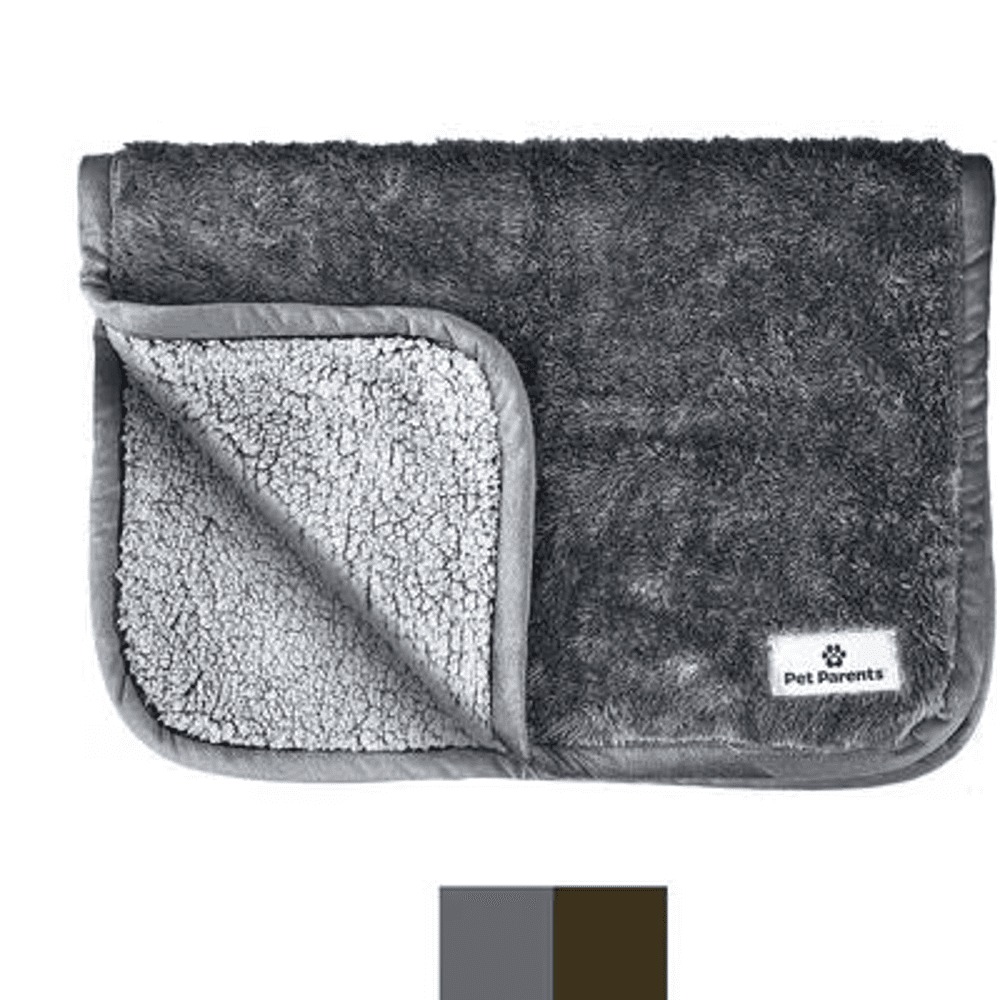
A Small washable mat for ordinary rest, only for a puppy who uses fabric safely. Remove damaged or chewed fabric.
Webvet may earn a commission when you click through to Chewy, at no extra cost to you.
For instance, calm greetings with one familiar adult do not prove that the puppy can manage several running children. The second situation needs a different setup, more distance, and close adult supervision. Reducing difficulty is part of teaching, not a failure.
A habit may still be rewarding
If biting feet reliably produces a chase, the puppy may keep trying it. If grabbing a toy from a person always starts a wrestling match, the grabbing has a useful outcome from the puppy's perspective. Change that pattern and reward a safer way to begin interaction.
Avoid responding with faster movement, shouting, or rough handling. Those reactions can add excitement or fear. A calm pause, a prepared barrier, and an easier restart give the household a more consistent response.
A new cause needs a new assessment
Sudden hard biting, growling when touched, or guarding something valuable should not be filed under an ordinary setback without assessment. Pain and other health concerns can contribute to behavior changes. Fear or guarding also needs an approach that fits the trigger.
Use our guide to hard biting and growling to understand the next step. Do not recreate a worrying incident to test whether the puppy will repeat it. Protect the puppy and people while you arrange help.
What helps at every age
To stop ordinary puppy biting and nipping, teach an alternative instead of waiting for maturity. Offer a toy before hands or feet become a target, briefly pause painful play, and reward a calmer choice. Our puppy-biting training guide explains the sequence for mouthing, grabbing clothes, and chasing ankles.
Teaching bite inhibition means helping puppies learn control of bite pressure. Arrange non-aggressive games where teeth stay away from skin. If a puppy bites the leash, grabs hands, or won't stop chasing feet, adjust that particular situation instead of trying to teach everything during an exciting outing.
Start with the same foundations: suitable supervision, predictable care, calm teaching, and appropriate opportunities to rest and explore. A flexible dog training schedule can help the household deliver those consistently without assuming every day must look identical.
Plan safe experiences beyond the home
Appropriate social experiences and gentle learning matter during puppyhood, but they should match the individual puppy. Ask your veterinarian about suitable outings and classes in light of local infection risk and your puppy's health history.
Our puppy vaccine schedule explains the vaccination side of that discussion. A general age chart cannot clear a puppy for every setting. Avoid using unsupervised dog interactions as a test of whether another dog will “teach them manners.”
Help the people follow the same plan
Agree on what happens when teeth touch skin, where appropriate toys are kept, and when barriers are used. Give visitors the same simple instructions. A puppy who gets different reactions from every person has a harder pattern to learn.
Caregivers need breaks too. Arrange safe, comfortable separation when you feel overwhelmed, and ask for help before frustration turns into punishment. The aim is a plan that protects the relationship and can be repeated in everyday life.
Signs that should not wait for the next stage
Aggressive puppy biting, resource guarding, and fear during handling need assessment at any age. If you are trying to stop that behavior, begin with safety rather than a stronger correction. Our hard biting and growling guide explains why training and medical or behavior evaluation may need to work together.
If your puppy guards food or possessions, keep people away from those items and ask for an individual safety plan. Do not take things away to test the response or wait for a birthday to seek help.
A veterinarian can assess possible health contributions and help you find appropriate behavior support. A qualified reward-based trainer can assist with ordinary play biting; more complex fear, aggression, or guarding may need a veterinary behavior professional.
You cannot reliably predict a puppy's future from one episode, and growling does not supply a diagnosis. Equally, repeated unsafe behavior should not be dismissed as a phase. Use the actual pattern and its impact on safety to decide how promptly to seek help.
Frequently asked questions
How long is a puppy's biting stage?
There is no fixed length for every puppy's biting stage. Teething changes as adult teeth arrive, but play habits and responses to excitement develop through learning. Watch for safer interaction, fewer episodes, and easier recovery rather than a single end date.
If biting is painful, defensive, or escalating, get help while the puppy is young instead of waiting for the stage to pass.
What is the hardest month for a puppy?
There is no single hardest month for every puppy or household. Early adjustment, changing teeth, growing activity needs, and adolescence can each bring different challenges. The difficult period depends on the individual puppy, the environment, and the support available.
Use your notes to identify the recurring situation that needs a change, rather than expecting a calendar to predict it.
What is the naughtiest age for a puppy?
There is no universally naughtiest age for a puppy. During adolescence, new experiences and increased expectations can expose skills that still need practice. Maintain useful management, reward the behavior you want, and provide suitable rest and activity.
Calling it a deliberately naughty phase can obscure the practical issue, such as an exciting greeting or a routine that no longer fits.
Can a puppy improve and then start biting again?
Yes, a puppy can improve and then start biting again when the routine, setting, or difficulty changes. Return to an easier exercise. A sudden new pattern, discomfort during handling, guarding, or harder bites deserves professional assessment rather than being assumed to be normal regression.
Your notes about context and recovery can help explain what is different.

Editor
The Webvet Editorial Team is the in-house group of pet-care editors and writers behind Webvet, operated by Smart Pet Collective. The team researches, writes, and maintains Webvet's pet health, behavior, and medication content. Every article follows a defined editorial process: research from reputable veterinary and scientific sources, careful drafting, mandatory review of medical content by a credentialed veterinarian, and dated publication. Health and medication articles are medically reviewed by a licensed veterinary professional before they go live and are kept current over time.


