Aggressive Puppy Biting: Hard Bites and Growling
Compare rough puppy play with fear, pain, frustration, and guarding. Learn safe first steps and when hard biting or growling needs a vet or behaviorist.

BVMS MRCVS

This article contains affiliate links. Webvet may earn a commission when you buy through them, at no extra cost to you.
A puppy biting hard and growling may be playing, frightened, frustrated, guarding something, or reacting to discomfort. The sound alone cannot tell you which. Stop the interaction safely, look at what happened immediately beforehand, and arrange help if bites are painful, escalating, or difficult to prevent.
Treat aggressive puppy biting as a reason to assess context, not punish the growl. Do not repeat the situation to test your puppy. Give people and the puppy safe space while you work out the next step. Sudden changes, handling sensitivity, and possible pain belong in a veterinary assessment.
Aggressive puppy biting: read the whole situation
- 1Context matters: rough play, fear, guarding, and pain can require different responses.
- 2Growling is information, not a reason to punish. Create space instead of forcing the interaction.
- 3Get professional help for hard biting, injury, sudden change, or a pattern you cannot manage safely.
“Aggressive puppy biting” describes a concern, not a diagnosis or a fixed personality. A useful assessment asks what the puppy was doing, what the person did next, and how the puppy responded. The aim is to understand the pattern while preventing another injury.
Aggressive puppy biting: use context to choose the safer next step
Loose, bouncy movement during a mutual game can accompany play growling. Freezing over a bowl or snapping when lifted is a different context. Neither a growl recording nor a single photograph can reliably classify the whole interaction.
Watch whether the puppy can disengage when the situation becomes easier. A puppy who remains distressed or escalates needs a change in management. Do not keep approaching, touching, or reaching for an item to find the exact point at which the puppy bites.
| Context | What to notice | Safer next step |
|---|---|---|
| Exciting play | Loose movement, pauses, ability to choose a toy | Lower excitement and use the ordinary play-biting plan |
| Approach to food, a chew, or a resting place | Freezing, hovering, hard staring, guarding | Give space and arrange professional guidance |
| Touching, lifting, grooming, or moving the puppy | Avoidance, flinching, tension, sudden bite | Stop unnecessary handling and contact your veterinarian |
| Cornering or an unwanted approach | Retreat, crouching, freezing, growling | Remove pressure and provide a safe exit |
| Repeated hard bites or injury | Escalation or inability to prevent contact | Separate safely and seek prompt help |
Red flags are reasons to act, not labels
If a puppy growls and snaps while playing, pause and review the whole interaction. Identifying what happened before the nipping helps distinguish the practical next step. Reaching back toward a puppy who keeps grabbing clothes or reacting very intensely adds risk; first create space and lower the pressure.
Red flag puppy behaviors include repeated hard biting, freezing before contact, guarding resources, a sudden change, or an interaction that people cannot stop safely. These observations justify help. They do not establish the cause or predict the puppy's entire future.
Our dog body language guide can help you describe posture and context. Read several signals together. A wagging tail does not prove safe play, and the absence of a loud growl does not prove that the puppy is comfortable.
Avoid an online aggression score
Signs of aggression in puppies are best described in context. Terms such as arousal biting, conflict aggression, or dominance aggression are not interchangeable diagnoses. A puppy snapping at an owner during handling is a different situation from noisy play at night, even if both look extremely intense to the person watching.
A quiz that adds points for barking, zoomies, or mouthing can confuse ordinary arousal with a serious behavior concern. Conversely, calling every bite playful can overlook fear or pain. Record what happened instead of trying to fit the puppy into a reassuring or alarming category.
Note the person involved, the activity, the location, and whether food or an object was present. Include what the puppy did before the bite, not just the final moment. Those details help a professional assess an incident more accurately than the word “aggressive” alone.
Why a puppy may bite hard and growl

Several influences can overlap. A puppy may already be excited, dislike being restrained, and have a painful area touched during the same incident. A veterinarian and qualified behavior professional can help separate those contributions and build a plan that fits the individual.
Play becomes too difficult or exciting
When a mouthy puppy won't stop ordinary play biting, choose a calmer game. Play arousal in puppies needs a manageable response, whether you have a cocker spaniel or another breed. You cannot teach every puppy to stop biting in seconds. Do not punish or bite the puppy back.
Chasing hands, grabbing clothes, and rough games can become more intense than a puppy can manage. A calm, easy version of the game may be appropriate when the puppy is otherwise comfortable and can disengage. Keep teeth away from skin and avoid provoking another episode.
A supervised play option for a suitably sized puppy
For a larger puppy whose size and play style suit it, ZippyPaws Skinny Peltz is an optional soft toy for supervised redirection. The linked set is Large, which the manufacturer lists for medium and large dogs. It is not a small-puppy chew. Remove it if fabric, seams, or squeakers loosen; choose another toy for destructive chewing.
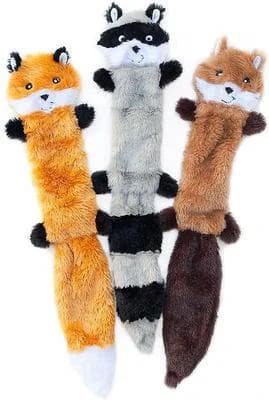
Large soft play toys for a suitably sized puppy under supervision. Not a teething treatment or a heavy-chewer option.
Webvet may earn a commission when you click through to Chewy, at no extra cost to you.
Use our ordinary puppy-biting training plan for early redirection and brief pauses. That plan is not a substitute for assessment when the puppy freezes, guards, reacts to handling, or repeatedly bites hard enough to injure someone.
Fear and frustration can change the response
A puppy may feel threatened when cornered, held, or approached despite attempts to move away. Frustration can also accompany a blocked goal or an overwhelming interaction. The visible behavior does not tell you exactly what the puppy feels, so avoid guessing from noise alone.
VCA's aggression overview explains that fear, frustration, and discomfort can affect aggressive responses. Give the puppy room to disengage and seek an assessment rather than insisting that they tolerate an unwanted interaction.
Pain is possible when behavior changes suddenly
Sudden aggression in puppies deserves a call to the veterinarian. If your puppy growls when you pick them up or move them, stop unnecessary handling and describe that pattern to the clinic. A young puppy may need both a health assessment and changes to how everyday care is approached.
New growling during lifting, grooming, or movement deserves veterinary attention. A puppy does not need to limp or cry continuously for discomfort to be relevant. Tell the clinic which action preceded the response and whether appetite, activity, sleep, or movement also changed.
The Merck Veterinary Manual identifies medical assessment, including consideration of pain, as part of evaluating behavior problems. Do not diagnose the cause yourself or force a painful examination at home. Ask the clinic how to manage necessary handling safely.
Do not test guarding by taking food away
Possession or food guarding should not become a contest. To prevent another incident while you seek help, keep the puppy's eating and resting area quiet. If the puppy is sleeping, avoid touching or moving them unnecessarily. Wake them from a comfortable distance before inviting them to move voluntarily.
Resource guarding can involve food, chews, toys, resting places, or other things the puppy values. A puppy who freezes when someone approaches a bowl is giving useful information before a bite occurs. Leave space rather than repeatedly touching the food to demonstrate ownership.
VCA's puppy food-guarding guidance recommends contacting the veterinary team when these signs appear. For now, provide a quiet eating area and keep people and other animals from approaching. A tailored plan can then address the response without rehearsing conflict.
Being picked up or moved is a distinct trigger
A puppy who growls when picked up, shifted from a bed, or awakened may need assessment for discomfort and a gentler handling plan. Avoid reaching for them simply to check whether the growling will happen again. Prepare another way to manage the space where possible.
Explain exactly how the handling occurred: asleep or awake, from which direction, and whether the puppy first tried to move away. That description is more useful than deciding they are dominant or stubborn. The immediate priority is preventing another difficult encounter.
What to do immediately after growling or a hard bite
Protect people without escalating the situation
Stop the activity that preceded the response when it is safe to do so. Keep your face and hands away from the mouth. Avoid chasing, cornering, or trying to physically overpower the puppy. A gate or closed door can help separate spaces without a confrontation.
Even a small puppy bite can need medical advice; the puppy’s age does not make a wound harmless. If a bite breaks the skin or draws blood, seek a medical assessment of the person’s injury. Tell the veterinary team about the incident when arranging the puppy’s assessment. This article cannot judge a wound or decide the medical care a person needs.
Children need distance and adult supervision
Keep children apart from the puppy after a worrying incident until there is a workable safety plan. Do not ask a child to take food away, practice corrections, or show the puppy who is in charge. Adults are responsible for managing access and preventing another bite.
Check that the barrier fits the household. A gate that a child can easily open or a puppy can jump is not a complete plan. Decide who manages doors, meals, toys, and visitor arrivals so safety does not depend on everyone remembering at the last moment.
Growling is information, not a reason to punish
Growling gives you information about the interaction. Punishing it can add fear or conflict without resolving the reason for it. The American Veterinary Society of Animal Behavior recommends reward-based approaches rather than aversive methods for training and behavior modification.
Do not bite the puppy back, tap the nose, shout into their face, or hold the mouth closed. A muzzle is not a device for making the puppy endure a frightening situation. If one is appropriate for safety, ask a professional about fit and gradual positive training.
Record the event once everyone is safe

Write down the sequence while it is fresh:
- What happened immediately before contact, including any warning signals.
- The target of the bite and whether there was an injury.
- What ended the interaction and helped everyone reach safety.
- Recent changes in health, routine, or handling.
Use video only if it already exists or can be captured without provoking the puppy or delaying safety. Never recreate a bite for a clearer clip. A written history is valuable even when no recording is available.
When to contact a veterinarian or behavior professional
Contact your veterinarian promptly for hard or escalating bites, sudden behavior change, guarding, or sensitivity to touch. Ask for immediate guidance if the puppy seems severely unwell, injured, or cannot be handled safely. Explain the behavior before arriving so the clinic can plan the visit.
Match the support to the problem
A reward-based trainer can help with everyday puppy skills and manageable play biting. Suspected pain requires veterinary assessment. Complex fear, repeated aggression, or significant safety concerns may warrant a veterinary behaviorist or another appropriately qualified behavior professional working with the veterinarian.
Ask prospective professionals how they assess risk, what methods they use, and how they coordinate with veterinary care. Avoid promises to cure every puppy in a fixed number of sessions. Choose someone who can explain a practical safety plan and adapt it to your household.
| Situation | Contact | Until help arrives |
|---|---|---|
| New sensitivity, sudden change, or suspected pain | Veterinarian | Avoid unnecessary handling and describe the trigger |
| Repeated hard bites, guarding, or escalating conflict | Veterinarian and qualified behavior professional | Prevent access to the provoking situation |
| Loose playful mouthing with no concerning pattern | Reward-based puppy trainer if needed | Use manageable play, redirection, and supervision |
| Injury or inability to keep people safe | Appropriate medical or emergency professional | Create safe separation without confrontation |
Bring a useful history
Share your notes, previous training methods, the puppy's daily routine, and any health changes. Mention whether the same response happens with every person or only in one context. Tell the professional what management you can realistically sustain, including barriers and supervision.
Plan an appropriate individual space
A MidWest exercise pen can define a supervised area before an ordinary activity begins, when the puppy is already comfortable there. This is the 36-inch model; check height, panel spacing, and climbing ability. Introduce it gradually with support. It is not equipment for physically managing an active bite incident.
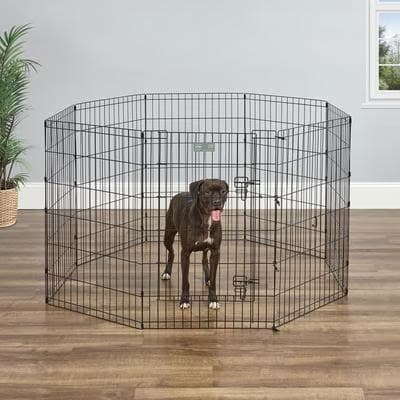
A 36-inch exercise pen for a preplanned, supported individual space. Check the puppy’s size and escape behavior before choosing.
Webvet may earn a commission when you click through to Chewy, at no extra cost to you.
It is also useful to describe the puppy's comfortable activities. Knowing that handling is difficult but quiet toy play is easy can help define a starting point. The assessment should consider the whole puppy and household, not only the most alarming moment.
Age and breed do not decide the answer

No age guarantees that aggression disappears
There is no age at which all puppies become aggressive, and no age guarantees that aggression disappears. Young puppies can need help with fear or guarding. An eight-, nine-, or twelve-week-old puppy who reacts strongly to being picked up still deserves an appropriate assessment.
Why is my three-month-old puppy so aggressive?
At three or four months, a puppy may be learning about play, handling, and household routines while also going through developmental changes. Those facts do not identify the reason for a hard bite. Look at the trigger and seek help for an unsafe pattern instead of relying on age alone.
The same approach applies to a six-month-old puppy who jumps, grabs, or growls. Ordinary excited play needs teaching, while fear, guarding, or pain needs a more specific plan. Our biting age guide explains why teething and learned habits follow different timelines.
Do puppies grow out of aggressive biting?
Do not assume puppies will grow out of aggressive biting. Some ordinary mouthing improves with maturity and teaching, but persistent fear, guarding, or painful contact should be addressed directly. Waiting can leave the household exposed to further incidents without changing the underlying situation.
Improvement is possible for many behavior concerns, but the outcome and long-term management needs vary. A professional can explain realistic goals for your puppy. A guarantee based only on age, an online description, or a brief video is not a reliable assessment.
Breed does not replace an individual assessment
Breed does not tell you whether a bite arose from play, fear, guarding, or pain. Describe what happened immediately before contact and what the puppy did afterward.
Size affects the consequences of a bite and the practical safety setup. Take a small puppy’s warnings seriously, and do not assume one incident proves that a large puppy has a permanently dangerous temperament.
Build a plan around the trigger
Ask the professional for a plan that identifies the trigger, prevents further unsafe contact, and teaches a safer response in manageable conditions. Agree on what to do if growling or biting increases. Stopping the visible growl is not enough; the plan should improve the puppy’s comfort and remain practical for caregivers.
Separate management from teaching
Management reduces opportunities for another incident: a quiet feeding area, a barrier during busy times, or avoiding unnecessary lifting. Teaching develops a safer response in carefully chosen conditions. Both can be needed, and one successful lesson does not mean management should immediately disappear.
For example, keeping people away from a guarded chew protects everyone while a professional designs the next steps. It is not a test of whether the puppy has learned to share. Do not remove the safeguard just to find out whether the behavior has gone away.
Set observable goals
Ask the professional what progress will look like in the specific situation: a more comfortable approach, voluntary movement, or easier disengagement. Agree on signs that mean the exercise should stop or become easier. Avoid a goal defined only as “never growl,” which can miss the puppy's comfort.
Use a small reward for a manageable lesson
Zuke’s Mini Naturals Peanut Butter & Oats treats can provide small rewards during an easy, planned lesson. Tear pieces to suit the puppy, supervise eating, and include treats in the daily feeding allowance. For a puppy with guarding concerns, follow the professional’s plan; do not use food to lure them into an uncomfortable approach.

Soft Peanut Butter & Oats rewards for easy, supervised lessons. Adjust piece size and account for treats in the puppy’s diet.
Webvet may earn a commission when you click through to Chewy, at no extra cost to you.
Keep a flexible daily training and care routine with appropriate rest and manageable activities. Products cannot substitute for that assessment and plan. Do not add calming supplements or deterrent sprays as a stand-alone response to hard biting.
Make ordinary quiet time familiar
A washable Pet Parents Pawtect blanket can serve as a familiar resting mat if the puppy uses fabric safely. This link opens the Small size. Introduce it during a supported quiet period and remove it if the puppy chews, shreds, or tries to swallow fabric. A mat supports the routine; it does not treat a biting problem.
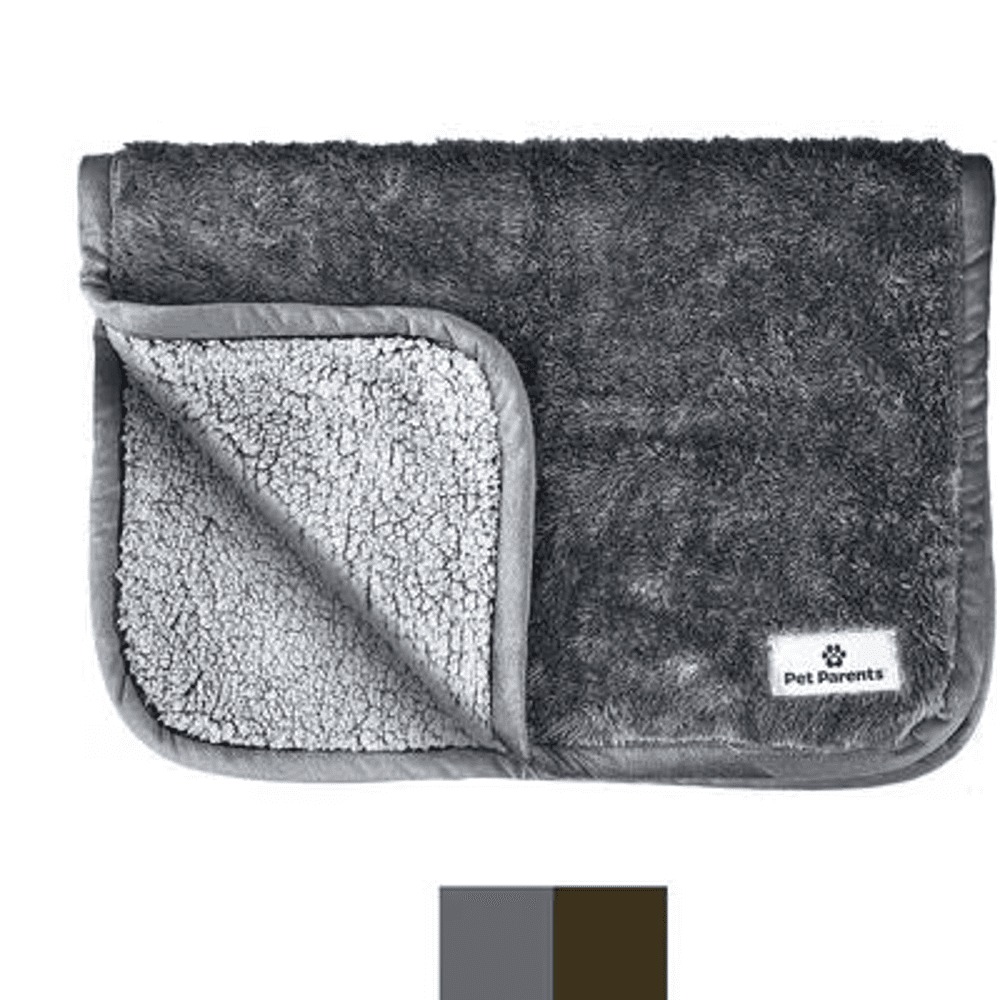
A Small washable mat for ordinary rest, only for a puppy who uses fabric safely. Remove damaged or chewed fabric.
Webvet may earn a commission when you click through to Chewy, at no extra cost to you.
Review the plan as the puppy grows
Tell the professional if the behavior changes, the puppy becomes larger or stronger, or the household can no longer manage the current arrangement. A safe plan needs to remain workable. Ask for adjustments before a temporary barrier or supervision routine becomes unreliable.
Help can also support the people who are worried or overwhelmed. Being frightened after a bite does not make you a poor caregiver. Describe those concerns honestly so the assessment includes the welfare and safety of everyone involved.
Frequently asked questions
How do I know if my dog has rage syndrome?
You cannot know whether a dog has rage syndrome from an online checklist or a description of sudden biting. A veterinarian needs to assess the history, health, and behavior and decide whether further investigation is warranted. Do not attach a rare diagnostic label before common contributing factors have been considered.
Keep everyone safe and record incidents without provoking another episode.
Should you get rid of a dog after it bites you?
There is no blanket rule that you should get rid of a dog after it bites you. A bite calls for an individual safety assessment. Consider the severity, context, household risks, and realistic management with veterinary and behavior support. If rehoming is considered, disclose the full bite history to the receiving organization or professional.
Otherwise, moving the dog can transfer risk.
Are girl or boy puppies easier?
Neither girl nor boy puppies are reliably easier based on sex alone. Individual temperament, health, experiences, environment, and the household's support all matter. Choose training and management based on the puppy you have.
If biting is concerning, assess that behavior directly rather than expecting a female or male puppy to follow a predictable pattern or become safer without help.
Can a puppy wag their tail before biting?
Yes, a puppy can wag their tail before biting. Tail movement does not by itself prove that a puppy is relaxed or safe to approach. Look at the whole body, the activity, access to an exit, and any freezing, guarding, or avoidance. Do not keep reaching because the tail is moving.
When unsure, create space and ask a qualified professional for help.

Editor
The Webvet Editorial Team is the in-house group of pet-care editors and writers behind Webvet, operated by Smart Pet Collective. The team researches, writes, and maintains Webvet's pet health, behavior, and medication content. Every article follows a defined editorial process: research from reputable veterinary and scientific sources, careful drafting, mandatory review of medical content by a credentialed veterinarian, and dated publication. Health and medication articles are medically reviewed by a licensed veterinary professional before they go live and are kept current over time.
Veterinarian · BVMS MRCVS
Dr. Pippa Elliott, BVMS, MRCVS, is a veterinarian with nearly 30 years of experience in companion animal practice. Dr. Elliott earned her Bachelor of Veterinary Medicine and Surgery from the University of Glasgow. She was also designated a Member of the Royal College of Veterinary Surgeons. Married with 2 grown-up kids, Dr. Elliott has a naughty Puggle named Poggle, 3 cats and a bearded dragon.
Related reading

When Do Puppies Stop Biting? Age Chart and Progress Signs

How to Stop a Puppy From Biting: A Calm, Practical Plan

Dog Anxiety at Night: Causes, Warning Signs, and How to Help
