Dog Body Language: A Vet Guide to Reading Your Dog
Your dog is "talking" to you all day with their tail, ears, eyes, mouth, and posture. This vet-reviewed guide shows you how to read the whole dog, in context, so you know when they're happy, anxious, or asking for space.

BVMS MRCVS

This article contains affiliate links. Webvet may earn a commission when you buy through them, at no extra cost to you.
Dog body language is how your dog communicates almost everything they feel. They use their tail, ears, eyes, mouth, and whole-body posture together, not single signals. To read it accurately, look at the entire dog at once and factor in the situation, because a wag alone never means "happy.". See WebVet’s guide to why a dog sits on you.
Dogs are masters of nonverbal communication. Long before a bark or a growl, your dog is already telling you whether they feel safe, curious, playful, worried, or threatened, and they are doing it with their body.
Learning to read dog body language is one of the most useful skills any owner can develop. It prevents bites, deepens trust, and lets you catch stress, fear, or even pain early, often before anyone else in the household notices something is wrong.
This guide is vet-reviewed and behavior-focused. We will work head to tail through every signal zone, give you a scannable chart, and hand you a simple green, yellow, red safety framework you can use in seconds.
One rule sits underneath all of it: never read a single signal in isolation. Read the whole dog, in context.
- 1Read the whole dog: tail, ears, eyes, mouth, and posture together, never one signal alone.
- 2A wagging tail signals arousal and engagement, not automatic friendliness. Pair it with the rest of the body.
- 3Use a green (loose and soft), yellow (conflicted, give space), red (stiff and warning, stop) system to stay safe.
- 4Context changes everything: location, resources nearby, strangers, children, and whether the dog can escape.
- 5Sudden changes in body language can mean pain or illness, not just emotion. When in doubt, call your vet.
 Sponsored
Want a vet's help with your dog's anxiety or behavior?
Talk to a licensed vet at Dutch over video, often the same day. They can recommend treatment and prescribe it when it's appropriate.
Use code Pets60
Plans start at $12/month · covers up to 5 pets
- Licensed vets in most states
- Rx for 150+ conditions
- 4.7 on Trustpilot
What Is Dog Body Language (and Why It Matters)
Dogs communicate primarily through body language, not vocalization. Barks and growls are real signals, but they are the soundtrack layered on top of a much richer visual conversation happening with the tail, ears, eyes, mouth, and body.
If you only listen, you miss most of what your dog is saying. If you learn to watch, you gain a running translation of their emotional state.
Why Reading It Prevents Bites
Why does this matter so much? Because most dog bites are not random. They are the predictable end of a sequence of warnings that went unread: a lip-lick, a turned head, a frozen body, a hard stare.
A person who can spot those early signals can defuse the situation, give the dog space, and avoid the snap entirely. Reading body language is the single best bite-prevention tool there is, and it is the foundation of trust between you and your dog.
The One Rule: Never Read a Single Signal Alone
The core rule of this entire guide is simple to state and easy to forget in the moment: never read one signal in isolation. A wag is not friendliness. A belly-up roll is not always a request for a rub.
You must read the whole dog, which means stacking every zone together (tail plus ears plus eyes plus mouth plus posture) and then placing that whole picture inside its context.
The same dog leaning toward you with a wag means very different things in your living room versus next to its food bowl versus cornered at the vet.
Signals also stack and can conflict, and the conflict is the message. A dog wagging its tail while its body is stiff, its mouth is tight, and its eyes are hard is not a friendly dog who happens to be tense. It is a conflicted or aroused dog telling you to slow down.
Mixed signals mean uncertainty, and uncertainty around an animal with teeth deserves respect.
Breed Shape Can Mask the Signals
Breed conformation complicates the read, too. Selective breeding has changed how dogs look more than how they feel.
A tightly curled tail, a low-set sighthound tail, cropped or naturally floppy ears, a flat brachycephalic face, and a heavy double coat that hides raised hackles can all mask or distort the signals you are trying to read.
The emotions are universal. The hardware that expresses them varies, so you learn to cross-check across zones rather than relying on the one that a particular breed has muted.
How to Read the Whole Dog: The 6 Signal Zones
Here is the head-to-tail framework the rest of this article follows. There are six signal zones, and you read them together like words in a sentence:
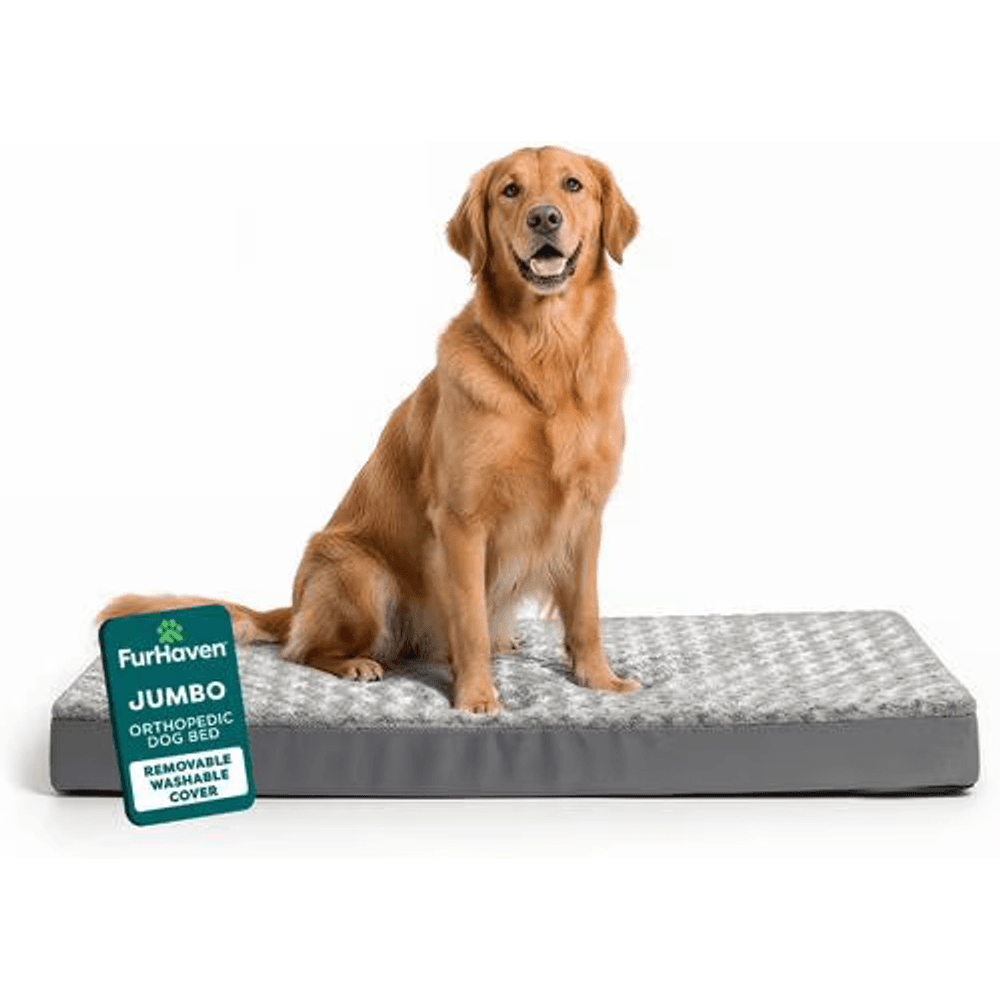
A plush orthopedic foam mattress that cushions aging joints and pressure points, giving a stiff or trembling senior dog warm, supportive rest.
Webvet may earn a commission when you click through to Chewy, at no extra cost to you.

- Eyes: soft and relaxed versus hard and staring, plus whale eye.
- Ears: forward, neutral, airplane, or pinned flat.
- Mouth and face: loose versus tense, teeth, yawns, and lip-licking.
- Tail: height, speed, and breadth of motion.
- Body posture and weight: forward and tall versus low and crouched, plus hackles.
- Vocalization: barks, growls, whines, sighs, and groans.
Each zone is one clue. On its own, a clue can mislead you. Combined, they form a clear statement. As you read, you are really decoding just two underlying dials.
The first is arousal: how amped up the dog is, from calm and loose to electric and ready to act. The second is emotional valence: whether the feeling behind that arousal is positive (happy, playful, confident) or negative (fearful, defensive, threatening).
A high-arousal dog can be joyfully overexcited or dangerously tense, and the other zones are what tell you which.
Further down you will find an at-a-glance chart that maps relaxed, alert, playful, anxious, fearful, and aroused or aggressive states across all six zones. Read it across the row for any one state, then confirm what you are seeing against the live context in front of you.
Eyes: Soft, Hard, and "Whale Eye"
- 1Soft eyes (almond-shaped, blinking, slightly squinty) signal a calm, comfortable dog.
- 2A hard, fixed, unblinking stare is a warning. Do not stare back: soften your gaze and create distance.
- 3Whale eye (a crescent of white at the corner) means "I am uncomfortable, please stop." Respect it at once.
- 4An unexplained or lasting pupil change can be medical, not emotional, and is worth a vet visit.

Soft Eyes vs. Hard Eyes
A dog's eyes carry an enormous amount of information, and the difference between soft and hard is the first thing to learn. Soft eyes look almond-shaped and slightly squinty. The dog blinks normally, the gaze is loose, and the muscles around the eyes are relaxed.
Soft eyes, often with a gentle squint and easy blinking, signal a calm, comfortable, friendly dog.
Hard eyes are the opposite, and they are a warning. The eyes look intense, rounder, and unblinking, the dog locks onto a target, and the whole face tightens with it. A hard, fixed stare often accompanies a threat, resource guarding, or high tension, and it is frequently the calm before a snap.
Whale Eye
Whale eye is one of the most reliable stress signals you can learn, and it is easy to spot once you know it.
It means the whites of the eyes (the sclera) show as a crescent at the corner, usually because the dog has turned its head away while keeping its eyes fixed on whatever worries it.
You often see whale eye when a dog feels cornered, when a child leans over it, or when someone reaches toward its food, toy, or resting spot. Whale eye says: I am uncomfortable and I want this to stop. Respect it immediately.
Pupils and Tracking
Pupil size and tracking add context. Dilated pupils in normal light can reflect fear or high arousal.
One important caveat, though: persistently dilated pupils, or pupils of unequal size (a condition called anisocoria), are not always emotional.
Paired with squinting, redness, bumping into things, or other signs, they can point to pain, eye disease, or a neurologic problem, so an unexplained or lasting pupil change is worth a vet visit rather than a behavioral read.
A dog that keeps glancing away, blinking, and breaking eye contact is trying to de-escalate, the social opposite of a dog that hard-stares to hold its ground.
Not all staring is tension, though. A relaxed dog that gazes softly at you, especially with a little squint or a slow blink, is often bonding and seeking connection or attention.
If you have ever wondered why your dog holds eye contact with you, the answer lives in this difference: soft, blinky eye contact is affection, while a hard, frozen stare is a boundary.
Ears: Forward, Airplane, and Pinned Back
Forward and Up
Ears are mood antennae, and they move fast. Forward and up means the dog is alert, interested, and investigating something. On its own that is neutral curiosity.
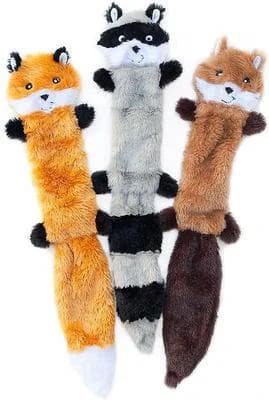
No-stuffing squeaky plush toys that satisfy a dog's urge to shake and carry prey, with no stuffing to shred and scatter.
Webvet may earn a commission when you click through to Chewy, at no extra cost to you.

But high, forward ears paired with a stiff body, a closed mouth, and a hard stare can tip from interest into challenge, so always read the ears alongside the rest of the face.
Neutral and Relaxed
Neutral or relaxed ears sit naturally with no visible tension at the base where the head meets the ear. What "neutral" looks like varies enormously by breed: a German Shepherd's neutral is upright, a Beagle's is hanging, a Husky's is pricked.
Learn your own dog's relaxed baseline so you can notice when it changes.
Airplane and Pinned Ears
Airplane ears, splayed slightly out to the sides rather than forward or flat, usually signal mild anxiety, conflict, or appeasement. The dog is unsure and would like the pressure to ease.
Pinned ears, flattened tight against the head, are a stronger signal of fear, appeasement, or an attempt to look smaller and avoid conflict. A dog flattening its ears and lowering its body is asking to be left alone, not inviting interaction.
Ears are also a target of social behavior between dogs. Ear-sniffing and ear-directed licking between dogs is usually a friendly, affiliative gesture, part of how dogs greet, groom, and reassure each other rather than anything to worry about.
Mouth and Face: Lips, Teeth, Yawns, and Lip-Licking
- 1A loose, open mouth with an easy pant signals a content dog; a tight, closed mouth signals rising tension.
- 2Teeth alone do not equal aggression: an offensive snarl, a fearful display, and a friendly appeasement grin look different.
- 3Out-of-context yawning and lip-licking are calming signals (stress), not tiredness or hunger.
- 4Sudden excessive drooling or marked facial tension can be medical, not a mood.

Loose vs. Tense Mouth
Start with the mouth's overall tension. A relaxed open mouth with an easy, loose pant (sometimes described as a doggy smile) signals a content, comfortable dog. See WebVet’s guide to whether dogs really smile.
A tightly closed mouth, or one where the commissure (the corner of the lips) pulls forward and tense, signals concentration, stress, or rising tension. When a previously panting dog suddenly clamps its mouth shut, that abrupt shift is worth noticing.
Reading Teeth
Teeth require careful reading, because not all bared teeth mean the same thing. Three displays look similar but mean different things:
- Offensive snarl: vertical lips, a wrinkled muzzle, and the front teeth and canines exposed, usually with a hard stare and a forward, stiff body.
- Fearful or defensive display: teeth may show, but paired with a lowered body, pinned ears, and weight shifted back.
- Submissive or appeasement grin: a goofy, squinty, wiggly display of the front teeth that some friendly dogs offer during greetings, with a loose body and a wagging rear.
Context and the rest of the body always decide which one you are looking at. Never assume teeth equals aggression, and never assume it does not.
Yawns, Lip-Licking, and the Shake-Off
Yawning and lip- or nose-licking out of context are classic calming signals, not signs of tiredness or hunger. A dog that yawns when there is no reason to be sleepy, or flicks its tongue over its nose when no food is around, is self-soothing and trying to lower tension, its own and yours.
You will see these constantly in stressful moments: at the vet, during a tense greeting, when a child hugs them, or when they are being scolded. Reading them as stress rather than boredom changes how you respond.
Another calming signal lives in the whole body rather than the mouth: the full-body shake-off. When a dog stops, plants its feet, and shakes vigorously from nose to tail as if drying off, but it is not wet, that shake is often a deliberate reset.
It discharges tension and signals a transition out of a stressful or over-aroused moment, for example right after a tense greeting, a vet handling, or a startle. Spotting the shake-off tells you the dog just felt pressure and is shaking it off, which is your cue to give it a breath of space.
Be alert to the medical side of the mouth, too. Marked facial tension, or sudden excessive drooling, can reflect nausea, dental pain, oral injury, or other health problems rather than emotion. If the change is sudden and unexplained, treat it as a possible medical sign, not just a mood.
Many oral behaviors people misread are actually communication or self-soothing. Licking is the big one: it can be a greeting, an appeasement gesture, attention-seeking, or a self-calming habit.
For more on when licking is communication versus a habit to redirect, and on paw-licking as a stress signal or a medical sign, the distinction comes down to frequency, context, and whether the behavior is escalating.
 Sponsored
Vet care that's always there
Unlimited video calls and messaging with licensed vets for less than a typical vet visit. One membership covers up to five pets.
Use code Pets60
Plans start at $12/month · covers up to 5 pets
- Licensed vets in most states
- Rx for 150+ conditions
- 4.7 on Trustpilot
The Tail: It's Not Just "Happy"

Daily dental chews with a porous, ridged texture designed to help clean teeth and reduce tartar buildup as part of an at-home oral-care routine.
Webvet may earn a commission when you click through to Chewy, at no extra cost to you.

To know what a wag means, you have to read its height, its speed, and its breadth, then combine that with the rest of the body.
Tail Height
Height encodes confidence and intent:
- High, stiffly held tail: confidence bordering on assertiveness or threat.
- Mid-height (level with the spine): a relaxed and neutral dog.
- Low tail: insecurity or appeasement.
- Tucked tight between the legs: fear or submission.
Speed and Breadth
Speed and breadth refine the read. A loose, sweeping, mid-height wag that takes the whole rear end with it reads as relaxed and genuinely friendly.
A high, fast, stiff, narrow wag (almost a vibration at the tip) signals high arousal and tension, and it can precede aggression.
The famous helicopter or circular wag, where the tail spins in a loose circle and the hips wiggle, is about as close to pure joy as dogs get. That is the unmistakable "you came home and I cannot contain myself" greeting.
What the Research Says
For a credibility-and-depth note, preliminary research from Italian groups at the University of Trento and the University of Bari (Quaranta and colleagues in 2007, and Siniscalchi and colleagues in 2013) found that dogs wag with a directional bias.
They wag more to the dog's right side when they feel something positive or want to approach, and more to the left when they feel something negative or want to withdraw, with some evidence that other dogs notice the asymmetry.
Treat this as a small, still-developing body of work rather than a reliable real-world reading tool. You will not be measuring degrees in real life, but it underscores the central point: the wag itself is just arousal, and the meaning lives in the details.
Arousal that builds up has to go somewhere, which is why you see tail-chasing, spinning, and sudden bursts of frantic running.
If you have ever watched the post-bath zoomies as an arousal release, that is the same engine: a dog discharging a spike of excitement or relief through movement. It is normal and usually nothing to worry about.
Body Posture, Weight, and Hackles
Where the Weight Goes
Where a dog puts its weight is one of the clearest signals of intent, and it is often the easiest to read from a distance.
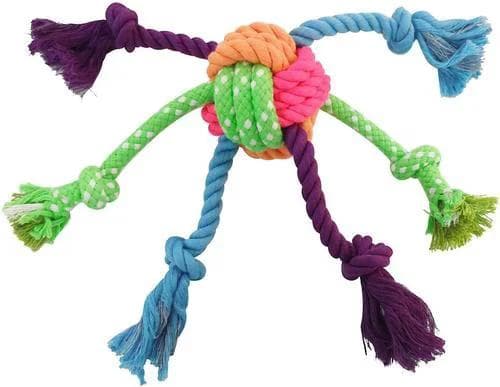
A durable rope-and-knot fetch toy that channels chewing, tugging, and fetch energy into safe play, and the woven rope gives teeth a light scrub.
Webvet may earn a commission when you click through to Chewy, at no extra cost to you.

Weight shifted forward, with a tall, stiff, still body, signals confidence and, in the wrong context, a threat. The dog is making itself big and is prepared to act. Weight shifted back, with a lowered or crouched body, signals fear or appeasement. The dog is making itself small and would prefer to avoid conflict.
The Play Bow
The play bow deserves its own mention because it is the single clearest play invitation in the canine vocabulary. The dog drops its chest and front legs to the ground while keeping its rear end and tail up in the air, usually with a loose, bouncy, wiggly body and a bright, soft face.
It means "let's play," and it also works as a reset that tells another dog that anything rough which follows is just a game. A true play bow is loose and springy from front to back.
Do not confuse it with the tense, hunched "praying" posture described later in the pain section, where the front end is down but the body is rigid and the dog looks uncomfortable rather than playful.
Raised Paw and the Relaxed Flop
A raised front paw is another posture cue worth knowing. When a dog lifts one front paw and holds it while looking at a new person, dog, or situation, it often signals mild uncertainty, insecurity, or anticipation rather than confidence.
(In pointing breeds a lifted paw can simply be hunting behavior, so read it in context.) Around an unfamiliar greeting, a held-up paw is usually a quiet "I am not sure about this yet," which pairs naturally with other yellow signals like lip-licking or looking away.
A truly relaxed dog looks loose and a little wiggly, weight balanced and neutral, often lying down with a soft, exposed belly. That genuine flop, all loose limbs and easy breathing, is comfort.
Be careful, though: a dog that rolls partway over with a tense body, a tucked tail, pinned ears, and whale eye is not relaxing. That is an appeasement roll, a plea to avoid trouble, and it is not an invitation for a belly rub.
Raised Hackles
Raised hackles, the strip of fur standing up along the shoulders, spine, and rump, are widely misunderstood. The technical term is piloerection, and it is an involuntary response, like human goosebumps.
Raised hackles mean arousal, and that arousal could be fear, excitement, conflict, or even startled curiosity. They are not proof of aggression.
For more on what raised hackles actually mean, the key is that hackles tell you a dog is highly stimulated, and the other zones tell you why. A heavy coat can hide hackles entirely, which is one more reason not to rely on a single zone.
Not every posture behavior is about threat or fear. Digging and burrowing as comfort behavior, along with nesting and circling before lying down, are normal instinctive comforts that signal a dog settling in and feeling secure. And the bottom line stands: read posture together with the tail and ears, never alone.
Vocalization: Barks, Growls, Whines, and Sighs
Vocalizations are the audio track that plays alongside body language, and they only make full sense when paired with it.

A growl over a bone, with a stiff body and a hard stare, is resource guarding and means business. A growl during a game of tug, with a loose, bouncy body and a play face, is just play. Same sound, opposite meaning, decided entirely by the body producing it.
A Quick Field Guide
Here is what the common sounds usually mean, always read together with the body:
- Barks: a sharp, repetitive alarm bark differs from a high, demanding bark for attention, which differs from the rapid, excited barking of play.
- Growls: range from a low warning to a rumbly play growl.
- Whines: can mean stress, excitement, or solicitation (asking for food, access, or attention).
- Sighs and groans: especially as a dog settles down, usually signal contentment and relaxation.
One rule about growling matters more than any other: never punish a growl. A growl is honest, valuable communication. It is the dog telling you, clearly and without violence, that it is uncomfortable and needs something to change.
Punishing the growl does not fix the underlying feeling. It only teaches the dog that growling earns a correction, so the dog learns to skip the warning and go straight to the bite. A growl is a gift. Listen to it and address the cause.
Vocal communication is surprisingly rich, and dogs have a sizable repertoire of sounds for different situations. For the full breakdown of barks, growls, and whines, and what each one is most likely telling you, the same principle applies throughout: pair the sound with the body. See WebVet’s guide to why dogs howl.
Reading the Whole Dog in Context: A Green / Yellow / Red Framework
Now we put the zones together into something you can use in the moment. Borrowing a traffic-light idea used widely in shelters and dog-safety education, you can classify almost any dog into one of three states at a glance.
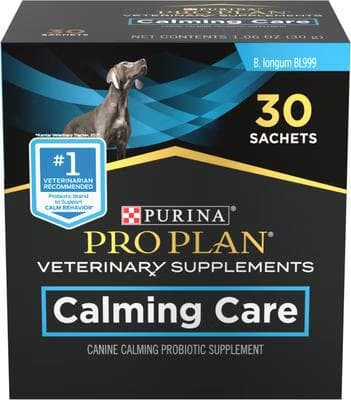
Probiotic supplement formulated to help dogs maintain calm behavior, with the BL999 strain. Liver-flavored powder in 30 daily sachets.
Webvet may earn a commission when you click through to Chewy, at no extra cost to you.

- Green (loose, soft, approachable): soft eyes, neutral or wiggly body, relaxed mouth, mid-height sweeping wag. This dog is comfortable and open to interaction.
- Yellow (conflicted or anxious): whale eye, airplane ears, lip-licking, yawning, a low or uncertain wag, weight shifting back. This dog needs space or for something in the situation to change. Do not push.
- Red (stiff, hard, warning): frozen body, hard stare, closed or snarling mouth, high stiff tail, pinned ears, growling. Stop. Do not approach, do not reach, and give the dog a clear way out.
Worked example: a dog approaches with its tail wagging. The naive read is green, go say hi. But look closer and you see the wag is high and stiff, the eyes show a crescent of white (whale eye), and the body is rigid.
That is not green. That is yellow heading toward red, and the friendly-looking wag was a trap. The whole-dog read overrides the single signal every time.
Context Is a Multiplier
Context acts as a multiplier on everything you see. The same body language reads differently depending on a few factors:
- Location: a calm home versus a chaotic vet lobby versus a crowded dog park.
- Valued resources nearby: food, chews, toys, a favorite person, a bed.
- The presence of strangers or children.
- Whether the dog has an escape route.
A dog that feels trapped is far more likely to escalate from yellow to red, because flight is off the table and only fight remains.
How to Greet a Dog Safely
To greet a friendly or neutral dog, ask the owner first, then let the dog come to you rather than reaching over its head. Turn slightly sideways, avoid a hard stare, and offer a low, relaxed hand.
Use the consent test, sometimes called pat-pause-pat: pet the dog briefly, then stop and see what it does. If it leans in, nudges your hand, or re-engages, it is consenting and you can continue. If it moves away, freezes, or shows yellow signals, it has opted out, so stop.
Some behaviors people read as needy or guilty are actually reassurance and trust signals.
Following you as a trust and affection signal is usually a sign your dog feels bonded and safe near you, not a problem to fix.
And once you have learned to spot fear or distress, the next step is knowing what to do once you recognize fear or distress, which often means calm reassurance, removing the trigger, and giving the dog choice and space.
How Body Language Develops, From Puppies to Seniors
Body language is not fixed at birth. It develops, and it shifts again in old age, so the same signal can mean slightly different things at the two ends of a dog's life.

Puppies Are Still Learning the Rules
During the key socialization window in the first few months, a well-socialized puppy is building the confident, fluent body language it will use as an adult, which is exactly why calm, positive exposure to people, dogs, surfaces, and situations matters so much.
Puppy signaling is often exaggerated and clumsy: big sloppy play bows, frequent appeasement (rolling over, licking, low wiggly approaches), and quick swings between bold and worried. They also rely heavily on adult dogs and on you to tell them when play is too much.
Reading a puppy means giving extra grace for the over-the-top displays while still respecting genuine fear so it does not harden into a lasting problem.
Aging Quietly Rewrites the Signals
At the other end of life, aging quietly rewrites the signals. Arthritis can make an older dog reluctant to move, slow to rise, irritable when touched, or snappy in ways that are easy to misread as a personality change or a behavior problem.
Cognitive decline can alter sleep, orientation, and how a senior responds to familiar people and cues.
Because a senior's body language so often blends emotion with physical discomfort, lean toward the medical explanation first and learn how arthritis and cognitive decline change an older dog's signals so you can tell a grumpy senior from a hurting one, and get them help sooner.
When Body Language Means Stress, Anxiety, Pain, or Illness
Not every signal is a passing mood. It helps to separate three things: a momentary stress signal, a chronic anxiety pattern, and a medical red flag.
- Momentary stress signal: a single lip-lick at the vet, for example. Perfectly normal.
- Chronic anxiety pattern: a dog that paces, pants, and cannot settle most days may have an anxiety problem.
- Medical red flag: a dog whose body language suddenly changes, especially toward guarding, hunching, or aggression when touched, may be in pain or ill.
The first two are behavioral; the third is medical, and this section is the one where vet review matters most.
The Stress and Anxiety Cluster
The stress and anxiety cluster tends to show up together: panting when the dog is not hot or exercised, pacing, trembling, drooling, repetitive lip-licking and yawning, hiding, clinginess, and destructive or repetitive behaviors.
When you see this cluster, the goal is to lower arousal and address the trigger. For practical strategies on calming an anxious dog once you spot the stress signals, consistency, safe spaces, and a predictable routine do a lot of the work.
The Pain and Illness Cluster
The pain and illness cluster is the one to memorize, because dogs hide pain well and it can be easy to mistake for grumpiness or aging. Two postures often get lumped together but are worth separating.
A true "praying" or "prayer" position, where the front legs and chest go down to the floor while the rear stays up (much like a play bow but tense, held, and clearly uncomfortable rather than bouncy), is a fairly specific sign of cranial abdominal pain, classically seen with conditions such as pancreatitis.
A generalized hunch, where the dog stands or stands roached with its back arched up and its belly tucked, is more nonspecific: it tells you the dog hurts somewhere but not precisely where.
Either way, also watch for these signs:
- Reluctance to move, jump, or climb stairs.
- Guarding or flinching when a body part is touched.
- Sudden aggression or snapping when handled.
- Restlessness and an inability to get comfortable.
- Panting at rest or trembling.
- Any abrupt change in appetite, sleep, or normal behavior.
Any of these, especially in combination or appearing suddenly, warrants a call to your veterinarian.
Some repetitive and displacement behaviors blur the line between behavioral and medical, and they need a careful eye.
Over-grooming and persistent paw-licking as a stress signal or a medical sign can be anxiety-driven, but they can equally be a response to itchy skin, allergies, or discomfort.
(Flank-sucking is sometimes listed alongside these, but it is different: it is an uncommon, often breed-linked compulsive behavior, classically seen in Dobermans, and is considered a canine compulsive disorder rather than a routine stress signal, so it warrants veterinary or behaviorist input rather than being brushed off.)
If your dog is constantly licking or scratching, it is worth understanding why your dog is so itchy and the common causes of canine pruritus before assuming it is purely emotional.
Common Misreads and "Human" Translations
A lot of friction between people and dogs comes from anthropomorphism, reading human meaning into canine behavior. Three myths cause most of the trouble.

- The "guilty look" is not guilt. The lowered head, averted eyes, and flattened ears after you find a mess is appeasement to your tone and body language, not remorse. Research (notably work by Alexandra Horowitz in 2009) showed dogs given the same scolding produced the "guilty" look whether or not they had actually done anything wrong. The face is appeasement to your cues in the moment, not reliable evidence that the dog connects your anger to an act from hours ago.
- A wagging tail is not consent to be touched. It signals arousal, which can be positive or negative.
- A belly-up roll is not always a request for a rub. Sometimes it is an appeasement signal, and a hand to the belly is unwelcome.
How Dogs Actually Show Affection
So how do dogs actually show affection and trust? Through soft, blinking eye contact; leaning against you; choosing to stay near you and following you around; relaxing fully (even sleeping) in your presence; gentle licking; bringing you a toy; and the unmistakable helicopter-tail, whole-body wiggle greeting when you come home.
People often ask how dogs say "I love you" or how they apologize. The honest answer is that dogs do not have a word for either, but they constantly broadcast trust and affiliation through exactly these relaxed, proximity-seeking, soft-bodied signals.
Weird-Looking but Normal Behaviors
Plenty of behaviors that look weird or "bad" are just normal canine instinct or communication.
Grass-eating as a misread but usually normal behavior is common and rarely a problem on its own. Screen-watching and what your dog actually perceives reflects normal canine vision and motion sensitivity, not a TV addiction. And coprophagia, a behavior owners often misread, has its own mix of instinctive, nutritional, and occasionally medical explanations.
None of these are signs of a "bad dog."
When a behavior problem is serious (real aggression, severe anxiety, or compulsive behaviors), it is time to bring in a professional, and knowing when to call a trainer versus a veterinary behaviorist matters.
A good trainer handles skills and everyday manners. A board-certified veterinary behaviorist is a veterinarian who can diagnose and medically treat the underlying emotional or neurological causes of severe behavior problems. Start with your regular vet to rule out pain or illness, then choose the right specialist.
Dog Body Language Chart (Quick Reference)
Use this chart as a fast cross-check, not a final verdict. Read across the row for the state you suspect, see whether the zones line up with what is in front of you, and then confirm against context.
Real dogs mix and shift between states, so when the signals are mixed, default to the more cautious reading.
| State | Eyes | Ears | Mouth | Tail | Posture | Vocalization |
|---|---|---|---|---|---|---|
| Relaxed | Soft, blinking, slight squint | Neutral, natural position | Open, loose pant | Mid-height, loose sweep | Loose, weight neutral, may flop | Quiet, sighs, soft groans |
| Alert | Wide, focused, tracking | Forward and up | Closed, may open suddenly | Raised, still or slow | Tall, weight slightly forward, still | Alert bark, brief |
| Playful | Soft, bright, sometimes squinty | Forward or floppy in motion | Open, relaxed play face | High, fast, wide wiggly wag | Play bow (chest down, rear up), bouncy, loose | Excited barks, play growls |
| Anxious / appeasing | Whale eye, looking away, blinking | Airplane or slightly back | Lip-licking, yawning, tight | Low or uncertain wag | Weight back, lowered, may turn away, paw lift | Whining, soft appeasement sounds |
| Fearful | Wide, whites showing, darting | Pinned flat back | Lips back, may show teeth (defensive) | Tucked between legs | Crouched, small, leaning away | Whimper, low growl, may be silent |
| Aroused / aggressive | Hard, fixed, unblinking stare | Forward and stiff or pinned | Tense, snarl, teeth, wrinkled muzzle | High, stiff, fast narrow vibration | Stiff, frozen, weight forward, hackles up | Low warning growl, snarl, sharp bark |
Relaxed vs. Stressed at a Glance
If you only remember one comparison, make it this one: how each zone looks on a happy dog versus a stressed one.
| Signal | Relaxed / happy | Stressed / anxious |
|---|---|---|
| Eyes | Soft, blinking, slight squint | Whale eye, hard stare, or darting |
| Ears | Neutral, natural baseline | Airplane or pinned flat back |
| Mouth | Loose open pant | Tight closed, lip-licking, or yawning |
| Tail | Mid-height, loose sweeping wag | Tucked low, or high stiff narrow wag |
| Posture | Loose, wiggly, weight neutral | Crouched and small, or stiff and frozen |
| Vocalization | Quiet, sighs, soft groans | Whining, or a low warning growl |
Frequently Asked Questions
What is the 7-7-7 rule for dogs?
The 7-7-7 rule is an informal socialization guideline, not a behavior law, that suggests exposing a young puppy to a wide variety of positive experiences early in life: for example, seven different surfaces, seven different locations, seven new people, seven challenges or objects, and so on, before a certain age. The goal is confident, well-adjusted adult body language. It is sometimes confused with the more common 3-3-3 rule for newly adopted dogs. For socialization and behavior planning, your veterinarian or a qualified trainer can tailor it to your specific puppy.
How do dogs say "I love you"?
Dogs express love and trust through body language rather than words. The clearest signals are soft, blinking eye contact, leaning against you, choosing to follow you and stay close, relaxing or sleeping in your presence, gentle licking, bringing you a toy, and the whole-body wiggle with a circular helicopter-tail wag when you come home. Reading these relaxed, proximity-seeking signals is how you know your dog feels bonded and safe.
What are some dog body language signs?
Key dog body language signs include the eyes (soft and relaxed versus a hard stare or whale eye), the ears (forward, neutral, airplane, or pinned flat), the mouth (loose pant versus a tense closed mouth, snarl, lip-licking, or yawning), the tail (height, speed, and breadth of the wag), and the body (loose and wiggly, a play bow, or stiff, frozen, crouched, or with raised hackles). Always read several of these together, never one alone, and factor in the context.
How do you say "I love you" in dog speak?
To communicate affection in a way dogs understand, mirror their calm signals: use soft eyes and slow blinks instead of a hard stare, keep your body relaxed and turned slightly sideways rather than looming over them, speak in a gentle tone, offer calm physical contact your dog enjoys (many prefer chest or shoulder scratches over head pats), and respect their space when they ask for it. Predictability and gentle, low-pressure attention build the trust that dogs read as safety.
What is a 3-3-3 rule with dogs?
The 3-3-3 rule is a rough timeline for a newly adopted dog adjusting to a home: about three days to begin decompressing (often fearful, shut down, or overwhelmed body language), about three weeks to start settling into a routine and showing more of their real personality, and about three months to feel fully secure and bonded. It is a helpful expectation-setting guide, though every dog moves at its own pace.
How do dogs apologize?
Dogs do not apologize in the human, guilt-based sense. What looks like an apology, the lowered head, averted eyes, flattened ears, slow tail wag, or crawling toward you, is appeasement behavior. Research on the "guilty look" shows it is driven by your tone and body language in the moment rather than being a reliable sign of remorse for a past act. It is a real-time attempt to defuse tension and signal "I am not a threat, please stay friendly," and it works because it usually softens your reaction.
What does it mean when a dog shows whale eye?
Whale eye is when you can see a crescent of white (the sclera) at the corner of a dog's eye, usually because the dog has turned its head away while keeping its gaze locked on something. It is a clear sign of stress, discomfort, or feeling cornered, and it often appears when a dog's food, toy, resting spot, or personal space is being threatened, or when someone leans over it. Treat whale eye as a request for space and back off.
Why isn't a wagging tail always a happy sign?
A wag signals arousal and engagement, meaning the dog is feeling something strongly and paying attention, but it does not tell you whether that feeling is positive or negative. A loose, sweeping, mid-height wag that moves the whole rear end is friendly, but a high, fast, stiff, narrow wag can signal tension or impending aggression, and a low or tucked wag signals fear. You have to read the tail's height, speed, and stiffness together with the eyes, ears, mouth, and posture to know what the wag actually means.
Reading dog body language is a skill that compounds. The more you practice watching the whole dog (tail, ears, eyes, mouth, and posture) inside its context, the faster the picture snaps into focus, and the safer and more connected you and your dog become.
When the signals are mixed or worrying, give space, and when a sudden change could be medical, talk to your veterinarian.

Editor
The Webvet Editorial Team is the in-house group of pet-care editors and writers behind Webvet, operated by Smart Pet Collective. The team researches, writes, and maintains Webvet's pet health, behavior, and medication content. Every article follows a defined editorial process: research from reputable veterinary and scientific sources, careful drafting, mandatory review of medical content by a credentialed veterinarian, and dated publication. Health and medication articles are medically reviewed by a licensed veterinary professional before they go live and are kept current over time.
Veterinarian · BVMS MRCVS
Dr. Pippa Elliott, BVMS, MRCVS, is a veterinarian with nearly 30 years of experience in companion animal practice. Dr. Elliott earned her Bachelor of Veterinary Medicine and Surgery from the University of Glasgow. She was also designated a Member of the Royal College of Veterinary Surgeons. Married with 2 grown-up kids, Dr. Elliott has a naughty Puggle named Poggle, 3 cats and a bearded dragon.


