Why Do Dogs Eat Poop? Causes and How to Stop It
Dogs may eat poop because it is fresh and accessible, the behavior has been reinforced, or a medical problem has changed appetite or digestion. Learn how to interrupt the habit humanely and when to call your veterinarian.


BVMS MRCVS

This article contains affiliate links. Webvet may earn a commission when you buy through them, at no extra cost to you.
Why do dogs eat poop? In many cases, the simple answer is that fresh stool is available and the dog has learned that investigating or swallowing it is rewarding. Puppies may explore with their mouths, mother dogs normally clean up after newborn puppies, and some adult dogs develop a persistent scavenging habit. Less often, a medical problem that changes appetite, digestion, or stool quality contributes.
The scientific name for eating feces is coprophagia. It is unpleasant to people, but it does not automatically mean a dog is sick, poorly fed, or missing a vitamin. The best response is to prevent access, reward the dog for turning away, clean up promptly, and ask a veterinarian about new or intense behavior.
Why Do Dogs Eat Poop?
- 1Coprophagia is common: Poop-eating is often a scavenging or learned behavior, not proof of a nutritional deficiency.
- 2Medical exception: A sudden increase, extreme hunger, weight loss, diarrhea, vomiting, or poor body condition warrants veterinary care.
- 3Fresh stool is especially attractive to many affected dogs, so immediate pickup is one of the strongest interventions.
- 4Teach and reward disengagement. Chasing, yelling, or punishment can make a dog swallow faster or hide the behavior.
- 5Commercial deterrents and home remedies have limited evidence and should never replace access control and training.
Why Dogs Eat Their Own Poop
A dog may eat their own poop because the stool is fresh, because the behavior has become a habit, or because eliminating predicts an exciting contest with the owner. Some dogs turn around immediately after defecating. Others revisit stool left in a yard, kennel, or indoor accident area.
What the research found
In a 2018 survey study published in Veterinary Medicine and Science, researchers reported that owners had observed about 23 percent of dogs eating feces at least once and classified 16 percent as frequent stool eaters. Among the frequent stool eaters, 82 percent preferred feces no more than two days old. A separate portion of the survey found an 85 percent preference for fresh feces. Those findings are the practical case for prompt pickup as a practical prevention step, although an owner survey cannot prove why an individual dog behaves this way.
The same Hart and colleagues study did not find an association with the dog's diet. That finding undercuts the common assumption that every dog who eats stool must lack a nutrient. It does not rule out medical causes in an individual dog, so a veterinary history and examination still matter when the behavior is new, frequent, or accompanied by other changes.
Common pathways include:
- Exploration: Puppies investigate textures, scents, and objects with their mouths.
- Learned reward: Smelling, licking, or swallowing stool may be reinforcing on its own.
- Opportunity: Stool left in a yard gives a dog repeated chances to rehearse the behavior.
- Owner reaction: A chase, shout, or grab can turn elimination into a fast-paced game.
- Cleanup after an accident: A dog may consume evidence after punishment or tense reactions around indoor elimination.
- Boredom or confinement: A dog with little activity may interact with whatever is available.
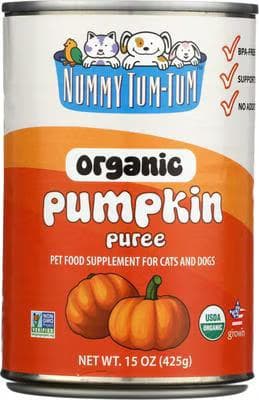
Pure USDA-organic pumpkin puree, no fillers or additives. Adds gentle soluble fiber to firm up loose stool and settle a mildly upset stomach. A simple vet-favorite topper.
Webvet may earn a commission when you click through to Chewy, at no extra cost to you.
Plain pumpkin is sometimes discussed as a fiber source when stool quality is part of a veterinarian's feeding plan, but it is not a proven cure for coprophagia. Ask whether it fits your dog's diet and symptoms, especially if the dog has a medical condition or therapeutic diet. Added fiber can change stool without addressing parasites, malabsorption, endocrine disease, or a learned scavenging habit.
When Poop-Eating Can Be Normal
Some poop-eating occurs in normal canine life stages. A mother dog licks newborn puppies to stimulate elimination and consumes their waste as part of maternal den cleaning, a temporary behavior that helps keep the nest area clean while the puppies are dependent on her. Puppies may copy or explore this behavior, then lose interest as they mature and their environment is managed. Maternal behavior does not explain sudden coprophagia in an unrelated adult dog, especially when appetite, weight, stool, or energy also changes.
Occasional investigation is also consistent with canine scavenging. Dogs use scent and taste to gather information in ways humans generally do not. Calling that tendency normal does not mean owners should permit it. Feces can carry parasites, bacteria, medication residues, or objects that make exposure risky.
Normal context is most plausible when:
- The dog is a young puppy exploring a new environment.
- The behavior is occasional rather than escalating.
- Appetite, weight, energy, stool, thirst, and urination remain normal.
- The dog can disengage readily for a reward.

- There is no reason to suspect contaminated waste or another animal's medication.
By contrast, a mature dog who abruptly begins searching for stool, appears ravenously hungry, loses weight, or has chronic loose stool needs a medical assessment. “Common” and “safe to ignore” are not the same thing.
Behavioral and Medical Causes of Coprophagia
The context around the episode helps separate an opportunity-driven habit from a health concern. Keep a short log for several days: record whose stool was eaten, how fresh it was, the dog's meal and medication timing, stool quality, appetite, and anything that happened immediately before and after.
Owners also ask, “What dog breeds are prone to eating poop?” Survey associations do not create a dependable breed rule, so any dog still needs individual cause triage. The table below separates a behavioral coprophagia cause, such as fresh access or a reinforced chase, from a medical coprophagia cause, such as unusual hunger, weight loss, medication effects, or gastrointestinal signs. Match the observed clue to the veterinary next step instead of assuming breed explains the behavior.
| Possible cause | Clues you may notice | Best next step |
|---|---|---|
| Behavioral cause: fresh stool is easily available | Dog turns back immediately after defecating or patrols an unclean yard | Supervise elimination, reward the turn-away, and pick up at once |
| Behavioral cause: exploration or scavenging | Young dog samples many outdoor items, not only feces | Use a leash, teach “leave it,” and provide safe sniffing and chewing outlets |
| Behavioral cause: reinforced chase game | Dog grabs stool and runs when a person approaches | Stop chasing, trade for a high-value reward, and manage closer next time |
| Behavioral cause: boredom or too little enrichment | Behavior occurs during long, unstimulating periods | Add exercise, food puzzles, training, and social time appropriate to the dog |
| Behavioral cause: stress around elimination | Dog hides accidents or eats stool after harsh reactions | End punishment, rebuild calm house-training, and provide frequent toilet trips |
| Medical cause: increased appetite or poor nutrient use | Ravenous behavior, weight loss, bulky stool, diarrhea, vomiting, or body-condition change | Schedule a veterinary examination and testing |
| Medical cause: medication effect | Appetite changed after starting or adjusting a medication | Contact the prescribing veterinarian before changing the medicine |
| Medical cause: parasites or gastrointestinal disease | Diarrhea, mucus, poor coat, weight change, discomfort, or exposure risk | Bring a fresh stool sample and follow the veterinarian's diagnostic plan |
VCA Animal Hospitals recommends first ruling out medical problems and notes that a fecal test is a minimum part of the evaluation in many cases. Depending on the dog's history and examination, a veterinarian may recommend additional testing rather than assuming one universal cause.
The Merck Veterinary Manual likewise emphasizes excluding medical contributors, managing access, and using reward-based behavior work. A diagnosis cannot be made from the behavior alone.
When Poop-Eating Needs a Vet Visit
Call your veterinarian when coprophagia begins suddenly, becomes frequent, or appears with a change in appetite, weight, energy, thirst, urination, vomiting, or stool. An older dog with a new behavior deserves the same medical attention as a puppy with persistent diarrhea.
Bring a fresh fecal sample if the clinic requests one. Also tell the veterinary team whose stool the dog ate, when it happened, what medications every animal in the home receives, and whether the dog has access to wildlife, livestock, cat litter, garbage, or raw animal products.
If loose stool is part of the pattern, use WebVet's guide to common causes of diarrhea in dogs to organize your observations. Do not use that information to delay care for repeated vomiting, blood, marked lethargy, pain, or dehydration.
A digestive-support product such as a probiotic should be used only for an appropriate dog and, ideally, after a veterinarian has considered the dog's diet, stool, and health. It does not diagnose the reason for coprophagia, kill parasites, or reliably stop stool-eating by itself.
Does Poop-Eating Mean a Nutritional Deficiency?
What is a dog lacking when they eat dog poop? Coprophagia does not, by itself, prove a nutritional deficiency, and there is no single missing vitamin, mineral, enzyme, or protein that can be diagnosed from this behavior. The 2018 Hart survey did not find a diet association, and dogs eating complete and balanced diets can still eat feces. The practical next step is to review the complete diet, appetite, weight, stool, medications, and health changes with a veterinarian rather than guessing at a supplement.
True medical or nutritional problems can change appetite, digestion, body condition, or stool. That is why the distinction matters: a veterinarian should investigate the whole dog rather than guessing at a supplement based on one behavior.
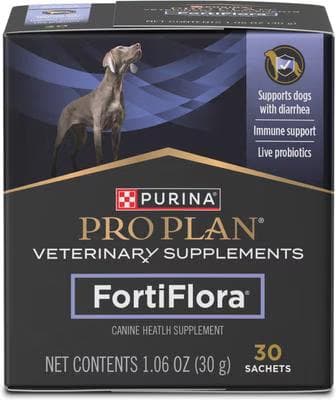
The #1 vet-recommended probiotic for dogs. Daily powder sachets with live probiotics support healthy digestion and firmer stools, and can help dogs coping with diarrhea or GI upset.
Webvet may earn a commission when you click through to Chewy, at no extra cost to you.
Before changing food, ask:
- Is the current food complete and balanced for the dog's life stage?
- Is the dog receiving the correct daily amount for body condition and activity?
- Has appetite increased while weight decreases?
- Is stool consistently loose, pale, greasy, bulky, or unusually frequent?
- Are vomiting, gas, discomfort, excessive thirst, or medication changes present?
Avoid switching to a raw diet as a homemade “fix.” The Hart survey did not establish diet as the cause, and raw animal products can introduce microbial hazards to pets and people. Do not give high-dose vitamins, minerals, digestive enzymes, or other supplements unless a veterinarian has identified a reason and an appropriate dose.
Why Dogs Eat Cat, Rabbit, Deer, and Other Poop
Dogs may eat another species' feces because it smells strongly, contains remnants attractive to a scavenger, or simply appears during an interesting outdoor search. The species matters because the exposure and prevention plan change.
Cat poop
Cat feces may be especially tempting, and the litter box provides a predictable location. The dog may also swallow litter, which adds a separate concern. Move the box to a cat-accessible, dog-resistant area using a gate, door latch, or covered furniture arrangement that the cat can use comfortably. Never make the cat's litter box hard for the cat to reach. A Litter-Robot automatic self-cleaning litter box may reduce how long waste remains accessible, but it does not replace a dog-resistant barrier or prompt supervision.
If the dog eats clumping litter, a large amount of any litter, or feces from a cat taking medication, call a veterinarian for case-specific advice. Keep the cat's parasite prevention and veterinary care current.

Rabbit or deer poop
Wildlife droppings are difficult to control across a large property. Use a leash in high-traffic areas, scan the path ahead, reinforce “leave it,” and redirect the dog to legal sniffing. Yard fencing and habitat changes may reduce access, but wildlife exposure cannot be treated as zero risk.
One small ingestion in an otherwise normal dog may not cause illness. Repeated exposure, gastrointestinal signs, or a dog with higher medical risk warrants a veterinary call.
Another dog's poop
Shared yards, dog parks, apartment relief areas, and boarding facilities increase access to feces of unknown health status. Pick up after your own dog immediately and steer around waste left by others. If exposure is routine, discuss fecal testing and parasite prevention with your veterinarian.
WebVet's guide to how to deworm a dog explains why the correct product and schedule depend on the parasite, the dog's health, and veterinary guidance. Do not give a random dewormer simply because a dog ate poop.
Human or livestock feces
Human waste may contain pathogens or medication residues, while livestock manure may be mixed with dewormers or other treatments. Prevent access and call a veterinarian if there is a known medication exposure, a large ingestion, or any abnormal sign. Provide the substance, timing, approximate amount, and packaging or treatment name when available.
Even when the target is another animal's feces, structured meals and legal foraging can give the dog better ways to use scavenging behavior. These activities supplement close supervision and access control; they do not neutralize contaminated waste.
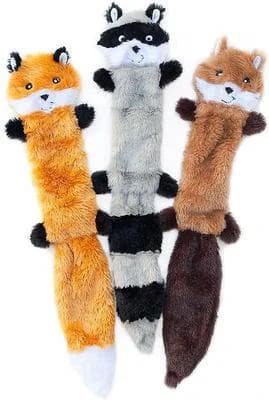
No-stuffing squeaky plush toys that satisfy a dog's urge to shake and carry prey, with no stuffing to shred and scatter.
Webvet may earn a commission when you click through to Chewy, at no extra cost to you.
A supervised ZippyPaws Skinny Peltz toy can provide a brief play or redirection option after the cleanup routine. Choose toys based on the dog's size and chewing style, inspect them often, and remove damaged toys. A toy can help meet activity needs but cannot replace medical evaluation or direct prevention.
Is Eating Poop Dangerous for Dogs?
Eating poop creates a pathogen and parasite risk because feces can carry infectious organisms and contaminants. Risk depends on whose feces it was, how fresh it was, the environment, the amount swallowed, and the dog's age and health. A dog's own fresh stool may carry fewer unknowns than wildlife or an unfamiliar dog's feces, but it is not a healthy snack.
The CDC notes that Giardia can spread when an animal swallows the parasite from contaminated feces, soil, food, or water. Other exposures can include roundworms, hookworms, bacteria, toxins, medication residues, litter, or foreign material.
Why do older dogs eat poop?
Why do older dogs eat poop after years without the habit? Access and learned scavenging can still explain it, but new coprophagia in an older dog is a medical exception that deserves a veterinary examination. Increased appetite, weight loss, medication effects, digestive disease, cognitive change, or altered elimination may contribute, especially when sudden onset appears with other signs.
Why do dogs eat their own poop and pee?
Owners asking why dogs eat their own poop and pee may be seeing two scent-driven behaviors: swallowing stool and licking urine or urine-soaked ground. The combination is not proof of one deficiency. Prevent access and tell the veterinarian about increased thirst, increased urination, accidents, appetite change, weight loss, or a sudden behavior change.
Why do dogs eat human poop?
Why do dogs eat human poop? Scavenging and a strong odor can attract a dog, but human waste creates less predictable exposure to pathogens, medications, drugs, or other contaminants. Move the dog away, record when and how much was swallowed, and call a veterinarian or poison resource when a medication or drug exposure is possible or any abnormal sign develops.
Potential consequences include:
- Vomiting, diarrhea, gas, or appetite changes.
- Parasite infection or reinfection.
- Exposure to bacteria or protozoa.
- Swallowing cat litter, plastic bags, soil, or other debris with the stool.
- Exposure to medications that passed through another animal.
- Transfer of fecal material to a person's face, hands, food surfaces, or household objects.
Keep perspective: exposure does not guarantee infection, and not every dog needs emergency treatment after one incident. Monitor the dog, identify the source, and use the decision guide below.
What to Do Right After Your Dog Eats Poop
What to give a dog after eating poop? In most cases, offer fresh water, move the dog away, and prevent immediate re-exposure while you identify the source and watch for symptoms. Do not force the mouth open, induce vomiting, or give food, medicine, a supplement, or another home remedy unless a veterinarian or poison professional tells you to do so. Call promptly when the feces may contain a medication or drug, litter or a foreign object was swallowed, or the dog develops abnormal signs.
Write down:

- The time and approximate amount.
- Whether the feces came from the dog, another dog, a cat, wildlife, livestock, or a person.
- Whether litter, medication, garbage, chemicals, or a foreign object may also have been swallowed.
- The dog's current symptoms, age, medical conditions, and medications.
What to Do After Different Poop Exposures
The table below is a starting point, not a substitute for case-specific veterinary advice. Exposure type changes what matters: the dog's own fresh stool has different unknowns from wildlife feces, cat waste mixed with litter, human sewage, or feces from an animal receiving medication. Record the source, amount, time, possible contaminants, and symptoms so a veterinarian can judge parasite risk, poisoning risk, testing needs, and whether monitoring at home is appropriate.
| Exposure type | Immediate action | When to call |
|---|---|---|
| Dog's own fresh stool | Move away, offer water, clean up, and monitor | Call for repeated episodes or any vomiting, diarrhea, pain, appetite change, or lethargy |
| Unknown dog or wildlife feces | Prevent more access, note location and species if known, and monitor | Ask about parasite risk, especially after repeated exposure or if signs develop |
| Cat feces with litter | Determine whether litter was swallowed and block the litter box | Call for a large ingestion, repeated vomiting, abdominal discomfort, trouble passing stool, or medication concern |
| Feces from an animal on medication | Obtain the medication name, strength, dose, and timing | Call a veterinarian or poison service promptly for case-specific advice |
| Human feces or sewage | Rinse contamination from paws or coat without letting the dog lick it | Call because pathogens, drugs, and other contaminants may be unknown |
| Any exposure with severe signs | Keep the dog quiet and prevent further ingestion | Seek urgent care for collapse, breathing trouble, repeated vomiting, marked weakness, severe pain, or neurologic signs |
Wash your hands after handling the dog, stool, leashes, or cleanup tools. The CDC recommends prompt waste pickup and handwashing after contact with dogs or their supplies. Avoid kisses and face licking until the dog's mouth area is clean and the situation is assessed.
How to Stop a Dog From Eating Poop
How do I stop my dog from eating his poo? Use a management-first stop protocol that prevents access and rewards a different choice every time. Supervise elimination on leash, cue the dog to move toward you as soon as he finishes, pay that turn-away with a high-value reward, and perform pickup immediately on every outing. Block access to litter boxes and old yard waste, then practice a leave-it cue away from feces. This protocol prevents rehearsal today while training a reliable alternative without fear, pain, chasing, or punishment.
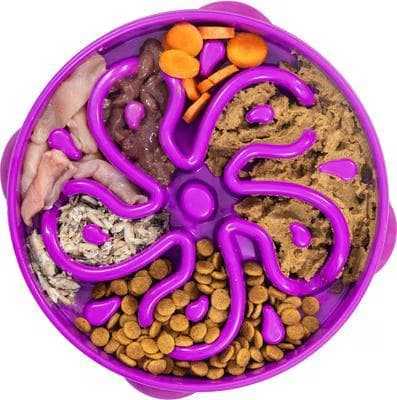
A maze-pattern slow-feeder bowl that makes fast eaters work for each bite, reducing the gulping and swallowed air that trigger regurgitation and vomiting. Holds up to 4 cups.
Webvet may earn a commission when you click through to Chewy, at no extra cost to you.
For a dog who gulps meals or benefits from structured food enrichment, an appropriately sized Outward Hound Fun Feeder can make part of the normal ration take longer to eat. Supervise initial use, match the design to the dog's muzzle and eating style, and stop if the dog chews or damages the bowl. A slow feeder is an enrichment tool, not a treatment for coprophagia.
Why do dogs try to eat their poop?
Why do dogs try to eat their poop immediately after eliminating? Fresh stool is especially attractive to many dogs with coprophagia, and the turn-back can become a rehearsed habit. Supervise on leash, cue movement toward you as soon as the dog finishes, reward that choice, and pick up before the dog can return.
Why do dogs try to eat cat poop?
Why do dogs try to eat cat poop? Its odor can reward scavenging, and a litter box is a reliable source that the dog can revisit. Put the box behind a gate or cat-only access point without making it difficult for the cat to use, scoop promptly, and call a veterinarian if litter or medication-contaminated feces was swallowed.
Why do dogs eat poop on walks?
Why do dogs eat poop on walks? Public routes contain unfamiliar dog and wildlife waste, and a scavenging dog can reach it before the handler notices. Scan ahead, shorten the leash near waste, practice a rewarded leave-it cue at safe distances, and move away instead of chasing or pulling an object from the dog's mouth.
1. Supervise every elimination
Take the dog out on a leash, even in a fenced yard, while rebuilding the habit. Carry high-value treats and waste bags. Give the dog enough leash to eliminate comfortably, but remain close enough to guide the next move.
2. Reward the turn-away
The instant the dog finishes, cheerfully cue a hand target, recall, or “this way.” Use positive reinforcement by moving several steps from the stool and delivering several small rewards in a row. Rewarding away from the feces matters more than waving food beside it, because distance helps prevent a fast grab. Practice the cue in easy settings first, keep rewards ready before the toilet trip begins, and repeat the same sequence until the dog expects to eliminate, orient to the person, move away, and get paid.

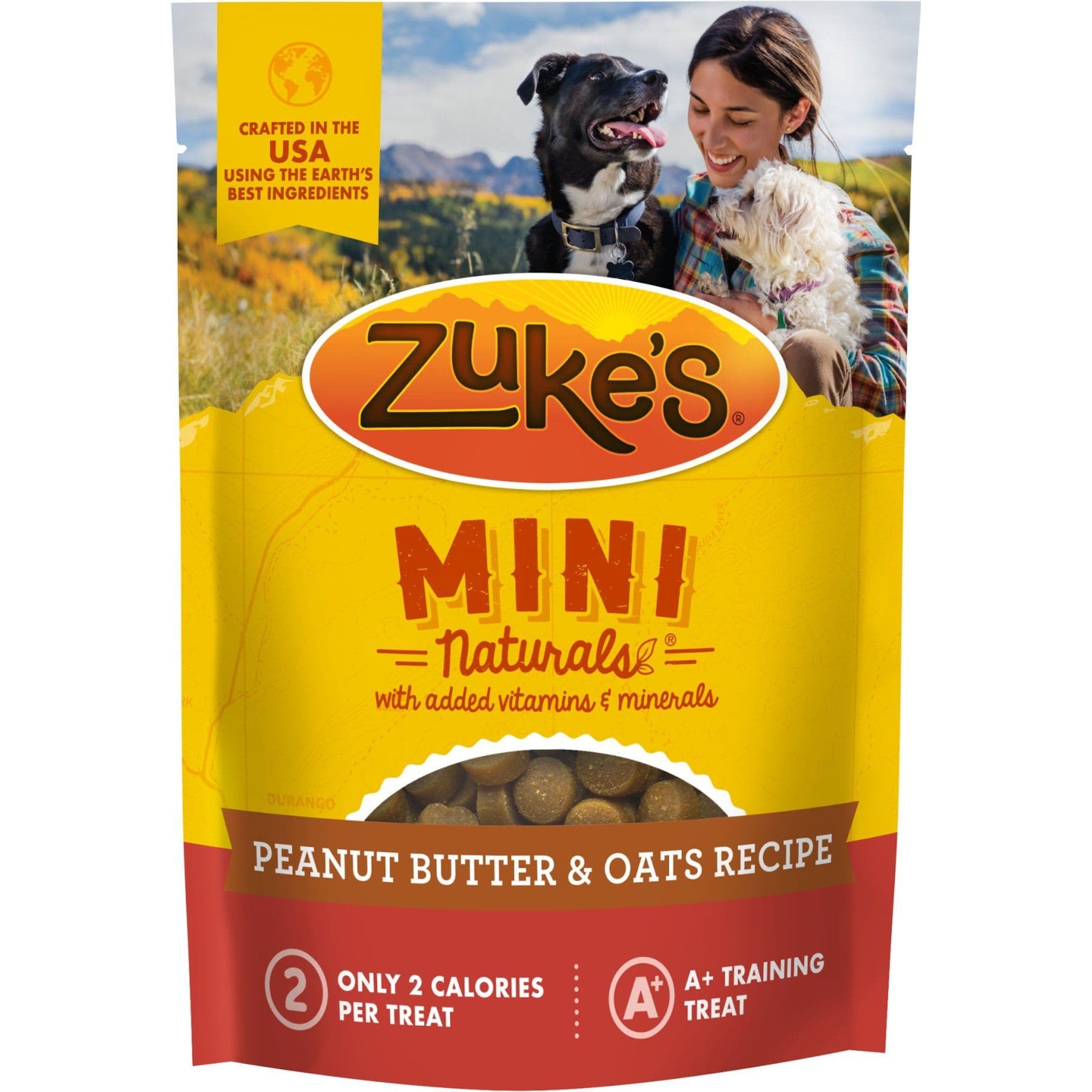
Soft, pea-sized training treats made with peanut butter and oats. Small enough to reward often while keeping treats inside the 10% of daily calories vets recommend.
Webvet may earn a commission when you click through to Chewy, at no extra cost to you.
3. Pick up immediately
Once the dog is engaged with a helper, a scatter of rewards, or a brief cue sequence at a safe distance, pick up the stool. In a one-person routine, guide the dog away, secure the leash underfoot without creating tension, then collect it. Remove old feces from the yard before training begins.
4. Practice “leave it” away from stool
Teach with a low-value food item covered by your hand. Mark and reward the moment the dog backs away, then progress gradually to uncovered items and outdoor distractions. Do not make feces the first or hardest lesson.
A consistent dog training schedule can help you keep sessions short and measurable. Practice recall, hand targets, leash movement, and leave-it skills in easy locations before asking for them around feces.
5. Prevent access at home and on walks
Use baby gates or a cat-only door arrangement around litter boxes. Clean kennels and yards frequently. Scan sidewalks and trails ahead. In multi-dog homes, supervise and clean up after each dog separately until the pattern is controlled.
6. Add purposeful food and activity outlets
Meet the dog's needs with sniff walks, reward-based training, chewing, social time, and food enrichment that fits the dog's diet. The goal is not to exhaust the dog. It is to provide predictable legal ways to forage, investigate, and earn reinforcement.
7. Coordinate the whole household
Everyone should use the same cue, reward location, and pickup routine. If one person chases while another trades, the dog receives mixed consequences. Post the routine by the door and restock bags and rewards before they run out.
Do Poop-Eating Deterrents and Home Remedies Work?
Evidence for commercial stool-eating deterrents is weak. In the Hart survey, owners reported only 0 to 2 percent success for the marketed products evaluated. That was owner-reported survey data, not a randomized clinical trial, but it offers little support for relying on a powder or chew as the main plan.
What to put in dog food to stop eating poop? No additive has strong evidence as a reliable cure. These the limits of the deterrent evidence matter when comparing a powder, chew, or home ingredient with the management-first protocol. It is worth being clear that the Hart owner survey was not a randomized trial and that reported product success was only 0 to 2 percent. Ask a veterinarian before adding anything, and continue supervision, prompt pickup, litter-box barriers, and rewarded disengagement even if an adjunct is approved.
What to avoid
Home suggestions such as pineapple, meat tenderizer, pepper, or hot sauce are also not proven solutions. Some can upset the digestive tract, add unnecessary sodium or ingredients, or create aversion without addressing access and reinforcement. Never apply an irritant to stool.
If you are considering a deterrent:
- Ask a veterinarian whether the ingredients fit your dog's health, diet, and medications.
- Treat it as an optional adjunct, not a cure.
- Continue immediate pickup, supervision, and reward-based training.
- Stop and call the veterinarian if vomiting, diarrhea, itching, lethargy, or another adverse sign appears.
- Measure actual behavior over time instead of assuming a change in stool odor means the habit is resolved.
Why Punishment Can Make the Problem Worse
Punishing a dog after finding missing stool does not teach what to do next time. The dog cannot connect a delayed reprimand to an earlier act in the way people often imagine. Even immediate yelling or rushing may teach the dog to swallow faster, run away, avoid eliminating near the owner, or consume indoor accidents before they are discovered.
Instead:
- Interrupt calmly if you can do so without chasing.
- Trade for a better reward.
- Increase supervision at the next opportunity.
- Clean the area without scolding.
- Reward outdoor elimination and immediate movement toward you.
The goal is not merely to stop one bite. It is to build a reliable pattern that remains safe when the owner is tired, distracted, or walking two dogs.
Build a Two-Week Coprophagia Plan
Use the first three days to establish tight management. Supervise every toilet trip, remove all accessible feces, block litter boxes, and start a simple log. Reward every voluntary turn toward you after elimination, even if the dog was not trying to approach the stool.
During days four through seven, practice leave-it and recall in low-distraction settings. Add one or two appropriate enrichment activities using part of the dog's normal daily food. If the behavior is new or health signs are present, schedule the veterinary examination rather than waiting for the behavior plan to fail.

During week two:
- Continue immediate pickup without exceptions.
- Practice around controlled outdoor distractions at a distance, not around actual feces.
- Track successful turn-aways, attempted approaches, and any ingestions.
- Adjust the reward value and distance based on the log.
- Review diet, stool, parasite prevention, and symptoms with the veterinarian when indicated.
Progress can mean fewer attempts, faster response to the cue, or easier movement away. Do not test success by deliberately leaving stool available. The safest long-term routine may still include prompt pickup and supervision, especially for a dog with a strong scavenging history.
For dogs whose stool quality or digestive history is part of the veterinary workup, WebVet's overview of gut health for dogs explains the roles of diet, the microbiome, and veterinary assessment without turning a behavior into a supplement diagnosis.
Keeping People and Other Pets Safe
Poop-eating is also a household hygiene problem because fecal material can remain on the dog's muzzle, coat, paws, toys, and water bowl. Keep children away from cleanup areas, wash hands, clean contaminated surfaces, and do not allow face licking right after an incident.
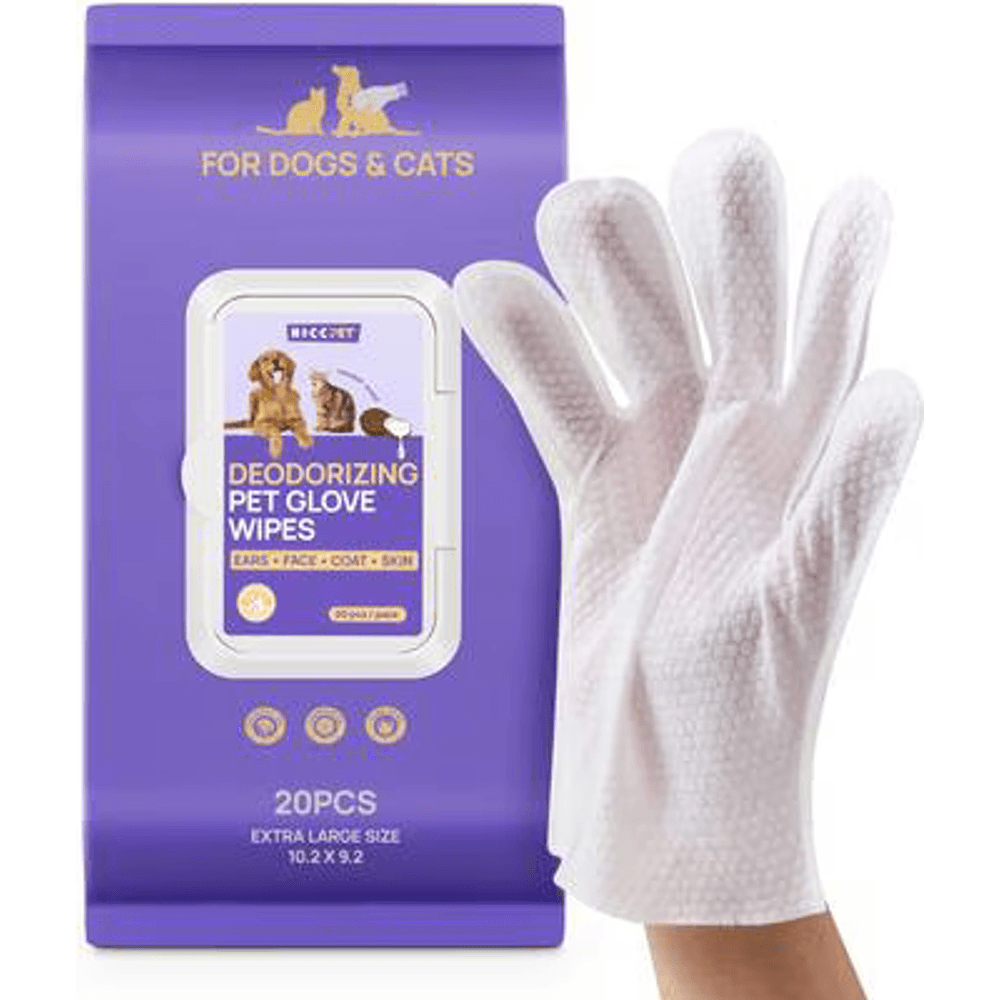
Wearable glove wipes that let you freshen and wipe down a dog's or cat's coat and skin without a full bath, while a fabric layer stays between your hand and the pet.
Webvet may earn a commission when you click through to Chewy, at no extra cost to you.
Maintain regular veterinary care for every pet in the home. Scoop litter boxes at least daily, pick up yard waste promptly, and store cleanup tools where pets and children cannot access them.
Do not share dewormers or medicines among pets. Parasite prevention and testing should reflect each animal's species, weight, age, health, region, and exposure. Good sanitation reduces opportunity, but it does not replace individual veterinary guidance.
Frequently Asked Questions
How do I stop my dog from eating his poo?
To stop your dog from eating his poo, use the most reliable approach: a coprophagia management routine. Supervise toilet trips on a leash, cue your dog to turn toward you immediately after eliminating, reward the movement away, and pick up the stool at once. Practice leave-it skills in easier settings and prevent access to old waste. The practical next step is to put treats and waste bags by the door and use the same sequence on every outing. Do not chase or punish the dog, because that can encourage faster swallowing or secretive behavior.
What dog breeds are prone to eating poop?
What dog breeds are prone to eating poop cannot be answered with a dependable breed list. The Hart survey found some breed associations, but breed does not determine what an individual dog will do, and any breed can develop coprophagia when fresh stool is available or the behavior is reinforced. The practical approach therefore focuses on the individual dog's health, history, environment, and access. The practical next step is to track when the behavior happens and start prompt pickup and rewarded turn-aways rather than treating breed as a diagnosis.
What is a dog lacking when they eat dog poop?
When owners ask what a dog is lacking when they eat dog poop, guidance should begin with this fact: poop-eating does not prove a nutrient deficiency. Dogs eating complete and balanced diets may still do it, and the Hart survey did not find a diet association. The practical next step is to confirm that the diet fits the dog's life stage and call a veterinarian about a new or intense pattern, especially with weight loss, extreme hunger, vomiting, diarrhea, or poor body condition. Do not guess at vitamins or switch to a raw diet.
What to put in dog food to stop eating poop?
For what to put in dog food to stop eating poop, the safest assumption is not that that an additive will cure coprophagia. Owner-reported success for commercial deterrents in the Hart survey was only 0 to 2 percent, and that survey was not a randomized clinical trial. The practical next step is to ask your veterinarian before adding a product, especially for a dog with a medical condition or therapeutic diet. Keep immediate pickup, leash supervision, litter-box barriers, and reward-based disengagement as the core plan even if a veterinarian approves an adjunct.
What to give a dog after eating poop?
For what to give a dog after eating poop, the safest guidance is usually fresh water and no improvised remedy. Do not induce vomiting or give a food, supplement, or medicine unless a veterinarian directs you. The practical next step is to identify the feces source and amount, note possible medication, drug, litter, or foreign-object exposure, and monitor for vomiting, diarrhea, pain, appetite change, weakness, or other abnormal signs. Call promptly for a high-risk source or any concerning symptom.
Is it unhealthy for my dog to eat his poop?
Yes, it can be unhealthy for a dog to eat his poop because feces may expose him to parasites, bacteria, protozoa such as Giardia, medication residues, litter, or foreign material. It also helps to keep the risk in perspective: one episode does not guarantee illness, and risk varies with the source and the dog's health. The practical next step is to prevent another exposure, identify whose feces it was, monitor the dog, wash your hands, and call a veterinarian if symptoms or a high-risk exposure occurs.
Why do dogs eat cat poop?
Cat feces can attract dogs because scavenging is naturally rewarding, and a litter box provides a repeatable source with a strong odor. The practical next step is litter-box access the cat can still use: use a gate or cat-only entrance, scoop promptly, and supervise while keeping the cat’s access easy and stress-free. If your dog eats cat poop, identify whether litter or medication-contaminated feces may also have been swallowed. Swallowed litter is the point to involve your veterinarian: call your veterinarian promptly for clumping-litter ingestion, medication exposure, vomiting, abdominal pain, constipation, weakness, or another concerning sign.
The Bottom Line
Most owners can make meaningful progress by treating coprophagia as an access-and-training problem while staying alert for medical clues. Supervise, reward the turn-away, pick up promptly, block litter boxes, and provide appropriate enrichment. If the behavior is sudden, persistent, or accompanied by appetite, weight, stool, or energy changes, involve your veterinarian.
The habit may not disappear overnight, and that is not a reason to punish. A calm, repeatable routine protects the dog today and teaches the behavior you want to see tomorrow.

Wendy Toth is an entrepreneurial writer, editor, and mom of two humans, two dogs and one cat. She’s currently Content Director here at PetFul. For the last 15 years she has held positions at Parents Magazine, NBC, PetSmart, and GreatPetCare, where she was co-founder. Her writing has appeared in many national outlets including Pet Lab Co., Retail Me Not, Ask Men, Wild Society Nutrition, and The New York Times. Because she loves her work so much, she’s obsessed with helping others find career fulfillment, and covers it regularly at PowerSuiting.
Veterinarian · BVMS MRCVS
Dr. Pippa Elliott, BVMS, MRCVS, is a veterinarian with nearly 30 years of experience in companion animal practice. Dr. Elliott earned her Bachelor of Veterinary Medicine and Surgery from the University of Glasgow. She was also designated a Member of the Royal College of Veterinary Surgeons. Married with 2 grown-up kids, Dr. Elliott has a naughty Puggle named Poggle, 3 cats and a bearded dragon.


