Navigating Dog Correction: An Effective Guide to Correcting Bad Dog Behavior
Learn effective strategies for dog correction, striking a harmonious balance between discipline and reward


BVMS MRCVS

This article contains affiliate links. Webvet may earn a commission when you buy through them, at no extra cost to you.
We all know the scene: You come home to find your favorite shoes in shreds or the trash can toppled over, and your canine companion donning what seems to be a "guilty look." The drooping ears, lowered gaze, and tucked tail seem to communicate a remorseful "I did something wrong."
But, are we reading the signs correctly? Is your dog truly guilty, or are they just responding to your evident disappointment? And when faced with such misbehaviors, how should we react? Is our method of disciplining effective or causing more harm than good?
This article seeks to unravel the mystery behind the so-called "guilty look," the science behind dog correction, and the art of balancing discipline and reward.
Understanding the “Guilty Look”
Contrary to popular belief, the so-called "guilty look" in dogs is not a manifestation of their remorse. According to a 2009 study by Alexandra Horowitz of Barnard College, what we perceive as guilt is, in fact, a response to cues from the dog’s human [1].
Interestingly, studies show that dogs are more likely to display this look when their people scold them, irrespective of whether they had performed a misdeed or not.
The research suggests that the guilty look is a form of social appeasement or submission.
Dogs have evolved as our companions for thousands of years and have become acutely attuned to human emotions and responses. So, they might be responding to our disappointment or anger with a look that has been reinforced over generations to diffuse confrontation.
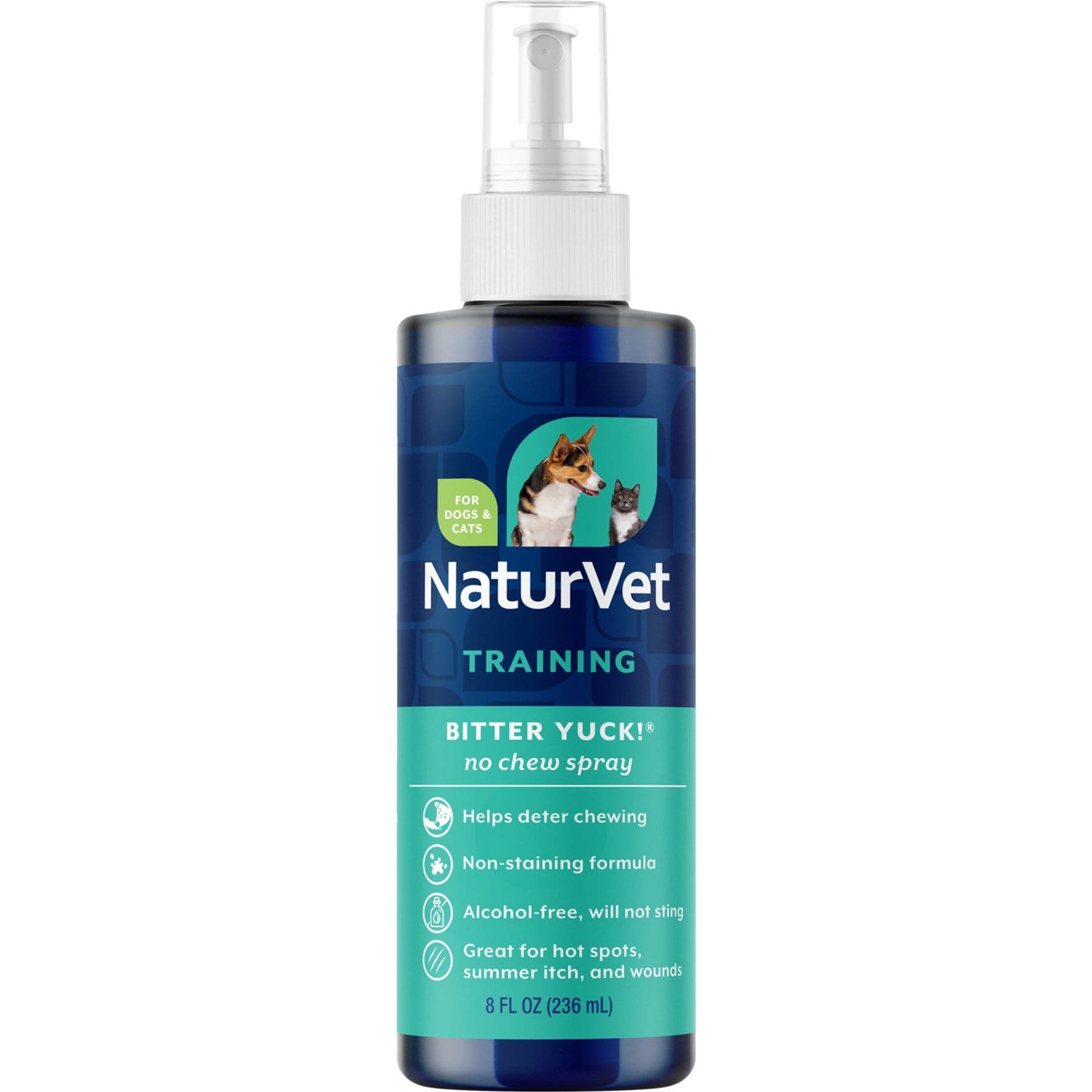
A bitter, alcohol-free taste deterrent labeled for cats and dogs. Misted on leaves, stems, and cords it makes a tempting plant taste terrible, which is the honest fix when moving the plant out of reach is not an option.
Webvet may earn a commission when you click through to Chewy, at no extra cost to you.
It seems we may be anthropomorphizing our pets, attributing them with human-like emotions and responses that they may not genuinely possess.
The Science of Dog Correction
Understanding the dynamics of dog correction is key to effective communication and training. And the timing of your correction plays a crucial role in this process.
When correcting bad behavior, you need to be sure the correction occurs at the exact moment of the misconduct, such as when your dog is about to take a bite out of your favorite shoes.
The reason behind this immediate correction is that dogs live in the present. They react to their immediate circumstances and don’t grasp the concept of past or future.
So, if you find your chewed shoe half an hour after the incident and then scold your dog, they really won't understand why they're being punished. And you won’t see any results.
The dog needs to associate the correction with the specific action, and that will happen only if you correct them as the behavior is in process.
Correcting Common Bad Behaviors in Dogs
Several common dog behaviors, such as excessive barking, chewing, and digging, require our attention and understanding before we can correct them effectively:
Excessive Barking
Dogs bark for various reasons, including attention-seeking, boredom, anxiety, or responding to external stimuli [2]. To discourage this behavior, start by identifying the cause of the barking.

Soft, pea-sized training treats made with peanut butter and oats. Small enough to reward often while keeping treats inside the 10% of daily calories vets recommend.
Webvet may earn a commission when you click through to Chewy, at no extra cost to you.
For instance, if your dog is barking due to boredom, increasing physical and mental stimulation can help. You can also teach your dog the 'quiet' command, which can be effective with consistent training.
Reinforce the silence after the command with treats and praises.
Chewing
Dogs chew as a natural behavior for oral health and during the teething phase in puppies. Chewing can also be a response to anxiety or boredom.
Offer your dog a range of chew toys to cater to this need, which can distract them from your belongings. Ensure the items they're chewing on are indeed off-limits by making them inaccessible and correct the behavior as soon as it happens.
Using a deterrent spray on certain items can also discourage this behavior.
Digging
Digging can be a tricky behavior to curb as it is a deeply ingrained instinct in dogs.
Dogs may dig out of boredom, to create a cool place to lie down, or to bury objects. Providing them with a designated digging area can help channel this behavior constructively. This could be a sandpit in your backyard, for example.
Alternatively, increasing their physical and mental stimulation can also reduce the urge to dig.
Remember, patience and consistency are vital in this process. Negative behaviors do not develop overnight, and they will take time and consistent effort to correct.
The Impact of Administering Discipline the Wrong Way
Incorrect discipline can have negative effects on your dog's behavior and cause fear, anxiety, or even aggression [3].

Soft chicken-flavor training rewards in a larger bag for frequent practice. Break rewards into appropriate pieces for your dog.
Webvet may earn a commission when you click through to Chewy, at no extra cost to you.
For instance, if your dog has ignored a command and you were to scold your dog when he finally comes to you, you’ll be sending mixed signals and creating confusion.
From the dog's perspective, they’re being punished for returning to you. Instead of learning that ignoring your call was the problem, the dog might associate your anger with their return, discouraging them from coming back to you in the future.
All discipline should occur during or immediately after the undesirable action, and never out of context.
The Art of Discipline: From Puppies to Grown Dogs
Disciplining methods may vary between puppies and grown dogs due to their cognitive development stages and learning capabilities:
Puppies
Puppies are in the early stages of learning about the world around them and haven't yet understood the rules of the household. Therefore, they require gentler guidance.
Make use of distractions, such as toys or chewables, to prevent them from engaging in destructive behaviors.
Use redirection strategies — for instance, if your puppy is chewing on a piece of furniture, gently steer them towards a chew toy instead.
Positive reinforcement in the form of treats, praises, or petting, when they perform desirable actions, helps to reinforce good behavior.
Compare coverage choices for your pet, then request a quote directly on Lemonade.
- Check a price for your pet
- Review available coverage choices
- See the terms before you decide
Eligibility, waiting periods, limits and exclusions apply.
Webvet may earn a commission when you click through to Lemonade, at no extra cost to you.
Grown Dogs
Adult dogs, having a better understanding and ability to learn commands, may require firmer guidance.
Use clear, consistent commands to correct bad behavior. Coupling these commands with positive reinforcement for desired behaviors can be effective.
For example, if you're training your dog not to jump on guests, use a firm "Off" command and reward the dog when all four paws are on the ground.
The Balance Between Reward and Discipline
While discipline is a crucial part of dog training, it's equally essential to reward your dog for their good behavior. According to experts, a training regime should comprise only a small portion of correction or discipline [4].
Mostof your interaction with your pet should be positive to foster a strong, trusting relationship. This positive reinforcement creates a warm and comfortable learning environment where your dog is motivated to behave well, not just out of fear of correction but also for the expectation of rewards.
Positive reinforcement, such as praise, treats, or playtime, can be more effective in shaping your dog's behavior than harsh discipline. Remember that the reward should immediately follow the desired behavior for your dog to make a clear connection.
In Conclusion: Dog Correction
Understanding and effectively navigating canine behavior can be a challenging but rewarding experience. With patience, consistency, and the right balance between reward and discipline, we can correct bad dog behavior and foster a happy, healthy relationship with our furry friends.
Are you interested in learning more about pet behavior and care? Follow the link below for more valuable insights.
[Click Here To Learn More]
Callout Box:
🐾 Key Takeaways on Correcting Bad Dog Behavior 🐾
- Your dog’s "guilty look" is not guilt — it’s submission.
- Time your correction to coincide with the bad behavior.
- Consistent and patient correction is key to improving common bad dog behaviors.
- Incorrect disciplining can have adverse effects on your dog's behavior.
- Disciplining methods vary between puppies and grown dogs.
- A balanced approach between reward and discipline fosters a strong, trusting relationship with your dog.
References/External Links:
- American Kennel Club
- Fetch by WebMD
- Hills Pet
- Hepper
- Pexels for feature image
FAQs
How can I correct my dog effectively?
The most effective dog correction occurs at the moment of the misconduct. Using a firm but gentle tone and clear, consistent commands can help correct your dog's behavior.
What role does timing play in dog correction?
Timing is crucial in dog correction. Immediate correction helps the dog associate the discipline with the specific bad behavior, making the correction more effective.
How can I properly discipline a puppy?
Disciplining a puppy requires patience and consistency. Use distractions and redirection to correct bad behavior, and always reward good behavior with positive reinforcement.
What are some common bad dog behaviors, and how can I correct them?
Common bad dog behaviors include excessive barking, chewing, and digging. You can correct them through consistent commands, positive reinforcement, and providing alternatives, like chew toys or designated digging areas.

Wendy Toth is an entrepreneurial writer, editor, and mom of two humans, two dogs and one cat. She’s currently Content Director here at PetFul. For the last 15 years she has held positions at Parents Magazine, NBC, PetSmart, and GreatPetCare, where she was co-founder. Her writing has appeared in many national outlets including Pet Lab Co., Retail Me Not, Ask Men, Wild Society Nutrition, and The New York Times. Because she loves her work so much, she’s obsessed with helping others find career fulfillment, and covers it regularly at PowerSuiting.
Veterinarian · BVMS MRCVS
Dr. Pippa Elliott, BVMS, MRCVS, is a veterinarian with nearly 30 years of experience in companion animal practice. Dr. Elliott earned her Bachelor of Veterinary Medicine and Surgery from the University of Glasgow. She was also designated a Member of the Royal College of Veterinary Surgeons. Married with 2 grown-up kids, Dr. Elliott has a naughty Puggle named Poggle, 3 cats and a bearded dragon.


