Raised Hackles in Dogs and Cats: What They Really Mean
All about piloerection — Not a dirty word, we swear

BVMS MRCVS
Medically reviewed by Dr. Pippa Elliott, BVMS MRCVS · Last reviewed

This article contains affiliate links. Webvet may earn a commission when you buy through them, at no extra cost to you.
Raised hackles are the strip of hair that lifts along a dog's neck, shoulders and back, or the ballooning tail and ridged spine of a startled cat. The proper name for it is piloerection, and it is a reflex rather than a decision.
It is also the most misread signal in pet body language. Standing fur tells you your pet's arousal has just spiked. It does not tell you whether they are thrilled, frightened or genuinely about to escalate. The rest of the body does that.
What Is Piloerection in Pets?
Piloerection happens when the tiny involuntary muscles attached to the hair follicles contract and pull the hair upright. Each of those muscles is called an arrector pili, and they answer to the sympathetic nervous system, the same automatic wiring that speeds up the heart. Your pet does not choose it.
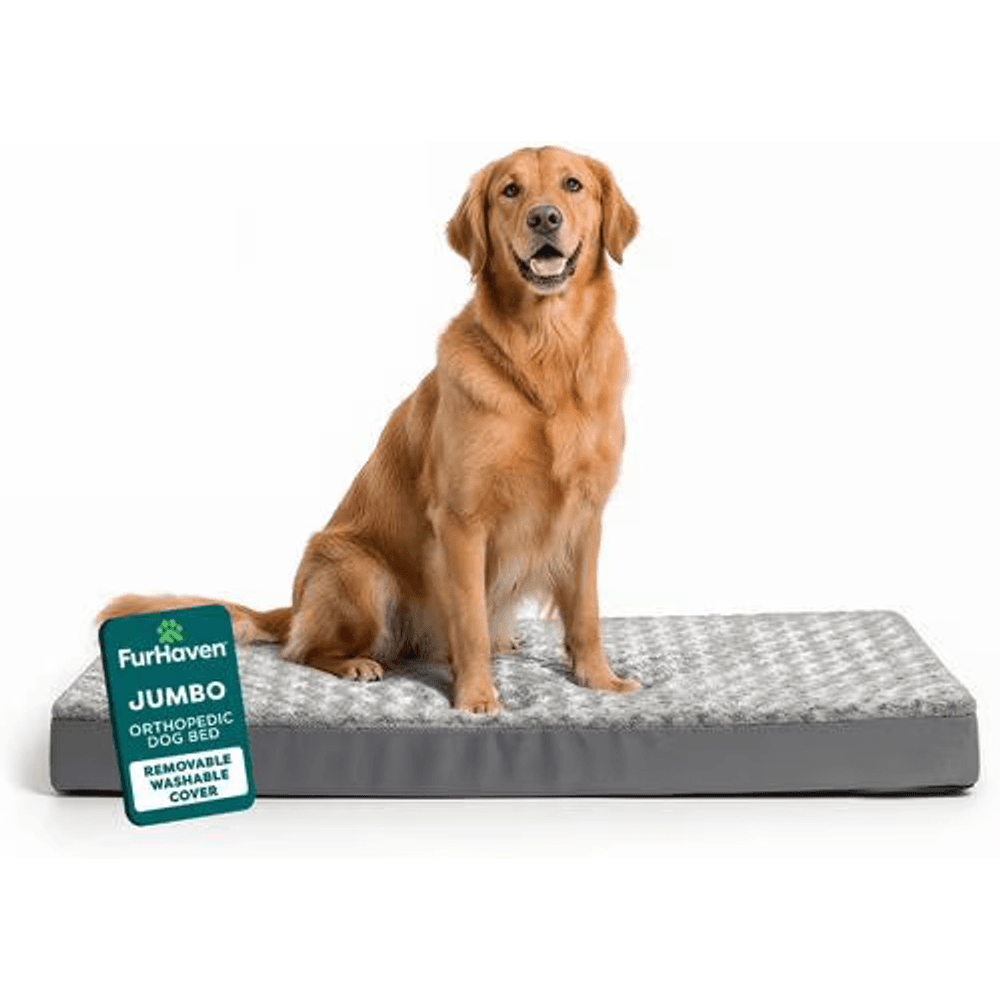
A plush orthopedic foam mattress that cushions aging joints and pressure points, giving a stiff or trembling senior dog warm, supportive rest.
Webvet may earn a commission when you click through to Chewy, at no extra cost to you.

On a dog you usually see it as a defined stripe over the shoulders, at the base of the tail, or both. On a cat it shows up fastest in the tail, which fluffs out into a bottle brush.
The reflex is very old, and it does more than one job:
- Warmth: raised hair traps a thicker layer of air against the skin, which is why a cold or shivering animal fluffs up.
- Communication: the Merck Veterinary Manual lists piloerection alongside body posture, facial expression, and tail and ear position as one of the visual signals dogs use to send messages to other dogs and to people.
- Looking bigger: a raised coat adds visible bulk along the topline and the tail. An animal that wants to be left alone can use that to settle a confrontation without anyone touching anyone.
Raised hackles are an involuntary reflex, not a decision, and not proof of aggression. They tell you your pet's arousal has spiked. The tail, ears, mouth and weight tell you which emotion caused it.
Why Does Piloerection Happen?
Piloerection is an arousal response, and arousal has more than one source. These are the triggers behind most of what owners actually see:

360-degree Wi-Fi pet camera so you can watch your cat's resting breathing rate and behavior from your phone and catch worrying changes early.
Webvet may earn a commission when you click through to Chewy, at no extra cost to you.

- Fear and anxiety: thunder, fireworks, a vet waiting room, a stranger in the hallway. For a dog whose everyday anxiety already sits close to the surface, a vet-formulated calming supplement can support a longer training plan, though it will not change how your dog feels about the trigger on its own.
- Cold and startle: a chilly morning raises the coat for warmth, and a sudden bang raises it before your pet has worked out what the noise even was. Both are automatic, and both settle quickly.
- Pain or illness: a sore joint, an injury, a fever or an itchy skin problem can leave the coat standing when nothing in the room has changed. If your pet's hair goes up with no trigger in sight, or it comes with hiding, hunching or flinching from touch, book a vet visit.
- A genuine threat display: an animal that means it raises the hair as part of a package. Stiff legs, weight forward, a hard stare and a closed mouth are the parts that carry the warning. The hair on its own does not.
- Excitement and over-arousal: the doorbell, a favourite person at the door, a squirrel on the fence, a fast game of chase. Plenty of dogs and cats raise the hair while having an unambiguously good time.
Are Raised Hackles a Sign of Aggression?
No, not on their own. Piloerection is an automatic reflex that fires when arousal spikes, and arousal is not the same thing as intent. Excitement, surprise, frustration, fear and play all raise the hair on animals that have no interest in a fight.
What turns raised hair into a real warning is the company it keeps. Look for several of these at once:
- Stiff, braced legs with the weight carried forward over the front feet
- A hard, unblinking stare locked on one target
- A closed, tight mouth after a stretch of open-mouthed panting
- A low growl, a lifted lip, or a slow and rigid tail
- An animal that has stopped answering your voice
Any one of those on its own is weak evidence. Three or four together, with the hair up, is a pet telling you plainly that it wants the situation to stop.
Read it the other way too. A dog with a bouncy curved body, a loose wagging tail and a mouth that keeps falling open is aroused, not dangerous, even when the ridge along its back is standing.
| What you see with the raised hair | What it usually means | What to do |
|---|---|---|
| Loose bouncy body, play bow, wagging tail | Excitement or over-arousal in play | Let play continue, but call a short break every couple of minutes to bring arousal down |
| Stiff legs, weight forward, hard unblinking stare, closed mouth, low growl | A genuine threat display, one step from escalating | Create distance calmly and immediately. Do not punish, and do not leave them to work it out |
| Weight shifted back, tail tucked, ears flat, lip licking, whale eye | Fear or a startle response | Give space and let the trigger pass. Never force an approach or a greeting |
| Tail high and rigid, quick shallow breathing, hard to interrupt | High arousal that could tip either way | Interrupt calmly, move away, and reassess once the body softens |
| Cat with an arched back, sideways stance, bottle-brush tail, hissing | A cat that wants the situation to stop | Stop approaching, open an escape route, and let the cat leave on its own |
| Cat with a puffed tail only, straight after a sudden noise | A startle, nothing more | Ignore it and let the cat settle. Do not pick them up while the tail is still up |
Hackles Up During Play: When to Let It Ride and When to Step In
Play is one of the most common reasons a dog's hair goes up, and it frightens owners who have been told that hackles mean aggression. Two dogs can bounce around a park with their ridges standing the whole time and never come close to a fight.
Let it ride when the play looks like this:
- Both bodies stay loose and curved, with plenty of play bows
- The dogs swap roles, taking turns to chase and be chased
- There are natural pauses, and both dogs choose to start again
- The bigger or faster dog handicaps itself, rolling over or slowing down
Step in when it looks like this:
- One dog stops taking turns and pins or chases the other relentlessly
- Bodies go stiff and straight, and the pauses disappear
- One dog keeps trying to leave and is not allowed to
- Neither dog answers when you call
A useful rule of thumb: hold the more aroused dog back for a moment and see whether the other one comes back for more. If it shakes itself off and walks away, the game had stopped being mutual.
Short breaks every couple of minutes are the simplest way to keep arousal under the level where scuffles start.
 $65 · no membership
Have a health question about your pet?
A licensed vet can assess your pet over video and prescribe online when it's appropriate.
 Talk to a vet
- Licensed vets
- All 50 states
- same-day Rx

Webvet may earn a commission if you book.
How to Identify Piloerection
Standing fur is easy to spot once you know where to look. These are the signs, and the things that usually arrive with them:
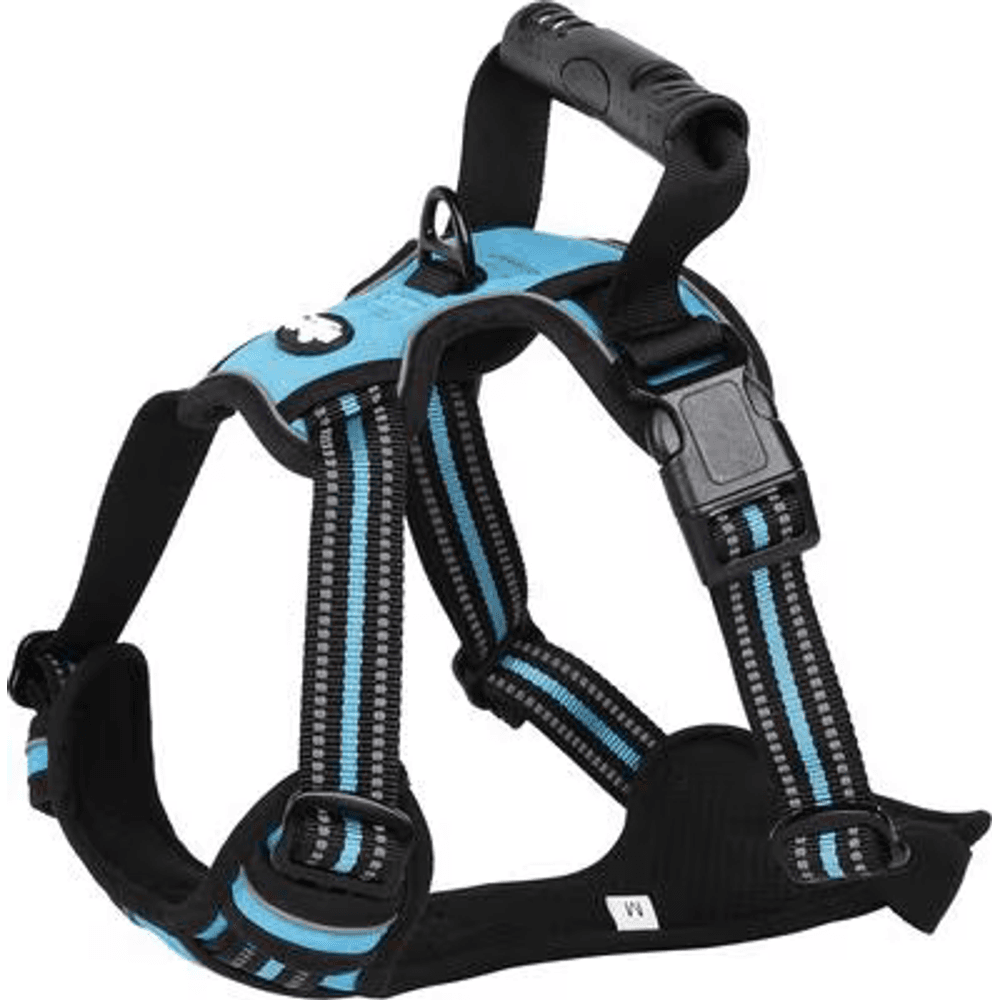
A padded, reflective no-pull harness that spreads leash pressure across the chest instead of the throat, the switch most vets recommend for a dog with a cough, a collapsing trachea, or any airway irritation so the leash never presses on...
Webvet may earn a commission when you click through to Chewy, at no extra cost to you.

- Raised hair: a defined stripe standing proud of the rest of the coat, most often over the shoulders, along the spine, or at the base of the tail.
- A bigger outline: the coat gains visible bulk, so the animal looks taller and broader than it did a second earlier.
- A tense posture: muscle tone rises with the hair, so the body looks braced, still and more alert than usual.
- Dilated pupils, especially in cats: Cornell's Feline Health Center lists wide pupils alongside erect hair in both frightened and aggressive cats.
- Sound: growling, barking, hissing or a low warning rumble may or may not arrive with the hair. When it does, take the pairing seriously.
Standing fur on its own is not a bad sign. Plenty of pets raise the hair over something they are delighted about.
Context does most of the work. What happened in the ten seconds before the hair went up usually explains it.
Which Dogs Show Hackles Most Clearly?
Every dog with hair can raise its hackles. Coat type, not temperament, decides whether you get to see it.
- Short, smooth coats show the sharpest ridge. Boxers, pit bull types, Dobermans, whippets and Staffordshire terriers give you an unmistakable line.
- Long and curly coats can mask or soften the same movement, so it is easy to miss on a poodle or a shih tzu.
- Dense double coats sit in between. Some show a clear ridge through the outer layer, others swallow it.
None of that tells you how likely a dog is to react. It only changes how much warning you get to see.
A Rhodesian Ridgeback's ridge is something else entirely
The ridge down a Rhodesian Ridgeback's back is permanent. The American Kennel Club describes it as a stripe of backward-growing hair and calls it the breed's hallmark. It is still there while the dog is asleep. Piloerection comes and goes in seconds.
Piloerection in Different Pet Species
The reflex is the same in dogs and cats. What it looks like, and what usually sets it off, is not.
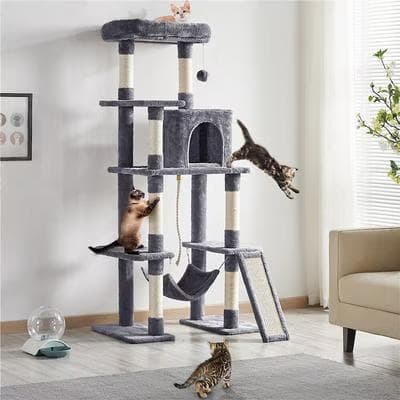
63-inch multi-level cat tree with plush perches, a condo, a hammock, sisal scratching posts, and a dangling toy. Dark gray.
Webvet may earn a commission when you click through to Chewy, at no extra cost to you.

- Cats: the tail goes first. A startled cat can puff its tail into a bottle brush before anything else moves, and a cat that has run out of patience arches its back with the hair up along the spine.
- Dogs: the hair usually rises in a band over the shoulders, at the base of the tail, or along the whole topline, and it tends to arrive with the rest of the body language rather than ahead of it.
Rabbits, guinea pigs and pet birds fluff up too, for reasons of their own that a species-specific guide is better placed to cover.
Do Cats Have Hackles? What a Puffed-Up Cat Is Telling You
Yes. Cats are not usually described as having hackles the way dogs are, but the same muscles do the same job, and the display is more dramatic because the tail joins in.
Cornell's Feline Health Center describes the aggressive package plainly: an arched back, hair held erect, ears flattened backward and the tail held up. A frightened cat does close to the opposite, flattening itself down with its ears turned out and its tail tucked under the body. Both come with wide pupils.
Two situations account for most of what owners actually see:
- The startle puff. A dropped pan, a slammed door, the dog walking in. The tail balloons, the cat freezes or bolts, and it is over inside a minute.
- The stand-off. The arched back, the sideways turn, the hair up along the spine. This is a cat that wants the thing in front of it to go away.
Handling either one is mostly a matter of doing less:
- Stop moving toward the cat, and take a step back
- Open an exit so it can leave the room without walking past you
- Do not pick it up or hold it. Cornell is explicit that you should never physically punish or even touch a cat in this state
- Let it come down in its own time. Once the tail has dropped and the body has softened, a lickable treat is a fair way to end the episode well
How to Deal With Piloerection
You cannot switch the reflex off, and you would not want to. What you can change is the arousal underneath it.

- Make distance your first move. Arousal drops with space, so the fastest thing you can do is put more of it between your pet and whatever set them off. Turn, walk, and take the pressure off before you try anything else.
- Give them somewhere dull to land. A quiet room away from the window, the doorbell and the traffic lets an aroused animal come back down instead of topping itself up all afternoon.
Once you are moving, the mechanics matter more than they sound.
- Walk away on a slack leash. A padded no-pull harness lets you turn a dog away from a trigger without a jerk on the neck, which would only add pain to an animal that is already over threshold.
- Pay for the disengagement. The moment your dog looks away from the trigger and back at you, mark it and pay it. High-value training treats work here because they are small and quick to eat, so you can deliver ten of them while the trigger is still in view.
- Keep your own voice flat and low. Shouting adds to the arousal you are trying to bring down.
Done consistently, that pattern changes what the trigger predicts. Over a few weeks, the dog that used to bristle at the sight of another dog starts turning to look at you instead.
When Raised Hackles Need a Vet, Not a Trainer
Most standing fur is communication. A small share of it is not, and it is worth knowing which is which.
Book a veterinary appointment if the hair goes up alongside any of these:
- Pain signals: hunching, flinching from touch, reluctance to jump or take stairs, or a change in how your pet moves
- Shivering or a fever with no cold room to explain it
- Skin under the raised coat that is red, scabbed, flaky or peppered with flea dirt
- Standing fur that arrives with no trigger at all and does not settle
One feline pattern gets mistaken for hackles and is not the same thing. The Merck Veterinary Manual describes episodes in which the skin along the lower back twitches or ripples while the cat grooms itself frantically, hisses or bites at its own back or flank, wags its tail hard, and sometimes cries and dashes away.
That picture belongs with a vet rather than a trainer. Merck notes that neuropathic pain, skin disease, muscle disease and focal seizures can all produce the same signs, so it needs a proper work-up instead of a label.
For everything that is genuinely behavioural and not improving, a veterinary behaviourist or a certified behaviour consultant is the right referral. Ask your own vet for a name rather than choosing one on price.
Reading the Whole Animal, Not Just the Fur
Raised hackles are a volume dial, not a message. They tell you that something just got louder inside your pet. They never tell you what it was.

So build the habit of checking four things before you decide: the tail, the ears, the mouth, and where the weight is sitting. Those four answer the question the hair cannot.
Learn your own animal's baseline as well. The dog that raises a ridge at every passing cyclist and the cat that has never puffed up once are telling you very different things with the same reflex.
FAQs
What does it mean when dogs' hackles are up?
It means arousal, not one particular emotion. The hair over the neck, shoulders and rump lifts automatically when the sympathetic nervous system fires, and excitement, surprise, fear, frustration or a genuine threat display can all do that. The tail, ears, mouth and weight distribution tell you which one you are looking at.
Is it hackles or heckles on dogs?
Hackles is the correct word for the erectile hair along a dog's neck, shoulders and back. The idiom about raising someone's hackles comes from the same image in birds, where an angry rooster lifts its neck feathers. Heckle, meaning to interrupt a speaker, is a different word.
What dog breeds get raised hackles?
All of them. Every primary hair follicle has a tiny involuntary muscle called the arrector pili attached to it, so any dog with hair can raise its hackles. Breed only changes how obvious it looks. Short smooth coats show a sharp ridge, while long and curly coats soften it.
Do all dogs have hackles?
Yes, and the pattern is individual. Some dogs raise only the strip over the shoulders, some raise only the base of the tail, and some lift the whole ridge from neck to rump. Learning your own dog's normal pattern is more useful than comparing them to another dog.
Do cats have hackles?
Yes. A cat's version shows most obviously in the tail, which fluffs into a bottle brush, and along the spine when the back arches. Cornell's Feline Health Center lists an arched back with erect hair, flattened ears and wide pupils among the signs of aggression, so give that cat room rather than a hand.
How do you stop a dog's hackles from going up?
You cannot stop the reflex, and you should not want to, because it is involuntary and it is useful information. What you can change is the arousal behind it. Increase distance from the trigger, interrupt calmly and walk away, and pay your dog for choosing to disengage. Punishing it teaches dogs to hide their warnings.
Why are my dog's hackles up when sleeping?
Brief piloerection during sleep usually goes with dreaming, a startle on waking, or simply feeling cold, and on its own it is not a concern. Book a vet visit if it comes with rigidity, paddling limbs, vocalising or unresponsiveness, which can point to seizure activity rather than a dream.
$65 · no membershipHave a health question about your pet?
A licensed vet can assess your pet over video and prescribe online when it's appropriate.
Talk to a vet- Licensed vets
- All 50 states
- same-day Rx
Webvet may earn a commission if you book.

Editor
The Webvet Editorial Team is the in-house group of pet-care editors and writers behind Webvet, operated by Smart Pet Collective. The team researches, writes, and maintains Webvet's pet health, behavior, and medication content. Every article follows a defined editorial process: research from reputable veterinary and scientific sources, careful drafting, mandatory review of medical content by a credentialed veterinarian, and dated publication. Health and medication articles are medically reviewed by a licensed veterinary professional before they go live and are kept current over time.
Veterinarian · BVMS MRCVS
Dr. Pippa Elliott, BVMS, MRCVS, is a veterinarian with nearly 30 years of experience in companion animal practice. Dr. Elliott earned her Bachelor of Veterinary Medicine and Surgery from the University of Glasgow. She was also designated a Member of the Royal College of Veterinary Surgeons. Married with 2 grown-up kids, Dr. Elliott has a naughty Puggle named Poggle, 3 cats and a bearded dragon.


