Why Does My Dog Eat Grass? Vet Reasons and When to Worry
Most grass eating is normal dog behavior, not a sign your dog is sick. Here's why dogs eat grass, what's normal versus concerning, what to do, and the warning signs that mean it's time to see a vet.

BVMS MRCVS

This article contains affiliate links. Webvet may earn a commission when you buy through them, at no extra cost to you.
Why does my dog eat grass? In most cases, grass eating is a normal, harmless dog behavior driven by instinct, taste, boredom, or an appetite for fiber.
In one widely cited UC Davis survey of plant-eating dogs, fewer than 25 percent vomited afterward and only about 10 percent seemed ill beforehand. So the large majority were not sick and did not throw up.
It is one of the most common questions worried owners ask, and the good news is that occasional grazing usually means nothing is wrong. Most estimates suggest the great majority of dogs (often quoted in the range of two-thirds to four-fifths) eat grass at least sometimes.
Still, the behavior sits on a spectrum. Most grass eating is benign, but a smaller share can signal nausea, anxiety, or an underlying problem, and a few specific patterns are genuine red flags.
This guide walks through the real reasons dogs eat grass, what normal grazing looks like versus what is concerning, what to do about it, and the exact signs that mean it is time to call your veterinarian.
- 1Grass eating is normal and very common. In surveys, the great majority of grass-eating dogs are not sick first and do not throw up after.
- 2The old idea that dogs eat grass only to make themselves vomit is largely a myth. Fewer than a quarter of dogs vomit after grazing.
- 3Common drivers are instinct, taste, boredom, anxiety, and an appetite for fiber or roughage, not a clear nutritional deficiency or a need to detox.
- 4Occasional calm grazing on clean, pesticide-free grass in a healthy, dewormed dog is generally fine to allow.
- 5Frantic gulping, grass eating with no interest in food, repeated vomiting, weight loss, or a swollen, hard belly are reasons to see a vet, sometimes urgently.
Grass eating is just one small piece of how dogs communicate and self-soothe. For the full picture of what your dog is telling you, see our vet guide to dog body language.

 Sponsored
Want a vet's help with your dog's anxiety or behavior?
Talk to a licensed vet at Dutch over video, often the same day. They can recommend treatment and prescribe it when it's appropriate.
Use code Pets60
Plans start at $12/month · covers up to 5 pets
- Licensed vets in most states
- Rx for 150+ conditions
- 4.7 on Trustpilot
Why does my dog eat grass? The quick answer
Grass eating is one of the most common normal behaviors in dogs, and most of the time it is harmless.
When owners ask why does my dog want to eat grass or why does my dog like to eat grass, the honest answer is usually instinct, boredom, taste, or a craving for fiber, not a sign of illness.
Think of it as a spectrum. On the common end, a dog calmly samples a few blades of fresh grass because it tastes good or there is nothing better to do. On the much rarer end, grass eating can reflect nausea, stress, or a digestive issue that deserves attention.
Throughout this article we cover the causes, how to tell normal from concerning, what to do at home, and the specific signs that warrant a vet visit.

A durable rope-and-knot fetch toy that channels chewing, tugging, and fetch energy into safe play, and the woven rope gives teeth a light scrub.
Webvet may earn a commission when you click through to Chewy, at no extra cost to you.
Is it normal for dogs to eat grass?
Yes. It is normal, and it is extremely common across breeds, ages, and sizes. Eating grass is technically a form of pica (the consumption of non-food items), but in most dogs this particular kind of pica is considered benign.
Round brown patches in the lawn are a different problem, usually caused by urine rather than grazing. Our dog urine killing grass guide explains why and how to fix them.
If you have wondered do all dogs eat grass, the answer is that a very large share do at least sometimes (surveys commonly land in the 68 to 80 percent range), and most owners of grazing dogs report no related health problems.
What the research says
Behavioral research backs this up. A frequently cited 2008 survey from the University of California, Davis, which gathered responses on roughly 1,500 plant-eating dogs, found that grass eating is best understood as a normal canine behavior rather than a primarily self-medicating one.
Two findings stand out from that survey:
- About 90 percent of dogs did not appear ill before eating grass.
- Fewer than 25 percent vomited afterward.
In other words, vomiting after grass is the exception, not the rule, which directly challenges the popular belief that a dog only grazes to make itself sick.
The evolutionary logic
There is an evolutionary logic to it, too. Dogs are omnivorous scavengers, not strict carnivores. Their wild relatives routinely ingest plant material and the stomach contents of prey, so a taste for greenery is an ancient, hardwired part of the canine playbook.
Grass eating can even be a social or exploratory behavior, a cousin of other instinct-driven habits like why dogs eat poop that look strange to us but make sense to a scavenger's brain.
The useful distinction is between calm, casual nibbling and the more intense patterns we cover later. Normal grazing is relaxed and occasional. The behaviors that deserve a closer look are sudden, frantic, or paired with other symptoms.
Top reasons dogs eat grass
There is rarely a single explanation. Most dogs graze for a mix of the following reasons, and the same dog may do it for different reasons on different days. Here are the most common drivers behind why dogs eat grass.
- 1Instinct and scavenging: sampling vegetation is a built-in canine drive.
- 2Taste and texture: fresh spring grass is tender and sweet, so grazing peaks in spring.
- 3Boredom and under-stimulation: an under-exercised dog finds its own entertainment.
- 4Anxiety and attention-seeking: grazing can be self-soothing or accidentally rewarded.
- 5An appetite for fiber and roughage, not a proven nutrient deficiency or a need to detox.
Instinct and scavenging
The simplest reason is inherited behavior. Wild canids eat plants and the gut contents of prey, so the drive to sample vegetation is built in. Many dogs graze simply because it is something dogs have always done.
Taste, smell, and texture
Plenty of dogs just like it. Fresh spring grass is tender, sweet, and fragrant, which is one reason grass eating tends to spike in spring and early summer. If your dog grazes more on a warm April walk than in the dead of winter, taste and seasonality are likely at play.
Boredom and under-stimulation
A dog with energy to burn and nothing to do will often find its own entertainment, and grazing is an easy option. This is especially common in the yard, on long walks with little to sniff, or during play, when a dog grabs a mouthful of grass mid-zoom.
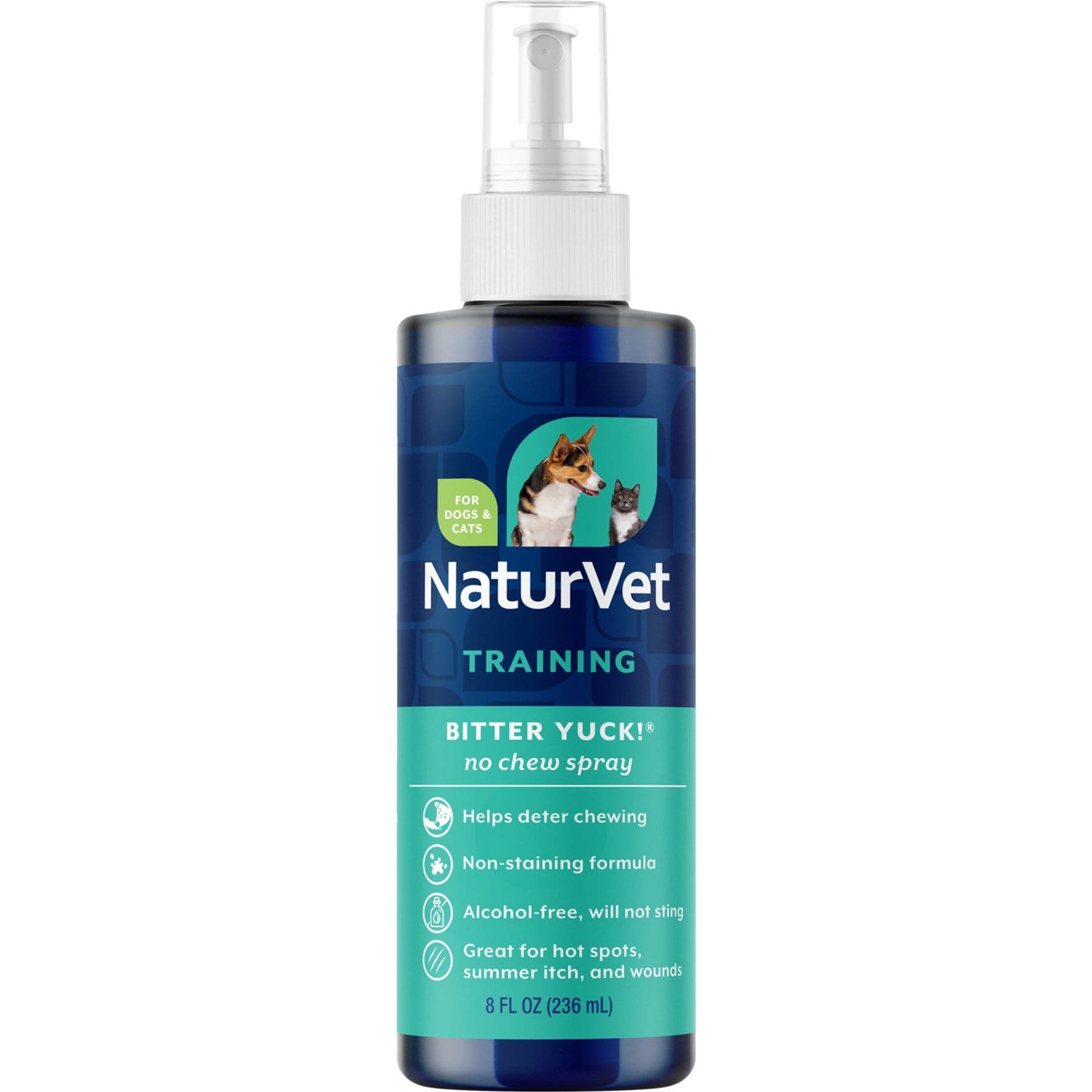
A bitter, alcohol-free taste deterrent labeled for cats and dogs. Misted on leaves, stems, and cords it makes a tempting plant taste terrible, which is the honest fix when moving the plant out of reach is not an option.
Webvet may earn a commission when you click through to Chewy, at no extra cost to you.
More exercise and enrichment usually reduce boredom-driven grazing.
Attention-seeking and anxiety
Some dogs learn that eating grass gets a reaction, a recall, or a treat to lure them away, which can accidentally reinforce the habit. For others, grazing is a self-soothing, comfort behavior, a little like nail-biting in people.
If your dog grazes most when stressed, left alone, or in a new environment, anxiety relief for dogs strategies may help more than trying to stop the chewing itself.
An appetite for fiber, roughage, and gas relief
Grass is mostly indigestible fiber, and added bulk can help move things through the gut. Some dogs seem to seek out roughage when their stool is sluggish, their stomach feels off, or they are dealing with gas and flatulence. This is better described as an appetite for fiber than a true deficiency.
Possible (but overstated) nutritional gaps
You will often read that dogs eat grass because they are missing a nutrient. It is worth being honest here: the deficiency theory is weakly supported and is not the default explanation. Dogs on complete, balanced diets still eat grass, and most grazing dogs are perfectly well nourished.
If you genuinely suspect a dietary gap, the answer is a vet conversation about a complete diet, not a guess. Reviewing your dog's meal timing and feeding schedule is a more practical starting point than chasing a vitamin theory.
The chlorophyll and detox myth
A popular online theory holds that dogs graze for the chlorophyll in grass or to detox their system. It is an appealing idea, but there is no good evidence that dogs seek out grass for chlorophyll or that grass detoxifies anything.
Dogs that eat grass are not measurably deficient in it, and a healthy liver and kidneys already handle detoxification. Treat the chlorophyll and natural-detox framing as folklore, not a reason to encourage grazing.
Hunger and an empty stomach
Long gaps between meals can leave the stomach empty and slightly acidic, which prompts some dogs to graze, especially first thing in the morning. This overlaps with the bile and foam patterns covered further down. Smaller, more frequent meals often help.
 Sponsored
Vet care that's always there
Unlimited video calls and messaging with licensed vets for less than a typical vet visit. One membership covers up to five pets.
Use code Pets60
Plans start at $12/month · covers up to 5 pets
- Licensed vets in most states
- Rx for 150+ conditions
- 4.7 on Trustpilot
Do dogs eat grass when they feel sick?
This is where the famous myth lives. The belief that dogs eat grass to make themselves vomit is widespread, but the evidence does not support it as the main reason.
In the UC Davis survey, only about 1 in 10 dogs showed signs of illness before grazing, and fewer than a quarter vomited afterward. So while some dogs do eat grass when sick, most grass eating happens in healthy dogs feeling perfectly fine.
What nausea-driven grazing looks like
That said, nausea genuinely is the driver for some dogs some of the time. When it is, you will usually see telltale signs in the moments before:
- Lip-licking and repeated swallowing
- Drooling and restlessness or pacing
- Frantic, gulping mouthfuls of grass right before a vomit
That cluster looks and feels different from relaxed grazing. In these cases grazing may be a self-soothing response to mild gastric upset or acid reflux.
Whether that is something to treat depends on how often it happens and what comes with it. A one-off episode in a dog who quickly returns to normal is usually nothing.
Frequent nausea, or nausea plus other symptoms, points to an underlying issue worth investigating, including conditions a vet can rule out such as acid reflux, inflammatory bowel disease (IBD), and pancreatitis.

No-stuffing squeaky plush toys that satisfy a dog's urge to shake and carry prey, with no stuffing to shred and scatter.
Webvet may earn a commission when you click through to Chewy, at no extra cost to you.
Why do puppies eat grass more often?
Puppies tend to graze even more than adults, and for them it is usually about exploration. Young dogs investigate the world with their mouths, so grass, sticks, leaves, and dirt all get sampled as they learn what is food and what is not.
Teething pups may also chew grass to soothe sore gums, much as they gnaw on toys and furniture.
For a healthy, dewormed puppy, the occasional mouthful of clean grass is generally normal and not a cause for alarm. The bigger concerns at this age are:
- Indiscriminate eating (puppies will swallow things they should not)
- Exposure to lawn chemicals or toxic plants
- The higher parasite risk in young dogs
Redirect a teething puppy to an appropriate chew, keep the grazing area safe, and stay on schedule with deworming.
Why is my dog suddenly eating grass like crazy?
A sudden change in pattern is more meaningful than grazing itself. A dog who normally ignores grass and then starts eating it frantically, like crazy, is worth paying attention to, especially if the gulping is paired with lip-licking, drooling, or obvious urgency.
That intensity can point to nausea, acid reflux, or general stomach discomfort rather than a casual snack.
Morning and empty-stomach grazing
Many owners also notice their dog eats grass in the morning or on an empty stomach. Overnight the stomach empties and acid can build up, so an early-morning graze, sometimes followed by a little yellow bile or white foam, often traces back to hunger and an empty belly rather than illness.
Smaller or more frequent meals, including a small bedtime snack, can settle this pattern.
When grass eating is a warning sign (and when it's an emergency)
Most grazing is benign, but a handful of patterns should put you on alert. The common thread is change: behavior that is sudden, out of character, frantic, or bundled with other symptoms.
Warning pattern 1: sudden, frantic, compulsive grazing. A dog who normally ignores grass and then starts gulping it desperately, often with lip-licking and obvious urgency, may be telling you it feels nauseated. This can accompany acid reflux, general GI discomfort, or, in deep-chested breeds, the early unease that precedes bloat.
Warning pattern 2: grass eating plus other symptoms. Grazing paired with refusing regular food, low energy or lethargy, weight loss, or repeated vomiting is a different situation than a casual nibble. The grass is a clue, but the company it keeps is what matters.
Warning pattern 3: frantic grazing at night or with visible distress. A dog who wakes up and frantically eats grass in the middle of the night, paces, can't settle, or seems anxious and uncomfortable should be taken seriously, especially if the belly looks bloated.
A special note on senior dogs
One more group to watch: senior dogs. A sudden new grass-eating habit in an older dog is worth a checkup, since new behaviors in seniors can reflect dental disease and mouth pain, nausea, parasites, chronic GI disease, or, less commonly, an emerging tumor.
Persistent grazing paired with weight or appetite loss in an aging dog should not be written off as a quirk. A baseline senior dog health check is a sensible response to any abrupt change in an aging dog.
Why does my dog eat grass and then throw up?
First, the reassurance: most dogs do not vomit after eating grass, with surveys putting it at fewer than 1 in 4. When it does happen, the likely mechanism is mechanical.
Long, coarse blades can tickle the back of the throat or the stomach lining and trigger a gag or vomit in some dogs. It is the texture, not a deliberate self-cure, that does it.
Decoding what comes up
It also helps to decode what comes up, because the color is a useful clue:
| What you see | What it often means |
|---|---|
| White foam | An empty or irritated stomach, or mild reflux. Common when the stomach has been empty for a while. |
| Yellow or green bile | Bile from an empty stomach (bilious vomiting syndrome), often early morning or overnight on a long fasting gap. |
| Mostly grass and saliva | A mechanical response to coarse blades. Usually a one-off if the dog is otherwise well. |
| Blood, repeated vomit, or food refusal | Not a normal grass reaction. Call your vet. |
On timing, when dogs do vomit after grazing it usually happens fairly quickly, within minutes to a short while, not hours later. A vomit the next day is unlikely to be about the grass.
Benign versus needs-attention
The benign version looks like this: an occasional graze, one tidy vomit of foam or grass, and a dog who immediately bounces back to normal appetite and energy.
The version that needs attention is repeat or forceful vomiting, vomiting paired with diarrhea, or a dog who seems off. If your dog's belly is also noisy, our guide to what your dog's stomach noises mean can help you read the bigger picture.
Persistent grazing-and-vomiting can also reflect an unsettled gut. If episodes keep recurring alongside soft stools or a sensitive stomach, supporting your dog's gut health and diet (with your vet's input) is more productive than focusing on the grass alone.
What should I do if my dog keeps eating grass?
If grazing is occasional and your dog is otherwise healthy, you usually do not need to do anything. If it is frequent, escalating, or you simply want to manage it, here is a sensible, step-by-step approach.
- Watch and log. Note how often it happens, when, what triggers it, and whether it comes with vomiting or appetite changes. A short log is gold for your vet.
- Rule out boredom. Add walks, play, sniff-walks, puzzle feeders, and training games. A more stimulated dog grazes less out of sheer boredom.
- Review diet and feeding times. Consider whether long gaps between meals leave an empty stomach. Adjusting fiber or splitting meals can curb empty-stomach grazing.
- Keep grass safe and mind re-entry times. Keep your own lawn pesticide and herbicide free where you can, and steer your dog away from foxtails and toxic plants. After any lawn treatment, keep your dog off the grass until it is completely dry, or for the interval printed on the product label (commonly 24 to 48 hours). If you suspect contact with treated grass, rinse your dog's paws and call your vet for advice.
- Redirect and reward. Calmly redirect to a toy or a dog-safe alternative and reward the switch, rather than scolding. Here is why punishment backfires with this kind of behavior.
- Know when to stop allowing it. Step in fully if there is any toxin exposure, parasite risk, choking risk, or if your vet advises against it.

Daily dental chews with a porous, ridged texture designed to help clean teeth and reduce tartar buildup as part of an at-home oral-care routine.
Webvet may earn a commission when you click through to Chewy, at no extra cost to you.
How to stop or reduce your dog's grass eating
To reframe: you usually do not need to stop benign grazing at all. But if it is excessive, risky, or causing repeated vomiting, here is how to reduce it without a battle of wills.
Letting a healthy dog graze occasionally
Pros
- Satisfies a normal, instinctive behavior
- Adds a little fiber and mental enrichment
- Low effort, no constant correction needed
- Usually harmless on clean, untreated grass
Cons
- Risk on pesticide- or herbicide-treated lawns
- Foxtails and barbed seeds can injure or embed
- Possible intestinal parasites from contaminated ground
- Long blades can trigger gagging or occasional vomiting
With that balance in mind, the most effective levers are:
- More exercise and mental work. Physical and mental stimulation is the single biggest fix for boredom-driven grazing.
- Appropriate fiber. Adding suitable fiber or moving to a higher-fiber complete diet can help, but do it under veterinary guidance. This is general guidance, not a product pitch.
- Safe substitutes. Offer wheatgrass or a pet grass kit, dog-safe vegetables, a lick mat, or a chew so the urge has a safer outlet.
- Positive redirection and a solid leave it cue. Teaching a reliable leave it is far more effective than punishment, which tends to add stress and can make the behavior worse.
- Address anxiety, and get help for compulsive cases. Routine, comfort, and enrichment ease stress-driven grazing. If it looks compulsive, a trainer or veterinary behaviorist can build a tailored plan.
When to call your veterinarian
Use this quick checklist to sort a casual nibble from something that needs professional eyes.
| Situation | What to do |
|---|---|
| Bloat signs (unproductive retching, swollen hard belly), collapse, repeated vomiting, blood in vomit or stool, known toxin or pesticide ingestion | Vet now / emergency |
| New compulsive grazing, grass eating with appetite or weight loss, chronic vomiting or diarrhea, sudden new habit in a senior dog | Vet soon (book a visit) |
| Occasional calm grazing in a healthy, dewormed dog with normal appetite and energy | Monitor at home |
This article is educational and vet-reviewed, but it is not a substitute for a hands-on exam. If your dog's grazing worries you or comes with any of the red flags above, your veterinarian is the right person to sort it out.
Frequently asked questions
Does it mean anything when dogs eat grass?
Usually it means very little. For most dogs, eating grass is a normal behavior driven by instinct, taste, boredom, or an appetite for fiber, and they are not sick. It only means something concerning when it is sudden and frantic, paired with vomiting, weight loss, or appetite loss, or accompanied by signs like a swollen belly.
What do I do when my dog keeps eating grass?
Watch and log when it happens, rule out boredom with more exercise and enrichment, review meal timing and fiber, and keep the grass pesticide free and safe. After any lawn treatment, keep your dog off the grass until it is dry or for the label interval (often 24 to 48 hours). Redirect to a toy or dog-safe alternative rather than punishing. If it is frequent, escalating, or comes with vomiting, check in with your vet.
What are dogs lacking when they eat grass?
Often nothing. The idea that grass eating signals a nutrient deficiency or a need for chlorophyll is weakly supported, and most grazing dogs are well nourished on complete diets. Some dogs may be seeking extra fiber or roughage, but that is an appetite, not a clear deficiency. If you suspect a dietary gap, talk to your vet rather than guessing.
Why does my puppy eat grass?
Puppies graze mostly out of exploration and teething. Young dogs taste-test the world with their mouths, and chewing grass can soothe sore gums. For a healthy, dewormed puppy, the odd mouthful of clean grass is normal. Watch for obsessive grazing, repeated vomiting, appetite loss, or poor weight gain, keep them away from chemicals and toxic plants, and stay current on deworming. When in doubt, ask your vet.
Why does my dog suddenly eat grass like crazy?
A sudden, frantic change is more telling than grazing itself. Gulping grass like crazy, often with drooling or lip-licking, can signal nausea, acid reflux, or stomach discomfort. Dogs also graze hard first thing in the morning when the stomach is empty and acidic, sometimes bringing up bile or foam. Smaller, more frequent meals can help that pattern, but if the behavior is new, persistent, or paired with vomiting or low energy, call your vet.
Do dogs eat grass when they're sick?
Sometimes, but it is the exception. Surveys show only about 1 in 10 dogs seem ill before grazing, and fewer than a quarter vomit afterward. When nausea is the cause, you usually see lip-licking, drooling, and frantic gulping right before a vomit. Most grass eating, though, happens in dogs who feel fine.
Should I stop my dog from eating grass?
Not necessarily. Occasional grazing on clean, untreated grass in a healthy dog is generally fine to allow. Step in if the grass may be treated with chemicals, if there are foxtails or toxic plants around, if your dog chokes or vomits repeatedly, or if your vet advises it. Reduce excessive grazing with enrichment and redirection rather than punishment.
Why does my dog eat grass and then throw up?
Most dogs do not vomit after grass, but when they do, long coarse blades can irritate the throat or stomach and trigger a vomit. White foam often points to an empty or irritated stomach, while yellow bile suggests an empty stomach, frequently overnight or early morning. An occasional tidy vomit in a dog who bounces right back is usually benign; repeated or forceful vomiting needs a vet.
Is it bad for dogs to eat grass?
Grass itself is not toxic, and casual grazing on clean grass is generally harmless. The real risk is usually the non-grass material mixed into a lawn, since a grazing dog does not separate grass blades from interspersed toxic weeds or ornamentals (such as lily-of-the-valley, autumn crocus, foxglove, or mushrooms after rain), plus lawn chemicals, foxtails and barbed seeds, intestinal parasites, and the small chance of choking on long blades. Keep the grass clean, untreated, and free of toxic plants and most grazing is low risk.
Should I let my dog eat grass when sick?
A few mouthfuls of clean grass are unlikely to harm a mildly queasy dog, but grass is not a reliable treatment for nausea. If your dog is repeatedly sick, vomits forcefully, refuses food, or seems lethargic, do not rely on grazing. Contact your vet so the underlying cause can be diagnosed and treated.

Editor
The Webvet Editorial Team is the in-house group of pet-care editors and writers behind Webvet, operated by Smart Pet Collective. The team researches, writes, and maintains Webvet's pet health, behavior, and medication content. Every article follows a defined editorial process: research from reputable veterinary and scientific sources, careful drafting, mandatory review of medical content by a credentialed veterinarian, and dated publication. Health and medication articles are medically reviewed by a licensed veterinary professional before they go live and are kept current over time.
Veterinarian · BVMS MRCVS
Dr. Pippa Elliott, BVMS, MRCVS, is a veterinarian with nearly 30 years of experience in companion animal practice. Dr. Elliott earned her Bachelor of Veterinary Medicine and Surgery from the University of Glasgow. She was also designated a Member of the Royal College of Veterinary Surgeons. Married with 2 grown-up kids, Dr. Elliott has a naughty Puggle named Poggle, 3 cats and a bearded dragon.


