How to Stop a Puppy From Biting: A Calm, Practical Plan
Stop puppy play biting with early redirection, brief pauses, and rewards for safer choices. Learn what to avoid and when biting needs professional help.

This article contains affiliate links. Webvet may earn a commission when you buy through them, at no extra cost to you.
Learning how to stop a puppy from biting starts with a safer choice: offer an appropriate toy before teeth reach skin, briefly pause interaction when biting starts, and reward calm play. Repeat the same response across the household. A puppy needs practice, rest, and supervision, not a frightening correction.
This plan is for ordinary playful mouthing and nipping. Hard bites, a stiff body, guarding, or biting during handling need a different assessment. Start with safety when you are unsure, especially around children.
How to stop a puppy from biting during play
Think of puppy biting practice as a sequence: prepare the setting, offer a safe choice, pause contact when needed, and decide what to change before restarting. The last step matters. Repeating the same exciting game after every pause can keep producing the same result, even when everyone is trying to be consistent.
- 1Reward a safer choice before biting starts, such as taking a toy or keeping four paws on the floor.
- 2Pause the interaction briefly when teeth touch skin; avoid grabbing, chasing, or restraining the puppy.
- 3Make the next practice easier. Repeated biting can mean the situation needs to change.
Prepare before the puppy gets excited
Puppies learn through practice. In puppy training, the best way to teach safer play is to make the desired action easy and repeatable. These tips cannot correct every biting problem with one fast response. Start with a manageable setting so the puppy can get useful feedback without becoming overwhelmed.
Put a suitable toy within reach before you sit down to play. Choose a size and material intended for your puppy, inspect it for damage, and supervise its use. A longer toy can keep your fingers farther from the mouth than a tiny object pinched between fingertips.
A supervised play option for a suitably sized puppy
For a larger puppy whose size and play style suit it, ZippyPaws Skinny Peltz is an optional soft toy for supervised redirection. The linked set is Large, which the manufacturer lists for medium and large dogs. It is not a small-puppy chew. Remove it if fabric, seams, or squeakers loosen; choose another toy for destructive chewing.
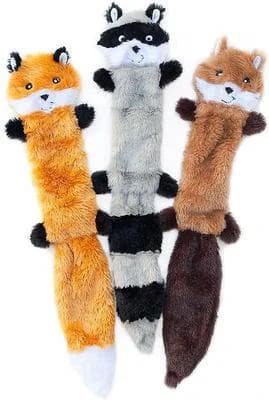
Large soft play toys for a suitably sized puppy under supervision. Not a teething treatment or a heavy-chewer option.
Webvet may earn a commission when you click through to Chewy, at no extra cost to you.
Choose a space where you can step behind a secure gate if necessary. Remove dangling clothing and tempting objects. The goal is to have an easy, calm response available before you need it, rather than improvising while a puppy hangs onto your sleeve.
Choose a manageable moment
Start when the puppy is ready for a short interaction. If they need to toilet, are hungry, or have already had an exciting session, address that first. More stimulation is not automatically the answer to a puppy who seems unable to settle.
Redirect early and reward the choice
Offer the toy before the puppy grabs your hand or leg. Move it gently at the puppy's level without waving fingers near their face. When they take the toy, let the pleasant game continue. That continuation helps make the toy a worthwhile choice.
If the puppy already has clothing, stop adding movement when it is safe to do so. Avoid turning the sleeve into a tug game. Offer an alternative without putting fingers into the mouth. Use the prepared barrier to end contact if you cannot redirect safely.
Reward a safer choice before biting starts whenever you can. Notice a puppy approaching with a toy, sitting nearby, or greeting without jumping. Waiting for every mistake before offering feedback leaves the puppy with fewer opportunities to discover what works.
Pause, then plan the next practice

When teeth touch skin, pause the game and calmly create space. If the puppy follows and keeps nipping, step behind the gate rather than pushing them away with your hands. Keep the area safe and remain attentive to the puppy's needs.
The pause is a brief interruption of the interaction, not a prolonged period of isolation. Resume when you can offer calm, safe play. If the puppy becomes distressed by the barrier, change the setup and ask for help; distress is not the learning objective.
A restart might mean a slower game, a longer toy, or a simpler reward for standing calmly. If the puppy immediately repeats the biting, stop rehearsing the same difficult situation. Arrange a toilet break, quiet activity, or rest as appropriate, then practice another time.
| Situation | Response | Next practice |
|---|---|---|
| Puppy approaches with an open mouth | Offer the toy before contact | Reward choosing the toy |
| Teeth touch skin during play | Pause and create safe space | Restart more calmly |
| Puppy keeps grabbing after a restart | End the exciting interaction | Check rest, toileting, and the setup |
| Puppy stiffens, guards, or bites during handling | Stop the provoking activity safely | Seek a professional assessment |
Do not measure success in seconds
Playful puppies may grab everything within reach when playing with people. Chewing objects, chasing legs, and biting hard are not all the same problem. For a new puppy who won't stop grabbing shoes while you are walking, change that situation first instead of repeating the whole game faster.
You may stop one interaction quickly, but teaching a reliable alternative takes repeated practice. Promises to stop puppy biting in seconds confuse an interruption with a learned skill. Look for easier redirection, gentler interaction, and fewer episodes over time.
Record what you changed if the puppy seems to bite constantly. For example, offering a toy before evening play may work better than producing it after five minutes of wrestling. That comparison tells you more than deciding that the puppy is stubborn.
Adapt the setup to your puppy's size and movement
Check that barriers remain secure as your puppy grows. Their height, spacing, and stability must suit the puppy’s size and climbing ability. A setup that worked earlier may need changing.
Plan an appropriate individual space
A MidWest exercise pen can define a supervised area before an ordinary activity begins, when the puppy is already comfortable there. This is the 36-inch model; check height, panel spacing, and climbing ability. Introduce it gradually with support. It is not equipment for physically managing an active bite incident.
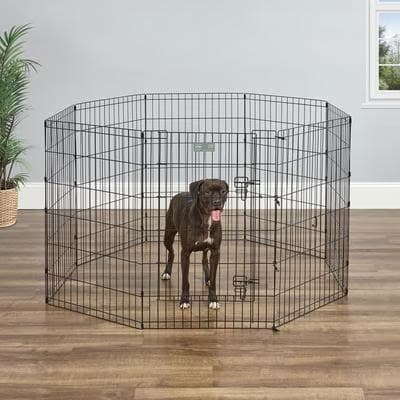
A 36-inch exercise pen for a preplanned, supported individual space. Check the puppy’s size and escape behavior before choosing.
Webvet may earn a commission when you click through to Chewy, at no extra cost to you.
For a small puppy, check toy size and your hand position just as carefully. Small teeth can still injure. Keep your face out of reach and take nipping seriously.
If moving feet trigger chasing and nipping, slow the movement and reward a manageable alternative. Frightening, pinning, or roughly correcting the puppy does not teach that alternative.
Bite inhibition and learning gentle play
Bite inhibition means controlling bite pressure. It is related to, but different from, learning that human hands and clothing are not play toys. The household goal is safe interaction. You do not have to invite painful bites to work toward it.
A mouthy puppy needs opportunities to practice without mouthing people. To stop mouthing and biting, combine an appropriate toy with a calm pause and rewards for safe interaction. Teach the alternative while the puppy can manage it; do not wait for the most excited moment of the day.
Puppies learn through the consequences of their actions and through suitable social experiences. Gentle games, rewards for disengaging, and consistent pauses can support that learning. A puppy who can take a treat gently still needs practice with movement, excitement, and different people.
Make gentle behavior easy to repeat
Practice a simple alternative when biting is unlikely. Reward four paws on the floor, a brief sit, or choosing a toy. Keep the exercise short enough that the puppy can succeed. Add small distractions only after the easier version is working.
For example, begin a greeting while you stand still with a toy available. Later, practice one slow step, then a few. If jumping and grabbing return, reduce the difficulty. The puppy does not need to fail repeatedly before you are allowed to make the exercise easier.
Use small food rewards that fit your puppy's diet, counting them within the daily allowance. Our guide to dog training treats explains practical reward choices. Food is one option; access to a favorite safe game can also be useful.
Use a small reward for a manageable lesson
Zuke’s Mini Naturals Peanut Butter & Oats treats can provide small rewards during an easy, planned lesson. Tear pieces to suit the puppy, supervise eating, and include treats in the daily feeding allowance. For a puppy with guarding concerns, follow the professional’s plan; do not use food to lure them into an uncomfortable approach.

Soft Peanut Butter & Oats rewards for easy, supervised lessons. Adjust piece size and account for treats in the puppy’s diet.
Webvet may earn a commission when you click through to Chewy, at no extra cost to you.
Keep play separate from restraint
Avoid hand wrestling or teasing the puppy with fingers. Choose games with an object between the mouth and your skin. Pause a tug game if the puppy cannot keep their mouth on the toy, and lower the excitement when you restart.
Do not use handling practice to test how much discomfort the puppy will tolerate. A puppy who backs away, freezes, or growls needs space and a different plan. Our guide to puppy biting hard and growling explains when a veterinary or behavior assessment matters.
For a deaf puppy, choose clear visual cues and reward-based teaching suited to their needs. Startling them with unexpected touch is not a substitute for communication. A qualified trainer can help the household develop predictable ways to approach and invite interaction.
Hands, feet, clothes, and other biting targets
Movement can make a target exciting. A hand pulled away repeatedly, a trouser leg moving down a hallway, or a swinging leash can become part of the game. Change that pattern before expecting a young puppy to resist it reliably.
Hands and fingers during petting
Keep early petting brief and watch whether the puppy wants it. Pause after a small amount of contact. If they turn away, let them. If they seek more contact without mouthing, you can continue briefly and calmly.
A puppy who becomes mouthy whenever you stroke them may need a different kind of interaction at that moment. Offer a toy game or reward calm proximity. Hands do not have to keep moving over the puppy simply because the person wanted a cuddle.
Feet, ankles, shoes, and pant legs
Prepare for the hallway ambush before walking past. Use a gate to prevent access when you cannot supervise a training exercise. During practice, reward the puppy for watching a small amount of movement without chasing or grabbing.
If grabbing starts, stop the movement when safe and create distance. Running, kicking feet, or repeatedly pulling fabric away can add excitement and risk. Do not ask a child to stand still while a puppy bites them; an adult should manage separation.
Clothes, leashes, and household objects
Keep sleeves, drawstrings, and loose fabric out of reach during early training. If leash chewing starts, check whether the walk has become too difficult or exciting. Offer a safe break and practice calm leash handling separately, without turning the leash into a tug toy.
Block access to cables, furniture edges, shoes, and puppy pads that are being shredded. Object chewing needs supervision and safe alternatives too. Repeatedly removing forbidden items after the puppy finds them gives everyone more work than arranging a manageable environment in advance.
| Target | Change the setup | Teach instead |
|---|---|---|
| Hands and fingers | Shorter petting; toy within reach | Calm proximity or choosing a toy |
| Feet and ankles | Gate between puppy and busy foot traffic | Watching small movements without chasing |
| Clothes and pant legs | Remove dangling fabric; avoid chase games | Disengaging and greeting calmly |
| Leash | Reduce excitement; pause the outing safely | Calm handling in an easier setting |
| Furniture and loose objects | Block access and supervise | Chewing an appropriate inspected item |
Children need adult-managed separation
An adult should actively supervise every puppy-child interaction and arrange a barrier when attention must go elsewhere. Children should not be responsible for correcting biting, taking objects away, or handling a puppy who is struggling to settle.
Give both the child and puppy somewhere comfortable apart. Choose calm activities with an adult managing the puppy's access. If biting has become frightening, painful, or difficult to prevent, stop direct interaction and seek help rather than asking the child to keep practicing.
Keep faces away from the puppy's mouth. Picking up an excited puppy for a kiss or bringing a face close to a toy adds avoidable risk. A puppy being small does not make an injury unimportant.
Build a routine that makes biting less likely

A routine cannot guarantee a bite-free puppy, but it can reduce situations that repeatedly end badly. Include appropriate play, toilet opportunities, food, quiet rest, and short teaching sessions. Our dog training schedule explains how to build predictability without forcing a rigid timetable.
Notice the pattern before the busiest period
Excessive barking and biting may be your cue to review the routine. If you want to stop that repeated pattern, identify the event that usually starts it. Then arrange an easier activity or comfortable separation before the puppy reaches the same level of excitement.
If barking and biting cluster around visitors arriving, arrange a quieter introduction. If the puppy grabs during dinner preparation, set up a suitable resting or enrichment space beforehand. Preventing the predictable rush is usually easier than training in the middle of it.
Make ordinary quiet time familiar
A washable Pet Parents Pawtect blanket can serve as a familiar resting mat if the puppy uses fabric safely. This link opens the Small size. Introduce it during a supported quiet period and remove it if the puppy chews, shreds, or tries to swallow fabric. A mat supports the routine; it does not treat a biting problem.
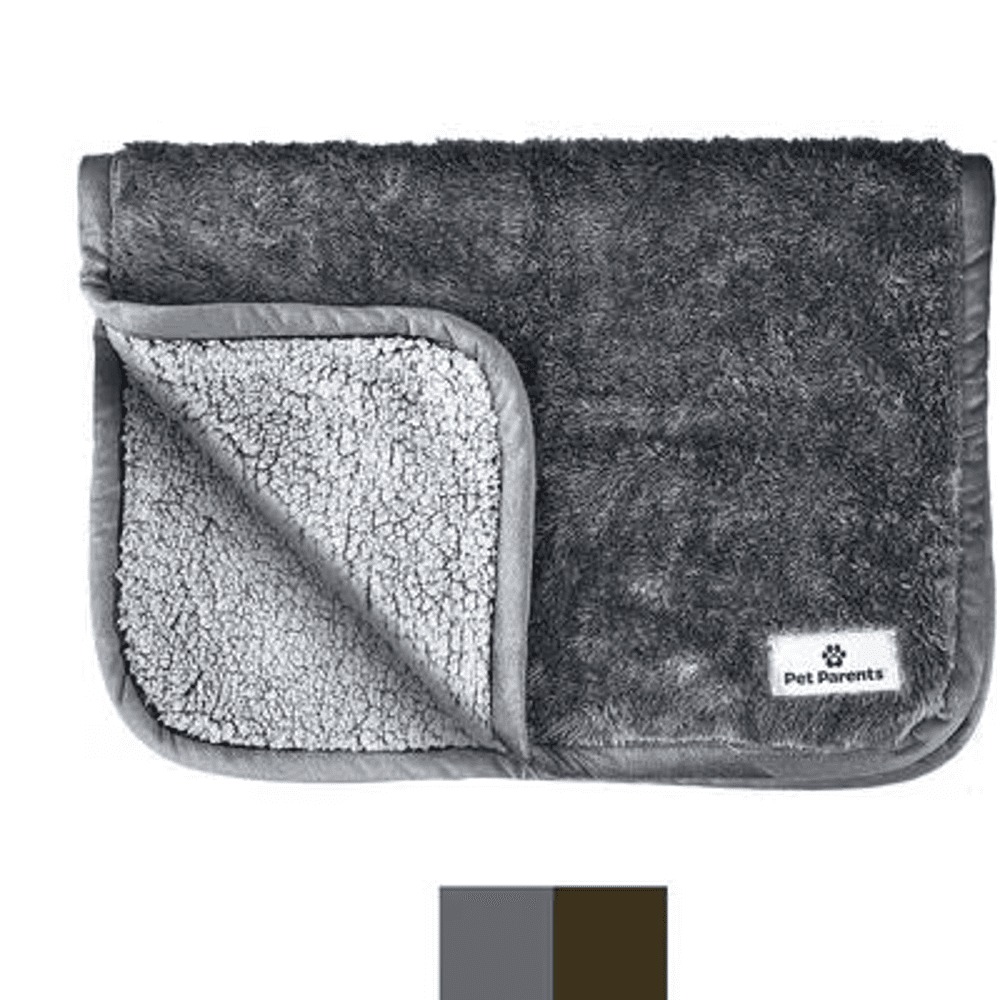
A Small washable mat for ordinary rest, only for a puppy who uses fabric safely. Remove damaged or chewed fabric.
Webvet may earn a commission when you click through to Chewy, at no extra cost to you.
Watch the puppy rather than the clock alone. Some need a quieter environment after a short outing; others are ready for a brief game. Avoid assuming that more exercise will solve every burst of excessive biting. An overtiring routine can make calm practice harder.
Make quiet space familiar
Rest spaces should already feel comfortable. Do not chase the puppy into a crate or use confinement as a frightening consequence. If settling behind a gate is difficult, practice supported calm time separately from a biting episode and ask a trainer for help when needed.
Keep the plan practical for your household
Agree on a short household checklist:
- Keep suitable toys within reach where supervised interaction happens.
- Offer a toy before teeth reach skin.
- Pause the interaction calmly when teeth touch skin, then reward a calmer restart.
- Arrange barriers where people frequently walk past the puppy.
A plan that requires constant perfect timing is hard to sustain. Management helps while learning develops. It also gives the puppy repeated opportunities to succeed instead of spending the day hearing corrections for situations they cannot yet handle.
Breed and size can affect the practical setup, including toy size, reach, and how much space you need. A Labrador, German shepherd, husky, or small terrier still benefits from clear humane teaching. A breed name does not justify harsher handling or an instant-results promise.
What not to do when a puppy bites
Do not hit, pin, shake, or hold the mouth shut. Avoid nose tapping, leash corrections, shock collars, spraying the puppy, and frightening confrontations. The American Veterinary Society of Animal Behavior recommends reward-based methods and rejects aversive training methods.
Avoid escalating the interaction
Yelping is often suggested, but some puppies become more excited by a sudden high sound. You do not need to keep making a noise that increases biting. A calm pause and a safer setup can communicate the end of play without trying to startle the puppy.
Do not bite the puppy back or try growling at your puppy. Those actions put your face near teeth and add threat or excitement. They also fail to show the puppy which safe behavior will make a pleasant interaction continue.
Bitter spray is not a people-biting solution
An anti-chew spray intended for objects does not teach a puppy how to greet or play safely with people. Do not spray it into the mouth or use it on hands as this training plan. Product directions and suitability vary, and an unpleasant taste is not a replacement for teaching.
Calming supplements are not a substitute for understanding why biting happens either. If the puppy appears persistently distressed or cannot settle despite appropriate care, discuss the situation with a veterinarian or qualified behavior professional instead of adding products at random.
When will the biting improve?
Whether you want to stop biting from an eight-week-old puppy or a six-month-old puppy, start with safe, manageable teaching. Teething does not mean hands must be offered as chew toys. A puppy who is only five or six weeks old also needs individual guidance about age-appropriate care and social development.
There is no age when every puppy automatically stops biting. Dental development, learning, excitement, and the situations the puppy encounters all matter. Adult teeth do not erase a practiced play habit. Our puppy biting age guide separates typical milestones from progress you can observe.
Look for fewer episodes in the same situation, easier redirection, and quicker recovery after excitement. Compare similar moments rather than a quiet morning with a busy evening. If the plan is producing no useful change, a trainer can observe the details and help you adjust it.
When biting needs a different plan

Trying to stop aggressive puppy biting requires understanding the context. A puppy who growls or bites when frightened, guarded food is approached, or handling hurts needs more than a repeated play pause. Correcting the puppy more forcefully can make the situation harder. Contact your veterinarian and seek appropriately qualified behavior help.
Fear aggression, food guarding, or a puppy acting aggressively during handling needs assessment rather than ordinary dog training alone. This applies to a pitbull, golden retriever, rottweiler, or any other puppy. If a puppy bit someone and drew blood, address the injury and seek help with preventing another incident.
To deal with aggressive behavior in puppies, assess the situation at any age. A nine-week-old puppy or six-month-old puppy can need help. Growling while playing is not enough to identify the cause. Even a small puppy's bite can be dangerous, so protect people rather than waiting for development to solve it.
Get advice promptly if bites break skin, someone is frightened, or you cannot reliably keep people safe. A veterinarian can assess potential health contributions; a qualified reward-based behavior professional can help with management and learning. A person who is injured should seek appropriate medical advice.
The VCA puppy-biting guidance emphasizes a consistent household approach. Consistency works best when the approach fits the behavior. Read our hard biting and growling guide before treating fearful or defensive behavior as ordinary play.
Frequently asked questions
How do you discipline a puppy who is biting?
To discipline a puppy who is biting, use clear teaching: reward a safe alternative, pause play when teeth touch skin, and make the next attempt easier. Keep the response consistent across caregivers. Physical punishment and frightening corrections can add fear or excitement without teaching the desired behavior.
For hard or defensive biting, get help rather than increasing the correction.
Should I tap my puppy on the nose when he bites?
Do not tap or hit your puppy's nose for biting. Hands near the face should not predict pain or fear, especially when the puppy will need comfortable handling throughout life. Pause the interaction, offer an appropriate alternative early, and reward safer choices.
If you feel too frustrated to respond calmly, arrange safe separation and take a break yourself.
Should I put bitter spray on my hands?
Do not put bitter spray on your hands as the solution to puppy play biting. A product intended to deter object chewing does not teach safe interaction with people. Keep suitable toys nearby, reward choices before biting starts, and use brief calm pauses when needed.
Persistent or hard biting deserves an assessment of the situation, not stronger taste deterrents.
What if different family members use different rules?
If different family members use different rules, agree on one clear household rule and demonstrate the same calm response. Hand wrestling from one person and corrections from another give inconsistent feedback. Choose a simple routine everyone can follow, including visitors.
Use barriers and supervision when someone cannot participate safely, and review the setup together when a pattern keeps recurring.

Editor
The Webvet Editorial Team is the in-house group of pet-care editors and writers behind Webvet, operated by Smart Pet Collective. The team researches, writes, and maintains Webvet's pet health, behavior, and medication content. Every article follows a defined editorial process: research from reputable veterinary and scientific sources, careful drafting, mandatory review of medical content by a credentialed veterinarian, and dated publication. Health and medication articles are medically reviewed by a licensed veterinary professional before they go live and are kept current over time.
Related reading

Aggressive Puppy Biting: Hard Bites and Growling

When Do Puppies Stop Biting? Age Chart and Progress Signs

Dog Anxiety at Night: Causes, Warning Signs, and How to Help
