Resource Guarding in Dogs: Signs, Triggers and What to Do
Recognize the early signs of resource guarding, reduce conflict over food, toys and resting places, and understand when a dog needs individualized reward-based professional help.

This article contains affiliate links. Webvet may earn a commission when you buy through them, at no extra cost to you.
The first response to resource guarding in dogs is to create space and prevent another confrontation. Guarding happens when a dog tries to keep access to something valuable, such as food, a chew, a bed or a person. Stiffening and staring may appear before growling, snapping or biting. Do not punish those warnings or reach in to test them.
You can start making the household safer immediately, even while waiting for professional help. Feed pets separately, keep children away from occupied resting and feeding areas, and remove opportunities for conflict before the dog has an item. Training comes after a plan that keeps everyone out of biting range.
Recognizing resource guarding in dogs
Resource guarding is a pattern tied to a valued thing or situation. A dog that freezes over a bowl when someone walks closer is communicating something different from a puppy bouncing and mouthing during play. Read that body language in context: notice what happened immediately before the response, where everyone stood, and whether increasing distance allowed the dog to relax.

- 1Watch for stiffening, hard staring, hovering over an item or suddenly gulping food.
- 2Do not punish, grab the resource or deliberately provoke a reaction.
- 3Use distance, separate feeding and a professional plan when guarding is already present.
For a household that can use a gate safely, the Carlson Extra Tall Walk-Thru Gate with Pet Door is one separation option. Measure the opening, follow installation directions and secure the small pet door. A gate must actually prevent access for the animals involved; choose a closed room instead if a dog can jump it, push through it or remain distressed at the barrier.
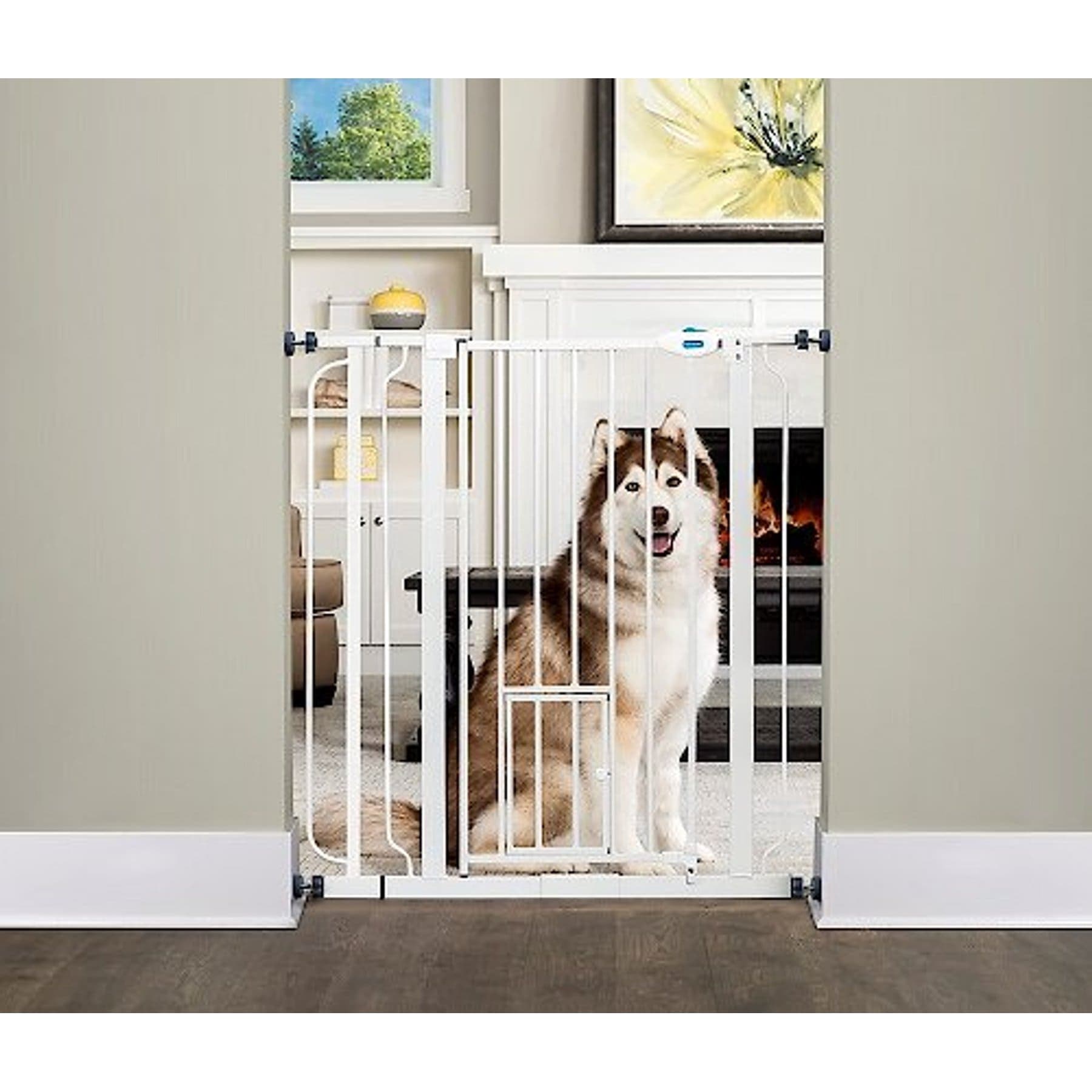
Use a correctly installed gate only where it reliably separates the animals. Secure the small pet door and choose closed-room separation when needed.
Webvet may earn a commission when you click through to Chewy, at no extra cost to you.
A Cocker Spaniel guarding a chew and an English cream Golden Retriever guarding a bed both need assessment of the actual behavior and setting. The breed name or coat color does not tell you how close it is safe to approach. Record the warning signs and protect people before seeking a personalized plan.
Early warnings are useful information
VCA's veterinary behavior guidance describes signs that owners can miss because they look quieter than a growl:
- Eating faster, swallowing rapidly or gulping as someone approaches.
- Stopping mid-mouthful and becoming unusually still.
- Lowering the head or hovering over the valued object.
- Watching the approaching person or animal with a hard stare.
- Putting a paw or chin over the item, then escalating if the approach continues.
A dog can guard a water bowl, ball, sofa or favored person, not just food. Guarding may happen only at night around a bed, or only when another pet enters. Moving between a person and another dog can be part of that pattern, but a single posture cannot establish the cause. Avoid interpreting it as affection, dominance or jealousy without looking at the full situation.
Keep a brief factual log of incidents you naturally observe. Write down the resource, who approached and the earliest sign; do not recreate the event for a video. This gives your veterinarian or behavior professional useful information without asking the dog to repeat a dangerous response.
Why guarding develops or suddenly worsens
Dogs differ in what they value and how comfortable they feel sharing space. Repeatedly losing food or being disturbed while eating can make an approaching hand predict an unpleasant interruption. Competition with another pet, crowded feeding areas and unpredictable access to valued items can also make management harder. The aim is to reduce that pressure, not decide which family member should “win.”
Before starting an agreed training plan, organize rewards where you can reach them without moving toward the dog's food. A Frisco Dog Training Treat Pouch Bag can keep an adult handler's chosen rewards accessible during professional-guided work. Store it out of reach afterward; a food-filled pouch can itself become an interesting resource. Equipment helps organization but does not determine a safe training distance.
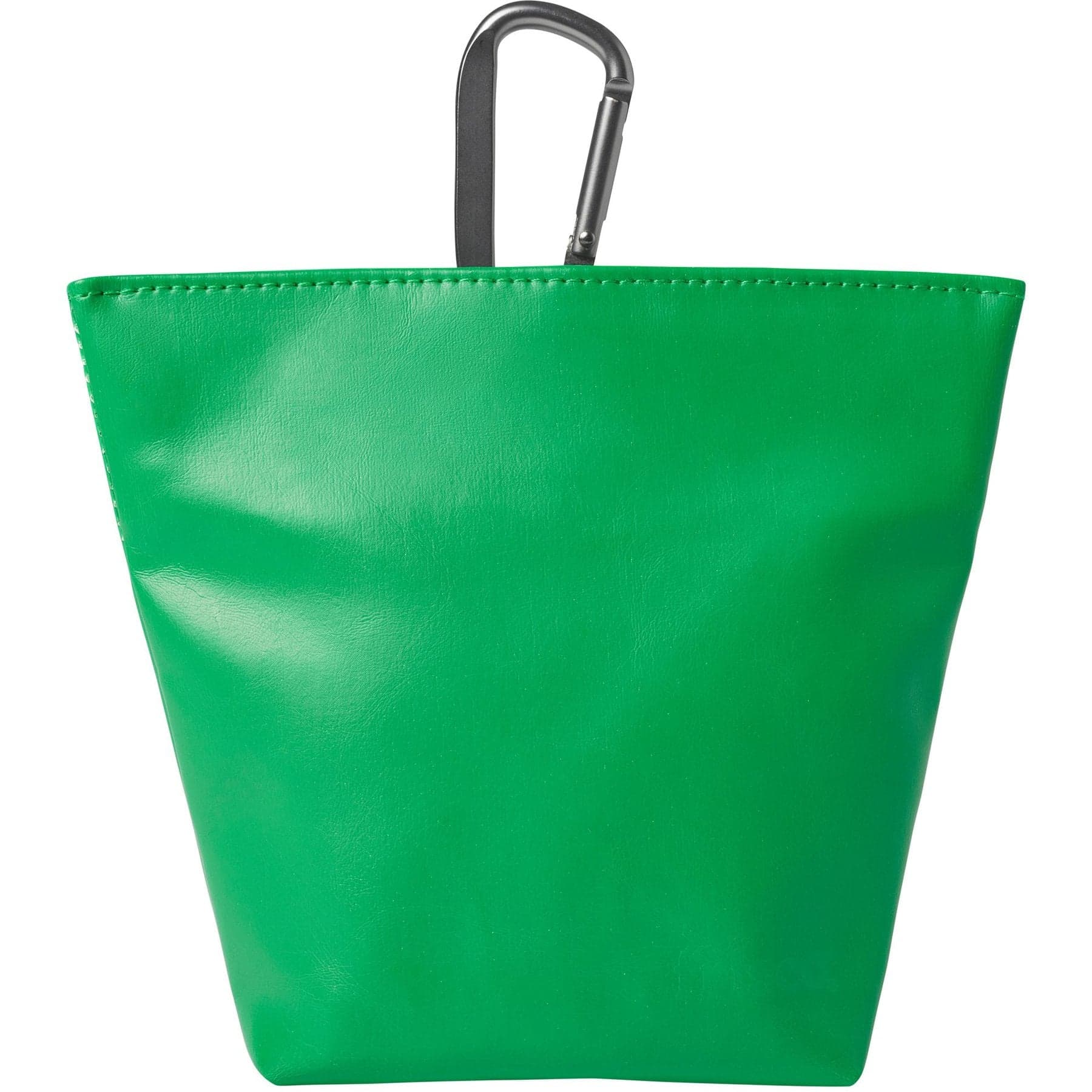
Keep rewards accessible for adult-led, professional-guided practice. Store the pouch away from dogs between sessions.
Webvet may earn a commission when you click through to Chewy, at no extra cost to you.
A sudden change deserves a veterinary check
New guarding, a sudden increase in intensity or a change in appetite should prompt a veterinary examination. VCA recommends checking for health problems that contribute to hunger or irritability before beginning a prevention or treatment program. Report changes in movement, sleep, handling tolerance and medicines too. A behavior history and a medical examination answer different parts of the problem.
For puppies, ordinary play biting and guarding can overlap in what owners notice. The key question is whether the response consistently protects an item or location. Our guide to puppy biting hard and growling explains the broader puppy behavior picture. A young age is a reason to seek early, gentle help, not a reason to ignore growling over food.
The American Veterinary Society of Animal Behavior cautions that repeatedly taking a meal away can teach the dog to defend it. Avoid bowl-removal “tests,” hands in food and petting a dog through its meal to prove a point. Predictable, undisturbed access is a more useful starting condition.
Make food and valued items safer
Management changes the arrangement that creates the conflict. It does not require waiting until a dog is growling, and it does not require touching the guarded thing. Choose a feeding space before food comes out, separate the pets first, then serve the meals. Clear empty dishes only after the dogs have left and are safely elsewhere.

| Guarded resource or situation | Physical management change | When professional help becomes especially important |
|---|---|---|
| Meals or chews | Separate feeding behind closed doors or secure barriers; keep bowls away from traffic | Dog threatens anyone passing at a distance or cannot eat without distress |
| Toys, stolen clothing or dropped food | Prevent access with storage and closed doors before an item is taken | Retrieving ordinary household items creates a bite risk |
| Bed, sofa or resting corner | Provide protected rest space; avoid reaching in or pulling the dog off | Guarding blocks a necessary route or occurs during routine movement |
| A person | Arrange separate resting areas and avoid crowding around that person | Dog threatens family members or another pet approaching the person |
| Children or multiple pets nearby | Use reliable physical separation and an adult-managed routine | Any guarding involving a child, chasing, injury or failed barriers |
Start with the situation that happens most often. If breakfast causes tension between two dogs, separate feeding means two secure spaces, not bowls at opposite ends of an open kitchen. Keep the separation in place until both have finished and dishes are cleared. Include chews, food puzzles and treats in that routine because a dog may value those more highly than an ordinary meal.
For a guarded toy or stolen sock, avoid chasing, cornering or grabbing the collar. Prevent the next incident by moving laundry and rubbish out of reach while the dog is elsewhere. If the current item could be poisonous or dangerous if swallowed, contact the veterinarian urgently for help managing both the object and the bite risk. An emergency does not make a hand near the mouth safe.
A guarded bone calls for the same no-grabbing response. Keep bones and other intensely valued items unavailable while you arrange a plan, rather than repeatedly offering them to test improvement. Put them away only when the dog is safely elsewhere. Another animal approaching the bone can create a confrontation even when the dog normally accepts people nearby.
Choose rewards as part of the plan
A professional may use small, appealing food rewards when teaching a dog to move comfortably to another location or respond to a familiar cue. Pet Botanics Training Reward Chicken Flavor Treats are one ready-made option if the ingredients suit the dog's diet. Account for treats within the day's food intake, and tell the professional if treats themselves trigger guarding. Food choice should support the exercise, not entice a person to steal a valued possession.
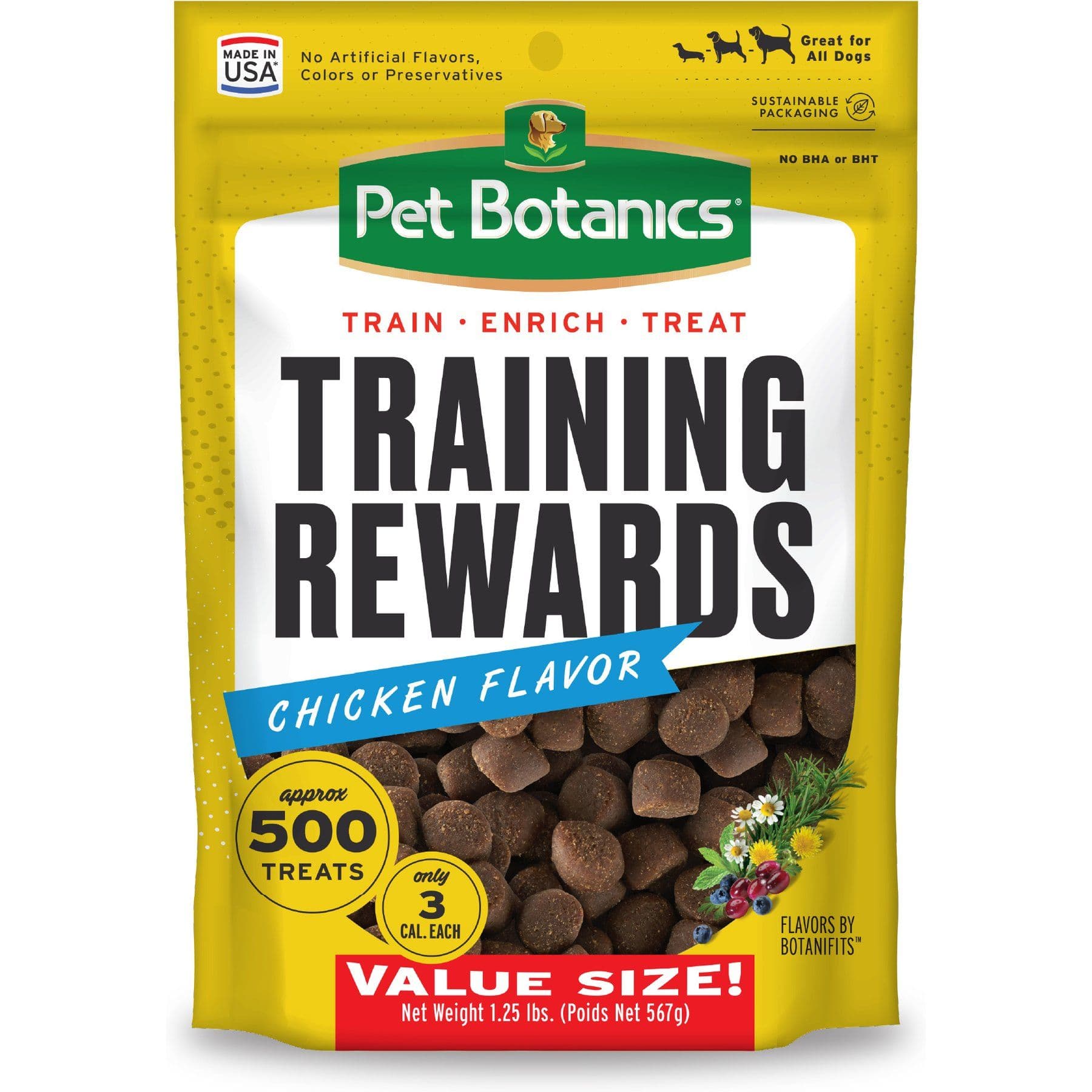
Small chicken-flavor rewards for an agreed training plan when the ingredients suit your dog. Count treats within daily food intake.
Webvet may earn a commission when you click through to Chewy, at no extra cost to you.
The same first steps apply when an owner reports food aggression in a Siberian Husky, Border Collie or Shiba Inu: prevent competition and seek a plan based on the individual dog. A breed-specific online exercise cannot establish a safe starting distance or account for that household’s children and other pets.
Food aggression in a puppy
If an eight-week-old puppy stiffens or growls over its food bowl, begin safe management now. Serve meals in a quiet protected space, keep other animals and children away, and let the puppy finish undisturbed. Arrange veterinary advice about the behavior, diet and health. Small size and young age are not reasons to handle the bowl through warning signs.
Preventing food aggression in puppies starts with predictable meals and avoiding perceived competition. VCA specifically advises against repeatedly removing a puppy's bowl or interrupting it with petting. Prevention exercises for a relaxed, nonaggressive puppy differ from treating established guarding. Once warning signs appear, use professional guidance instead of experimenting with closer approaches or hand-feeding.
What reward-based training involves
Training aims to change what an approach or a request predicts. With counterconditioning, a carefully controlled event is paired with something the dog likes; with desensitization, the situation starts at an intensity the dog can handle. A professional adjusts distance, resource value and timing so the dog stays comfortable. The dog should not have to growl to make the session stop.

An online food-bowl exercise written for a dog that has never guarded is not automatically appropriate for a dog already stiffening, growling or snapping. Both VCA and AVSAB distinguish prevention from treatment of existing aggression. Do not begin walking closer to a guarded bowl and tossing treats to see how far you can get. Seek an individualized plan before practicing around that trigger.
What a useful trade should teach
A trade is a trained, voluntary exchange, not a contest over an object. In suitable low-risk practice chosen by the professional, the dog learns that releasing an appropriate item leads to something worthwhile and that people are predictable. That foundation is developed away from dangerous, intensely guarded objects. A dog grabbing a treat while keeping one eye on its possession has not necessarily become comfortable with its removal.
Ask the professional to define:
- The starting environment and the resources that are safe to use.
- How to recognize relaxed behavior before and during practice.
- The exact response that earns a reward.
- What to do if the dog stiffens, stops responding or leaves.
- Who may practice and which household situations still require separation.
A separate resting station can be useful for teaching movement to a comfortable location before conflict starts. An optional FurHaven NAP Ultra Plush Full Support Deluxe Bed provides a defined flat resting surface with a removable cover. Put it in a quiet area, choose a size that fits, and build positive associations when the dog is relaxed. A new bed can also be guarded, so its presence does not replace boundaries.
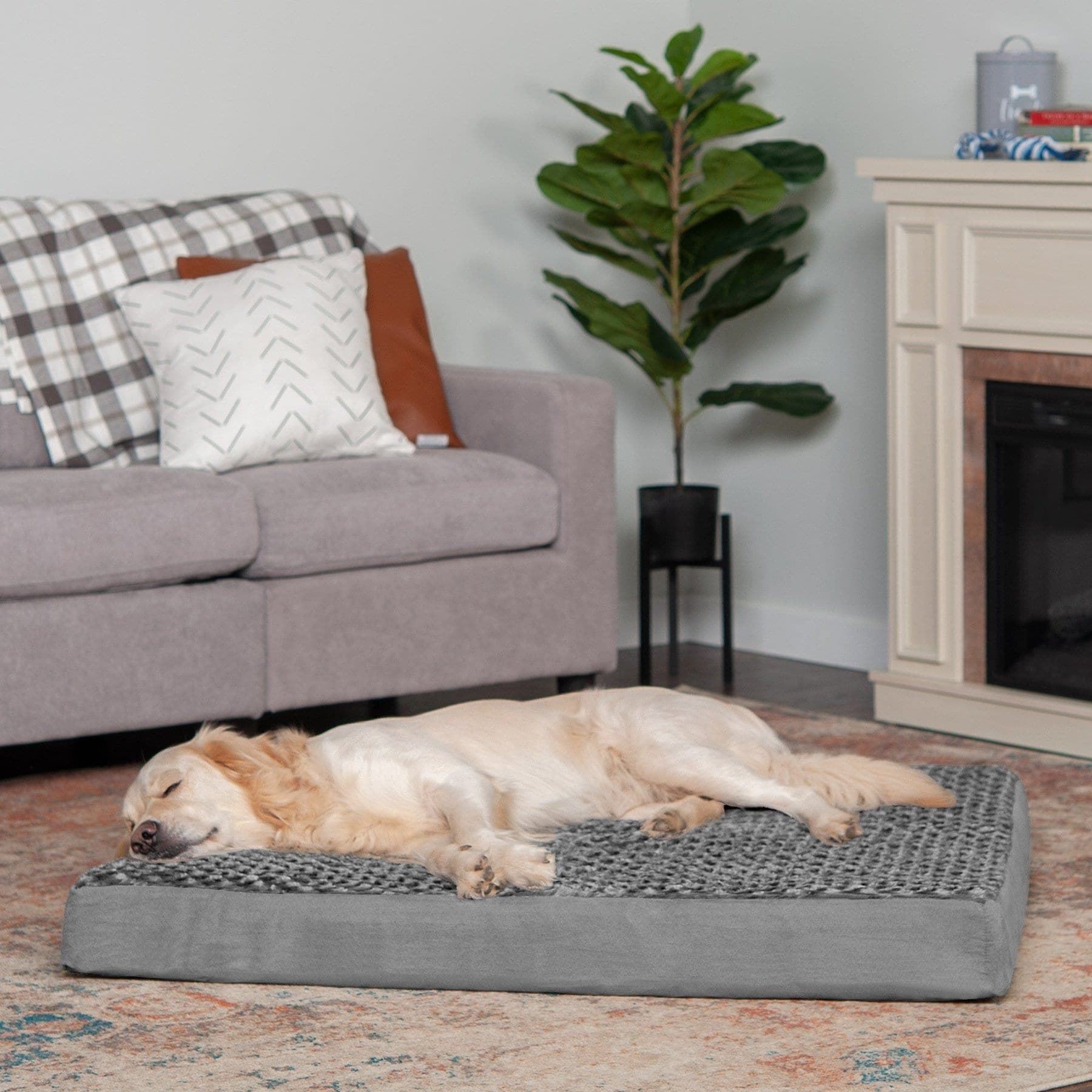
An optional defined resting surface with a removable cover. Choose a suitable size and keep the resting area protected from unwanted approaches.
Webvet may earn a commission when you click through to Chewy, at no extra cost to you.
Measure comfort, not obedience under pressure
Useful progress can include relaxed meals behind a barrier, fewer accidental encounters and an easy response to a familiar cue in an ordinary setting. Progress does not mean every person may touch every possession. Keep the management routine while the professional checks whether a skill transfers between rooms, resources and people. Do not test it by surprising the dog.
VCA finds no scientific evidence that hand-feeding or requiring a long sequence of tasks before every mouthful treats or prevents food aggression. Such routines may increase frustration for some dogs. Reward-based training should make the situation more predictable and comfortable; it should not withhold basic meals until the dog tolerates unwanted handling.
Guarding around children and other pets
Stopping food aggression against other dogs starts with preventing confrontations, not putting the dogs together to work it out. Use the separation plan below while a qualified professional assesses whether and how training can progress.
Children cannot be responsible for reading a dog's earliest warning or following a training protocol consistently. Physical separation is essential during meals, chews and guarded rest. Teach children to leave eating and sleeping dogs alone, but treat the barrier and adult routine as the safety plan. Watching from across the room is not enough if a child can reach the resource first.
For dog-to-dog guarding, give each animal its own protected access to food, water and rest. Include cats and other household animals in the separation plan: keeping another dog away is insufficient if a cat can enter the feeding space. Do not let pets “sort it out,” place valuable chews in shared spaces or reach between fighting dogs. Guarding a person may require separate resting arrangements and professional guidance about approaches; pulling the dog off the person's lap can trigger the very confrontation you want to prevent.
Choose help based on the risk, not a promise of a quick cure. A veterinary behaviorist can assess medical and behavioral contributors, while a qualified reward-based trainer or behavior consultant may work within the veterinarian's plan. Our comparison of dog trainers and behaviorists explains the roles. Ask about experience with guarding, methods used and how safety is maintained between appointments.
The household plan should be clear enough for a visitor or pet sitter to follow. State which door stays closed, where each animal eats and which items are put away before arrival. If that routine cannot be maintained reliably, tell the professional now. A plan that works only when one skilled adult is home needs to be adjusted to the actual household.
Write down tomorrow's routine
For two dogs that guard meals, a workable written plan might assign breakfast to two rooms with doors shut before bowls are prepared. Each dog remains separate while an adult clears its room; the pets reunite only after both spaces are ready. This is an example of management, not an exercise in making the dogs share. If either dog becomes distressed at the door, the professional needs to know so the arrangement can change.
Walk through the routine without the dogs first:
- Can a child open the door or reach through the barrier?
- Could a visitor enter the feeding room without knowing the rule?
- Does one dog have to pass the other's bowl to reach water or an exit?
- Where will each pet go while chews, dishes or resting areas are tidied?
- Who takes over when the usual caregiver is away?
Record improvements in those everyday situations and bring the log to follow-up appointments. A week without growling is useful context, but it may simply mean the barriers successfully prevented close approaches. That is worthwhile progress; it is not evidence that the dog should now be challenged with a harder test.
Resource guarding questions
Frequently Asked Questions
How do I stop my dog from resource guarding?
Begin by preventing confrontations, then obtain a veterinary assessment and an individualized behavior plan. A useful plan combines safe separation with reward-based work appropriate to your dog's triggers and history. A trade may eventually be one trained skill, but repeatedly taking possessions or following a generic bowl-approach drill can make things worse. Seek professional help before practicing around existing aggression.
Which dog breeds are more prone to resource guarding?
The sources here do not establish a reliable breed ranking you can use to judge an individual dog. A breed name or coat color does not change the first response: respect warnings and prevent close approaches. Size matters when choosing barriers and considering whom the dog can reach; a small dog's threats still need attention. Base precautions on actual behavior, past incidents and household access, not the breed's reputation.
Do dogs ever grow out of resource guarding?
Do not rely on maturity to make guarding disappear. A puppy can learn that defensive behavior successfully keeps people away, and repeated conflict may strengthen that pattern. Early management and appropriate reward-based guidance give you a better basis for change. Some dogs need long-term arrangements such as separate feeding even when they become more comfortable in other situations.
At what age do dogs start resource guarding?
Guarding can appear in puppies as well as adult dogs; there is no single age at which it must start. Watch a young puppy's response to valued items without disturbing or testing it. An adult dog's new guarding deserves attention too, particularly when appetite, health or household circumstances have changed. Describe the first observed signs to your veterinarian rather than waiting for a bite.
Should I growl back if my dog growls at me?
No. Responding with a growl, yell or physical challenge adds confrontation when the dog is already uncomfortable. Stop the approach and create space safely. A growl is information that the current situation exceeds the dog's comfort; suppressing it does not establish that the underlying concern has gone away. Review the trigger and management plan with a qualified professional before trying again.

Editor
The Webvet Editorial Team is the in-house group of pet-care editors and writers behind Webvet, operated by Smart Pet Collective. The team researches, writes, and maintains Webvet's pet health, behavior, and medication content. Every article follows a defined editorial process: research from reputable veterinary and scientific sources, careful drafting, mandatory review of medical content by a credentialed veterinarian, and dated publication. Health and medication articles are medically reviewed by a licensed veterinary professional before they go live and are kept current over time.


