Best Muzzle for Dogs: Basket, Soft, and Training Picks Sized for Comfort
A fitted basket muzzle lets a dog pant, drink, and take treats while stopping bites and scavenging, which is why vets prefer it over a soft muzzle for anything longer than a nail trim. Here is how to size one, which style suits which dog, plus picks.

BVMS MRCVS

This article contains affiliate links. Webvet may earn a commission when you buy through them, at no extra cost to you.
The best muzzle for dogs in most situations is a well-fitted basket muzzle. Cornell University's Riney Canine Health Center says a dog can pant normally in one, drink water, and eat treats, but cannot bite. A soft muzzle is for short procedures measured in minutes, because it limits panting.
Choosing a muzzle for dogs comes down to three decisions: why you need it, the shape of your dog's snout, and how long it will stay on. Scavenging, vet visits, reactive walks, a bite history, and grooming each point to a different type and a different safe wear time.
We have not tested these muzzles hands-on. Each pick is sold at Chewy and is matched to veterinary guidance on muzzle type and to the specs the maker or retailer publishes.
| Muzzle | Best fit | Material and format | Key detail | Main tradeoff |
|---|---|---|---|---|
| Baskerville Ultra Dog Adjustable Basket Muzzle, Black, Size 3 | Everyday walks, vet visits, and scavenging prevention | Thermoplastic rubber basket with nylon and padded straps | Pant, drink, and take treats; can be heat-shaped to the snout | This link is Size 3; check the chart and size up if between sizes |
| Baskerville Classic Basket Muzzle, Tan (choose your dog's size) | Dogs with narrower or longer noses | Thermoplastic rubber basket | Maker says it suits narrower or longer noses | Built for narrow noses; broad snouts suit a wide-fit shape |
| Baskerville INVISA Dog Basket Muzzle, Grey, Size 4 | Owners who want a lighter, less conspicuous basket in public | Transparent thermoplastic rubber basket | 360-degree padding; lightest in the Baskerville range per the maker | Listed on Chewy at $36 when we checked, more than the Ultra Size 3 |
| Labra Short Snout Flexible Silicone Dog Muzzle, Black, Medium | Flat-faced breeds such as pugs, French bulldogs, and Boston terriers | Flexible silicone with a three-hole airflow design | Sized by muzzle measurements, not body weight | Listing does not give the Medium's dimensions; watch breathing closely |
| Coastal Pet Products Best Fit Adjustable Mesh Dog Muzzle, Black, Size 3 | Nail trims, brief exams, and short grooming sessions | Mesh snout cup, nylon strap, plastic buckle | Size 3 fits a 5 inch nose circumference | Soft type: limits panting, so minutes only, never for walks |
| BRONZEDOG Pitbull Breathable Metal Basket Dog Muzzle, Large, Red | Large dogs that bite or chew | Metal mesh basket; Chewy lists leather and metal | Large fits about a 12 inch snout girth and 3.5 inch snout length | Wire can hurt people if the dog lunges |
 Sponsored
Want a vet's help with your dog's anxiety or behavior?
Talk to a licensed vet at Dutch over video, often the same day. They can recommend treatment and prescribe it when it's appropriate.
Use code Pets60
Plans start at $12/month · covers up to 5 pets
- Licensed vets in most states
- Rx for 150+ conditions
- 4.7 on Trustpilot
When a dog needs a muzzle and what a muzzle cannot fix
Start with the basket: a basket muzzle that lets your dog pant and drink is the default for anything longer than a nail trim. Then size it by snout length and snout circumference rather than breed or weight. Finally, train before you need it, so the muzzle predicts treats and outings rather than the vet table.

- 1A muzzle manages bite and scavenging risk; it does not treat fear, aggression, or barking.
- 2A basket muzzle lets a dog pant and drink; a soft muzzle that blocks panting should come off within a few minutes.
- 3Measure snout length from the nose tip to just below the eyes and snout circumference at the widest point, then size up if your dog falls between sizes.
- 4Train the muzzle before an emergency or vet visit so it never becomes a fear trigger.
- 5A muzzled dog still needs supervision, because it can hurt someone by lunging and hitting them with the muzzle.
What is the purpose of a muzzle on a dog?
A muzzle prevents bites and keeps a dog from eating things it should not, so the dog and the people around it stay safe. The Muzzle Up Project calls muzzles a tool for keeping dogs and people safe. Cornell adds that muzzled dogs can be handled more gently, with less physical restraint, which is better for most dogs.
A muzzle is appropriate when there is a predictable risk you need to manage. Common, legitimate reasons include:
- Scavenging and pica: dogs that swallow rocks, socks, or other non-food items on walks.
- Vet visits and grooming: handling that may hurt or frighten a dog, such as exams, injections, or nail trims.
- Reactive walks: a dog that lunges or snaps at other dogs or people when it is over threshold.
- A bite history: any dog that has bitten, or tried to, in a known situation.
- Injury emergencies: VCA Animal Hospitals notes that an injured dog in pain could bite a person trying to bring it to safety.
- Legal requirements: some local laws require certain dogs to be muzzled in public.
What a muzzle cannot fix matters just as much. A muzzle manages risk in the moment; it does not change why the dog bites, guards, or eats everything. It does not teach bite inhibition, and it does not make a fearful dog less afraid.
- It is not socialization. The Penn Vet Ryan Veterinary Hospital behavior service says muzzles can help manage aggression in some situations but should not be used as a means of socialization.
- It is not bark control. VCA says muzzles should not be used to keep a dog's mouth shut or as a tool to stop barking.
- It does not treat fear. For a fearful dog, VCA recommends working with an experienced behavior professional.
- It does not make a dog harmless. Penn Vet warns that dogs can still hurt people and animals by jumping on them or lunging and hitting them with the muzzle.
For serious aggression, the American Veterinary Society of Animal Behavior (AVSAB) describes the muzzle as the primary tool for preventing aggression, used inside a broader plan.
If your dog guards food, toys, or spaces, read our guide to resource guarding in dogs before relying on a muzzle alone, and see our overview of dog muzzles for the basics of each style.
What can I use instead of a dog muzzle?
For a true emergency, Cornell's guide to muzzle choices describes a gauze muzzle made from roll gauze, ribbon, or a spare leash as temporary emergency restraint only. It is not a training or long-wear option. For everyday risks such as scavenging or a bite history, no improvised substitute matches a trained, well-fitted basket muzzle plus a behavior plan.
Our picks: the best dog muzzles
Each pick had to meet these criteria:
- Lets the dog pant and drink for any muzzle meant for walks or extended use, per Cornell and Penn Vet.
- A clear job: each pick covers a different use case, snout shape, or dog size.
- Sold at Chewy with a current listing, so you can check sizes and price for your dog.
The picks cover three groups: basket muzzles in rubber or metal wire, a soft mesh muzzle, and a short-snout design in flexible silicone. Breed names are only a starting point, so measure every dog before ordering.
Baskerville Ultra Dog Adjustable Basket Muzzle: best overall basket muzzle
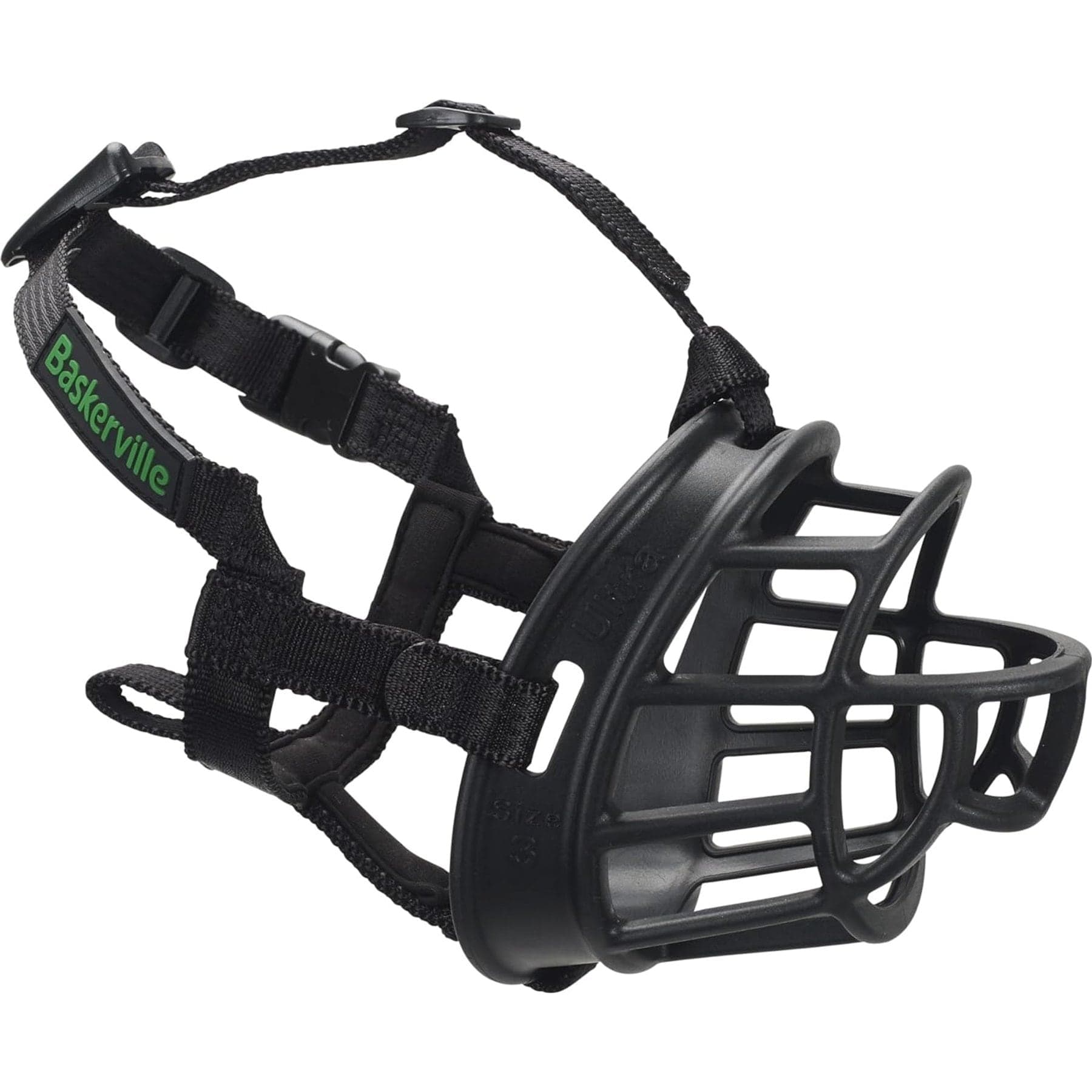
Rubber basket muzzle that lets a dog pant, drink, and take treats, with padded straps and a heat-shapeable fit.
Webvet may earn a commission when you click through to Chewy, at no extra cost to you.
The Baskerville Ultra is the basket muzzle most owners should look at first. Company of Animals, which makes Baskerville, says all Baskerville muzzles are made from thermoplastic rubber (TPR). A retailer listing for the Ultra describes tough yet flexible TPR with nylon, padded face straps, and a collar loop that helps keep it in place.
The same listing says the basket design lets a dog pant, drink, and take treats, which is exactly what Cornell says a basket muzzle should allow. Chewy's listing adds a flexible fit for wider noses and a small opening so a dog can eat while wearing it, and notes it protects other pets and people from bites.
The Ultra can also be heat-shaped, like a mouthguard, to mould around the dog's snout, which helps when a snout falls between standard shapes. The Size 3 was listed at $16.99 on Chewy when we checked.
- Who it suits: most medium-snouted dogs for walks, vet visits, reactive-dog management, and muzzle training.
- Why it stands out: pant-friendly basket, padded straps, collar loop, and a custom fit through heat-shaping.
- The tradeoff: the detailed specs come from a retailer listing rather than the maker, and this link is for Size 3, so check the size chart and size up if your dog falls between sizes.
Baskerville Classic Basket Muzzle: best classic basket muzzle
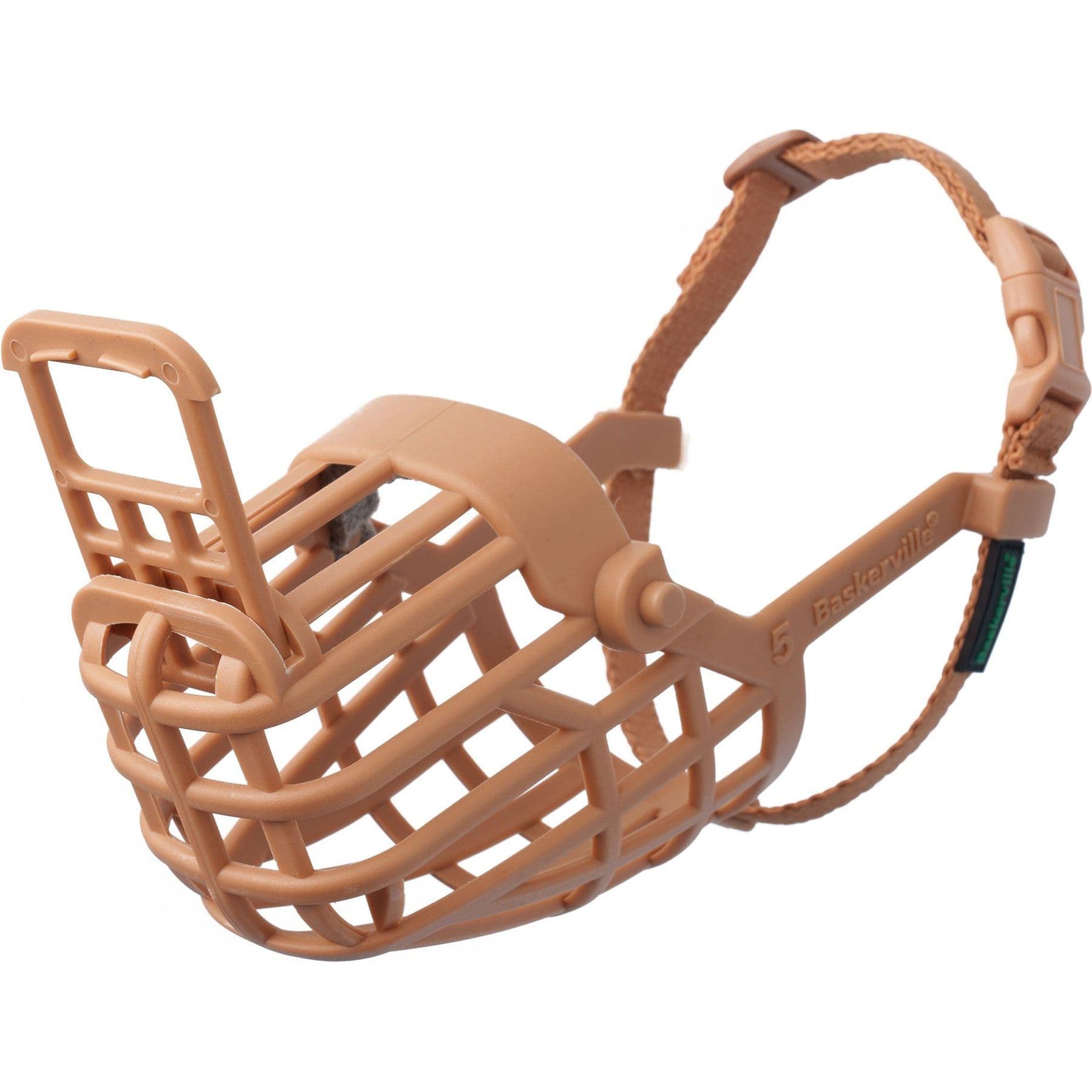
Tan rubber basket muzzle from Baskerville, shaped for dogs with narrower or longer noses.
Webvet may earn a commission when you click through to Chewy, at no extra cost to you.
The Baskerville Classic is the Baskerville basket for long, narrow snouts, in the same TPR material as the rest of the range. Company of Animals says the Classic is particularly well suited to dogs with narrower or longer noses.
Measure snout length and circumference before you order and match both numbers to the size chart for this model. Check the price for that size on Chewy before choosing between the Classic and the Ultra.
- Who it suits: long-snouted dogs whose noses are narrow enough that wider baskets leave gaps.
- Why it stands out: a basket shape built around long, narrow snouts, in tan.
- The tradeoff: not designed for broad or short snouts; flat-faced dogs need a different shape.
Baskerville INVISA Dog Basket Muzzle: best low-profile basket
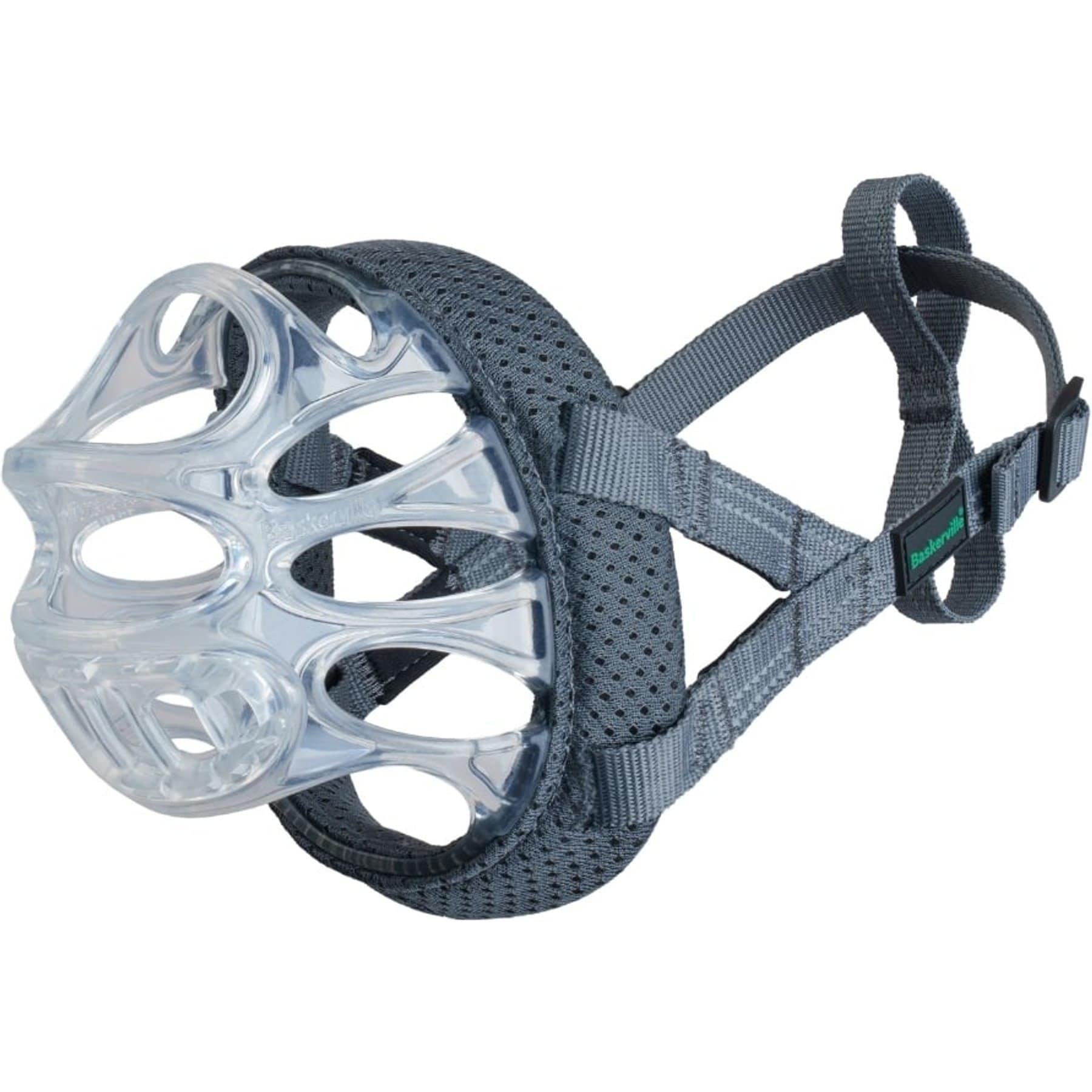
Low-profile grey basket muzzle that lets a dog pant, drink, and take treats while blocking bites and scavenging.
Webvet may earn a commission when you click through to Chewy, at no extra cost to you.
The grey INVISA is Baskerville's take on a muzzle that looks less intimidating in public. Company of Animals describes it as transparent, with 360-degree padding, and calls it the lightest muzzle in the range. Those are manufacturer claims rather than independent comfort data.
Chewy's listing says the INVISA is made from durable thermoplastic rubber and that the transparent basket is meant to reduce the stigma owners can feel when their dog wears a muzzle. The listing opens with a reminder to measure for the right fit. It was listed at $36 on Chewy when we checked.
- Who it suits: owners who muzzle daily and want a lighter, less conspicuous basket.
- Why it stands out: clear, padded all the way around, and the lightest Baskerville per its maker.
- The tradeoff: it was listed above the Ultra Size 3 when we checked, and the comfort claims are the maker's own.
Labra Short Snout Flexible Silicone Dog Muzzle: best for flat-faced breeds
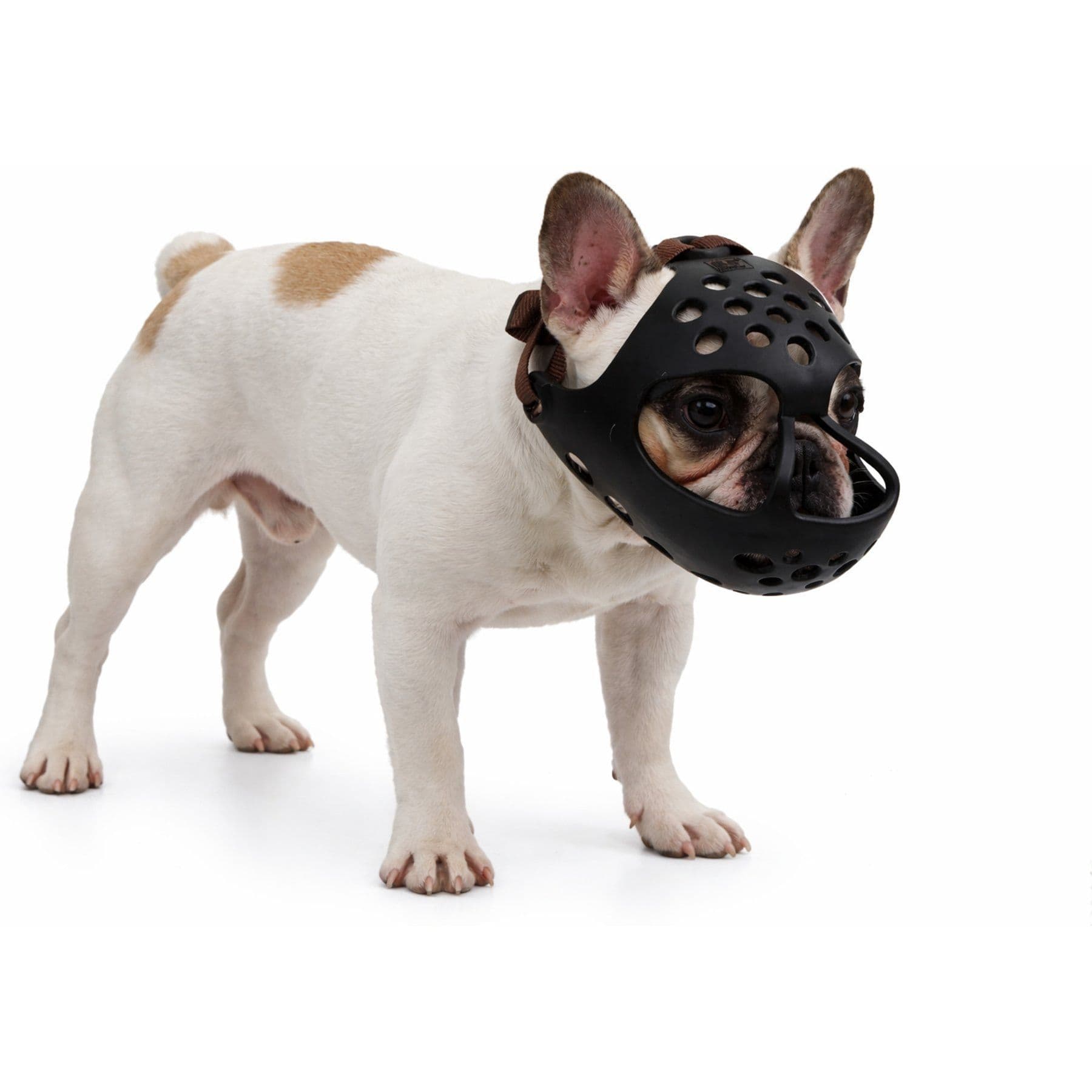
Flexible silicone muzzle shaped for short-nosed breeds that standard baskets cannot fit.
Webvet may earn a commission when you click through to Chewy, at no extra cost to you.
Flat-faced dogs have short, broad snouts, and short-snout designs are shaped around them. Chewy's listing says the Labra is designed for breeds like French bulldogs, pugs, shih tzus, boxers, and Boston terriers, and is made from soft silicone.
The listing credits a three-hole design with allowing airflow so the dog can breathe comfortably and drink water. It is sized by muzzle measurements, not body weight. The Medium was listed at $29.95 on Chewy when we checked; the listing description does not give the Medium's dimensions.
- Who it suits: brachycephalic dogs, including French bulldogs, pugs, boxers, and shih tzus, that need a muzzle for vet visits or short outings.
- Why it stands out: a shape built for short snouts, where a basket will not sit securely.
- The tradeoff: airflow claims come from the listing only, and flat-faced dogs overheat more easily, so keep sessions short and stay alert in warm weather.
Measure the snout before ordering rather than going by breed, since the Labra is sized by muzzle measurements.
Coastal Pet Products Best Fit Adjustable Mesh Dog Muzzle: best soft muzzle for short vet and grooming visits
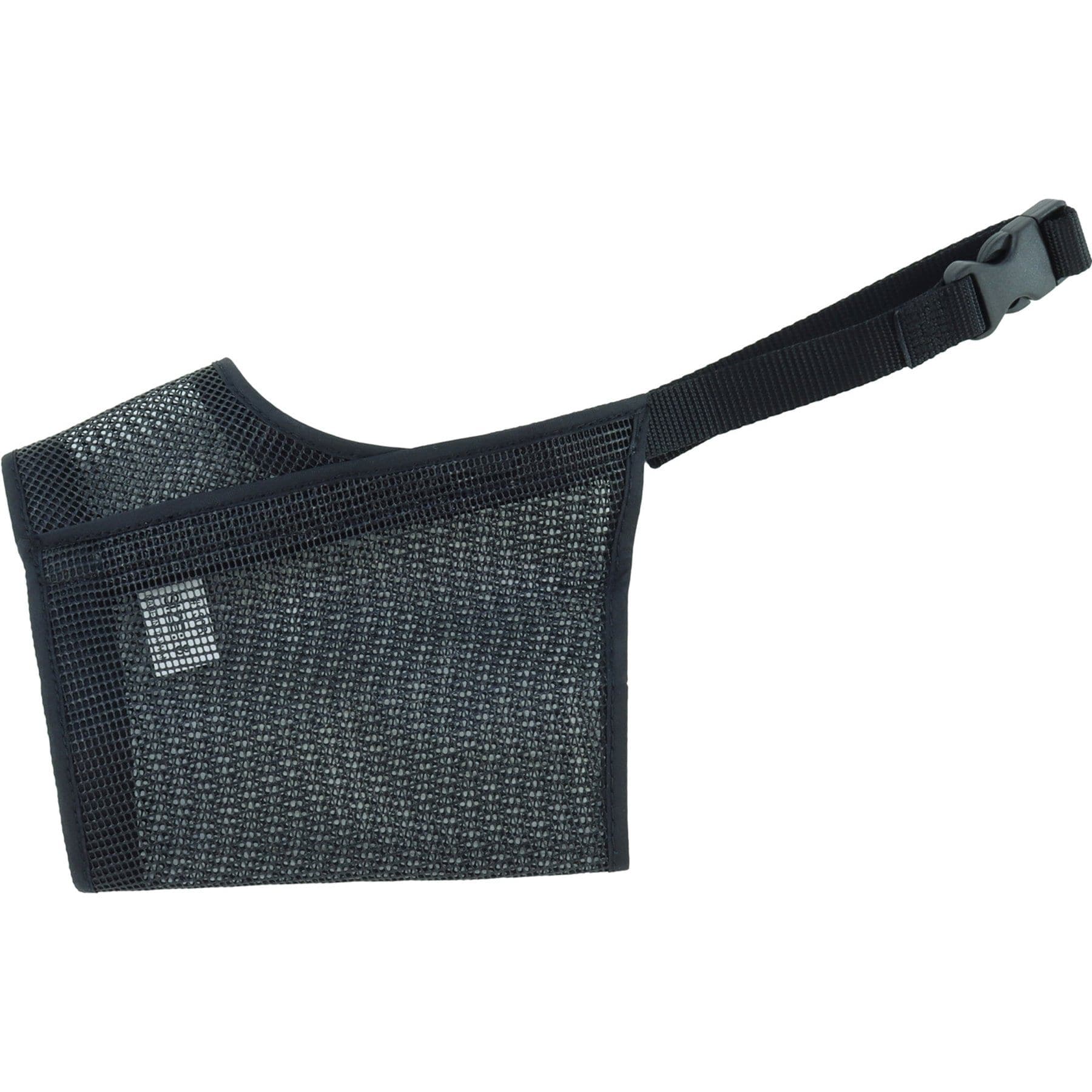
Soft mesh muzzle for short vet or grooming visits, not for walks, because it limits panting.
Webvet may earn a commission when you click through to Chewy, at no extra cost to you.
The Coastal Best Fit is a soft muzzle, and it is on this list for a narrow job. Coastal describes a mesh snout cup, a nylon head strap with a plastic buckle, and markets it as a solution for temporary muzzling. Chewy's listing says the mesh webbing maximizes ventilation and the strap adjusts for a custom fit.
Even with mesh, a soft muzzle holds the mouth closer to closed than a basket does. Cornell says soft muzzles limit panting and drinking and that dogs may still nip, so this belongs at nail trims, brief exams, and grooming, not on walks. The Size 3 was listed at $18.99 on Chewy when we checked.
- Who it suits: owners and groomers who need a quick, light muzzle for a few minutes of handling.
- Why it stands out: wide size range, from a 3 inch nose circumference (Size 1) to 13.5 inches (8XL), with Size 3 fitting a 5 inch circumference, which Coastal lists for dogs like a schnauzer or dachshund.
- The tradeoff: limits panting and drinking, so it is unsafe for exercise, heat, or long wear.
Keep it in the grooming kit or the car for the vet, and pair it with a basket muzzle for everything else.
BRONZEDOG Pitbull Breathable Metal Basket Dog Muzzle: best metal basket for large powerful dogs
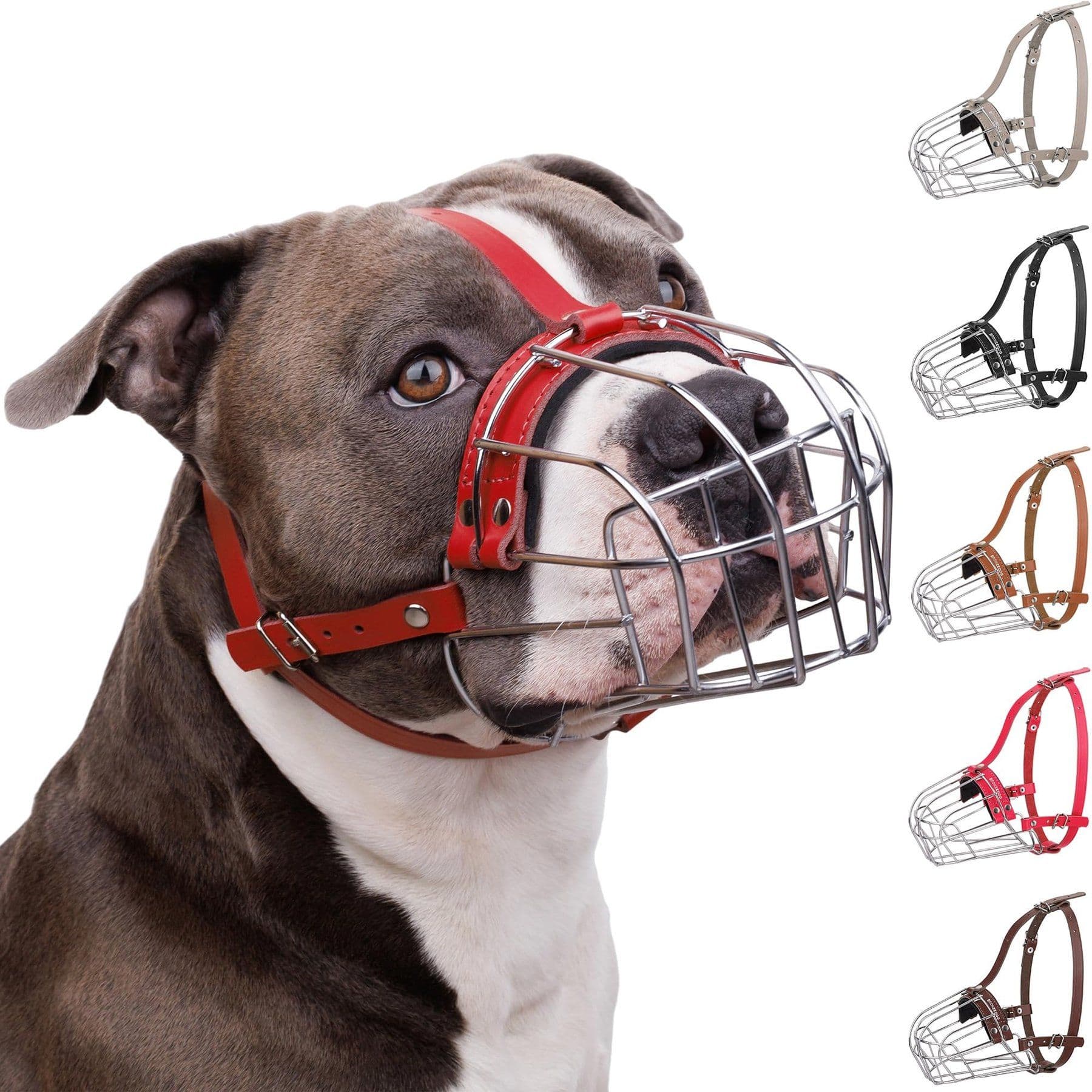
Metal mesh basket for large dogs that bite or chew, with room to pant and drink.
Webvet may earn a commission when you click through to Chewy, at no extra cost to you.
Chewy's listing pitches the BRONZEDOG at large dogs that bite or chew, and describes strong, breathable metal mesh that lets a dog pant, drink water, and take treats. Chewy's buyer guide lists the Large (in black) as leather and metal with a buckle closure.
For fit, a third-party retailer listing gives the Large's target as about a 12 inch snout girth and a 3.5 inch snout length, and its title names Amstaff and Staffordshire terrier types. Measure your dog against those numbers rather than going by breed. The Red was listed at $32.99 on Chewy when we checked.
- Who it suits: large dogs with a bite history or a habit of chewing their gear.
- Why it stands out: a metal mesh basket that keeps panting and drinking possible.
- The tradeoff: Penn Vet notes a wire basket muzzle can hurt people if the dog lunges at them, so supervision stays essential.
Chewy's listing also pitches it for dogs that bark excessively. Veterinary guidance from VCA is clear that a muzzle is not a barking tool, so buy it for bite and chewing risk only.
 Sponsored
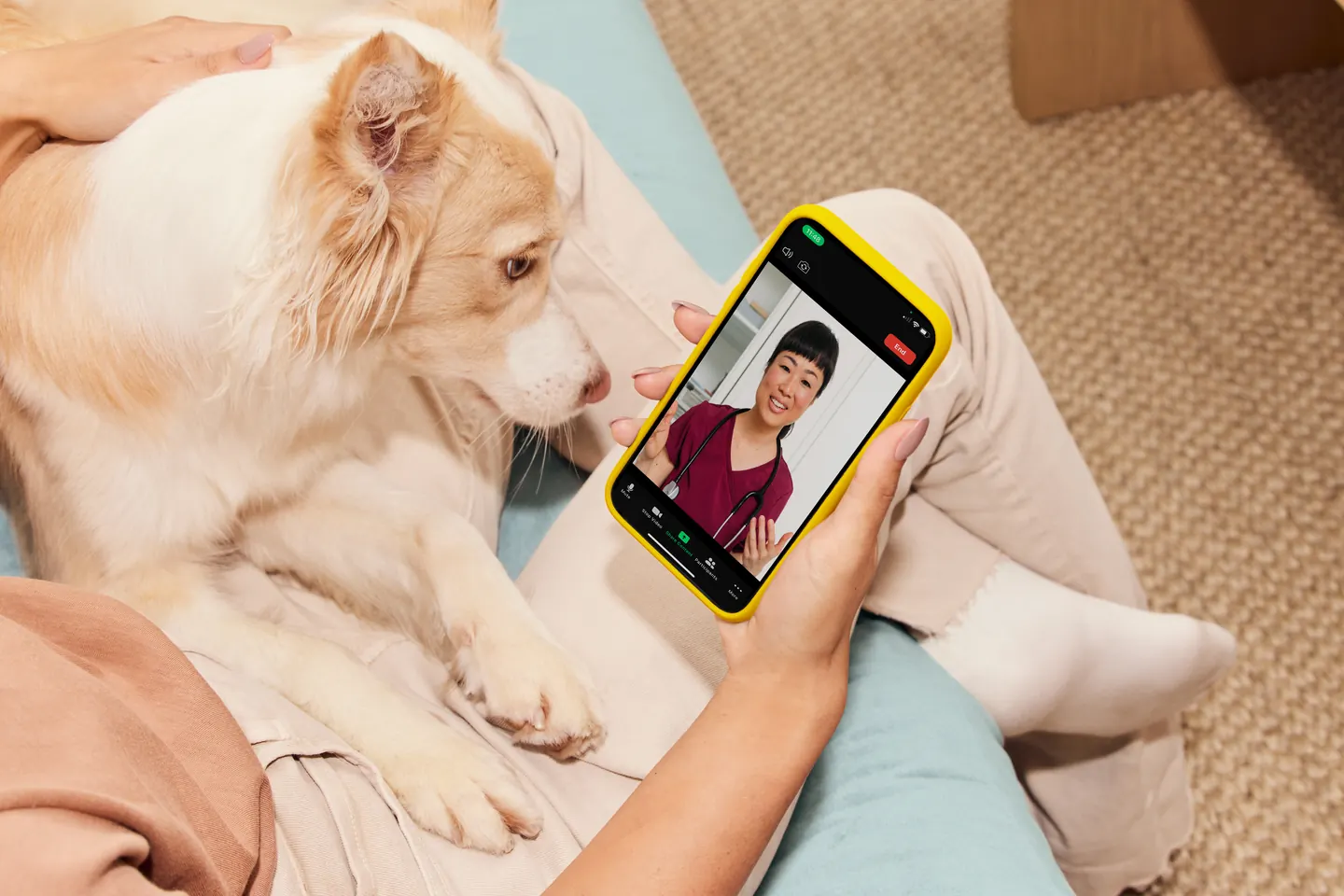
Vet care that's always there
Unlimited video calls and messaging with licensed vets for less than a typical vet visit. One membership covers up to five pets.
Use code Pets60
Plans start at $12/month · covers up to 5 pets
- Licensed vets in most states
- Rx for 150+ conditions
- 4.7 on Trustpilot
Basket muzzles versus soft muzzles: panting, drinking, and how long each can stay on
The difference between a basket muzzle and a soft muzzle is panting, and panting is how dogs cool down. VCA's guide to heat stroke in dogs says panting is a dog's primary way of regulating body temperature. Anything that stops panting stops cooling.
A basket muzzle is a cage of rubber, plastic, or wire with space for the jaw to open. Cornell rates basket muzzles best for extended use and says they provide the most protection against bites.
A soft muzzle, also called a sleeve or mesh muzzle, wraps snugly around the snout. VCA says a sleeve muzzle does not allow the dog to pant.
The BC SPCA muzzle care guide reaches the same conclusion: soft muzzles prevent panting and should only be used for short-term procedures like exams and grooming. VCA lists body temperatures above about 106 F as most associated with heat stroke, and organ failure around 107 to 109 F.
We found no veterinary source that sets a maximum number of minutes for a basket muzzle. Penn Vet's limit of a few minutes applies to designs that block panting, and Cornell describes soft muzzles as for temporary use. For a trained dog in a basket, the limit is set by comfort, heat, and supervision rather than a clock.
Start from the reason you are muzzling, then choose the type and the wear time it allows:
| Situation | Muzzle type | Wear time guidance | Why |
|---|---|---|---|
| Nail trim or quick exam | Soft muzzle or trained basket muzzle | Soft: a few minutes only. Basket: for the procedure | Soft muzzles limit panting and drinking (Cornell, Penn Vet) |
| Full vet visit with waiting and handling | Trained basket muzzle | For the visit, then off once the dog is distracted | Basket allows panting; Penn Vet advises removal when the dog is distracted |
| Grooming session | Soft muzzle for short steps, basket muzzle for longer sessions | Soft: minutes. Basket: session length with breaks | BC SPCA limits soft muzzles to short-term procedures |
| Scavenging on walks | Basket muzzle | Walk length once trained; Oregon Humane trains toward 30 minutes or longer | Fabric muzzles often fail at prevention; baskets allow panting |
| Reactive walks | Basket muzzle | Walk length, supervised | Prevents bites but not lunging injuries (Penn Vet) |
| Bite history with visitors | Basket muzzle plus a behavior plan | During exposure only, supervised | AVSAB calls the muzzle the primary tool for serious aggression |
| Injured dog needing transport | Any available muzzle or gauze | Only until help arrives | Cornell lists gauze as temporary emergency restraint |
| Hot weather or flat-faced dog | Basket muzzle or short-snout design with room to pant | As short as possible, watch breathing | Brachycephalic dogs are at greater heatstroke risk (VCA) |
| Barking | No muzzle | Not applicable | VCA says muzzles are not a tool to stop barking |
Panting sets the ceiling on wear time, so treat any wear time as a limit rather than a target. A basket muzzle that lets a dog pant, drink, and accept treats can stay on for a full walk once the dog is trained; a soft muzzle cannot.
What is the most comfortable dog muzzle?
The most comfortable dog muzzle is the one that fits and lets your dog pant. In practice that means a basket in the right size.
Company of Animals describes the Baskerville Ultra Dog Adjustable Basket Muzzle, Black, Size 3 as ergonomic and the Baskerville INVISA Dog Basket Muzzle, Grey, Size 4 as 360-degree padded, but those are maker claims, not independent comfort data. Fit and training matter more than any brand.
Signs a muzzle is comfortable enough for regular wear include:
- The dog can open its mouth fully, pant, and take a treat through the front.
- The nose tip does not touch the end of the basket.
- The strap is snug enough not to slip over the head, with one to two fingers fitting underneath.
- The dog walks, sniffs, and drinks normally instead of pawing at its face.
Sizing a dog muzzle so it is secure but lets the dog pant
Muzzle fit comes down to two measurements and a strap check. Company of Animals' guide to choosing a safe muzzle calls snout length the most important measurement.
- Measure snout length from the tip of the nose to the base of the nose, just below the eyes.
- Measure snout circumference around the widest part of the muzzle area, usually just below the eyes, with the mouth closed.
- Compare both numbers to the brand's size chart, not to a breed list.
- Size up if your dog falls between sizes.
- Check the fit on the dog: the nose tip should not touch the end, and the dog should be able to open fully, pant, drink, and take treats.
- Adjust the strap so it cannot slip over the head, with one to two fingers fitting underneath, per Cornell.

Size numbers mean different things from brand to brand, so always match your measurements to the chart for the exact model. The Baskerville Ultra Dog Adjustable Basket Muzzle, Black, Size 3 is one size in a range, and a UK retailer's chart for the Ultra gives these examples:
- Size 1: 5 cm snout length, 22 cm circumference.
- Size 4: 8 cm length, 32 cm circumference.
- Size 6: 10 cm length, 42 cm circumference.
The same retailer recommends sizing up if your dog falls between sizes, and says the Ultra can be heat-shaped to mould around an unusual snout.
Coastal's soft muzzles are sized by nose circumference. The Coastal Pet Products Best Fit Adjustable Mesh Dog Muzzle, Black, Size 3 fits a 5 inch circumference, with a schnauzer or dachshund as Coastal's typical Size 3 dog, and the line runs from 3 inches (Size 1) to 13.5 inches (8XL).
On the metal side, a third-party listing puts the BRONZEDOG Pitbull Breathable Metal Basket Dog Muzzle, Large, Red at about a 12 inch snout girth and a 3.5 inch snout length.
Muzzles for small dogs
Small dogs need the same room to pant as large ones, just in a smaller basket. Start from the smallest sizes in a range, such as the Ultra's Size 1 (5 cm long and 22 cm around on the retailer chart) or Coastal's Size 1 (3 inch circumference), and measure rather than guessing from the breed.
Keep a soft muzzle for brief handling such as a nail trim, not for walks.
Muzzles for large and extra large dogs
For large and extra large dogs, fit the basket to snout length, not head size, and measure rather than guessing from the breed. Whether it is rubber, leather, or wire, the muzzle should still let the dog open its mouth to pant and take a treat.
A sizing checklist before you order:
- Length and circumference measured twice, in inches or centimeters to match the chart.
- Chart checked for the exact model, since sizes differ between brands and even between models.
- Between sizes: go up one.
- Strap adjustable, with a collar loop or second strap if your dog is good at pawing it off.
- A plan to check fit again after a few days of training, and to re-measure a growing puppy.
If you use the Ultra's collar loop, the collar has to fit well too. Our guide on how to choose the right dog collar covers fit and materials.
Muzzles for flat-faced, small, and large powerful dogs
Flat-faced dogs need the most care with any muzzle. The University of Cambridge Department of Veterinary Medicine explains that dogs do not sweat and lower their temperature by panting, and that in an obstructed brachycephalic dog, the airway becomes inflamed and swollen during panting, causing more obstruction and overheating.
The University of Tennessee Veterinary Medical Center describes brachycephalic airway syndrome in breeds such as Old English and French bulldogs, pugs, and other short-nosed dogs. Signs include excessive panting, collapse, and heat exhaustion. A muzzle that blocks panting stacks a second problem on top of that one.

Flat-faced and brachycephalic dogs
A muzzle for a flat-faced dog has to sit securely and still leave room to breathe. For pugs, French bulldogs, Boston terriers, and other short-nosed breeds, look at shapes built for short noses:
- Short-snout silicone: the Labra Short Snout Flexible Silicone Dog Muzzle, Black, Medium is marketed for French bulldogs, pugs, shih tzus, boxers, and Boston terriers.
- Wide basket: Company of Animals says the Baskerville Wide Fit is designed for broader snouts, including brachycephalic breeds.
- Never a soft sleeve for exercise: on a flat-nosed dog, a panting-blocking muzzle is the riskiest choice of all.
Whatever you choose for a brachycephalic dog, keep sessions short, avoid warm weather, and watch the breathing more closely than you would with a long-nosed dog.
Small and little dogs
A small dog with a normal-length nose needs the smallest basket that clears the nose tip and still lets it pant. A small, short-nosed dog such as a pug, shih tzu, or Boston terrier needs a short-snout shape instead, with the same heat precautions as any flat-faced breed.
Large, powerful, and long-nosed dogs
For big dogs, snout shape matters as much as strength. Company of Animals says the Baskerville Classic Basket Muzzle, Tan (choose your dog's size) suits narrower or longer noses, so a long-nosed large dog may fit it better than a wider basket. For an average snout, start with a standard basket and measure to find the size.
For a strong dog that chews its gear, Chewy's listing pitches the BRONZEDOG Pitbull Breathable Metal Basket Dog Muzzle, Large, Red at large dogs that bite or chew, in strong metal mesh that still lets the dog pant and drink.
Before you buy for a large or powerful dog, run through these checks:
- Chewing: a dog that chews its gear may do better in heavy-duty metal mesh than in rubber.
- Snout length: long-nosed dogs need a basket deep enough that the nose tip clears the end.
- Supervision: plan to stay close, because the muzzle prevents bites but not lunging.
- Heat: big, heavily muscled dogs still cool by panting, so any muzzle for walks must leave room to pant.
In some places, breed-specific laws require certain breeds or mixes to be muzzled in public, as AVSAB notes, so check your local rules before you assume a muzzle is optional.
Penn Vet warns that a dog can hurt people by lunging and hitting them with a muzzle, particularly a wire basket muzzle, and that this can also happen with a solid plastic muzzle. With a large, powerful dog, a muzzle is one layer of safety, not the whole plan.
Muzzle training: making the muzzle a good thing
Muzzle training teaches a dog that the muzzle predicts good things, so it wears one calmly. Skipping it has a cost: Cornell's guide to basket muzzle training says a dog can develop a negative association with muzzles if it is not conditioned to wear them comfortably.
To muzzle train a dog, follow these steps from veterinary and shelter trainers:
- Let the dog investigate. Fear Free Happy Homes says to give dogs the choice to approach and investigate the muzzle at their own pace.
- Reward every look and sniff. Feed treats near the muzzle, then from inside it.
- Never push the nose in. The Oregon Humane Society says not to force your dog's nose into the muzzle.
- Build time gradually. Penn Vet advises increasing wear time slowly while feeding through the openings.
- Add a trick at 10 seconds. VCA suggests that once the dog tolerates the basket for 10 seconds, you ask for a fun trick it already knows.
- Take it on short walks. Oregon Humane works up to longer walks until the dog can wear the muzzle for 30 minutes or longer without pawing at it.
- Pair it with good outings. Fear Free recommends pairing the muzzle with happy outcomes, such as a favorite place, not only stressful events.

A basket works best for training because the dog can take treats through the front, which keeps rewards flowing. A soft muzzle limits panting and drinking, so it is a poor fit for training sessions.
Muzzle training for reactive and aggressive dogs
For a reactive dog, train well away from triggers: at home first, then on quiet walks, so the muzzle is familiar before you add other dogs or people. For a dog with aggression, use the same steps inside a professional behavior plan, as AVSAB and VCA both advise for serious aggression and fear.
When training stalls
Progress is rarely a straight line. Slow down and go back a step if you see any of these:
- Pawing at the muzzle: Oregon Humane treats calm wear without pawing as the goal, so pawing usually means the session ran too long.
- Turning away or refusing treats: Fear Free's advice to let the dog approach at its own pace applies at every stage, not just the first day.
- Only putting it on for stressful events: Fear Free warns against this pattern; mix in walks to a favorite place.
- Pulling it off the moment you unclip it: Penn Vet suggests removing the muzzle while the dog is distracted, so removal does not become the reward.
Starting early pays off in an emergency. VCA points out that an injured dog in pain may bite the person trying to help, and a dog that already wears its muzzle calmly is far easier to help safely.
Muzzle training for anxious dogs and dogs that eat everything
For an anxious dog, let the dog set the pace, as Fear Free advises, and let it walk away and come back. For a dog that eats everything, finish training before you need the muzzle on walks, so the first scavenging walk is not also the first muzzle walk.
Muzzles for scavenging, vet visits, and reactive dogs
Let the reason you are muzzling decide the type. A trained basket muzzle covers most situations, while a soft muzzle covers only short handling.

Scavenging and dogs that eat everything
Pica is one of the strongest cases for a muzzle. VCA's guide to pica in dogs defines it as persistent eating of non-food items and says some dogs may need to be trained to wear basket muzzles to avoid it. If medical causes have been ruled out, a vet may refer the dog to a veterinary behaviorist.
The stakes are real. VCA notes that a sharp foreign object can damage the intestine, leading to ulcers or perforations. The Muzzle Up Project lists eating rocks, socks, and other non-food items, which can be toxic or require expensive surgery, among the reasons dogs wear muzzles.
For scavenging, choose a basket, whether rubber, leather, or metal. An anti-scavenge muzzle is simply a basket the dog cannot eat through: muzzle maker Company of Animals says fabric muzzles frequently fail when the goal is actual prevention. A walking muzzle must also let the dog pant, and the listings for the Baskerville Ultra Dog Adjustable Basket Muzzle, Black, Size 3 and the BRONZEDOG Pitbull Breathable Metal Basket Dog Muzzle, Large, Red both say the dog can pant and drink.
Vet visits and grooming
A vet muzzle works best when the dog already knows it. Fear Free says arriving at the vet already wearing a trained muzzle reduces the stress of having an unfamiliar muzzle put on by someone the dog does not know. Cornell adds that a muzzled dog can be handled more gently with less restraint.
Penn Vet advises removing the muzzle when the dog is distracted, especially at vet visits, so the removal does not become part of a stressful moment. For grooming steps that take a few minutes, such as a nail trim, a soft mesh design such as the Coastal Pet Products Best Fit Adjustable Mesh Dog Muzzle, Black, Size 3 is enough.
Reactive dogs and biting
A properly fitted basket muzzle stops bites: Cornell says dogs in one cannot bite. A soft muzzle is less reliable, because Cornell notes dogs may still nip. No muzzle stops a dog from lunging, and Penn Vet warns of injuries from the muzzle itself.
With an aggressive dog, safety comes from training, not force: train first, use a basket, supervise closely, and work with a behavior professional.
Barking
A muzzle is the wrong purchase for barking. VCA says muzzles should not be used to keep a dog from opening its mouth or as a tool to stop barking. If barking is the problem, our guide to bark collars covers the options and their limits, and a trainer can address the cause.
Will a muzzle stop my dog from licking?
Not reliably, and it is not the right tool. We found no veterinary source recommending a muzzle to stop licking, and VCA says muzzles should not be used to keep a dog from opening its mouth. Licking a wound or itchy spot usually needs a different fix.
Obsessive licking can point to a skin problem, so start with a vet visit and our guide to hot spots on dogs. To keep a dog off a wound or surgical site, a dog cone is the usual tool instead.
Dog muzzle questions
Frequently Asked Questions
How do I measure my dog for a basket muzzle?
Use a soft tape. Measure snout length from the nose tip to just below the eyes, then measure circumference around the widest part of the snout. Compare both to the brand's chart and size up if your dog is between sizes, since a nose that touches the end of the basket means the muzzle is too short.
How long can a dog wear a muzzle?
It depends on the type. A muzzle that blocks panting should come off within a few minutes, per Penn Vet. A well-fitted basket lets the dog pant and drink, and the Oregon Humane Society trains dogs to wear one for 30 minutes or longer. We found no veterinary source that sets an all-day limit, so supervise every session.
Can a dog drink water with a muzzle on?
In a basket muzzle, yes: Cornell says dogs can drink water and pant normally in a properly fitted basket. A soft muzzle limits drinking as well as panting, which is one reason it suits only short procedures. Offer water on long walks and check that your dog can lap comfortably.
Does a muzzle mean a dog is aggressive?
No. Many dogs wear muzzles for scavenging, vet visits, or a new situation, and a muzzle on a friendly dog is a sensible precaution. The Muzzle Up Project puts it simply: muzzled dogs are not bad dogs. A muzzle tells you the owner is managing risk responsibly.
Is it legal to walk a dog without a muzzle?
It depends on where you live, so check your local ordinance. AVSAB notes that breed-specific legislation can require owners of certain breeds or mixes to muzzle their dogs in public. AVSAB also calls breed-specific legislation ineffective and says training, socialization, and education prevent bites better.

Editor
The Webvet Editorial Team is the in-house group of pet-care editors and writers behind Webvet, operated by Smart Pet Collective. The team researches, writes, and maintains Webvet's pet health, behavior, and medication content. Every article follows a defined editorial process: research from reputable veterinary and scientific sources, careful drafting, mandatory review of medical content by a credentialed veterinarian, and dated publication. Health and medication articles are medically reviewed by a licensed veterinary professional before they go live and are kept current over time.
Veterinarian · BVMS MRCVS
Dr. Pippa Elliott, BVMS, MRCVS, is a veterinarian with nearly 30 years of experience in companion animal practice. Dr. Elliott earned her Bachelor of Veterinary Medicine and Surgery from the University of Glasgow. She was also designated a Member of the Royal College of Veterinary Surgeons. Married with 2 grown-up kids, Dr. Elliott has a naughty Puggle named Poggle, 3 cats and a bearded dragon.
Related reading

Best Dog Anxiety Vests: ThunderShirt and Calming Wraps Compared

Best Dog Door for Sliding Glass Door Setups: Panel Inserts That Fit Without Cutting

Best Dog Doors: Wall, Door, and Microchip Options for Every Size of Dog
