Best Dog Doors: Wall, Door, and Microchip Options for Every Size of Dog
A dog door only works if it is sized right, sealed against weather, and secure against what else might come through it. Here is how to choose between door, wall, electronic, and microchip doors, and the Chewy picks we would install.

BVMS MRCVS

This article contains affiliate links. Webvet may earn a commission when you buy through them, at no extra cost to you.
A good dog door gives your dog a way in and out on their own schedule, but only if it fits, seals, and locks. The sizing rule comes first: measure your dog's shoulder height and set the top of the flap above it, with room to spare.
After sizing, choosing a dog door comes down to three decisions: where to mount it (an existing door or a wall), how well it holds back weather, and how well it keeps out animals and people you did not invite. Get those three right, then compare specific doors.
| Product | Best fit | Material or format | Key spec | Main tradeoff |
|---|---|---|---|---|
| PetSafe Extreme Weather Energy Efficient Pet Door, Large | Large dogs in hot or cold climates | Plastic frame, three vinyl flaps with insulated center flap | Flap 10 1/8 x 16 1/4 in, pets up to 100 lb | Fits only doors 1 5/8 to 2 1/4 in thick |
| PetSafe Freedom Aluminum Pet Door, Medium | Busy, multi-pet homes with mid-size dogs | Aluminum frame, vinyl flap with magnetic closure | Flap 8 1/4 x 12 1/4 in, pets up to 40 lb | Single flap, no listed lock beyond the closing panel |
| PetSafe NEVER RUST SmartDoor Connected Pet Door, White, Large | Owners who want app control and access logs | Electronic flap, collar key, WiFi app | Up to 5 collar keys, 4 C-cell batteries or 12V adaptor | Needs 2.4GHz WiFi for app features |
| PetSafe Electronic Pet Door, Large | Large dogs that need selective entry without WiFi | Electronic flap, SmartKey collar key | Flap 11 x 16 in, pets up to 100 lb, key range up to 3 ft | Dog must wear the collar key |
| SureFlap Microchip Small Dog & Cat Door, White | Small dogs and cats sharing one door | Microchip reader flap | Stores up to 32 pets, batteries last up to 12 months | Opening is 7.5 in wide, too small for dogs above small size |
| PetSafe Pet Door for Dogs & Cats, Medium | Budget installs in mild weather | Plastic frame, vinyl flap with magnetic strip | Flap 8 1/8 x 12 1/4 in, doors 3/8 to 2 in thick | Single flap, least weather protection |
| High Tech Pet Products DuraFlex Dog Door, X-Large | Giant breeds that hit the flap hard | Aluminum frame, wide-flange vinyl flap, rare earth magnets | Flap 12 1/2 x 25 in, dogs up to 130 lb | Largest cut-out of these picks |
 Sponsored
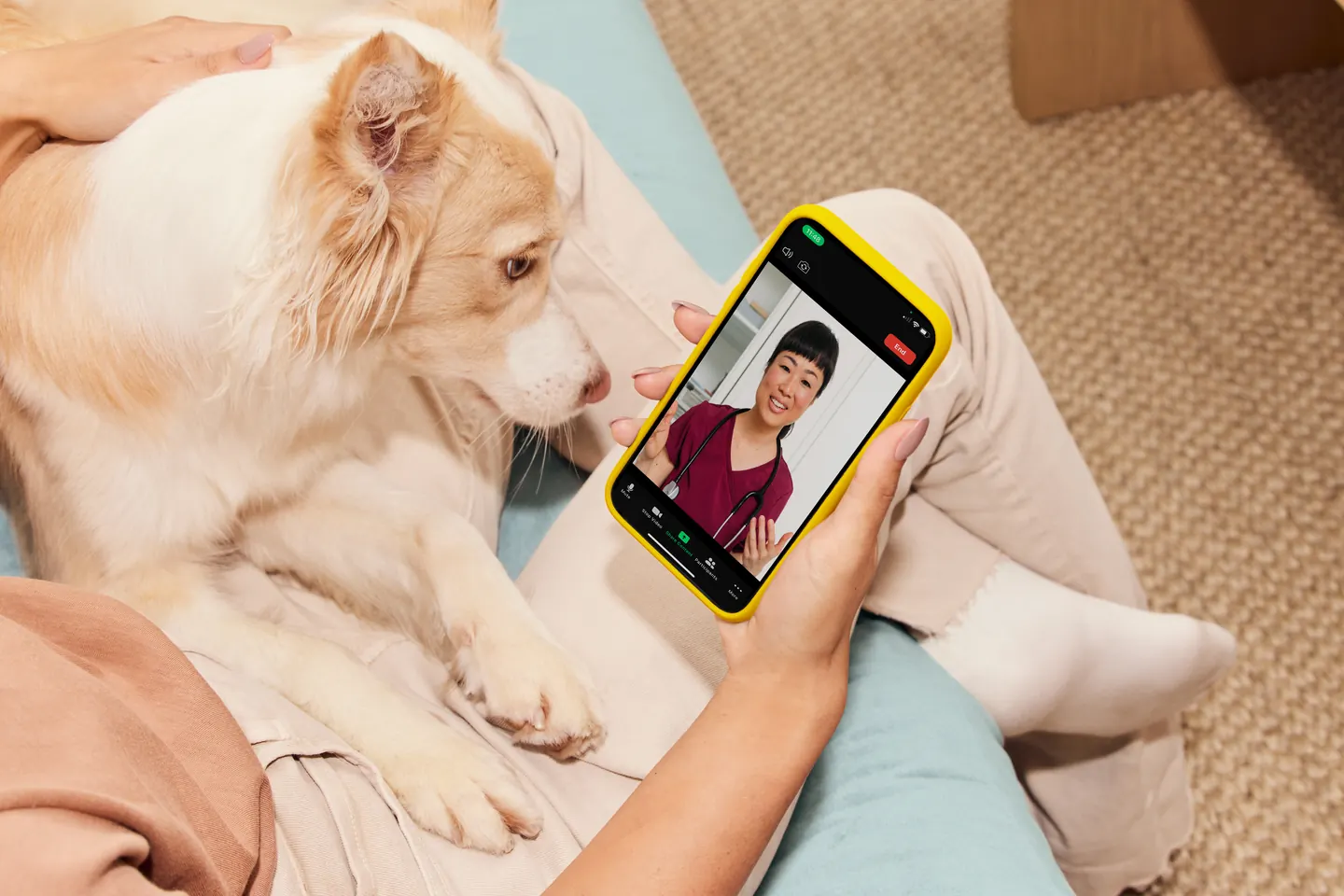
Want a vet's help with your dog's anxiety or behavior?
Talk to a licensed vet at Dutch over video, often the same day. They can recommend treatment and prescribe it when it's appropriate.
Use code Pets60
Plans start at $12/month · covers up to 5 pets
- Licensed vets in most states
- Rx for 150+ conditions
- 4.7 on Trustpilot
How to size a dog door and the mistakes that get doors returned
Sizing starts with a tape measure, not the product page. PetDoors.com says to measure your dog from the ground to the top of the shoulders, then choose a flap whose top sits at least 1 inch above the tallest point of the back. For more on how each door style works, see our guide to dog doors.

- 1Measure first: sizing by shoulder height with two inches of clearance gives your dog a margin over the 1-inch minimum.
- 2The door-mount versus wall-mount tradeoffs come down to cost and placement: a door cut is easier and cheaper, while a wall tunnel puts the opening where you want it.
- 3Match the flap to your climate: a single magnetic flap for mild weather, a multi-flap or energy-efficient flap for heat and cold.
- 4Lock the door at night with its closing panel or electronic lock to keep out wildlife.
Two inches is our margin, not a published standard. PetDoors.com sets 1 inch as the minimum and advises leaving room for a dog that may still grow, so treat 1 inch as the floor and two inches as the comfortable target.
Shoulder height is only one of the measurements that matter:
- Shoulder height: floor to the top of the shoulders, then add clearance for the flap top.
- Chest height and width: PetSafe Support sizes its plastic doors by chest height (from the back above the shoulder to the lowest point of the ribcage) and chest width, not by weight alone.
- Step-over height: PetDoors.com says the rise from the floor to the bottom of the opening should never exceed one third of your dog's height, and its install guide aims for about 3 to 5 inches.
- The largest dog: in a multi-dog home, PetSafe says to size for your biggest dog.
The common sizing mistakes follow from skipping one of those numbers:
- Sizing by weight. PetSafe sizes by chest height and width rather than weight alone, so a weight chart can point you to the wrong flap.
- Picking the smaller size when your dog falls between two. PetSafe tells owners to choose the larger size for its plastic doors, though its SmartDoor guide says to pick the size that best fits your dog's height.
- Going far too big. The PetSmart Learning Center warns against a door so large that other animals or people can crawl through.
- Mounting it too high. A step-over above one third of your dog's height breaks PetDoors.com's rule.
Once you have your dog's numbers, narrow the field by door type: match the type to your dog's size and your climate, and check how it closes.
| Door type | Dog size it suits (after measuring shoulder height) | Climate fit | How it closes |
|---|---|---|---|
| Single-flap plastic door | Small to medium; PetSafe classic Medium flap is 8 1/8 x 12 1/4 in | Mild weather; one vinyl flap with a magnetic strip | Snap-on closing panel |
| Aluminum frame single flap | Small through extra large; PetSafe Freedom sizes run up to 220 lb | Mild weather; single magnetic vinyl flap | Slide-in closing panel |
| Three-flap insulated door | Large dogs up to 100 lb (PetSafe Extreme Weather) | Hot and cold; center insulated flap | Snap-on closing panel, second panel sold separately |
| Rare earth magnet sealed flap | Giant dogs up to 130 lb (DuraFlex X-Large) | Drafty, exposed doors; felt-on-neoprene seal | Heavy duty security panel |
| Collar-key electronic door | Large dogs up to 100 lb (PetSafe Electronic) | No insulation rating listed | Auto-lock between uses |
| Microchip door | Small dogs and large cats (SureFlap) | No insulation rating listed | Curfew, manual lock, in-only modes |
| Wall tunnel install | Any size, set by the door chosen | Depends on the flap used | Closing panel of the chosen door |
What can I use instead of a doggie door?
If a dog door is not practical, PetSmart suggests dog gates and fences that let your dog reach a patio, garden, or dog run on your terms. A gate across a doorway gives controlled access while you are home; our roundup of the best dog gates covers indoor and outdoor options.
What is the disadvantage of a doggie door?
PetSmart names two main drawbacks. An unsecured door may let unwanted animals or intruders into the home, and a door that is not properly insulated can raise your heating and cooling costs. Both are manageable with the right size, a sealed flap, and a lock used every night.
Our picks: the best dog doors
These picks run from a microchip door for small dogs to an extra-large flap rated for dogs up to 130 pounds. For a short-legged dog, also check the step-over height so the bottom rail does not stop them. An interior door follows the same sizing rules without the weather questions.
A dog door suits a dog home alone for part of the day with a safe yard outside. If you rent and cannot cut into a door, look at no-cut panel inserts that seat in a sliding door track instead. A dog door is no substitute for a secure yard fence; see our guide to an invisible fence for dogs.
PetSafe Extreme Weather Energy Efficient Pet Door, Large: best insulated door-mount
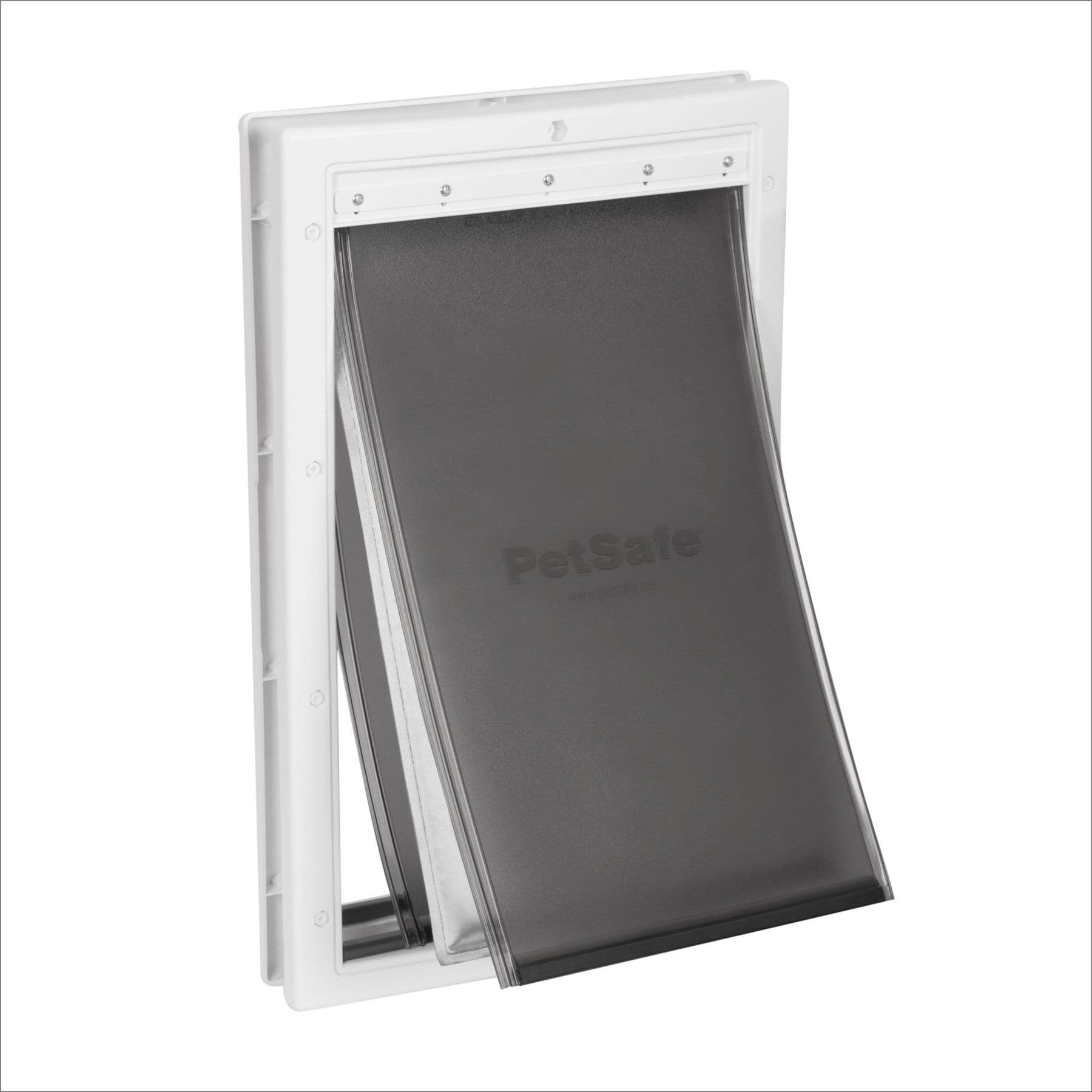
Three-flap insulated door with a closing panel for large dogs in hot or cold climates.
Webvet may earn a commission when you click through to Chewy, at no extra cost to you.
This large PetSafe dog door uses three flaps, including a center insulated flap, and PetSafe rates it 3.5 times more efficient than single-flap doors (a manufacturer claim we could not verify independently). The flap opening is 10 1/8 by 16 1/4 inches for pets up to 100 pounds.
- Who it suits: large dogs in homes that see freezing winters or triple-digit summers.
- Fit: standard paneled, wood, metal, and PVC doors 1 5/8 to 2 1/4 inches thick, per PetSafe.
- Tradeoff: the narrow thickness range rules out some doors, and a second closing panel for extra weather protection is sold separately. Chewy listed it at $119.95 in October 2026.
PetSafe Freedom Aluminum Pet Door, Medium: best heavy-use aluminum door
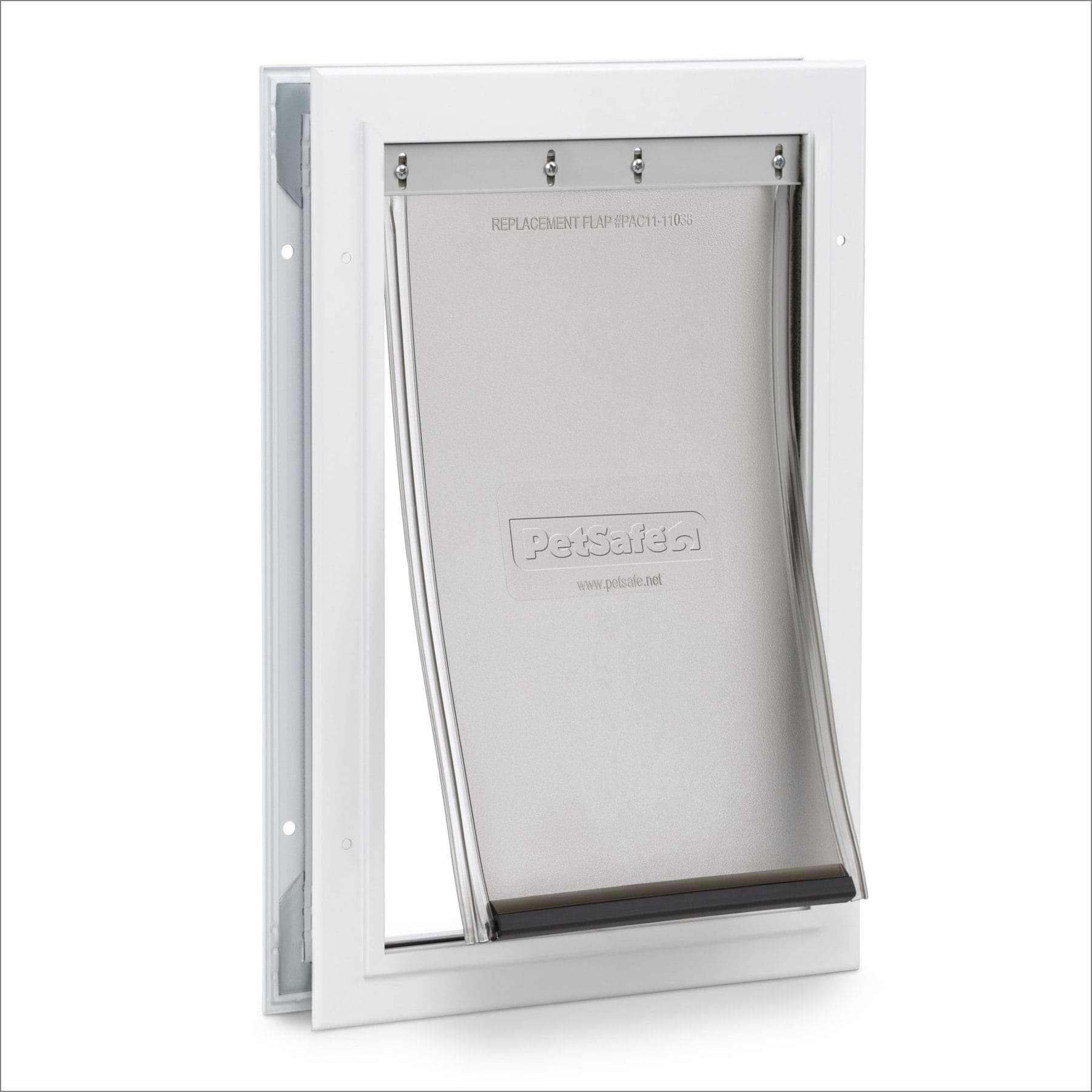
Solid aluminum frame and soft magnetic flap built for dogs that dash in and out all day.
Webvet may earn a commission when you click through to Chewy, at no extra cost to you.
The Freedom Aluminum door pairs a solid aluminum frame with a soft vinyl flap and magnetic closure, which Chewy's listing aims at multi-pet homes and dogs that dash in and out. The Medium has an 8 1/4 by 12 1/4 inch flap for pets up to 40 pounds and fits interior and exterior doors 3/8 to 2 inches thick.
- Who it suits: active mid-size dogs and multi-pet households where dogs dash in and out all day.
- Sizes: PetSafe lists Small up to 15 pounds, Medium up to 40, Large up to 100, and Extra Large up to 220.
- Tradeoff: one flap and a slide-in closing panel; PetSafe's page does not list a separate lock. Chewy listed the Medium at $64.99 in October 2026.
PetSafe NEVER RUST SmartDoor Connected Pet Door, Large: best app-controlled smart door
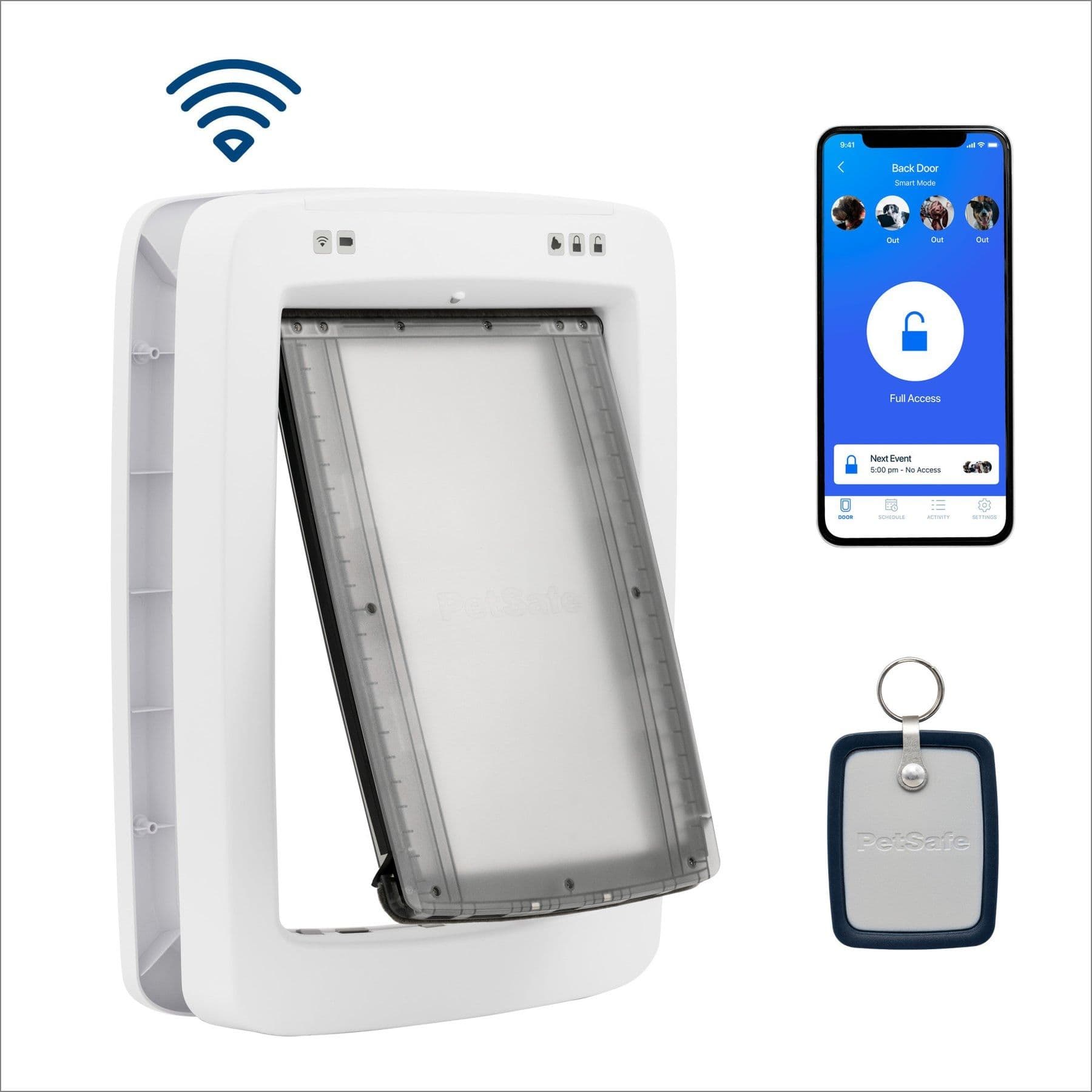
App-controlled smart door that unlocks for the collar key and locks from your phone.
Webvet may earn a commission when you click through to Chewy, at no extra cost to you.
This smart dog door unlocks for a programmed collar key and connects to the My PetSafe app, which can lock or unlock the flap remotely and send access-history notifications. PetDoors.com lists the Medium and Large as accepting collar keys, with one included and up to five programmable.
- Who it suits: owners who want to set schedules or check who went out while they are away, instead of coming home to a dog waiting at the door.
- Power: 4 C-cell batteries or an optional 12V adaptor.
- Tradeoff: app features need 2.4GHz WiFi, and microchip reading is listed for the Medium only. Chewy listed the Large at $314.99 in October 2026.
PetSafe Electronic Pet Door, Large: best collar-key electronic door
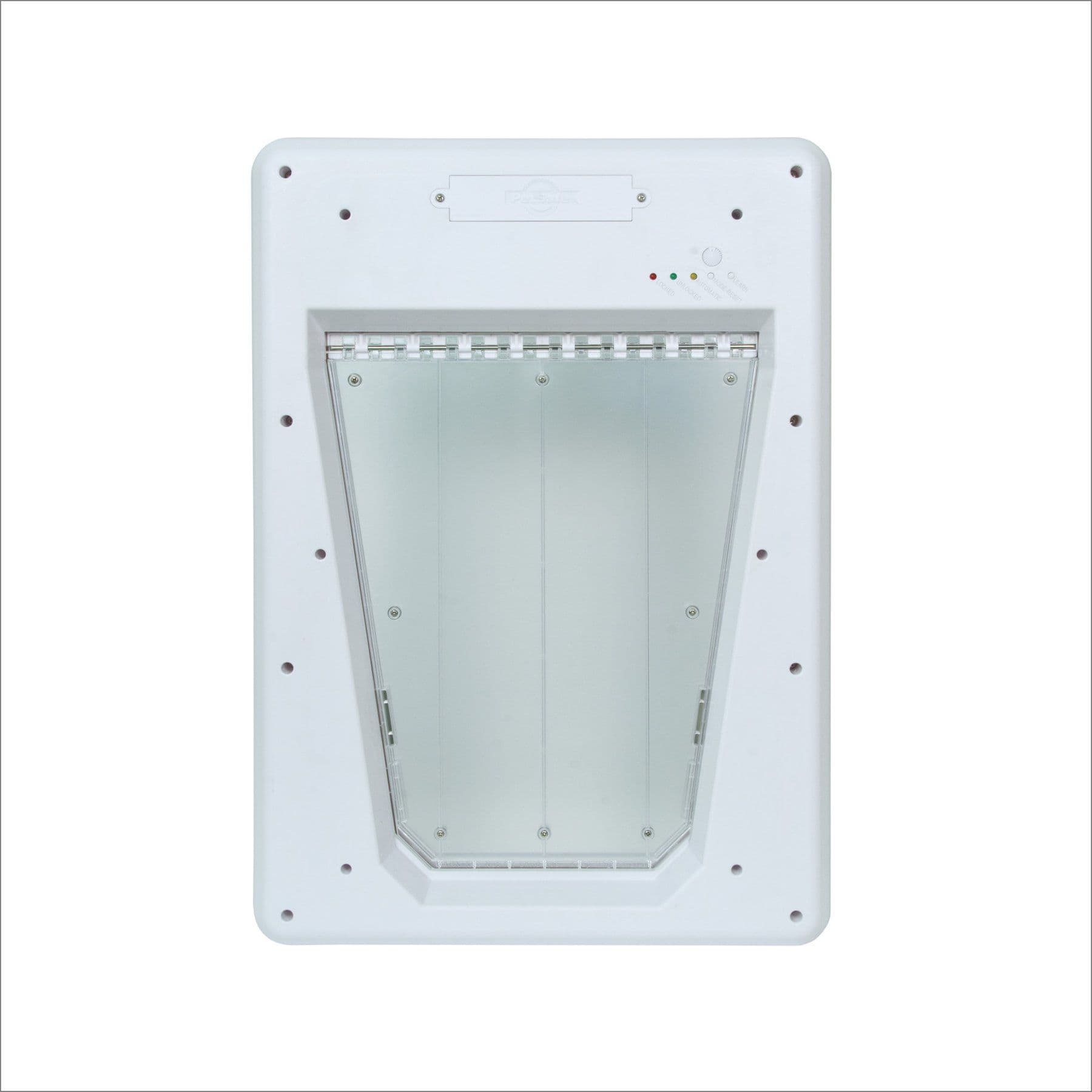
Radio-frequency SmartKey door for large dogs with selective entry and auto-locking, no WiFi needed.
Webvet may earn a commission when you click through to Chewy, at no extra cost to you.
The PetSafe Electronic door reads a SmartKey on your dog's collar using radio-frequency technology and unlocks the battery-powered flap when it senses the key. PetSafe Canada lists an 11 by 16 inch flap for pets up to 100 pounds.
- Who it suits: large dogs in homes where neighborhood animals have learned to use the flap.
- Controls: programmable selective entry, exit, and auto-locking, with a key range adjustable up to 3 feet.
- Tradeoff: runs on 4 D-cell batteries, and the dog must wear the key. Chewy listed it at $174.99 in October 2026.
SureFlap Microchip Small Dog & Cat Door: best microchip door for small dogs
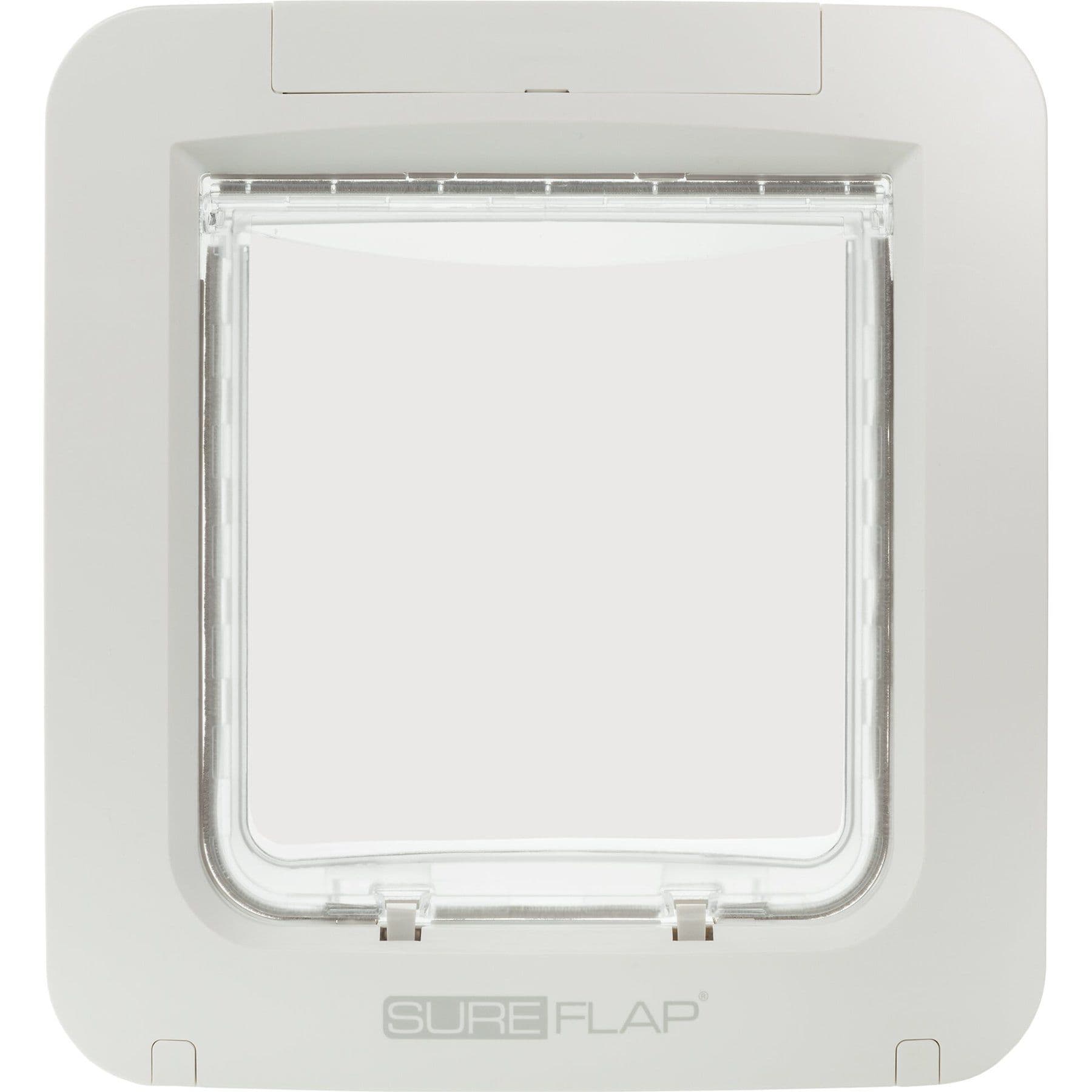
Microchip-reading door for small dogs and cats that stores up to 32 pets and needs no collar.
Webvet may earn a commission when you click through to Chewy, at no extra cost to you.
The SureFlap reads your pet's existing microchip, so a small dog does not need to wear anything. Sure Petcare says it stores up to 32 pets, runs on four C batteries for up to 12 months, and includes one RFID collar tag for an unchipped pet.
- Who it suits: small dogs that share a door with cats; see our best cat doors roundup for cat-first options.
- Modes: curfew, manual lock, in-only, and selective entry.
- Tradeoff: the smallest passable opening is 7.5 inches wide by 6 11/16 inches high. Chewy listed it at $278.25 in October 2026.
PetSafe Pet Door for Dogs & Cats, Medium: best budget door
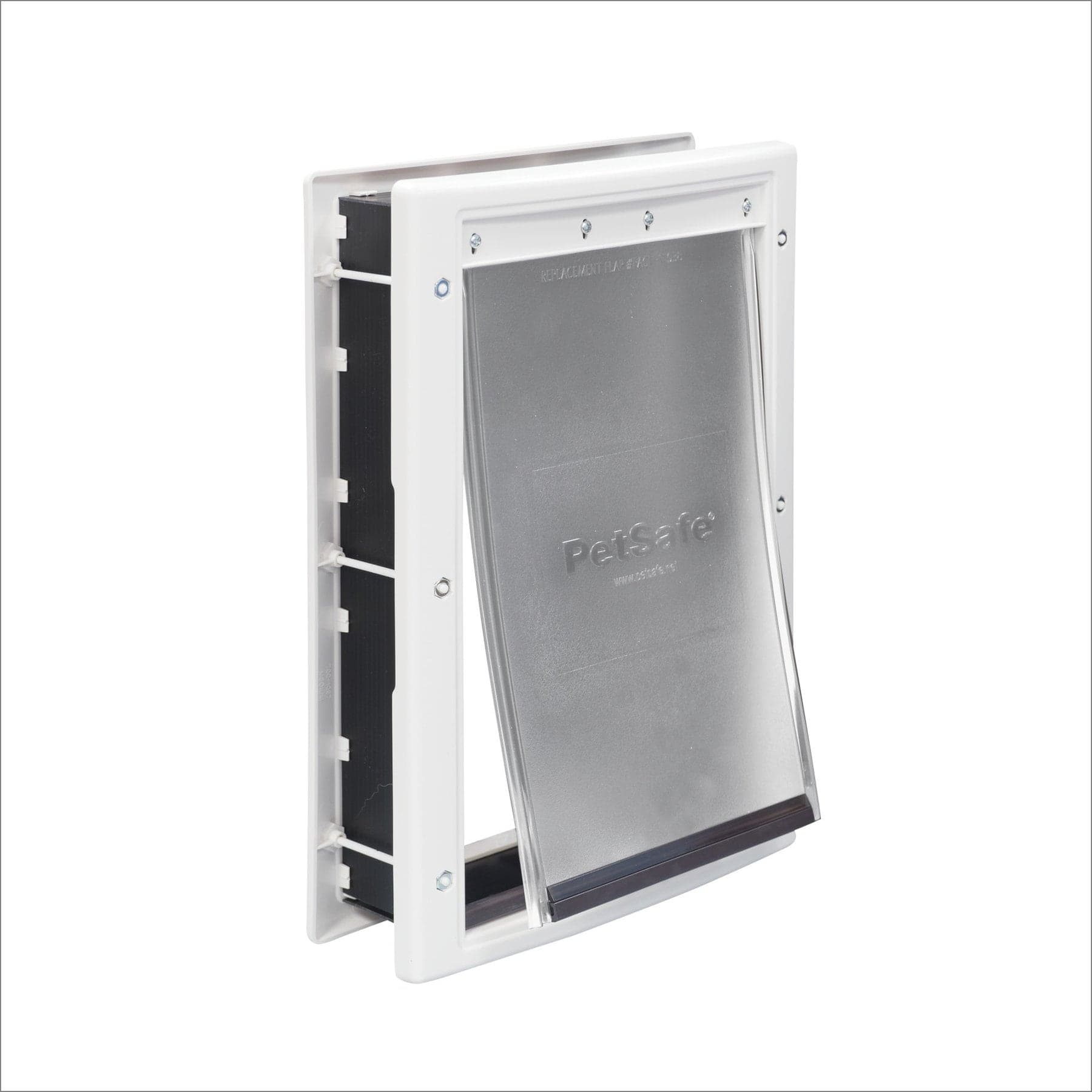
Budget plastic flap door with a magnetic strip and snap-on closing panel for medium dogs.
Webvet may earn a commission when you click through to Chewy, at no extra cost to you.
This is the classic plastic flap door: a flexible vinyl flap with a magnetic strip and a snap-on closing panel. Chewy's listing says it installs in interior or exterior wood, PVC, metal, and paneled doors, and PetDoors.com lists the Medium flap at 8 1/8 by 12 1/4 inches for doors 3/8 to 2 inches thick.
- Who it suits: first-time buyers, mild climates, and interior doors.
- Tradeoff: a single flap gives the least weather protection of these picks. Chewy listed it at $36.79 in October 2026.
High Tech Pet Products DuraFlex Dog Door, X-Large: best for giant breeds
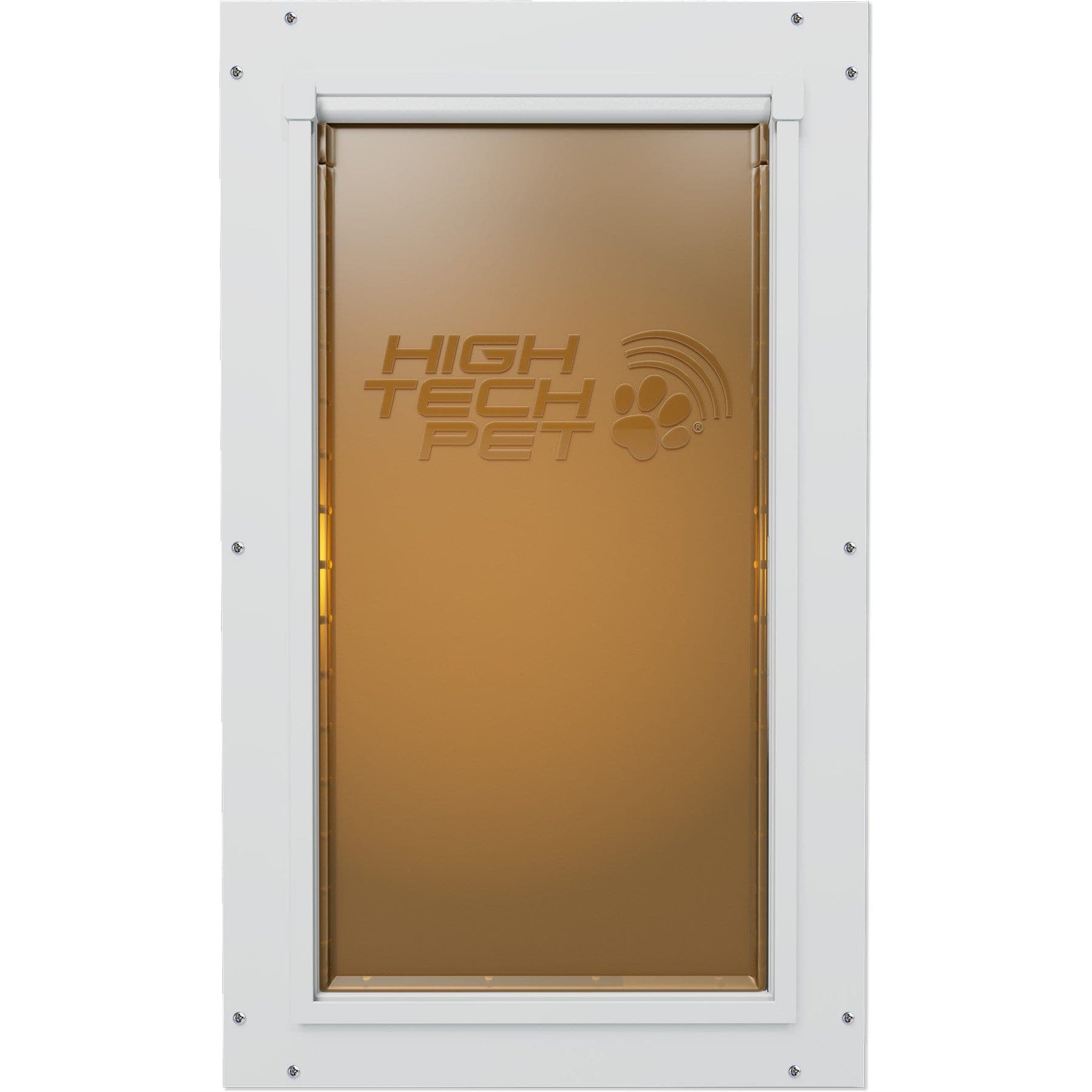
Extra-large rare earth magnet flap and aluminum frame for giant breeds up to 130 pounds.
Webvet may earn a commission when you click through to Chewy, at no extra cost to you.
The DuraFlex X-Large has a 12 1/2 by 25 inch flap rated for dogs up to 130 pounds, set in a high strength aluminum frame. High Tech Pet Products embeds rare earth magnets along a wide-flange, high density vinyl flap and seals it with a felt-on-neoprene system.
- Who it suits: big dogs up to 130 pounds that hit the flap hard. If your dog is heavier or taller, measure shoulder height against the 25 inch flap before ordering.
- Security: ships with a heavy duty security panel for when the door is not in use.
- Tradeoff: the largest cut-out on this list. Chewy listed it at $239.99 in October 2026.
 Sponsored
Vet care that's always there
Unlimited video calls and messaging with licensed vets for less than a typical vet visit. One membership covers up to five pets.
Use code Pets60
Plans start at $12/month · covers up to 5 pets
- Licensed vets in most states
- Rx for 150+ conditions
- 4.7 on Trustpilot
Door-mount versus wall-mount dog doors
A door-mount dog door is cut into an existing exterior door. A wall-mount door uses a wall tunnel that passes through the framing between inside and outside. PetSmart says door-mount options are easier and less expensive to install, while wall-mount doors give more flexibility in where the opening goes.

Here are the main door-mount versus wall-mount tradeoffs:
- Door-mount: cheaper and simpler, and many kits fit wood, metal, and PVC doors. PetDoors.com warns that cutting a flap into an existing door can wreck the door or frame.
- Doors with a pet door built in: replacing a back door, French door, or storm door with one that already has a pet door avoids cutting the door you have.
- Wall-mount: a wall install keeps your exterior door intact and is easier to patch if you remove it later. PetSafe sells a wall-entry door for siding, stucco, and brick walls.
- Professional help: PetDoors.com recommends hiring a professional for trickier jobs such as wall installs.
Which is better for a dog door, installed in the wall or a door?
A door install is better if you want the easier, cheaper job and your door suits a cut-out. A wall install is better if the best spot is not a door or you want to keep your exterior door uncut. Before cutting, PetDoors.com says to check the wall for electrical, studs, and plumbing.
Where to place a dog door?
Place the dog door where your dog already goes out, ideally into a fenced area. Small or large, mark your dog's shoulder height on the wall or door, then set the opening so the step-over is about 3 to 5 inches and the flap top clears the back by at least 1 inch, per PetDoors.com.
For patio and sliding glass doors, including a renter's apartment balcony slider, a no-cut panel insert seats in the existing track, and we compare those in our best dog doors for sliding glass doors roundup.
Weather sealing: flaps, magnets, and insulated doors for hot and cold climates
Judge the flap first. PetSmart notes that a door that is not properly insulated may increase your heating and cooling costs, so the flap type matters more in a hard climate than in a mild one.
The flap designs to know:
- Single magnetic flap: a vinyl flap with a magnetic strip, fine for mild weather and interior doors.
- Double flap: two panels that trap a pocket of still air between them, which gives the insulating effect, per the High Tech Pet Armor Flex FAQ on PetDoors.com.
- Three-flap energy-efficient flap: the PetSafe Extreme Weather Energy Efficient Pet Door, Large adds a center insulated flap, and PetSafe markets it as sealed against single-digit to triple-digit temperatures.
- Rare earth magnet seal: the High Tech Pet Products DuraFlex Dog Door, X-Large uses rare earth magnets and felt on neoprene along a wide flange, aimed at a draft-free seal.

Judge any weather-focused door by the same checks: how many flap layers it has, how the flap seals, and whether it comes with a closing panel.
When a flap wears out, order the replacement listed for your door's exact model and size so the magnets and edges line up. Replace a flap once it curls, cracks, or leaves a visible gap, since the CDC notes mice can fit through a hole about 1/4 inch wide.
Electronic, microchip, and app-controlled dog doors
An electronic dog door stays locked until it recognizes your dog. All three doors here are automatic in that sense: the flap unlocks on its own for the recognized dog and stays locked for everything else. PetSmart explains that electronic pet doors use sensors that detect a special collar tag, and some read the dog's microchip instead. Our guide to electronic dog doors covers how each system works in more depth.
What the dog must wear depends on the type:
- Collar-key door: the flap unlocks when it senses a key on your dog's collar. The PetSafe Electronic Pet Door, Large uses a radio-frequency key with a range adjustable up to 3 feet and has an 11 by 16 inch flap for pets up to 100 pounds.
- Microchip door: a microchip reader recognizes the microchip already implanted in your dog, so nothing goes on the collar. The SureFlap Microchip Small Dog & Cat Door, White is designed for large cats and small dogs, with an opening 7.5 inches wide. The SmartDoor Connected lists microchip reading for its Medium only, which is also sized for small pets.
- Smart or app-controlled door: the PetSafe NEVER RUST SmartDoor Connected Pet Door, White, Large works with a collar key and adds remote locking and unlocking from your phone, plus access notifications over 2.4GHz WiFi.
Battery power is the ongoing cost. The SureFlap runs on four C batteries for up to 12 months, the PetSafe Electronic on four D-cells, and the SmartDoor Connected on four C-cells or an optional 12V adaptor. A powered lock depends on its batteries, so replace them before they run flat.
Check the flap size against your dog's shoulder height before paying for the electronics.
Security and wildlife: keeping the dog door from becoming an open door
Dog door security starts with size. A door large enough for a person or a raccoon to crawl through is a door you must lock every night. The yard on the other side matters too; our dog friendly yard guide covers fencing and layout.
The CDC lists bats, skunks, raccoons, and foxes as the animals most often found with rabies in the U.S., which makes wildlife coming through a pet door a health problem as well as a nuisance.
How to make a doggy door safe?
Use this security checklist:
- Size the door to your largest dog, and no larger.
- Fit the closing panel or security panel every night and whenever you travel.
- Choose a collar-key or microchip door if wild or neighborhood animals already use the flap.
- Replace a worn flap that leaves visible gaps.
- Lock dog doors at night and bring pet food and water dishes in each evening, as the Peninsula Humane Society and SPCA advises.
Will snakes come through a doggie door?
They can. UF/IFAS says pet doors can serve as easy access points for snakes, and that advertised snake repellents do not work. The dependable fix is a door that is locked or closed at night, plus rodent control around the house so snakes have less reason to come close.
Training a dog to use a dog door
Many dogs balk at their first dog door. Hill's Pet Nutrition notes that a dog that has never used one will likely be hesitant, because the flap looks like part of a solid door.

These doggie door training tips work best in small steps:
- Detach the flap, or secure it in the open position, so your dog sees a clear gap.
- Lure your dog through with a treat.
- Lower the flap once your dog walks through calmly, and reward every pass.
- Keep sessions short; PetSafe suggests two spaced-out 10-minute sessions a day and never pushing your dog through.
- For an electronic door, put the collar key on your dog during training so the flap unlocks.
Sure Petcare says never to force a dog to use the door or scold them for not using it, and to prop the flap open again if your dog is still unsure. If your dog is distressed whenever you leave, read our guide to separation anxiety in dogs, since a dog door does not address that on its own.
Dog door questions
Frequently Asked Questions
Do mice come through doggie doors?
How do I measure my dog for a dog door?
Measure from the floor to the top of your dog's shoulder, then measure chest height and chest width. PetDoors.com sets the flap top at least 1 inch above the tallest point of the back; we suggest two inches for a growing or bouncy dog. Keep the step-over under one third of your dog's height.
Can a dog door go in a metal or fiberglass door?
Often, yes. Several PetSafe doors list metal doors among the doors they fit, and PetSafe sells a panel insert that names fiberglass. PetDoors.com notes that installs get more complex with metal, solid, and panel doors. Check the door thickness range on the listing before you buy.
Do electronic dog doors need the dog to wear something?
It depends on the type. Collar-key doors, such as the PetSafe Electronic and SmartDoor Connected, need your dog to wear a collar key. A microchip door like the SureFlap reads your dog's implanted microchip instead, and includes one RFID collar tag for a pet without a chip.
How much does a dog door cost to install?
PetDoors.com puts a professional install at roughly $200 to $300, with the door itself running about $50 to $400 depending on brand and quality. A DIY install costs nothing beyond the tools you own, though PetDoors.com recommends a professional for harder jobs such as wall doors.

Editor
The Webvet Editorial Team is the in-house group of pet-care editors and writers behind Webvet, operated by Smart Pet Collective. The team researches, writes, and maintains Webvet's pet health, behavior, and medication content. Every article follows a defined editorial process: research from reputable veterinary and scientific sources, careful drafting, mandatory review of medical content by a credentialed veterinarian, and dated publication. Health and medication articles are medically reviewed by a licensed veterinary professional before they go live and are kept current over time.
Veterinarian · BVMS MRCVS
Dr. Pippa Elliott, BVMS, MRCVS, is a veterinarian with nearly 30 years of experience in companion animal practice. Dr. Elliott earned her Bachelor of Veterinary Medicine and Surgery from the University of Glasgow. She was also designated a Member of the Royal College of Veterinary Surgeons. Married with 2 grown-up kids, Dr. Elliott has a naughty Puggle named Poggle, 3 cats and a bearded dragon.
Related reading

Best Muzzle for Dogs: Basket, Soft, and Training Picks Sized for Comfort

Best Dog Anxiety Vests: ThunderShirt and Calming Wraps Compared

Best Dog Door for Sliding Glass Door Setups: Panel Inserts That Fit Without Cutting
