Dog Doors: Types, Sizing and Home Safety Before You Install
Plan a dog door around the dog, building and outdoor destination. Compare installation types, measure the clear opening and consider weather, wildlife, security and other pets.

This article contains affiliate links. Webvet may earn a commission when you buy through them, at no extra cost to you.
A dog door can make a suitable outdoor area easier to reach, but the opening itself does not make the yard safe. Before comparing flaps or electronics, decide whether independent access is appropriate for your dog, the weather and every other pet in the house. Then match the door to the dog and the building.
- 1Start with a secure outdoor destination and a plan for supervising access.
- 2Compare the pet opening, installation cutout and outside frame separately.
- 3A locking flap or electronic reader does not replace home security or a physical garden barrier.
Is a dog door suitable for your home?
Look beyond the wall where the door will go. Can the dog reach a road, pool, unsafe plant, loose gate or neighboring animal? Can a visitor accidentally leave the yard open? If the destination is not secure, solve that problem before creating easier access.
A dog-door preinstallation checklist separates the dog dimensions from the frame cutout, checks wall construction and assesses the safety of the destination. Complete all four checks before ordering. A suitable flap size cannot compensate for an unsafe yard or a building surface that cannot support the intended installation.
Use a preinstallation check:
| Question | Proceed only when |
|---|---|
| Where does the dog go? | The destination is appropriate and physically secured |
| Who else can use the opening? | Cats, other dogs and visiting animals have been considered |
| Can access be stopped? | A responsible person can reliably close or lock the opening |
| Does the home support installation? | Permission, construction and weatherproofing needs are resolved |
Independent access may be inappropriate for a dog that digs, climbs fences, chases wildlife or becomes distressed outdoors. It may also conflict with a medical recovery plan. A caregiver opening the main door at suitable times can be the better arrangement.
Compare dog door types
For a conventional door-mounted flap, compare the PetSafe Freedom Aluminum Pet Door with the door’s material and available panel width. Its aluminum frame does not remove the need to check the exact cutout, pet opening and weather seal.
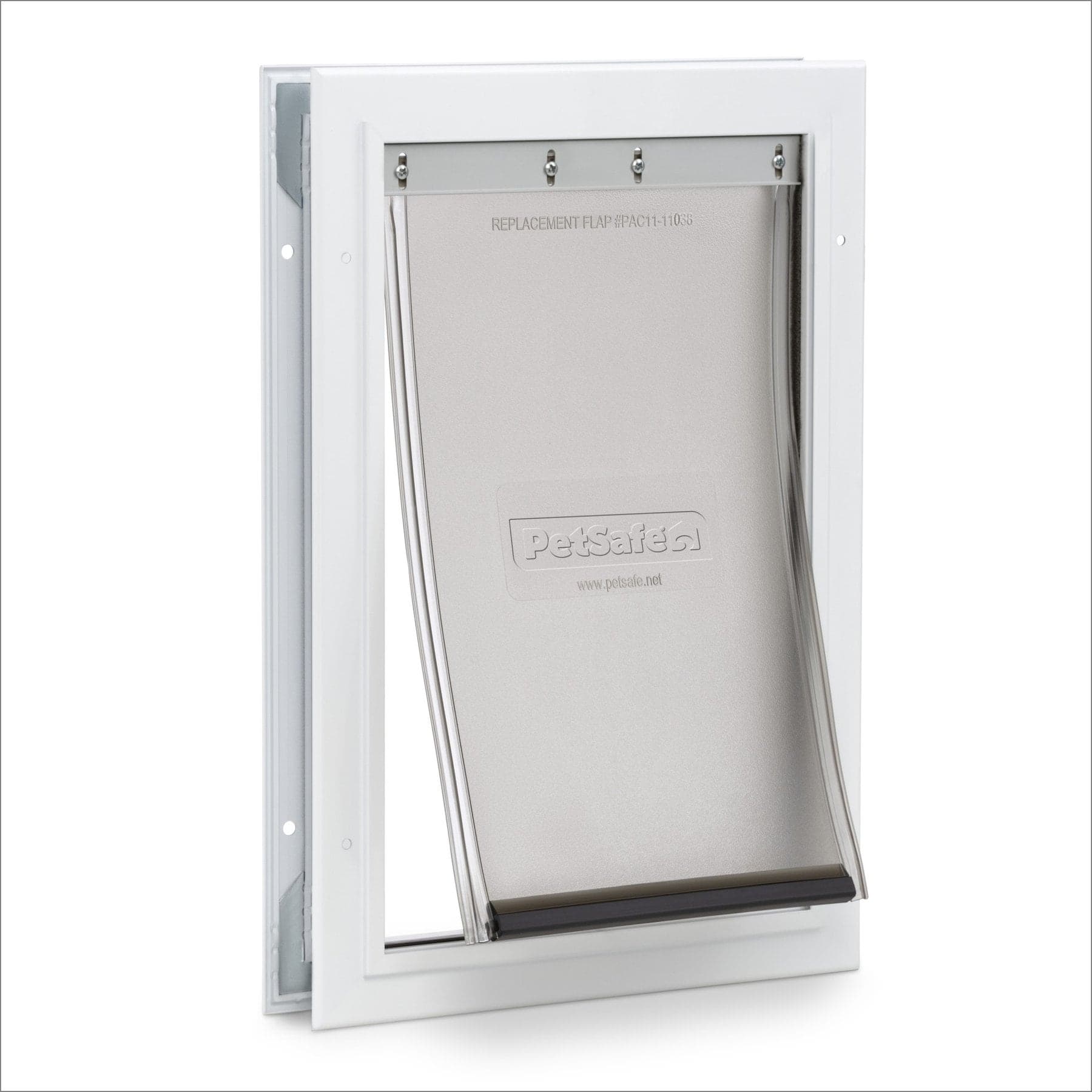
An aluminum door-mounted flap for an appropriate home opening; compare clear passage, cutout and frame sizes.
Webvet may earn a commission when you click through to Chewy, at no extra cost to you.
The installation route and access technology are separate decisions. A wall-mounted door may have a simple flap or electronic control, and a patio insert may contain either type. Do not let a smart feature distract from a poor physical fit.
| Type | Main advantage | Main question |
|---|---|---|
| Door-mounted flap | Uses an appropriate existing door | Can this door be modified and sealed correctly? |
| Wall-entry unit | Places access away from the main doorway | Can the wall be safely opened and weatherproofed? |
| Sliding-glass insert | Adds a panel to an appropriate patio track | What happens to the human opening and lock? |
| Electronic access | Adds model-specific identification or control | Does it govern entry, exit or both? |
| Screen-door opening | Can suit limited supervised access | What happens when the solid door is closed? |
PetSafe's current door range illustrates these installation differences. Compare exact models rather than treating all pet doors from one manufacturer as interchangeable. For specialized choices, see sliding-glass dog doors and electronic dog doors.
Measure your dog and the opening

Separate the flap, frame and cutout
The Medium PetSafe Freedom Aluminum model demonstrates three easily confused sizes. PetSafe’s chart lists an 8¼ × 12¼-inch flap opening, a 10¾ × 15⅝-inch outer frame and an 8⅞ × 13¾-inch cutout. The same “Medium” label describes all three, but they serve different jobs.
| Measurement for this Medium model | Use it to answer |
|---|---|
| Flap opening: 8¼ × 12¼ inches | Can the dog pass comfortably? |
| Outer frame: 10¾ × 15⅝ inches | Does the frame fit on a suitable flat section of the door? |
| Cutout: 8⅞ × 13¾ inches | Does the supplied full-size template fit the intended position? |
| Supported door thickness: ⅜–2 inches | Is this door construction within the product’s stated range? |
A flat panel only 10 inches wide is too narrow for the 10¾-inch frame even though the 8⅞-inch cutout width appears to fit. That rules out this placement. Do not cut first and expect trim or sealant to replace the missing mounting surface.
Treat the table as a shopping check. Use the delivered model’s template and installation instructions for actual cutting, after checking the door construction and the dog’s step-over height. A wall tunnel, patio insert or electronic unit requires its own measurements.
Measure the dog’s comfortable passage
A big dog door needs a clear opening that fits the individual dog and a building location with enough room for its cutout and frame. Do not select solely by a large-size label: the step-over, shoulder clearance and route outside still determine whether passage is comfortable.
Measure the dog's natural standing height and the width of the body at its broadest relevant point. Follow the chosen manufacturer's method, and check the actual clear opening rather than the outside frame size. A product's weight range is only a guide.
Three sets of numbers belong on your worksheet:
- Pet opening: The clear passage available after the flap and frame are installed.
- Cutout: The hole the installer must make in the door or wall.
- Frame dimensions: The overall space required on each face of the surface.
The PetSafe Wall Entry Dual Flap Pet Door is a wall-entry option to discuss with the installer. Match the tunnel and opening to the wall construction, and check the approach on both sides before committing to a cutout.
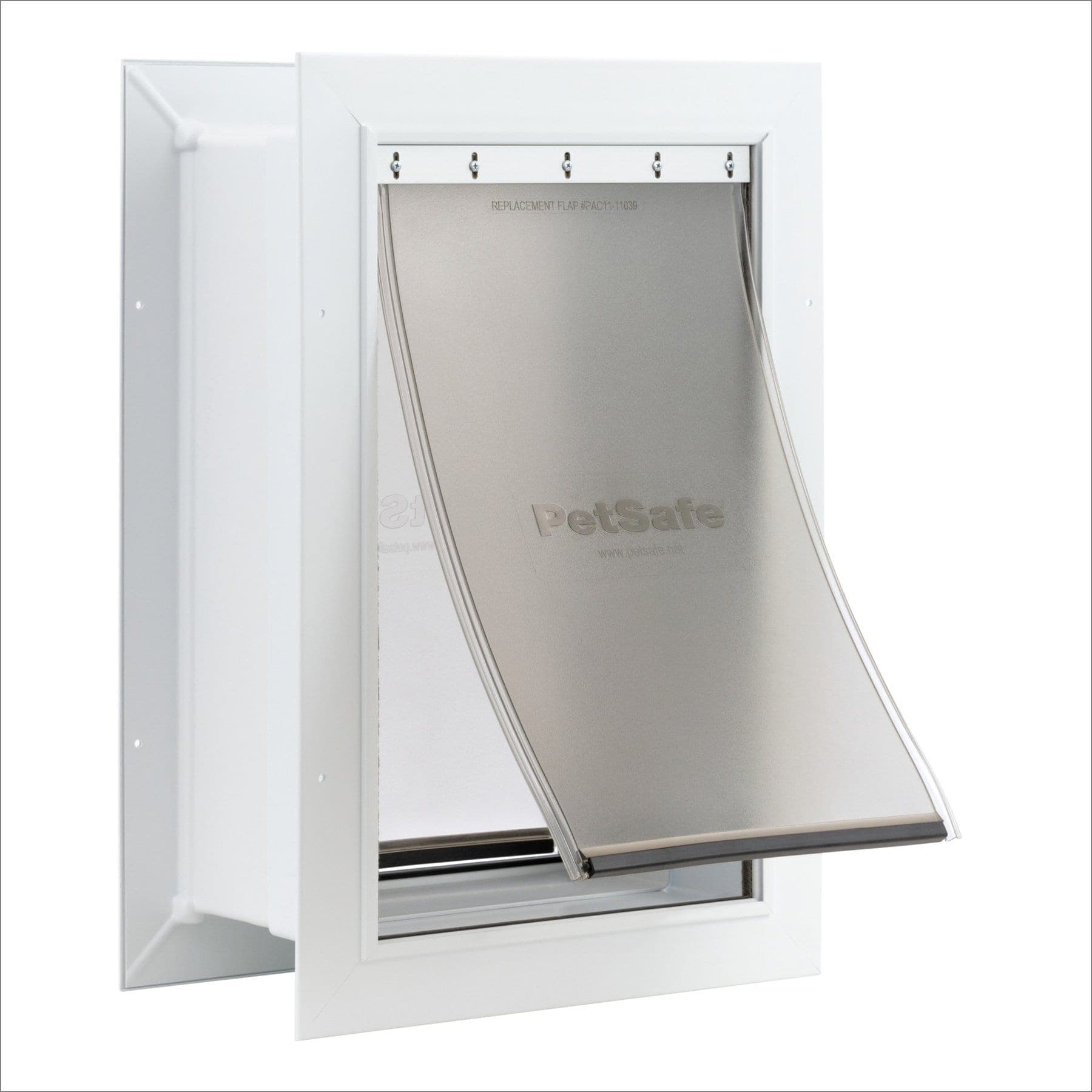
A wall-entry unit with two flaps and a closing panel; plan the tunnel, wall assessment and weather sealing.
Webvet may earn a commission when you click through to Chewy, at no extra cost to you.
Also check the step-over height. A large opening positioned too high may be awkward for a short-legged or older dog. For multiple dogs, fit the largest while keeping access comfortable for the smallest. Ask your veterinarian about movement difficulties rather than assuming a dog will become accustomed to an uncomfortable threshold.
Use a safe mock opening, such as a cardboard template held securely by a person, to assess passage before construction. Do not force the dog through or rely on a single hurried attempt. The goal is a natural movement pattern without scraping, twisting or jumping.
Door or wall: choose the installation route
- A door-mounted unit can be straightforward only when the door material and construction are suitable. Solid wood, metal skins, insulated panels and decorative panels create different installation requirements. Read the exact manual before marking a cutout.
- A wall-entry installation adds questions about wiring, plumbing, structural elements, weather barriers and the depth of the tunnel. Those are reasons to use an appropriately qualified installer, not to probe blindly with a saw. Do not modify a fire-rated or otherwise restricted assembly without the necessary advice and approval.
- A slider screen door with a dog door is a separate arrangement from a pet opening in the solid glass door. It permits passage only when the solid doorway is open and does not provide equivalent security or wildlife exclusion. Assess it as supervised screened access, not an independent exterior boundary.
- Glass requires a specialist. Do not attempt to cut an existing tempered-glass panel. A glazier can advise whether a replacement pane or a different solution is needed. A patio insert may avoid cutting glass, but its track fit, lock and weather seal still need assessment.
For an appropriate patio track, the PetSafe Sliding Glass Pet Door provides a panel alternative to cutting the main door. Compare track height, remaining human passage, lock compatibility and threshold height for the dog.
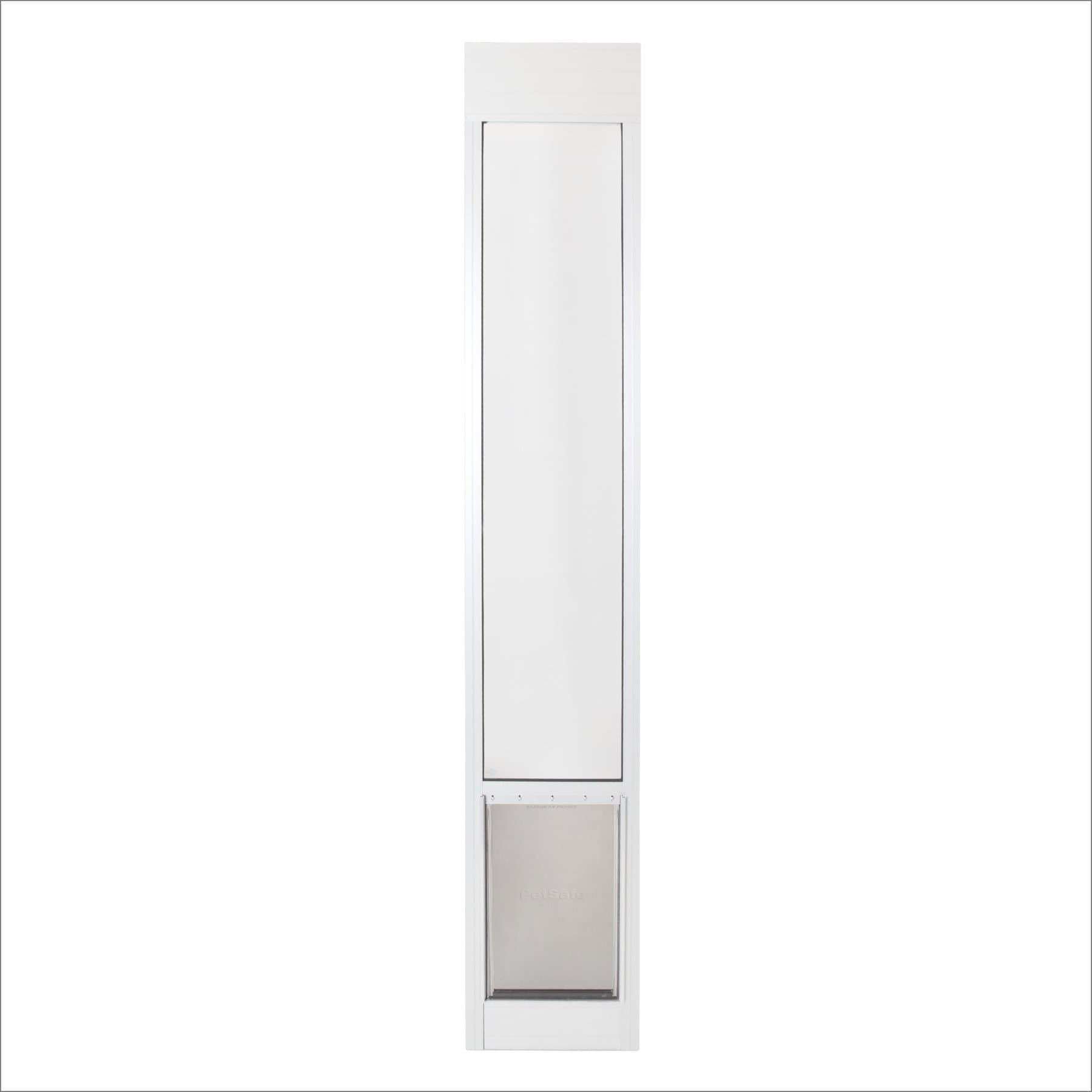
A sliding-glass pet-door panel; verify the exact track-height range, dog opening and remaining human passage.
Webvet may earn a commission when you click through to Chewy, at no extra cost to you.
Compare the complete installation cost:
- The correct door model and any required tunnel or adapter.
- Professional labor where needed.
- Weatherproofing and replacement trim.
- A suitable locking or security arrangement.
- Future repair or removal of the opening.
Plan weather sealing and home security

Work through one complete installation example
Imagine a household with one medium-sized dog and a physically fenced yard. A rear door is the shortest route outside, but its decorative lower panel is too narrow for the intended pet-door frame.
The owner has three realistic choices: select a compatible smaller frame only if the dog still fits, replace the main door with a suitable one, or investigate a wall location with a qualified installer. Cutting across an unsuitable panel is not a fourth equivalent choice.
Add other pets to the decision
Now imagine the same home with an indoor-only cat. The building measurements have not changed, but the access requirement has. A simple flap would let the cat follow the dog.
An electronic product might help only if its actual exit controls match that requirement; a reader that recognizes animals entering from outdoors does not solve it.
Check whether independent access is appropriate
Finally, consider the daily routine. If the dog needs supervision around a pool or regularly barks at people outside the fence, independent access may be inappropriate even with a perfectly installed opening. The best outcome may be keeping the exterior door intact and arranging supervised trips.
Working through the dog, household and building in that order avoids buying a device that solves only one part of the problem.
Keep pests and insects in the planning check
The PetSafe SmartDoor Connected adds electronic access controls to compare when household pets need different permissions. Verify what the selected model controls in each direction; an app feature alone does not establish that an indoor-only pet cannot leave.
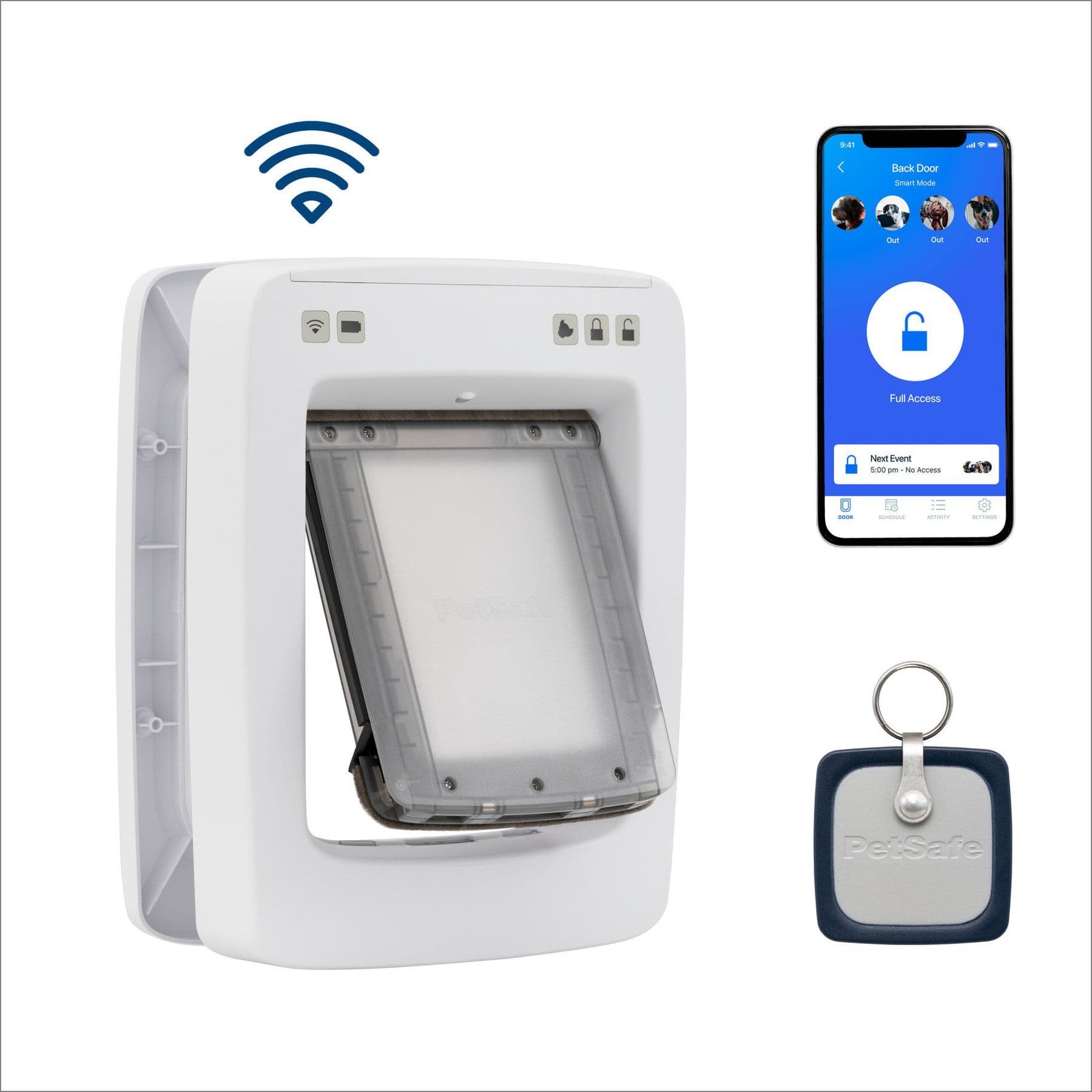
A connected pet door for model-specific access permissions and schedules; plan power, network and backup access.
Webvet may earn a commission when you click through to Chewy, at no extra cost to you.
A well-closing flap and intact seals can reduce gaps, but no general product category guarantees that insects or rodents will never enter. Ask the manufacturer what the exact closure does and inspect the finished installation. Screens and flaps can be damaged or held open by debris.
Keep food and waste managed around the access area and address pest problems through appropriate control measures. Do not choose a dog breed to catch mice or rely on a pet to confront wildlife. That creates a separate animal-welfare and health issue rather than repairing the opening.
If unwanted animals have already entered, stop uncontrolled access while the problem is assessed. A more sophisticated reader may be part of a future solution, but the immediate task is to secure the route and identify how entry occurred. Distinguish an animal using an open flap from a gap elsewhere in the wall or frame.
Review the whole exterior opening
A pet opening is another route for air, water and unwanted access. Inspect seals and the exterior junction after installation and after severe weather. A flap that closes poorly may need adjustment or replacement rather than simply heavier magnets or improvised weights.
Consider the location relative to locks, handles and valuable items. A large opening may create access risks beyond the intended pet use. Discuss concerns with an appropriate home-security or installation professional instead of assuming an “electronic” label makes the opening secure against people.
Check wildlife access as well as the lock
Wildlife can also be a problem. A standard flap does not identify the animal using it. Electronic systems may reduce some unwanted entry when functioning correctly, but a following animal, an open flap or an unsuitable setup can undermine the boundary. Do not encourage a dog to confront wildlife at the doorway.
An invisible fence is not a physical enclosure and does not prevent other animals or people entering the yard. A dog door should not turn that limitation into unattended access to an unsafe destination.
Teach comfortable entry and exit
Introduce the opening while you are present. Follow the maker's training instructions, initially reducing unfamiliar flap movement or noise only in ways the product permits. Reward voluntary approaches and short passages in both directions.
Progress at the dog's pace:
- Let the dog investigate the closed or secured-open opening safely.
- Reward calm interest without pulling the dog through.
- Practice entry and exit with a person on each side when practical.
- Restore normal operation gradually and confirm the dog can return indoors.
If the dog hesitates, inspect the threshold, flap resistance, sound and outdoor surface. A slippery landing or a heavy flap can be the real obstacle. Do not use hunger, isolation outside or physical force to make the dog use it.
When a gate or supervised trip works better
Think about future changes to the home
A dog door is a building alteration as well as a pet purchase. Ask how the opening could be repaired or removed if you move, change doors or no longer need independent access. Keep installation records and the model's instructions with the household maintenance information.
Do not assume a pet door will increase or decrease the home's value by a particular amount. Buyer preferences, workmanship and the property itself vary. If resale implications matter to your decision, ask a qualified local property professional about the specific installation rather than relying on a universal online percentage.
For a rental, clarify permission and restoration responsibilities in advance. A removable product may still alter the way a door locks or require holes for approved hardware. Describe the complete installation to the property owner, not just the marketing phrase used on the box.
Leave usable instructions for caregivers
Anyone caring for the dog should know how to stop access, how to check that the dog has returned indoors and what to do if the door fails. Keep the procedure short enough to follow during ordinary life. A sitter should not have to search an unfamiliar app to secure the opening during bad weather.
If the setup depends on a key or tag, identify which one belongs to each pet and where approved replacements are kept. Explain any household rule about cats, visitors or overnight access. A technically capable door can still fail the management goal when different people assume it is set differently.
Compare supervised trips with permanent access
Not every household needs permanent pet access. Scheduled trips with an owner can handle toilet needs while preserving control over weather and other animals. A dog-proofed room or suitable crate may help with indoor management when the dog is comfortable with that arrangement.
Mixed cat-and-dog homes need special attention. A door intended for the dog may allow a cat to escape even if the cat has no registered tag. Check actual exit permissions rather than assuming selective entry means selective exit. The guide to a cat trying to escape covers that broader management problem.
Check replacement flaps and existing openings
A replacement dog door flap must match the exact frame and model, including its attachment points and closure system. Measure the existing opening and identify the model before ordering. A dog door built into a replacement exterior door still needs the same clear-passage, weather-sealing and destination checks as a separate pet-door unit.
Dog door questions
Frequently Asked Questions
What is the disadvantage of a doggie door?
It creates another opening to manage for weather, security, other pets and unwanted animals. Installation can change the building and may require professional work. If the yard is unsuitable or the dog needs supervision, easier independent access is itself a disadvantage, even when the flap fits correctly.
What can I use instead of a doggie door?
Supervised trips through the main door, help from a caregiver or a different daily routine may be simpler. If the concern is indoor management, a suitable gate or pen can address that without creating an exterior opening.
Are doggy doors a good or bad idea?
They can work in a secure setting with appropriate dogs and controls. They are a poor fit when the destination is unsafe, other pets must be kept in, or the dog cannot safely manage independent access.
Can you put a doggie door in a regular door?
Some models can, provided the material, thickness and construction match the instructions. Check permission and restrictions before cutting. Glass, fire-rated assemblies and complex doors need specialist advice.
What is the best dog door for a home?
Choose by the dog's fit, the building and the access needed. A simple flap may be enough for one home; another may need selective access or a patio panel. No feature compensates for an insecure yard.
Is a wall or door installation better?
A door installation may be easier to replace later, while a wall location can improve the route outside. Wall construction and weatherproofing are more involved. Compare the whole installation rather than the pet-door price alone.
Can snakes come through a dog door?
A standard open flap is not a wildlife-proof barrier. Manage the opening and the surroundings, and seek local wildlife advice for a specific problem. Do not rely on the dog to deter or confront a snake.
Can rats get through a dog door?
An unsecured pet opening can provide unwanted access. Keep food attractants managed, check closure and address pest issues with appropriate professional help. Electronic identification is not a guarantee against every entry route.
Does a dog door affect a home's resale value?
There is no universal increase or decrease you can assume. The alteration, installation quality and a future buyer's preferences differ. Consider reversibility and repair costs before cutting a door or wall, and discuss the particular property with an appropriate local professional if resale is a deciding factor.
How do I know what size dog door I need?
Measure the dog's widest shoulders or chest and the standing height relevant to the manufacturer's sizing method. Compare those measurements with the clear pet opening, then check the step-over from both sides. Frame and cutout dimensions are installation measurements; they do not show how much space the dog has to pass through.
What kind of dog door doesn't let bugs in?
No general door category guarantees that insects cannot enter. A correctly installed, well-closing flap and intact seals reduce gaps, but the opening is exposed whenever a pet passes. Inspect for damaged seals and manage pest attractants; use a closed access setting when the circumstances require it.

Editor
The Webvet Editorial Team is the in-house group of pet-care editors and writers behind Webvet, operated by Smart Pet Collective. The team researches, writes, and maintains Webvet's pet health, behavior, and medication content. Every article follows a defined editorial process: research from reputable veterinary and scientific sources, careful drafting, mandatory review of medical content by a credentialed veterinarian, and dated publication. Health and medication articles are medically reviewed by a licensed veterinary professional before they go live and are kept current over time.
Related reading

Best Dog Playpens: Indoor and Outdoor Options for Different Dogs

Dog Gate for Stairs: Safer Choices for Top and Bottom Landings

Best Dog Gates: Match the Barrier to Your Doorway and Dog
