Dog Door for Sliding Glass Door: Panel Fit, Locks and Screens
Compare patio inserts and automatic sliding-door openers. Check track measurements, dog fit, the remaining human passage, locking arrangements and weatherproofing before installation.

This article contains affiliate links. Webvet may earn a commission when you buy through them, at no extra cost to you.
Choosing a dog door for sliding glass door access involves more than picking a flap. It can be a fixed patio insert, a pet opening in replacement glazing or an automatic system that moves the existing door. Those solutions affect the track, human passage and lock differently.
Measure the entire doorway before comparing the flap size.
- 1Match the panel to the exact track and the dog to the clear pet opening.
- 2Check the remaining human doorway and how the main door will lock.
- 3Do not cut an existing tempered-glass pane; use a qualified glazier for glass work.
Which sliding-door solution fits your home?
A patio insert occupies part of the sliding door's opening. It can avoid cutting a pet hole through a solid door, but it may reduce the width people use and change how the original latch works. “Removable” does not mean compatible with every frame or free of security and weatherproofing work.
| Approach | What changes | First fit check |
|---|---|---|
| Patio insert | A fixed panel takes part of the opening | Track height, depth and remaining passage |
| Replacement glazing with pet opening | A glass panel is professionally replaced | Glazier and pet-door compatibility |
| Automatic slider opener | The existing door moves for access | Door layout, operating resistance and device compatibility |
| Screen-door pet opening | The screen has a pet passage | Safe use while the solid door is open |

A screen-door opening is not a substitute for an exterior security barrier. It can be useful during supervised time when the main door is open, but the screen itself does not securely contain every dog or exclude wildlife. Close the solid door when the arrangement is no longer appropriate.
Use the broader dog door guide to assess the outdoor destination first. A convenient patio route should lead into an appropriate physically secured area, not an unfenced yard beside a road.
Compare patio door options
These are researched options based on manufacturer-described designs, not products we have personally tested. Exact model dimensions and installation instructions control the decision.
| Option | Design to consider | Question that can rule it out |
|---|---|---|
| PetSafe Sliding Glass Pet Door | Conventional patio-panel access | Does its height range and track profile fit? |
| PetSafe Extreme Weather Sliding Glass | Alternative weather-focused patio panel | Does the selected height and flap arrangement suit the frame and dog? |
| High Tech Pet Power Pet Patio Door | A panel incorporating powered access | Can power, collar identification and fit all be supported? |
| Wayzn Smart Pet Door | An opener for the existing sliding door | Is the door layout compatible with the device? |
The cheapest unit can become the most expensive choice if it needs unplanned adapters, leaves poor weather seals or cannot be returned after an attempted installation. Compare the completed setup rather than the box price alone.
Patio dog door picks
PetSafe Sliding Glass Pet Door
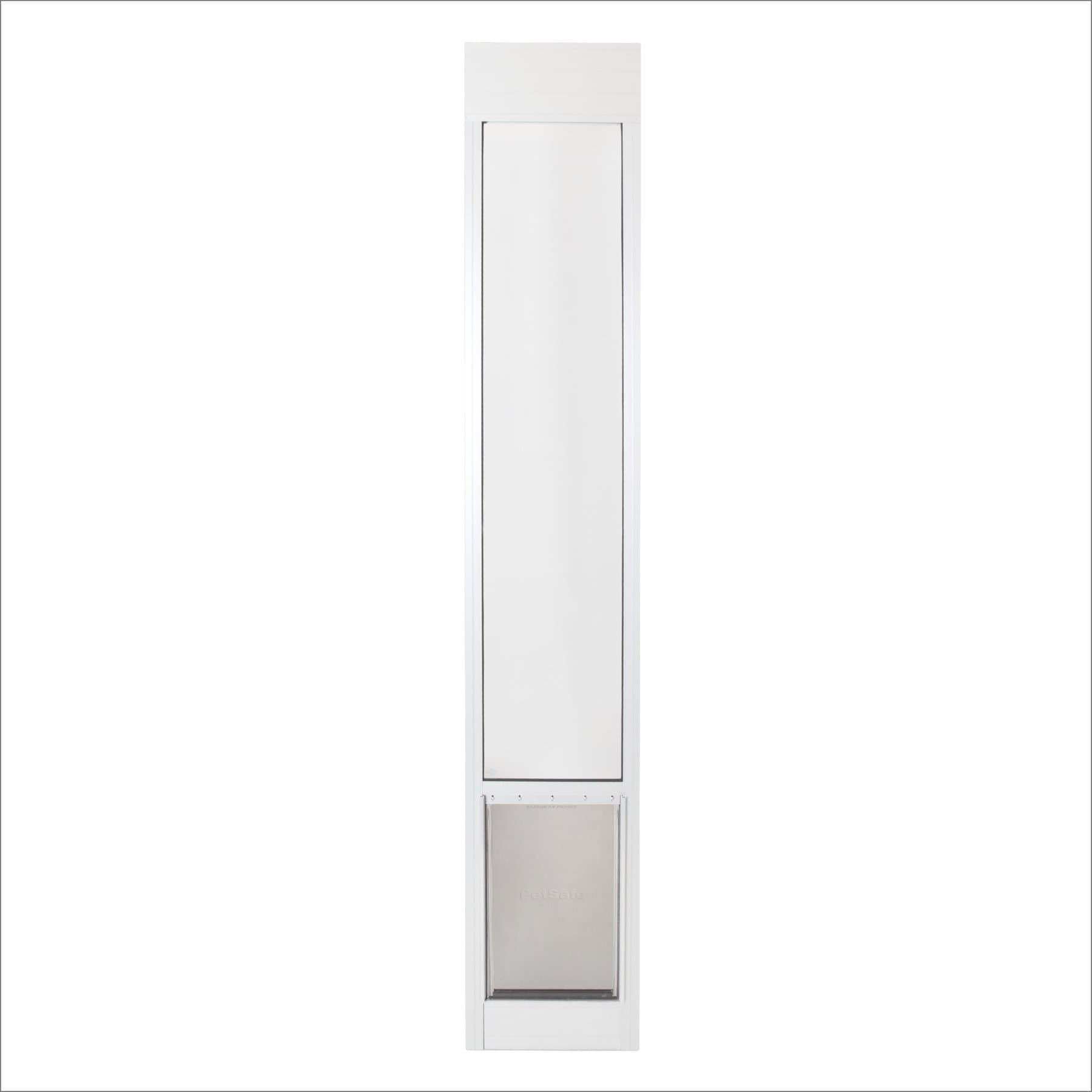
A sliding-glass pet-door panel; verify the exact track-height range, dog opening and remaining human passage.
Webvet may earn a commission when you click through to Chewy, at no extra cost to you.
PetSafe's sliding-glass range includes different panel sizes and designs. Choose by the exact height range, frame requirements and pet opening, not by the phrase “patio door” alone.
Compare the PetSafe Sliding Glass Pet Door only after matching its panel-height range and pet opening to your track and dog.
Check locking and removal requirements
Read the manual for locking and weatherstripping details before purchase. The original sliding-door latch may not engage the same way once an insert occupies the track. Confirm the supplied or recommended solution and whether additional components are required for your frame.
A renter should also check permission and removal requirements. Even a panel marketed as convenient to remove may need installation steps that affect the frame or security arrangement. Resolve those questions before unpacking tools.
PetSafe Extreme Weather Sliding Glass Pet Door
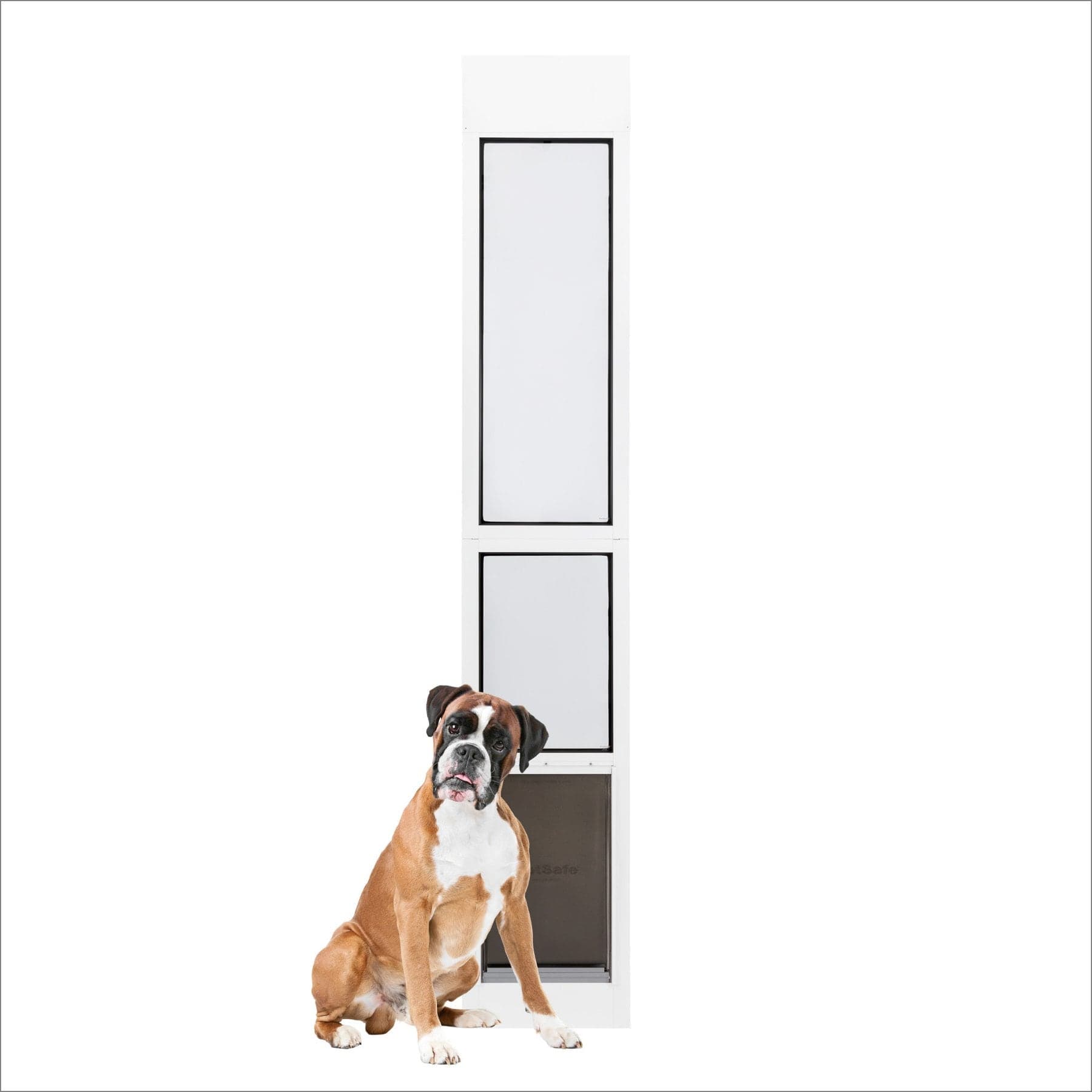
A weather-focused sliding-glass panel option; check the exact height range, seals and locking arrangement.
Webvet may earn a commission when you click through to Chewy, at no extra cost to you.
The PetSafe Extreme Weather Sliding Glass Pet Door is a distinct patio-panel option from the basic Sliding Glass model. The current selected catalog variant is White, Large. Compare the exact frame height range, pet opening and included sealing arrangement; do not copy measurements from a different PetSafe panel simply because the names are similar.
An insulated-flap design can be worth considering when an exterior opening is exposed to more demanding weather. Still examine every junction: the panel in the track, the main sliding door against the insert and the overlap between moving and fixed glass. A well-sealing pet flap cannot compensate for a gap elsewhere in the assembly.
Check comfortable passage
Check the dog's ability to move through the actual flap arrangement. More substantial sealing can change the feel of pushing through. Introduce the door gradually and let the dog retreat rather than pushing the dog through an unfamiliar opening.
If a dog has mobility limitations, discuss access geometry with their veterinarian and consider whether a different location or powered opening makes more sense.
High Tech Pet Power Pet Patio Door
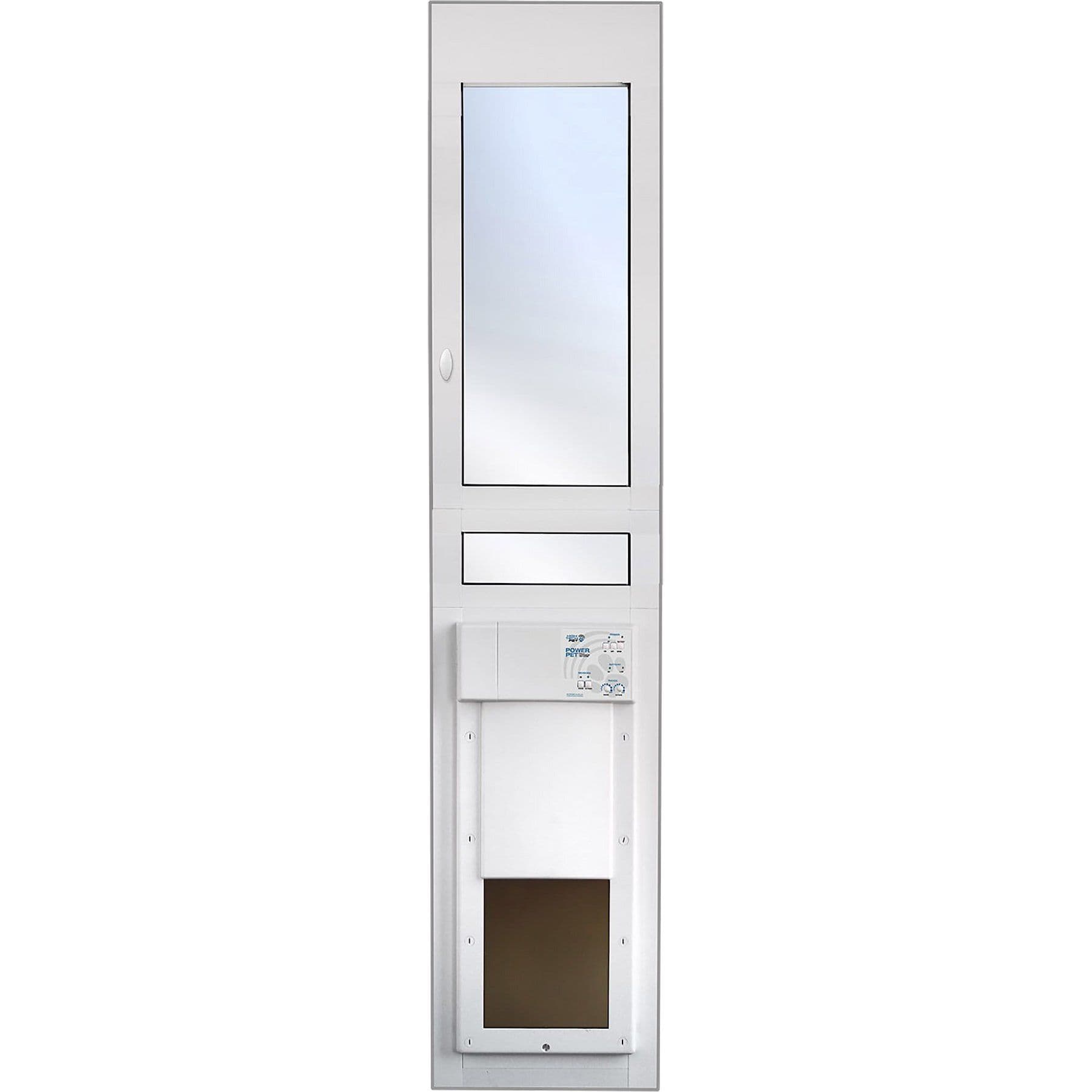
A powered pet-door patio panel; compare track compatibility, collar sensing and access during power loss.
Webvet may earn a commission when you click through to Chewy, at no extra cost to you.
High Tech Pet's patio-door range combines an insert format with powered pet access. This makes the panel's physical fit and the electronic system's requirements equally important.
The High Tech Pet Power Pet Patio Door is the powered patio-panel option here; check the exact insert size and collar requirements together.
Plan the powered installation
Confirm the exact model's compatible collar, power arrangement and access controls. Plan cable routing so it does not create a trip or chewing hazard. Check how a person secures the pet opening and what happens during a power interruption.
Powered access may help a dog that struggles to push a flap, but it does not remove the need for careful introduction and supervision. Compare identification and direction-specific permissions in the electronic dog door guide.
Wayzn Smart Pet Door
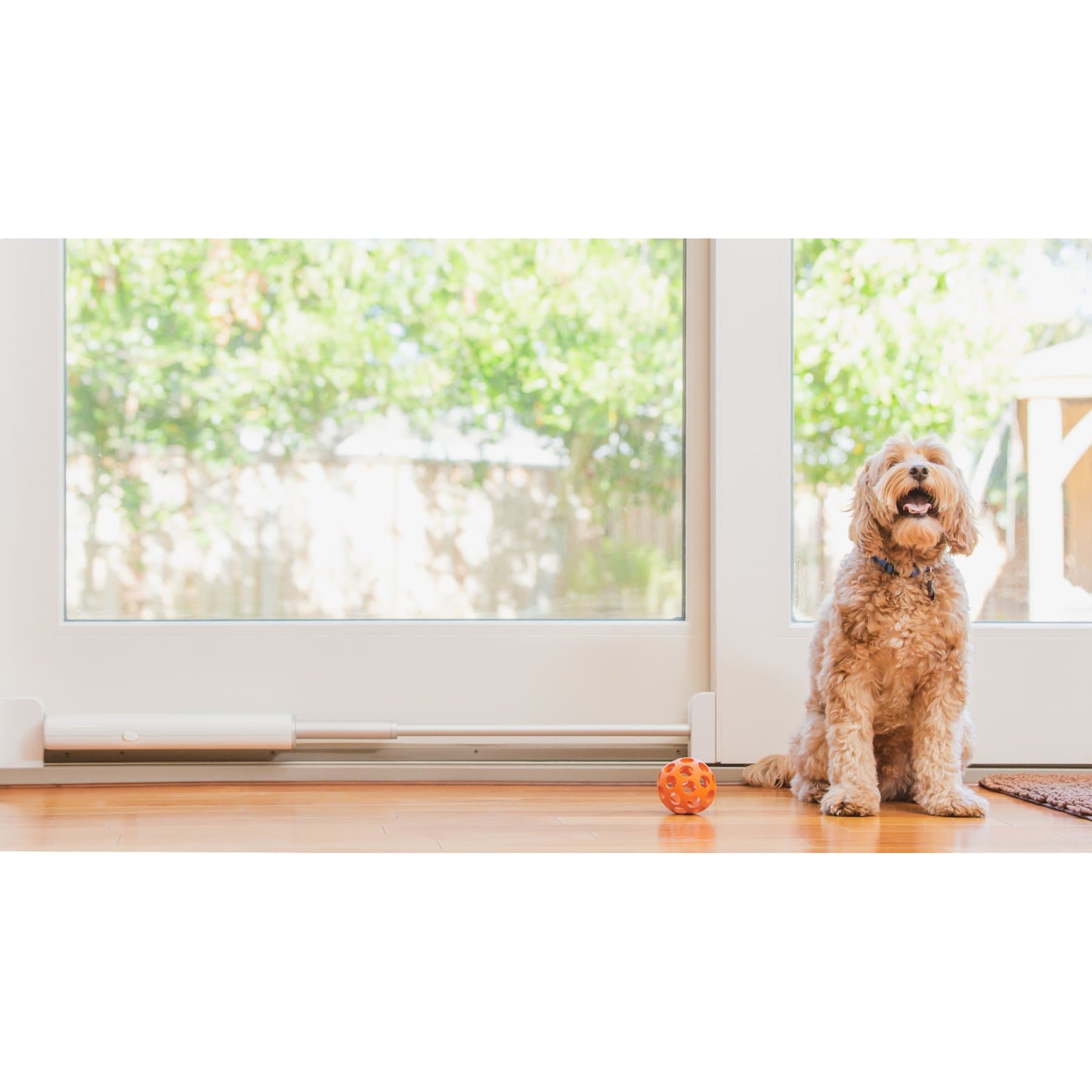
An automatic sliding-door opener; confirm door compatibility, supervised operation and the manual access plan.
Webvet may earn a commission when you click through to Chewy, at no extra cost to you.
The Wayzn Smart Pet Door moves a compatible existing sliding door rather than adding a pet flap to an insert. The manufacturer's current information specifies a two-panel layout with the fixed panel outermost; do not assume a multipanel or outward-facing arrangement fits.
Measure the exposed track as directed by Wayzn and use its compatibility process. The amount the door can open depends on the installation. Confirm that the dog can pass comfortably and that people can disengage the device to regain normal door use.
This is a different ownership commitment from a passive flap. The door must slide properly, the device needs setup and calibration, and caregivers should understand manual operation. Review the manufacturer's help guidance before deciding that automation is the easiest solution for your home.
Measure the track and remaining doorway
Keep three measurements separate
First measure the part of the building that will receive the insert. Follow the selected maker's method for the upper and lower tracks, including the depth into which the panel must seat. Second, record the clear pet passage through the assembled product. Third, calculate the human opening that remains after the insert is installed.

Passing one of these checks does not imply that the other two work.
Compare pet access with human passage
PetSafe lists the selected standard Medium patio panel as 11½ inches wide, with an 8¼ × 12³⁄₁₆-inch flap opening and a 1¾-inch rise. Its Extreme Weather Large panel is 13½ inches wide, with a 10¼ × 16⅜-inch flap and 4¼-inch rise. These are distinct fit tradeoffs.
| Example: current clear human opening is 30 inches | Nominal width subtraction | What remains to verify |
|---|---|---|
| Standard Medium panel, 11½ inches wide | 30 − 11.5 = 18.5 inches | Actual installed passage, latch hardware and every household user |
| Extreme Weather Large panel, 13½ inches wide | 30 − 13.5 = 16.5 inches | Larger pet opening costs another 2 inches of nominal human passage |
The Extreme Weather specifications also show a higher step-over for Large. A larger dog may need its opening while a smaller housemate struggles with the rise. Check both animals and both landing surfaces; selecting the biggest flap does not automatically serve the household.
These subtractions are an early rejection screen, not a measurement of the finished opening or a building-code approval. Tracks, overlap and locking components can change the result. Mark the insert width, test ordinary passage, and choose another installation route if the doorway would no longer work for people and pets.
Keep the selected variant with the measurements
Record the measurements before choosing a variant. Retail listings may group several panel heights and flap sizes on one page. Recheck the selected option in the basket; the photo and displayed specifications may change when a different size is chosen.
Keep the exact model number with your measurement notes so a later order or replacement part matches the intended system.
Check the step-over and both landing surfaces
The bottom of the pet opening may sit above floor level. Measure that step-over on each side, because the patio surface can be lower than the indoor floor. Look for a sudden drop, a loose mat, slippery paving or an obstruction immediately outside.
The dog needs a comfortable approach, passage and landing, not just enough shoulder width in the middle.
Consider the dog’s movement
For a short-legged, older or mobility-limited dog, ask the veterinarian about the movements the dog should avoid. Do not assume that choosing a larger flap changes the height of the lower frame. A different panel configuration, installation location or access arrangement may be more appropriate.
Avoid placing improvised objects in the route to create a step. A loose box or unstable stool can move as the dog crosses. If an access aid is needed, choose an appropriate stable design for the setting and assess it as part of the whole route.
Assess repeated daily use
An apparently small mismatch becomes more important when the dog will use the door repeatedly.
Test the main door before adding a device
A patio door that is difficult to slide, misaligned or unable to latch properly needs attention before a pet-access installation. An automatic opener is not a repair for a damaged track, and a panel insert should not be used to conceal a problem with the frame.
Have the existing door assessed when its condition is uncertain.
Match the mechanism to the door
For a powered slider opener, use the manufacturer's compatibility process for the actual door layout and track. The Wayzn option in this comparison requires a compatible two-panel arrangement; a similar-looking multipanel patio system can be a different case. Check power, calibration and manual release before making automation part of the routine.
For an insert, check how the moving door meets the installed panel and how the original screen moves. Screens and solid doors may occupy different tracks. A panel that works in one track does not necessarily preserve every original screen position.
Work through the modes you actually use: pet access open, pet access closed, screened ventilation and the main door secured overnight.
Plan locks without assuming compatibility
An insert changes where the original sliding door stops. Its factory latch may no longer meet the original keeper. Read the model's locking instructions and decide whether the supplied arrangement works with the actual frame. Do not describe a removable insert as secure merely because it sits tightly in the track.
Also examine how the pet opening itself is closed. A flap cover, an electronic lockout and a locked main slider perform different jobs. Determine which controls need to be engaged when everyone leaves or when outdoor access is inappropriate.
Caregivers should be able to follow the routine without guessing which part is responsible for which opening.
Resolve security incompatibilities
If a lock, alarm contact or other security feature cannot be preserved as intended, obtain qualified advice or choose another installation. The purpose of a pet door is convenient access for an animal, but the whole exterior doorway still needs to function for the household.
Never leave an unresolved fit problem to be solved with a makeshift wedge.
Look for the source of drafts

Follow the installation instructions for the panel's weatherstripping and sealing components. Then inspect the assembled joins. Air can move at the pet flap, along the panel frame or through the overlap between the sliding and fixed door sections. Identifying the location matters before deciding that a thicker flap will solve the problem.
Check again after ordinary use and changes in weather. A displaced seal, debris in the track or a component that has moved can change the result. Use approved replacement parts and avoid sealing a track in a way that blocks drainage or prevents the door from operating as intended.
If the frame's drainage arrangement is unclear, ask an installer.
Compare weather claims in context
Weather claims should be compared cautiously. A manufacturer's insulated or extreme-weather description does not establish the same result in every climate and doorway. Consider the exposure at your particular opening, the installation quality and how often the pet passage is used. Keep an appropriate plan for closing access during unsuitable conditions.
Budget for the complete installation
Compare the panel or opener price with the cost of the finished arrangement: necessary adapters, sealing materials, permitted locking components and professional work where needed. Check what is included in the exact package. A product image showing an accessory beside a door does not establish that the accessory comes in the box.
For renters, clarify installation and removal requirements with the property owner before making alterations. A product described as removable can still involve mounting or locking changes. Keep the original components and instructions if the approved arrangement requires restoring the doorway later.
Check returns before fitting
Read the return terms before assembly or modification. Once a unit has been fitted, altered or used, a seller may apply different conditions. Measure and confirm compatibility early so the first installation attempt is not also the first time you discover an incompatible track.
This planning is especially useful for unusually tall doors, narrow human passageways and powered systems.
Record the final track measurements
The fit worksheet combines the remaining human passage and replacement locking plan with pet-opening measurements, two buying constraints that flap-size comparisons alone miss. Preserve secure human egress: everyone must be able to use the doorway and operate the approved locks.
If an insert compromises a required exit, choose another installation route rather than accepting a narrower passage simply because the dog fits.
Your fit worksheet should include:
- Required track measurements for the exact model.
- Width occupied by the installed panel or mechanism.
- Clear passage remaining for people and necessary household movement.
- Clear pet opening and step-over height.
- Space for the main door's new locking arrangement.
Consider everyday access, not just whether one person can squeeze through. People may carry laundry, use a mobility aid or need to exit quickly. Do not compromise a required exit route; consult an appropriate installer or local authority if compliance is uncertain.
For a large dog, confirm the actual opening width at the flap, not simply the overall panel width. For multiple dogs, the largest must fit while the smallest can cross the threshold comfortably. A panel can fail either requirement.
Installation, locks and weather gaps
Follow the current instructions for the exact frame type. An aluminum, vinyl or recessed track may require different components. Do not force a panel into a poor fit and rely on extra foam or improvised fasteners to hold it in place.
After installation, check the whole doorway:
- The panel is securely seated and cannot shift during normal use.
- The main door closes and locks as intended.
- Weatherstripping seals the new junctions without obstructing movement.
- The pet opening closes normally and can be secured when needed.
- Everyone responsible for the home can operate and disengage the setup.
Inspect after rain and temperature changes for drafts or water at the frame. Address leaks promptly with the appropriate installer rather than allowing moisture to collect behind trim.
Check access for every pet
In a cat-and-dog home, check whether the cat can use the same opening. An electronic reader may restrict entry without restricting exit. The cat escape guide is relevant even when the product is advertised primarily for dogs.
If the patio route cannot be made suitable, supervised trips through the existing door may be the better answer. For indoor management between outings, a comfortable arrangement from the dog crate guide or a safe room can meet a different need without construction.
Match a manual or installation video to the actual product
Use installation instructions for the exact VEVOR model and panel variant if that is the product you own. An installation video for a similar-looking panel can omit differences in track fit, locking hardware or sealing. Compare the product identifier on the delivered unit with the manual before following a demonstration; stop when the components differ.
Sliding glass dog door questions
Frequently Asked Questions
Is it possible to put a doggie door in a sliding glass door?
Often, through a compatible patio insert, replacement glazing or an automatic opener. The exact door layout and track determine the options. Do not cut an existing tempered-glass panel yourself.
What is the best doggy door for a sliding glass door?
The best option fits the track, the dog and the home's locking and access needs. An insulated insert, powered panel and automatic slider solve different problems, so compare the completed installation.
How much does a sliding-glass dog door cost?
The selected products had these listed U.S. prices on September 26, 2026:
- PetSafe Sliding 80 11/16-inch Glass Pet Door, White, Medium: $189.95.
- PetSafe Extreme Weather Sliding Glass Cat & Dog Door, White, Large: $347.70.
- High Tech Pet Medium Power Automatic Sliding Glass Pet Patio Door, White, Regular: $769.99.
- Wayzn Smart Pet Door, Medium: $549.00; this moves a compatible existing slider rather than adding a patio panel.
These are product-only examples for the exact variants linked above. Prices can change; add applicable tax, delivery, adapters, seals and locking components. Labor and replacement glazing are not included or estimated here. Get a written quote for your actual frame and installation before ordering a nonreturnable component.
What are the best dog door panels?
Choose from panels with clear compatibility instructions, suitable dimensions and support for the required security arrangement. PetSafe, Endura Flap and High Tech Pet offer different approaches to investigate; no panel fits every patio door.
What is the disadvantage of a doggie door?
A patio insert can narrow the human doorway, change the original locking arrangement and add weather-sealing work. A powered system also requires setup and a manual-access plan. Measure these compromises before buying; a larger flap is not useful if the complete installation prevents the household from using the doorway safely.
What is the best type of doggie door?
Choose a compatible insert when its dimensions, locks and clear passages work together. Investigate replacement glazing with a qualified glazier when an insert does not suit the doorway. A powered opening is a separate option when the dog needs that mechanism and the building meets the model's requirements.
What can I use instead of a doggie door?
Supervised access through the existing door may meet the need. A caregiver or schedule change can be simpler than installing a pet opening where the yard, other pets or doorway geometry make it unsuitable.
How much does installation in glass cost?
Ask a glazier to assess the actual pane and frame. The work may require replacement glass manufactured with the appropriate opening, so a generic handyman estimate or product-only price is not a reliable total.
Can I install a dog door in glass myself?
Do not attempt to cut existing tempered glass. Follow the product's specialist installation requirements. A compatible patio insert may be a separate option that avoids glass cutting but still needs correct mounting and sealing.
Will a patio insert work with my existing screen door?
Not necessarily. The screen and solid door may run on different tracks, and an insert can change their travel. Check the exact frame and panel instructions. A pet opening fitted only to the screen serves a different purpose and does not replace the solid exterior door's security.
Will a patio pet door reduce my home's value?
Do not assume a standard effect on resale value. A removable insert, a modified frame and replacement glazing create different alterations. Consider permission, restoration and the quality of the finished installation. Obtain property-specific advice if potential resale is central to the decision.
Can mice come through a patio dog door?
Yes, an open or poorly secured passage can give a small animal access. Inspect the flap and seals, manage food and waste near the opening and close access when necessary. An electronic reader or weather seal should not be treated as a pest-proof guarantee.

Editor
The Webvet Editorial Team is the in-house group of pet-care editors and writers behind Webvet, operated by Smart Pet Collective. The team researches, writes, and maintains Webvet's pet health, behavior, and medication content. Every article follows a defined editorial process: research from reputable veterinary and scientific sources, careful drafting, mandatory review of medical content by a credentialed veterinarian, and dated publication. Health and medication articles are medically reviewed by a licensed veterinary professional before they go live and are kept current over time.
Related reading

Dog Doors: Types, Sizing and Home Safety Before You Install

Best Dog Playpens: Indoor and Outdoor Options for Different Dogs

Dog Gate for Stairs: Safer Choices for Top and Bottom Landings
