Why Is My Cat Trying to Escape? Safe Ways to Stop It
An indoor cat may rush the door because of mating drive, opportunity, boredom, stress, or outdoor cues. Learn a safe barrier, station-training, and recovery plan.


BVMS MRCVS

This article contains affiliate links. Webvet may earn a commission when you buy through them, at no extra cost to you.
A cat trying to escape is usually responding to opportunity, mating drive, hunting or territorial cues, boredom, stress, or a learned door dashing routine. Start by preventing access with a second barrier, then teach a rewarded station several feet from the door. Do not punish or chase your cat.
A sudden escape obsession deserves more attention than an established habit. Look for a new outdoor trigger, a household change, intact reproductive status, fear, pain, disorientation, or another health change. The right fix depends on what motivates the cat, not on making the doorway frightening.
Why Is My Cat Trying to Escape?
An indoor cat is not trying to leave because they dislike you. The outdoors contains movement, scent, prey, other cats, potential mates, and territory that can be intensely interesting. A door that sometimes opens also creates a powerful opportunity, especially if rushing it has worked before.
The six motive buckets to check are opportunity, mating drive, boredom, territory, fear, and sudden medical change. More than one can operate at the same time, but separating them keeps the response specific: block a learned doorway opportunity, address reproductive motivation, add purposeful activity, manage territorial patrol and outdoor-cat cues, create a safe indoor retreat, or call a veterinarian for an abrupt health-linked change.
Common motives include:
- Territorial patrol: A cat may see or smell outdoor cats and feel compelled to investigate or defend the boundary.
- Hunting drive: Birds, insects, rodents, and moving leaves can trigger stalking and pursuit.
- Mating drive: An intact cat may vocalize, pace, mark, or seek an exit to find a mate.
- Boredom or unmet activity needs: A quiet indoor environment may offer too few chances to climb, chase, scratch, forage, and choose.
- Stress or fear: Construction, a new person or pet, conflict between cats, or a frightening indoor event may make escape look like the safest option.
- Learned door-dashing: A cat who has reached a hallway, yard, or exciting threshold before may repeat the successful route.
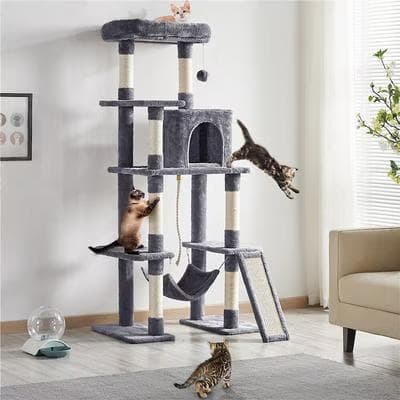
63-inch multi-level cat tree with plush perches, a condo, a hammock, sisal scratching posts, and a dangling toy. Dark gray.
Webvet may earn a commission when you click through to Chewy, at no extra cost to you.
Watch the body as well as the door. Relaxed ears, loose movement, and curious sniffing suggest exploration. Crouching, flattened ears, a lashing tail, dilated pupils, growling, or frantic movement suggest fear or high arousal. WebVet's guide to cat body language can help you read that difference.
- 1Door-dashing is driven by motivation and opportunity, not spite.
- 2Use physical barriers immediately so the cat cannot rehearse the escape.
- 3Teach a station cue with positive reinforcement several feet from the threshold.
- 4Add enrichment that matches the cat's motive, such as climbing, hunting-style play, or safe outdoor viewing.
- 5Keep microchip information current and use appropriate breakaway identification.
- 6Investigate sudden, frantic, or medically unusual behavior with a veterinarian.
A securely anchored cat tree can provide vertical territory, scratching, and observation inside the home. Place it away from the entry traffic path and choose access points that fit your cat's mobility. It can improve the environment, but it does not replace a closed barrier or door training.
Mating Drive and Outdoor Cats
If an intact cat suddenly becomes vocal, restless, or determined to get outside, mating drive belongs near the top of the list. Spaying or neutering can reduce reproductive motivation, but it will not automatically erase a learned door routine or meet activity needs. Use cat spay and neuter planning to prepare questions for your veterinary team.
An outdoor cat near a window or door can also trigger territorial patrol or redirected arousal. A cat may race toward the exit, swat another pet, or stay agitated after the outdoor animal disappears. Learn more about redirected aggression in cats and block the sightline while arousal settles.
What Escape Attempts Mean
Escape attempts mean the cat expects something important beyond the threshold or wants distance from something indoors. The practical next step is to identify whether the motive is opportunity, mating drive, prey, territorial patrol, boredom, or fear. Matching prevention works better than making the door or owner frightening. What it does not mean is that your cat has rejected the home. Treat each attempt as information about motivation, access, and rehearsal, then change the environment before testing training.
Match the Escape Trigger to the Fix
Effective prevention pairs each escape trigger with matching prevention. The cause-to-action escape table below moves from the likely motive to observable clues and a safe first response. Use it before adding a deterrent or testing the doorway. A generic response cannot address every combination of activity need, fear, reproductive drive, territorial patrol, or sudden illness, and a frightening device can create a new fear problem without changing the original motive.
| Escape trigger | Clues at home | Matching prevention |
|---|---|---|
| Learned opportunity | Cat waits beside the door and bolts when the handle moves | Add a second barrier and teach a station cue |
| Mating drive | Intact cat paces, vocalizes, marks, or reacts to nearby cats | Discuss spaying or neutering and prevent all unsupervised exits |
| Boredom or hunting drive | Long inactive periods followed by intense window or door focus | Schedule chase play, climbing, scratching, and food-search tasks |
| Territorial patrol | Cat watches or smells outdoor animals and repeatedly checks the boundary | Block the view, clean scent marks, and add secure indoor territory |
| Fear or household stress | Crouching, hiding, flattened ears, conflict, or frantic movement | Create a safe retreat and address the indoor stressor |
| Sudden medical or sensory change | New pacing, vocalization, disorientation, pain, appetite change | Contact a veterinarian before treating it as a training problem |

Single-ingredient freeze-dried raw minnows: a high-protein, grain-free cat treat with nothing added.
Webvet may earn a commission when you click through to Chewy, at no extra cost to you.
Why Is My Cat Suddenly Trying to Escape?
A sudden, frantic effort to escape can be a red flag when it comes with pain, disorientation, appetite or thirst change, urinary signs, altered sleep, new vocalization, or another abrupt behavior change. These sudden behavior red flags need a veterinarian, not a harder training test.
New outdoor cats, prey, construction noise, visitors, moving, conflict with another pet, or discovering that a door sometimes opens can also create a sudden pattern. Observe location, timing, posture, and the event immediately before each attempt. If the cat is otherwise normal, strengthen barriers while testing one likely trigger at a time.
Seek prompt veterinary advice if your cat:
- Strains to urinate, makes repeated litter-box trips, or produces little to no urine.
- Seems confused, becomes trapped in familiar spaces, or no longer follows normal routes.
- Cries when touched, moves stiffly, hides more, or stops jumping.
- Develops marked appetite, thirst, weight, vomiting, or stool changes.
- Pants, breathes with an open mouth, collapses, or appears severely distressed.
- Is an elderly cat who suddenly keeps trying to escape or wander.
Red Flag Escape Behavior
Red flag escape behavior is frantic, disoriented, painful, or paired with another abrupt physical or behavioral change. The safe next step is to close barriers and call a veterinarian, not intensify training. Open-mouth breathing, collapse, urinary straining, severe weakness, trauma, or profound disorientation can require urgent care.
Do not wait for an emergency to update your prevention plan. A closed room or second barrier protects a disoriented or frightened cat while you contact the clinic. Avoid grabbing an agitated cat with bare hands. Use distance and a door whenever possible.
How to Stop a Cat From Trying to Escape
To stop a cat from trying to escape, prevent rehearsal first, then teach an incompatible behavior. The practical goal is a cat who moves to a station while a person safely manages the door, not a cat who is too afraid to approach the entry.
How do I get my cat to stop trying to escape? Start with a physical barrier and a second closed layer so the cat cannot rehearse door-dashing while learning. Then use positive reinforcement to teach a station cue several feet from the threshold. The two barrier setup protects the cat during practice, while reward placement makes the station more valuable than the doorway. Rehearse with the exterior door secured before adding visitors or deliveries.

Teaser wand with a feathered bird charm and catnip to trigger your cat's chase-and-pounce instinct.
Webvet may earn a commission when you click through to Chewy, at no extra cost to you.
Build a Two-Barrier Door Routine
A two-barrier setup means two separate things must fail before the cat reaches outside. Options depend on the home:
- Close the cat in a prepared interior room before opening the exterior door.
- Use a closed interior door to create a small vestibule.
- Place a tall, secure barrier inside the entry while keeping the exterior door closed.
- Ask delivery workers to leave items outside, then retrieve them after the door is shut.
- Move packages, shoes, and greetings away from the threshold so the door stays open for less time.
Prepare a covered retreat away from the entry only if your cat enjoys enclosed beds. A retreat should offer choice and distance, not function as punishment. Include water, litter access, and a comfortable resting place during longer visits or repairs.
Teach a Station Cue With Positive Reinforcement
Choose a mat, low platform, or stable perch several feet from the closed door. Begin when no one is entering. Reward the cat for looking at, approaching, and standing on the station. Use very short sessions and finish while the cat is successful.
Progress through these stages:
- Reward the cat on the station while the door remains closed.
- Touch the doorknob, then reward the cat for staying.
- Move the handle and open the door a fraction of an inch.
- Open it wider behind a second barrier.
- Rehearse one household member entering quietly.
- Add a doorbell sound, package movement, or a familiar visitor only after the earlier steps are easy.
Place the reward on or behind the station, never beside the threshold. If the cat leaves, close the door and make the next repetition easier. A reliable station cue grows from many calm successes, not from testing the cat against a wide-open exit.
A high-value food reward can make station training clearer. Use tiny pieces that fit the cat's diet and have the owner deliver them away from the threshold. Do not hold food near the open door or lure a fearful cat closer to a trigger.
Use One Visitor and Delivery Protocol
Household consistency matters most when attention is divided. Use one visitor entry protocol: close the second barrier and place the cat at the trained station or in a prepared retreat before the door opens. Tell visitors not to call, reach for, or hold the cat near the doorway.
For deliveries, ask for a doorstep drop when possible. If someone must enter, secure the cat before the exterior door opens. Put a small reminder at eye level inside the entry so family members, contractors, and pet sitters follow the same routine.
Why an Indoor Cat Keeps Trying to Escape
Indoor enrichment reduces escape motivation when it serves the same needs that draw the cat outside. Rotate purposeful activities instead of filling the room with unused objects. A cat interested in prey needs chase and search opportunities. A climber needs stable vertical routes. A territorial watcher needs secure observation points away from the doorway.
An indoor cat keeps trying to escape when the outside motivation repeatedly outweighs the available indoor choices or when door-dashing has been rehearsed. Enrichment works best alongside the two-barrier routine and station training. It cannot safely compensate for an exterior door that stays open or a household that responds inconsistently.
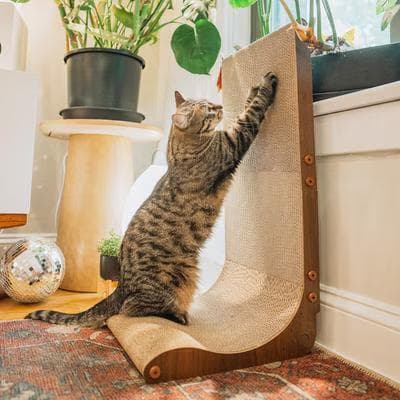
Curved cardboard wall scratcher with a wood frame that protects walls and gives cats a satisfying vertical scratch surface.
Webvet may earn a commission when you click through to Chewy, at no extra cost to you.
Make Indoor Life More Worth Choosing
Build a practical weekly mix:
- Two or three brief interactive play sessions on most days.
- Climbing and resting choices at different heights.
- Several appropriate scratching surfaces in active areas.
- Measured food-search games or puzzle feeding.
- Safe window viewing with intact screens and no reachable exit.
- Quiet retreat options in more than one part of the home.
For more ideas, use WebVet's guide to cat exercises. Match intensity to age, mobility, and health. A senior cat may prefer gentle tracking and low platforms, while a young adult may need fast chase sessions and more climbing.
A teaser wand can support supervised hunt-style play and redirection away from predictable door events. Let the cat stalk and catch the toy rather than waving it continuously. Store all strings and feather attachments after play so they are not available for chewing or entanglement.
- Scratching option: A vertical scratching surface can give a cat an appropriate place to stretch and leave visual and scent marks indoors. Put it near a route the cat already uses, but not directly beside the exterior door. A scratcher supports territorial expression; it is not a physical escape barrier.
A silvervine and catnip blend may refresh a play or scratching area for responsive cats. Not every cat reacts to catnip or silvervine. Use a small amount, observe the response, and avoid it if your cat becomes more agitated.
Offer Safe, Controlled Outdoor Access
Some cats benefit from controlled outdoor experiences, but access should never depend on an open door and hope. A secure, inspected catio or enclosed run provides physical separation while still offering changing scents, sounds, and views. Check every seam, latch, roof panel, and connection to the home before use, supervise early sessions, and provide shade and water. A catio is enrichment, not a replacement for door barriers, identification, or station training.
Harness training begins indoors. Let the cat investigate properly fitted equipment, reward brief wear, and practice calm movement before adding a leash. A frightened cat can back out of poorly fitted gear, so do not make the first trial at an exposed doorway.
Strollers and carriers suit only cats who remain relaxed inside secure equipment. Skip them for a cat who panics, claws at mesh, overheats, or becomes highly aroused. None of these options replaces current microchip contact details and appropriate breakaway identification.
What to Do if Your Cat Gets Outside
If your cat gets outside, act immediately but stay quiet. The lost-cat recovery checklist and lost-cat first-hour checklist below start close to the exit because frightened indoor cats often hide nearby. A loud group search or chase can push the cat farther away.
Bring a secure carrier and familiar reward. If you see the cat, sit sideways, avoid pursuit, and give them time to approach.
Will a cat come back after he escaped? Some cats come back on their own, but there is no guarantee, and waiting passively wastes valuable time. Continue close searches at quieter times, refresh local reports, and follow shelter instructions. If the cat is injured, trapped, or in immediate danger, contact animal services or an emergency veterinary clinic for safe recovery guidance.
Frequently Asked Questions
Why is my cat suddenly trying to escape?
A cat suddenly trying to escape may be reacting to an outdoor animal, mating drive, a new household stressor, fear, or a recently discovered door opportunity. For suddenly trying guidance, the practical next step is to check health and triggers. Pain, disorientation, urinary signs, appetite change, or new vocalization needs veterinary advice. Secure a second barrier while you investigate so another escape attempt does not become the test.
How do I get my cat to stop trying to escape?
How do I get my cat to stop trying to escape? Prevent access with two barriers, teach a rewarded station away from the threshold, and rehearse entries in small steps using positive reinforcement. Good stop trying guidance starts with that practical next step, then adds motive-matched enrichment and one visitor routine. Do not spray, yell, chase, or use a frightening doorway device. Practice only with the exterior door secured until the station response is reliable.
What does it mean when your cat tries to escape your house?
When a cat tries to escape the house, it usually means something outside is motivating exploration or something inside needs adjustment. Clear mean tries guidance focuses on motive, not rejection. The practical next step is to identify territorial patrol, prey, mating drive, boredom, fear, stress, or learned opportunity and apply matching prevention. Watch the location, timing, posture, and event before each rush to find the most likely motive.
Will a cat come back after he escaped?
Will a cat come back after he escaped? Some cats return after escaping, but there is no guarantee and owners should not wait without searching. Reliable come back guidance gives one practical next step first: begin a safe recovery search at the home perimeter and nearby hiding places. Alert neighbors, shelters, clinics, and the microchip registry, and avoid chasing if you see the cat. Search again at quiet times and keep reports current.
What is a red flag behavior in cats?
A red flag behavior is a sudden or severe change that may signal distress, illness, pain, or unsafe arousal. Useful flag behavior guidance leads to a practical next step: prevent escape and contact a veterinarian. Frantic attempts, disorientation, open-mouth breathing, collapse, urinary straining, appetite change, or unusual vocalization should not be treated as stubbornness. Use a closed room or barrier while you obtain clinical guidance.
The Bottom Line
A cat trying to escape needs a prevention plan built around motive, management, and practice. Use a second barrier now, teach a station cue with positive reinforcement, improve the indoor environment, and prepare identification and recovery steps before an accident happens. If the behavior starts suddenly or looks frantic, investigate health and stress before assuming it is simple curiosity.

Wendy Toth is an entrepreneurial writer, editor, and mom of two humans, two dogs and one cat. She’s currently Content Director here at PetFul. For the last 15 years she has held positions at Parents Magazine, NBC, PetSmart, and GreatPetCare, where she was co-founder. Her writing has appeared in many national outlets including Pet Lab Co., Retail Me Not, Ask Men, Wild Society Nutrition, and The New York Times. Because she loves her work so much, she’s obsessed with helping others find career fulfillment, and covers it regularly at PowerSuiting.
Veterinarian · BVMS MRCVS
Dr. Pippa Elliott, BVMS, MRCVS, is a veterinarian with nearly 30 years of experience in companion animal practice. Dr. Elliott earned her Bachelor of Veterinary Medicine and Surgery from the University of Glasgow. She was also designated a Member of the Royal College of Veterinary Surgeons. Married with 2 grown-up kids, Dr. Elliott has a naughty Puggle named Poggle, 3 cats and a bearded dragon.


