Does My Cat Like Me? 9 Signs of Feline Affection
Yes, your cat likely likes you. A vet-informed guide to the 9 clearest signs of feline affection, from slow blinks to sleeping on you, plus how to strengthen the bond.


BVMS MRCVS

This article contains affiliate links. Webvet may earn a commission when you buy through them, at no extra cost to you.
Does my cat like me? Yes, your cat very likely likes you, and probably more than its aloof reputation suggests. Cats are simply quieter about affection than dogs. Instead of a wagging tail and a face full of kisses, a cat shows love through slow blinks, head-bunts, kneading, purring, and the quiet decision to be in the same room as you. Once you know what to look for, the signs are everywhere.
This guide walks through the most reliable signs a cat likes you, what each behavior actually means, and the practical, vet-informed ways to strengthen the bond if your cat is still warming up to you.
The Quick Answer: How Cats Say "I Like You"
Cats descend from largely solitary ancestors, so their affection is built on trust and scent rather than pack-style devotion. When a cat chooses to share space with you, mark you with its scent, expose vulnerable body parts, or groom you, it is treating you as a member of its social group. Those are the behaviors that count.
The clearest signs your cat likes you are:
- Slow blinking at you
- Head-bunting and cheek-rubbing against you
- An upright, curved-tip tail when it greets you
- Kneading and purring in your lap
- Following you from room to room

Soft and crunchy cat treats in chicken, liver, and beef flavors. Under 2 calories per treat, in a 16-oz value tub.
Webvet may earn a commission when you click through to Chewy, at no extra cost to you.
- Grooming or gently licking you
- Choosing to sleep on or near you
- Bringing you "gifts"
- Rolling over and exposing its belly
A cat that does even a few of these is telling you, in its own language, that it feels safe with you. Here is what each one means.
The Slow Blink: Your Cat's Version of a Kiss

If your cat looks at you and slowly closes and reopens its eyes, you are receiving the feline equivalent of a kiss. A slow blink is a deliberate signal of trust and a relaxed emotional state. In the animal world, closing your eyes near another creature means you feel safe enough to drop your guard, and your cat is choosing to do that with you.
You can return the gesture. Look at your cat with soft, relaxed eyes and slowly blink back. Many cats will hold your gaze and blink in return, which is one of the simplest ways to tell your cat you feel the same way.
Head-Bunting and Cheek Rubs: Marking You as Family

When your cat bumps its forehead against you or rubs its cheek along your hand, leg, or face, it is doing something called bunting. Cats have scent glands on their cheeks, chin, and forehead, and rubbing those glands on you deposits their scent.
That scent-marking is a compliment. Your cat is mixing its smell with yours and folding you into its colony, essentially labeling you as "mine" and "safe." Cats do this with other cats they trust, with favorite objects, and with the people they have bonded to.
Allorubbing: the full-body lean
Some cats take it further and wind their whole body or wrap their tail around your ankles. This full-body rub, sometimes called allorubbing, is the same friendly social behavior cats use to greet trusted companions in a colony. If your cat weaves figure-eights around your legs, it is greeting you as one of its own.
Following You Around and the Tail-Up Greeting
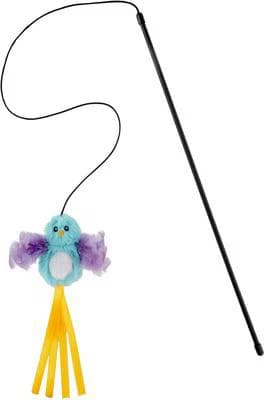
Teaser wand with a feathered bird charm and catnip to trigger your cat's chase-and-pounce instinct.
Webvet may earn a commission when you click through to Chewy, at no extra cost to you.

A cat that trails you from the kitchen to the couch to the bathroom is not just being nosy. Outside of mealtimes, following you around is a way of staying close to a person it likes and trusts. Your cat could be anywhere in the home and is choosing to be wherever you are.
Pay attention to the tail during these moments. A tail held straight up like a flagpole, often with a soft curl or question-mark hook at the tip, is a confident, friendly greeting. It is the feline version of a wave and an invitation to interact. A tail wrapped gently around your arm or hand is an even warmer display of affection.
Kneading and Purring: Comfort You Provide

Kneading is when a cat pushes its front paws into a soft surface in a rhythmic, alternating motion, sometimes called "making biscuits." The behavior traces back to kittenhood, when kittens knead their mother to stimulate milk. When an adult cat kneads on your lap or chest, it has carried that feeling of safety and comfort into adulthood and is associating it with you.
Purring usually goes hand in hand with kneading. While cats can purr for several reasons, a relaxed cat that purrs while curled up against you, eyes half-closed, is signaling contentment. If your cat settles in, kneads, and rumbles, it considers you a source of security.
The behaviors that signal affection in cats are almost all rooted in trust and safety. A cat shows love by making itself comfortable and vulnerable around you, not by performing for you.
Grooming and Licking You
Cats spend a large part of their day grooming, and they extend that grooming to the members of their inner circle. When your cat licks your hair, hand, or face, it is treating you the way a mother cat treats her kittens and the way bonded cats groom one another, a behavior called allogrooming.
A cat's tongue is rough and the licking can be surprisingly insistent, but it is a genuine sign of acceptance. Your cat is caring for you and reinforcing the shared group scent. Enjoy it, and if the licking becomes too much, redirect gently rather than scolding.
Sleeping On or Near You
Sleep is a cat's most vulnerable state, so where a cat chooses to sleep says a great deal about who it trusts. A cat is alert to threats even while resting, so curling up on your lap, against your side, or at the foot of your bed means it feels protected enough to let its guard down completely in your presence.
Sleeping near you also blends your scents and conserves warmth, both of which deepen the social bond. If your cat seeks you out at nap time, take it as a quiet but strong vote of confidence.
Bringing You "Gifts"
It is not always glamorous, but a cat that drops a toy, a sock, or, less happily, a real "catch" at your feet is sharing something it values. Cats are skilled hunters, and offering prey or prey-like objects to a member of the family is thought to be a social, sharing behavior.

Single-ingredient freeze-dried raw minnows: a high-protein, grain-free cat treat with nothing added.
Webvet may earn a commission when you click through to Chewy, at no extra cost to you.
You may not love the gift itself, but the gesture is affectionate. Respond calmly and with a little praise rather than disgust, and redirect hunting energy into interactive toy play so your cat has a healthier outlet.
Showing You the Belly
A cat's belly is its most vulnerable area, protecting vital organs. When your cat flops over and exposes its stomach in your presence, it is showing a high level of trust and relaxation.
One important caveat: a belly display is usually an invitation to interact, not always an invitation to touch the belly. Many cats dislike belly rubs and will grab your hand with claws or teeth if you try. Take the exposed belly as the compliment it is, and respond with chin scratches or gentle head rubs instead.
What If My Cat Doesn't Show These Signs?
Not every cat is a lap cat, and a reserved cat is not necessarily an unhappy or unbonded one. Personality, early socialization, breed tendencies, and past experiences all shape how openly a cat shows affection. A formerly stray or under-socialized cat may take months to warm up, and some cats simply express love in subtle, low-key ways their whole lives.
Watch for the quiet signals: a cat that stays in the same room as you, relaxes in your presence, or comes to check on you is showing trust even if it never kneads or sleeps on your chest. Sudden changes matter more than personality. If a previously affectionate cat suddenly withdraws, hides, stops eating, or changes its litter box habits, that can signal illness or stress and is worth a call to your veterinarian.
How To Strengthen the Bond With Your Cat
If you want a closer relationship with your cat, the goal is simple: become a reliable source of good things and respect your cat's boundaries. Trust grows from predictability.
Let your cat set the pace
Avoid forcing interaction. Sit nearby, let your cat approach you, and reward it for choosing to come close. Cats bond far faster with people who do not corner or grab them.
Play together every day
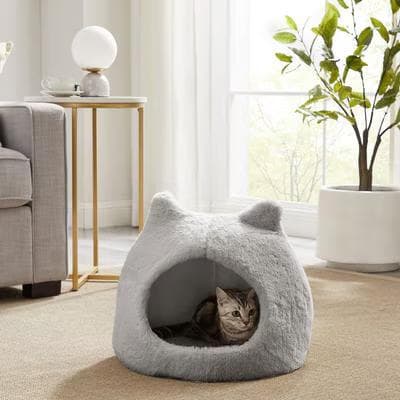
Covered, igloo-style cat bed in soft plush with a water-resistant bottom, giving cats a cozy enclosed spot to curl up. Grey.
Webvet may earn a commission when you click through to Chewy, at no extra cost to you.
Interactive play with a wand or teaser toy lets your cat act out its natural hunt-catch-kill sequence with you as the partner. A couple of short daily sessions burn energy, reduce stress, and build a strong positive association with you. End sessions with a "catch" so your cat feels satisfied.
Hand-feed treats and use food strategically
Food is one of the most powerful bonding tools you have. Offer high-value treats from your hand, reward calm approaches, and let your cat associate your presence with good things. For a shy or new cat, tossing a treat nearby and letting it eat on its own terms builds trust without pressure.
Respect the slow blink and quiet time
Return your cat's slow blinks, talk to it softly, and let it nap near you without disturbance. Affection in cats is often about calm shared presence rather than active play, so simply being a steady, low-pressure companion matters.
Provide security and enrichment
A cat that feels safe is a cat that can afford to be affectionate. Vertical space like a cat tree, cozy hiding spots, scratching posts, and a calm environment all lower stress. Reducing ambient anxiety, including with pheromone products for nervous cats, frees your cat up to bond rather than stay on guard.
Keep routines predictable
Feed, play, and clean the litter box on a consistent schedule. Predictability tells your cat the world is safe and that you are the dependable center of it, which is the foundation of every affection signal in this guide.
Frequently Asked Questions
Does my cat actually love me, or just want food?
Both can be true, but affection goes beyond mealtime. If your cat seeks you out when it is not hungry, follows you around outside of feeding times, slow blinks, head-bunts, or chooses to rest near you, those are bonding behaviors unrelated to food. A cat that only appears at the food bowl and avoids you otherwise is a different picture, and one worth working on with patient, reward-based bonding.
How do I tell my cat I love it back?
Speak its language. Return slow blinks with soft, relaxed eyes, let it initiate physical contact, offer gentle chin and cheek scratches, play with it daily, and respect its no when it wants space. Consistency and calm, low-pressure attention communicate affection to a cat far better than hugs or being picked up.
Why does my cat headbutt me?
Head-butting, or bunting, is your cat depositing scent from glands on its face onto you to mark you as a trusted member of its group. It is one of the most affectionate things a cat can do and signals comfort and ownership in the friendliest possible sense.
My cat used to be affectionate but suddenly stopped. What happened?
A sudden drop in affection, especially with hiding, reduced appetite, litter box changes, or aggression, can point to pain, illness, or a stressor in the environment such as a new pet, move, or schedule change. Behavior changes are one of the main ways cats show they do not feel well, so contact your veterinarian to rule out a medical cause.
Do cats bond with one person more than others?
Many cats do form a closer attachment to one household member, often the person who feeds them, plays with them, or simply provides the calmest and most predictable interactions. This does not mean the cat dislikes everyone else; it just has a favorite. You can build your own bond through consistent feeding, play, and respectful, unhurried attention.
How long does it take for a cat to bond with a new owner?
It varies widely. A confident, well-socialized cat may bond within days, while a shy, fearful, or formerly stray cat can take weeks or months. Let the cat set the pace, keep routines predictable, use food and play to build trust, and avoid forcing contact. Patience almost always pays off.
Is it normal for my cat to show affection in only subtle ways?
Completely normal. Some cats are simply more reserved and will never be cuddly lap cats, yet still feel deeply bonded. Staying in the same room, relaxed body language, checking in on you, and a calm tail-up greeting are all real signs of affection. Judge your individual cat against its own baseline rather than against a more demonstrative pet.

Wendy Toth is an entrepreneurial writer, editor, and mom of two humans, two dogs and one cat. She’s currently Content Director here at PetFul. For the last 15 years she has held positions at Parents Magazine, NBC, PetSmart, and GreatPetCare, where she was co-founder. Her writing has appeared in many national outlets including Pet Lab Co., Retail Me Not, Ask Men, Wild Society Nutrition, and The New York Times. Because she loves her work so much, she’s obsessed with helping others find career fulfillment, and covers it regularly at PowerSuiting.
Veterinarian · BVMS MRCVS
Dr. Pippa Elliott, BVMS, MRCVS, is a veterinarian with nearly 30 years of experience in companion animal practice. Dr. Elliott earned her Bachelor of Veterinary Medicine and Surgery from the University of Glasgow. She was also designated a Member of the Royal College of Veterinary Surgeons. Married with 2 grown-up kids, Dr. Elliott has a naughty Puggle named Poggle, 3 cats and a bearded dragon.


