Why Does My Kitten Follow Me Everywhere?
Kittens often follow familiar people for company, food and reassurance. Learn how to recognize a relaxed pattern, support safe independent play and spot changes that need veterinary advice.


BVMS MRCVS

This article contains affiliate links. Webvet may earn a commission when you buy through them, at no extra cost to you.
Why does my kitten follow me everywhere? Often, you are a familiar source of food, play, reassurance and company while your kitten learns about their home. Following can be normal, especially after adoption. The useful distinction is whether your kitten can also eat, explore, sleep and settle comfortably without staying beside you every moment.
Look at the whole pattern before labeling a kitten clingy or anxious. A relaxed kitten who trots after you and then naps is different from one who cannot settle, stops eating or becomes distressed whenever you move away. Your goal is to build confidence while keeping the relationship warm and predictable.
- 1Following alone does not prove anxiety or imprinting.
- 2Offer predictable care, safe hiding places and short play sessions.
- 3Sudden behavior changes or persistent distress deserve veterinary advice.
Is it normal for a kitten to follow you around?
It is normal for a kitten to follow you around sometimes. Young kittens are learning where resources are, which sounds are ordinary and who is safe to approach. Following a familiar person can bring them closer to food, interesting activity or a comfortable place to rest. It does not automatically mean that something is wrong with their attachment. When a kitten follows you everywhere, it usually means that staying near a familiar person is rewarding or reassuring. That meaning depends on the context; it is not proof of distress.

Webvet may earn a commission when you click through to Chewy, at no extra cost to you.
A clingy kitten may simply be checking what you are doing. Notice whether their body looks loose, their ears are in a neutral position and they can choose to disengage. Following with a relaxed tail and stopping to investigate a toy gives you more useful information than counting the number of rooms they enter behind you.

Try keeping a settling record: note when following begins, what happened just beforehand and what helps your kitten settle. A comfortable distance might initially be the other end of your room. Over time, notice whether they can rest there while you move about. This observation method is a practical aid, not a diagnostic test or a schedule every kitten must meet.
- Before meals: check whether you are seeing an expected feeding routine rather than distress.
- After a nap: a kitten may be ready for play and social contact.
- In a new room: curiosity and uncertainty can happen together.
- During quiet time: voluntary rest away from you is a useful sign of comfort.
A simple food activity can help separate attention from constant hand-feeding. If your kitten already eats suitable dry food, supervise an easy introduction to the Catit Play Treat Puzzle. Use part of their normal food allowance, make the first attempts easy and check that the food and toy are appropriate for their age. A puzzle is enrichment, not a treatment for distress.
Does following mean your kitten has imprinted on you?
You cannot tell that a kitten has imprinted on you just because they follow. People often use “imprinting” to describe a close bond, but following is not a validated test of a special, irreversible attachment. A kitten can form positive relationships with more than one person, and affectionate behavior can change as their confidence and daily routine develop.
Early experiences matter, but they do not let you read a kitten's history from a single behavior. A rescued kitten who seeks company has not necessarily experienced trauma. Likewise, a kitten who prefers to watch from a distance is not necessarily poorly socialized. Avoid turning either pattern into a fixed personality label that discourages patient, responsive care.
Help a new kitten feel secure
Begin with a quiet, kitten-proofed base containing separate feeding, drinking, toileting and resting areas. Give them somewhere to hide without being pulled out for attention. Sit nearby and let them decide when to approach. Gradually expand access as they become comfortable, rather than carrying them through a busy home and expecting immediate confidence.
Webvet may earn a commission when you click through to Chewy, at no extra cost to you.
The Cats Protection new-kitten guide is a useful preparation resource. Keep early introductions calm and supervised. If children are involved, teach them to let the kitten leave and to use toys instead of hands for play. Predictable, gentle interactions are more helpful than repeatedly testing whether the kitten will tolerate being held.
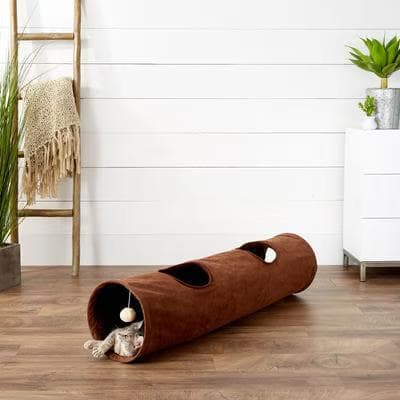
An open-ended Frisco crinkle play tunnel can provide an optional place to investigate during supervised play. Position it where your kitten can leave easily, rather than using it to block access or confine them. Check it regularly for damage and remove it if your kitten chews loose material. A plain safe hiding box is also a useful low-cost choice.
How to tell if a kitten really likes you
A kitten who really likes your company may approach voluntarily, rub against you, play nearby or choose to rest close to you. Look for a repeated pattern of relaxed, willing interaction rather than one supposedly definitive sign. Purring can occur in several contexts, so it does not establish that a kitten is comfortable with everything happening around them.
Give your kitten a choice during contact. Offer a hand to investigate, try a brief gentle stroke if they approach and pause. If they move closer, you can continue; if they turn away or leave, stop. Following you into a room is an invitation to notice them, not automatic consent to pick them up or keep them on your lap.
Their preferred distance may vary by activity. A kitten might sleep beside you but play alone, or follow while you make breakfast and retreat when visitors arrive. These differences do not rank the strength of your bond. Keep watching for changes in appetite, energy and normal routines alongside the social behavior.
Build confidence through independent play
Kitten independent play works best as one part of a day that also includes interaction, rest and reliable care. Start with short, easy activities while you remain nearby. Let your kitten investigate at their own pace, and finish before they become frustrated or overtired. You are creating more satisfying choices, rather than trying to make them stop enjoying your company.
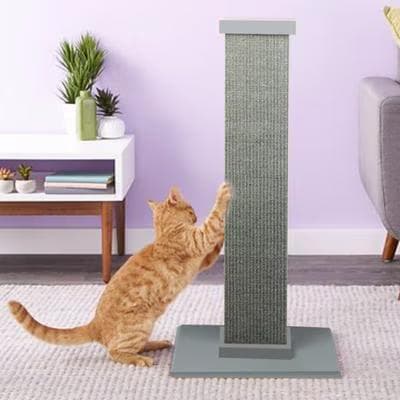
A kitten scratching post gives them an appropriate place to stretch and scratch. Choose a stable base and a surface they use willingly; placement near a waking or play area often makes more practical sense than hiding it in an unused corner. The SmartCat Ultimate scratching post is a tall sisal option, but check its footprint and stability in your room before introducing it.

Rotate a small selection of cat toys and accessories instead of leaving everything out at once. Watch how your kitten uses each item before considering it suitable for time without direct supervision. Strings, wand attachments, small detachable parts and damaged toys should be put away. A toy being sold for cats does not make every style appropriate for every kitten.
Webvet may earn a commission when you click through to Chewy, at no extra cost to you.
- Offer a short interactive play session using a toy your kitten can catch.
- Follow with a suitable meal or quiet activity as their routine allows.
- Give them a comfortable resting place near you, without repeatedly moving them back onto your lap.
- Practice brief ordinary movements around the room while they are already relaxed.
- Increase distance only when they remain comfortable; return to an easier step if they become distressed.
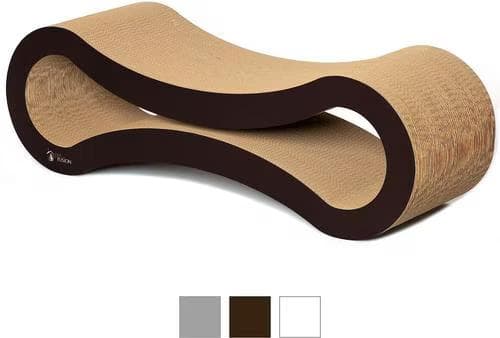
Some kittens prefer a horizontal scratching surface. The PetFusion Ultimate Cat Scratcher Lounge provides a broad alternative to an upright post. There is no need to buy both styles before learning what your kitten enjoys. Catnip response also varies, so choose the shape and scratching surface for their usefulness rather than expecting catnip to change attachment behavior.
Make the home interesting without making it overwhelming
Keep appealing activities within safe reach. A kitten who follows because nothing else is available may benefit from a hiding box, a suitable scratching surface and a supervised view of household activity. Secure windows and screens, remove dangerous cords and keep household chemicals inaccessible. Do not rely on a high perch or an open window as a substitute for a safe environment.
Use your settling record to change one practical thing at a time. For example, try a brief play session before a period when you need to work, then see whether your kitten rests at a comfortable distance afterward. If they still follow, the experiment has given you information; it does not mean you have failed or that the kitten needs punishment.
Clingy kitten or separation-related distress?
Kitten separation anxiety cannot be diagnosed from following alone. The timing and intensity of behavior matter: does distress occur specifically around separation, or does your kitten seek activity after a long quiet period? Persistent vocalizing, frantic behavior, toileting changes or difficulty settling deserve attention, but they can have several explanations, including unmet needs and medical problems.
If possible, observe a brief ordinary absence using a camera you already have. If you need a dedicated option, the INSTACHEW Purrsight pet camera is one choice; buying a camera is optional. Record what happens rather than setting up an extended “test” designed to see how long your kitten cries. Note whether they settle, eat, use the litter box and rest. Share concerning observations with your veterinarian, who can assess health first and recommend a qualified feline behavior professional when appropriate.
Webvet may earn a commission when you click through to Chewy, at no extra cost to you.
Cats Protection explains separation-related behavior and why boredom, frustration and routine changes should also be considered. A diagnosis matters because a distressed kitten may need an individualized plan, while a relaxed kitten simply asking for play may need a better daily routine. Products alone cannot resolve that distinction.
When to call your veterinarian
Call your veterinarian if following suddenly increases or comes with reduced appetite, vomiting, diarrhea, lethargy, unusual crying or a clear change in toileting. Young kittens can become unwell quickly, so seek advice promptly rather than spending several days adjusting toys. Severe weakness, collapse or trouble breathing needs urgent veterinary attention.
Mention the kitten's age, how long they have lived with you and any recent changes in the household. Explain what “clingy” looks like in concrete terms: following between rooms, crying behind a door, refusing food or failing to settle. This helps the veterinary team decide what assessment is needed without relying on a label that different people may interpret differently.
Following in adult cats
Why does my cat follow me everywhere, even to the bathroom? Adult cats may follow for food, company, curiosity or a learned routine, but their life stage and health context differ from a newly adopted kitten's. Our guide to why adult cats follow their owners covers those wider situations, including cats who follow but do not want to cuddle.
A British Shorthair who follows you everywhere still needs the same individual assessment of routine, comfort and health as another adult cat. Breed labels cannot tell you why that particular cat is following. Notice whether the behavior is longstanding or new, whether it happens around meals or closed doors, and whether the cat can settle comfortably afterward.
A cat who sleeps with you, follows at night or watches while you use the bathroom is not necessarily guarding you when you pee or poop. You cannot establish protective intent from that observation. If a cat follows while purring, consider the whole context rather than assuming one meaning. Sudden changes in an adult or senior cat deserve a health check, particularly when other routines change too.
More questions about following kittens
A practical plan for a busy household

Choose a routine that the people caring for your kitten can repeat. Agree where food is offered, which toys need supervision and where the kitten can retreat undisturbed. If one person feeds every time the kitten follows while another tries to discourage it, the pattern becomes harder to understand. Consistency does not mean refusing affection; it means making everyday care more predictable.
Before a work call or household task, check the basics rather than starting with a behavior label. Has the kitten eaten on their usual schedule, had an opportunity to use the litter box and enjoyed some suitable activity? Is the room comfortable and safe? A kitten seeking contact may still want company after those needs are met, but these checks help you respond thoughtfully.
- Keep a safe resting option within sight during early practice.
- Put away supervised toys before you become occupied.
- Allow a relaxed kitten to approach, then return to your ordinary activity.
- Arrange age-appropriate care when you will be away; a confidence exercise is not a substitute for supervision.
If you must leave the room, begin with ordinary brief movements when your kitten is comfortable. You might stand up, take a few steps and sit down again before progressing to stepping through a doorway. There is no universal number of seconds or days that fits every kitten. If they stop coping, make the situation easier and seek individual advice rather than extending the absence to meet a target.
What improvement can look like
Success is not a kitten who never follows. It may be a kitten who follows to the doorway, notices a familiar toy and returns to play, or one who rests on their own mat while you work nearby. These are examples of flexible behavior, not milestones a kitten must reach at a particular age. Comfortable independence and an affectionate bond can develop together.
Review the settling record across several ordinary days rather than judging one unusually busy afternoon. Note changes in the household, visitors, disrupted naps and feeding routines alongside the following. If behavior becomes more intense instead of easier, or if the kitten no longer enjoys their usual activities, bring the record to your veterinarian. It can make the discussion more precise without pretending to diagnose the cause at home.
Let other caregivers become familiar too
When another trusted person helps, ask them to offer the same calm care rather than compete for the kitten's attention. They can sit quietly, participate in a short play session or provide a normal meal while allowing the kitten to approach. Do not pass a reluctant kitten between people to “get them used to it.” Familiarity is more useful when the kitten retains a choice about contact.
Make changes gradually when possible, especially if your working hours are about to shift. Keep feeding, play and rest opportunities as consistent as circumstances allow. If a planned absence exceeds what your kitten can manage safely, arrange appropriate care. Buying more toys cannot replace reliable human care, and a kitten's needs should determine the arrangement rather than a generic claim that cats are independent.
Following kitten FAQs
Frequently Asked Questions
Should I adopt another kitten to stop the following?
Another kitten is not a guaranteed solution for following or distress. Before an adoption decision, consider both animals’ needs, temperament, health, available space and the time required for careful introductions. If your kitten seems unable to cope alone, get veterinary and behavior advice before deciding to adopt another kitten as a way to stop the following.
Should I give food every time my kitten follows me?
Use a feeding routine appropriate for your kitten’s age and veterinary advice rather than giving food every time they follow you. Repeated snacks can teach a strong kitchen-following habit and make intake harder to track. Food used in puzzles should come from the planned daily allowance, not replace balanced meals or add untracked extra portions.

Wendy Toth is an entrepreneurial writer, editor, and mom of two humans, two dogs and one cat. She’s currently Content Director here at PetFul. For the last 15 years she has held positions at Parents Magazine, NBC, PetSmart, and GreatPetCare, where she was co-founder. Her writing has appeared in many national outlets including Pet Lab Co., Retail Me Not, Ask Men, Wild Society Nutrition, and The New York Times. Because she loves her work so much, she’s obsessed with helping others find career fulfillment, and covers it regularly at PowerSuiting.
Veterinarian · BVMS MRCVS
Dr. Pippa Elliott, BVMS, MRCVS, is a veterinarian with nearly 30 years of experience in companion animal practice. Dr. Elliott earned her Bachelor of Veterinary Medicine and Surgery from the University of Glasgow. She was also designated a Member of the Royal College of Veterinary Surgeons. Married with 2 grown-up kids, Dr. Elliott has a naughty Puggle named Poggle, 3 cats and a bearded dragon.


