Invisible Fence for Dogs: Limits, Welfare Risks and Safer Alternatives
Electronic boundaries do not create a physical fence. Understand wired, wireless and GPS limitations, welfare concerns and the safer options for supervised outdoor access.

This article contains affiliate links. Webvet may earn a commission when you buy through them, at no extra cost to you.
An invisible fence for dogs marks an electronic boundary rather than building a physical barrier. Buried-wire, wireless and GPS systems differ in how they locate that boundary, but none closes the yard to traffic, wildlife or people. Before comparing brands, decide whether the system can address the actual safety problem without relying on aversive correction.
- 1Electronic boundaries do not physically stop a dog leaving or another animal entering.
- 2Shock-based containment introduces welfare concerns and is not the approach recommended here.
- 3A secure physical barrier or supervised access with reward-based training is the better starting point.
What an invisible fence does and does not do
These systems typically combine a boundary signal with a receiver worn by the dog. Depending on the product and settings, approaching or crossing the boundary may trigger a warning and an aversive stimulus. The dog is expected to learn to avoid the area where that happens.

An outside-in risk check asks what wildlife, people or loose dogs can enter the property. An invisible fence does not exclude intruders, even when its collar boundary is operating correctly. Decide how those encounters will be prevented or supervised before considering the convenience of any electronic map.
The most useful first check is outside-in: what can enter the property? A collar cannot stop a loose dog, wildlife, a child or a visitor from crossing the same invisible line. It also cannot block access to a pool or prevent an open gate becoming a route out.
| Safety question | Electronic boundary | Suitable physical enclosure |
|---|---|---|
| Does it physically block departure? | No | It can, when correctly designed and maintained |
| Does it block outside animals entering? | No | It can reduce access, depending on design |
| Does it depend on a worn receiver? | Usually | No |
| Does it still require inspection and supervision? | Yes | Yes |
The VCA overview describes limitations including outside animals entering and dogs crossing despite correction. Those limits matter even when a system is operating as designed.
A smaller supervised enclosure
For a smaller supervised area, compare the MidWest Gold Zinc Exercise Pen with Step-Thru Door with the dog’s height, jumping and climbing behavior. It is a portable exercise enclosure, not a permanent perimeter fence or an unattended outdoor kennel.
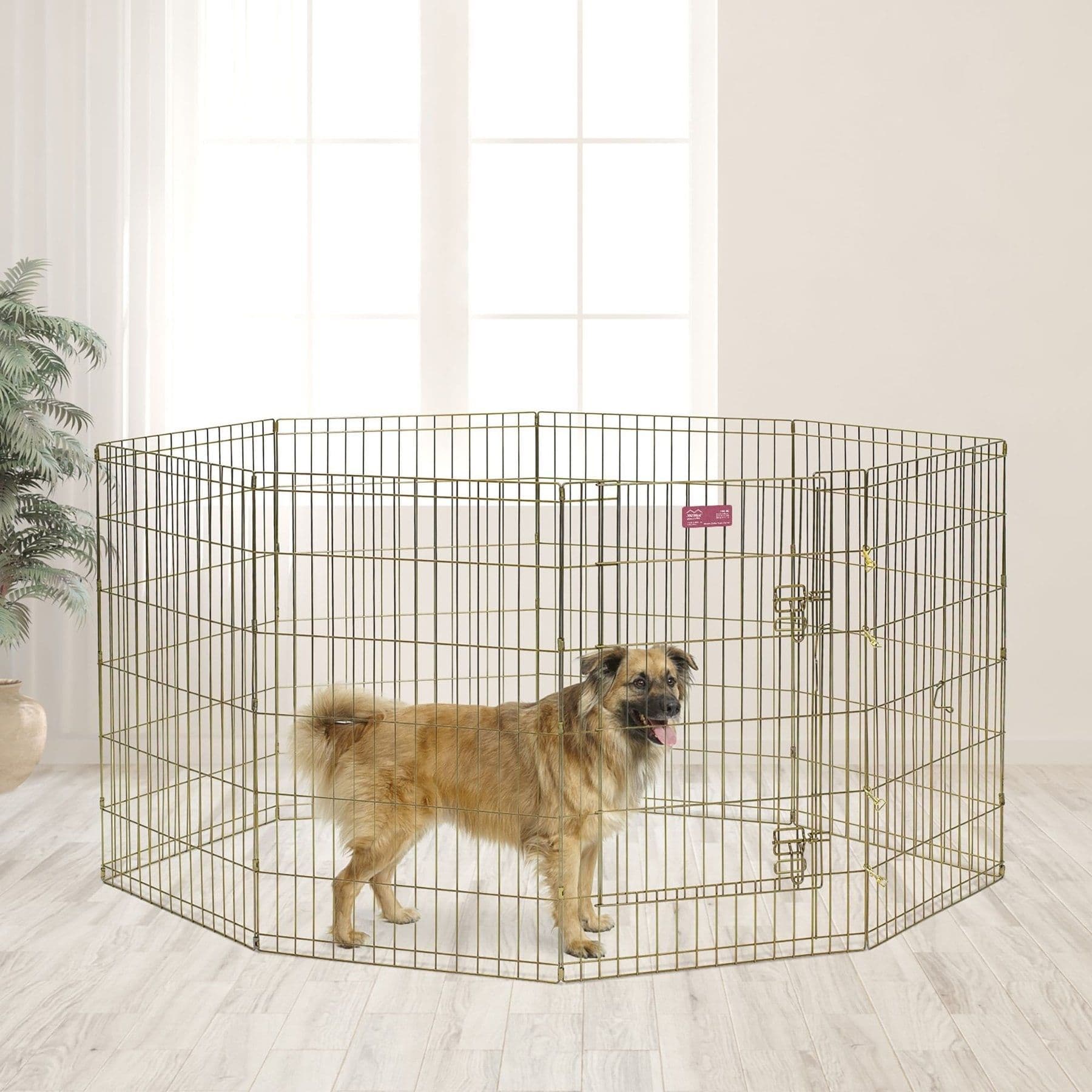
A 36-inch metal exercise pen with step-through access; use an approved layout and supervise the individual dog.
Webvet may earn a commission when you click through to Chewy, at no extra cost to you.
Wired, wireless and GPS systems compared
A buried-wire system uses an installed wire to define a route. A wireless transmitter typically creates a signal-based area around a base unit. GPS systems use satellite positioning and software-defined boundaries. Product details vary, so a feature from one collar should not be assumed in another.
| Technology | Boundary planning issue | Ongoing ownership issue |
|---|---|---|
| Buried wire | Physical installation and the wire's route | Breaks, repairs and transmitter operation |
| Wireless transmitter | Allowed coverage shape and signal conditions | Placement, power and boundary consistency |
| GPS | Location accuracy and the product's minimum-area rules | Charging, connectivity, software and possible subscription |
These differences affect convenience and cost, but do not change the absence of a physical barrier. A more customizable map is not proof that a dog cannot leave or that an approaching animal will be kept out.
Before considering any system, read what happens when power fails, a battery is depleted, reception changes or the dog crosses the boundary. Do not infer the answers from a tracking app's map. Finding a dog after escape and preventing escape are different functions.
Does dog size change the containment limit?
An invisible fence does not become a physical barrier for a big dog, and a wireless model marketed for small dogs has the same basic limitation. Receiver fit, minimum size and operation are model-specific. Do not choose a stronger correction as the answer for a large dog that crosses the boundary.
For either a small or large dog, assess escape consequences, outside animals and power failure before comparing brands. This guide does not name a best wireless invisible fence by body size because size alone cannot establish safe containment. The preferred starting point remains physical protection or supervised access without shock-based correction.
Supervised access without an electronic boundary
The Coachi Training Line can support supervised sniffing or recall practice where you can manage the full line length. Keep it clear of entanglement hazards and use an appropriate fitted harness; never leave the dog tethered to it alone.
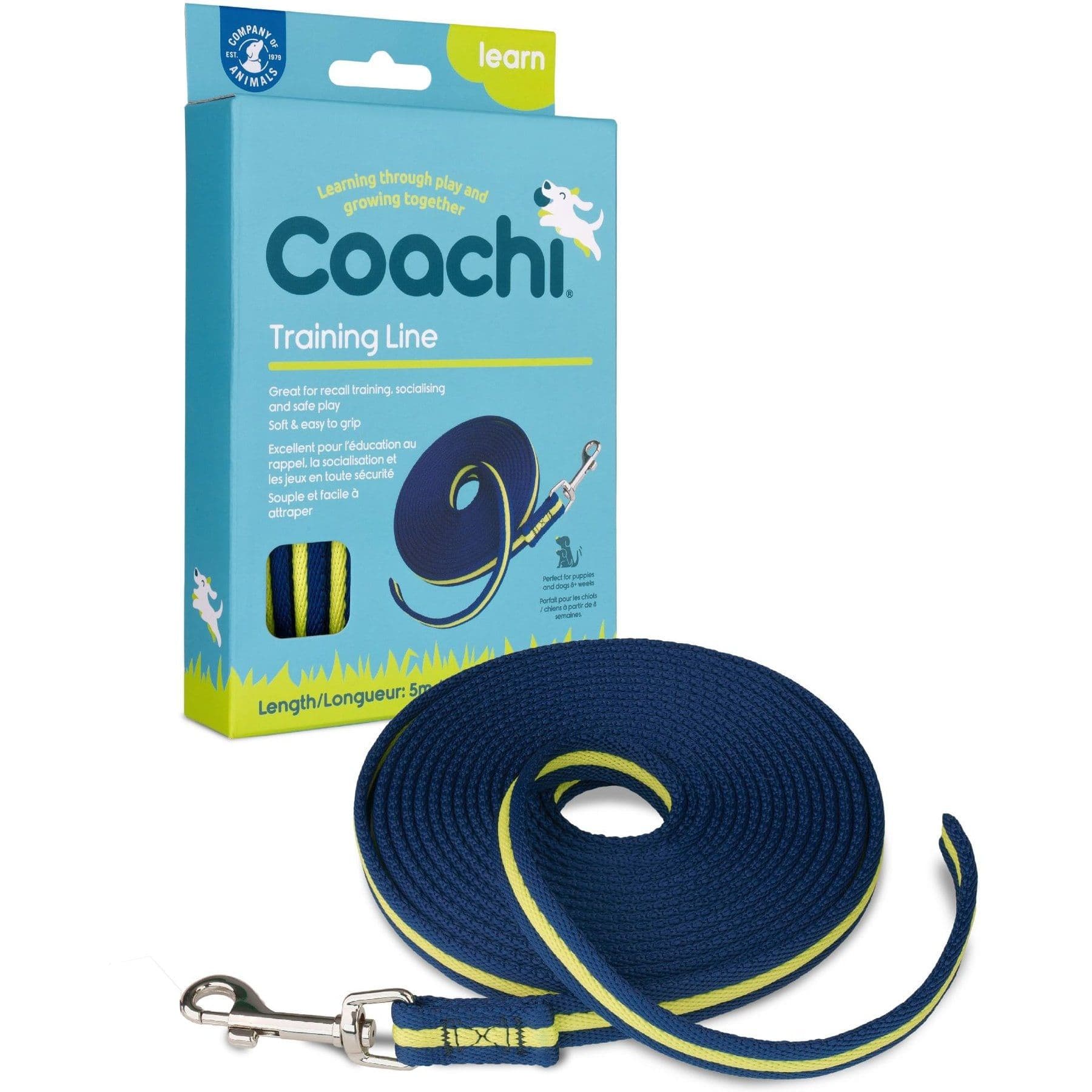
A training line for supervised outdoor access; manage slack and use it as part of an appropriate handling plan.
Webvet may earn a commission when you click through to Chewy, at no extra cost to you.
Why a warning signal does not guarantee containment
A dog may cross a boundary when chasing, fleeing or highly aroused. Once outside, the return route may create a different problem depending on the system. A product's advertised reentry feature must be checked for that exact model; it does not undo the risks encountered beyond the property.
Boundary training also does not control the rest of the environment. A delivery driver can open a physical gate, a neighbor's dog can approach, and wildlife can enter. The dog may be exposed to those events while wearing a collar that changes what happens when they move toward or away from them.
Ask what the management plan does in three situations:
- The dog is startled and wants to flee.
- Another animal enters the yard.
- The electronics stop working while no one is watching.
If the answer relies on the dog making the right choice under stress, the boundary is not providing the kind of physical protection many owners expect from the word “fence.”
A fitted harness for supervised outings
The Frisco Comfort Padded Dog Harness is a padded option to fit before supervised leash or training-line use. Check the current size chart and attachment instructions, then watch movement and slipping. Padding does not make a poorly fitted harness escape-proof.
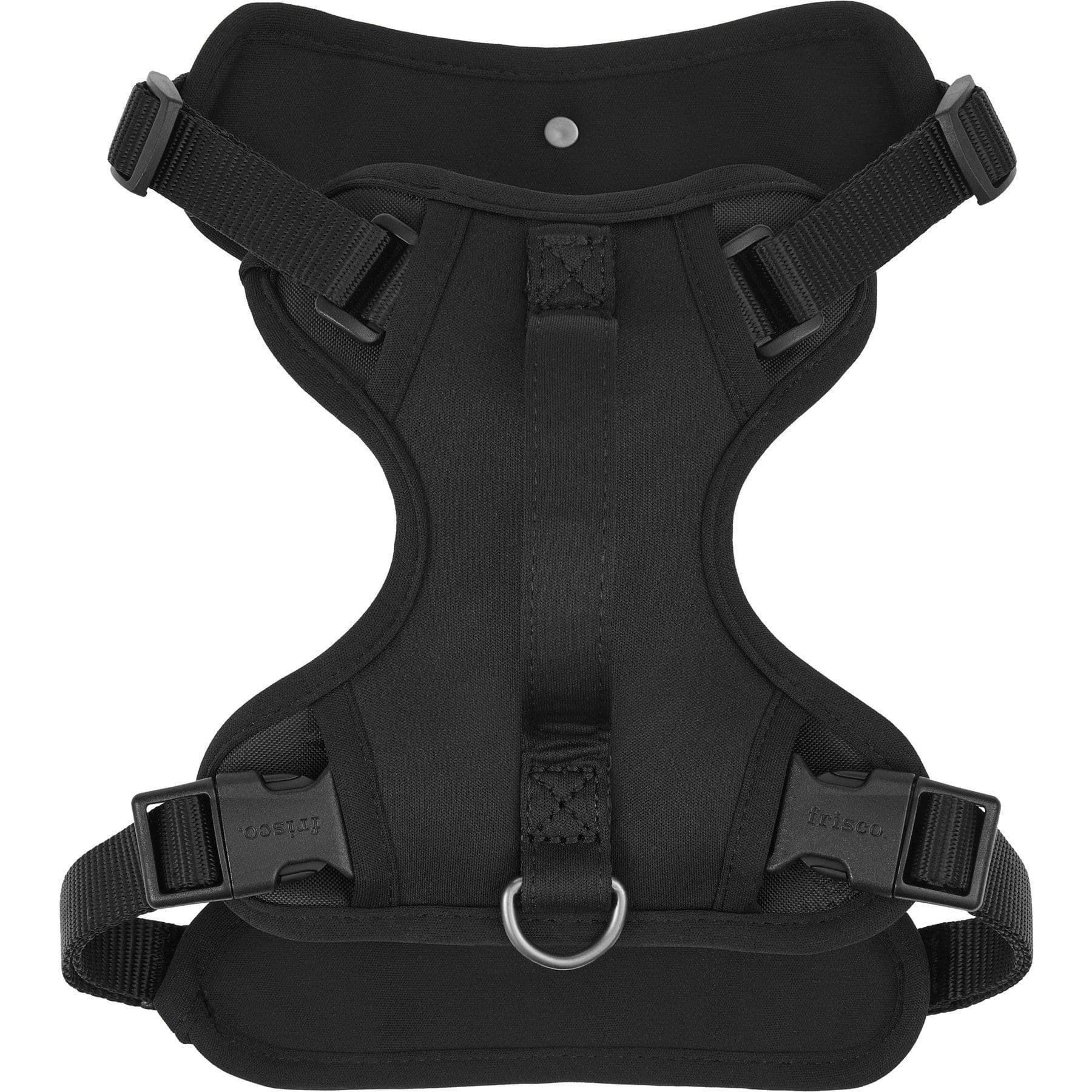
A padded harness to fit and check before supervised outdoor walks or training-line sessions.
Webvet may earn a commission when you click through to Chewy, at no extra cost to you.
Welfare concerns with electronic correction
The American Veterinary Society of Animal Behavior recommends reward-based training and opposes aversive methods, including electronic collars. Its current position supports choosing management and training that do not depend on pain or fear.
This guide therefore does not rank shock-based fences as recommended purchases. Marketing terms such as “correction,” “static” or “stimulation” do not remove the need to consider what the dog experiences and what associations may form around the boundary.
If your dog is already fearful, reactive or distressed outdoors, discuss that behavior with your veterinarian and a qualified reward-based professional. The aim is not simply to suppress movement or barking. A useful plan helps the dog cope while preventing access to hazards.
Compare safer ways to manage outdoor access
A physical fence, a smaller secure exercise area or supervised leash access may solve the actual problem more directly. The appropriate choice depends on the property, dog and daily routine.

Consider these options:
- Secure physical fencing: Assess height, gaps, digging, gates and local requirements. Inspect regularly; no fence is maintenance-free.
- A supervised exercise pen: Useful for an appropriate dog and setting, but not a permanent escape-proof yard. See the playpen guide.
- A leash or suitable long line with a well-fitted harness: Allows supervised access where a full enclosure is not available. Keep the line clear of entanglement hazards and maintain control.
- Indoor boundary management: A suitable dog gate can help prevent rushing through an exterior doorway.
If leash walks are difficult, start with reward-based loose-leash work. A long line is not a tether for leaving a dog alone, and it should not allow the dog to reach a road or another animal before you can respond.
A dog door adds access, not containment. Avoid combining easy independent exit with a boundary that does not physically protect the destination. For indoor rest between supervised outings, use an appropriate safe room or a comfortable option from the crate guide.
For a suitable outdoor opening, the Cardinal Outdoor Gate SS-30OD provides a physical gate to compare with the mounting surfaces and span. Follow its installation instructions and check adjacent gaps; closing one opening does not secure the entire property.
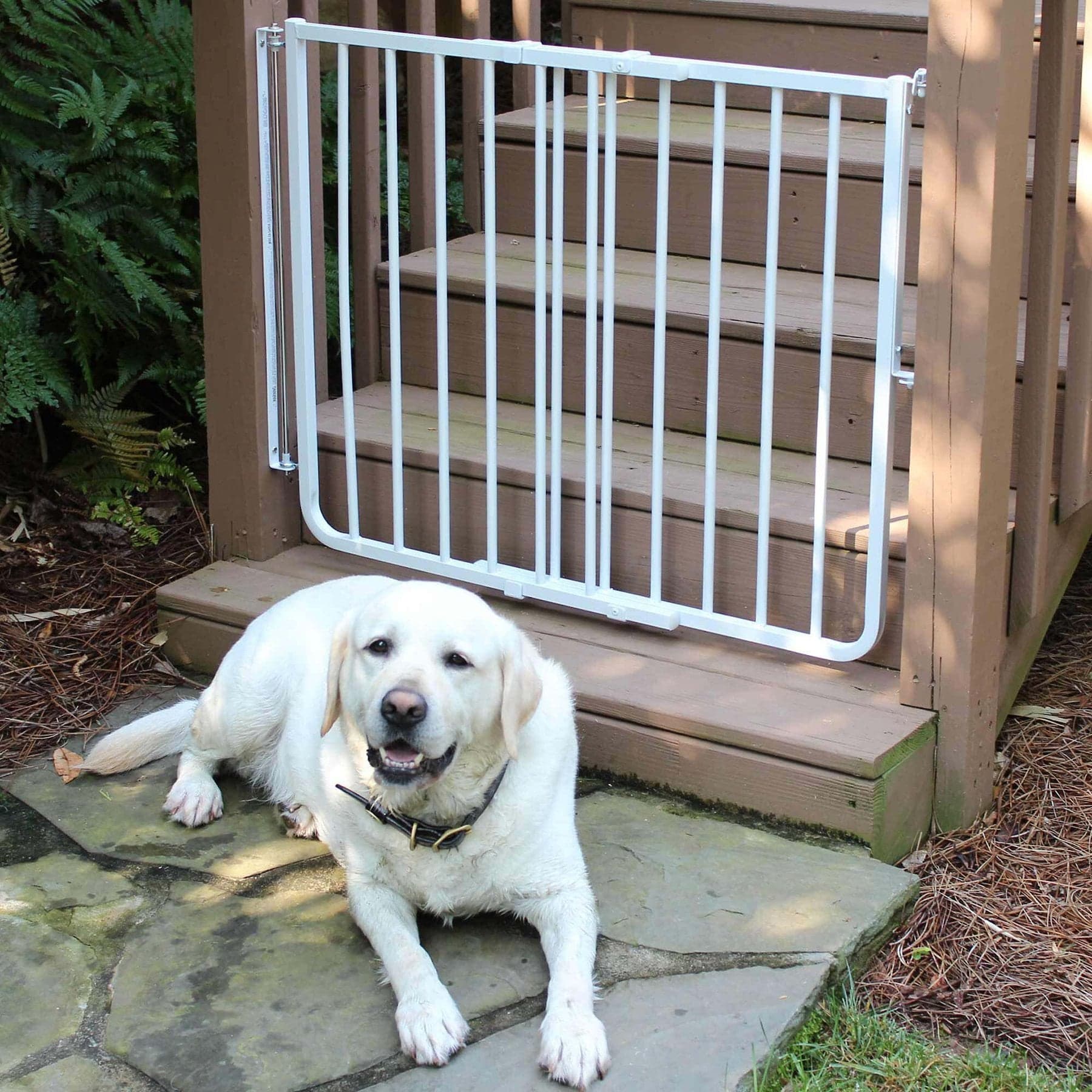
An outdoor gate option; follow its exact mounting instructions and inspect the whole surrounding boundary.
Webvet may earn a commission when you click through to Chewy, at no extra cost to you.
Costs to compare before buying
Match the alternative to the property
A large rural property does not have to be fenced in its entirety to provide one suitable dog area. A smaller physically enclosed space near the house may be easier to inspect, supervise and keep free of hazards.
The useful comparison is the area the dog can safely use, not the maximum number of acres a device advertises.
For a rented home where permanent fencing is unavailable, supervised leash access may be more realistic than an electronic boundary. A portable pen can support short, watched periods for an appropriate dog, but it should not be described as equivalent to a permanent enclosure. Check permission for any equipment that attaches to the property.
Assess each dog and nearby hazards
For a household with several dogs, assess each dog independently. One may rest calmly in a yard while another digs, climbs or reacts to passing animals. A system that appears effective for the first dog does not establish suitability for the second.
Separate routines or spaces may be more practical than requiring one device to manage every behavior.
Consider the consequences of escape
For a property beside a busy road, treat an escape as a foreseeable high-consequence event. Select a plan with physical protection and human control appropriate to that setting. Convenience, a large mapped area or a confident product description should not outweigh the actual route from the yard to traffic.
These examples are decision aids, not construction specifications. Physical fences still need suitable height, materials, gate hardware and attention to digging or climbing. Use qualified installation advice where necessary, and review the arrangement whenever the dog's behavior or the property changes.
Compare the cost of the complete plan
Do not compare only the starter-kit price. Electronic systems may require installation, additional receivers, replacement batteries, repairs or subscriptions. Physical fencing has its own installation and maintenance costs, while supervised access requires time and sometimes paid help.
Write down the total for the actual care plan:
- Equipment and installation.
- Required accessories for every dog.
- Ongoing service or subscription charges.
- Maintenance and replacement parts.
- Human supervision and training support.
Current prices vary by model and location, so a generic national average can obscure the decision. Get current written quotes and compare what each option actually provides. A lower price does not make an option equivalent if it leaves the main hazard unresolved.
Work through a small unfenced yard
Suppose the only open exercise space is eight meters from a road. A ten-meter line used at full length can reach beyond that boundary even before allowing for the handler’s position and the dog’s body. Buying a long line does not turn that yard into a contained area.
| Property observation | Practical decision |
|---|---|
| Road or driveway within the line’s possible reach | Choose a more distant location or a suitably shorter controlled setup; do not rely on recall alone |
| Trees, furniture or multiple people across the route | Reduce entanglement opportunities and maintain direct supervision |
| No place to move without reaching a hazard | Use a different exercise location or an appropriate physical enclosure |
| A gate closes only the porch opening | Inspect the remaining perimeter; the gate does not secure an otherwise open yard |
Coachi describes its ten-meter Training Line as recall-training equipment. Its guidance distinguishes it from a standard everyday walking lead. Choose the location and the amount of line you can control before giving extra distance; never leave the dog tethered by it unattended.
If you already have an electronic fence
Reassess the property and the dog's experience before changing access. Arrange a physical or supervised management alternative so switching away from an electronic boundary does not simply leave the dog free to run into danger.
Record any escape, reluctance to enter the yard, distress near the boundary or conflict with passing animals. Share those observations with a veterinarian or qualified reward-based professional. Do not increase correction as the automatic response to a dog crossing the line.
Keep identification current and make a practical lost-dog plan, but treat those as backups. The main work is choosing a daily arrangement that prevents access to hazards while meeting the dog's needs for exercise, exploration and company.
Invisible fence questions
Frequently Asked Questions
Do invisible fences actually work for dogs?
Some dogs learn to remain within an electronic boundary, but the system does not physically prevent escape or outside entry. Reliability for a particular dog cannot be assumed from another owner's experience or a product claim.
What is the average cost?
There is no verified national average in the sources used here. As a concrete equipment example, Halo lists its Collar 5 at a regular $599, with a required plan starting at $9.99 monthly per collar. That is $718.88 for equipment plus 12 months before tax, promotions or optional extras.
A professionally installed buried-wire system needs a property-specific quote. Compare installation, additional dogs, repairs and recurring charges against a physical enclosure or supervised plan addressing the same hazards. These are different products, so one retail collar price cannot establish the average cost of an installed fence.
What is better than an invisible fence?
A suitable physical barrier or supervised access is the recommended starting point here. The best arrangement prevents access to the actual hazards without relying on shock-based correction.
Is Halo better than Invisible Fence?
Brand comparisons do not remove the shared absence of a physical barrier. Compare the exact technologies and terms if researching costs, but this guide recommends non-shock management rather than choosing a shock system as a winner.
What is the most reliable invisible fence for dogs?
There is no universal reliability claim this guide can substantiate. Dog behavior, terrain, power and product limitations matter. Choose physical protection or supervision when failure could expose the dog to traffic or other serious hazards.
What happens if a dog escapes a Halo boundary?
Halo says crossing the boundary while moving away triggers Emergency Feedback. When the dog stops or turns toward the safe zone, that feedback stops; return encouragement guides the turn back. Beyond its approximately 300-foot Protection Zone, the collar switches to Lost Mode and Return Whistle prompts.
These are manufacturer-described electronic responses, not physical restraint or a safe-return guarantee. App location updates require the stated phone and collar connectivity. Secure the dog safely after an escape, then use a physical or supervised alternative while reassessing the containment plan.
Is there a better collar than Halo?
If the goal is safer outdoor access, the better comparison may be a well-fitted harness and supervised line or a physical enclosure. Changing collar brands does not create a physical fence.
Can a dog jump over an invisible fence?
There is no wall to jump over. A dog can cross the electronic boundary by moving through it, including while running or jumping. The system relies on learned avoidance rather than a physical obstacle.
What is the monthly cost of a Halo collar?
On September 26, 2026, Halo listed Pack plans at $9.99, $14.99 and $19.99 per month, with a plan required for each collar. The lowest plan adds $119.88 per year. Verify current terms; subscription features do not create a physical barrier.

Editor
The Webvet Editorial Team is the in-house group of pet-care editors and writers behind Webvet, operated by Smart Pet Collective. The team researches, writes, and maintains Webvet's pet health, behavior, and medication content. Every article follows a defined editorial process: research from reputable veterinary and scientific sources, careful drafting, mandatory review of medical content by a credentialed veterinarian, and dated publication. Health and medication articles are medically reviewed by a licensed veterinary professional before they go live and are kept current over time.
Related reading

Electronic Dog Doors: Microchips, Collar Keys and App Controls

Dog Door for Sliding Glass Door: Panel Fit, Locks and Screens

Dog Doors: Types, Sizing and Home Safety Before You Install
