How to Stop a Dog from Pulling on the Leash Without Making Walks Miserable
Walks feel miserable when your dog drags you down the block. Here is a force-free method to teach loose-leash walking, plus the DOGISTRY harness-and-leash setup that can support calmer practice.

This guide is sponsored by DOGISTRY. WebVet independently writes the training and gear guidance below; DOGISTRY makes the recommended harness and leash.
This article contains affiliate links. WebVet may earn a commission when you buy through them, at no extra cost to you.
If your dog turns every walk into a tug-of-war, you already know how fast the fun drains out of it. Learning how to stop a dog from pulling on the leash is one of the most common goals for pet parents. The behavior can improve with consistent, reward-based practice, and DOGISTRY's front-and-back attachment system can support that work without replacing it.
Pulling is not a character flaw and it is not your dog trying to run the show. It is a habit built on simple cause and effect, which means it can be retrained with patience, a clear method, and a walking setup that quietly does some of the work for you.
This guide walks you through a practical, force-free approach: why dogs pull, the rule that changes the consequence of pulling, a step-by-step training plan, scenario-specific troubleshooting, and the DOGISTRY design choices that support the method. Progress varies by dog, environment, and consistency.
- 1Pulling is self-rewarding, not defiant: dogs learn that pulling gets them to the good stuff faster.
- 2The core rule: a loose leash means the walk continues, a tight leash means it stops.
- 3Reward the position you want (dog beside your leg) and stay consistent on every single walk.
- 4A well-fitted harness with front and back attachment options, paired with a manageable leash, can make training easier for both of you.
 Sponsored
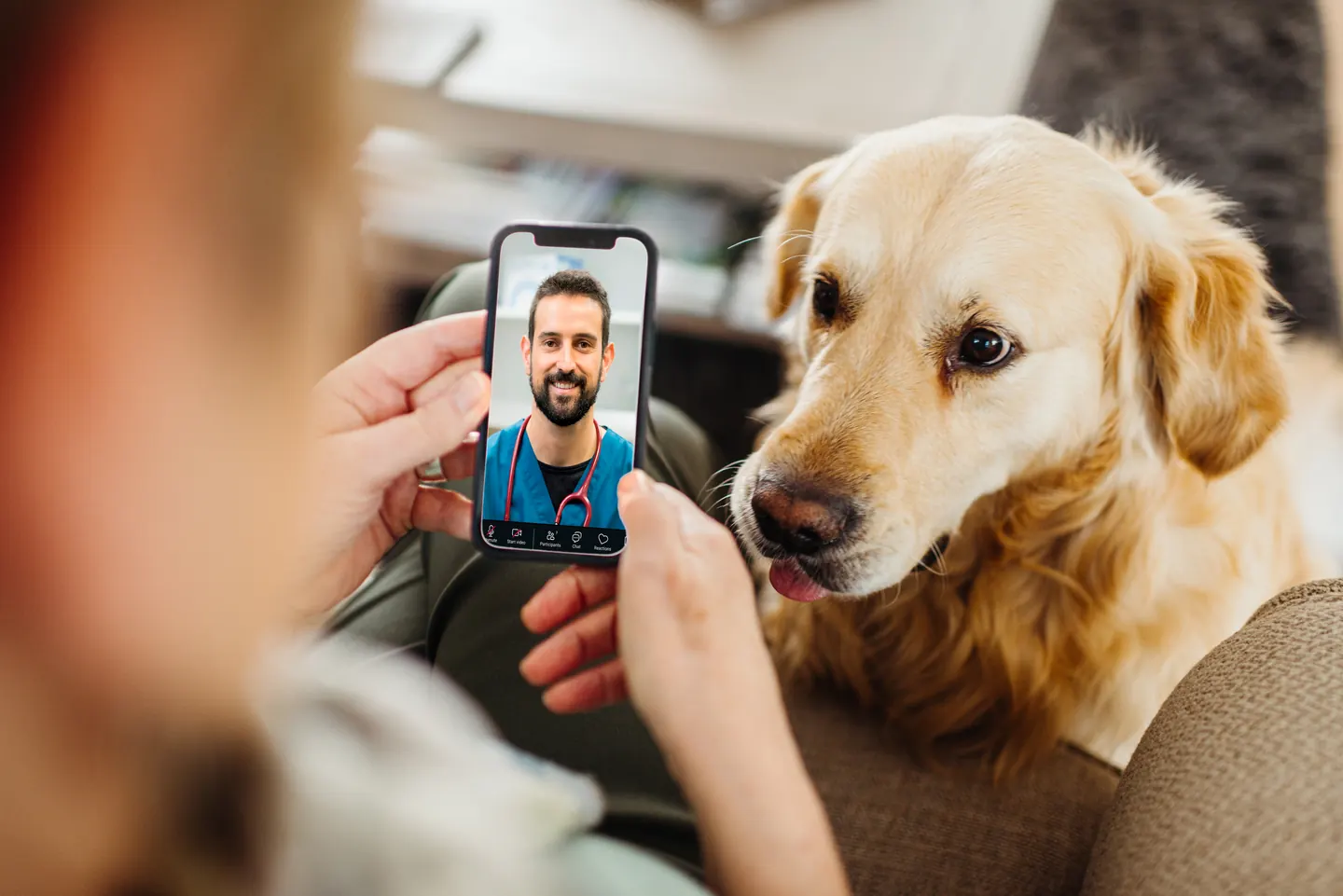
Want a vet's help with your dog's anxiety or behavior?
Talk to a licensed vet at Dutch over video, often the same day. They can recommend treatment and prescribe it when it's appropriate.
Use code Pets60
Plans start at $12/month · covers up to 5 pets
- Licensed vets in most states
- Rx for 150+ conditions
- 4.7 on Trustpilot
Why Dogs Pull on the Leash (It Is Not Dominance or Spite)
Before you can fix pulling, it helps to understand it. Most frustration comes from a misread of what the dog is actually doing. Your dog is not being stubborn, dominant, or spiteful. Two very ordinary mechanisms are driving the behavior, and both are easy to work with once you see them clearly.
Pulling Is Self-Rewarding
The biggest reason dogs pull is that pulling works. When your dog leans forward and you follow, they learn a simple lesson: straining ahead gets them to the exciting smell, the other dog, or the park faster. Every time the walk continues while the leash is tight, that habit gets a little stronger.
The outside world is full of rewards for a dog: scent trails, squirrels, grass, other dogs, and interesting people. A dog does not need a trainer to teach it to pull. The environment does it automatically, one reinforced tug at a time, until pulling becomes the default walking style.
- Reaching a smell or a favorite spot faster
- Getting closer to another dog or person
- Moving toward the park or the car
- Simply covering more ground and burning energy
Why Some Dogs Brace Against Leash Pressure
Some dogs brace or lean into steady pressure instead of yielding to it. That response is sometimes described as an opposition reflex, but it is not a universal explanation for every dog that pulls. Pulling is also reinforced whenever it gets the dog closer to something interesting.
That is one reason yanking, jerking, and dragging are poor teaching strategies. They add pressure without showing the dog what to do instead. The clearer approach is to prevent pulling from earning forward movement and reward the loose-leash position you want.

The One Rule That Changes Everything
If you take only one idea from this guide, make it this one. It is the honest answer to the question everyone searches for about the number one trick to stop pulling. There is no magic gadget or secret command. There is a single, unbreakable rule that quietly rewires how your dog walks.
A loose leash means the walk continues. A tight leash means the walk stops. Every time, without exception.
That is it. When the leash is slack, your dog moves forward and enjoys the world. The moment the leash goes tight, all forward progress ends. Your dog quickly learns that pulling is the one thing that stops the fun, and that a loose leash is the key that unlocks it.
This works because it removes the reward. Pulling no longer gets your dog anywhere faster. In fact, it does the opposite. You are not punishing your dog. You are simply making the behavior you want (a loose leash) the only path to what your dog actually wants (to keep moving).
The "Be a Tree" Stop
The practical version of this rule is often called being a tree. When your dog hits the end of the leash and it goes tight, you become as boring and immovable as a tree. You do not yank, scold, or drag. You simply stop and wait for the leash to soften.
- The instant the leash goes tight, stop walking and plant your feet.
- Stay still and quiet. Do not pull back, do not repeat commands, do not react.
- Wait for your dog to release the tension. Most dogs will glance back, take a step toward you, or shift their weight, and the leash will go slack.
- The moment there is slack, mark it with a cheerful word like "yes" and reward with a small treat.
- Resume walking. The loose leash literally makes the walk start again.
Repeat this each time the leash tightens. Early sessions may involve frequent stops, and progress will vary. Look for small improvements such as quicker check-ins, more slack between stops, and better focus in familiar places before adding harder distractions.
Shop the DOGISTRY 3-in-1 City LeashA Step-by-Step Method to Stop Leash Pulling
The be-a-tree rule is the foundation. This step-by-step method builds loose-leash walking around it, starting where it is easy and adding difficulty only when your dog is ready. Rushing straight to a busy sidewalk is the most common reason training stalls, so resist the urge to skip ahead.
You will need a pouch of small, high-value treats (something your dog loves, cut tiny), a well-fitted harness, and a standard fixed-length leash. Keep sessions short and upbeat, around five to ten minutes at first, and always end on a win rather than pushing until your dog is frazzled.
- Start in a low-distraction space. Begin indoors or in a quiet backyard where there is almost nothing competing for your dog's attention. This is where your dog learns the game before the real world tests it.
- Reward the sweet spot. Decide where you want your dog: usually beside your leg with a loose leash. Whenever your dog is in that position, mark with "yes" and treat. You are showing your dog exactly where the rewards live.
- Mark and treat generously. In the beginning, reward often, sometimes every step or two. You are building a strong association: staying near you pays better than pulling ahead ever did.
- Add distractions gradually. Once your dog holds position indoors, practice in the yard, then the driveway, then a quiet stretch of sidewalk. Add difficulty in small steps, not all at once.
- Take it to the sidewalk. Apply the be-a-tree rule on real walks. Stop every time the leash tightens, reward every loose-leash moment, and keep your treat rate high while the environment is new.
- Generalize to the real world. Slowly work up to busier streets, the park path, and places with other dogs. Each new environment is a fresh classroom, so drop your criteria and reward more at first.
Think of your treats as a paycheck. Early on, your dog is a new employee learning the job, so you pay often. As the behavior becomes reliable, you can thin the rewards out and rely more on praise and the walk itself as the payoff. Do not cut the treats too soon.
Direction Changes and the Corrective U-Turn
Being a tree teaches your dog that pulling stops the walk. Direction changes teach the flip side: staying with you pays off, and forging ahead means you might not be going where they thought. Together they make you unpredictable in the best way, so your dog learns to keep an eye on you.
The corrective U-turn is the tool for a dog that constantly forges to the end of the leash. Instead of letting your dog tow you forward, you calmly change direction and become the one who decides where the walk goes. Your dog then has to catch up, and you reward them for it.
- Notice your dog beginning to forge ahead before the leash snaps tight.
- Say something friendly like "this way," then turn and walk calmly in the opposite direction.
- Do not drag your dog around. The gentle turn and your movement invite them to follow.
- The moment your dog catches up and reaches your side, mark with "yes" and reward.
- Carry on, ready to turn again if they surge ahead. Randomly changing direction keeps your dog checking in with you.
Direction changes should always feel like a game, never a punishment or a wrench on the neck. Keep your body language relaxed and your voice upbeat. The message you want to send is simple: good things happen next to me, and I am worth paying attention to on this walk.

 Sponsored
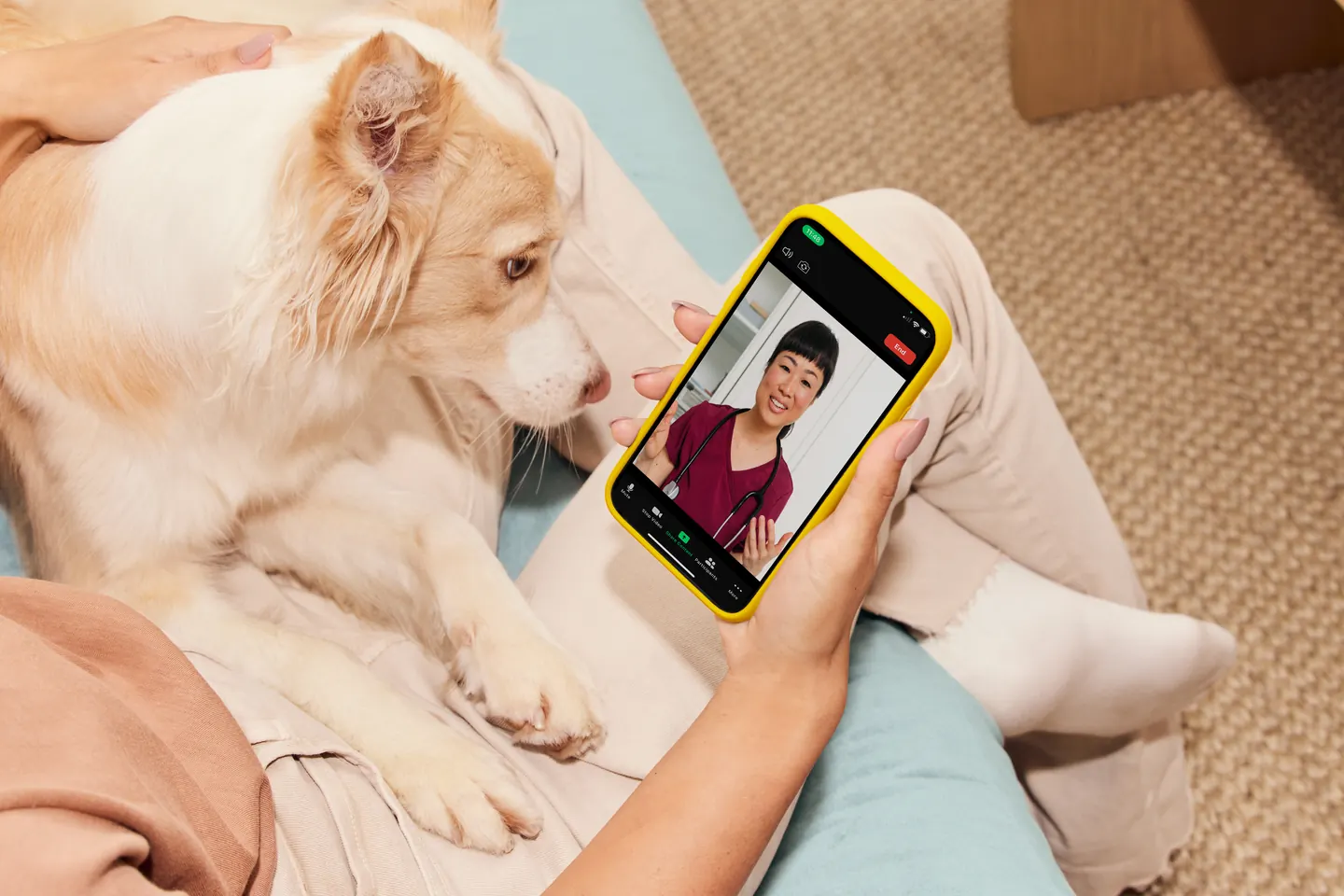
Vet care that's always there
Unlimited video calls and messaging with licensed vets for less than a typical vet visit. One membership covers up to five pets.
Use code Pets60
Plans start at $12/month · covers up to 5 pets
- Licensed vets in most states
- Rx for 150+ conditions
- 4.7 on Trustpilot
Set Your Dog Up to Succeed With the Right Gear
Training does the real work, but your equipment decides how hard that work is. The right setup makes a loose leash the path of least resistance, so your dog stumbles into good habits instead of fighting the whole way. The wrong gear can quietly sabotage weeks of patient practice.
DOGISTRY Design Note: Why the SoHo Uses Front and Back Attachment Points
DOGISTRY built the SoHo with two leash positions because training and everyday walking are not always the same job. The front D-ring offers a guidance option when a dog surges ahead by redirecting forward motion toward the handler. The back D-ring is the simpler choice for calm, relaxed walks.
Neither attachment is automatically right for every moment. Use the front ring when you need more guidance, use the back ring when the dog is walking comfortably, and keep rewarding the loose-leash behavior you want. The equipment supports the lesson; it does not create the behavior on its own.
A body harness moves the leash attachment away from the collar area and distributes contact across the torso. For dogs diagnosed with tracheal collapse, the American College of Veterinary Surgeons advises using a body harness rather than a neck lead. That is condition-specific management guidance, not a guarantee that a harness prevents injury. A collar can still hold ID and rabies tags.
The Gear That Makes Training Stick
For small and teacup breeds, the DOGISTRY SoHo puts those two design choices in one step-in harness: a front ring for guided training and a back ring for everyday walks. This lets an owner change the attachment point without changing the entire walking setup.
The SoHo is a step-in style with breathable mesh padding, a secure buckle, and an escape-resistant fit, which matters for wiggly little dogs who like to back out of poorly fitted gear. It comes in sizes from XXS (2 to 4 lb) up to XL (18 to 25 lb) and is machine washable.
The DOGISTRY City Leash adjusts from 2 to 5 feet and uses a locking buckled handle for hands-free, tethering, or standard walking. Its bungee section adds cushioning when a dog reaches the end of the lead. Together, the leash and dual-ring harness create a flexible walking system while training remains the primary behavior-change tool.

The City Leash adjusts from 2 to 5 feet and its locking buckled handle works three ways: hands-free around your waist, tethered to a fixed point, or as a standard handle. A built-in waste-bag attachment point keeps your hands free for treats and marking, which is exactly what training demands.
| Attachment point | What it does | Best for |
|---|---|---|
| Front chest D-ring | Can redirect forward motion toward the handler as a guidance aid | Active training, dogs that still pull, teaching loose-leash walking |
| Back D-ring | Lets your dog move freely without redirection | Calm, trained dogs on relaxed walks and everyday strolls |
| Retractable leash | Extends line as the dog pulls, rewarding the pull | Not recommended during training |
How to Fit and Introduce a No-Pull Harness
Even the best harness only works if it fits correctly and your dog is comfortable wearing it. A harness that is too loose lets your dog slip out or lets the front ring twist, while one that is too tight rubs and pinches. The goal is snug, secure, and comfortable all at once.
- Measure and size correctly. Check your dog's neck and chest against the current size chart rather than guessing. If your dog falls between DOGISTRY sizes, size up, then use the adjustments for a snug, level fit. Do not deliberately buy an oversized harness for future growth.
- Use the two-finger rule. Once the harness is on, you should be able to slide two fingers flat between the straps and your dog's body. If you cannot, loosen it. If it is sloppy or shifts, tighten it.
- Check the fit standing and moving. Watch that straps do not rub the armpits and that the front ring sits centered on the chest. Adjust after a few minutes of movement.
- Introduce it with treats. Let your dog sniff the harness, then feed treats while you put it on. Keep the first sessions short and happy so the harness predicts good things, not restraint.
For a nervous or sensitive dog, take the introduction slowly over a few days. Let your dog wear the harness for a few minutes indoors with a treat party, then remove it. Build up until the harness simply means a walk is coming, and clipping in becomes a happy routine, not a wrestling match.
View the DOGISTRY SoHo Harness- 1A snug, correctly sized harness that passes the two-finger test
- 2The front ring clipped for training, the back ring for calm walks
- 3A fixed-length leash (not retractable), ideally with a shock-absorbing section
- 4A pouch of small, high-value treats and a clear marker word
Troubleshooting: Real-World Pulling Scenarios
The method is the same for every dog, but real walks throw curveballs. Here is how to adapt the loose-leash approach to the situations that trip owners up most, from powerful pullers to reactive dogs to bouncy puppies. In every case, the answer is management plus reward, never force.
The Big, Strong Dog That Pulls You Off Balance
With a large, powerful dog, safety comes first. A well-fitted front-attachment harness can offer additional guidance, but no tool guarantees control. Never wrap the leash around your hand, practice in a quiet area, and get hands-on help from a qualified force-free trainer if the dog can pull you off balance.
Practice in a quiet area first so you are not being towed toward traffic while you learn. Use plenty of direction changes so your dog never gets a long, satisfying pull. If your dog is strong enough to genuinely hurt you, work with a force-free trainer for hands-on help early on.
The Dog That Lunges or Pulls Toward Other Dogs
When a dog strains, barks, or lunges toward other dogs, that is usually excitement or big feelings, not naughtiness. Punishing it can make the reaction worse by adding stress to an already charged moment. The tool here is distance combined with reward, sometimes called counter-conditioning.
Keep enough distance that your dog notices the other dog but can still take treats and think. The instant your dog sees the other dog, feed a stream of treats. When the other dog passes, the treats stop. Your dog learns that other dogs predict good things and there is no need to lunge.
Over many repetitions, you slowly decrease the distance. If your dog is genuinely reactive (barking, lunging, unable to eat), do not push closer. Cross the street, create space, and consider a certified trainer or your vet, since underlying anxiety may need a tailored plan.
The Over-Excited Dog at the Start of the Walk
Many dogs pull hardest in the first five minutes, when excitement is at its peak. If your dog is bouncing off the walls before you even clip the leash, wait. Do not open the door until your dog has four paws on the floor and a moment of calm.
Practice calm departures: clip the leash, and if your dog erupts, simply pause and wait. Only move toward the door when your dog settles. You may repeat this several times at first. You are teaching that calm, not chaos, is what makes the walk actually begin.
The Puppy That Pulls
Puppies are the easy case, because you are building habits from scratch rather than undoing old ones. Start loose-leash training the day your puppy comes home, in the house and yard, with tiny treats and short, playful sessions. Keep walks brief and let your puppy sniff, since sniffing is how puppies explore the world.
Be patient and keep it positive. A puppy has a short attention span and is easily overwhelmed by new sights and smells. Reward every check-in and every loose-leash step lavishly. The habits you build gently now will save you from having to fix a strong, ingrained pull later on.
"I Have Tried Everything"
If nothing seems to work, the problem is almost always in the details, not the dog. Before you give up, run through an honest audit of the four things that quietly break loose-leash training. Fixing even one of them often gets progress moving again.
- Consistency: is pulling allowed to work even occasionally? One person letting the dog drag them undoes everyone else's work.
- Gear and fit: is the harness clipped at the front and fitted with the two-finger test, or is the dog still pulling from a back clip or collar?
- Reward value: are your treats genuinely exciting, and are you rewarding often enough to compete with the environment?
- Environment: are you practicing somewhere far too distracting for your dog's current level? Drop back to an easier setting and rebuild.
How Long Does It Take? A Realistic Timeline
Be realistic about the timeline. There is no overnight fix, and the pace varies with the dog's age, history, environment, health, and the handler's consistency. Track gradual improvements rather than expecting a fixed schedule.
A puppy learning fresh may progress faster than an adult dog with a long-rehearsed habit, but every case is individual. If progress stalls, lower the difficulty, improve the reward value, and consider help from a qualified force-free trainer.
The most useful mindset shift is this: every walk is a training walk. You are always teaching something, either that pulling works or that it does not. There is no neutral walk. Treat each outing as a short practice session and the weeks will add up faster than you expect.
- 1Expect the timeline to vary; measure progress through more frequent check-ins, longer stretches of slack leash, and success around gradually harder distractions.
- 2Every walk teaches your dog something, so keep the rule the same on every single one.
- 3Everyone who walks the dog must follow the same rule, or progress stalls.
When to Get Professional Help
Sometimes the smartest move is to bring in an expert, and that is a sign of a good owner, not a failing one. If pulling comes wrapped in fear, anxiety, or reactivity, a professional can build a plan tailored to your specific dog and keep everyone safe while you work through it.
Reach out to a certified force-free trainer if your dog is so strong you cannot safely hold the leash, if progress has completely stalled despite consistent effort, or if your dog barks and lunges at dogs or people. Look for trainers who use positive-reinforcement, reward-based methods only.
Loop in your veterinarian too if your dog seems genuinely anxious, panicked, or in pain on walks. Sudden changes in behavior can have a medical cause, and a reactive or fearful dog sometimes benefits from a combined plan with your vet and a qualified behavior professional.

Stopping the pulling is absolutely within reach. Keep the rule simple, reward the behavior you want, set your dog up with gear that makes good habits easy, and stay patient through the messy early walks. The reward is a walk you both actually look forward to, every single day. Once your dog walks nicely on leash, you can build toward off-leash training using the same reward-based approach.
Build the Three-Piece Rockstar Walking Set at DOGISTRYFrequently Asked Questions
What is the #1 trick to stop your dog from pulling on the leash?
The single most effective trick is to make the walk depend on a loose leash: when the leash is slack you keep moving, and the moment it goes tight you stop and stand still like a tree until your dog releases the tension. Then you mark with a word like "yes," reward, and resume.
This works because pulling stops paying off. Your dog learns that a tight leash ends the fun and a loose leash keeps it going. There is no gadget behind it, just consistency: you have to honor the rule on every walk, every time, for it to click.
How do you discipline a dog that pulls on the lead?
The most effective approach is not punishment at all, it is management and reward. Instead of correcting or scolding, you simply remove the reward for pulling by stopping whenever the leash is tight, and you generously reward your dog for walking on a loose leash beside you.
Yanking, jerking, or harsh corrections can add pain or fear without teaching the desired position. The American Veterinary Society of Animal Behavior recommends reward-based methods and advises against aversive training. Pair humane management with consistent loose-leash practice.
Why is my dog constantly pulling on the leash?
Your dog may pull because pulling has worked before: it moved the dog closer to a smell, another dog, or the park. Some dogs also brace into steady leash pressure. Neither pattern is dominance or spite, and both call for clear reinforcement rather than punishment.
It is not dominance or spite. It is simply an untrained habit combined with a world full of exciting things. Once you stop letting pulling pay off and teach that a loose leash is what keeps the walk moving, the constant pulling fades.
How do you walk a dog that constantly pulls?
Start with a well-fitted harness and a manageable fixed-length leash. A front attachment can provide guidance by redirecting forward motion toward you, while the back attachment remains available for calm walks. Then teach the loose-leash behavior with rewards and consistent pauses.
Then apply the loose-leash method. Stop every time the leash tightens, reward every loose-leash moment with a small treat, and use frequent direction changes so your dog learns to check in with you. Begin in a quiet area and only add distractions as your dog succeeds, keeping sessions short and positive.
What is the best no pull solution for dogs?
The best approach is a combination, not a single product: consistent loose-leash training paired with a properly fitted harness. Training changes the behavior, while a front attachment can make forward pulling less direct and provide guidance toward the handler.
A dual-ring step-in harness such as the DOGISTRY SoHo, which offers a front no-pull ring for training and a back ring for calm walks, plus a shock-absorbing leash to soften sudden lunges, gives you a humane, effective setup. Gear supports the training; it does not replace it.
What is the hardest command to teach a dog?
Many trainers consider a reliable recall (coming back every time when called, even around major distractions) the hardest thing to teach, because you are competing with everything exciting in the environment. A rock-solid "stay" under heavy distraction is a close second.
Loose-leash walking is often ranked among the harder skills too, precisely because the whole outside world rewards pulling. The reason it feels so difficult is the same reason our method works: you have to consistently make the calm behavior more rewarding than the distraction, over many repetitions.

Editor
The Webvet Editorial Team is the in-house group of pet-care editors and writers behind Webvet, operated by Smart Pet Collective. The team researches, writes, and maintains Webvet's pet health, behavior, and medication content. Every article follows a defined editorial process: research from reputable veterinary and scientific sources, careful drafting, mandatory review of medical content by a credentialed veterinarian, and dated publication. Health and medication articles are medically reviewed by a licensed veterinary professional before they go live and are kept current over time.
Related reading

Best Puppy Crates: Divider Panels, Size-Up Timing, and Vet-Reviewed Picks

Best Soft Sided Dog Crate and Travel Crate Picks: When Fabric Works and When It Does Not

Best Small Dog Crate Picks for Toy and Small Breeds: Right-Sized, Not Cramped
