Separation Anxiety in Dogs: Training, Treatment, and Medication
Learn how to recognize separation anxiety in dogs, distinguish it from common look-alikes, start below-threshold training, and understand when medication may help.

BVMS MRCVS

This article contains affiliate links. Webvet may earn a commission when you buy through them, at no extra cost to you.
Separation anxiety in dogs is panic or severe distress connected to being separated from an attachment figure. It is not spite, stubbornness, or a failure of obedience. The most useful first steps are to record what happens after departure, rule out medical and environmental look-alikes, prevent repeated full panic when possible, and build a veterinarian-guided plan that keeps every practice absence below the dog's distress threshold.
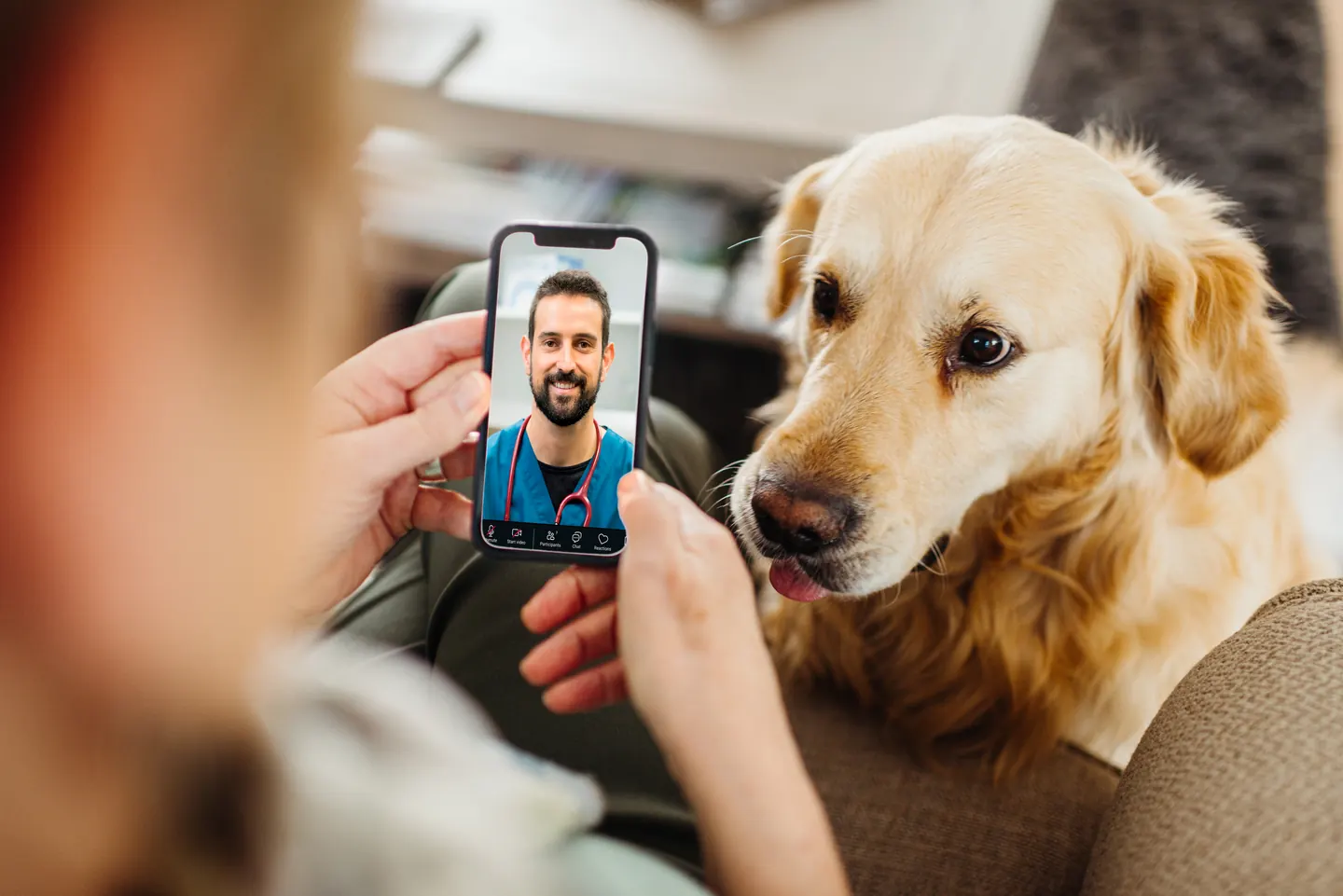
 Sponsored
Want a vet's help with your dog's anxiety or behavior?
Talk to a licensed vet at Dutch over video, often the same day. They can recommend treatment and prescribe it when it's appropriate.
Use code Pets60
Plans start at $12/month · covers up to 5 pets
- Licensed vets in most states
- Rx for 150+ conditions
- 4.7 on Trustpilot
Signs of Separation Anxiety in Dogs
Dogs with separation anxiety usually show a cluster of distress behaviors before or soon after a caregiver leaves. Some react while departure cues are happening. Others remain quiet until a door closes, a car leaves, or the person moves out of sight. The timing and emotional pattern matter more than any single damaged object.
- 1Veterinary evaluation helps distinguish separation distress from pain, urinary disease, cognitive change, noise triggers, and other look-alikes.
- 2Video is the clearest way to learn whether distress begins around departure and what the earliest signs are.
- 3Destruction, barking, and house soiling can have many causes, so diagnosis comes before a training label.
- 4Graduated departures start below the dog's panic threshold. Flooding a dog with a long absence can make the problem worse.
- 5Medication may be appropriate for moderate or severe cases, but it is a supportive adjunct to management and behavior modification rather than a replacement.
- 6Self-injury, collapse, breathing difficulty, inability to urinate, or severe gastrointestinal signs need urgent veterinary evaluation.
Common signs include:
- pacing, panting, trembling, drooling, or repeated yawning
- whining, barking, or howling that continues rather than settling
- scratching, chewing, or digging at doors, windows, gates, or exit points
- urinating or defecating despite otherwise reliable house training
- refusing a familiar food toy that the dog normally values
- frantic following as the person prepares to leave
- escape attempts that injure teeth, nails, paws, or skin
- intense greeting behavior after even a short absence
- inability to rest, lie on one hip, or disengage from the exit
These signs do not all need to be present. A quiet dog can still be distressed, particularly if the dog freezes, hides, scans, salivates, or remains tense. A camera that records the dog's whole body is more informative than an audio alert that reports barking alone.
Signs of separation anxiety in dogs need to be interpreted alongside their timing and context. Petful's guide to signs of stress in dogs expands on the body-language signals that can be missed when owners look only for barking or destruction. Timing around departure, whole-body video, health history, and the response to different safe locations distinguish separation distress from common look-alikes.
What separation anxiety looks like on video
Record at least the first 30 to 60 minutes of an ordinary departure when it is safe to do so. Start the recording before shoes, keys, a coat, or the normal leaving routine. Video should show the dog's posture, movement, access to exits, and interaction with food. Do not stage a long absence simply to provoke a reaction.
Look for the first observable change:
- stops eating or drops a chew
- orients toward the exit and cannot look away
- begins scanning, panting, or pacing
- follows each pre-departure movement
- vocalizes, scratches, or pushes at a barrier
- cannot return to a loose resting posture
The earliest repeatable change is the training threshold. It is more useful than the time of the loudest behavior because practice should end before panic grows. The American Veterinary Society of Animal Behavior describes video as an important way to distinguish separation distress from look-alikes and supports reward-based behavior care through its position statements.
An INSTACHEW pet camera can help record departure timing, pacing, vocalizing, door focus, and recovery without presenting the device as treatment. Stop a recording exercise that requires repeatedly leaving a distressed dog over threshold.

Separation distress or another problem?
Not every dog that barks or destroys property when alone has separation anxiety. Boredom, insufficient toilet access, noise outside, barrier frustration, predatory interest, juvenile exploration, pain, cognitive dysfunction, and incomplete house training can create similar evidence after the fact.
For barking across these different contexts, use the cause-based plan for reducing dog barking.
| Differential observation table: observed pattern | Medical look-alikes or behavior pattern | What to record next |
|---|---|---|
| Distress begins with departure cues or within minutes of separation | Separation-related distress | Exact first sign, latency, food response, and recovery |
| Barking follows hallway noise, deliveries, wildlife, or another dog | Environmental trigger or territorial arousal | Sound, window view, location, and whether the behavior stops when the trigger ends |
| Chewing is scattered, relaxed, and not concentrated at exits | Exploration, access, or unmet activity needs | Time of day, available enrichment, and body posture |
| House soiling also occurs while people are home | Medical, digestive, urinary, or house-training cause | Stool or urine changes, thirst, pain, mobility, and timing |
| Senior dog wanders, stares, gets stuck, or reverses sleep and wake times | Sensory loss, pain, or cognitive dysfunction | Night behavior, navigation, hearing, vision, medication, and physical signs |
| Panic occurs behind a gate or in a crate while the caregiver stays nearby | Barrier or confinement distress | Response to different safe locations and distances |
This decision table is not a diagnosis. It makes the veterinary and behavior history more precise. A dog can also have more than one problem, such as separation distress plus noise sensitivity or arthritis.

360-degree Wi-Fi pet camera so you can watch your cat's resting breathing rate and behavior from your phone and catch worrying changes early.
Webvet may earn a commission when you click through to Chewy, at no extra cost to you.
Medical conditions that can mimic or worsen separation anxiety
Sudden behavior change deserves a veterinary examination. Pain can make resting alone difficult. Urinary or gastrointestinal disease can create accidents and urgency. Hearing or vision loss can increase dependence on familiar people. Neurologic disease, endocrine disease, medication effects, and cognitive dysfunction can alter sleep, awareness, and recovery from stress.
Tell the veterinarian about:
- when the problem began and whether onset was sudden or gradual
- changes in thirst, appetite, weight, urination, stool, sleep, or mobility
- panting, coughing, weakness, confusion, staring, circling, or seizures
- every prescription, supplement, chew, and over-the-counter product
- recent moves, schedule changes, construction, losses, boarding, or illness
- whether the dog is distressed when one person leaves, when everyone leaves, or whenever physically separated
The VCA separation-anxiety guide emphasizes diagnosis, management, and individualized behavior treatment. The ASPCA separation-anxiety resource also explains that other behavior patterns require different plans.
How to Treat Separation Anxiety in Dogs
Treatment has three connected jobs: stop rehearsing full panic as much as practical, teach safety through absences the dog can actually tolerate, and lower the underlying anxiety enough for learning to occur. The plan is adjusted to the individual dog rather than a fixed calendar.
Training for separation anxiety in dogs is therefore not a generic stay exercise. To learn how to help separation anxiety in dogs or how to treat separation anxiety in dogs, begin with the earliest observable departure response, manage absences beyond that threshold, and adjust one practice variable at a time.
| Departure-threshold training log field | Observable behavior to record | Next decision |
|---|---|---|
| Why the log matters | A vague product or symptom question becomes observable behavior that can be compared across departures | Turn the pattern into observable decisions an owner and veterinarian can review together |
| Planned versus actual absence | First second the dog stops eating, stiffens, scans, follows, vocalizes, or approaches an exit | Shorten the next trial below the earliest repeatable change |
| Food and resting response | Whether the dog eats, lies with loose posture, or repeatedly interrupts either behavior | Repeat the easy level until calm responses are reliable |
| Distress intensity | Pacing, panting, drooling, scratching, elimination, destruction, or escape behavior | Stop the session and reduce duration, cue intensity, or confinement pressure |
| Recovery after return | Time needed to eat, rest, breathe normally, and disengage from the exit | Treat prolonged recovery as evidence that the absence was too difficult |
| Context and treatment | Time of day, departure cues, sleep, exercise, medicine, health changes, and unusual events | Change one major variable at a time and share patterns with the treatment team |
Clear boundaries distinguish low-risk environmental support from medical diagnosis and behavior treatment. A predictable departure routine, camera, food toy, or comfortable resting area may support management, but none can diagnose pain, panic, or cognitive change. Medical findings and the dog's recorded threshold determine when veterinary treatment and an individualized behavior plan are needed.
First, reduce unavoidable panic exposure
A dog does not learn that being alone is safe by repeatedly experiencing terror. During the early treatment period, many families need temporary ways to avoid absences longer than the dog's current threshold.
Options may include:
- staggering household schedules
- using a trusted friend, relative, sitter, or day-care setting the dog already tolerates
- taking the dog along when the environment and temperature are safe
- arranging remote work or shorter errands during a defined training period
- asking the veterinarian whether short-term event medication is appropriate for unavoidable departures
Management is not failure. It creates the conditions for learning. Choose the least disruptive workable option, review it regularly, and make sure a sitter or facility does not introduce punishment or forced confinement.
Build a departure-threshold training log
The strongest starting point is a departure-threshold training log based on observable behavior. Use the same camera angle and a simple sequence. Record the planned duration, the first sign of tension, whether the dog ate, the highest intensity reached, and how quickly the dog recovered after the person returned.
A useful log includes:
- date, time, and who departed
- exact departure cues used
- planned and actual absence duration
- first change in posture or activity
- food engagement or refusal
- vocalization, pacing, exit focus, elimination, or destruction
- recovery time after return
- medication, exercise, sleep, and unusual events that day
The next practice should stay shorter or easier than the first sign of distress. If the dog became tense at 20 seconds, a training absence might be only a few seconds. If the dog remained loose and continued eating, repeat that successful level before adding a small amount of time.
Start with calm separation inside the home
Some dogs cannot tolerate a closed exterior door yet. Begin with a distance the dog can handle, such as the caregiver shifting in a chair, stepping behind a visual barrier for one second, or moving to the next room while the dog rests. This is not a command to stay while frightened. The goal is a relaxed emotional response.
Build one variable at a time:
- distance from the dog
- time out of sight
- movement toward the exit
- door movement
- departure cues such as shoes or keys
- actual absence outside the home
If the dog gets up, stops eating, stiffens, scans, or follows, the step may be too difficult. Reduce distance or duration on the next repetition. Short successful sessions usually teach more than one long test.
Graduated departures
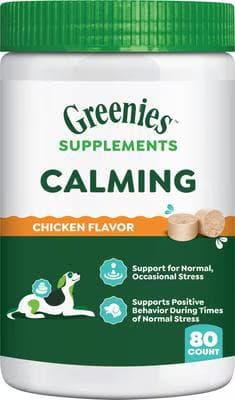
Chicken-flavored soft chew that supports normal, occasional stress and positive behavior during times of normal stress.
Webvet may earn a commission when you click through to Chewy, at no extra cost to you.

Graduated departures are brief absences that increase only while the dog remains below threshold. Early repetitions can be a few seconds. Progress is rarely linear, and time alone is not the only difficulty. A dog may tolerate 30 seconds at noon but struggle with 10 seconds during the normal work routine.
Keep practice humane and measurable:
- begin from a calm baseline rather than after exciting play
- vary durations within the easy range so each repetition is not predictably harder
- return before distress begins, without a dramatic greeting
- pause if the dog becomes more watchful across repetitions
- stop the session after a small number of successful trials
- use video rather than guessing from outside the door
- reduce difficulty after illness, travel, storms, schedule changes, or a failed absence
Do not extend an absence because the dog is already upset and needs to “get used to it.” That is flooding, not graduated exposure. The AVSAB humane-training position rejects aversive methods and supports systematic desensitization that keeps the animal feeling safe.
A short practice example
Suppose your dog stays relaxed when you touch the door handle but starts staring at the door when you step outside. Begin with the easier handle movement and return to normal activity. When that stays easy, try a brief door opening without leaving. Only attempt an absence shorter than the earliest tension you observed, and return while the dog is still comfortable.
If a one-second absence produces scanning, pacing or food refusal, reduce the step instead of trying five seconds. This example is not a daily time target: a professional can help choose smaller steps, and real workday absences may need a sitter or another safe management arrangement.
Departure cues need separate practice
Keys, shoes, a bag, a uniform, coffee preparation, and a garage door can predict a long absence. Some dogs begin reacting well before anyone leaves. Practice one cue at a time without departure and while the dog remains relaxed.
Examples include:
- pick up keys, set them down, and continue a quiet activity
- put on shoes, then make dinner
- open and close the exterior door without stepping through
- carry the usual bag to another room
- start the car at a different time while another person remains with the dog
Cue practice should become boring, not confusing or relentless. If the dog follows closely or becomes vigilant, simplify the exercise. Do not run through the entire workday sequence repeatedly in one session.
Food toys and enrichment
Food toys can support a calm departure for dogs that continue eating. They are not a treatment test and cannot overcome panic. Refusing a normally valuable food is useful evidence that the dog is too distressed for the current step.
Choose enrichment that is safe for unsupervised use and familiar from supervised practice. Avoid leaving a new hard chew, shreddable object, or puzzle that could trap a jaw or create a swallowing hazard. Pick the item up after the practice if it is intended to predict absence.
Exercise and sniffing can improve welfare, but exhaustion does not cure separation anxiety. A physically tired dog can still be terrified. Use age-appropriate activity as part of a predictable day, not as a way to force sleep through an absence.
Crates are not automatically the answer
A crate may be a secure resting place for a dog that already relaxes there. For a dog with confinement distress, a crate can intensify escape attempts and cause severe injury. Scraped noses, broken teeth, bent crate bars, blood, or frantic biting are reasons to stop the setup and contact a veterinarian.
Compare safe locations with video:
- familiar room with a closed door
- baby-gated area
- open crate within a dog-proofed room
- room with curtains or white noise if outside triggers are involved
- location near or away from household exits
Use the setting in which the dog is safest and most able to rest. Do not force a dog back into a damaged crate or add stronger hardware as the only response to panic.
If a crate is already an appropriate resting option in your dog’s plan, compare dog crate designs and the limits of heavy-duty crates.
Before buying, use the dog crate size chart and compare furniture-style dog crates if the enclosure will share your living space.
How a veterinarian or behaviorist confirms the pattern
There is no single blood test for separation anxiety. Diagnosis combines history, video, physical examination, and exclusion of other causes. The professional needs to know what happens before departure, during the first part of absence, across different caregivers, and when the household is present.
Bring representative video rather than only the most severe clip. A useful sample starts before departure cues and continues through the first behavior changes. If the dog is at risk of injury, do not create a longer recording. Safety and existing evidence are enough to begin the conversation.
The assessment may compare several possibilities:
- distress specifically when one attachment figure leaves
- distress whenever the dog is completely alone
- fear of confinement or a particular room
- barking at outside sounds or people
- frustration at blocked access
- incomplete house training or insufficient toilet opportunity
- pain, cognitive dysfunction, or another medical condition
- generalized fear or noise sensitivity that continues while people are home
Treatment changes with the answer. A dog reacting to delivery sounds may benefit from visual and sound management. A dog panicking behind a gate while a caregiver is visible needs a confinement plan. A dog with urinary disease needs medical treatment. Using the correct label protects the dog from ineffective practice.
Puppies, newly adopted dogs, and schedule changes
A puppy vocalizing during early alone-time learning does not automatically have a clinical disorder, but repeated panic should still be prevented. Begin with very short, safe separations after toilet, food, activity, and rest needs are met. Increase only while the puppy can remain relaxed.
Newly adopted dogs need time to learn the home and routine. The popular “3-3-3 rule” is a rough adoption slogan, not a clinical timeline or training prescription. Individual dogs adjust at different rates. Do not force a new dog into long absences because a certain number of days has passed.
To help prevent separation anxiety in dogs, introduce very short safe alone-time experiences before a major schedule change, meet toilet and rest needs, and increase duration only while the dog stays relaxed. Prevention lowers avoidable panic exposure, but it cannot guarantee that a dog with medical, developmental, or temperament risk will never develop distress.
- practice short absences before the new schedule begins
- identify care for time beyond the dog's current ability
- preserve feeding, toilet, exercise, and sleep predictability
- change one departure cue at a time
- use a camera to detect early distress
- contact the veterinarian if behavior changes suddenly or severely
Dogs that were rarely alone during illness, remote work, or family leave may need a gradual rebuilding period. This does not mean the caregiver caused the disorder. Focus on the current threshold and welfare.
What not to do with dog separation anxiety
Punishment after returning home cannot teach a dog what to do during an earlier panic episode. It can add fear to the caregiver's return and damage trust. A “guilty” posture is usually appeasement in response to human body language, not proof that the dog planned the behavior.

Probiotic supplement formulated to help dogs maintain calm behavior, with the BL999 strain. Liver-flavored powder in 30 daily sachets.
Webvet may earn a commission when you click through to Chewy, at no extra cost to you.
Avoid:
- yelling, scolding, leash corrections, shock collars, or spray collars
- leaving the dog to cry until exhausted
- forcing long absences to prove that nothing bad happens
- making a crate inescapable when the dog is injuring itself
- adding several supplements and medications at once
- changing duration, location, cue sequence, and enrichment in the same trial
- interpreting sedation as emotional comfort
 Sponsored
Vet care that's always there
Unlimited video calls and messaging with licensed vets for less than a typical vet visit. One membership covers up to five pets.
Use code Pets60
Plans start at $12/month · covers up to 5 pets
- Licensed vets in most states
- Rx for 150+ conditions
- 4.7 on Trustpilot
Medication for Separation Anxiety in Dogs
Medication can reduce the intensity of anxiety enough for management and behavior modification to work. It is often appropriate when panic is frequent, the threshold is extremely short, welfare is poor, the dog cannot eat or learn during practice, or unavoidable absences continue. The decision belongs to a veterinarian who has examined the dog and reviewed other medicines and health risks.
A veterinarian may consider a daily medication such as fluoxetine alongside behavior training. Another dog may need a different medication, situational support, further testing or no medication at all. Over-the-counter products are not substitutes for this assessment.
Medication plans commonly include one of two roles:
- a daily medicine intended to lower baseline anxiety over time
- an event medicine used before predictable absences or during the early treatment period
Some dogs need both. Choice depends on diagnosis, onset, duration, medical history, adverse-effect risk, and the household's schedule. Medication should have observable goals, a reassessment date, and clear instructions for missed doses and side effects.
Fluoxetine and clomipramine
Fluoxetine and clomipramine are commonly discussed for canine separation anxiety. Both require veterinary prescribing and gradual evaluation. They are not interchangeable, and they can interact with other serotonergic or sedating drugs. A benefit may take weeks rather than hours.
Ask the prescribing veterinarian for fluoxetine-specific uses, safety, and monitoring. Do not start, stop, taper, or combine fluoxetine based on an online schedule.
Clomipramine has an FDA-approved veterinary product for canine separation anxiety when used as part of a behavior plan. Approval does not make it appropriate for every dog. Cardiac history, seizure risk, other medications, and adverse effects still matter.
Trazodone and other event support
Veterinarians may use trazodone or another event medication for selected dogs. The aim is not to make a dog unable to move or signal distress. It is to reduce arousal while preserving safe function and learning.
WebVet's guide to trazodone for dogs explains veterinary uses and safety considerations. Dose and timing vary. A home trial may be recommended before an important absence so the veterinarian can evaluate sedation, agitation, gastrointestinal effects, coordination, and duration.
Monitoring a medication plan
Keep the same kinds of data used for departure training. Medication benefit should be visible as a change in the target behavior, not just sleepiness.
Track:
- latency to the first sign of distress
- ability to eat, rest, and disengage from the exit
- vocalization and pacing duration
- recovery after a departure
- appetite, stool, vomiting, thirst, and urination
- alertness, coordination, agitation, and sleep
- new aggression, disinhibition, tremors, or unusual behavior
Call the veterinarian promptly for severe agitation, profound sedation, collapse, tremors, seizures, repeated vomiting, breathing difficulty, or suspected overdose. Do not add diphenhydramine, melatonin, CBD, another calming chew, or leftover prescription medicine without checking for interactions. See WebVet’s guide to melatonin for dogs, including why there is no single weight-based dose.
Calming products as adjuncts
Calming chews, a comfortable bed, pheromone products, sound management, and cameras may support parts of a treatment plan, but none diagnoses or cures separation anxiety. This is a products as adjuncts rather than cures decision. A camera can document behavior. A bed can improve comfort. A supplement may be considered for a specific dog after its ingredients and other medicines are reviewed.
For a deeper product-safety decision, see calming chews for dogs. A dog calming diffuser is also an adjunct with variable evidence, not a substitute for graduated departures.
- For dogs already cleared to use an occasional supplement adjunct, Greenies Calming Soft Chews provide one exact label to compare for ingredients and weight-based serving directions.
- Purina Calming Care is a daily powder alternative for a longer evaluation period. It is not a same-day rescue product or a replacement for prescribed medication and graduated departure training.
If your dog is injuring itself or cannot tolerate even seconds alone, arrange veterinary behavior care promptly. A camera or comfort product may support the plan, but shopping should not delay treatment.
What Makes Separation Anxiety Worse?
Separation anxiety often worsens when the dog repeatedly experiences departures beyond its threshold. Sudden schedule changes, long absences after constant companionship, moving, household loss, boarding, illness, pain, and cognitive change can also lower coping ability.
Introduce alone time gradually and reduce avoidable episodes of panic. These steps support recovery and may help prevent distress from escalating. Punishment and departures beyond the dog’s tolerance can worsen the problem. Expect progress rather than a guaranteed cure date; medical problems and unavoidable life changes can still cause setbacks.

Common setbacks include:
- one unavoidable long absence during early training
- increasing duration too quickly after a few successful trials
- practicing only the exact workday routine

A plush, long-fur donut bolster bed with a raised rim that gives a recovering pet a secure, cushioned place to curl up during the crucial 10 to 14 days after surgery.
Webvet may earn a commission when you click through to Chewy, at no extra cost to you.
- adding a crate to a dog with confinement distress
- using punishment or bark suppression
- changing medication or supplement timing without veterinary guidance
- measuring success by quietness rather than relaxed body language
- assuming a tired dog is emotionally comfortable
A setback does not erase all learning. Return to the last clearly successful level, reduce other difficulty, and discuss repeated regression with the treatment team.
Will a dog get over separation anxiety?
Many dogs improve substantially and reach comfortable, useful alone-time goals. Progress may take weeks to months, and some dogs need long-term management. Severity, medical problems, unavoidable stressful absences, caregiver resources and response to treatment all affect recovery. Keep practice below the dog’s distress threshold and review the plan when progress stalls.
Set functional goals:
- can rest while the caregiver moves out of sight
- can tolerate ordinary departure cues
- can remain alone for a meaningful, gradually increasing duration
- can eat or sleep with loose body language
- recovers quickly after a manageable absence
- has a safe plan for unavoidable longer departures
Progress may be uneven. A behavior professional can help adjust criteria without turning each session into a test of endurance.
Choosing professional help
Start with the dog's veterinarian to rule out medical causes and discuss medication. For complex, severe, or unsafe cases, ask for a board-certified veterinary behaviorist. A qualified reward-based trainer or separation-anxiety specialist can help implement the behavior plan in collaboration with the veterinarian.
Ask a professional:
- how distress thresholds are measured
- whether video will guide progression
- what happens after a failed trial
- which credentials and continuing education they hold
- how they coordinate with the veterinarian
- whether they use shock, prong, choke, startle, or flooding methods
Choose a professional who works below threshold and does not promise a fixed cure date. AVSAB's public position statements explain why reward-based methods are the humane standard for behavior problems. The treatment boundary is reward-based methods without flooding or punishment.
A Practical First-Week Plan
The first week is for safety, diagnosis, and measurement, not proving how long the dog can endure. Keep departures below the known threshold and avoid introducing multiple remedies at once.
Days 1 and 2: observe
- record a safe, ordinary departure
- note the first sign of distress and recovery
- list medical, schedule, and household changes
- identify unavoidable upcoming absences
- stop testing if the dog risks injury
Days 3 and 4: arrange management
- schedule a veterinary examination for sudden, severe, or medically complicated behavior
- find temporary care for absences beyond the current threshold
- test safe resting locations while someone remains nearby
- remove dangerous exit hazards
- prepare a simple behavior and health log
Days 5 through 7: begin easy practice
- practice one departure cue without leaving
- try seconds of distance or out-of-sight time below threshold
- repeat easy successes rather than increasing every trial
- record food response and body language
- share the log and video with the treatment professional
The schedule is illustrative, not a promise that a dog should advance by day seven. A severely distressed dog may need management and medication planning before formal departures begin.
Measuring Progress Beyond the First Week
Progress is more than the longest absence completed. Track emotional quality and repeatability. A single long trial followed by several difficult days is less useful than a shorter duration the dog can repeat with relaxed posture.

Review these measures weekly:
- median time before the first distress sign
- percentage of trials completed below threshold
- ability to eat and then rest
- time spent pacing, vocalizing, or watching the exit
- recovery after the caregiver returns
- response to different departure cues and times of day
- number of unavoidable over-threshold absences
- medication benefit and adverse effects
Video can reveal subtle gains, such as the dog glancing at the door and returning to rest instead of escalating. It can also reveal that a quiet dog remains frozen. Use several observations rather than one impression.
A calm return avoids adding a large emotional spike, but there is no need to ignore a frightened dog by rule. Enter safely, use neutral body language, and allow the dog to settle. Provide toilet access if needed. Avoid punishment, excited questioning, or immediately repeating a failed departure.
If the dog is highly aroused, lower stimulation and observe for injury. Note recovery time. A consistently long recovery can mean the absence remains too difficult even when the most visible behavior stopped before the caregiver returned.
When to revise the treatment plan
Ask the treatment team to reassess when:
- the threshold does not improve despite consistent easy practice
- distress appears earlier across sessions
- medication causes adverse effects or no observable benefit
- a new medical sign develops
- the household cannot prevent frequent long absences
- confinement or aggression creates safety risk
- the dog cannot eat or rest at the easiest practical level
- caregiver burden makes the plan impossible to sustain
A revised plan may change management, medication, practice criteria, setting, or professional support. It should not default to stronger punishment or longer flooding.
Household planning and caregiver welfare
Separation anxiety affects the entire household. People may avoid work, appointments, relationships, or necessary travel because the dog cannot be left. A humane plan must support the dog without pretending caregiver time and money are unlimited.
Write a practical coverage plan for ordinary workdays, medical appointments, emergencies, and travel. Identify which trusted people or settings the dog tolerates and which create more distress. Keep contact information, medication instructions, trigger notes, and veterinary authorization current.
Divide jobs when possible:
- one person maintains the video and training log
- one coordinates temporary care
- one tracks medication supply and veterinary questions
- all caregivers use the same threshold and return criteria
If the plan is becoming unsustainable, tell the veterinarian or behaviorist early. The answer may be simpler practice, different management, medication adjustment, or more professional support. Caregiver strain is relevant clinical context, not a moral failure.
Separation anxiety in multi-dog homes
Another dog does not reliably cure separation anxiety. Some dogs remain distressed when the person leaves even if a familiar dog stays. A second dog can also copy arousal, become the target of redirected behavior, or have separate welfare needs.
Use video to observe both dogs. Provide separate access to food, water, beds, and retreat. Do not leave a high-value item if guarding is possible. If one dog blocks exits, follows relentlessly, or reacts to the anxious dog's vocalization, include those interactions in the professional assessment.
Treat the affected dog's emotional response rather than adopting another pet as therapy. A new dog is a permanent household commitment and may add transition stress.
Visitors, sitters, and departures by different people
Some dogs react only when one attachment figure leaves, while others are comfortable as long as any familiar person remains. Test these distinctions only with safe, below-threshold observations. Record who leaves, who stays, whether the dog can see them, and the first behavior change.
A sitter should follow the treatment plan rather than attempt a cure during one visit. Provide:
- normal feeding and toilet routine
- approved safe resting location
- known triggers and early distress signs
- veterinarian and emergency contacts
- exact medicine instructions
- activities the dog already tolerates
- instructions to avoid punishment and forced confinement
Introduce a sitter while the caregiver is present if possible. A dog that accepts a person socially may still panic when the primary caregiver departs, so use video and a short trial.
Workday departures versus brief errands
Dogs notice time of day, clothing, devices, vehicle sounds, and household sequences. A dog may tolerate an evening walk to the mailbox but react to the morning work routine. Practice should eventually generalize across these cue combinations without beginning at full workday intensity.
Build a cue inventory:
- alarm and morning lighting
- shower, uniform, or work shoes
- lunch packing and coffee preparation
- laptop bag or keys
- garage door, vehicle start, or elevator
- departures by one or several people
Select one cue, present it at low intensity, and then continue an ordinary home activity. When the cue stops predicting a long absence and the dog remains relaxed, combine it with another easy cue. The goal is not to surprise the dog with an unannounced departure. It is to weaken the rigid chain that predicts panic.
Relapse prevention after improvement

Once the dog can tolerate the household's necessary absence, maintain occasional easy practices and continue monitoring health. A move, pain flare, storm season, boarding stay, caregiver illness, or long period without being alone can reduce tolerance.
Plan for foreseeable changes:
- resume short departures before a return to office work
- arrange care during a move or major renovation
- discuss event medication before fireworks or travel
- reassess senior dogs after sleep, sensory, or mobility changes
- keep camera access available for a new schedule
Do not wait for severe damage or injury before stepping back. Early tension, food refusal, and longer recovery are signals to reduce difficulty and review the plan.
Keeping records useful without becoming overwhelmed
The log does not need to capture every second. Record the first distress sign, highest intensity, recovery, and any important health or schedule change. Save short representative clips and label them with date and duration. A weekly summary can show trends that individual difficult days hide.
If record keeping increases caregiver stress, reduce it to the two measures that guide the next training decision. Treatment should produce usable evidence, not an impossible administrative burden.
Quality of rest matters
Dogs need opportunities for undisturbed sleep and recovery. A dog that remains vigilant while a caregiver moves around the home may start departure training already tired and aroused. Build predictable quiet periods when the dog can rest without being repeatedly tested.
A FurHaven calming-style dog bed can support a familiar rest station for a dog that already chooses it voluntarily. Keep the bed optional and accessible; it should never become a restraint point for a dog trying to escape.
Sleep change can also be medical evidence. Report nighttime pacing, daytime sleep increase, repeated waking, pain on lying down, coughing, accidents, or confusion. A treatment plan works better when the dog is physically able to rest and learn.
Separation Anxiety in Dogs Questions
Frequently Asked Questions
How do you help a dog with separation anxiety?
You help a dog with separation anxiety by confirming the departure-linked pattern with video, ruling out medical and environmental look-alikes, and preventing repeated full panic when possible. Begin graduated departures below the dog's first observable distress signal and use a departure-threshold training log to choose the next duration. A realistic expectation is a gradual observable behavior change, not instant comfort with a full-length absence. Moderate or severe cases often need a veterinarian and a reward-based behavior professional, and medication may support learning when anxiety blocks it. The veterinary treatment plan still uses management and reward-based methods without flooding or punishment.
What not to do with dog separation anxiety?
What not to do with dog separation anxiety is punish damage or house soiling, use shock or spray collars, force a panicking dog to remain alone, or lock a dog into confinement that causes escape injury. Do not increase absence time while the dog is distressed or keep leaving to make the dog “get used to it.” Those approaches can worsen fear, suppress observable behavior, and create injury without changing the emotional problem. A realistic expectation is that practice advances in small increments. Return to an easier below-threshold step and ask the veterinarian or qualified behavior professional to revise the plan.
What makes dog separation anxiety worse?
Repeated absences beyond the dog's threshold, abrupt schedule change, pain, illness, cognitive decline, punitive training, and confinement distress can all make dog separation anxiety worse. Progress can also stall when duration rises too quickly, a crate adds barrier panic, or several variables change at once. Review current video, the departure-threshold training log, sleep and health changes, medication timing, and each observable behavior change. Then reduce the next absence to the last clearly successful level instead of testing the dog through another panic episode. Seek veterinary care when the pattern suddenly worsens so the veterinary treatment plan can address medical contributors.
Will my dog eventually get over separation anxiety?
Your dog may eventually get over some separation-anxiety limits and reach useful, humane alone-time goals with consistent management, below-threshold training, and veterinary treatment when indicated, but there is no fixed cure timeline. A realistic expectation is gradual improvement, and some dogs need long-term support or a permanent plan for absences beyond their comfortable duration. Judge progress by observable behavior: relaxed posture, continued food engagement, longer tolerable absences, faster recovery, and improved welfare rather than silence alone. If improvement stalls or regresses, seek veterinary care to reassess medical contributors, unavoidable panic exposure, medication response, and training difficulty with the treatment team.
The broader anxiety relief for dogs guide explains other fear and anxiety patterns. Separation anxiety is specifically linked to absence or separation, so a precise diagnosis protects the dog from punishment and gives the household a measurable path forward.

Editor
The Webvet Editorial Team is the in-house group of pet-care editors and writers behind Webvet, operated by Smart Pet Collective. The team researches, writes, and maintains Webvet's pet health, behavior, and medication content. Every article follows a defined editorial process: research from reputable veterinary and scientific sources, careful drafting, mandatory review of medical content by a credentialed veterinarian, and dated publication. Health and medication articles are medically reviewed by a licensed veterinary professional before they go live and are kept current over time.
Veterinarian · BVMS MRCVS
Dr. Pippa Elliott, BVMS, MRCVS, is a veterinarian with nearly 30 years of experience in companion animal practice. Dr. Elliott earned her Bachelor of Veterinary Medicine and Surgery from the University of Glasgow. She was also designated a Member of the Royal College of Veterinary Surgeons. Married with 2 grown-up kids, Dr. Elliott has a naughty Puggle named Poggle, 3 cats and a bearded dragon.
Related reading

Best Muzzle for Dogs: Basket, Soft, and Training Picks Sized for Comfort

Best Dog Anxiety Vests: ThunderShirt and Calming Wraps Compared

Best Dog Door for Sliding Glass Door Setups: Panel Inserts That Fit Without Cutting
