How to Stop Dog Barking With a Reward-Based Plan
Build a cause-based barking plan for windows, walks, greetings and time alone, with manageable training steps and a progress record that measures coping as well as noise.

This article contains affiliate links. Webvet may earn a commission when you buy through them, at no extra cost to you.
Learning how to stop dog barking starts with identifying what the barking accomplishes. A dog alerting at a window, asking for play or panicking when alone needs a different response. Reduce repeated exposure to difficult triggers, then reward a quiet alternative the dog can understand.
The goal is less excessive barking and better coping, not a dog who never communicates. Avoid promises that a command or device will fix every cause in seconds.
Identify the job the barking is doing
- 1Identify the trigger and change the setup before asking for a new response.
- 2Reward quiet alternatives in conditions where the dog can succeed.
- 3Measure recovery time, comfort and daily function as well as the number of barks.
For several ordinary episodes, note what happens before the first bark, where the dog is looking and what follows. Include your response. If barking reliably starts a game, summons a person or makes a passerby disappear, that sequence can help explain why it repeats.

Wi-Fi camera for observing what your pet does when you are elsewhere.
Webvet may earn a commission when you click through to Chewy, at no extra cost to you.
The ASPCA’s barking guide describes several functions, including alarm, greeting, frustration and requests. You do not have to assign a perfect category before helping, but you do need to avoid treating distress as a simple demand for attention.
Make the first distinction
- Ordinary alerting or excitement: The dog notices something, remains able to engage and recovers readily.
- A learned request: Barking consistently gains access to something after essential needs are met.
- Fear or distress: The dog struggles to disengage, escape, settle or carry out ordinary activities.
- A new unexplained change: Health assessment may be needed before a training explanation is accepted.
These categories can overlap. A dog frustrated at a barrier may also be worried about the person approaching. Watch the whole body, not just a wagging tail or the volume of the bark.
If you cannot identify any trigger, begin with why dogs bark at nothing. Whining that accompanies the barking can add useful context; the dog whining guide explains what to record.
Change the setup before training
Management reduces rehearsals while the dog learns a new response. It is not cheating, and it does not need to eliminate every stimulus forever. It gives you a practical starting point where the dog can remain comfortable enough to learn.
| Trigger | First management change | Alternative to teach |
|---|---|---|
| People passing the window | Block the relevant view or move the resting spot | Turn toward you or settle on a mat |
| Doorbell and visitors | Arrange distance from the entrance and a calm arrival routine | Go to a practiced resting station |
| Dogs on walks | Increase space and choose quieter routes | Check in and move away with you |
| Requests for play or food | Make access predictable and meet essential needs | Sit, bring a toy or wait calmly |
| Distress during absence | Review natural footage and seek a tailored plan | Comfortable alone time built at an appropriate pace |

Windows, yards and neighbors
Move furniture that creates an all-day lookout if it repeatedly triggers barking. Cover the relevant part of a window or use a different room during predictable busy periods. In a yard, supervised shorter outings may be more useful than leaving the dog outside to rehearse fence-line barking.
If the neighbor’s dog is part of the pattern, focus on what you can change on your side: timing, distance, visual barriers and the length of outdoor sessions. Do not aim an unpleasant sound device at another person’s animal. A calm conversation about when the problem occurs is more constructive than escalating the noise.
Make sure a barrier is suitable for the individual dog. A dog distressed by being shut away may need a different arrangement, not simply a taller gate. Management should reduce the problem without creating a new one.
Every little noise can become part of the pattern
If a dog barks at every small noise outside the house, record the location and time before assuming there is no trigger. Close the relevant window or move the resting place for one observation period. A change after that adjustment is useful evidence, not proof that the cause is solved.
A dog who barks at everything passing by may be rehearsing the same alert response many times each day. Reduce the view during busy periods and practice a quiet alternative separately. Reward-based work does not require a shock collar.
Teach a quiet alternative in easy sessions
Choose a behavior you can reward clearly. Small portions of Pet Botanics Chicken Training Rewards can make prompt reinforcement convenient when they suit your dog’s diet.
Moving to a mat, looking toward you or following you away from a window are often easier to teach than an abstract demand to “stop being excited.” Start when the triggering event is absent.
Build a mat response
A comfortable mat such as Kurgo Loft Wander Travel Bed gives the exercise a consistent location.

A portable padded resting surface for practicing a familiar settle cue. Choose a size that lets your dog rest comfortably.
Webvet may earn a commission when you click through to Chewy, at no extra cost to you.
- Put the mat in a quiet, low-traffic area.
- Reward voluntary interest and stepping onto it.
- Gradually reward a brief comfortable pause on the mat.
- Add a cue once the action is familiar.
- Practice your own small movements before adding mild distractions.
Keep sessions short enough that the dog stays engaged. A mat is a location for a learned response, not a place where the dog must remain despite distress. Let the dog leave between practice repetitions.
Add a manageable version of the trigger
When the alternative is familiar, introduce a mild version of the everyday event. For a doorway routine, a household member moving near the entrance may be an appropriate first step; a stream of excited visitors is not. Reward success before the situation becomes overwhelming.
If the dog barks repeatedly, cannot turn away or loses interest in normally welcome rewards, make the exercise easier. Increase distance, reduce intensity or end the session calmly. Do not continue until the dog gives up and call that learning.
A “quiet” cue can be taught by marking and rewarding a brief pause during manageable barking, then gradually making the cue meaningful. It should not become a word repeated loudly over a dog who is frightened or unable to respond. The alternative behavior and environmental change usually do more work than the word itself.
Avoid promises of a remedy in seconds
There is no home remedy that reliably stops all barking in seconds. Brief interruption and comfortable long-term learning are different outcomes. Make an immediate situation easier by creating distance or blocking a trigger, then teach the replacement behavior in manageable practice sessions.
Adjust the plan for walks, greetings and being alone
For barking at people coming into the house, prepare the space before opening the door. Keep enough distance for the dog to remain comfortable, ask visitors to avoid crowding it and reward a familiar alternative. Practice with a calm helper before expecting success during a busy arrival.
The same core approach needs different practical setups. A dog on a narrow sidewalk cannot create the same distance as a dog in a spacious park. Plan the environment so the response you want is actually possible.
Barking at other dogs on walks
Begin farther away from dogs than the point where barking usually starts. Reward noticing and then turning back toward you, and move away before tension builds. Use quiet routes and an easy exit rather than repeatedly passing close to unfamiliar dogs as a test.
A properly fitted walking harness such as Frisco Padded No Pull Harness supports management; it does not resolve the barking trigger.
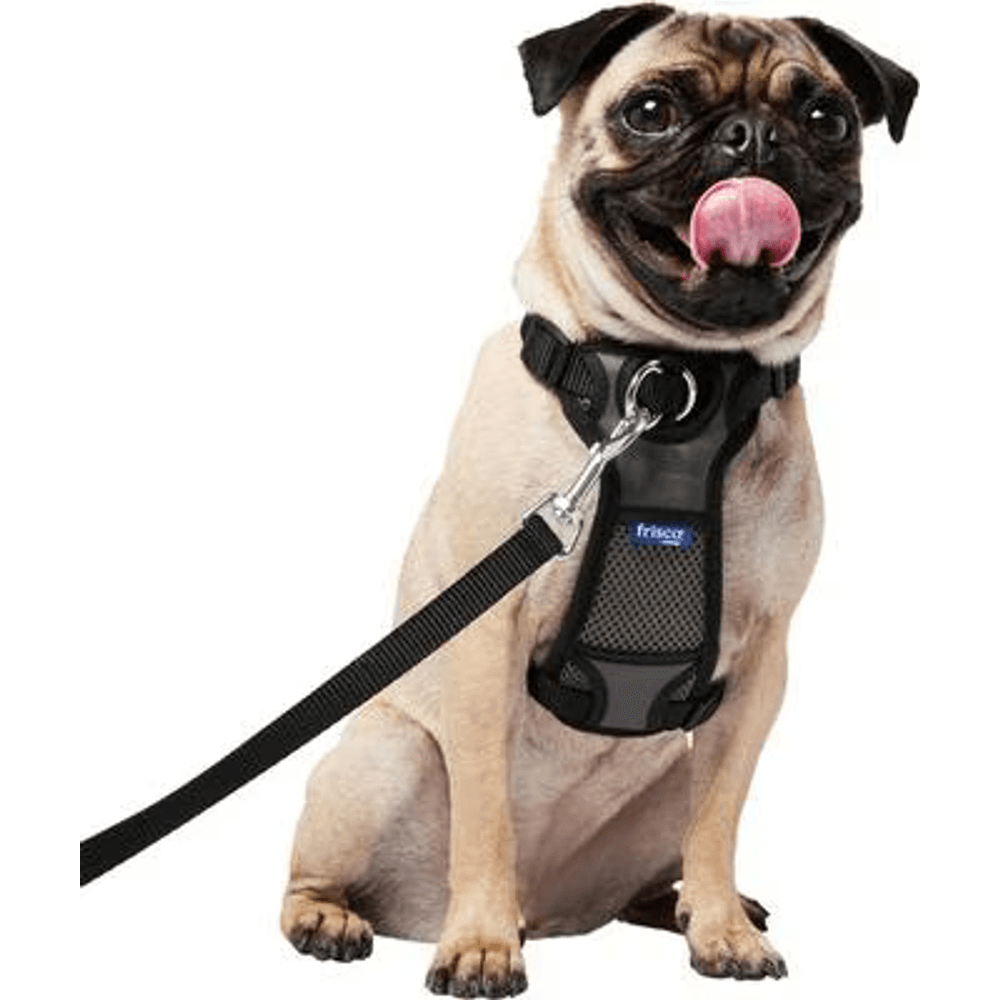
Padded walking harness; choose the fit and size for your dog.
Webvet may earn a commission when you click through to Chewy, at no extra cost to you.
Avoid forcing greetings to “socialize” a barking dog. The other dog is not training equipment, and a greeting can increase fear or frustration. If practical distances are impossible or safety is affected, seek qualified help.

Barking during greetings
Ask visitors to enter calmly and follow the same routine. Practice the resting station separately, then use a manageable arrival with enough distance. If the dog becomes too excited, reduce the difficulty instead of expecting a new visitor to repeat commands.
For attention requests, reward the alternative before barking becomes the default opening move. Keep ordinary interaction and activity predictable. Do not withhold water, toilet access or comfort to demand silence.
Barking when left alone
Use a short natural recording to see what happens after departure. A dog who barks briefly at a passing sound presents a different pattern from one who paces, pants, drools or tries to escape. Follow the separation anxiety guide and seek a tailored plan when distress is present.
A food toy may be useful when the dog is comfortable enough to use it, but an untouched toy does not prove stubbornness. Do not rely on a puzzle to make an absence tolerable when the dog is panicking.
For persistent nighttime anxiety or restlessness, use the established dog anxiety at night plan. Sounds made during sleep are a different issue; see dog barking in sleep. Howling also has its own context, covered in why dogs howl.
Reduce barking after bedtime
To reduce nighttime barking, first check toileting, water, physical comfort and an obvious sound or view. The hour alone does not establish anxiety. Record the time and setting, meet an ordinary need, then use the same calm alternative already practiced during the day. Persistent new behavior needs veterinary assessment.

Outside noises and foxes
For a dog barking outside at night, move to a familiar indoor resting area and reduce the view. If foxes are the trigger, keep the dog separated from wildlife, supervise toilet trips and remove accessible outdoor pet food. Practice a calm return cue away from wildlife, not during a confrontation.
Humane World’s fox guidance supports supervision and avoiding food attractants. The goal is to change exposure, not punish a dog for noticing another animal.
Crates, kennels and being left alone
Nighttime barking in a crate or kennel needs a comfort and toilet check before a training response. Frantic escape attempts, heavy panting or drooling call for a safer arrangement and professional help. Do not wait for exhaustion or assume stronger hardware solves distress.
During calm daytime practice, secure the door open, reward voluntary entry and relaxed resting, then introduce brief closures. Increase duration only while the dog remains comfortable; return to an easier step when worry appears. Dogs Trust’s crate guidance explains this gradual sequence.

Small chicken-flavored treats for rewarding successful training repetitions.
Webvet may earn a commission when you click through to Chewy, at no extra cost to you.
If barking starts when the dog is left alone at night, compare the response while you remain nearby. A toilet need or unfamiliar resting place needs a different response from panic during departures. Arrange a setup where the dog can cope and use the linked anxiety guidance for ongoing distress.
There is no guaranteed fix in seconds
Removing a trigger may interrupt barking quickly, but no method reliably stops every dog barking in seconds at night. Reward a practiced quiet alternative when the dog can respond. Repeated or worsening episodes need a cause review, not louder corrections, a stronger collar or repeated exposure until the dog gives up.
Use a seven-day progress record
A week is a useful observation window, not a promise that the behavior will be fixed in seven days. Keep the record short enough that you will use it. Compare similar situations rather than treating a quiet day with no deliveries as proof the doorbell plan worked.
Days one and two: describe the baseline
Note the main triggers, approximate duration and recovery time. Identify which management change can reduce repeated difficult episodes immediately. Address health concerns before moving into a training explanation.
Days three and four: practice the alternative
Work in quiet conditions and record whether the dog can perform the chosen action comfortably. Keep the exercise separate from the hardest real-life event. A few successful short repetitions are more useful than a long session that ends in frustration.
Days five through seven: add one challenge
Increase only one factor, such as distance from the mat, mild household movement or a lower-intensity version of the trigger. If performance deteriorates, return to the previous successful level. Record that adjustment as useful information, not failure.
Use these fields in a notebook:
- Trigger and setting.
- Management in place.
- Alternative attempted.
- Barking duration or number of separate episodes.
- Time to resume ordinary behavior.
- Signs of comfort, avoidance or distress.
The most meaningful trend is easier coping under comparable conditions. Fewer barks alongside more hiding is not the improvement you are seeking. Share the record with a professional if progress stalls or the problem grows.
Read improvement from a filled record
| Illustrative entry | What it tells you | Next decision |
|---|---|---|
| Monday: four visible deliveries; barking at all four | A baseline with four opportunities | Manage the entrance before rehearsing |
| Wednesday: no deliveries; no barking | No comparable trigger occurred | Do not count this as proof the training worked |
| Friday: two deliveries; view blocked; dog rested away from door | The setup prevented rehearsal during two events | Keep that management and practice an easy door movement separately |
| Practice: handle reached for; dog remained loose on mat | That small step was manageable today | Repeat before adding door movement |
This is an example of recordkeeping, not a seven-day result promise. Compare similar events and note both management and training. Fewer barks because no trigger occurred is useful household peace, but it answers a different question from whether the dog learned a new response.
When to get professional help
Arrange veterinary assessment for a sudden change, suspected pain, confusion, altered sleep or other health signs. Seek qualified behavior help when barking affects safety, the dog cannot recover comfortably or normal daily life is difficult to manage.
The AVSAB humane training position recommends reward-based methods. Ask a prospective professional how they will assess the cause, reduce exposure and measure welfare as well as sound. Our trainer versus behaviorist guide explains which role may fit.
Bring a concrete example to the appointment
Rather than saying “barks at everything,” describe one typical sequence: a delivery van stops, the dog runs to the window, barks for several minutes and then continues pacing. Include what changes when the blind is closed before the van arrives. That comparison helps a professional separate the trigger, rehearsal pattern and recovery difficulty.
Also describe an easy version of the situation. Perhaps the dog can watch a person across a wide street and then return to sniffing. That tells the trainer where successful practice may begin. The goal is to build from a manageable level, not repeatedly prove that the hardest version is still too much.
Ask what you should do between sessions and how to respond if the plan becomes too difficult. A useful plan includes an exit strategy: increasing distance, blocking the view or ending practice. It should not depend on escalating pressure until the dog stops expressing discomfort.
Keep the household consistent
Choose a small set of actions everyone can follow. For window barking, that may mean keeping the lower blind closed during deliveries, rewarding movement to the mat and avoiding excited group trips to inspect the street. For requests, agree on the alternative behavior and make basic care predictable.
Write those steps near the relevant equipment rather than relying on a long verbal explanation. If one person rewards calm approaches and another starts play after prolonged barking, the dog receives mixed information. Consistency is about the sequence the dog experiences, not simply everyone using the same command word.
Review the plan when routine changes. Visitors, school schedules or a new work pattern can alter triggers and opportunities to practice. Return to easier repetitions after a disruption instead of assuming an old success guarantees the same response under new conditions.
Evaluate equipment by its actual job
Training rewards, a comfortable mat and an observation camera such as INSTACHEW Purrsight camera can support specific parts of a plan. A whistle can become a trained recall cue, as explained in dog training whistles, but it does not automatically mean “stop barking.”
Before buying a deterrent, read bark collars explained and the anti-bark device comparison. The best bark collar buying guide also distinguishes product features from evidence of a humane outcome. A quieter dog is not necessarily a less distressed dog.
Build the plan around the trigger, the dog’s comfort and an achievable alternative. Equipment should serve that plan rather than define it.
Protect the easiest successful version
The most effective way to stop dog barking depends on its cause and on a response the dog can practice comfortably. For door barking, rehearse one small movement with a helper inside the home while the dog is comfortable at its resting place. Begin before adding a visitor.
- Have the helper stand near the door without touching it. Reward the dog for the already-learned resting response.
- On another easy repetition, let the helper reach toward the handle. Keep the door closed and reward continued comfort.
- Practice a small handle movement only when the earlier step stays easy. Change one feature at a time; do not add a knock, opening door and visitor together.
- If the dog leaves the spot, barks or becomes tense, stop the rehearsal. Create more distance or return to the easier movement next time.
Use management for real arrivals while practicing: place the dog comfortably away from the entrance before opening it. Training with a helper does not make an unexpected caller a suitable next test. Your dog should have an easy route away, and the helper should know when to stop.
Questions owners ask
Frequently Asked Questions
How do you stop nuisance barking?
Identify the trigger, reduce repeated difficult exposure and reward an alternative such as checking in or settling on a mat. Investigate new health changes and seek help for distress. The plan must fit the cause rather than treating every bark alike.
What's the best thing to stop dogs from barking?
There is no universal product or command. A cause-based plan combining management and reward-based learning is more useful than a device chosen without understanding the behavior. Medical or anxiety-related problems may need professional treatment.
What is the 3 bark rule?
It is an informal idea of allowing a few alert barks before cueing another response. It is not a universal welfare or training rule. Teach the cue in easy conditions and do not use the count to ignore distress.
What age should a dog start barking?
Vocal development and individual behavior vary, so there is no single age at which every dog should bark on schedule. A change in voice, breathing or behavior matters more than meeting a bark milestone. Ask your veterinarian about a concern.
Can barking be trained out of a dog?
Excessive barking can often be reduced by addressing its cause and teaching alternatives, but eliminating all barking is not a realistic or appropriate goal. Dogs use vocalization to communicate. Measure comfort and recovery alongside noise.
What is a red flag dog's behavior?
A sudden major change, inability to settle, severe distress, escape attempts or behavior that threatens safety needs assessment. These signs do not identify one diagnosis. Start with veterinary advice and an appropriate qualified behavior professional.

Editor
The Webvet Editorial Team is the in-house group of pet-care editors and writers behind Webvet, operated by Smart Pet Collective. The team researches, writes, and maintains Webvet's pet health, behavior, and medication content. Every article follows a defined editorial process: research from reputable veterinary and scientific sources, careful drafting, mandatory review of medical content by a credentialed veterinarian, and dated publication. Health and medication articles are medically reviewed by a licensed veterinary professional before they go live and are kept current over time.


