Why Is My Dog Whining? Causes and What to Do
Understand dog whining through its context, accompanying signs and recent changes, with clear next steps for health concerns, everyday needs and teaching a calmer way to ask.

This article contains affiliate links. Webvet may earn a commission when you buy through them, at no extra cost to you.
Why is my dog whining when there seems to be nothing wrong? Whining can accompany a request, excitement, uncertainty, anxiety or physical discomfort. Start with what changed and what happens around the sound. A new or persistent pattern needs assessment before you decide it is attention-seeking.
Check basic needs and the whole dog: movement, breathing, appetite, toileting and ability to settle. Then choose a response that addresses the situation rather than punishing the sound.
Start with what changed
- 1Check basic needs before treating whining as a learned request.
- 2New persistent whining, or whining with other changes, warrants veterinary advice.
- 3Avoid punishing distress. Teach a quiet alternative only after the dog’s needs and comfort are addressed.
Whining noises that seem to happen for no reason still have a context worth recording. If the dog always appears to be asking for something, compare the episodes with meals, outings, rest and your responses. Persistent, non-stop whining needs assessment rather than an assumption about manipulation or illness from frequency alone.
Whining is a relatively high-pitched vocalization that may be brief or sustained. People also describe it as crying, squeaking or whimpering. The label matters less than whether the pattern is familiar and what the dog is doing at the time.
The ASPCA’s whining guide describes several motivations, including greeting, attention, appeasement and anxiety, and advises considering injury or medical causes when vocalization begins suddenly or occurs frequently. One sound can therefore lead to very different next steps.
Compare two ordinary situations
A dog who briefly whines while you pick up the leash, then walks comfortably and settles afterward, presents a different pattern from a dog who paces, whines and cannot get comfortable throughout the evening. Both deserve attention, but a training response suited to excited anticipation may be inappropriate for the unsettled dog.
Write down the sequence rather than a guessed emotion. “Whines when the car door opens and trembles during travel” is more useful than “being dramatic.” It gives your veterinarian or trainer something concrete to investigate.
If whining occurs around departures or while the dog is alone, a short recording from an INSTACHEW Purrsight camera can show pacing, panting, escape attempts or other distress. Use the dedicated guide to separation anxiety in dogs and seek professional support when needed.

Wi-Fi camera for observing what your pet does when you are elsewhere.
Webvet may earn a commission when you click through to Chewy, at no extra cost to you.
Check whether anything changed recently: schedule, exercise, medication, a new pet, travel, an injury or the location of a resting place. Small household changes can matter, but finding one does not exclude an unrelated health problem.
Pain and illness come before training
Contact your veterinarian for new, frequent or unexplained whining, particularly with changes in movement, appetite, drinking, toileting, sleep or normal interaction. Shaking and whining can occur in several circumstances; they do not prove either cold or anxiety.
Seek urgent advice for severe distress, breathing difficulty, collapse, a swollen painful abdomen or repeated unsuccessful attempts to urinate. Do not wait to complete a behavior log when the dog appears acutely unwell.
| Accompanying observation | Useful next step |
|---|---|
| Reluctance to jump, climb or be touched | Describe the change and arrange a veterinary assessment |
| Pacing and inability to settle | Check for other signs and contact the clinic, especially if new |
| Whining during travel with drooling or vomiting | Discuss travel-related discomfort and anxiety with your vet |
| Brief excitement around a familiar activity, otherwise normal | Meet ordinary needs and practice a calmer routine |

Avoid testing a painful area repeatedly
If the dog cries when touched or moved, stop reproducing the reaction. Give the clinic a description of the event and ask how to handle the dog safely. Do not administer human painkillers or use sedatives to quiet the behavior without veterinary direction.
A dog can still eat or wag its tail while uncomfortable. Conversely, a whining dog does not necessarily have a medical emergency. The right response comes from the full pattern, its severity and whether it has changed.
Surgery, panting and self-directed behavior
A male or female dog that is constantly crying or whining needs more than repeated requests to be quiet. Describe whether the sound is nearly nonstop, suddenly more frequent or accompanied by unusual behavior. A dog that acts differently and cannot settle warrants assessment even without an obvious injury.
Whining after surgery, anesthesia, sedation, spaying or neutering belongs in a call to the treating clinic. Explain when medication was given and what else has changed; follow the discharge instructions. Do not guess whether the dog needs extra medicine or alter the prescribed dose yourself.
Describe breathing, movement and repeated body attention
If you describe the dog as “acting weird” or whining randomly, add one observable example: pacing between rooms, avoiding a usual resting spot or stopping an ordinary activity. That detail makes the change easier to assess without pretending that one sign identifies its cause.
Report heavy breathing, panting at rest, repeated licking or biting of one area, and scratching an ear alongside the whining. These observations can help the veterinarian assess discomfort. Severe breathing difficulty or collapse needs urgent help; a familiar-looking request does not rule out illness.
Sudden, constant or apparently random whining deserves attention in both young and old dogs. Pacing, walking in circles, staring at nothing or running around without settling is more useful to describe than saying the dog is being dramatic.
Read the situation around the whining
Once immediate health concerns are addressed, context can help identify the next practical change. Look at what the dog is trying to reach, avoid or anticipate. Do not assume the same explanation for every episode.
Greetings and anticipation
Whining may rise when a favorite person arrives or a familiar activity is about to begin. Make the sequence calmer: prepare equipment before inviting the dog over, pause for a simple known behavior and reward a manageable response. Keep greetings relaxed rather than building excitement and then demanding instant stillness.
Small training rewards such as Pet Botanics Chicken Training Rewards can make timing easier.

Small chicken-flavored treats for rewarding successful training repetitions.
Webvet may earn a commission when you click through to Chewy, at no extra cost to you.
Loose anticipation and appeasement need different responses
The ASPCA’s whining guidance describes appeasement signals such as crouching, a tucked tail, ears back, avoiding eye contact or turning sideways. These differ from a loose-bodied dog approaching an expected walk or greeting.
| What you observe | What to avoid assuming | Immediate response |
|---|---|---|
| Loose approach when the leash appears; normal movement | Every whine is anxiety or pain | Meet the ordinary walk need and practice a calm preparation routine separately |
| Crouching, turning away or retreating during a greeting | The dog wants closer handling because it approached earlier | Reduce pressure and give room to leave |
| Repeated whining when rising or being touched | The dog is trying to manipulate attention | Stop repeating the trigger and arrange veterinary assessment |
For a walk-preparation example, practice picking up and setting down the leash at a quiet time when toileting is not urgent. Reward a brief comfortable pause before clipping it on. Do not turn an urgently needed bathroom trip into a test of silence, or pull a hesitant dog toward a greeting.
Confinement, separation and barriers
A dog whining in a crate may need to toilet, feel uncomfortable or be distressed by confinement. Do not decide that every crate sound must be ignored. Check the immediate need and review whether the dog has been gradually taught to relax there.
Make comfortable rest easy to access
Begin by making essential care predictable. Provide water, appropriate toilet opportunities, comfortable rest and activity suited to the dog.
A low resting surface such as FurHaven NAP Orthopedic Bed may suit that setup; choose the right size and do not treat bedding as pain treatment. A dog should not need to become increasingly noisy to access a basic need.

Floor-level resting bed with a removable cover; select a size with room to stretch.
Webvet may earn a commission when you click through to Chewy, at no extra cost to you.
Interactions with people or other dogs
A lowered body, avoidance or tense movement changes how you should interpret a social whine. Increase space rather than insisting on a greeting. A male dog’s persistent whining is not automatically a reproductive issue; consider the same health and context questions you would for any dog.
Nighttime whining may involve comfort, toileting, routine or distress. The established dog anxiety at night article covers that detailed investigation. If the dog is also barking toward an apparently empty space, see barking at nothing for a trigger-check method.
Male and female dogs whining at night
A male dog constantly whining at night needs the same comfort, toileting and health checks as a female dog. Record the onset, frequency and accompanying changes instead of assuming sex identifies the cause. Persistent or sudden whining deserves veterinary assessment, even if the dog sometimes settles with company.
Offer a calm toilet opportunity, check water and the resting surface, and watch breathing, movement and urine output. Do not repeatedly press or move a painful area to test it. Trouble breathing, collapse or unsuccessful repeated attempts to urinate need urgent veterinary help rather than an overnight training experiment.
For a female dog whining repeatedly after dark, note reproductive status, the last heat and any nesting, toy-guarding or mammary changes. These details belong in the history discussed below; they do not confirm a hormonal cause or rule out pain. The time of day does not change that distinction.
Carrying toys or becoming unusually clingy
What owners call a dog’s “period” is part of a heat cycle, not the same process as human menstruation. Whining, scratching bedding or becoming unusually clingy should be described alongside cycle timing and other changes. Do not assume a hormonal explanation without veterinary assessment.
A female dog carrying or guarding toys, nesting in bedding and whining after a heat cycle may need assessment for reproductive changes. VCA’s false-pregnancy guidance describes maternal behavior and guarding small objects among possible signs. These behaviors do not establish pregnancy, and the sound alone cannot diagnose a hormonal cause.
Describe unusual clinginess, toy hoarding, appetite changes and the timing of the last heat to your veterinarian. Male dogs can also carry toys or whine for other reasons. Judge the whole pattern rather than assigning a diagnosis from sex or one object.
Separate mealtime and sleeping observations
At a food bowl, check access, appetite and the ability to eat instead of automatically giving more food. Whining after eating should be recorded separately. A wagging tail during whining may accompany excitement, but it does not prove comfort.
For twitching and whining while asleep, see dog barking and other sounds during sleep. Record whether the dog was truly asleep; awake pacing and crying needs a different investigation.
Use a food activity in an ordinary quiet period
A food puzzle such as Outward Hound Spin N’ Eat Puzzle Feeder may support an ordinary quiet period, but it is not a treatment for severe separation distress.
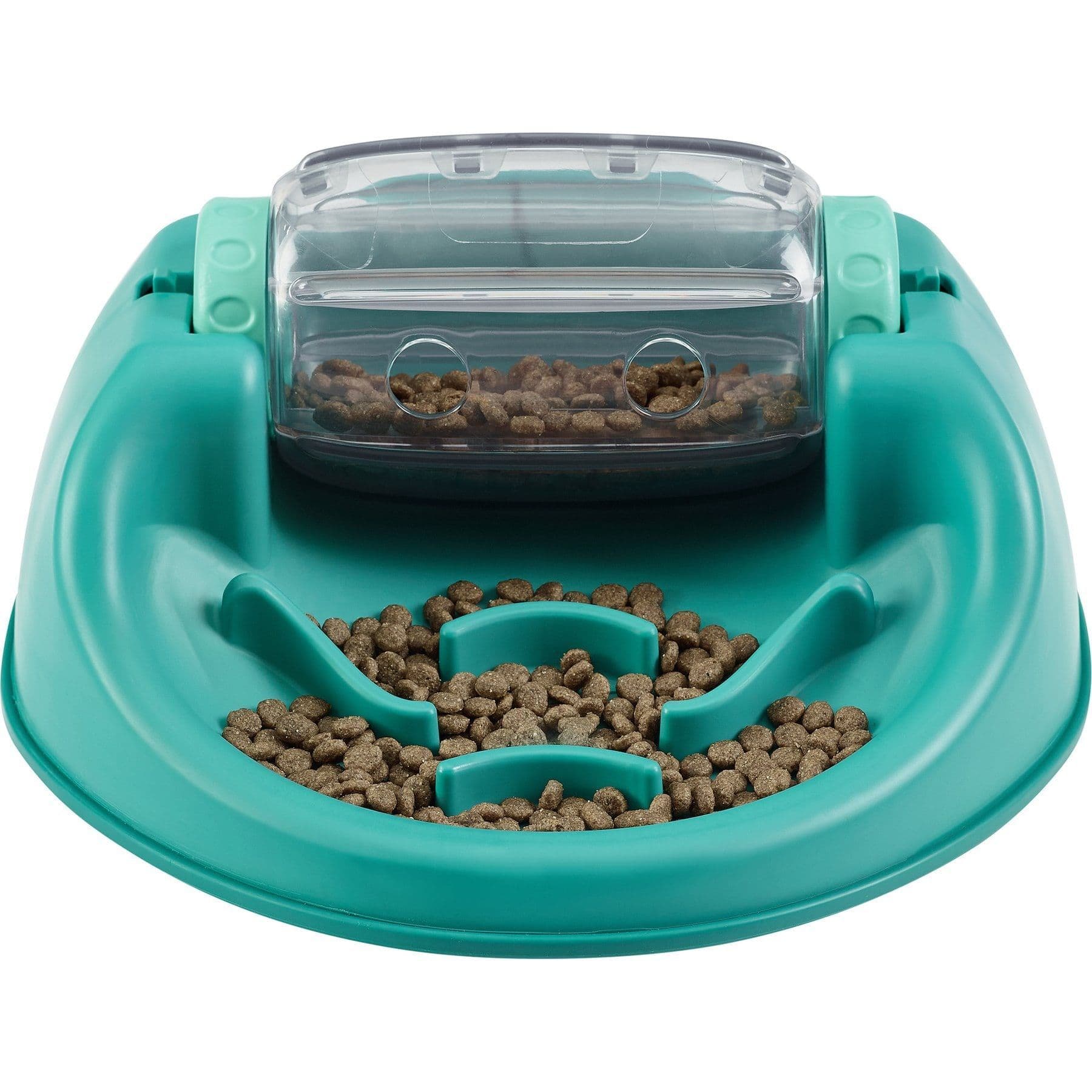
Food-puzzle feeder for supervised activity during an ordinary quiet period.
Webvet may earn a commission when you click through to Chewy, at no extra cost to you.
Meet the need and teach a quiet request
For a confirmed learned request, choose an alternative that is easy to notice and reward. Sitting near the door can request an outing; bringing a toy can invite play. Teach the behavior during quiet moments before expecting it when the dog is excited.

Separate a request from distress before changing your response
First meet the immediate ordinary need: a toilet opportunity, water, suitable rest or relief from an overwhelming interaction. If whining persists or the dog cannot return to normal activity, do not keep treating it as a request you should outwait. Reassess the setting and involve your veterinarian when the pattern is new or concerning.
A learned request is more plausible when the dog is otherwise comfortable, the sequence is familiar and a specific response reliably follows it. Even then, teach the alternative proactively. For example, practice a calm sit before preparing the leash rather than waiting for prolonged whining and then demanding a behavior the dog has not learned.
The words “crying” and “whining” do not separate these categories. A caregiver may use either label for the same high-pitched sound. What distinguishes the response is the surrounding behavior, unmet need and change from the dog’s normal pattern.
Practice a short sequence
- Set up an easy version of the everyday situation.
- Ask for an already learned action, such as sitting or moving to a mat.
- Reward promptly while the dog is comfortable and able to respond.
- End before frustration builds and repeat in another short session.
If the dog cannot settle or the whining intensifies, reduce the difficulty and reconsider the cause. Repeatedly withholding everything until silence can create more frustration, particularly when the dog does not understand how to succeed.
Choose tools that fit ordinary practice
Choose a difficulty the dog can manage and supervise unfamiliar items before leaving them available.
For dogs whose requests include barking, the reward-based barking plan explains how to teach alternatives while changing the setup. The same underlying principle applies: teach something useful rather than merely suppress communication.
Build a useful record for your veterinarian
Record when the whining begins, how long it lasts and what the dog does afterward. Include food, water, toileting, movement and sleep changes. A short natural video can help distinguish the sound and posture without relying on your memory of a stressful event.
For a nonurgent recurring pattern, compare similar situations on different days. Note whether the dog can eat, engage in familiar activity and recover normally. “Whined for a minute before the walk, then relaxed” and “whined for an hour despite resting in a quiet room” should not be grouped as the same problem.
Ask for the right kind of help
Medical assessment comes first for suspected discomfort or a new unexplained pattern. A qualified reward-based trainer can help with ordinary learned requests, while more complex fear or anxiety may need a veterinarian with behavior expertise. Our trainer versus behaviorist guide explains those roles.
Judge improvement by comfort, normal activities and easier recovery as well as sound. A dog who becomes silent but avoids people or remains frozen has not necessarily improved. Keep the plan focused on the dog’s wellbeing and the specific everyday problem you are trying to solve.
Keep the response predictable
Ask everyone who cares for the dog to use the same basic sequence: check the need, assess concerning changes and reward the taught alternative when appropriate. Mixed responses make a learned request harder to understand.
A note beside the walking equipment or feeding area can help people remember what to reward without turning the household into a series of shouted commands. Revisit the routine when work hours, visitors or the dog’s health changes.
Questions owners ask
Frequently Asked Questions
Why is my dog whining but acting normal?
A request or anticipation may explain a familiar brief pattern, but apparently normal behavior does not exclude discomfort. Check what happens before the whine and whether anything has changed. New, frequent or unexplained whining deserves veterinary advice.
When should I worry about dog whining?
Seek advice when it is new, persistent or accompanied by changes in movement, appetite, toileting, sleep or behavior. Severe distress, collapse or breathing difficulty requires urgent attention rather than a training exercise.
Does whining mean a dog is sad?
Not necessarily. Whining can accompany excitement, requests, uncertainty, distress or pain. Interpret the situation and the whole dog rather than assigning one emotion to the sound.
What is the difference between a dog crying and a dog whining?
There is no dependable everyday boundary between the two words: owners often call the same high-pitched whine “crying.” Neither term proves pain or sadness. Describe whether it is brief or sustained, what the dog is doing and whether the behavior changed; those details guide assessment more than the label.
What are the early signs that my dog is unwell?
Changes in appetite, thirst, activity, movement, toileting, sleep or usual social behavior can be useful clues. They are not specific diagnoses. A new pattern, including unexplained whining, should be discussed with your veterinarian.
How do I cheer up a sad dog?
First investigate a change in behavior instead of assuming sadness. Once health needs are addressed, offer an easy sniffing walk, a familiar gentle game or quiet company according to what your dog chooses comfortably. Keep meals and rest predictable, and do not force excited play on a withdrawn dog.
Persistent withdrawal or distress deserves professional assessment.

Editor
The Webvet Editorial Team is the in-house group of pet-care editors and writers behind Webvet, operated by Smart Pet Collective. The team researches, writes, and maintains Webvet's pet health, behavior, and medication content. Every article follows a defined editorial process: research from reputable veterinary and scientific sources, careful drafting, mandatory review of medical content by a credentialed veterinarian, and dated publication. Health and medication articles are medically reviewed by a licensed veterinary professional before they go live and are kept current over time.


