Why Is My Dog Barking at Nothing? What to Check
Investigate apparently unexplained barking with a practical trigger log, simple environmental changes and reward-based next steps, while recognizing when a new pattern needs veterinary attention.

This article contains affiliate links. Webvet may earn a commission when you buy through them, at no extra cost to you.
Why is my dog barking at nothing? Often, there is a sound, scent, movement or familiar pattern that you have not noticed. Dogs do not need a visible person directly in front of them to react. Sometimes the apparent lack of a trigger reflects a health or behavior change that needs investigation.
Check the setting and your dog’s condition before trying to silence the noise. A simple trigger log and one change at a time can reveal more than shouting, repeatedly checking the window together or buying a deterrent.
There may be a trigger you cannot detect
- 1Look for a repeatable trigger, including sounds and reflections outside your own awareness.
- 2Reward a quiet response in easier conditions instead of punishing alarm.
- 3A sudden behavior change, especially with confusion, discomfort or other symptoms, needs veterinary assessment.
A dog’s sensory experience differs from yours. A distant animal, movement outside a window, sounds in a corridor or activity behind a wall may attract attention before you notice anything. That does not mean every unexplained bark can be assigned a precise hidden cause.
The ASPCA’s barking guidance distinguishes several motivations, including alarm, greeting, frustration and requests. Identifying the setting is more useful than assuming the dog is being stubborn or claiming that a particular pitch proves fear.
Look for the sequence
- Does the dog turn toward the same door, wall or window first?
- Does barking begin around deliveries, a neighbor’s departure or an appliance cycle?
- Is the dog loose and eager, or tense, retreating or unable to settle?
- Does the behavior stop when the dog moves to another room?
Record ordinary episodes from a distance
A camera such as INSTACHEW Purrsight camera can help when nobody is in the room, provided its placement captures the dog’s body and nearby activity. It does not identify a medical cause or prove that silence means comfort.

Wi-Fi camera for observing what your pet does when you are elsewhere.
Webvet may earn a commission when you click through to Chewy, at no extra cost to you.
Your response can become part of the pattern too. A dog may learn that barking brings a person to the window or starts an interaction. That possibility does not justify ignoring a new problem. First check that ordinary needs and health concerns have been addressed.
If the dog also whines, paces or struggles to settle, our guide to why dogs whine helps organize those accompanying observations. Do not diagnose anxiety from one sound, but do record the full episode.
Run a simple trigger check

Start by moving the dog calmly away from the apparent trigger if that is safe. Offer a quieter location and let arousal decrease. Then investigate the environment without repeatedly bringing the dog back to provoke another episode.
Change one variable at a time during ordinary, manageable situations. If you close the curtains, turn on background sound and offer a food toy simultaneously, you may improve the immediate setting but learn little about which element mattered.
| Pattern | Low-pressure test | What the result can tell you |
|---|---|---|
| Barking at a window | Block the lower view before the usual busy period | A reduction suggests visual access is relevant, not that all causes are solved |
| Barking toward a corridor | Move the resting spot farther from the entrance | Distance may reduce the impact of outside activity |
| Barking at a particular hour | Record deliveries, appliances and household movements | Repeated timing may reveal a predictable event |
| Barking only when left | Review a short camera recording of the departure period | Pacing, panting or prolonged distress needs a different plan from casual alerting |
Try the least startling change first
If your dog is barking at a window, quietly invite them to move with you to a room where the view is blocked. Do not grab the collar or clap beside the ears. Once the dog has settled, close the blind before the next predictable busy period and compare the response.
Offer a quiet activity once the dog settles
A food puzzle such as Outward Hound Spin N’ Eat Puzzle Feeder may be useful for an ordinary quiet period when the dog can engage comfortably.
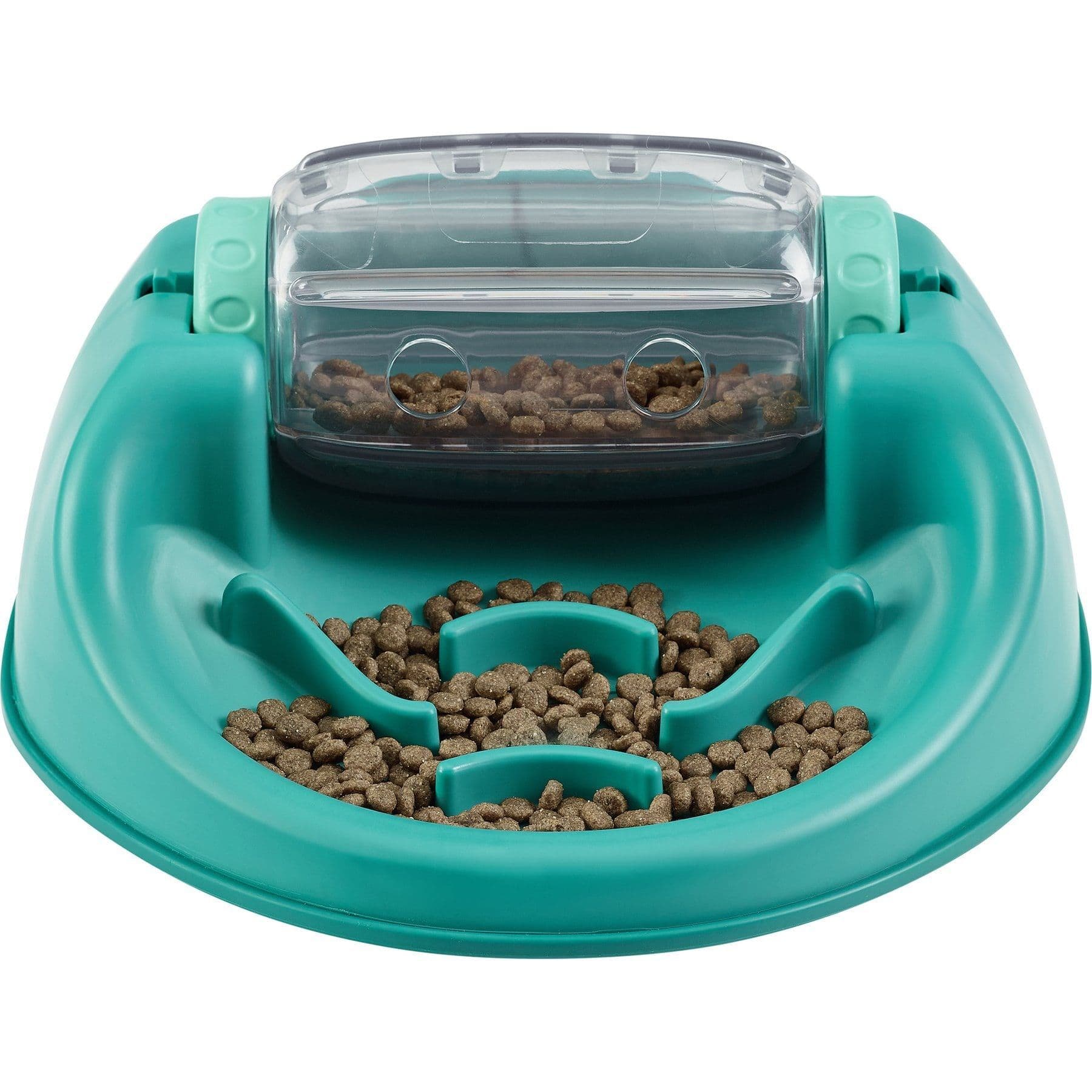
Food-puzzle feeder for supervised activity during an ordinary quiet period.
Webvet may earn a commission when you click through to Chewy, at no extra cost to you.
If a noise seems involved, increase distance from the entrance or wall rather than deliberately playing the sound louder. Background sound may help some dogs in some settings, but introduce it gently and watch the response. The aim is a calmer environment, not drowning out the dog.
This approach gives you a reversible first step. If moving rooms creates more distress, stop treating it as the right solution and consider another arrangement. A dog who feels trapped by separation may need space with a familiar person rather than isolation behind a closed door.
Keep the log useful
Write the sequence in order: what changed, where the dog looked, what the dog did and how the episode ended. A trigger hypothesis should lead to a small, reversible setup change. It should not become a reason to play loud noises or recreate a frightening encounter.
| Example observation | Working possibility | Next ordinary observation |
|---|---|---|
| Footsteps in shared hallway; dog faces entrance; barking ends after footsteps fade | A sound outside your view | Observe from a quieter resting location during normal traffic |
| Dog scans the window before barking; settles when the view is screened | Something visible outdoors | Compare similar ordinary times with the view already blocked |
| Barking begins after distant dogs bark; no person visible nearby | A response to other dogs | Note whether the same sound sequence occurs again naturally |
| Camera shows pacing and barking after departure | Being alone may be part of the problem | Share the sequence with a professional; do not extend absences to test endurance |
Record “unknown” when the trigger is not visible. One quiet evening with curtains closed does not establish the cause: there may simply have been less activity outside. Look for a repeatable pattern while keeping the dog comfortable, and retain the original recording if new behavior warrants veterinary assessment.
Observe without provoking another episode
Avoid repeatedly speaking through the camera if that startles or confuses the dog.
Do not use recorded barking, startling noises or forced close exposure to test your theory. An observation exercise should make daily life easier, not create more frightening rehearsals. If the dog is already struggling, lower exposure and ask for help.
Practice a resting cue away from the trigger
For example, teach a mat cue in a quiet room first. A portable washable resting surface such as Kurgo Loft Wander Travel Bed gives that practice a consistent location. Reward stepping onto it and settling for a short period. Later, practice with mild household activity well away from the entrance.

A portable padded resting surface for practicing a familiar settle cue. Choose a size that lets your dog rest comfortably.
Webvet may earn a commission when you click through to Chewy, at no extra cost to you.
Nighttime barking outside can have an unseen trigger
A dog barking at apparently nothing outside at night may be responding to an animal, sound or movement you have not detected. Note the direction of attention and what changes when you move to a familiar indoor area. A quieter response helps identify the setting; it does not prove a diagnosis.
Check nearby lights, moving branches, appliances and animal activity without sending the dog toward them. Reduce a repeated window view and supervise toilet trips. If barking occurs with new confusion, discomfort or other physical changes, use the veterinary checks below rather than repeatedly testing the same trigger.
Change one ordinary variable, such as closing the curtain, while staying in the calmer area. Record whether barking and tense posture ease. Do not replay a startling sound, approach wildlife or return the dog to the original spot to prove your explanation; observe the next naturally occurring episode instead.
When new barking needs a vet visit
Arrange veterinary assessment if unexplained barking is new, substantially increased or accompanied by changes in sleep, appetite, movement, toileting, awareness or responsiveness. Pain, sensory changes and other health issues can affect behavior, but the bark cannot tell you which one is present.
An older dog who suddenly stares, vocalizes or seems unsettled in familiar places deserves assessment rather than an assumption of normal aging. Bring the log and a short natural video if available. Describe changes across the day, not just the episode that woke you.
Describe ordinary activities that changed
AAHA’s pain guidance notes that changes in behavior and vocalization can accompany discomfort. Bring specific comparisons to the appointment: the dog previously climbed onto a bed but now waits beside it, or used to sleep through routine hallway activity but now paces and barks.
Those examples do not diagnose pain. They help the clinician decide what to investigate and avoid the unhelpful label “barking for no reason.” Include when the change began and whether it appears in more than one setting.
Reward the easy response you want to repeat
Small training treats such as Pet Botanics Chicken Training Rewards can help deliver rewards promptly.

Small chicken-flavored treats for rewarding successful training repetitions.
Webvet may earn a commission when you click through to Chewy, at no extra cost to you.
Compare the body with the apparent trigger
The ASPCA’s barking guidance distinguishes alarm, greeting and responses to other dogs. A stiff dog facing a sound differs from a loose-bodied dog approaching a familiar visitor, even if both are loud.
A practical response follows that difference: give the first dog distance from the trigger; give the second an easy, practiced greeting alternative. If the posture is unclear, manage space and observe rather than assigning “protective,” “happy” or “stubborn” from the bark alone.
Watch the whole dog
- A reluctance to move, jump or be touched can be important even without crying.
- Changes in posture, rest or normal activities may indicate discomfort.
- Confusion, collapse, severe distress or breathing difficulty warrants urgent advice.
- A normal appetite does not rule out every health problem.
Do not give human pain medicine or sedating products to quiet the dog. Call the clinic for advice about what to do while waiting for an appointment. If handling seems painful or unsafe, do not keep pressing or moving the dog to confirm your suspicion.
Nighttime episodes deserve the same initial assessment, followed by a look at sleep and routine. The established dog anxiety at night guide covers persistent nighttime anxiety, restlessness and sleep-related assessment. This page focuses on apparently absent triggers, regardless of the hour.
Teach a calmer response to ordinary triggers
For a familiar everyday trigger that the dog can notice without becoming overwhelmed, work at an easier distance or lower intensity. Reward the dog for checking in with you, moving to a comfortable mat or briefly observing without escalating. Choose an alternative the dog already understands before practicing around the difficult event.
A real delivery at full intensity is not the place to introduce the exercise for the first time.

If barking starts, make the task easier
Do not repeatedly say “quiet” over a prolonged episode. Create distance, block the view or end the setup calmly, then return to a simpler exercise another time. If the dog cannot disengage or take a normally welcome reward, the situation may be too difficult for useful practice.
Rewarding a quiet alternative is different from waiting through severe distress for a split second of silence. The purpose is to change the experience and teach a usable response, not simply stop the sound while fear remains.
Use rewards without trapping the dog
Do not use food or a resting cue to keep a distressed dog trapped near a trigger.
Measure recovery and seek help when needed
The reward-based barking plan provides the fuller progression. Seek help if the problem spreads to more settings, recovery takes longer, safety is affected or the dog cannot remain comfortable at a practical distance. Our trainer versus behaviorist guide explains the different kinds of support.
Track progress as fewer rehearsals, easier disengagement and quicker recovery, not a promise of complete silence. Barking is normal communication. The useful goal is a dog who can notice everyday activity and return to normal behavior without repeated distress.
Check whether the change holds in daily life
Repeat the easier setup on comparable days before declaring the mystery solved. A dog may be quiet because the usual trigger never appeared, not because the response changed. Keep a note of both exposure and behavior. If barking returns, revisit distance, timing and health changes rather than immediately adding a stronger consequence.
The record should help you make the next small adjustment, not become a scorecard for blaming the dog.
Questions owners ask
Frequently Asked Questions
Should I ignore my dog barking at nothing?
Not automatically. Check for a hidden trigger, an unmet need or a new health change. A confirmed learned request may need a different response, but ignoring fear, pain or prolonged distress does not resolve its cause.
Why is my dog barking at something I can't see?
The dog may notice a sound, scent or movement you have missed. Look for repeated direction, timing and context. If the behavior is new or comes with other changes, arrange veterinary assessment rather than assuming a harmless hidden trigger.
What is the 3 bark rule?
People use the phrase for allowing a few alert barks before asking for a quieter response. It is not a universal veterinary rule or a substitute for identifying the cause. A useful cue must be taught in manageable conditions.
Do dogs bark when they are in pain?
Some dogs vocalize when uncomfortable, while others become quieter or change movement and interaction. Barking alone cannot diagnose pain, and silence cannot exclude it. Report a new pattern and accompanying signs to your veterinarian.
How to tell if a dog feels pain?
Watch for changes in movement, posture, sleep, appetite, interaction or tolerance of touch. These signs have several possible causes. A veterinarian should assess the dog; do not repeatedly manipulate a sore area or try human medication.

Editor
The Webvet Editorial Team is the in-house group of pet-care editors and writers behind Webvet, operated by Smart Pet Collective. The team researches, writes, and maintains Webvet's pet health, behavior, and medication content. Every article follows a defined editorial process: research from reputable veterinary and scientific sources, careful drafting, mandatory review of medical content by a credentialed veterinarian, and dated publication. Health and medication articles are medically reviewed by a licensed veterinary professional before they go live and are kept current over time.
Related reading

Cat Yowling: Why It Happens and What to Check

Dog Muzzles: Fit, Basket Styles and Comfortable Training

Invisible Fence for Dogs: Limits, Welfare Risks and Safer Alternatives
